

Reviewed · MUSEUMS
Vermeer Centrum Delft Museum Admission Ticket
Vermeer Centrum Delft is less about standing before famous original canvases and more about learning how Johannes Vermeer worked. The museum places reproductions in chronological order, explains his use of light, and lets you step into a reconstruction inspired by one of his paintings. An included audio guide helps turn a short visit into a useful lesson in art and Delft life.
I like two things here: you can explore at your own pace, and the displays connect Vermeer’s paintings to 17th-century Dutch culture. The museum also draws attention to the small messages hidden in his pictures, a fine reason to look twice instead of simply checking off another art stop.
The main consideration is simple: you will not see original Vermeer paintings. The reproductions are useful for study, but visitors seeking authentic canvases should treat this as background and interpretation rather than a substitute for a major art museum.
Key points to know before you go
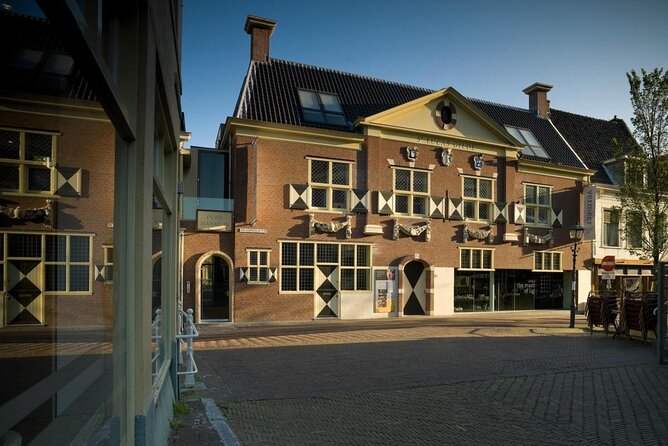
- Reproductions, not originals: See Vermeer’s paintings in chronological order, but do not expect original canvases.
- Audio guide included: The English audio guide adds context about Vermeer, Delft, his methods, and the symbols in his work.
- A compact visit: Plan on roughly one to two hours, making this easy to fit into a day in Delft.
- Look for the light: The museum explains how Vermeer shaped scenes through light, one of the most praised parts of the visit.
- Self-guided freedom: You can pause, listen, and study the displays without following a fixed group schedule.
- Mobile entry: Your ticket is delivered for mobile use, though the QR code should be visible when you arrive.
Why Vermeer Centrum Delft is worth your time
Vermeer is one of those painters whose reputation rests on a small number of surviving works. His quiet rooms, careful light, and absorbed figures can look simple at first glance. The longer you look, the more you notice the arrangement of objects, the direction of light, and the possible meaning behind a letter, gesture, or musical instrument.
That is the useful role of Vermeer Centrum Delft. It gives you a framework for looking. Instead of placing one famous painting in front of you and leaving you to guess, the museum walks through Vermeer’s life, working methods, city, and artistic choices.
I would think of the museum as an introduction and a study stop. It can help you get more from Vermeer paintings elsewhere, even though the works displayed here are reproductions. For many people, that is a fair trade for a modest admission price and a visit that fits neatly into a busy Delft day.
The museum also connects art with place. Vermeer lived and worked in Delft, and the displays use his paintings to explain something about the city and its time. You are not only looking at interiors and figures. You are also getting a sense of how Dutch art recorded daily life, domestic spaces, clothing, work, and social clues.
More Museum Tours in Delft
- Royal Delft: Delftblue Factory and Museum Admission Ticket
★ 4.5 · 145 reviews - Private Tour of Delft + Visit to Delft Blue Museum & Factory
★ 4.5 · 8 reviews - Private Tour of Vermeer’s Delft + Tickets to Vermeer Museum
★ 5.0 · 3 reviews
Starting with Vermeer’s life in Delft
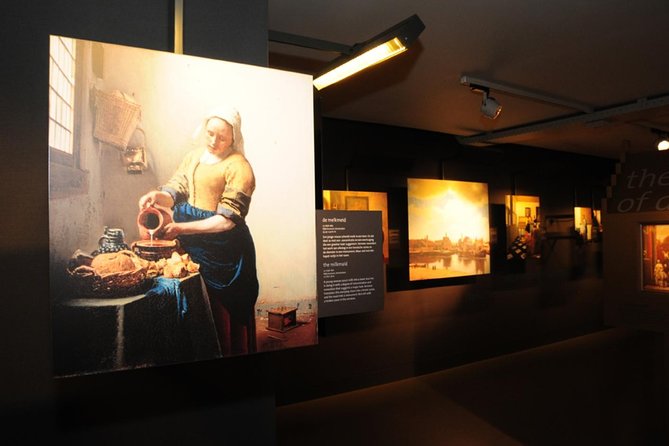
The visit begins with a glimpse into Johannes Vermeer’s life. The available information does not promise a long biographical exhibition, so you should expect an introduction rather than a full museum devoted to every detail of his family and career.
Still, this opening matters. Vermeer’s paintings are often treated as timeless images, but he was a specific person working in a specific city during the 17th century. Putting his art back into Delft gives you a clearer sense of the world behind those calm rooms and carefully framed moments.
The chronological arrangement is especially helpful. You can follow the development of his work rather than seeing reproductions in a random order. That lets you compare early and later choices, notice changes in subject or technique, and understand that his style was shaped over time.
I recommend listening to the audio guide rather than rushing straight to the reproductions. The guide is included, and it gives the visit a clear thread. You can still stop the audio, move at your own speed, or spend more time with the paintings that interest you most.
Reading the reproductions in chronological order
The central display presents reproductions of Vermeer’s original paintings in chronological order. This is the heart of the visit, but it needs the right expectation. A reproduction cannot give you the same physical experience as an original painting, particularly with works known for delicate color, surface texture, and subtle handling of light.
It can still be valuable. Reproductions allow the museum to show a broad range of Vermeer’s work in one place. You can compare paintings side by side and trace ideas that might otherwise be scattered among collections.
One painting that has made a strong impression on visitors is The Art of Painting. Even if you arrive with a short list of better-known works, leave room for an unexpected favorite. A compact museum can be good at that. You may discover a painting you had never studied before and spend more time with it than with the familiar names.
Use the chronological display as a lesson in looking. Ask yourself:
- How does Vermeer place figures within the room?
- Where does the light enter?
- What objects attract your eye first?
- Does a letter, map, instrument, or gesture suggest a story?
- Which details seem decorative, and which may carry meaning?
The museum’s job is to give you clues. Your job is to slow down enough to use them.
Vermeer’s light and the messages in his paintings
The strongest theme here is Vermeer’s treatment of light. His paintings are admired for the way light falls across faces, walls, tables, clothing, and objects. The museum explains this process so you can see that the effect is not accidental.
This part is valuable even if you know little about painting technique. You do not need a background in art to understand the basic lesson: Vermeer used light to guide attention, create mood, and give ordinary rooms a quiet sense of drama.
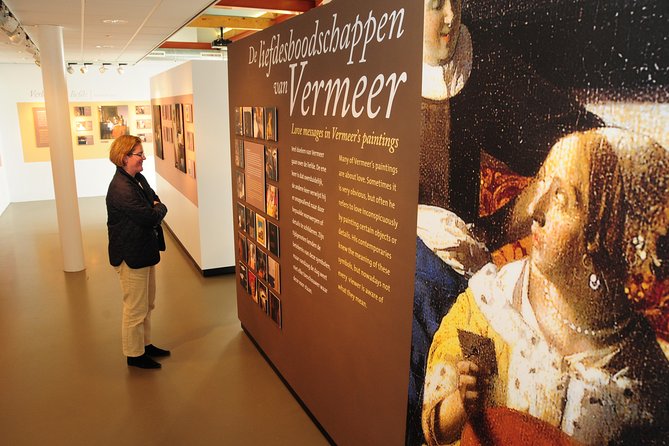
The displays also point out secret love messages and other clues within his paintings. That does not mean every picture has one fixed answer. It means the objects and actions deserve a closer look.
A woman reading a letter, a musical instrument, or a domestic task can carry more than its surface meaning. The museum gives you ways to consider those details without turning the paintings into a simple code-breaking exercise.
I especially like this approach because it helps you look again at works you may have already seen in books or online. On a screen, it is easy to notice the main figure and move on. Here, the audio and displays encourage you to inspect the room, the props, and the spaces between people.
More ways to spend a day in Delft:
- The Hague: One Way Boat Ticket to or from Delft
★ 4.5 · 52 reviews - Walking Tour of Delft – The City of Orange and Blue
★ 5.0 · 50 reviews - Private Walking Tour of Delft: Dive into the Dutch Golden Age
★ 5.0 · 33 reviews - Discover Delft with a self-guided Outside Escape city game tour!
★ 5.0 · 32 reviews
Stepping into a Vermeer painting
One of the more unusual parts of the visit is the chance to experience his work methods and step into one of his paintings. The supplied information does not specify the exact design or painting used, so you should expect an interpretive feature rather than an original historical setting.
That feature gives the museum a more hands-on quality. You are not only reading about composition from a label. You are being asked to think about how a scene is arranged and what it might feel like to stand within it.
For families, casual art lovers, and anyone who finds traditional galleries too quiet or abstract, this can make Vermeer easier to approach. It also helps explain why viewpoint matters. A painting is not just a collection of objects. The artist chooses where you stand, what you see, and what remains outside the frame.
Do not expect a full theatrical production or a long interactive program. This is a museum visit with an interpretive feature, not a guided stage show. Its value comes from adding a physical prompt to the visual and audio material.
How long to allow for the museum
The usual visit takes about one to two hours. That range is wide because the experience is self-guided. You can move quickly through the biographical material, or you can listen to the audio guide in full and spend time comparing the reproductions.
If you have only an hour, focus on the chronological paintings, Vermeer’s use of light, and the section about hidden messages. Those are the ideas most likely to improve the way you look at his work.
With two hours, you can give the audio guide more attention and revisit paintings that catch your eye. I would avoid scheduling the museum so tightly that you must race through it. The displays are designed for looking, and the main benefit comes from pausing.
The compact length is also a practical advantage. You can pair the visit with other time in Delft without giving up an entire afternoon. The experience is listed under The Hague in the supplied location details, but the museum itself is Vermeer Centrum Delft, in Delft. Check your route and allow time to reach Delft if you are staying elsewhere.
Price and what the admission gives you
Admission is listed at $14.42 per person. Whether that feels like good value depends on what you want from an art museum.
For a visitor who expects original Vermeer paintings, the price may feel less attractive because the museum displays reproductions. You should know that before booking. The experience is not a replacement for seeing original works in a major collection.
For someone interested in learning how to read Vermeer, the price is easier to justify. It includes entry, the audio guide, access to the chronological display, the explanation of his methods, and the interpretive opportunity to step into one of his paintings. You can also stay as long as you wish during your visit rather than being tied to a short timed explanation.
I see the ticket as good value for an art-focused stop of one to two hours, especially if you are already planning time in Delft. It is less compelling if your only goal is to stand before original masterpieces.
The museum can also save you from arriving at a larger collection with no context. After this visit, you may recognize recurring subjects, understand why the light matters, and pay attention to visual clues that previously passed unnoticed.
Practical details for a smooth visit
Your ticket is mobile, and confirmation is provided at booking. Keep the ticket ready on your phone. One practical problem has been reported with a downloaded ticket that did not show a QR code at the entrance. The museum accepted entry in that case, but you should not rely on that kindness.
Before arriving, open the ticket and make sure the QR code is visible. A screenshot may be useful if your connection is poor, though you should use the ticket format supplied at booking. This small check can prevent an awkward pause at the door.
The museum is near public transportation, so it is reachable without needing a private car. Exact transport routes are not provided here, so check your departure point and local service before setting out.
Service animals are allowed, and most people can participate. The visit is self-guided, which means you can control the pace rather than keeping up with a group. English is the offered language for the experience, and the included audio guide is a key part of the visit.
The museum is suitable for art and culture enthusiasts, but you do not need to be an expert. If you enjoy learning through pictures, symbols, and short explanations, you should find enough material to keep the visit worthwhile.
Who will enjoy this Delft museum most
I would recommend Vermeer Centrum Delft to several kinds of visitors.
First-time Vermeer viewers get a clear introduction to his life, city, methods, and visual themes. You can arrive without knowing the titles of his paintings and still leave with a stronger sense of what makes his work distinctive.
Art students and serious museumgoers may appreciate the chronological order and the focus on technique. The reproductions are not originals, but seeing many works together makes comparison easier.
Families and mixed-interest groups may like the self-guided format and the chance to step into a painting. Nobody has to stay with a fixed guide, and different people can spend more or less time at each section.
Visitors with a short Delft schedule can fit the museum into one to two hours. It offers enough substance to feel like a real cultural stop without taking over your day.
I would be more cautious if you have limited time and care only about original art. In that case, choose a museum known for holding original Vermeer paintings, or visit this center only if you also want background about the artist and Delft.
Cancellation and booking flexibility
Free cancellation is available if you cancel at least 24 hours before the experience start time. That gives you useful flexibility when building a Netherlands itinerary, especially if your Delft plans may change.
If you cancel less than 24 hours before the start time, you will not receive a refund. Changes made within that same period are not accepted, and the cut-off is based on local time.
The rule is easy to manage: decide by the previous day. If your plans are uncertain, avoid waiting until the last few hours.
Final call: should you book Vermeer Centrum Delft?
Book it if you want a focused introduction to Vermeer, a better understanding of his use of light, and clues to the messages within his paintings. The included audio guide, chronological reproductions, and self-guided pace make the visit practical and easy to fit into Delft.
Do not book it expecting original canvases. That is the one fact that should guide your decision. If you accept the museum as an interpretive center rather than a traditional gallery, the $14.42 admission offers a useful one to two hours with a clear purpose.
My advice is to go early in your Vermeer study, not late. Visit this center before seeing original works elsewhere, and you will have more tools for looking. If you already know Vermeer well and have seen his originals, the visit may feel more like a refresher, but the hidden messages and technical explanations can still add a few worthwhile details.
FAQ
Where is Vermeer Centrum Delft located?
The experience takes place at Vermeer Centrum Delft in Delft, Netherlands. The supplied location information also refers to The Hague, so check your route carefully if you are traveling from The Hague or another city.
How much does admission cost?
The listed price is $14.42 per person.
How long does the visit take?
Plan on approximately one to two hours. Since the visit is self-guided, your exact time depends on how closely you listen to the audio guide and study the reproductions.
Are original Vermeer paintings displayed?
No. The museum displays reproductions of Vermeer’s original paintings.
Is an audio guide included?
Yes. An audio guide is included with admission. The experience is offered in English.
Can I explore at my own pace?
Yes. This is a self-guided visit, so you can admire the displays for as long as you want during your time there.
Is the museum accessible by public transportation?
Yes. The museum is near public transportation.
Can I cancel for a refund?
Yes, if you cancel at least 24 hours before the experience start time. Cancellations made less than 24 hours before the start time are not refundable, and changes within that period are not accepted.
More Museums in The Hague
- The Hague: Escher in The Palace Museum Ticket
★ 4.6 · 896 reviews - The Hague: Prison Gate Museum
★ 4.5 · 58 reviews - Amsterdam: Van Gogh Museum Ticket
★ 4.7 · 52,054 reviews - Moco Museum Amsterdam Entrance Tickets with Banksy & More
★ 4.4 · 10,088 reviews
Just added around The Hague
- Your Own Hague. Behind The Scenes of The Royal City★ 4.5 · 5 reviews
- e-Scavenger hunt The Hague: Explore the city at your own pace★ 3.5 · 10 reviews
- 3 Course Walking Dinner in Delft with Guided Tours in Between★ 5.0 · 3 reviews
- Delft: City Walk with Audio Guide in 7 Languages on your Phone★ 5.0 · 4 reviews
- The Hague: City Walk Audio Guide in 7 Languages on your Phone★ 3.5 · 5 reviews
- Surfing at The Shore in The Hague★ 4.5 · 3 reviews
- The Hague Must-See attractions Private Walking Tour With A Guide★ 5.0 · 5 reviews
- Surprise Walk of The Hague with a Local★ 4.5 · 3 reviews
Museums, compared.


Moco Museum Amsterdam Entrance Tickets with Banksy & More
Read our review →





Browse the lists this tour appears in