
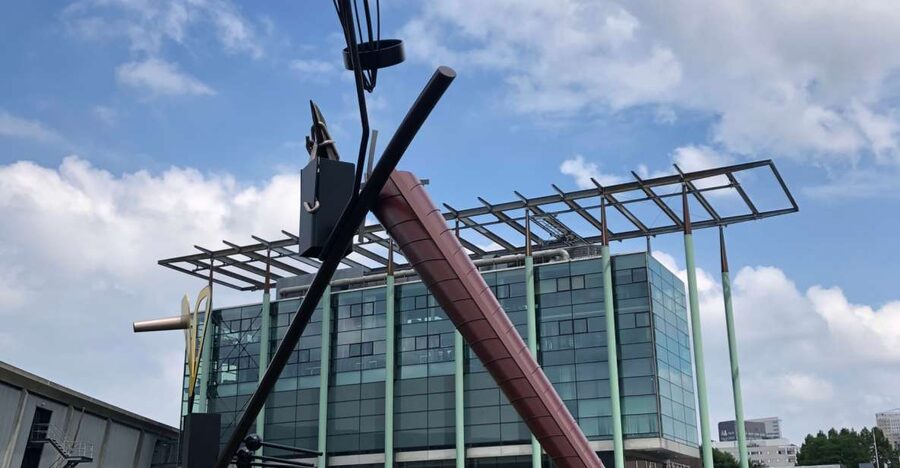
Reviewed · WALKING TOURS
Rotterdam: Art and Architecture Highlights Walking Tour
Rotterdam’s story is written in concrete, glass, tilted walls, and public art. This 2.5-hour walking tour links the city’s boldest buildings, from the rebuilt Central Station to the Cube Houses and the spectacular Markthal, while explaining how wartime destruction shaped modern Rotterdam.
I like the route’s clear focus on architecture and art, rather than a general city walk. I also like that it includes outdoor works by artists such as Henry Moore, Picasso, Roden, and Joep van Lieshout, so you can enjoy the city’s art without paying museum admission. The main consideration is pace: you will cover a lot of ground on foot, and the tour runs rain or shine.
- Central Station sets the scene: Begin with Rotterdam’s striking modern gateway and the city’s postwar rebuilding story.
- The Museum Quarter brings several icons together: See the Kunsthal, New Institute, and Boijmans Depot from the outside.
- Open-air art adds meaning to the walk: Public works connect Rotterdam’s bomb damage, reconstruction, and creative identity.
- Witte de Wit offers a lively street stop: Explore one of the city’s best-known arts and nightlife areas.
- The Cube Houses and Markthal provide a strong finish: End with two of Rotterdam’s most recognizable architectural projects.
- The $65 price pays for interpretation: You are paying for a guided city overview, not entry to museums or food.
Why Rotterdam Makes Such a Good Architecture Walk
Rotterdam is an unusual Dutch city. Many visitors arrive expecting old canals, narrow brick houses, and church towers, but much of the central area is defined by rebuilding and experimentation. The bombing of the city created a painful break with the past, and Rotterdam responded with wide streets, large-scale buildings, modern housing, and room for architects to try unusual ideas.
That makes this route more than a parade of photogenic buildings. A guide can explain why the city looks so different from Amsterdam, and how individual buildings fit into a larger plan. The strongest part of the experience is the connection between architecture and urban history.
You start beneath the clock at the main entrance of Rotterdam Central Station. This is a practical meeting point, easy to identify in a busy transport hub. It also gives the guide a powerful opening chapter: the old station was replaced by a dramatic modern building that reflects Rotterdam’s role as a major European city.
The station is not just a place to meet. Its angular form, broad entrance, and mix of metal, glass, and stone make it an early example of the city’s love for bold design. From here, you begin seeing Rotterdam through an architectural lens rather than simply moving from one attraction to another.
From Central Station to the Calypso Building
The first stretch follows several modern landmarks, including the Calypso building and the Theater square. These stops help show how Rotterdam uses large, contemporary structures to shape public spaces.
The Calypso building is especially useful as a visual introduction to the city’s taste for unusual residential design. It is not a traditional Dutch apartment block, and that is the point. Rotterdam often treats housing as part of the city’s public image, with color, angles, and scale all playing a role.
Theater square adds another layer. It is a place where architecture, performance, and daily city life meet. You can expect the guide to explain how the square works as an urban space, not just point out a building and move on.
This part of the walk is best for visitors who want context. If you are mainly looking for historic interiors or formal sightseeing, the route may feel less satisfying. Much of the experience is about looking at buildings from the street and understanding their purpose.
More Walking Tours in Rotterdam
- Rotterdam Walk: Hilights, Gems, Architecture & WWII | 2 or 3hrs
★ 5.0 · 149 reviews - Rotterdam: Highlights & Gems Walking Tour with Dutch Local
★ 5.0 · 133 reviews - Rotterdam 2-Hour Walking Tour | Discover The City With A Local
★ 4.5 · 111 reviews
The Museum Quarter: Kunsthal, New Institute, and Boijmans Depot
The tour then reaches Rotterdam’s Museum Quarter, home to the Kunsthal, the New Institute, and the Boijmans Depot. Even without entering any of these institutions, the group gets to see how the buildings themselves contribute to the city.
The Kunsthal is associated with changing exhibitions and modern design. Its position and structure make it a natural stop on an architecture walk. The New Institute adds a focus on architecture, design, and creative practice, making this section feel less like a standard museum visit and more like a look at how Rotterdam thinks about culture.
The most unusual building here is the Boijmans Depot, described as the first accessible museum depot in the world. Its mirrored exterior gives it a strong visual presence, and its purpose is different from that of a normal museum. Instead of showing only a selection of works in galleries, a depot stores and manages a much larger collection.
That distinction matters. You may not enter the building on this tour, and entry tickets are not included, but the guide can help you understand why the depot is important. It is a working collection building made visible to the public, rather than a closed storage facility hidden behind museum walls.
I like this part of the route because it shows Rotterdam’s willingness to rethink familiar cultural buildings. The tradeoff is that art lovers hoping to see paintings or sculptures indoors will need to arrange a separate museum visit.
Following Rotterdam’s Open-Air Art
One of the tour’s best features is its attention to public art. Rotterdam’s open-air collection is spread across streets, squares, and building areas, so you can encounter major works as part of the city rather than inside a quiet gallery.
The works connected with the route include artists such as Henry Moore, Roden, Picasso, and Joep van Lieshout. The tour also includes art dealing with the drama of the bombarded city. That gives the walk a more serious edge, since the sculptures are not only decoration. Some help mark loss, rebuilding, or the city’s changing identity.
A guide is particularly useful here. Without explanation, a sculpture in a public square can be easy to overlook. With the right background, you begin to see why it was placed there and how it relates to nearby buildings.
This is also where Rotterdam’s contrasts become clear. A large modern building may sit near a work of sculpture, a piece of street art, or a reminder of wartime destruction. The city does not keep art in one tidy district. It places culture into ordinary streets and public spaces.
The tour does not include museum admission, which keeps the price more manageable. You still get an introduction to Rotterdam’s art scene, but you should not book it expecting a full gallery experience.
Witte de Wit and Rotterdam’s Arts Scene
The route continues to Witte de Wit, described as Rotterdam’s most vivid and artsy street. This is one of the more social parts of the walk, with the emphasis shifting from monumental buildings to street-level city life.
You can expect a mix of art venues, restaurants, bars, and creative energy. The street is useful because it shows how Rotterdam’s cultural identity works outside formal museums. It is a good place to pause, look around, and see how design and nightlife share the same urban setting.
The guide presents Witte de Wit as a major art venue rather than simply a pleasant street. That distinction is worth keeping in mind. The stop is not only about taking a photo or choosing a place for dinner. It gives you a sense of where Rotterdam’s young and experimental side gathers.
I would especially recommend this section to first-time visitors who want a quick feel for the city’s creative character. If you prefer quiet streets and old-world scenery, it may be the least appealing part of the route. Rotterdam is not trying to imitate a historic Dutch town here, and the street can feel loud and modern.
A few more days out around Rotterdam worth weighing up
- Rotterdam: Harbor Sightseeing Cruise
★ 4.3 · 7,599 reviews - Rotterdam: 1-Hour Sightseeing Splash Tour
★ 4.5 · 3,299 reviews - Rotterdam: Rotterdam Zoo Blijdorp Entry Ticket
★ 4.6 · 2,754 reviews - Rotterdam: Euromast Lookout Tower Ticket
★ 4.4 · 2,549 reviews
The Cube Houses and the Logic of Tilted Living
The tour then heads toward the Cube Houses, one of Rotterdam’s most famous architectural projects. Their bright yellow, tilted forms make them easy to recognize, but the guide’s explanation is more useful than the photo alone.
The buildings were designed as a cluster of tilted homes, creating a strange but carefully planned village above the street. The basic idea was to represent a forest, with each cube acting like a tree. It is a clever concept, and the result is one of the city’s most memorable examples of architecture as an experiment.
From the outside, the Cube Houses look playful. They also raise practical questions about daily life inside them. How do you arrange furniture in rooms with unusual angles? How much usable wall space do you have? The tour does not include an entry ticket, so you will mainly consider these questions from the public areas around the complex.
That is enough for many visitors. The exterior is the key attraction, and the guide can explain the urban idea behind it. Still, if you want to inspect a house from the inside, you will need to pay separately.
This stop works well near the end of the walk because it prepares you for the final building. The Cube Houses are playful and residential, while the Markthal is large, commercial, and designed to turn everyday shopping into a visual event.
Ending Under the Markthal’s Giant Artwork
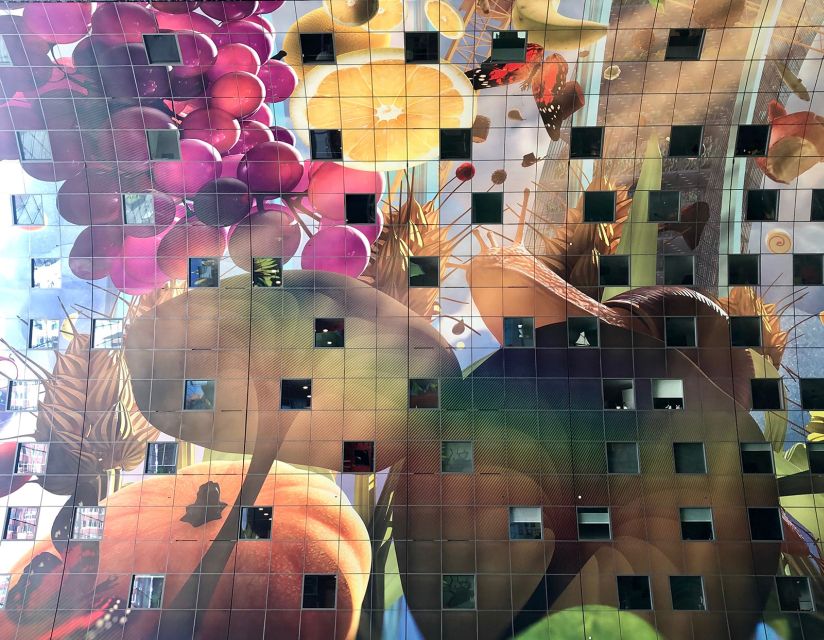
The tour ends at the Markthal, where art and architecture come together in a spectacular interior. The building combines apartments, market stalls, restaurants, and a huge colorful artwork across the inside of its curved roof.
This is a satisfying finish because the Markthal is easy to understand at a glance, yet there is plenty to discuss. The structure turns a food market into a major public building, and the artwork gives the interior a memorable sense of scale.
Food and drinks are not included, so you can decide for yourself if you want to browse the stalls or eat after the tour. Ending here is convenient, since you can continue exploring independently rather than being returned to Central Station.
The Markthal is also a useful final reminder of Rotterdam’s approach to city building. Architecture here is not limited to monuments or museums. It shapes housing, commerce, public gathering, and the way people move through the city.
What the $65 Price Really Covers
At $65 per person, this is not a bargain city stroll, but the price can make sense if you want a guide to connect a large number of sights in a short time. The tour lasts 2.5 hours and covers several districts and themes, including modern buildings, public art, the Museum Quarter, Witte de Wit, the Cube Houses, and the Markthal.
You are paying for an English-speaking live guide. You are not paying for museum entry, food, drinks, hotel pickup, or transportation. That makes the tour best for someone who wants orientation and interpretation, then plans to explore interiors independently.
The value also depends on your interest in architecture. If you enjoy design, city planning, sculpture, and the story of postwar rebuilding, $65 is easier to justify. If you only want a short introduction to Rotterdam’s headline sights, you might find the walk more detailed than necessary.
A private group option is available, which may suit families or friends who want a more personal format. No standard group size is specified, so check the current booking details if group atmosphere matters to you.
Walking Comfort, Weather, and Access
Wear comfortable shoes. This is a walking tour with no included transportation, and the route covers enough ground for footwear to matter. Seasonal clothing is also important because the tour runs rain or shine.
Bring weather protection rather than hoping for a perfect Dutch afternoon. The open-air art and building exteriors are part of the experience, so poor weather will not turn the route indoors.
The activity is listed as wheelchair accessible, but it is not suitable for people with visual or hearing impairments. That combination is worth checking carefully before booking. If you need specific assistance, confirm the route and guiding arrangements in advance.
Oversize luggage is not allowed, and unaccompanied minors cannot join. Hotel pickup and dropoff are not included, so plan to reach the meeting point at Central Station on your own.
Who Will Get the Most From This Walk
I would choose this tour if you are visiting Rotterdam for the first time and want the city explained through its buildings. It gives you a useful framework for later independent sightseeing, especially around the Museum Quarter, Witte de Wit, the Cube Houses, and the Markthal.
It is also a strong choice for architecture students, design fans, photographers, and anyone curious about how a heavily damaged city rebuilt itself in a modern style. The route offers more than a list of famous façades because it includes public art and urban planning.
The walk may be less suitable if you have limited mobility, dislike outdoor touring in bad weather, or want to spend time inside museums. It is also not a food tour, despite ending at the Markthal.
A guide named Diana has been praised for clearly explaining Rotterdam’s postwar planning and architectural development, beginning with the new Central Station. If she is leading your departure, you can expect the historical side of the tour to receive particular attention, though guides and availability can change.
Should You Book the Rotterdam Architecture Walk?
Book it if you want a strong first look at Rotterdam’s modern identity, especially if buildings and public art interest you more than old canals and historic interiors. The route is well chosen, the ending at the Markthal is practical, and the guide’s role adds the context that these unusual buildings need.
Skip it if you prefer to explore at your own pace, want museum entry included, or are uncomfortable walking outdoors for 2.5 hours. At $65, the tour earns its price through interpretation, not inclusions.
For most first-time visitors with comfortable shoes and an interest in modern cities, this is a useful way to get your bearings. You leave with a better sense of why Rotterdam looks the way it does, and you finish in one of the city’s most enjoyable places to continue on your own.
FAQ
Where does the tour meet?
The meeting point is beside Rotterdam Central Station’s main entrance, under the station’s clock.
How long does the walking tour last?
The tour lasts 2.5 hours.
What language is the tour conducted in?
The live tour guide speaks English.
Are museum entry tickets included?
No. Entry tickets, food, and drinks are not included.
Is transportation provided?
No. Hotel pickup, hotel dropoff, and transportation are not included.
What should I bring?
Bring comfortable shoes and clothing suited to the weather and season. The tour takes place rain or shine.
Just added around Rotterdam
- e-Scavenger hunt Rotterdam: Explore the city at your own pace★ 4.5 · 13 reviews
- Rotterdam: City Walk Audio Guide in 7 Languages on your Phone★ 3.5 · 6 reviews
- Rotterdam Must Do Tour: Highlights, History, WW2 and Architecture★ 5.0 · 20 reviews
- Breda Fun Puzzle Quest: True Lord Self-Guided Tour★ 4.0 · 9 reviews
- e-Scavenger hunt Breda: Explore the city at your own pace★ 4.5 · 27 reviews
- Delfshaven Self-Guided Tour: A Guide to Rotterdam’s Old Town★ 5.0 · 4 reviews
- Skip the Line: SS Rotterdam Steam Ship Entrance Ticket★ 4.5 · 18 reviews
- Discover Rotterdam: Classic Highlights Bike Tour with a Local★ 5.0 · 22 reviews
Walking Tours, compared.

Anne Frank’s Story – Guided Walking Tour through Amsterdam
Read our review →
Life of Anne Frank and World War II Walking Tour
Read our review →
Absolutely Amsterdam – the Essential Introductory Walking Tour
Read our review →
Anne Frank Walking Tour – Guided in EN/DE/IT/ES
Read our review →

Anne Frank Walking Tour Amsterdam Including Jewish Cultural Quarter
Read our review →Browse the lists this tour appears in