

Reviewed · ANNE FRANK WALKING TOURS
Amsterdam: Anne Frank Walking Tour – Guided in EN/DE/IT/ES
Amsterdam’s Jewish Quarter carries its history in plain sight: a synagogue, old homes, memorial stones, and names carved into a wall. This two-hour walking tour links those places to Anne Frank’s diary and to the wartime lives of Amsterdam’s Jewish residents.
I like the way the route balances personal story with wider history. The diary passages give the tour a human voice, while stops such as the February Strike memorial and the National Holocaust Names Monument show that Anne Frank’s story was part of a much larger tragedy. Guides including Valentina, Josh, Julia, Emilia, and Deborah have been praised for clear storytelling, thoughtful pacing, and strong command of the subject.
The main limitation is also important: you do not visit or see the Anne Frank House. This is an outdoor history walk in the Jewish Quarter, not a substitute for a timed Anne Frank House ticket. Expect 2 to 3 kilometers on foot, in all weather.
Key points to know before booking

- Diary passages bring the story close: Your guide reads selected excerpts from Anne Frank’s diary at points along the route.
- The route covers Amsterdam’s Jewish Quarter: See Nieuwmarkt, the Jewish Triangle, the Portuguese Synagogue, memorials, and former Jewish landmarks.
- The focus goes beyond Anne Frank: Learn about Jewish life before the war, Nazi persecution, the February Strike, and resistance by Jews and non-Jews.
- Several guides earn strong praise: Valentina, Josh, Julia, Emilia, Deborah, Bianca, Charlotte, Lili, and David are all noted for warmth and clear presentation.
- It is a real walking tour: Plan for 2 to 3 kilometers, comfortable shoes, water, and weather-ready clothing.
- The $28 price is fair for a guided city history walk: There are no admission charges along the route, but food, drinks, and Anne Frank House entry are separate.
Why this walk matters in Amsterdam

Anne Frank’s diary is often the first doorway into the history of Amsterdam’s Jews during World War II. That personal connection is powerful, but it can also make the story feel isolated, as if the war began and ended with one hidden family.
This tour widens the frame. You hear about Jewish communities that helped shape Amsterdam’s commercial life, the creation of the Jodenbuurt, the Jewish Triangle, the Nazi occupation, deportations, local resistance, and the community that exists today.
The tour also gives you a better sense of place. Amsterdam’s Jewish Quarter is not just a collection of memorials. It was a neighborhood where people lived, worked, worshiped, traded, raised families, and shared streets with non-Jewish neighbors. Rembrandt lived in the area, and the route uses buildings and streets to show how Jewish and non-Jewish life overlapped.
I especially like this approach because it avoids treating Jewish history as a museum exhibit disconnected from the rest of Amsterdam. You see ordinary city spaces, then learn what happened there and what those places mean now.
The tone is serious, as it should be. Still, the guides’ style appears to be approachable rather than stiff. Josh is praised for patience and kindness, while Julia is described as both passionate and respectful. Bianca’s ability to tell Anne’s story with feeling, and David’s calm presentation of diary excerpts, point to a tour that handles painful material with care.
More Walking Tours in Amsterdam
- Anne Frank’s Story – Guided Walking Tour through Amsterdam
★ 5.0 · 11,619 reviews - Amsterdam: Life of Anne Frank and World War II Walking Tour
★ 4.8 · 10,467 reviews - Absolutely Amsterdam – the Essential Introductory Walking Tour
★ 5.0 · 3,629 reviews
Meeting at De Waag in Nieuwmarkt
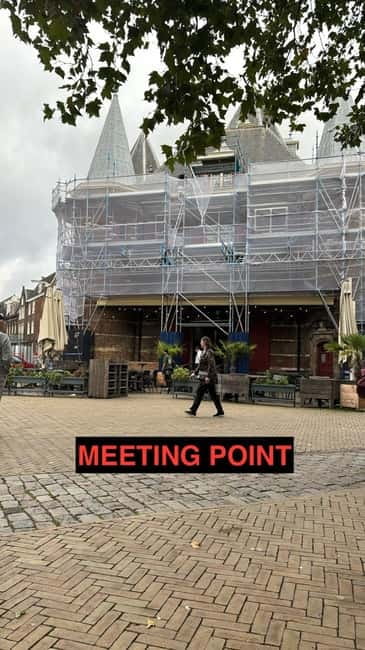
The tour begins at De Waag, the historic building in the center of Nieuwmarkt. It looks a little like a small castle, so it is hard to miss once you are in the square.
Look for the guide wearing a red name tag around the neck. Take care with navigation apps: the directions can lead you to the back of the building. If you find the coffeeshop called Jolly Joker, you are on the wrong side. Walk around De Waag to reach the entrance of the restaurant.
Nieuwmarkt is a useful starting point because it places you in a busy, central part of Amsterdam before the tour moves into quieter and more reflective streets. Arrive with a few minutes to spare. A city square with trams, bikes, pedestrians, and cafés is not the place to be hunting for a meeting point at the last second.
The exact route information lists the final stop as the National Holocaust Names Monument, while the meeting details say the activity ends back at the meeting point. Since those details do not perfectly match, check the instructions supplied with your booking for the final return arrangement.
Nieuwmarkt and Zuiderkerk: setting the neighborhood
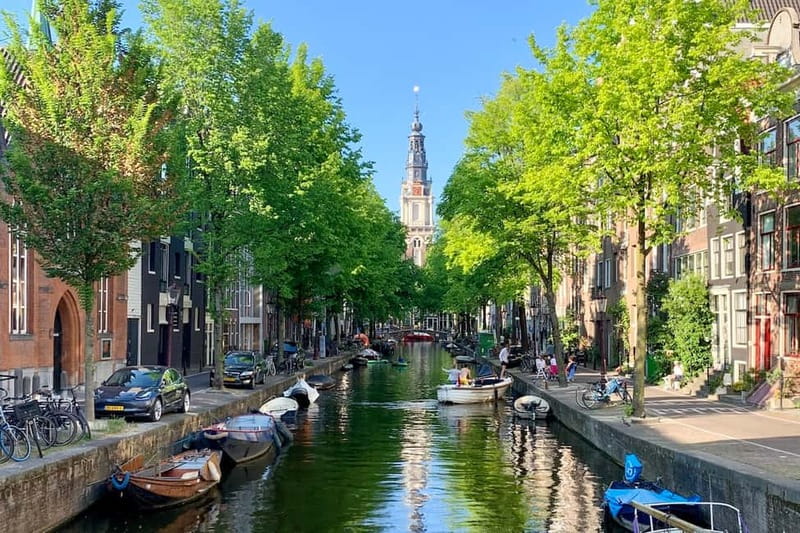
The first guided stop is Nieuwmarkt Square, followed by Zuiderkerk, the South Church. Each receives about ten minutes of explanation.
Here, the guide begins laying out the geography of the old Jewish Quarter. The area grew after Jews expelled by the Spanish Inquisition settled in Amsterdam. Over time, Jewish residents helped turn the city into a major commercial center, and their presence shaped streets, homes, religious buildings, and business life.
This opening matters because it gives you context before the wartime story begins. You are not simply walking from one memorial to another. You are learning what was here before persecution destroyed so much of the community.
The short stop at Zuiderkerk also shows the mixed nature of the neighborhood. Jewish and non-Jewish residents lived close together, and famous figures such as Rembrandt had homes in the quarter. Your guide may use the church and surrounding streets to explain how the neighborhood developed and why Jewish residents chose this part of Amsterdam.
Huis de Pinto and the old Jewish Triangle

At Huis de Pinto, the tour pauses for about five minutes. The stop is brief, but it helps connect the grander buildings with the people who once lived in this part of the city.
The route moves through the area associated with the Jewish Triangle, one of the best-known sections of the Jodenbuurt. Look for small details that are easy to pass without a guide: stately homes, former boundaries, commemorative stones, and traces of a community that was almost erased.
This is one reason a walking tour works better than a general city sightseeing loop. A bus can show you Amsterdam’s major sights, but it cannot easily explain a Stolperstein beneath your feet or the meaning of a gate connected with the old plague cemetery.
More Anne Frank and Jewish Quarter walks:
- Amsterdam: Anne Frank Guided Small Group Walking Tour
★ 4.8 · 2,722 reviews - Anne Frank Walking Tour Amsterdam Including Jewish Cultural Quarter
★ 5.0 · 1,879 reviews - Anne Frank’s Last Walk & See Anne Frank House in Virtual Reality
★ 5.0 · 957 reviews - Anne Frank and Jewish Quarter Amsterdam Private Walking Tour
★ 5.0 · 684 reviews
Rembrandt House: Jewish Amsterdam and shared city life
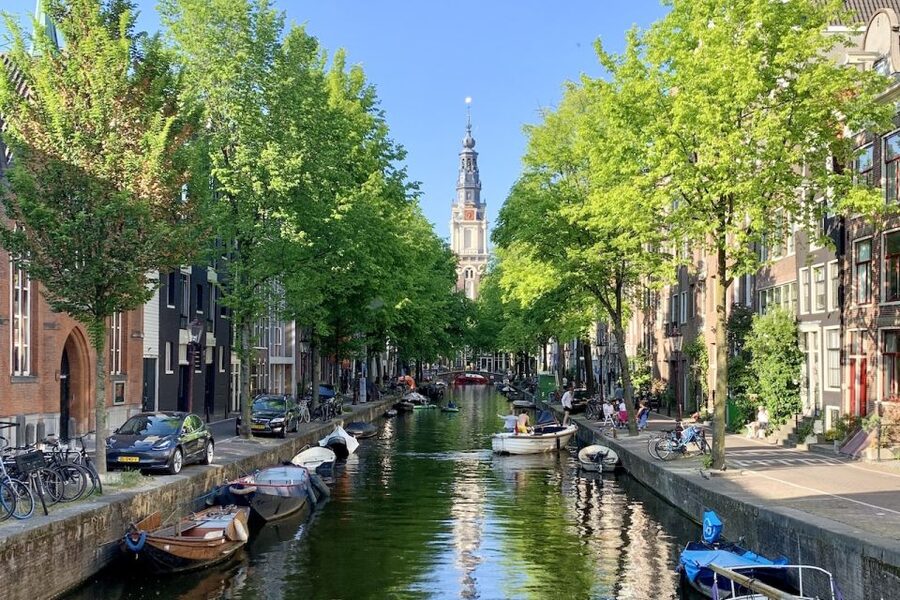
The Rembrandt House receives about fifteen minutes. You do not enter the museum as part of the tour, and there is no admission charge at the stops.
Instead, the guide uses the house and its setting to discuss Rembrandt’s connection with the Jewish Quarter. This is a useful reminder that the district was not sealed off from the rest of Amsterdam. Jewish life and wider Dutch life met here in homes, workshops, markets, and public streets.
The stop also adds variety. A tour focused only on wartime suffering can become emotionally heavy very quickly. The Rembrandt connection offers a look at the neighborhood’s social and cultural life before the destruction of the Holocaust.
Sint Antoniesluis and the Portuguese Synagogue
At Sint Antoniesluis, expect around ten minutes of guided explanation. This section of the route helps you read Amsterdam as an old working city, where canals and locks were tied to trade and daily movement.
The Portuguese Synagogue is one of the major visual highlights. The tour includes a photo stop and about ten minutes of commentary. Its presence reflects the importance of the Portuguese Jewish community and the wealth that Jewish merchants helped create in Amsterdam.
You will not pay an admission fee during this walk, and the synagogue is treated as an exterior stop. If you want to explore religious buildings inside, you would need to arrange that separately and allow extra time.
I like this part of the route because it keeps the story from becoming only a record of loss. The synagogue points to faith, trade, architecture, and community life. Then the guide brings you back to the destruction caused by Nazi rule, making the later memorials more painful and more understandable.
Jewish Historical Museum and the wider wartime story
The tour next passes the Jewish Historical Museum, with about five minutes of guided explanation. Again, this is an exterior-oriented walking route rather than a museum visit.
If you have not studied Amsterdam’s Jewish history, this stop helps explain how the city remembers and presents that past today. The guide also discusses the Jewish community in modern, multicultural Amsterdam, so the tour does not end with 1945.
That present-day connection is easy to miss on a standard memorial walk. You learn that Jewish Amsterdam is not only a subject from the past. It remains part of the city’s culture and public life.
Auschwitz Monument: grief in a public space
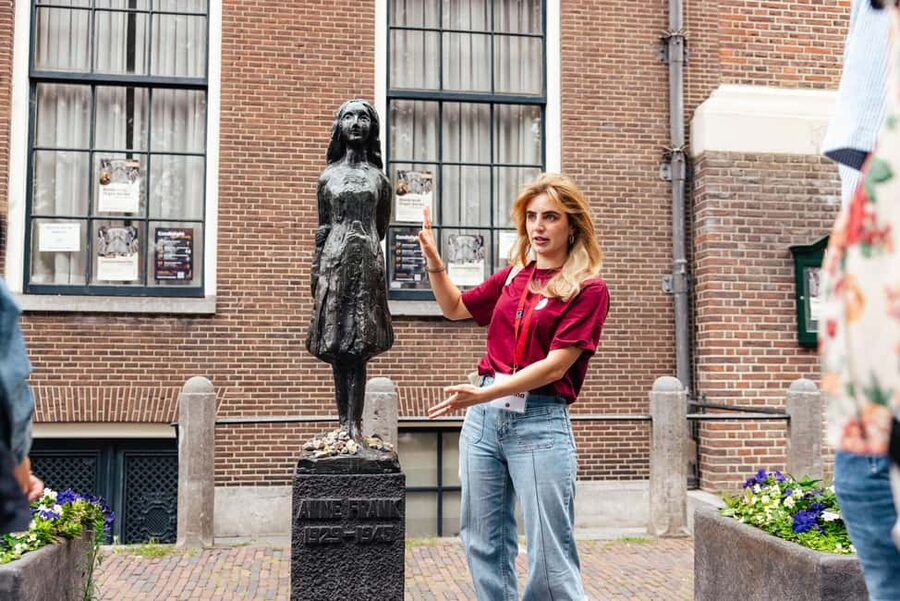
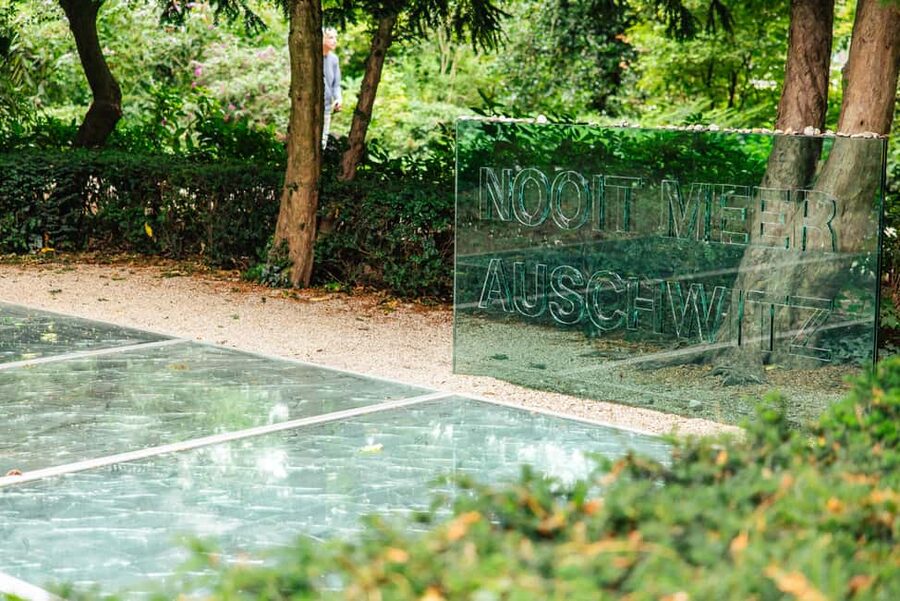
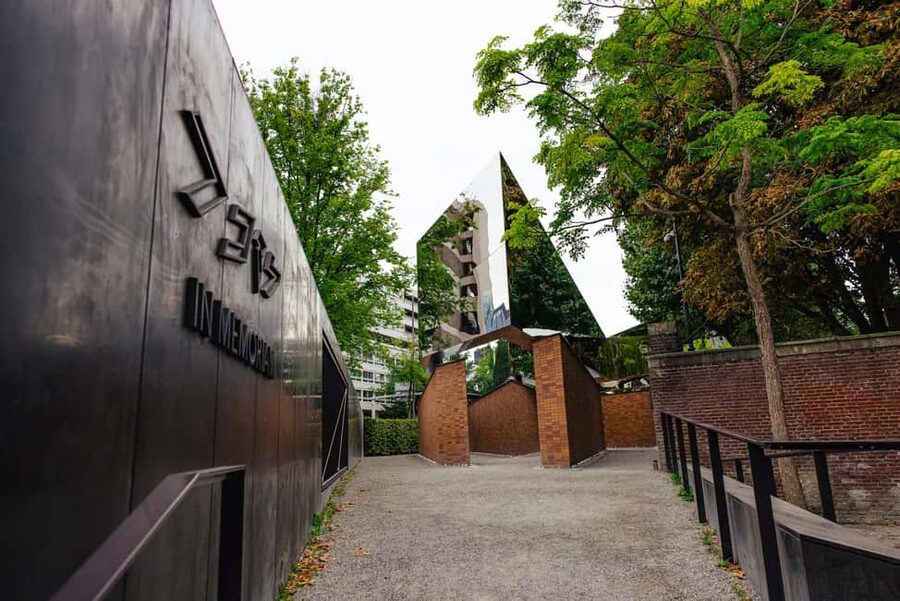
The Auschwitz Monument receives about ten minutes. This is one of the tour’s most difficult stops, and the guide connects it to the deportation and murder of Amsterdam’s Jewish population during World War II.
Anne Frank’s diary passages are especially effective here. Her writing gives you one young person’s thoughts and fears, while the monument points to the thousands who were deported and the very small number who returned.
A good guide has to manage this contrast carefully. Valentina is praised for reading diary extracts in excellent English and linking them to the places along the route. Lili is also noted for making Anne’s story come alive through passages from the diary. Those readings are not decoration. They help you pause and listen instead of treating the memorial as another photo stop.
Bring a respectful frame of mind. This is not a light sightseeing walk, and the subject matter can be upsetting.
The Dokwerker and the February Strike
At The Dokwerker, the tour pauses for about five minutes. This statue commemorates resistance to Nazi persecution, especially the February Strike of 1941.
The strike was a major act of protest by Amsterdam workers against the persecution and deportation of Jews. The tour uses this moment to show that local people did not all accept Nazi policies quietly.
That distinction is valuable. The history includes cowardice, collaboration, fear, and loss, but it also includes courage. You hear about Jews and non-Jews who resisted and saved lives while putting their own lives at risk.
This part keeps the tour from presenting Amsterdam as a simple story of victims and villains. Resistance was dangerous and difficult, yet it happened. The guide’s job is to explain that complexity without losing the human scale of the subject.
The National Holocaust Names Monument
The final major stop is the National Holocaust Names Monument, where the tour allows about fifteen minutes and includes a photo stop.
This is a place for names rather than general statistics. After hearing about Amsterdam’s Jewish community, Anne’s family, deportations, and resistance, the wall of names gives the history a direct, physical weight.
The route ending here makes sense emotionally. You have moved from the old neighborhood and its daily life to the monuments that record its destruction. The final stop also provides time to reflect instead of rushing straight into another busy square.
If you want photographs, keep them quiet and respectful. This is a memorial, not merely an architectural attraction.
The guides and the way the story is told
The strongest part of this experience is the guiding. The tour depends less on entering buildings and more on how well each stop is explained.
Several guides receive specific praise:
- Valentina is noted for passion, excellent English, and well-chosen diary excerpts.
- Josh is praised for patience, personal insights, pictures, and a warm manner.
- Julia is described as respectful, clear, and very well prepared.
- Emilia is noted for detailed World War II explanations and thoughtful answers.
- Deborah provides useful background on the Jewish Quarter, Nazi occupation, and Dutch life.
- Bianca brings emotional warmth and answers difficult questions with ease.
- Charlotte keeps the group away from the most crowded areas and presents the material clearly.
- David is praised for a well-paced walk and beautifully read diary passages.
Your guide will depend on the date and language you select, so do not book on the assumption that one specific person will lead your departure. Still, these repeated strengths tell you what to expect: a structured story, room for questions, diary readings, and a guide who takes the subject seriously.
The tour is offered in English, German, Italian, or Spanish. It is not bilingual. Select the language you want when booking, especially if your group includes people with different language needs.
Price, walking effort, and practical value
At $28 per person, this is a reasonable price for a two-hour guided walk through central Amsterdam. You pay for the guide’s explanation and route design rather than for admission tickets. The sights visited during the walk are free, but food, drinks, and entry to the Anne Frank House are not included.
I see the value in this tour if you want a clear introduction to Amsterdam’s Jewish Quarter. A guide can point out Stolpersteine, explain why the neighborhood formed where it did, and connect a canal, house, synagogue, or monument to a larger story.
The price is less compelling if you mainly want to enter historic buildings. This tour does not include the Anne Frank House, the Jewish Historical Museum, or the Portuguese Synagogue as interior visits.
Plan on 2 to 3 kilometers of walking. The pace appears manageable, and one guide is praised for making an unscheduled bathroom stop, but this is still a street tour. Wear shoes you can walk in for two hours, carry water, and bring an umbrella or rain jacket. The tour runs in all weather.
Wheelchair access is listed, but Amsterdam’s streets and weather can still affect comfort. If you need specific accessibility arrangements, ask before booking.
Free cancellation is available up to 24 hours before the tour, and you can reserve now and pay later. A private group option is also available, which may suit families or groups that want more control over the pace and questions.
Who should book this Amsterdam walk?
I would choose this tour for a first visit to Amsterdam if you want historical context before exploring the city on your own. It is also a good fit for anyone who has read Anne Frank’s diary and wants to place her story within the wider Jewish community.
Families with older children may find the route meaningful, though parents should decide if the Holocaust material is suitable for their children. The walking distance is modest, but the emotional subject is not.
This is less suitable if your priority is the Anne Frank House itself. Buy a separate entry ticket if that is your main goal, and do not expect this walk to provide access or a view of the building.
I also recommend it for visitors who prefer a small-group feel and direct conversation with a guide. The route has fixed stops, but the strongest guides leave room for questions and discussion. That personal exchange can make a major difference when dealing with a complicated subject.
Should you book it?
Book this tour if you want a thoughtful outdoor introduction to Jewish Amsterdam, with Anne Frank’s diary used as a thread rather than the entire story. The route covers major memorials, Jewish landmarks, resistance history, and present-day context in two hours, with no entrance fees and a moderate price.
Skip it if you want indoor sightseeing, a relaxed café-style outing, or Anne Frank House entry. For everyone else, the combination of place, diary readings, and strong guides such as Valentina, Josh, Julia, Emilia, and Deborah makes this a worthwhile way to understand a part of Amsterdam that deserves more than a quick photograph.
FAQ
Does the tour visit the Anne Frank House?
No. The Anne Frank House is not visited or seen during this walking tour, and entry is not included.
How long is the walking tour?
The tour lasts two hours. The route covers about 2 to 3 kilometers.
Which languages are available?
You can choose English, German, Italian, or Spanish. The tour is conducted in one selected language and is not bilingual.
Where does the tour start?
Meet at the entrance to the restaurant De Waag, in the historic De Waag building at the center of Nieuwmarkt. Look for the guide wearing a red name tag.
Is the tour wheelchair accessible?
Yes, the activity is listed as wheelchair accessible. Ask the provider about your specific needs before booking.
What should I bring?
Wear comfortable shoes, bring water, and dress for the weather. The tour operates in all weather, so bring an umbrella if rain is expected.
Just added around Amsterdam
- From Amsterdam: The Hague Private Trip and Mauritshuis Entry★ 4.3 · 4 reviews
- VIP Private Full Day Tour of the Netherlands★ 4.8 · 6 reviews
- Amsterdam Old-West Vegan Food Tour with Local Guide★ 4.7 · 3 reviews
- Amsterdam: Van Gogh Museum Guided Tour★ 4.8 · 262 reviews
- Van Gogh Museum Private Guided Tour★ 4.2 · 10 reviews
- Vecht River: Full-day Cruise with Lunch★ 4.8 · 9 reviews
- Van Gogh and Rijksmusuem Tour: Small Group Tour with Entry★ 4.7 · 3 reviews
- Amsterdam: Van Gogh Museum Ticket & Guided Tour★ 4.4 · 187 reviews
Anne Frank Walking Tours, compared.

Anne Frank’s Story – Guided Walking Tour through Amsterdam
Read our review →
Life of Anne Frank and World War II Walking Tour
Read our review →
Anne Frank Walking Tour Amsterdam Including Jewish Cultural Quarter
Read our review →
Anne Frank’s Last Walk & See Anne Frank House in Virtual Reality
Read our review →
Anne Frank and Jewish Quarter Amsterdam Private Walking Tour
Read our review →
Browse the lists this tour appears in