
Reviewed · WALKING TOURS
Absolutely Amsterdam – the Essential Introductory Walking Tour
Amsterdam’s story comes together on foot, from the old harbor and Red Light District to the canals, Jewish Quarter, and Royal Palace. This tour is less about entering famous buildings and more about understanding how water, trade, religion, and tolerance shaped the city.
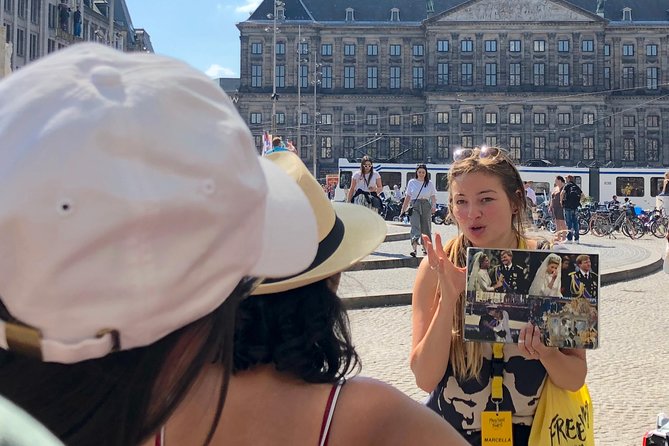
I like the broad route and the easy pace. I also like the way the guides use maps, painting copies, photos, and personal stories to make complex subjects clear. The main drawback is that most stops are outside, so weather matters, and you should not expect admission to the hidden church or other interiors.
Key things to know before you book

- A full old-center route: Cover Amsterdam’s main sights in about two and a half hours without using public transport.
- History with some edge: The tour connects the Red Light District, drug policy, slavery-era trade, war, religion, and monarchy.
- Guides who bring personality: Past guides have included Jaap, Raymond, Sergio, David, Gianni, Roman, and others.
- Useful for first days: The route helps you get your bearings and gives you ideas for places to revisit.
- Small-group format: The group is limited to 15 people, which should make questions and guide interaction easier.
- Very low upfront cost: The listed price is $5.93 per person, with the option to tip according to the value you feel you received.
Why this works as an Amsterdam first look
Amsterdam can feel confusing at first. The canals curve away from the center, bicycles appear from every direction, and the city’s famous sights sit close together without always explaining their own stories.
This walk gives you a framework. You learn why the city grew where it did, how commerce shaped its buildings, how religious tolerance worked in practice, and why Amsterdam’s modern reputation includes both liberal policies and serious social problems.
The route also has a useful balance. It does not treat Amsterdam as a collection of pretty canal views. You get architecture and art, but also the difficult parts of the past, including the colonial trading system, Nazi occupation, the destruction of Jewish Amsterdam, and the continuing problems around prostitution and drug policy.
The pace is one of the strongest features. Several people describe it as manageable, with the walk taking around two hours in practice, though the scheduled duration is approximately two hours and 30 minutes. You will cover a fair stretch of the center, so comfortable shoes are a smart choice.
The group limit of 15 matters here. Amsterdam’s old streets can be tight and noisy, especially around the Damrak and Red Light District. A smaller group is easier to keep together and gives you a better chance to hear the guide.
More Walking Tours in Amsterdam
- Anne Frank’s Story – Guided Walking Tour through Amsterdam
★ 5.0 · 11,619 reviews - Amsterdam: Life of Anne Frank and World War II Walking Tour
★ 4.8 · 10,467 reviews - Amsterdam: Anne Frank Guided Small Group Walking Tour
★ 4.8 · 2,722 reviews
Beurs van Berlage and the city built on water
The walk begins at Freedam Tours, Beursplein 5, near the Beurs van Berlage. This is a strong starting point because the area helps explain Amsterdam’s basic setup.
The exchange buildings sit where the Amstel River once flowed toward the old harbor. Here, the guide links the city’s origins to water, shipping, and finance. You are not simply looking at an attractive historic building. You are learning why this particular spot helped Amsterdam grow into a major commercial center.
Allow about 20 minutes for this opening section. It sets up themes that return later: trade, urban planning, canals, and the close relationship between money and public life.
Damrak and the holy and profane city
The Damrak was once part of Amsterdam’s harbor. Today, it is one of the city’s most photographed streets, but its past is more complicated than its canal houses suggest.
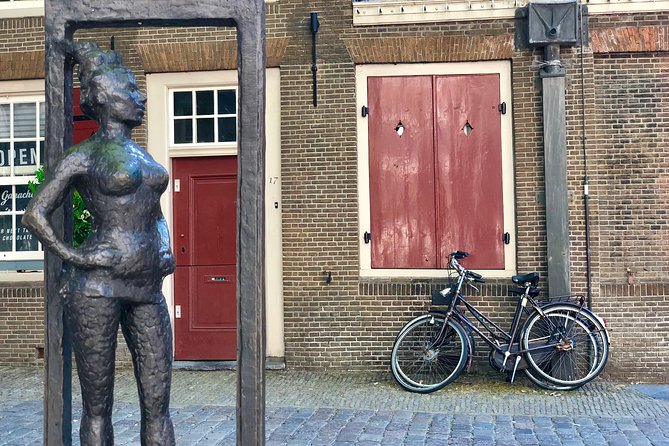
The guide explains how the Red Light District developed, including the role of the Church and the unusual ways religious institutions and commercial activity operated side by side. The discussion also covers prostitution in the 20th and 21st centuries, including why it became a legal profession and how the neighborhood has changed.
This is useful context before you explore the district on your own. Amsterdam’s liberal image can be easy to oversimplify. The stop gives you a chance to consider the gap between legal status, public image, worker safety, tourism, and neighborhood pressure.
You spend about 15 minutes here. It is a busy part of the city, and bicycles, pedestrians, and narrow streets can make it harder to stay focused. The guide’s commentary is the main attraction, not a long pause at one monument.
Our Lord in the Attic and practical tolerance
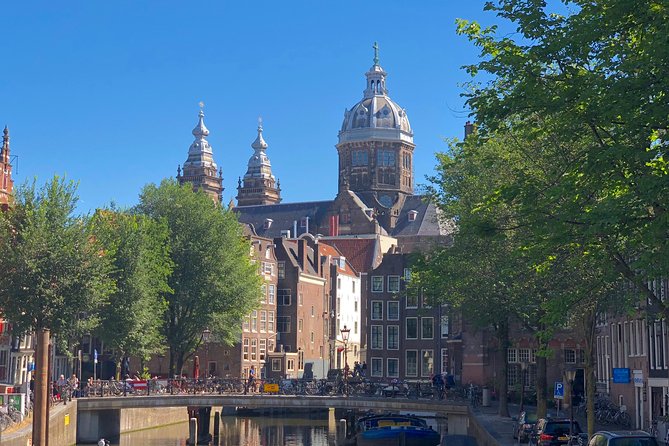
At the Museum Ons’ Lieve Heer op Solder, also known as Our Lord in the Attic, you discuss the position of Catholics after Catholic worship became illegal in the 17th century.
The key point is that tolerance was not simple permission. Catholic worship could be tolerated under specific conditions, and hidden churches developed as a result. The tour draws a line between this earlier system and the meaning of tolerance today.
You do not enter the museum or hidden church on this walk. You see the building from outside and use pictures of the interior. That keeps the tour inexpensive, but it also means you will not experience the remarkable rooms firsthand. If this museum interests you, mark it for a separate visit.
A few more days out around Amsterdam worth weighing up
- Amsterdam: Van Gogh Museum Ticket
★ 4.7 · 52,054 reviews - Amsterdam Classic Saloon Boat Cruise with Drinks and Cheese
★ 5.0 · 31,825 reviews - Amsterdam Luxury Canal Cruise + Unlimited Drinks & Bites option
★ 5.0 · 30,518 reviews - Amsterdam: Heineken Experience Ticket
★ 4.6 · 30,055 reviews
Chinatown and the roots of coffeeshop policy
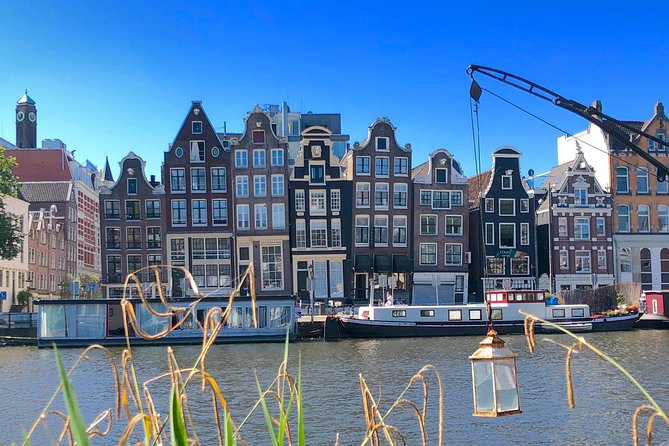
The Chinatown stop shifts the focus to Dutch drug policy. You learn how the area became associated with crime and was considered a no-go zone in the 1970s, and how that period helped spark the rise of coffeeshops selling marijuana.
This is a good example of the tour’s wider approach. Instead of presenting Dutch policy as a quirky tourist fact, the guide connects it to urban problems, attempts at regulation, and changing public attitudes.
The stop lasts about 15 minutes and requires no admission ticket. Keep in mind that the subject is part of a broader explanation of Amsterdam. This is not a visit to a coffeeshop, and the activity does not promise any related purchase or tasting.
The Waag and Rembrandt’s breakthrough
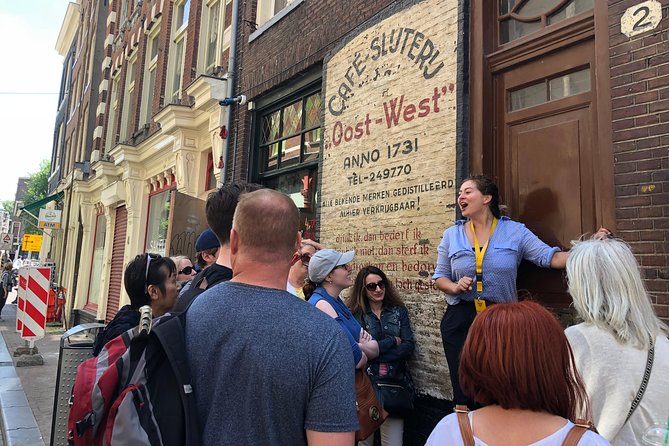
The Waag offers a shorter art-focused stop. Here, the guide explains where Rembrandt painted his first major work and why that painting changed portrait-making.
A copy of the painting is used to point out details. That small teaching tool is valuable because looking at a famous work from a distance often leaves you with only a name and a date. A visual aid lets you follow the guide’s explanation and see what made the composition important.
The stop lasts around 10 minutes. Admission is not included, and the itinerary does not say that you enter the building. Treat this as an outdoor history and art lesson rather than a museum visit.
Oostindisch Huis and Amsterdam’s global trade
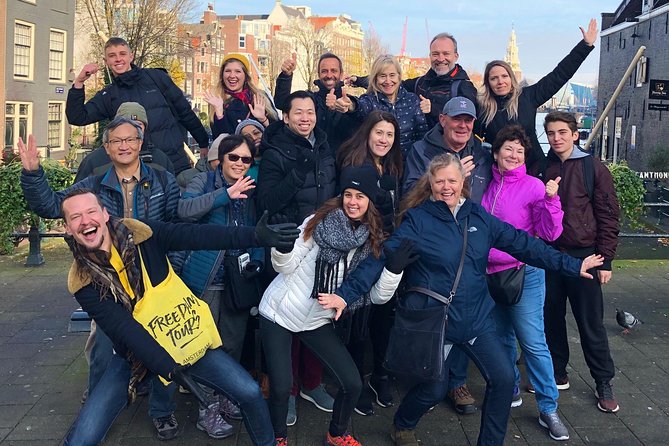
One of the most revealing stops is Oostindisch Huis. On weekdays, the group can access a 17th-century courtyard inside the building. The timing matters because this part may not be available on weekends.
The guide explains how Amsterdam became the center of a global trading empire during the period often called the Golden Age. This was when the city became one of the wealthiest places in the world, and Oostindisch Huis served as the headquarters of the Dutch East India Company.
The tour connects this corporation to the beginnings of modern capitalism. Just as important, it does not present commercial success as a clean triumph. The guide addresses the darker side of this period, giving you a more honest view of how wealth was created and who paid the price.
This section is especially helpful if you want more than pretty buildings and royal anecdotes. It provides a direct link between Amsterdam’s historic prosperity and the wider world.
Waterlooplein and the destroyed Jewish Quarter
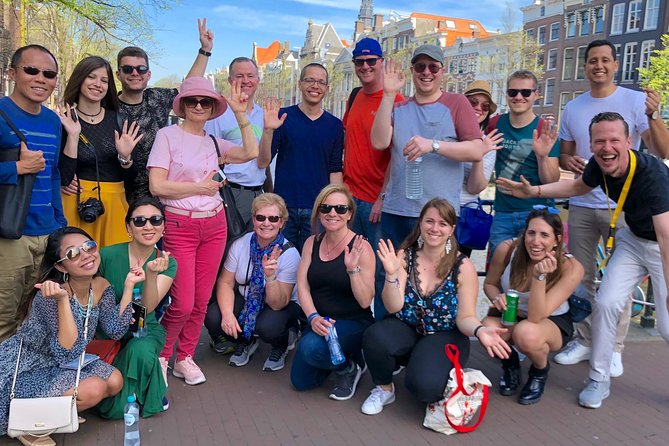
At Waterlooplein Market, the subject turns to Amsterdam’s former Jewish Quarter and the devastation of the Second World War.
The market is described as Amsterdam’s oldest. Its setting is important: the surrounding Jewish neighborhood was almost entirely destroyed by the end of the war. The guide explains the effects of Nazi occupation, the destruction of Jewish life, and the difficult choices Amsterdammers faced during the final hunger winter.
This is one of the heavier parts of the walk, and rightly so. Amsterdam’s reputation as a safe haven for persecuted Jewish people from across Europe makes the later destruction especially painful to understand.
The stop lasts about 15 minutes. You will not get a full museum treatment of the war, but you do receive a compact explanation of how the neighborhood, the occupation, and survival during wartime connect.
The Amstel and the logic of canal houses
At the Amstel, or at another canal if weather or the guide’s judgment calls for a change, the tour returns to Amsterdam’s built environment.
You learn why the city has canals and why the canal houses are so narrow. The guide also explains their tendency to lean, the hooks attached to many buildings, and the Dutch habit of leaving curtains open.
These details may sound light after the war section, but they are useful. They help you read the city as you walk. Instead of seeing a row of attractive houses, you begin to notice how practical needs, taxes, construction methods, and household customs shaped the streetscape.
Because the exact canal location can change, this part is flexible. It is also weather-sensitive. Amsterdam’s rain and wind can affect an outdoor walk, so bring suitable clothing rather than relying on a pleasant forecast from breakfast.
Oudemanhuispoort and the Dutch bicycle habit
Oudemanhuispoort is a former monastery that later became a hospital and now forms part of the University of Amsterdam. It is a quieter and harder-to-find setting than the main squares, which gives the walk a welcome change of pace.
Here, the guide explains Dutch cycling culture, including why Amsterdam has more bicycles than people and why many bikes are practical rather than polished.
The subject is not just a fun urban fact. Cycling affects how you move through Amsterdam. You need to understand the difference between walking space and cycle space, and you need to stay alert. One guide specifically warned that dodging bicycles can be challenging, although that is part of doing almost anything in the city center.
This is a 10-minute stop, but it may save you frustration for the rest of your visit.
Dam Square and the road to monarchy
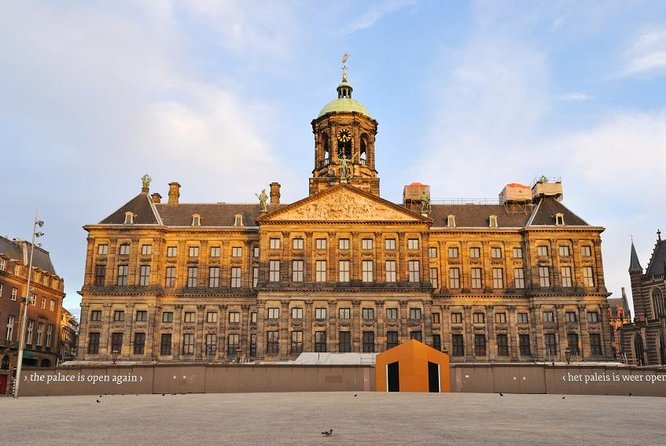
The final major stop is the Royal Palace Amsterdam on Dam Square. The guide explains the unusual transition from a Dutch republic to a monarchy and introduces the current royal family with photographs.
There is also room for lighter royal gossip, which helps keep the final section from becoming too formal. The palace itself is not included, so you should not book this walk expecting an interior visit.
The tour is described as ending at Dam Square. The meeting details also state that the activity ends back at the meeting point, so check the final location when booking if that distinction matters for your plans.
Dam Square is a practical finish. From here, you can continue into other central sights, return toward the station, or use the guide’s suggestions to plan the rest of your stay.
Price, guide style, and the real value
At $5.93 per person, this is an unusually inexpensive way to spend a morning or afternoon in central Amsterdam. The low price is tied to the tip-based format, so the amount you pay upfront does not represent the full expected value of the guide’s work.
I like this model for budget planning because you can decide what the experience was worth to you. The tradeoff is that the final cost is less fixed than a standard paid tour.
Guide style appears to vary, but the strongest pattern is clear: humor, local insight, and strong storytelling matter as much as dates and names. Guides named in the tour feedback include Jaap, Raymond, Sergio, David, Gianni, Esi, Fernando, Roman, Ramses, Alexander, Sebastien, Samuel, Dani, Carl, and others.
You may receive maps, photographs, painting copies, or other visual aids. Some guides bring personal experience, and Raymond is described as a lifelong local. Roman is noted for adding quintessential Dutch food to his explanations, though you should not assume that food is included on every departure.
The overall rating is 4.9 from 3,629 ratings, and 98 percent of customers recommend the activity. Those figures suggest a reliable experience, but the guide assigned to your departure will shape the mood and depth.
Who should book this walk
I would choose this tour for a first visit, especially if I wanted to understand the city before choosing museums and neighborhoods to explore in more detail.
It also suits repeat visitors. The route covers familiar sights, but the explanations about trade, religion, war, art, and cycling can add meaning even if you have already seen the canals and Dam Square.
You should be comfortable walking for up to two and a half hours. Wear good shoes, carry water, and expect to spend most of the time outside. The tour is offered in English, service animals are allowed, and most people can participate.
This is less suitable if you want extended museum visits, a highly specialized art tour, or a private experience. The itinerary moves through many subjects, so each topic receives a focused introduction rather than a long academic treatment.
Should you book Absolutely Amsterdam?
Book it if you want a low-cost, broad introduction to Amsterdam with a guide who can make the city’s difficult and amusing stories easy to follow.
The tour gives you more than a checklist of landmarks. You will see how finance, faith, colonial trade, war, drug policy, bicycles, and monarchy all fit into the city’s story. That range is its biggest strength.
Skip it if rain, crowds, or outdoor walking will spoil your day, or if you mainly want to enter historic buildings. For most first-time visitors, though, it is a practical way to get your bearings early in a stay and decide what deserves a closer look later.
Free cancellation is available up to 24 hours before the start time for a full refund. Cancellations or changes within 24 hours are not refunded or accepted, and the activity requires a minimum number of participants.
FAQ
How long is Absolutely Amsterdam?
The tour lasts approximately 2 hours and 30 minutes.
What language is the tour offered in?
The tour is offered in English.
How much does the tour cost?
The listed price is $5.93 per person. It is a tip-based experience, so you may tip according to how much value you feel you received.
Where does the tour start?
The meeting point is Freedam Tours at Beursplein 5, 1012 GZ Amsterdam, Netherlands.
Where does the tour end?
The route description says the tour ends at Dam Square. The booking details also state that the activity ends back at the meeting point, so confirm the final location when arranging your plans.
Does the tour enter Our Lord in the Attic Museum?
No. The group sees the building from outside and uses pictures of the hidden church interior. Admission is not included.
Does the tour enter the Royal Palace Amsterdam?
No admission to the Royal Palace is included.
Is the Oostindisch Huis courtyard always accessible?
The courtyard is accessible only on weekdays. Access may not be available on weekend departures.
How many people can join the tour?
The maximum group size is 15 people.
Can I cancel for a full refund?
Yes. You must cancel at least 24 hours before the experience start time. Cancellations made less than 24 hours before the start time are not refunded.
Just added around Amsterdam
- From Amsterdam: The Hague Private Trip and Mauritshuis Entry★ 4.3 · 4 reviews
- VIP Private Full Day Tour of the Netherlands★ 4.8 · 6 reviews
- Amsterdam Old-West Vegan Food Tour with Local Guide★ 4.7 · 3 reviews
- Amsterdam: Van Gogh Museum Guided Tour★ 4.8 · 262 reviews
- Van Gogh Museum Private Guided Tour★ 4.2 · 10 reviews
- Vecht River: Full-day Cruise with Lunch★ 4.8 · 9 reviews
- Amsterdam: Van Gogh Museum Ticket & Guided Tour★ 4.4 · 187 reviews
- Van Gogh and Rijksmusuem Tour: Small Group Tour with Entry★ 4.7 · 3 reviews
Walking Tours, compared.

Anne Frank’s Story – Guided Walking Tour through Amsterdam
Read our review →
Life of Anne Frank and World War II Walking Tour
Read our review →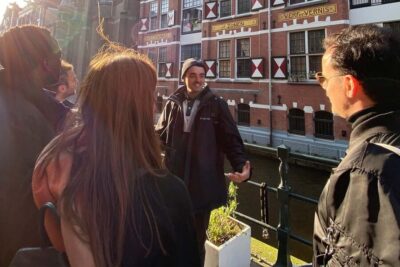

Anne Frank Walking Tour – Guided in EN/DE/IT/ES
Read our review →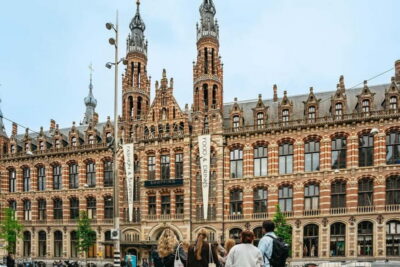

Anne Frank Walking Tour Amsterdam Including Jewish Cultural Quarter
Read our review →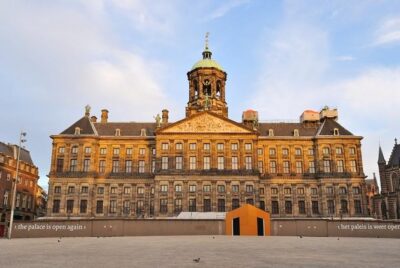
Amsterdam Highlights Walking Tour: Small Group Experience
Read our review →Browse the lists this tour appears in