
Reviewed · WALKING TOURS
Rotterdam Architecture Highlights Walking Tour
Rotterdam makes the most sense when you understand why it looks so different from other Dutch cities. This two-hour walk follows the city’s modern face, from the dramatic entrance of Rotterdam Centraal to the Cube Houses, Markthal, and the broad Maas waterfront. Your guide is a trained architect, so the buildings come with context, not just names and photo stops.
I like the route for two clear reasons: it connects design with the city’s rebuilding after World War II, and the small-group format gives you room to ask questions. Guides such as Tania and Silvia are also praised for adding practical restaurant tips and personal insight into present-day Rotterdam. The main consideration is the pace. This is a proper city walk, and one account measured close to 12,000 steps. You may also see the Cube Houses from outside rather than walk through them.
Key points before you book
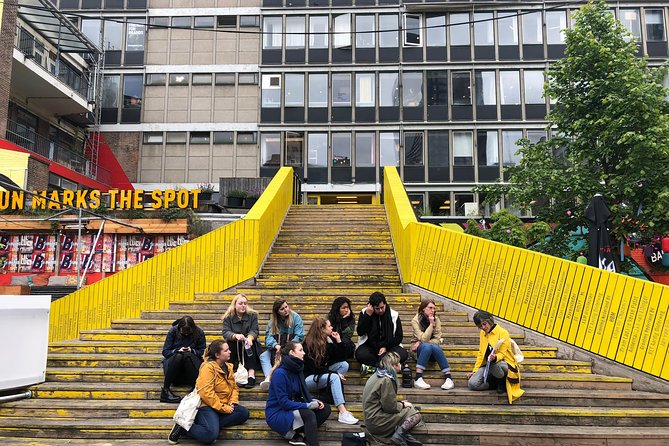
- A postwar city told through its buildings: The focus is Rotterdam’s reconstruction, not just architectural trivia.
- An architect leads the walk: Tania and Silvia are named guides associated with warm, adaptable explanations.
- The route crosses central Rotterdam: You start at Centraal Station and finish on the Maas at Boompjeskade.
- Small groups make a difference: The maximum is 15 people, and some departures may be much smaller.
- The Cube Houses may be a viewing stop: The route includes the area, but interior access is not guaranteed.
- Plan for weather and walking: The tour requires good weather, and the riverside can feel cold and windy.
Why Rotterdam needs an architecture walk
Rotterdam is not a city you fully understand by wandering without context. Its center was heavily damaged during World War II, and the rebuilding that followed gave planners a rare chance to rethink streets, public spaces, housing, offices, and transport.
That rebuilding is the thread running through this tour. You will look at buildings that are practical, experimental, symbolic, and sometimes controversial. Your guide also connects architecture with questions about public life, city politics, social activism, and how different structures serve the people who use them.
That wider approach is useful, though it may not satisfy you if you want a technical architecture lecture. One architect on the walk wanted more detail about construction methods and design mechanics, and found that the discussion sometimes moved toward social and political themes. I see that as a fair warning: this is an architecture-focused city tour, not a specialist course in structural engineering.
The best guides adjust their explanations to the group. Silvia is praised for adapting her material to different nationalities and interests, while Tania is described as particularly open to questions and current issues. That flexibility matters because Rotterdam’s buildings can look strange at first glance. A good explanation helps you see the choices behind the odd angles and oversized forms.
More Walking Tours in Rotterdam
- Rotterdam Walk: Hilights, Gems, Architecture & WWII | 2 or 3hrs
★ 5.0 · 149 reviews - Rotterdam: Highlights & Gems Walking Tour with Dutch Local
★ 5.0 · 133 reviews - Rotterdam 2-Hour Walking Tour | Discover The City With A Local
★ 4.5 · 111 reviews
Starting at Rotterdam Centraal Station
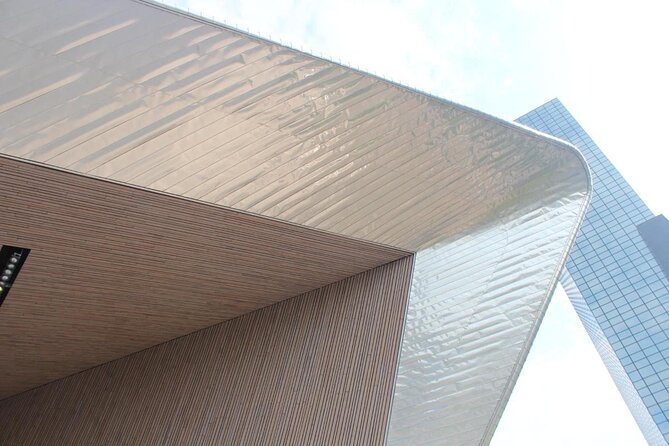
The tour begins at Rotterdam Central Station, where the building serves as the city’s modern front door. You spend about 10 minutes here, with no admission charge.
This is a smart starting point. You are not simply meeting beside a train station and hurrying away. The station introduces the visual language of the newer city, and it gives your guide a chance to set up the story of Rotterdam’s growth, destruction, and rebuilding.
The location is also practical. Rotterdam Centraal is easy to reach by public transport, making this a good first activity if you arrive from Amsterdam or another Dutch city. One person specifically found the tour worthwhile as a day trip from Amsterdam.
Take a moment to get your bearings before the group leaves. The station area is open and modern, and the walk quickly moves into the city center. The meeting point information can be confusing, however. The street address, map marker, and actual meeting place have not always appeared identical, so check the final directions carefully and arrive early.
Schouwburgplein and the city as public stage
The next stop is Schouwburgplein, described as Rotterdam’s cultural podium square. You spend around 10 minutes here.
The name gives you the idea. This is not just leftover space between buildings. It is a public setting tied to cultural life, and your guide uses it to discuss how open space works in a modern city. The square helps balance the tour’s focus on individual buildings by asking how people gather, move, pause, and share urban space.
The route also includes a postwar national monument, although the supplied details do not identify it by name or give a separate timing. Your guide will provide the relevant context on the day. That stop fits the larger theme: Rotterdam’s present form cannot be separated from the war and the national effort to rebuild.
This part of the walk may be especially useful if you enjoy city planning more than postcard architecture. You will hear about the ideas behind the spaces between buildings, not only the buildings themselves.
Timmerhuis and the OMA connection
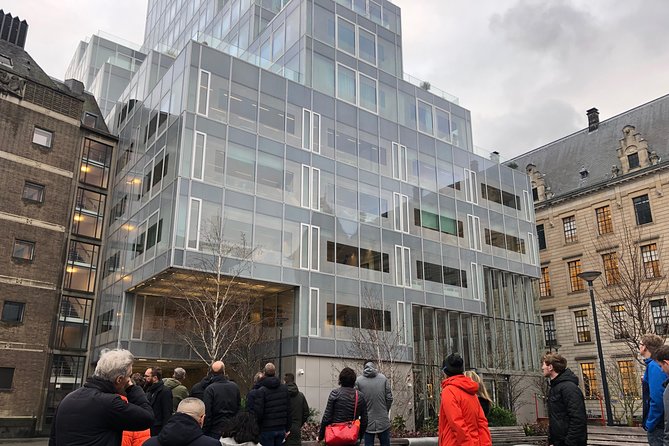
At Timmerhuis, the group pauses for about five minutes. This building is identified as an architectural icon designed by OMA, the Rotterdam-based practice known for bold, highly considered urban projects.
Five minutes sounds short, but the stop works as part of a moving sequence. Your guide can point out the building’s key visual and planning ideas before the group continues. If you want a long technical discussion of the design, ask your questions promptly.
This is one of the moments when an architect guide adds real value. A standard city walk might identify Timmerhuis and move on. An architect can explain how the building fits Rotterdam’s approach to new construction, city density, and the relationship between older and newer parts of the center.
You should keep your expectations in check. The tour is conducted outdoors, and the listed stops do not promise entry into the buildings. The value comes from seeing the structure in its urban setting and understanding what it says about Rotterdam.
A few more days out around Rotterdam worth weighing up
- Rotterdam: Harbor Sightseeing Cruise
★ 4.3 · 7,599 reviews - Rotterdam: 1-Hour Sightseeing Splash Tour
★ 4.5 · 3,299 reviews - Rotterdam: Rotterdam Zoo Blijdorp Entry Ticket
★ 4.6 · 2,754 reviews - Rotterdam: Euromast Lookout Tower Ticket
★ 4.4 · 2,549 reviews
Markthal, the most colorful pause
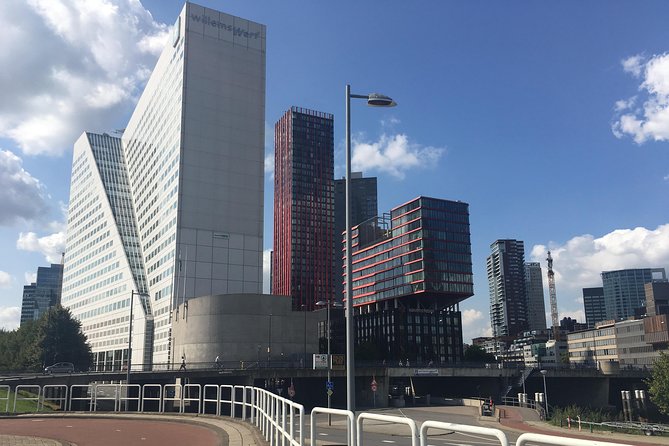
Markthal gets about 15 minutes, the longest stop in the central portion of the route. It is presented as an indoor market and one of the city’s most eye-catching modern structures.
This is an easy place to appreciate the tour even if you are not an architecture specialist. Markthal is visually bold, and the indoor setting gives you a short break from the weather. Your guide can link the building’s public market function with the city’s broader push to create new places for shopping, eating, and meeting.
You will also have a good photo opportunity here. The stop is brief, so do not expect a full meal or an extended shopping session. Treat it as a focused architectural visit within the walk, not a market tour.
The route also brings you toward the Cube Houses. They are one of Rotterdam’s best-known architectural statements, and the tour highlights them among its major sights. Here is the practical catch: access is not guaranteed. A participant found that the group passed the Cube Houses at a distance rather than walking through them, despite seeing them in the tour imagery.
If the Cube Houses are your main reason for booking, ask the guide at the start what the day’s route includes. You may get a close exterior view, but you should not assume that an interior visit is part of the two-hour program.
Boompjeskade and the Maas view
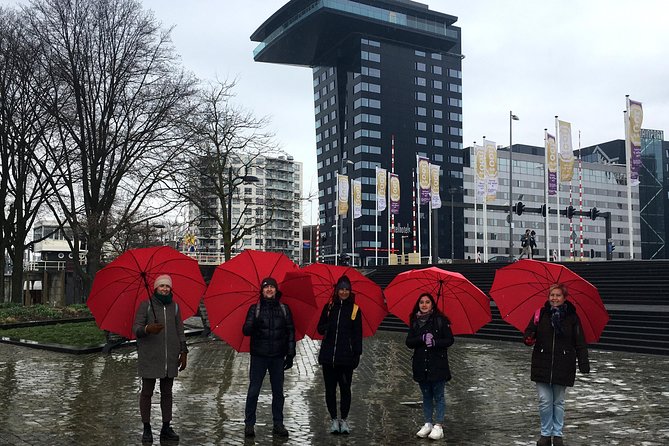
The walk ends at Boompjeskade, on the riverside. The stop lasts about 15 minutes and gives you a broad view across the Maas toward Rotterdam’s South Bank.
This finish changes the mood. After the tight concentration of central streets and unusual buildings, the river opens the view and lets you consider Rotterdam as a port city. You see how the modern center relates to the water and to the newer development across the river.
The riverside is also where weather matters most. One person described an icy breeze on a cold day, so bring a layer even if the forecast looks mild. The tour requires good weather, and the operator offers another date or a full refund if poor conditions cause cancellation.
Ending here can be convenient if you want to continue along the river afterward, but hotel pickup and drop-off are not included. You arrange your own way to the starting point and your own onward transport from Boompjeskade.
What the architect guide adds
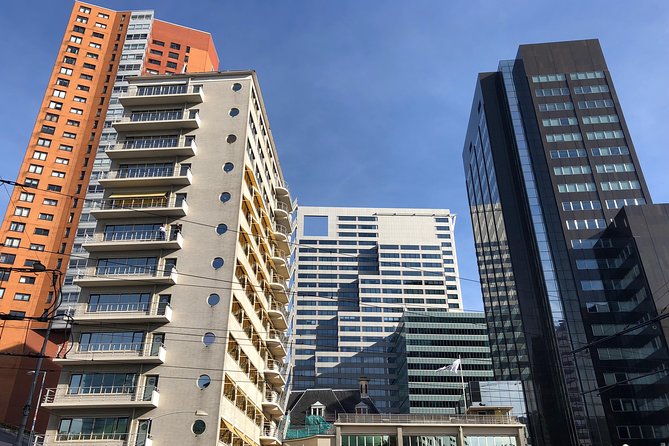
The guide is the heart of this experience. The advertised guide is a professional architect, and the named guides include Tania and Silvia. The guide may be multilingual, but the tour is offered in English, so confirm that the language suits you when booking.
The strongest part of the guiding style is the connection between buildings and daily life. Tania is praised for explaining how the city center was rebuilt after the war and for discussing challenges Rotterdam faces now. Silvia is described as clear, engaging, and willing to spend extra time answering individual questions.
That personal approach can turn a two-hour route into a much better introduction to the city. You are not just collecting building names. You are learning why Rotterdam accepted such experimental forms and how the city continues to debate its future.
The tour can also run with only two people if bookings are light. That may give you a near-private experience, with more freedom to ask questions and follow your interests. At the other end, the maximum group size is 15, still small enough for a personal exchange if everyone stays close.
Guides have sometimes extended the tour beyond two hours, including one occasion when an extra 30 minutes was spent with the group. Do not count on overtime, but it shows the benefit of an engaged guide and a flexible day.
Price, pace, and practical value
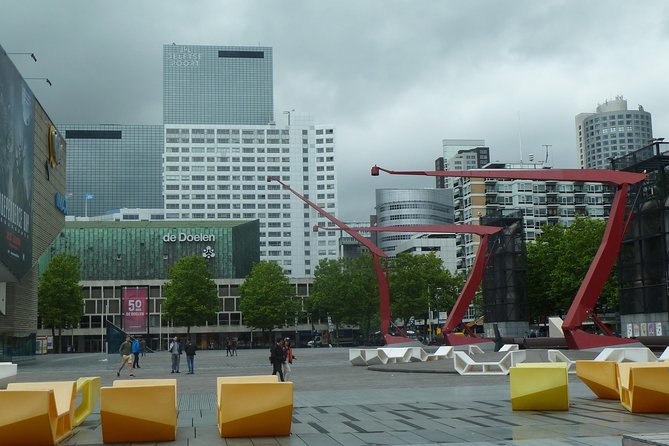
At $54.31 per person, this is not the cheapest way to see Rotterdam’s center. You are paying for a professional architect, a planned two-hour route, and interpretation that ties several major buildings into one story.
I think the price makes sense if you care about design, city planning, or the rebuilding of Rotterdam after World War II. It is also useful for a first visit because the walk gives you a framework for exploring independently afterward. Restaurant suggestions from the guide can add value, too.
The calculation changes if you mainly want quick photographs. You can see many of these buildings without a paid tour, and the admission cost at the listed stops is free. In that case, the fee pays for explanation and company, not entry tickets.
Give yourself more time than the nominal two hours. The route covers several central locations and can involve a great deal of walking. You need moderate physical fitness, and the walk may feel long if you are not used to city sightseeing on foot.
Wear shoes suited to pavement and dress for the forecast. The tour is outdoors for much of its duration, even though Markthal offers an indoor stop. Service animals are allowed, and the route is close to public transport.
The minimum age is 12, and at least two people are required per booking. Group discounts are available, which can improve the value for families or small parties who meet the age requirement.
Who will enjoy this route most
I would choose this walk if you like architecture but also want to understand the city behind the concrete and glass. It suits first-time visitors, design students, photographers, urban planners, and anyone curious about how a city rebuilds itself after disaster.
It is also a good match for a short Rotterdam visit. Starting at Centraal Station and ending at the Maas gives you a useful cross-section of the center without requiring a full day.
You may prefer another activity if you want old Rotterdam, traditional Dutch streets, or an interior-heavy tour. One participant wished the route had included the old area nearby. The advertised stops focus firmly on modern Rotterdam, so do not book this expecting a broad survey of every period in the city’s past.
I would also think twice if you dislike long walks, cold wind, or group tours. The maximum group is modest, but the experience remains a walking tour with a set route and limited time at each stop.
Should you book the Rotterdam Architecture Highlights Walking Tour?
Book it if you want Rotterdam explained by someone who works with architecture and can connect design to history, politics, and daily life. The 4.8 rating from 66 submitted evaluations and 97 percent recommendation figure support the idea that the guiding is the strongest part of the experience, especially with Tania or Silvia.
The best value comes when you ask questions. Before the walk begins, confirm how close the group will get to the Cube Houses and clarify the meeting point. If you do that, wear good shoes, bring a weatherproof layer, and expect a brisk city walk rather than a museum visit.
Skip it if your priority is entering buildings or seeing Rotterdam’s historic quarter. Choose it for the modern city, the postwar story, the OMA and Markthal stops, and the final Maas view.
FAQ
How long does the Rotterdam Architecture Highlights Walking Tour last?
The tour lasts approximately two hours. Guides may sometimes spend extra time with a group, but the scheduled duration is two hours.
Where does the tour start?
It starts at Rotterdam Central Station, 3013 AJ Rotterdam, Netherlands.
Where does the tour end?
The tour ends at Boompjeskade, 3011 Rotterdam, on the riverside.
What language is the tour offered in?
The tour is offered in English. The guide may be multilingual.
Which places are included on the route?
The route includes Rotterdam Centraal Station, Schouwburgplein, Timmerhuis, Markthal, the Cube Houses area, a postwar national monument, and Boompjeskade.
Do I enter the Cube Houses?
Interior access is not guaranteed. The route includes the Cube Houses among its highlights, but the group may view them from outside or at a distance.
How many people can join the tour?
The maximum group size is 15 people. A booking requires at least two people.
Is the tour suitable for children?
The minimum age is 12 years. Participants should also have a moderate level of physical fitness.
Can I cancel for a full refund?
Yes. You can cancel at least 24 hours before the local start time for a full refund. Cancellations or changes made less than 24 hours before the start time are not refunded or accepted. If poor weather cancels the experience, you are offered another date or a full refund.
Just added around Rotterdam
- Rotterdam: City Walk Audio Guide in 7 Languages on your Phone★ 3.5 · 6 reviews
- e-Scavenger hunt Rotterdam: Explore the city at your own pace★ 4.5 · 13 reviews
- Rotterdam Must Do Tour: Highlights, History, WW2 and Architecture★ 5.0 · 20 reviews
- Breda Fun Puzzle Quest: True Lord Self-Guided Tour★ 4.0 · 9 reviews
- e-Scavenger hunt Breda: Explore the city at your own pace★ 4.5 · 27 reviews
- Delfshaven Self-Guided Tour: A Guide to Rotterdam’s Old Town★ 5.0 · 4 reviews
- Skip the Line: SS Rotterdam Steam Ship Entrance Ticket★ 4.5 · 18 reviews
- Discover Rotterdam: Classic Highlights Bike Tour with a Local★ 5.0 · 22 reviews
Walking Tours, compared.

Anne Frank’s Story – Guided Walking Tour through Amsterdam
Read our review →
Life of Anne Frank and World War II Walking Tour
Read our review →
Absolutely Amsterdam – the Essential Introductory Walking Tour
Read our review →
Anne Frank Walking Tour – Guided in EN/DE/IT/ES
Read our review →

Anne Frank Walking Tour Amsterdam Including Jewish Cultural Quarter
Read our review →Browse the lists this tour appears in