
Reviewed · WALKING TOURS
Cultural Walking Tour in Rotterdam
Rotterdam is easiest to understand on foot, and this tour gives you a clear route through its boldest architectural ideas. You begin at the sleek Central Station, pass the rebuilt shopping streets and medieval Laurenskerk, then finish beside the Maas with the Erasmus Bridge ahead.
I like the architect-led storytelling, which connects buildings to wartime destruction, engineering, politics, and urban design. I also like the market stop at Markthal, where you can pause for a local snack at your own expense. The main drawback is that two hours can feel tight if you want long stops, museum visits, or plenty of time for photos.
This is a walking tour for curious first-time visitors, not a sightseeing bus ride with a list of names. Guides such as Tania and Sonia have been praised for making the rebuilt city easier to read, though the tour can sometimes run closer to two and a half hours.
Key points to know before booking
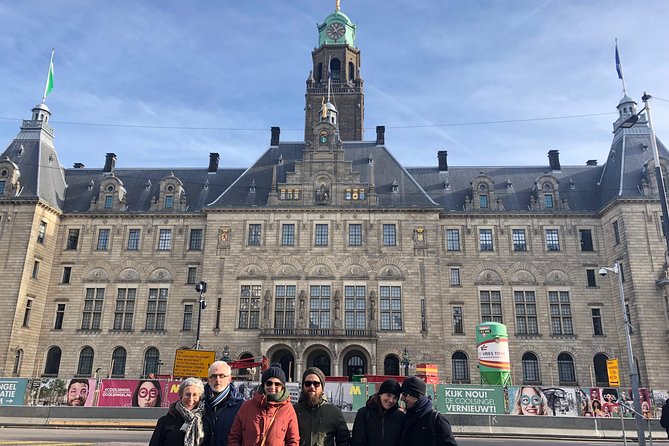
- The route crosses Rotterdam’s architectural story: You move from the modern Central Station through the Lijnbaan and old Laurenskerk to Markthal and the Maas.
- The guide shapes the experience: A local guide with architectural training explains why Rotterdam looks so different from many Dutch cities.
- The city’s wartime rebuilding is central: You learn how destruction and postwar planning produced Rotterdam’s modern identity.
- Markthal is a food stop, not an included meal: You may buy a snack, but drinks and food are not part of the price.
- The tour ends by the river: The finish at Boompjeskade gives you views of the Erasmus Bridge, other bridges, and newer development across the Maas.
- Plan for a real walk: You need moderate physical fitness, weather-appropriate clothing, water, and comfortable shoes.
Why Rotterdam makes sense on foot
Rotterdam can feel confusing at first. Its center does not offer the continuous run of old streets you find in Amsterdam, Delft, or Leiden. Instead, you encounter a modern station, broad shopping routes, high-rise blocks, daring bridges, and isolated older buildings.
That contrast is exactly what makes this tour useful. You are not simply taken from one photo stop to another. The route helps you see how Rotterdam changed after the Second World War, when much of the center was destroyed and the city had to decide what to build next.
A professional architect guide can point out choices you might otherwise miss: the scale of a street, the angle of a building, the reason an older church remains surrounded by newer construction, or how a bridge changes the riverfront. You get a lesson in how a city works, not just a collection of postcard views.
The tour lasts about two hours and allows up to 20 people. That is small enough for a guide to address the group, though it is not a private walk. On one occasion, the group consisted of only one person, which created a much more personal discussion. You should not count on that, but a smaller group would make it easier to ask detailed questions.
More Walking Tours in Rotterdam
- Rotterdam Walk: Hilights, Gems, Architecture & WWII | 2 or 3hrs
★ 5.0 · 149 reviews - Rotterdam: Highlights & Gems Walking Tour with Dutch Local
★ 5.0 · 133 reviews - Rotterdam 2-Hour Walking Tour | Discover The City With A Local
★ 4.5 · 111 reviews
Starting at Rotterdam Centraal Station
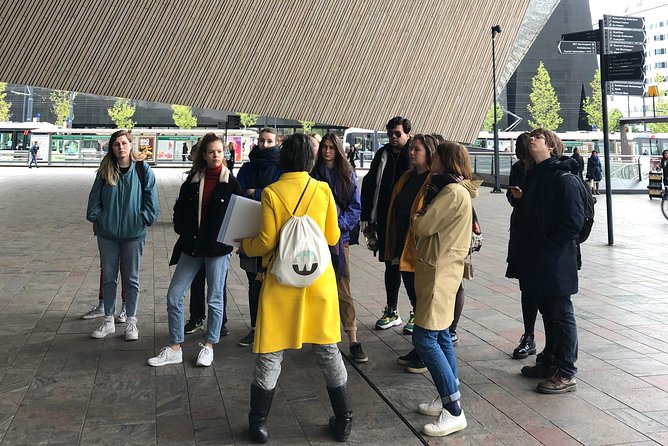
The meeting point is Rotterdam Centraal Station, at 3013 AJ Rotterdam. This is a practical beginning because the station is easy to reach by public transportation and acts as a useful reference point in the city center.
The station itself gives you an immediate introduction to Rotterdam’s modern character. Its newly built design is large, angular, and forward-looking. Your guide begins by placing the station within the city’s wider architectural story, then leads you into the central streets.
I recommend arriving with your phone charged. Rotterdam offers many good photo angles, and the station is only the first of them. You will also want comfortable shoes, since the route covers central streets and continues all the way to the Maas.
The meeting point is convenient, but the tour does not include hotel pickup. You need to reach Central Station yourself and make your own way home from the riverside finish.
Walking the Lijnbaan, a postwar shopping district
From the station, the route continues through the Lijnbaan, described as the country’s largest national monument area. This is not an old Dutch lane lined with canal houses. It represents a different chapter in city planning, with a broad pedestrian shopping route shaped by postwar ideas about traffic, retail, and public space.
This is one of the places where an architecture-focused guide adds real value. You can look at the shops and paving on your own, but it takes explanation to understand why the area mattered when it was built and why it remains important to Rotterdam’s identity.
The Lijnbaan also gives you a sense of daily Rotterdam life. It is a working part of the center rather than a preserved historic set piece. You may find this less picturesque than Amsterdam’s canals, but it is more revealing if you want to understand how Rotterdam rebuilt itself for modern urban life.
The walk is generally manageable, but the route is active and exposed to the weather. A January tour can feel very cold, so gloves and a warm coat matter. In sunny weather, sunglasses and water will make the longer walk more comfortable.
Meeting Rotterdam’s oldest survivor at Laurenskerk
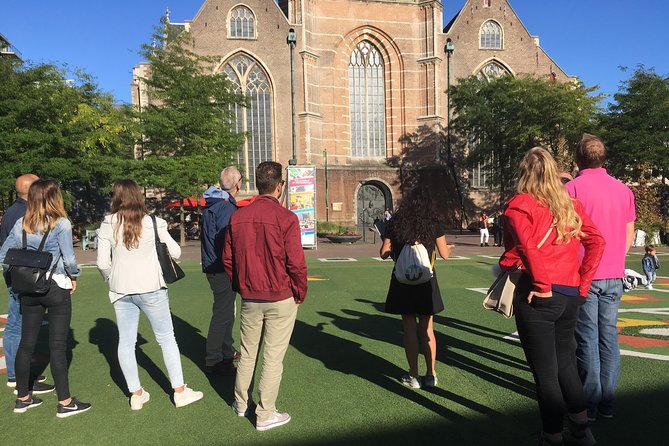
The Grote of Sint-Laurenskerk is the oldest building in Rotterdam and one of the few major historic structures to survive the city’s wartime bombardment, at least in part. The tour focuses on the exterior, with about ten minutes set aside to admire it and hear about its place in the city.
The church creates a powerful contrast. Around it, Rotterdam is defined by modern blocks, unusual towers, and open urban space. Here you get a visible link to the medieval city that existed before the destruction and rebuilding.
Do not expect an extended church visit as part of the standard route. Admission is not charged for this stop, but the experience is built around the outside and the guide’s explanation. If you want a detailed look inside, organ music, or a longer architectural study, you would need separate time.
For me, this is an important stop because it keeps the tour from becoming a simple celebration of modern design. Rotterdam’s identity includes both the old church and the city that grew around it. Seeing them together makes the rebuilding story easier to grasp.
A few more days out around Rotterdam worth weighing up
- Rotterdam: Harbor Sightseeing Cruise
★ 4.3 · 7,599 reviews - Rotterdam: 1-Hour Sightseeing Splash Tour
★ 4.5 · 3,299 reviews - Rotterdam: Rotterdam Zoo Blijdorp Entry Ticket
★ 4.6 · 2,754 reviews - Rotterdam: Euromast Lookout Tower Ticket
★ 4.4 · 2,549 reviews
Reading the Markthal from outside and in
The Markthal is the tour’s food and architecture stop. This large indoor market and food hall is one of Rotterdam’s most recognizable modern buildings, and your guide explains its design and role in the center.
You have around ten minutes here, so expect an introduction rather than a leisurely market meal. The stop works best if you want a quick look at the building and a chance to buy a snack. Food and drinks are not included, so carry a little spending money if you want to sample something.
That detail matters because the tour description highlights an authentic taste of local life, but you should read that as an opportunity to purchase food, not as a provided tasting. The market is also a useful pause in the walk. You can step inside, look at the stalls, and take in the scale of the hall before continuing.
The brief timing is the main limitation. Markthal can easily deserve more than ten minutes, especially if you want to browse. If food is a priority, plan to return later rather than trying to fit a full meal into the tour.
Finishing beside the Maas and Erasmus Bridge
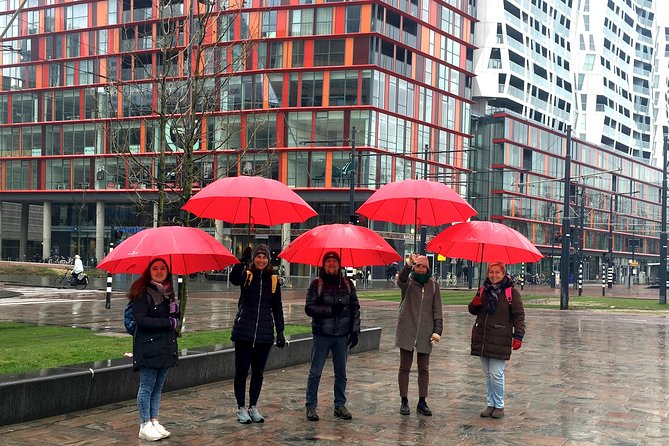
The route ends at Boompjeskade, by the Maas river. This is a strong finish because Rotterdam’s riverfront brings together the city’s bridges, tall buildings, port connections, and newer development.
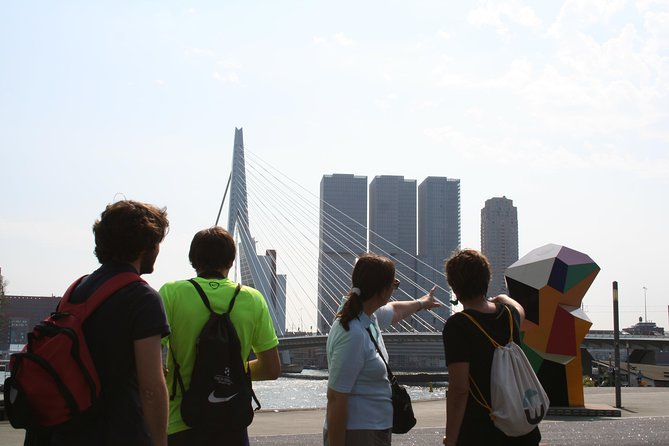
The Erasmus Bridge is the key visual reward. From the riverside, you can see the bridge’s distinctive profile and look toward high-end architectural projects on the opposite side of the Maas. The end point also gives you a natural place to continue exploring after the guide leaves.
The finish is not back at Central Station, so consider your plans before booking. You will need to arrange your own return trip or continue from the riverfront. That is not difficult, but it is worth knowing from the start.
A guide may also point out the engineering and urban design of the bridges rather than treating the Erasmus Bridge as only a photo stop. That approach helps explain why Rotterdam often feels more like a laboratory for modern architecture than a traditional old town.
What the guide adds to the walk
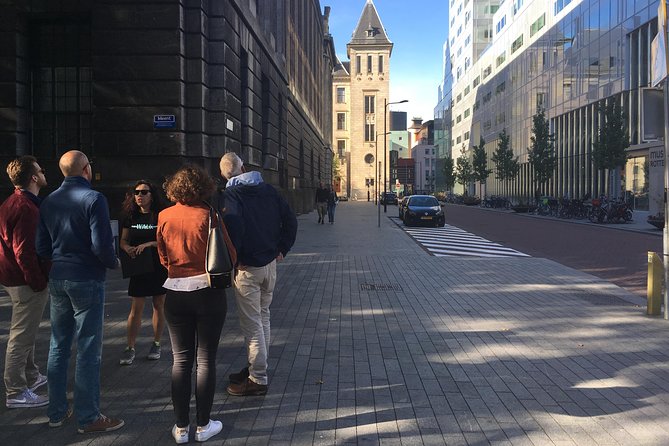
The strongest part of this experience is the quality of the explanation. Guides such as Tania and Sonia have led walks that connect buildings with Rotterdam’s social and political choices. The focus can include architecture, engineering, urban planning, culture, and the difficult process of rebuilding after wartime destruction.
That range gives you more than dates and construction styles. You can ask why a structure looks the way it does, what problem it was meant to solve, and how it fits into the city around it. One particularly useful approach is the explanation of sculptures, memorial sites, and other details that are easy to pass without context.
The guide may be multilingual, although the tour is offered in English. If precise English-language detail is essential to you, confirm the guide arrangement when booking. The experience is capped at 20 people, and a minimum of two people is required for a booking.
The route can occasionally take longer than the advertised two hours. One account describes roughly two and a half hours, which may be welcome if you enjoy long conversations but inconvenient if you have a tightly packed schedule. I would leave a little space afterward.
What the $54.06 price delivers
At $54.06 per person, this is not the cheapest way to walk around central Rotterdam. You can see the outside of the station, Laurenskerk, Markthal, and Erasmus Bridge without paying for admission.
The value comes from the interpretation. If you are interested in architecture, postwar Europe, or city planning, a good guide can turn a free walk into a useful introduction. You are paying for the route, the local perspective, and the chance to ask questions while the buildings are directly in front of you.
The price looks less attractive if you mainly want quick photo stops or a food tasting. There are no included drinks, snacks, hotel transfers, or entry tickets. Group discounts may be available, which can improve the cost for friends or families who meet the booking requirements.
I would compare this tour with your own interests rather than with free walking distances. If you would otherwise spend hours trying to work out Rotterdam’s unusual center alone, the guide may be worth the fee. If you already know modern architecture well, you may prefer an independent walk and use your budget for a museum or meal.
Practical planning for a comfortable walk
Wear shoes you can walk in for at least two hours. The route is not described as strenuous, but you need moderate physical fitness and will be outside for much of the experience.
Dress for the forecast. Cold wind can make the riverfront feel sharper than the city streets, while bright sunshine can make a long walk tiring. Bring water, sunglasses on clear days, and a fully charged phone for photos and navigation after the tour.
The tour is for ages 12 and older. Service animals are allowed, and the route is near public transportation. You should still consider the practical needs of your own group, since the tour moves through an active city center and ends at the river rather than returning to the station.
Free cancellation is available if you cancel at least 24 hours before the local start time. Changes or cancellations made inside that window are not accepted for a refund.
Who will get the most from this experience
I would choose this tour if you are visiting Rotterdam for the first time and want the city to make sense quickly. It is especially suited to anyone who likes buildings, engineering, urban planning, and the story of postwar reconstruction.
It also suits you if you want a walk that feels connected to ordinary city life. The Lijnbaan and Markthal are working parts of Rotterdam, while the riverfront shows where the city continues to develop. This is not only a parade of historic monuments.
You may want something else if you dislike walking, need a slow pace, or want substantial time inside each attraction. The Laurenskerk and Markthal receive short stops, and the tour does not include admission to paid attractions or a provided meal.
Solo visitors can still book, but a minimum of two people per booking applies. A private-feeling experience is possible with a very small group, though the normal maximum is 20 people.
Should you book the Rotterdam cultural walk?
Book it if you want a clear introduction to Rotterdam’s modern center and prefer thoughtful explanation over a quick checklist of sights. The combination of an architect or art historian, the rebuilt city, Markthal, Laurenskerk, and the Maas gives you a useful two-hour framework for exploring more on your own.
Think twice if you want a relaxed food tour, a private guide guaranteed for your party, or a full interior visit at every stop. The $54.06 fee pays for guidance rather than admission or refreshments.
For most first-time visitors with an interest in architecture, I see this as a sensible way to get oriented. Arrive ready to walk, bring water and a charged phone, and keep extra time after the finish at Erasmus Bridge. Rotterdam rewards you once you understand why its unusual streets and buildings are there.
FAQ
Where does the Cultural Walking Tour in Rotterdam start?
The tour starts at Rotterdam Central Station, 3013 AJ Rotterdam, Netherlands.
Where does the tour end?
The tour ends at Boompjeskade, 3011 Rotterdam, by the Maas river.
How long does the tour last?
The advertised duration is approximately two hours. It may sometimes take longer, with one reported experience lasting about two and a half hours.
What sights are included on the route?
The route begins at Rotterdam Centraal Station, continues through the Lijnbaan, visits the exterior of Grote or Sint-Laurenskerk and Markthal, and finishes near the Erasmus Bridge.
Are food and drinks included?
No. Drinks and snacks are not included. You have the opportunity to buy a snack at Markthal.
Is the tour suitable for children?
The minimum age is 12. Participants should also have a moderate level of physical fitness, dress for the weather, and be prepared for a walking route.
Just added around Rotterdam
- e-Scavenger hunt Rotterdam: Explore the city at your own pace★ 4.5 · 13 reviews
- Rotterdam: City Walk Audio Guide in 7 Languages on your Phone★ 3.5 · 6 reviews
- Rotterdam Must Do Tour: Highlights, History, WW2 and Architecture★ 5.0 · 20 reviews
- Breda Fun Puzzle Quest: True Lord Self-Guided Tour★ 4.0 · 9 reviews
- e-Scavenger hunt Breda: Explore the city at your own pace★ 4.5 · 27 reviews
- Delfshaven Self-Guided Tour: A Guide to Rotterdam’s Old Town★ 5.0 · 4 reviews
- Skip the Line: SS Rotterdam Steam Ship Entrance Ticket★ 4.5 · 18 reviews
- Discover Rotterdam: Classic Highlights Bike Tour with a Local★ 5.0 · 22 reviews
Walking Tours, compared.

Anne Frank’s Story – Guided Walking Tour through Amsterdam
Read our review →
Life of Anne Frank and World War II Walking Tour
Read our review →
Absolutely Amsterdam – the Essential Introductory Walking Tour
Read our review →
Anne Frank Walking Tour – Guided in EN/DE/IT/ES
Read our review →

Anne Frank Walking Tour Amsterdam Including Jewish Cultural Quarter
Read our review →Browse the lists this tour appears in