
Reviewed · MUSEUMS
Royal Delft: Delftblue Factory and Museum
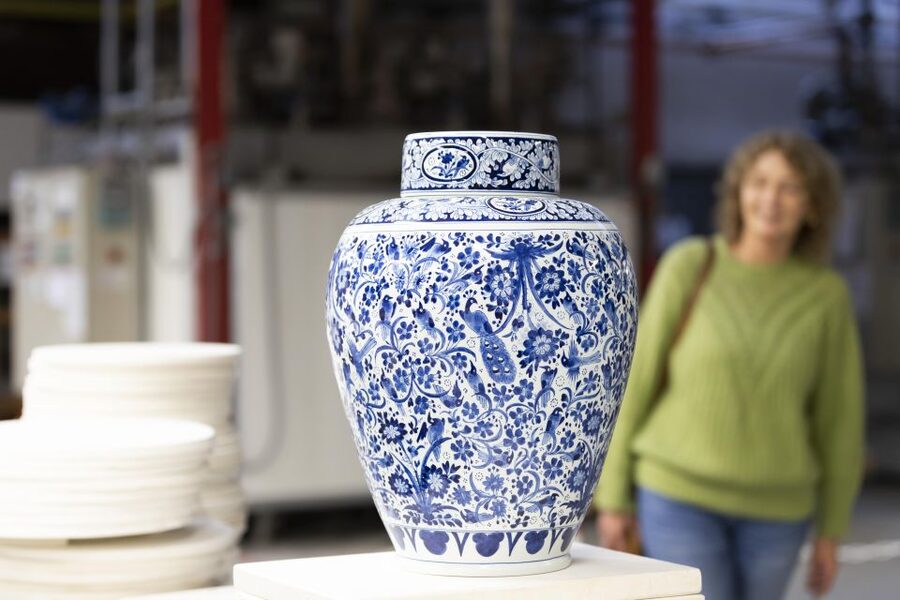
Royal Delft is one of those rare museums where the display cases lead straight into a working craft shop. Founded in 1653, it is the last original 17th-century Delft Blue factory in Delft still making pottery by hand, so you can watch painters work while learning how familiar blue-and-white ceramics are produced.
I like the authentic factory floor, where clay is poured into molds and delicate lines are painted by hand. I also like the easy audio tour, offered in eight languages and paced well for a self-guided visit. The main drawback is that this is not normally a live guided tour, and the factory can be quiet if you visit later in the day.
Key points to know before you go
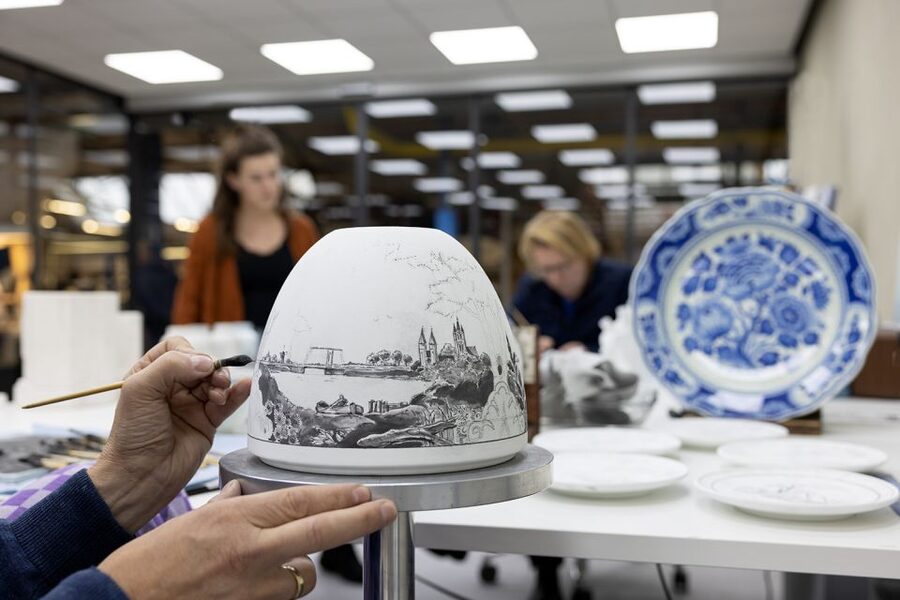
- Hand-painted Delft Blue: Watch skilled workers paint ceramics and see clay shaped in molds.
- A self-guided museum visit: The included one-hour audio tour covers the history, objects, and production process.
- A working historic factory: Royal Delft has made Delftware here since 1653.
- A beautiful pause point: Brasserie 1653 overlooks the courtyard garden and serves coffee, high tea, and lunch.
- A strong shopping stop: The showroom sells hand-painted classic and modern pieces, but prices can be high.
- Easy access from nearby cities: Delft station is about a 15-minute walk away, with free parking and local buses nearby.
Why Royal Delft is more than a Delftware gift shop
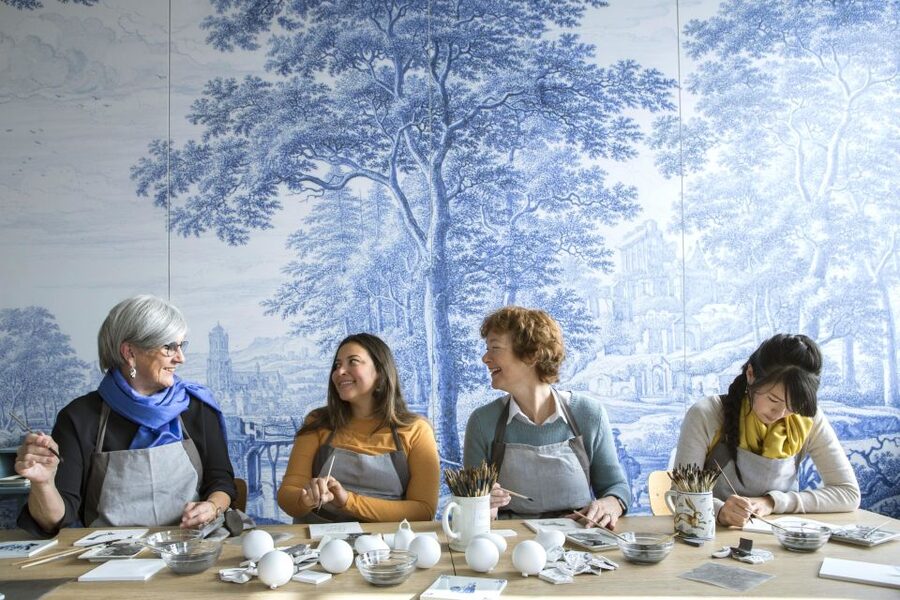
Delft Blue is often reduced to windmills, canal houses, and blue-and-white souvenir tiles. Royal Delft gives you the fuller picture. The visit explains how Dutch ceramic makers developed their own style and how the factory kept that tradition alive while adding modern designs.
The key point is that this remains a production site, not just a museum. In one area, you may see clay poured into handmade molds. In another, a craftsperson sands a newly formed piece. At the painting tables, a steady hand adds fine black lines to white earthenware. After firing, those lines turn blue.
That small technical detail helps you look at the finished pieces differently. Delft Blue is not simply blue paint brushed onto a plate. The design begins with dark-looking pigment, then changes in the kiln. The result is a familiar blue tone, but the finished surface also carries the marks of careful handwork.
You should allow about 1.5 hours for the full visit. That gives you enough time for the audio tour, the museum, the factory areas, and a look around the showroom. Add more time if you want coffee in the garden or plan to shop.
More Museum Tours in Delft
- Delft: Vermeer Centrum Delft Museum Entry Ticket
★ 4.6 · 189 reviews - Royal Delft: Delftblue Factory and Museum Admission Ticket
★ 4.5 · 145 reviews - Vermeer Centrum Delft Museum Admission Ticket
★ 4.0 · 45 reviews
Starting with the museum collection
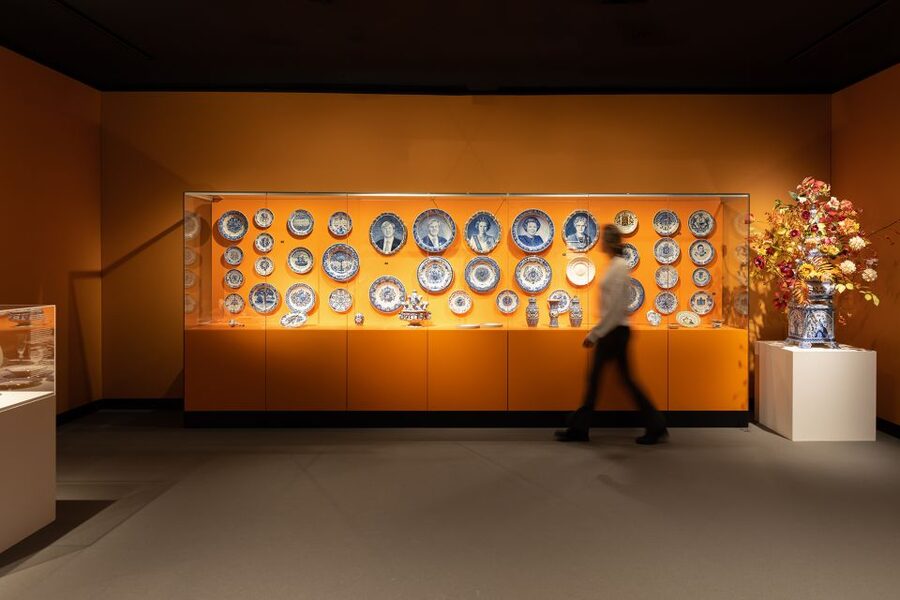
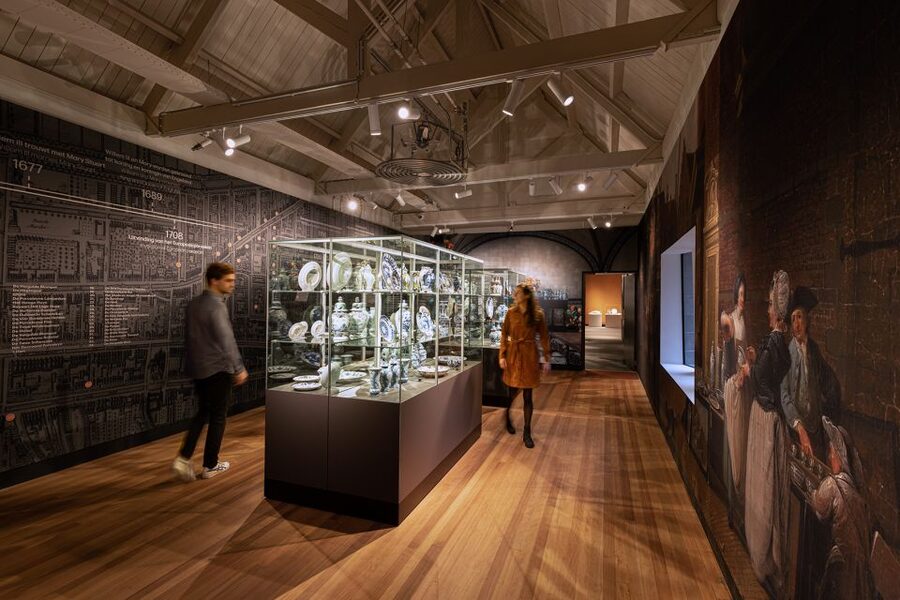
The Royal Delft Experience begins with the company’s past and its ceramics collection. Antique pieces show how Delftware developed, while newer work makes it clear that the factory is not locked in the past.
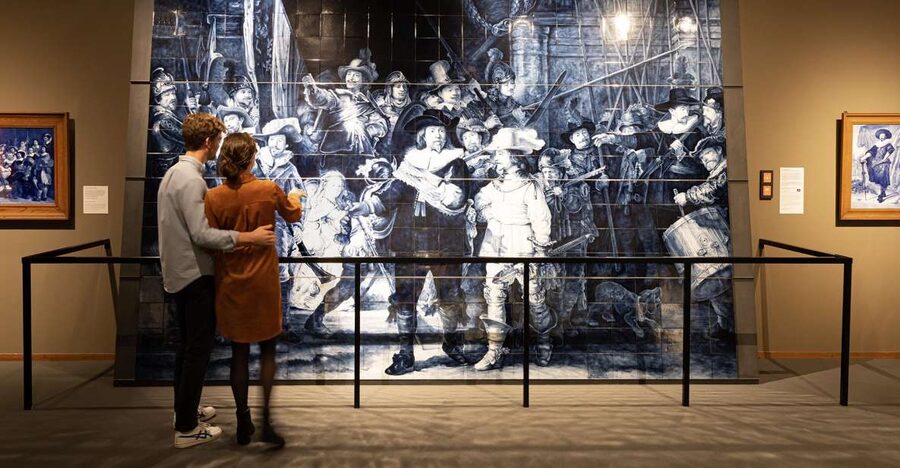
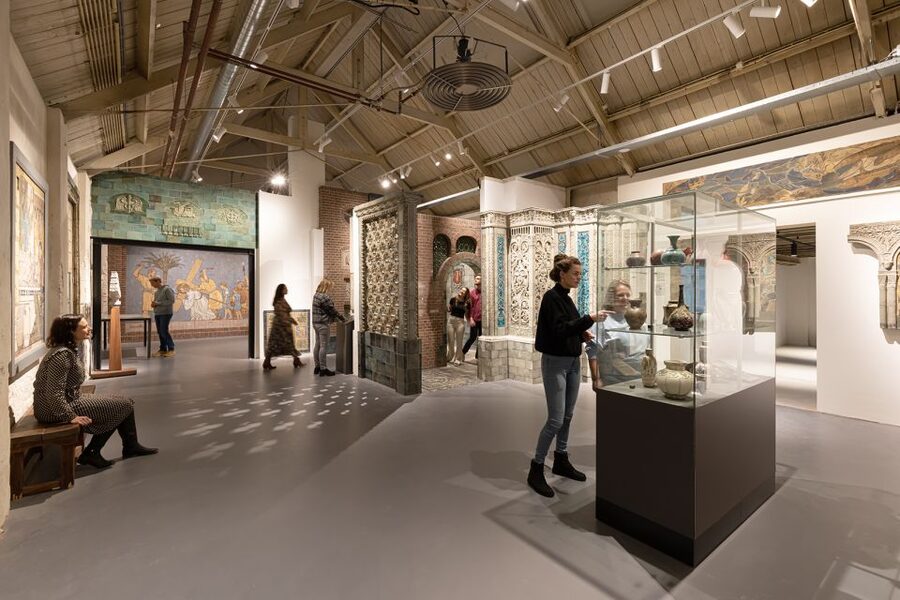
The displays include classic Delft Blue objects along with modern pieces. You will see familiar decorative forms, but the collection also includes larger and more ambitious work. One especially memorable example is a life-sized tiled version of Rembrandt’s The Night Watch. It gives you a sense of how far tile painting can go when hundreds of small pieces form one large image.
The museum is clean and well arranged, with clear directional information and written material for visitors who prefer to read. The audio guide adds more explanation without forcing you to move at a fixed pace. You can pause, continue, or simply look at an object when the design catches your eye.
I would not call the museum highly interactive. A few visitors find the audio format less engaging than a person leading the tour, and the displays may feel quiet or old-fashioned if you prefer hands-on museums. Still, the collection makes more sense after you have seen the factory, and the factory becomes more meaningful once you understand the company’s long past.
How the one-hour audio tour works
Your admission includes a one-hour audio tour in English, Dutch, Spanish, Chinese, French, German, Italian, and Japanese. English and Dutch are also the languages used by the host or greeter on site.
The audio tour is self-guided, not a scheduled talk by a live guide. Staff may welcome you and point out how to begin, but you should plan to follow the information through the provided audio system or exhibit points.
That format works well if you like setting your own pace. You can spend longer with a painting demonstration, move quickly through familiar material, or choose to read the signs instead. One visitor specifically found the audio guide well paced, while another preferred the written information. You have both options.
The limitation is sound. If a live group is passing nearby, its guide may make it harder to hear your audio. This is not a major issue for everyone, but it is worth knowing if you want a quiet, personal museum experience.
Seeing the real production process
The factory section is the heart of the visit. It shows how Delft Blue moves from raw clay to finished earthenware, and it lets you watch people doing the work rather than only seeing a video about it.
Look for the stages of production:
- Clay is poured into handmade molds to create the basic form.
- Newly made pieces are sanded and prepared.
- White earthenware receives its painted design.
- The pieces are fired, changing the dark pigment into Delft Blue.
- Finished ceramics are inspected and prepared for display or sale.
The most impressive moment is often the painting. A vase or plate may appear simple from a distance, but the close work involves fine lines, repeated patterns, and careful curves. The craftsperson cannot rush the brush. A small error can spoil a design that has already taken substantial time to prepare.
How much you see depends on the day and time. The factory is more likely to feel active in the morning. Afternoon visitors may find only one or two people working, perhaps one sanding a piece and another painting. On some days, little or no production may be visible.
That is the largest variable in the experience. If watching the makers matters most to you, arrive earlier in the day and ask staff what is happening on the factory floor. The visit still works on a quiet day, but you will spend more time with the museum and displays.
More ways to spend a day in Delft:
- From Amsterdam: Rotterdam, Delft & The Hague Guided Day Tour
★ 4.2 · 1,765 reviews - Delft: Canal Cruise with Guided Commentary
★ 4.4 · 990 reviews - Rotterdam, Delft, the Hague, Madurodam from Amsterdam
★ 4.0 · 793 reviews - Rotterdam, Delft and The Hague Small Group Tour from Amsterdam
★ 4.5 · 599 reviews
Demonstrations: useful, but check your expectations
A painting demonstration may be scheduled during your visit, but do not assume it will be a formal talk. The format can be as simple as a painter sitting down and working while visitors watch.
That is valuable in its own way. You get to observe the hand movements and concentration without a performance built around them. But if you expect questions, explanations, or a staff member speaking to the group, you may be disappointed.
This is an area where Royal Delft could offer more. A short explanation of the brush, pigment, kiln process, or design would make the demonstration more useful. If no one is speaking, read the nearby material and listen to the related audio content before watching the painter.
The quiet approach also has a benefit: you can focus on the work itself. There is no staged show to distract from the patience and precision involved.
The showroom and the true cost of Delft Blue
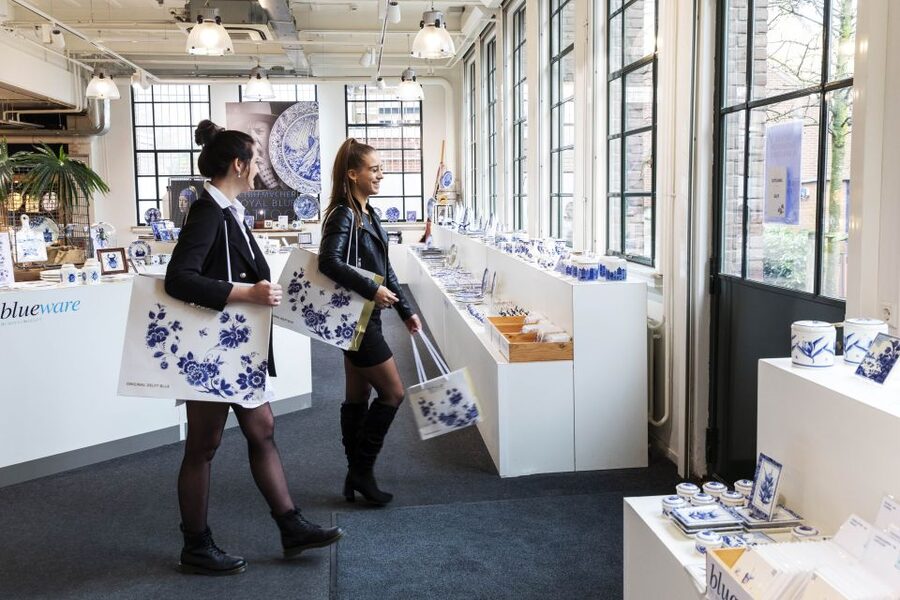
The showroom contains the complete Royal Delft collection, from classic hand-painted ceramics to modern designs and smaller souvenirs. It is a pleasant final stop because you can compare the museum pieces with items currently being sold.
This is where the price of handwork becomes clear. Delft Blue pottery can be expensive, especially for larger or highly detailed pieces. A small souvenir may fit a modest budget, but you should not expect traditional Royal Delft ceramics to cost the same as mass-produced blue-and-white pottery.
I like the showroom for another practical reason: purchased items can be wrapped, packed, and shipped home. That matters if you find a plate, vase, tile, or larger piece you want but cannot safely carry through the rest of your trip.
The shop also helps you judge value before buying. You have just seen the production process, the painting, and the difference between older and newer work. If the price still seems high, at least you can make that decision with a clear idea of what you are paying for.
Brasserie 1653 and the courtyard garden
After the museum and factory, Brasserie 1653 overlooks Royal Delft’s courtyard garden. It serves coffee, high tea, lunch, and snacks, with meals and drinks paid separately from admission.
This is a good place to slow down after the audio tour. The garden gives you a pleasant change from the indoor displays, and a coffee or light meal can turn a 1.5-hour visit into a relaxed half-day stop in Delft.
You do not need the café to enjoy Royal Delft, but it adds value if you are already planning a day in the city. The visit is located outside the historic center, so a garden break can be more convenient than walking back toward the Market Square in search of a place to sit.
Getting there from Delft, Amsterdam, The Hague, and Rotterdam
Royal Delft is at Rotterdamseweg 196, 2628 AR, Delft. The location is easy to reach from several Dutch cities, but it is not directly on Delft’s Market Square.
From Delft train station, allow about 15 minutes on foot. The Market Square is about 20 minutes away by foot. Local buses stop near the factory, and a canal boat or Delft City Shuttle can take you into the center quickly.
Driving is also practical, with free parking around the building. From The Hague or Rotterdam, the train journey takes about 30 minutes. From Amsterdam, allow roughly 1.5 hours by train, so I would combine Royal Delft with a broader Delft visit rather than make the trip only for a short museum stop.
If you are using public transport, check the return route before settling into lunch or shopping. The factory is easy to reach, but the short walk from the station still matters if you are carrying purchases.
Is $21 a fair price?

At $21 per person, Royal Delft is reasonably priced if you make use of the whole visit. You are paying for access to a museum collection, a working factory, the audio tour, and the chance to see hand painting and ceramic preparation in person.
The value is strongest for people who care about how objects are made. Watching a real painter work adds something that a standard museum of decorative arts cannot provide. The historic building, courtyard garden, and showroom add a little more substance than a quick factory viewing platform.
The value is weaker if you expect a live guide, a hands-on activity, or nonstop production. This is a self-guided experience, and the factory may be quiet. Some people also feel the ticket is high for a museum that can be completed in about 1.5 hours.
You can buy tickets at the door, and at least one visitor found them cheaper there. If you need the flexibility of reserving now and paying later, advance booking offers that option. Cancellation is free up to 24 hours before the visit, according to the stated terms.
Who will enjoy Royal Delft most?
I would recommend Royal Delft to:
- Anyone interested in ceramics, painting, design, or Dutch craft.
- Families with older children who can follow an audio tour and appreciate a working factory.
- Museum visitors who want to see modern production alongside antique pieces.
- Shoppers looking for an authentic Delftware item rather than a generic souvenir.
- Visitors using a wheelchair, since the site is wheelchair accessible.
- People already spending the day in Delft who want a quieter stop outside the center.
I would be more cautious if you need a live, interactive guide. The audio tour is clear and useful, but it does not replace conversation with a person. I would also check the opening schedule if your visit falls near Christmas and New Year.
The factory closes at 4 p.m. on December 24 and December 31. It is closed all day on December 25, December 26, and January 1.
Should you book Royal Delft?
Book it if you want to see Delft Blue as a living craft, not just a Dutch design motif in a display case. The hand painting, mold work, kiln explanation, historic pieces, and modern collection give the visit real substance.
Try to arrive in the morning if the makers at work are your main reason for going. Expect a self-guided audio visit rather than a live tour, and budget extra if you want lunch or a ceramic purchase.
For a short visit to Delft, Royal Delft is a sound choice, especially when paired with the Market Square and old town. It is less suitable for anyone seeking a fast, highly interactive attraction. At $21, I consider it good value when the factory is active and you take time with the collection, garden, and showroom.
FAQ
How long does the Royal Delft visit take?
The stated duration is 1.5 hours. The included audio tour lasts about one hour, with additional time for the factory, showroom, and courtyard garden.
Is the tour guided by a person?
The standard visit is self-guided with an audio tour. An English- or Dutch-speaking host or greeter is available on site, but a live guided tour is not included.
Which languages are available for the audio guide?
The audio guide is available in Spanish, Chinese, Dutch, English, French, German, Italian, and Japanese.
Can I watch Delft Blue being made?
Yes. The factory section shows parts of the production process, including clay being poured into handmade molds, pieces being sanded, and ceramics being painted. How many workers are present can vary by day and time.
Is Royal Delft wheelchair accessible?
Yes, the experience is wheelchair accessible.
Is there parking at Royal Delft?
Yes. Free parking is available around the building.
How far is Royal Delft from Delft train station?
The factory is about a 15-minute walk from Delft train station. The Market Square is about a 20-minute walk away.
Can I eat or drink during the visit?
Brasserie 1653 overlooks the courtyard garden and serves coffee, high tea, lunch, and snacks. Meals and drinks are not included in the admission price.
Can I cancel my booking?
You can cancel up to 24 hours in advance for a full refund. A reserve-now-and-pay-later option is also available.
More Museums in Delft
- Private Tour of Delft + Visit to Delft Blue Museum & Factory
★ 4.5 · 8 reviews - Delft: Canal House Museum ‘Paul Tetar van Elven’ Ticket
★ 4.5 · 6 reviews - Private Tour of Delft + Visit to Royal Delft Museum
★ 5.0 · 4 reviews - Private Tour of Vermeer’s Delft + Tickets to Vermeer Museum
★ 5.0 · 3 reviews
Just added around Delft
- 3 Course Walking Dinner in Delft with Guided Tours in Between★ 5.0 · 3 reviews
- Delft: City Walk with Audio Guide in 7 Languages on your Phone★ 5.0 · 4 reviews
- e-Scavenger hunt Delft: Explore the city at your own pace★ 4.5 · 26 reviews
- Private Tour of Delft + Visit to Delft Blue Museum & Factory★ 4.5 · 8 reviews
- Private Walking Tour: Delft’s Royal History and Pottery★ 4.0 · 5 reviews
- Photographic Tour in Delft Historical Center★ 5.0 · 11 reviews
- Private Tour of Delft & Rotterdam with Cube House and Transfer★ 5.0 · 12 reviews
- Private Tour of Vermeer’s Delft + Tickets to Vermeer Museum★ 5.0 · 3 reviews
Museums, compared.


Moco Museum Amsterdam Entrance Tickets with Banksy & More
Read our review →





Browse the lists this tour appears in