
Reviewed · MUSEUMS
Delft: Canal House Museum ‘Paul Tetar van Elven’ Ticket
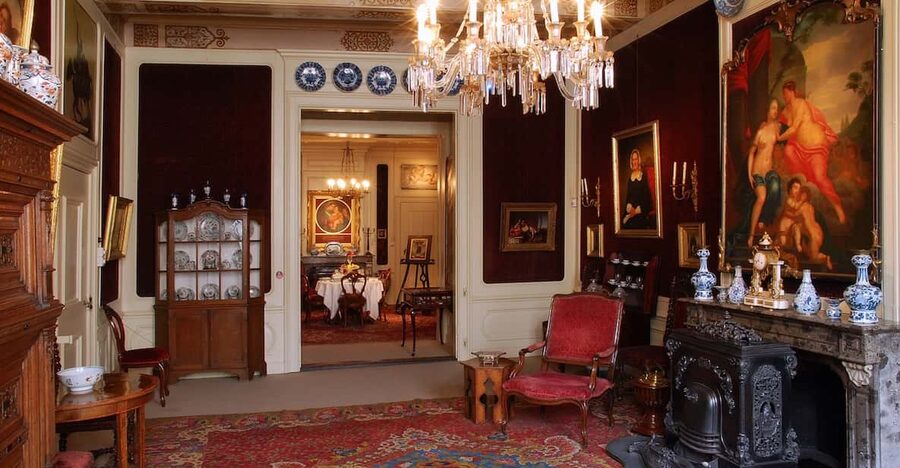
The most memorable part of this Delft visit is the house itself. Paul Tetar van Elven’s canal home remains furnished as an artist and collector left it, so you move through a real domestic setting rather than a bare gallery. I like the original furniture and the way the rooms reveal both his artistic tastes and daily life. I also like the unusual mix of paintings, antique books, Delft blue pottery, and Far Eastern porcelain under one roof.
The main consideration is scale. This is a single historic house, not a large museum, and the experience works best if you enjoy interiors, objects, and quiet cultural visits. At $14 per person, it offers strong value for a focused stop, but visitors looking for a busy, activity-packed attraction may find it too restrained.
Key points to know before you go
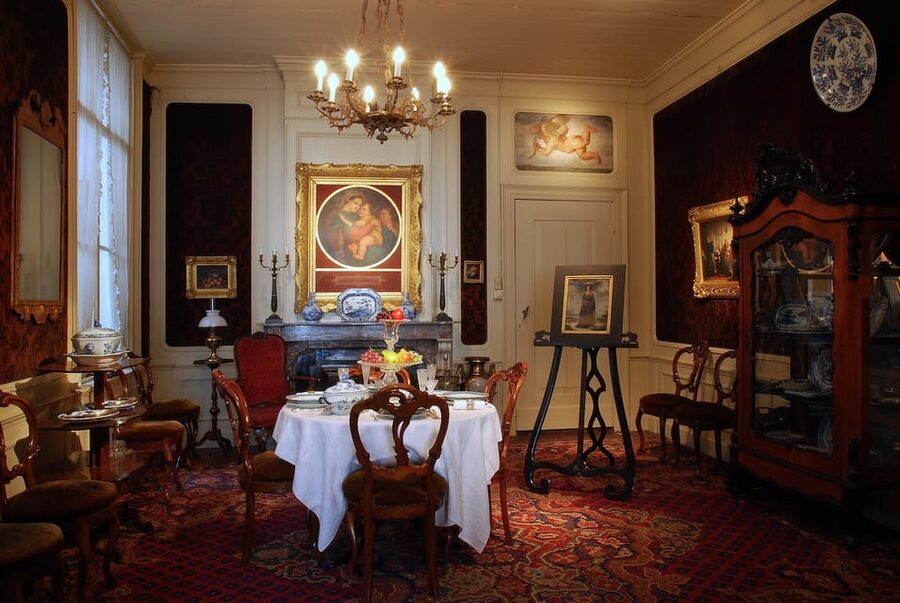
- A genuine 19th-century artist’s home: The rooms retain their furnishings and personal character.
- A painted salon ceiling: Paul Tetar van Elven commissioned Abraham Gips to decorate it with the names of old masters he admired.
- More than Delftware: The collection includes antiques, paintings, porcelain from the Far East, and antique books.
- A central Delft address: The museum is on Koornmarkt, in the historic centre of Delft.
- English and Dutch support: A host or greeter is available in English or Dutch.
- Flexible booking: You can cancel up to 24 hours ahead for a full refund and reserve now while paying later.
Entering Paul Tetar van Elven’s canal house
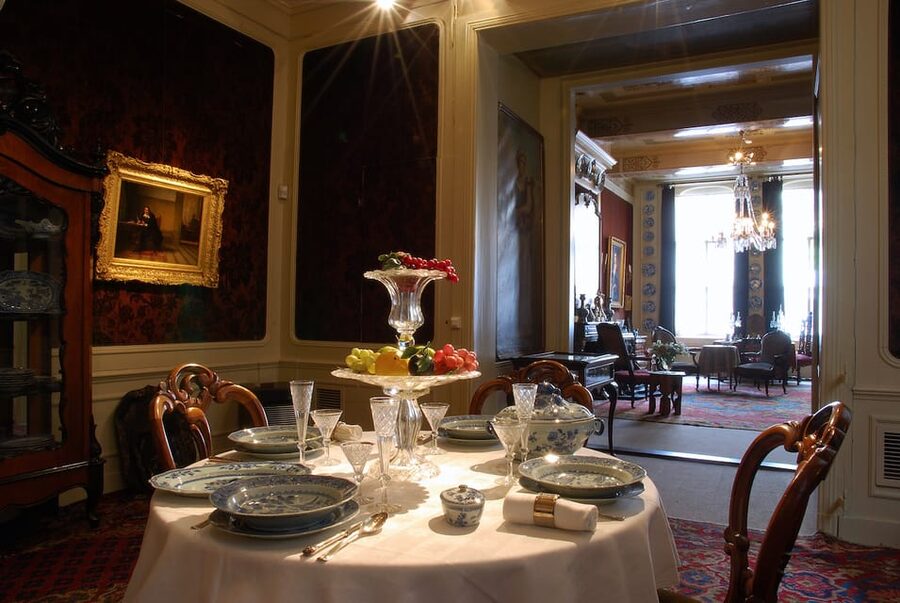
On Koornmarkt, in the centre of Delft, this museum gives you something many city museums cannot: a house that still feels connected to the person who owned it. Paul Tetar van Elven lived here after buying the property in 1864, and his will ensured that the house and its contents would become a museum.
I find that arrangement important. You are not simply looking at objects removed from their original setting. You see them in the rooms where an artist, teacher, husband, collector, and admirer of old masters once lived. The house gives every object a bit of context.
The property dates back to the 16th century, not long after Delft’s Great Fire in 1536. Koornmarkt later became one of the city’s wealthiest areas. The building changed over time, including a new front façade and major modernisation around 1800.
Tetar van Elven bought the already-updated house and made no further structural renovations. Instead, he changed the interiors to suit the fashion of his time. That choice helps explain the museum’s particular appeal. You see an older Delft building dressed in the style of a prosperous 19th-century artist.
More Museum Tours in Delft
- Royal Delft: Delftblue Factory and Museum
★ 4.6 · 588 reviews - Delft: Vermeer Centrum Delft Museum Entry Ticket
★ 4.6 · 189 reviews - Royal Delft: Delftblue Factory and Museum Admission Ticket
★ 4.5 · 145 reviews
Why the original interiors matter
A visit here is built around the rooms, not a fixed sequence of grand displays. You move from richly decorated living spaces to areas tied more directly to Tetar van Elven’s work and interests.
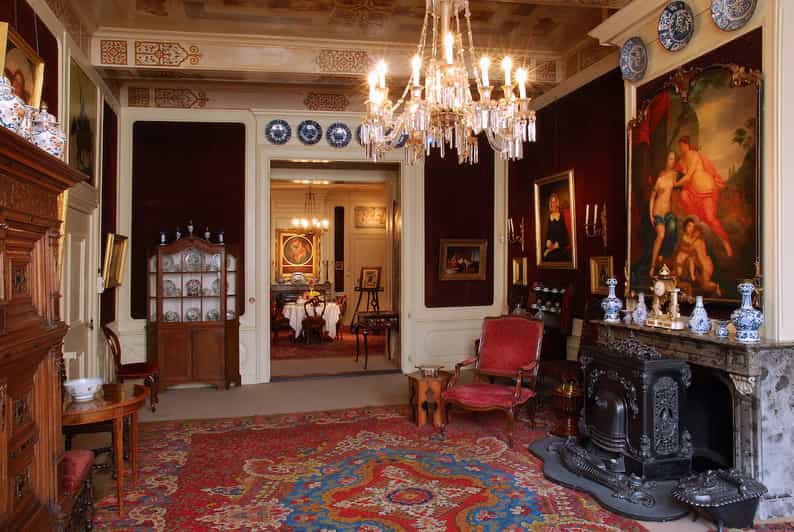
The drawing room is the natural centrepiece. The furnishings are lavish, and the room gives you a clear sense of how the house might have received visitors. The setting is more intimate than a formal art museum. Instead of standing in front of one painting after another, you look around an entire room and notice how furniture, decoration, paintings, and collected objects work together.
I especially like this kind of museum because it rewards slow looking. One person may focus on the portraits, another on the pottery cabinet, and another on the wall colours or ceiling decoration. Nothing depends on a single famous masterpiece. The pleasure comes from seeing a complete interior survive.
The house also helps you understand social ambition in 19th-century Delft. A home like this was not only a place to sleep. It was a setting for entertaining, displaying taste, and showing a connection to art and culture. Tetar van Elven’s collection tells you what he valued, while the rooms show how those values entered everyday life.
The salon ceiling by Abraham Gips
The most distinctive feature is the ceiling in the salon. Tetar van Elven commissioned Abraham Gips to decorate it with the names of old masters he admired and copied.
Raphaël, Rubens, Rembrandt, and other painters appear in this tribute. The ceiling turns the room into a record of Tetar van Elven’s artistic education and preferences. It is not just decoration. It tells you which painters he considered important and places his own work within an older European tradition.
Look up before you settle into the rest of the room. In a house filled with furniture, china, paintings, and books, it is easy to let your eyes stay at ground level. The ceiling is one of the details that makes this museum different from a standard historic-home visit.
The feature also gives the museum a personal touch. Tetar van Elven was not collecting at random. He was building an environment around the artists he respected. That makes the salon feel like an extension of his studio and his teaching.
From drawing master to museum founder
Paul Tetar van Elven was an artist and a drawing-master at the Polytechnic School, now Delft University of Technology. His professional role matters because it connects the house to Delft’s long relationship with education, design, and technical training.
The museum does not present him only as a painter. You also see him as a teacher and collector. His studio contains personal possessions, offering a more direct link to his working life. The paintings by Tetar van Elven and his contemporaries add another layer, allowing you to compare his own artistic world with the people and styles around him.
You should not expect a large survey of Dutch art. This is a personal collection in a personal home. Its value lies in the combination of biography and setting. The artist’s work makes more sense when you see the room in which he kept his possessions and the objects that shaped his taste.
For me, that is more useful than a museum label that gives only a name and date. The house lets you form a picture of the man behind the paintings.
More ways to spend a day in Delft:
- From Amsterdam: Rotterdam, Delft & The Hague Guided Day Tour
★ 4.2 · 1,765 reviews - Delft: Canal Cruise with Guided Commentary
★ 4.4 · 990 reviews - Rotterdam, Delft, the Hague, Madurodam from Amsterdam
★ 4.0 · 793 reviews - Rotterdam, Delft and The Hague Small Group Tour from Amsterdam
★ 4.5 · 599 reviews
The studio and personal possessions
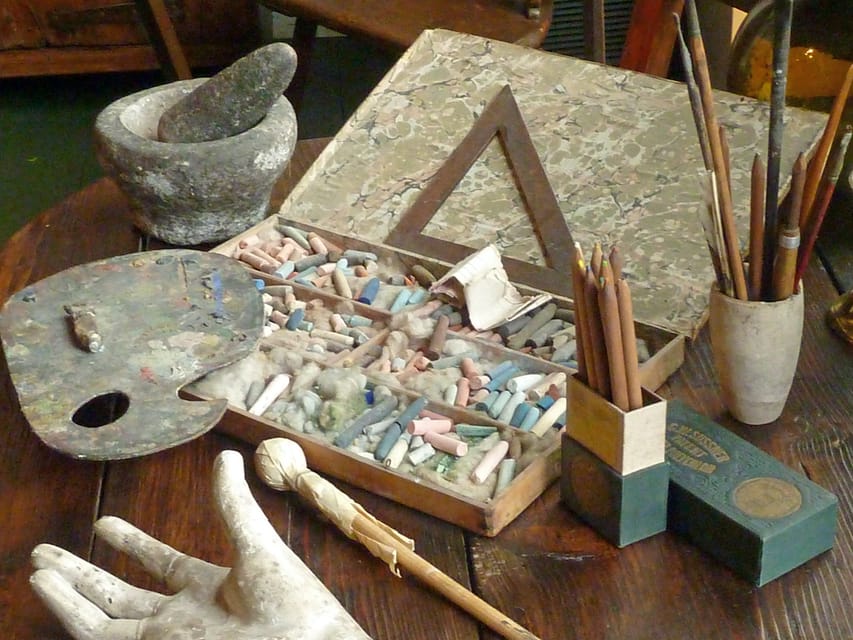
The studio is one of the rooms I would give extra time. It contains Tetar van Elven’s personal possessions and brings the visit back from formal entertaining to work.
The drawing room shows how he wanted the home to appear. The studio shows another side: the place of concentration, production, and professional identity. The information provided does not give a full inventory of the studio, so you should treat it as a room of personal objects rather than expect a reconstructed working demonstration.
That distinction matters. This is a preserved house museum, not a hands-on art workshop. You will not be signing up for a painting class or watching a live craft session. Instead, you get a close look at the surroundings of a 19th-century artist and teacher.
If you enjoy historic homes, the studio may be more revealing than the grander salon. It helps balance the polished appearance of the public rooms with the private working life of the owner.
Delft blue pottery and Far Eastern porcelain
The collection of pottery and porcelain is a major reason to choose this museum over a general city walk. Cabinets hold Tetar van Elven’s extensive collection, including Delft blue pottery and porcelain from the Far East.
Delft blue is an obvious fit for the city. Delftware is one of the city’s best-known cultural products, and seeing it as part of a private collection gives it a different setting from a shop display. You can consider the pieces not only as local craft but also as objects selected by a collector.
The Far Eastern porcelain broadens the picture. It shows that Tetar van Elven’s interests reached beyond Delft and the Netherlands. The combination of local pottery and imported porcelain reflects the collecting habits of a man interested in technique, beauty, history, and artistic influence.
I would not book this visit expecting a specialist ceramics museum with extensive technical interpretation. The collection belongs to the house, and the objects are part of the larger story. Still, if you care about decorative arts, these cabinets may be the highlight.
The displays also give you a reason to look carefully at small details. In a room full of furniture and paintings, a porcelain cabinet can be easy to pass quickly. Take your time. The appeal is in seeing the range of objects Tetar van Elven chose to live with.
The library and antique books
The library adds a quieter chapter to the visit. Its antique books show that Tetar van Elven’s interests were not limited to visual art and decorative objects.
Books can reveal how a person learned, researched, and kept contact with earlier ideas. In this house, the library fits naturally with the painted ceiling and the old masters named there. Together, they suggest an artist who looked backward as he developed his own work.
The available information does not specify the titles or number of books, so I would avoid treating the library as a research collection you need to study in detail. Its real importance is atmospheric and biographical. It helps you see Tetar van Elven as someone building an intellectual home as well as a beautiful one.
This room may appeal most to visitors who like historic interiors and personal collections. If your priority is only large paintings, you may move through it quickly.
Paintings, portraits, and the house’s personal mood
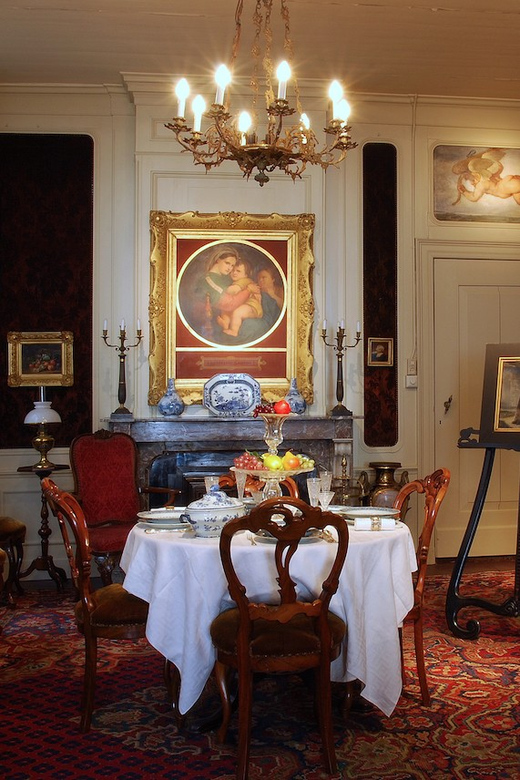
Paintings by Tetar van Elven and his contemporaries appear throughout the home, alongside portraits and other works. Because they are displayed among furniture and collected objects, you see them in the way a 19th-century household might have experienced art.
That setting changes the pace. A conventional gallery encourages you to compare one framed work with another. Here, the paintings share attention with a cabinet, a table, a book, or a ceiling. I like the more relaxed rhythm, though some art lovers may prefer clearer wall space and detailed museum interpretation.
The house is especially effective at showing how personal taste shaped a home. Tetar van Elven did not collect in isolation from his professional life. His admiration for old masters, his teaching, and his own art all appear in the rooms.
A visit may leave you with a stronger impression of the owner than of any single work. That is the point, and it is also the main difference between this museum and a standard art gallery.
How long to allow and who will enjoy it
The ticket is valid for one day, but the supplied information does not give a specific visit length or a fixed tour schedule. I would plan it as a focused Delft museum stop rather than an all-day attraction.
You are likely to get the most from it if you enjoy:
- Historic canal houses and original interiors
- Dutch art and 19th-century domestic life
- Delft blue pottery and porcelain
- Personal collections rather than large national museums
- Antique books, studios, and decorative details
- Quiet sightseeing in central Delft
Families with children may appreciate the house, but the experience is primarily visual and historical. There is no food, drink, workshop, or other activity included. If you need constant movement, the museum may feel small.
The English and Dutch host or greeter support is useful for international visitors. No individual guide name is provided, so you should not book expecting a specific person. The available information also does not promise a full guided tour at a particular time, so check the available starting information when you reserve.
Is $14 a fair price?
At $14, I consider this a reasonable price for a preserved historic home with its original contents. You are paying for the setting as much as for the objects. The fact that the house and collection remain together gives the visit a quality that is difficult to recreate in a modern exhibition hall.
The value improves if you already plan to spend time in Delft’s centre. Koornmarkt puts the museum in a convenient location for adding to a day of city sightseeing, though no transport, food, or drinks are included in the ticket.
The price may feel less attractive if you want a large museum with many galleries or a long program. This is a specialised experience. I would choose it for its intimacy and authenticity, not for quantity.
The strongest case for booking is that you get several subjects at once: a canal house, an artist’s home, a studio, a library, paintings, Delftware, and Far Eastern porcelain. Few short museum visits combine those elements so neatly.
Booking flexibility and practical details
You can reserve now and pay later, which helps if your Delft plans are still shifting. You can also cancel up to 24 hours in advance for a full refund. Those terms are useful for a city break where weather, train plans, and other museum hours may change.
The ticket includes entry to Museum Paul Tetar van Elven. Food and drinks are not included, so plan those separately around your Delft day.
The experience is listed as valid for one day, with availability and starting times shown during booking. Since the information does not provide a specific daily schedule, check the chosen date carefully before finalising your plans.
Should you book the Paul Tetar van Elven Museum?
I would book this ticket if you want an authentic Delft interior, personal collections, and a slower cultural stop. The preserved salon, Abraham Gips ceiling, artist’s studio, library, and pottery cabinets give the visit a clear identity. It is also a good choice for anyone who finds large museums tiring but still wants substance.
I would skip it if you are looking for a major art collection, a long guided activity, or entertainment beyond looking and listening. The house is compact and specialised.
For most visitors spending a day in central Delft, $14 is a fair outlay. Give the salon ceiling, studio, library, and ceramics cabinets your attention, and this small museum can tell you more about 19th-century taste than a much larger gallery.
FAQ
Where is Museum Paul Tetar van Elven located?
The museum is on Koornmarkt in the centre of Delft, in South Holland, Netherlands.
What does the $14 ticket include?
The $14 price includes entry to Museum Paul Tetar van Elven.
How long is the ticket valid?
The ticket is valid for one day.
What can I see inside the museum?
You can see the preserved canal house, furnished living rooms, paintings, portraits, a painted salon ceiling, the studio, the library, antique books, Delft blue pottery, and Far Eastern porcelain.
Is the museum connected to a real artist?
Yes. Paul Tetar van Elven was an artist, a drawing-master at the Polytechnic School, and a collector of art, antiques, Delft blue pottery, and porcelain from the Far East.
Is support available in English?
Yes. The host or greeter support is available in English and Dutch.
Can I cancel the ticket?
You can cancel up to 24 hours in advance for a full refund.
Can I reserve now and pay later?
Yes. The booking option allows you to reserve your place and pay later.
More Museums in Delft
- Vermeer Centrum Delft Museum Admission Ticket
★ 4.0 · 45 reviews - Private Tour of Delft + Visit to Delft Blue Museum & Factory
★ 4.5 · 8 reviews - Private Tour of Delft + Visit to Royal Delft Museum
★ 5.0 · 4 reviews - Private Tour of Vermeer’s Delft + Tickets to Vermeer Museum
★ 5.0 · 3 reviews
Just added around Delft
- 3 Course Walking Dinner in Delft with Guided Tours in Between★ 5.0 · 3 reviews
- Delft: City Walk with Audio Guide in 7 Languages on your Phone★ 5.0 · 4 reviews
- e-Scavenger hunt Delft: Explore the city at your own pace★ 4.5 · 26 reviews
- Private Tour of Delft + Visit to Delft Blue Museum & Factory★ 4.5 · 8 reviews
- Private Walking Tour: Delft’s Royal History and Pottery★ 4.0 · 5 reviews
- Photographic Tour in Delft Historical Center★ 5.0 · 11 reviews
- Private Tour of Delft & Rotterdam with Cube House and Transfer★ 5.0 · 12 reviews
- Private Tour of Vermeer’s Delft + Tickets to Vermeer Museum★ 5.0 · 3 reviews
Museums, compared.


Moco Museum Amsterdam Entrance Tickets with Banksy & More
Read our review →





Browse the lists this tour appears in