
Reviewed · HISTORICAL TOURS
Historical The Hague: Private Tour with Local Guide
The most memorable part of this tour is the way it links The Hague’s grand buildings with the people and arguments behind them. In roughly two hours, you walk from Willem van Oranje and the Dutch revolt to the modern parliament, the king’s working palace, and Johan de Witt’s grisly end. Politics and royal life are not tucked away here. They are part of the city streets.
I like the private format, which lets you ask about daily life in the Netherlands instead of following a fixed script. I also like the mix of famous sights and odd details, such as the flag at Noordeinde Palace and the stork on the Grote Kerk. The main consideration is pace: with nine stops in about two hours, some places receive only a short explanation, and the route requires a moderate level of fitness. Watch carefully for bicycles.
Key points
- Private group of up to 15: You get one guide for your own party, with room to ask questions and adjust the pace.
- Nine central sights in about two hours: The route covers political, royal, artistic, and religious landmarks.
- A strong introduction to Dutch government: Binnenhof, the Knight’s Hall, Hofvijver, Thorbecke, and the prime minister’s office all fit into the story.
- Local details beyond the standard postcard: Look for the royal flag, the stork, and the unusual story of Johan de Witt.
- Mauritshuis context without an included museum visit: You hear about the building and its famous Vermeer paintings, but museum admission is not part of the tour.
- Good value for a larger party: At $287.95 per group, the price makes more sense when shared by several people.
Why The Hague works best on foot
The Hague is not simply a government district with a few decorative buildings around it. It is the Netherlands’ political center, a royal city, and a place where stately avenues sit close to lively squares and everyday streets.
This walking route gives you a useful first look because the stops are close enough to connect. You begin at Plein, move past the Mauritshuis and parliament, follow the Hofvijver, then continue along Lange Voorhout toward Noordeinde Palace and the Grote Kerk. The final stop, the statue of Johan de Witt, brings you back to the darker side of Dutch politics.
A private guide matters here. A quick look at a building tells you very little about why it matters. Your guide can explain how the Dutch political system works, answer questions about life in the Netherlands, and point out details you might otherwise pass without noticing. The experience is designed to be conversational rather than a silent march from one photo stop to the next.
The listed route adds up to about two hours, though the individual stops are short. That timing suits you if you want orientation before exploring museums or if you have only a morning or afternoon in The Hague. It is less suited to you if you want to enter every building or spend long periods studying art.
More Private Tours in The Hague
- The Hague: Old City Private Walking Tour
★ 4.4 · 81 reviews - The Hague: Private Boattour up to 10 persons
★ 4.9 · 37 reviews - Private Walking Tour of Delft: Dive into the Dutch Golden Age
★ 5.0 · 33 reviews
Starting at Het Plein with Willem van Oranje
The tour begins at Het Plein, a handsome square near the heart of Dutch government. Here, the guide introduces Willem van Oranje, often called the Father of the Fatherland, and his role in the 80 Years War, the Dutch revolt against Spanish rule.
That opening gives the rest of the walk a clear thread. The Hague’s government buildings are not just old façades. They are tied to the long struggle that shaped the Netherlands as an independent country.
You spend about ten minutes here, with no admission charge. The short stop works well as an introduction, though you should not expect a full lesson on the entire Dutch revolt. Ask questions if this period interests you, since the private setting gives you a better chance to steer the conversation.
The Mauritshuis and the Vermeer connection
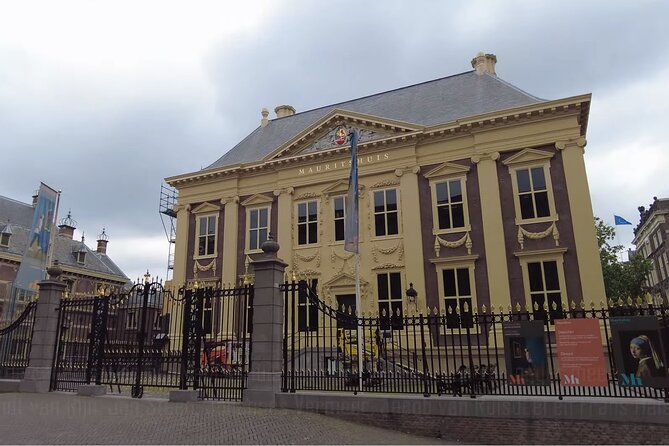
From Het Plein, the route heads toward the Mauritshuis. The guide discusses the building and its past, along with the museum’s famous collection, which includes some of Johannes Vermeer’s best-known paintings.
This is an important distinction: the tour takes you to the Mauritshuis, but admission to the museum is not included. The stop lasts about ten minutes, so it is best understood as an introduction rather than a museum visit.
I like this arrangement for a first walk through the city. You get context before deciding how to spend your own time later. If Vermeer or Dutch painting is high on your list, save a separate block for the museum. Trying to combine a proper visit with this walking route would make the two-hour schedule too tight.
The guide’s explanation of the building also helps you see the Mauritshuis as more than a container for paintings. Its setting near the parliament complex makes it part of The Hague’s compact center, where art, government, and royal power sit side by side.
Binnenhof and the Knight’s Hall
The walk continues into Binnenhof, the famous parliament complex. The guide briefly takes you onto the square and explains the importance of the Knight’s Hall, or Ridderzaal.
This is one of the most useful stops for understanding The Hague. You are not just looking at medieval-looking walls. You are standing in a place tied to the Dutch state and its political life. The guide may also point out ministers walking through the area, though that is a matter of luck, not a promised feature.
The ten-minute visit is brief, but the private format helps. You can ask how the Dutch political system works or what role the buildings play today. The experience does not promise entry into every government building, so treat Binnenhof as a guided exterior visit and historical setting.
The mixture of old architecture and present-day politics is the appeal. A government district can feel distant in many capitals. Here, the route makes it feel close enough to walk around and observe.
A few more days out around The Hague worth weighing up
- The Hague: City Canal Cruise
★ 4.6 · 2,024 reviews - The Hague: Madurodam Miniature Park Entry Ticket
★ 4.6 · 1,559 reviews - The Hague: Hop-on Hop-off Old-Fashioned Heritage Tram Tour
★ 4.4 · 1,083 reviews - The Hague: Escher in The Palace Museum Ticket
★ 4.6 · 896 reviews
Hofvijver, the little tower, and Dutch political life
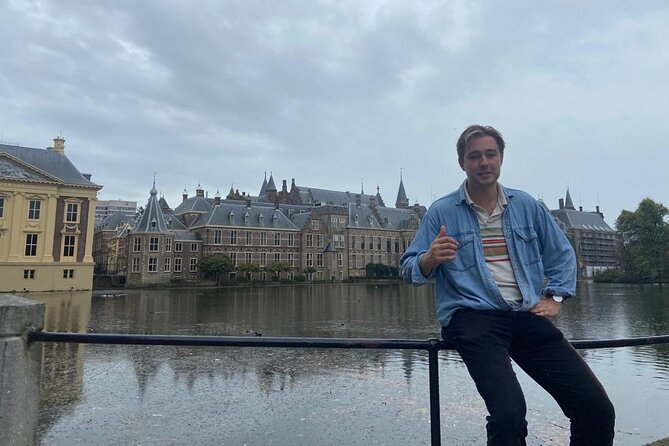
Next comes Hofvijver, the pond in front of the parliament buildings and the prime minister’s office, known as the little tower. The guide explains the importance of the pond and adds some of the city’s unusual stories.
This is a good place to pause because the water opens up the view. You can see how the pond frames the buildings and gives the political center a calmer appearance than its history might suggest.
The stop lasts about ten minutes. You will likely get more from it if you ask about the prime minister’s office and the relationship between the pond, parliament, and nearby government buildings. The tour’s promise is not a formal civics lecture. It is a local explanation of how Dutch public life fits into the places around you.
The guide also brings humor into the historical material. That matters in a city where names, titles, and political events can otherwise blur together. A funny story can make a location easier to remember.
Thorbecke and the Dutch constitution
Near Hofvijver, you see the statue of Thorbecke. The guide connects him with the Dutch constitution and explains why the statue matters.
This is another short stop, around ten minutes, but it adds an important layer to the political story. Willem van Oranje represents the country’s early struggle for independence. Binnenhof represents the machinery of government. Thorbecke brings the conversation toward constitutional government.
You do not need to arrive with a background in Dutch politics. The guide is there to explain the basic idea in plain terms. Still, the stop may feel more interesting to you if you enjoy understanding how a country is governed, rather than only photographing old buildings.
It is also a reminder that statues in European cities are often more than decoration. They mark people who changed the way power worked. Ask what Thorbecke changed if you want this part of the tour to go beyond a name and date.
Lange Voorhout, The Hague’s grand avenue
Lange Voorhout is the longest walking section, at about twenty minutes. It is presented as The Hague’s answer to the Champs-Élysées, and the comparison points to its broad, elegant character.
Along the avenue, you pass embassies, an art museum, a famous hotel, the temporary senate building, a gallery of statues representing Dutch heads of state, and other royal buildings. This is where the tour shifts from formal government history to the city’s polished public face.
The route gives you plenty to look at, but it also explains the need for comfortable shoes. You are walking between several stops, and the tour does not pause for long at each one. The guide controls the pace with your group, yet you should expect a steady walk rather than a slow museum stroll.
I especially like this section for showing how The Hague presents itself. The city’s power is not confined to parliament. It appears in embassies, hotels, royal addresses, and ceremonial avenues. You get a sense of the city’s social and political character without needing a separate sightseeing circuit.
Noordeinde Palace and the royal flag
At Noordeinde Palace, you see the working palace of the Dutch king. The guide explains how the flag can indicate whether the king is currently in the country.
That detail is simple but memorable. It turns a formal palace into something you can read at a glance. Look up at the flag, and a small piece of current royal life becomes part of the walk.
The stop lasts about ten minutes. The tour does not include entry into the palace, and the flag cannot guarantee that you will see the king. The value comes from the guide’s explanation and the chance to place the palace within the city’s working royal system.
This is also a good example of why a local guide adds value. A building alone may tell you that royalty is nearby. A guide can tell you what small sign to check and why it matters.
The Grote Kerk and its puzzling stork
The route then reaches the Grote Kerk, or Big Church. The guide points out the stork on top and explains its meaning.
The fifteen-minute stop is longer than several earlier stops, giving you time to look at the church and hear the story behind its unusual symbol. Details like this keep the walk from becoming a list of dates and grand façades.
The Grote Kerk adds a religious and civic note to the route. By this point, you have seen government buildings, royal spaces, art institutions, and a constitutional monument. The church helps show that The Hague’s identity was built through more than politics alone.
You should not expect a full interior tour unless the guide specifically confirms one. The supplied details describe seeing the church and discussing the stork, not an included admission or extended visit inside.
Johan de Witt and the grim ending
The final stop is the statue of Johan de Witt, with about fifteen minutes devoted to his story. The guide explains that he was the only head of government of the Netherlands to be eaten by an angry Dutch mob.
It is a shocking fact, and it gives the tour a sharp ending. Dutch political history was not always calm, orderly, or polite. The story of Johan de Witt shows how public anger and political conflict could turn brutal.
The unusual subject also helps balance the polished image created by palaces, embassies, and grand avenues. The Hague may look dignified, but its past includes violence, factional struggle, and hard political breaks.
This stop rewards questions. If you want dates and political background, ask for it. If you prefer stories that explain a city’s character, the guide can use the event to show how power and public opinion once collided.
A private guide, a flexible pace, and practical value
The experience costs $287.95 per group of up to 15 people. That price is not cheap for two hours if you are traveling alone or as a couple. It becomes much more reasonable when divided among a family or larger party, especially since the guide and taxes are included.
For a group of ten, the cost works out to about $28.80 per person. For 15 people, it is about $19.20 per person. A smaller party pays more for privacy, direct questions, and control over the pace.
The flexibility is the main benefit. You can ask about Dutch politics, modern life, the royal family, or restaurant ideas. One especially useful point from the experience is the local restaurant recommendation, which can help you turn the tour into a practical introduction to the city rather than a history lesson that ends at the meeting point.
Guide Mario is associated with a warm, informative style that covers both historical and modern life in the Netherlands. If he is your guide, you can expect the chance to ask about present-day life as well as the past. Since guide assignments can vary, it is best to regard the personal Dutch guide as the key feature rather than assume a particular person.
The meeting point is Plein in central The Hague, and the activity ends back at the meeting point. Pickup is offered, but the listed start and finish are at Plein, so confirm the pickup arrangement when booking if you need it.
You receive confirmation at booking, and the experience accepts service animals. It is near public transportation, but you should still plan for walking and stay alert around bicycle riders. A moderate level of physical fitness is advised.
Who should book this walk
I would choose this tour if you want a clear first look at The Hague and prefer conversation to a large group lecture. It suits families, friends, and multigenerational groups because you can ask questions at your own level.
It is also a good choice if you want to understand the city’s political role. The route gives you a useful framework before you visit the Mauritshuis, explore more of Binnenhof, or spend time around the royal buildings.
You may want something else if your priority is entering museums, touring palace interiors, or spending a long time at each sight. The Mauritshuis visit is only an exterior introduction, and most stops last ten to fifteen minutes.
Keep your bicycle awareness switched on. The practical tip is simple: look before stepping into the street or crossing a cycle path. The Hague is friendly to walkers, but bikes have the right of way in many places and can appear quickly.
Free cancellation is available up to 24 hours before the start time. Canceling or changing the booking less than 24 hours ahead does not qualify for a refund.
Should you book Historical The Hague?
Book it if you want a private, efficient introduction to the city’s government, royal connections, architecture, and stranger stories. The best value comes when several people share the group price, and the best feature is the ability to set the pace and ask about modern Dutch life.
Skip it if you want a museum-heavy day or a detailed interior tour. For most first-time visitors with two hours to spare, though, this is a smart way to get your bearings and learn why The Hague feels both grand and lived-in.
FAQ
Where does the tour start?
The tour starts at Plein, 2511 Den Haag, Netherlands.
Where does the tour end?
The activity ends back at the meeting point.
How long does the tour last?
The tour lasts approximately two hours.
How many people can join the private tour?
The private tour accommodates one group of up to 15 people.
Is museum admission included?
No. The tour includes a guide and all fees and taxes, but admission to the Mauritshuis is not listed as included.
Is pickup available?
Pickup is offered. The listed meeting point is Plein, so confirm the pickup details when booking.
What is the cancellation policy?
You can cancel for a full refund up to 24 hours before the experience starts. Cancellations or changes made less than 24 hours before the start time are not accepted for a refund.
More History Walks around The Hague
- Photographic Tour in Delft Historical Center
★ 5.0 · 11 reviews - Private Walking Tour: Delft’s Royal History and Pottery
★ 4.0 · 5 reviews - Discover Historical Delft with an Audio Guide
★ 5.0 · 3 reviews - Amsterdam Food and Cultural Tour with Tastings
★ 5.0 · 2,442 reviews
Just added around The Hague
- Your Own Hague. Behind The Scenes of The Royal City★ 4.5 · 5 reviews
- e-Scavenger hunt The Hague: Explore the city at your own pace★ 3.5 · 10 reviews
- 3 Course Walking Dinner in Delft with Guided Tours in Between★ 5.0 · 3 reviews
- Delft: City Walk with Audio Guide in 7 Languages on your Phone★ 5.0 · 4 reviews
- Surfing at The Shore in The Hague★ 4.5 · 3 reviews
- The Hague Must-See attractions Private Walking Tour With A Guide★ 5.0 · 5 reviews
- The Hague: City Walk Audio Guide in 7 Languages on your Phone★ 3.5 · 5 reviews
- Royal The Hague Private Guided Walking Tour★ 4.5 · 21 reviews
Historical Tours, compared.
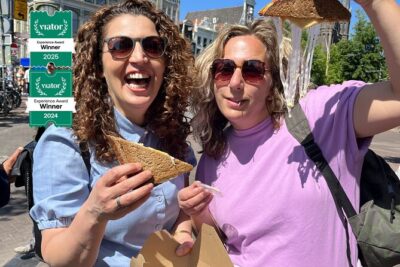
Amsterdam Food and Cultural Tour with Tastings
Read our review →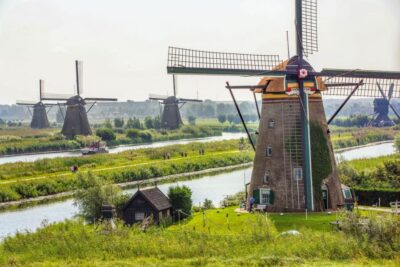
Kinderdijk UNESCO World Heritage Entry Ticket
Read our review →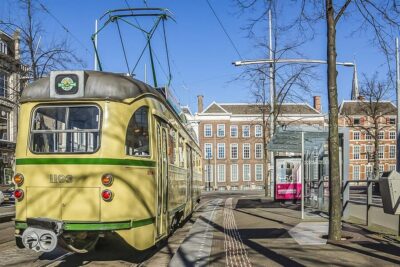
Hop-on Hop-off Old-Fashioned Heritage Tram Tour
Read our review →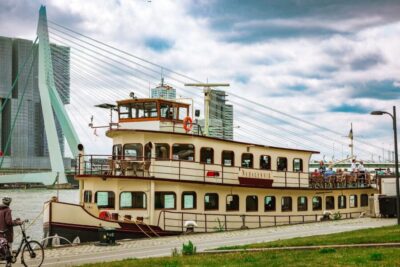


Amsterdam High-End Dutch Food & History Tour – Up to 8 guests
Read our review →
Cruise through the Historic City Center with Guide
Read our review →
Browse the lists this tour appears in