
Reviewed · CANAL CRUISES
Amsterdam: Historic City Sightseeing Canal Cruise
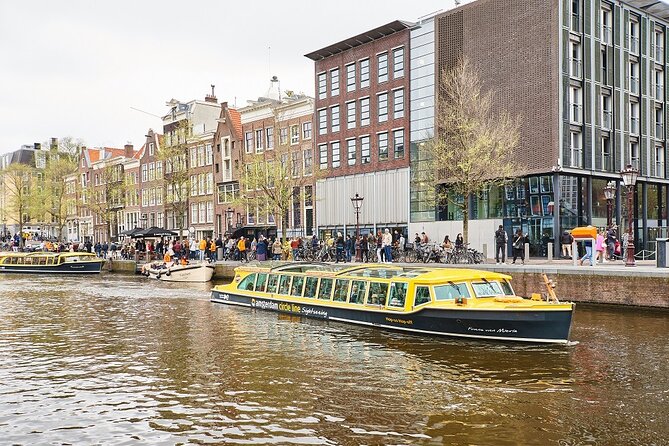
Amsterdam’s best introduction may come from the water. This approximately one-hour canal cruise puts Amsterdam’s narrow canal houses, old bridges, churches, and working waterfront in one tidy picture, with the Anne Frank House as an easy meeting point.
I like the low price of $18.71 and the broad route, which reaches both the old canal belt and modern sights near the IJ. I also like the flexible feel of the boats, with indoor seating and, on some boats, outdoor places for open views.
The main caution is the commentary. Some captains, including Robert and Rolif, have been funny and informative, while other departures rely on a recording that can be hard to hear or may switch languages without much warning.
Key points to know before boarding
- The Anne Frank House meeting point is easy to find: The departure area is central and convenient if you are already visiting Prinsengracht.
- The route covers old and new Amsterdam: You pass the Canal Ring, Brouwersgracht, Centraal Station, the IJ, EYE Filmmuseum, the Amstel, and Stopera.
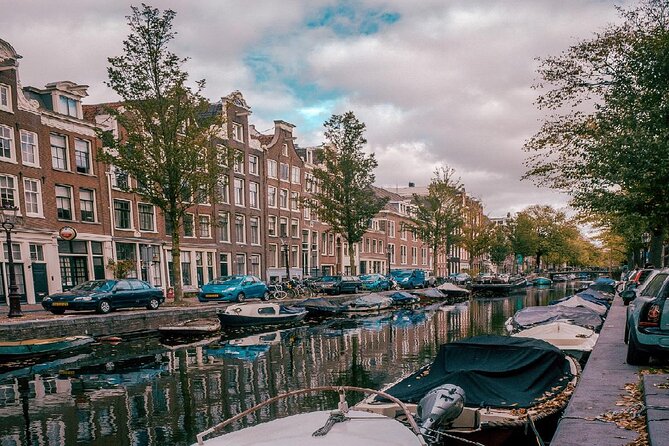
- The boat gives you a different view of the city: Canal-level views reveal houseboat life, bridge design, and the close-packed façades better than a street walk can.
- The English commentary can vary: A strong live captain adds humor and local detail, but recorded narration may be difficult to hear from rear seats.
- The short length suits a tight schedule: It works well near the start of a visit, between museum bookings, or as a final look at the city.
- Plan around fixed departure times: A parade or schedule change can affect service, so keep your booking details handy and allow some time around the cruise.
Why a canal cruise makes sense in Amsterdam
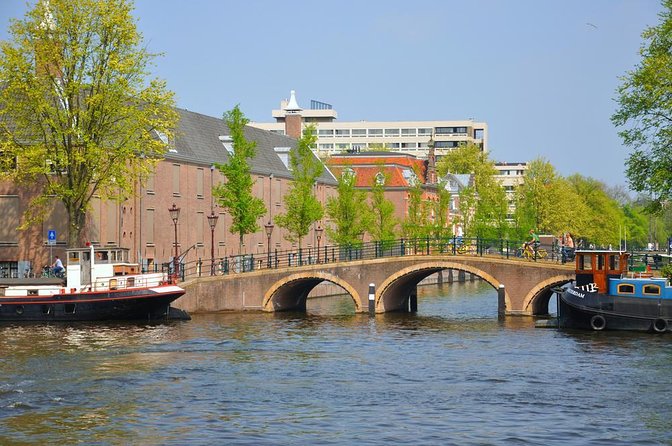
Amsterdam is built around water, not merely decorated with it. The canal belt was laid out during the city’s great 17th-century expansion, and the waterways still explain how Amsterdam grew, traded, housed its people, and connected to the wider world.
From a boat, the city’s architecture becomes easier to read. You see how tall, narrow houses line up along the water, how bridges link neighborhoods, and how the canals curve through the center. The view also removes much of the street-level noise. For an hour, you can simply watch the façades slide past.
This cruise is especially useful at the beginning of a short visit. You get a quick orientation to central Amsterdam without spending an hour walking between sights. Then you can return on foot to the places that caught your eye.
At $18.71 per person, the cruise is priced as an affordable introduction rather than a major excursion. You are paying for a seat, a city panorama, and some historical explanation. It is good value if you use it to plan the rest of your visit, but less so if you want a long, highly detailed history lesson from a dedicated guide.
The boat can carry up to 68 people. That is not an intimate private outing, but the experience may still feel comfortable when the boat is not full. One solo passenger described having a whole row and clear views through the windows and glass ceiling. Conditions will vary by departure, so do not count on an empty boat.
More Boat Tours in Amsterdam
- Amsterdam Classic Saloon Boat Cruise with Drinks and Cheese
★ 5.0 · 31,825 reviews - Amsterdam Luxury Canal Cruise + Unlimited Drinks & Bites option
★ 5.0 · 30,518 reviews - Amsterdam: Classic Boat Cruise with Optional Cheese & Wine
★ 4.6 · 22,925 reviews
Starting beside the Anne Frank House
The meeting point in front of the Anne Frank House is one of the cruise’s practical strengths. It is in the center, on Prinsengracht, and easy to connect with a visit to the Jordaan, Westerkerk, or the Anne Frank House itself.
Do not confuse the boat departure with entry to the Anne Frank House. The museum is a separate attraction, and its timed tickets must be arranged independently. A useful plan is to cruise before or after your museum visit, but leave enough time between the two so a late boat or a crowded boarding area does not put your museum entry at risk.
The Anne Frank House itself occupies a 17th-century canal house. During World War II, Anne Frank and seven others hid in the Secret Annex behind the main building. The site is a place for quiet attention, while the cruise offers a broader look at the city around it. I would not expect detailed discussion of Anne Frank’s story during the boat ride, but the departure point gives the cruise a meaningful setting.
As the boat moves along Prinsengracht, look toward the architecture rather than only the water ahead. The canal’s long, narrow buildings reflect Amsterdam’s limited plots and old tax practices, while their different rooflines show centuries of repair, rebuilding, and personal style.
Westerkerk, houseboats, and the Jordaan edge
The Westerkerk rises near the Anne Frank House, between Prinsengracht and Keizersgracht. This Reformed church belongs to the Jordaan area and is one of the most recognizable landmarks on the western side of the Canal Ring.
From the water, the church helps you understand the scale of central Amsterdam. It is not an isolated monument on a grand square. Instead, it sits amid tightly packed canal streets, homes, shops, and bridges. That setting is part of its appeal.
The Houseboat Museum offers another kind of Amsterdam story. It is housed in the Hendrika Maria, a former cargo ship built in 1914. Its old cargo hold has been made into a living space with the comforts of a home, showing that canal life is not limited to historic façades.
You may not get an extended museum visit during the cruise, but passing the Houseboat Museum gives you a useful reminder that the canals are living neighborhoods. Houseboats are homes, not just colorful props for photographs. If this part of Amsterdam interests you, note the museum’s location for a separate visit.
The quality of the view depends on where you sit. Front and side seats generally offer clearer sightlines, while rear seats may provide wide views but poor sound. One cruise account specifically noted that narration was difficult to hear at the back. If the history matters to you, sit closer to the speaker or guide rather than choosing a seat only for the view.
Smaller canals and grand canal houses
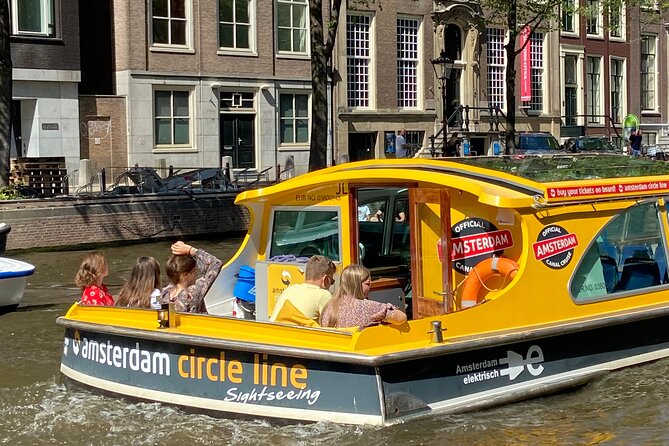
The cruise continues through connecting waterways such as Leidsegracht and De Beulingsloot. Leidsegracht crosses several major canals, linking Herengracht, Keizersgracht, Prinsengracht, and Lijnbaansgracht before reaching Singelgracht.
This is where a canal map becomes useful. Amsterdam’s waterways are not one simple loop. Cross-canals connect the larger arcs, and a boat can turn through spaces that are easy to miss on foot. De Beulingsloot is one of the oldest and shortest canals in the center, a small waterway with less fame but plenty of atmosphere.
At Herengracht, look for Bartolotti House at numbers 170 to 172. Built around 1617 for Willem van den Heuvel tot Beichlingen, it was funded by money inherited from his uncle by marriage, Giovanni Battista Bartolotti, a merchant from Bologna.
The house reflects the wealth of Amsterdam’s merchant class during the 17th century. Its importance is not only the façade itself, but the reminder that these canals were built for powerful commercial families. A short cruise cannot explain every house, so the best guides add small details such as this one.
One departure featured Robert as guide, and another passenger praised his presentation of the city’s architecture and sights. Rolif was also singled out for combining history, humor, and several languages. These examples point to the cruise’s biggest variable: the captain or guide on your particular boat.
More City Tours in Amsterdam
- Amsterdam: 75 Minute City Canal Cruise with Audio Guide
★ 4.4 · 17,501 reviews - Amsterdam: City Centre Canal Cruise
★ 4.2 · 12,827 reviews - Amsterdam: Smoke and Lounge City Boat Cruise
★ 4.7 · 8,572 reviews - Amsterdam: Guided Bike Tour City Centre in EN/DE/FR/ES
★ 4.7 · 4,187 reviews
Bridges, breweries, and the northern canal belt
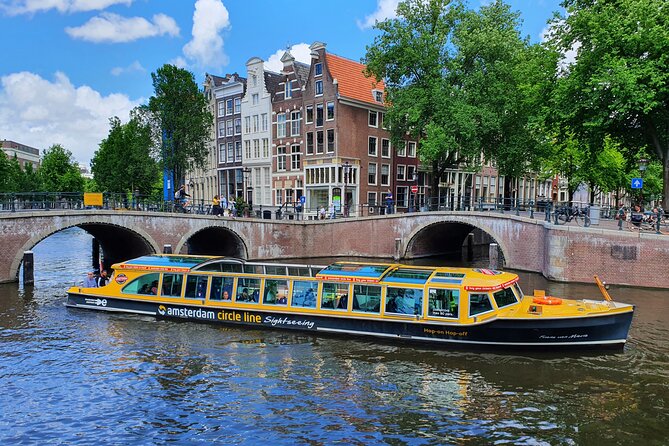
The Melkmeisjesbrug is a fixed bridge in central Amsterdam with a long connection to local commerce. Its name refers to the milk market once held nearby, and a later café used a milkmaid image as its sign.
The bridge has been rebuilt several times. A pedestrian drawbridge was replaced by a permanent bridge in 1883, then renewed in 1903 when the passage proved too narrow. Its later steel version dates from 1966 and kept the slim look that fits the surrounding streets.
These details are exactly what can make a canal ride worthwhile. On foot, a bridge is something you cross. From below, you can see its shape, supports, and relationship to the waterway. If the recorded commentary is clear, small facts like this give the cruise more substance.
Brouwersgracht marks the northwestern edge of the Canal Ring and the northern edge of the Jordaan in the stretch between Prinsengracht and Singelgracht. Its name recalls the breweries that once operated in this part of Amsterdam.
The canal also has a practical role in the city’s address system. House numbers on several major canals begin from Brouwersgracht. The area near Herenmarkt and the West-Indisch Huis adds another layer of Amsterdam’s commercial past.
Brouwersgracht was voted Amsterdam’s most beautiful street in a 2007 reader poll conducted by Het Parool. Beauty is subjective, of course, but the canal offers the kind of layered view that makes Amsterdam so appealing: water, old brick, bridges, bicycles, and houses leaning gently in different directions.
Churches, Centraal Station, and the open water of the IJ
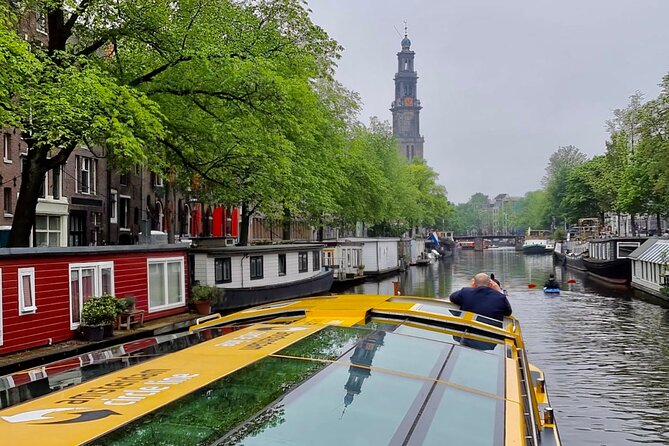
The route passes a former Lutheran church designed by Adriaan Dortsman and opened in 1671. It was nearly destroyed in 1822, rebuilt in 1826, later used as a concert hall, and restored again after a dome fire in 1993.
The building’s changes tell you something important about Amsterdam’s historic spaces. Churches have been rebuilt, repurposed, rented, and adapted as the city changed. You may hear only a short explanation from the boat, but the view gives you a reason to seek out the building later.
Amsterdam Centraal is another major sight from the water. Pierre Cuypers designed the station, as he did the Rijksmuseum, although railway engineers handled much of the structural design. From the canal or waterfront, the station appears as a grand gateway between the old city and the IJ.
The IJ is Amsterdam’s waterfront, a body of water that was once a bay. Reaching it changes the mood of the cruise. The close canal walls give way to a wider view, and you get a clearer sense of Amsterdam as a port city rather than only a collection of picturesque canals.
Across the water, the EYE Filmmuseum has a sharp, modern building designed by Delugan Meissl Associated Architects, also associated with the Porsche Museum in Stuttgart. Its facilities include exhibition galleries and several cinemas. The contrast between EYE’s angular form and the old canal houses is one of the route’s most useful visual lessons: Amsterdam protects its past while continuing to add new architecture.
The Posthoornkerk and the Amstel
The Posthoornkerk on Prinsengracht was designed by P.J.H. Cuypers and built in stages from 1860 through 1889. It replaced an earlier hidden church, and its height reflects the tight city plot where it had to be built.
The exterior is neo-Gothic, while the interior was modeled on the late Romanesque Munsterkerk in Roermond. Galleries above the side aisles helped make the most of the limited space.
From the boat, you will mainly appreciate the church’s scale and position among the canal houses. The cruise does not replace an interior visit, but it gives you a useful preview of the city’s religious architecture.
The boat then reaches the Amstel, the river that gives Amsterdam its name. It flows north toward the IJ and has long been central to the city’s growth and public life. Today it hosts events such as the Liberation Day concert, the Head of the River Amstel rowing race, and the Pride boat parade.
The Amstel section can feel more open and spacious than the narrow central canals. You may see the city from a wider angle, including the former Amstelhof, now associated with Hermitage Amsterdam, and the Stopera complex.
Hermitage Amsterdam occupies the classical Amstelhof building, dating from 1681. The museum developed as a major satellite of the Hermitage Museum in Saint Petersburg, with exhibition halls, smaller rooms, lecture spaces, offices, and a restaurant.
Nearby, Stopera combines Amsterdam’s city hall with Dutch National Opera and Ballet. Its name came from protests against the opera project, not from a simple combination of city hall and opera. That bit of civic history is the sort of detail a good captain can make memorable.
What the commentary is really like
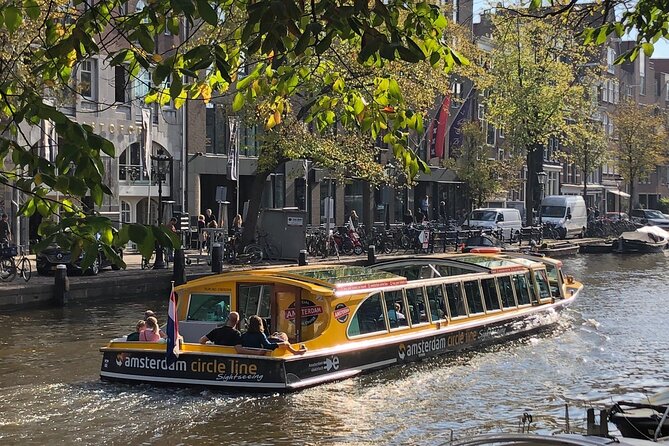
The cruise’s strongest departures have a live captain who talks naturally, points out sights, and adds humor. Robert and Rolif are two guides praised for this style, but you cannot choose your captain based on the booking details.
Other boats use recorded information in several languages. English is offered, yet the narration may switch between languages with little pause. Several people found the recording unclear, especially from the rear seats, and one account described a departure where the guides spent too much time talking to each other.
That means I would book this cruise for the views first and the commentary second. If you need a detailed account of every building, choose your seat carefully and keep your expectations moderate. If the captain is lively, you may get much more than the basic tour.
The weather matters, too. Indoor seating helps in cold or windy conditions, and one cruise was still enjoyable in unpleasant weather because the boat offered shelter. Rain can make the windows harder to see through, and a glass roof may show water spots, but the ride remains possible in many conditions.
Sunset can add a special touch. A late departure may show Amsterdam in daylight and then under evening lights, though you should choose a time for the schedule rather than assume the sunset will cooperate.
Who should book this one-hour cruise?
I would recommend it to you if this is your first Amsterdam visit, your time is short, or you want to rest your feet while seeing a large section of central Amsterdam. It also suits families, including those with very young children, as long as you are comfortable managing boarding and seating in a shared boat.
It works well for solo visitors, couples, and anyone who wants a calm orientation before exploring on foot. The route includes enough historic and modern landmarks to make the hour feel useful, not repetitive.
You may want a different canal experience if you are seeking a private boat, a food-focused outing, or a fully live, specialist-led history tour. The group limit of 68 keeps the experience manageable, but it is still a standard shared cruise.
The service is near public transportation, service animals are allowed, and most people can participate. You receive confirmation at booking and use a mobile ticket. Free cancellation is available up to 24 hours before the start time. After that point, cancellations and changes are not accepted.
Pay attention to the exact departure time and location. A Pride parade once prevented boats from leaving a scheduled point, and another booking was reportedly shifted by an hour. Those disruptions may be unusual, but they show why you should avoid placing a museum entry or train departure immediately after the cruise.
Should you book Amsterdam Circle Line?
Book it if you want an affordable, easy-to-find introduction to Amsterdam’s canals and major sights. At $18.71, it is a sensible way to see the Canal Ring, IJ, and Amstel without committing half a day.
I would choose a seat near the front or middle, arrive early, and treat the narration as a useful bonus rather than the whole product. If you get a captain such as Robert or Rolif, the hour may feel both funny and informative. If you get a weak recording or unclear commentary, the architecture and water views still provide the main value.
For a first look at Amsterdam, especially on a two-day visit, this is a practical choice. Just leave room in your schedule for the city to run on canal time.
FAQ
Where does the canal cruise meet?
The meeting point is in front of the Anne Frank House on Prinsengracht in central Amsterdam.
How long is the canal cruise?
The cruise lasts approximately one hour. One account describes a longer ride, so keeping a little flexibility around the scheduled time is sensible.
How much does the cruise cost?
The listed price is $18.71 per person.
Is the cruise offered in English?
Yes. English is offered, although some boats may use recorded commentary that switches between several languages.
How many people can join the boat?
The activity has a maximum capacity of 68 travelers.
Is the cruise suitable for most people?
Yes. Most travelers can participate, and service animals are allowed.
Is the boat near public transportation?
Yes. The experience is near public transportation, and the central Anne Frank House meeting point is easy to find.
Can I cancel for a full refund?
Yes, if you cancel at least 24 hours before the experience start time. Cancellations or changes made less than 24 hours before departure are not accepted.
More Canal Cruises around Amsterdam
- Amsterdam Canal Cruise in Open Boat with Unlimited Drinks Option
★ 5.0 · 4,976 reviews - Amsterdam: Van Gogh Museum Ticket and City Canal Cruise
★ 4.6 · 3,899 reviews - Amsterdam Evening Canal Cruise with Live Guide and Onboard Bar
★ 4.5 · 3,619 reviews - Amsterdam: Van Gogh Museum Ticket & Canal Cruise
★ 4.5 · 3,304 reviews
More History Tours in Amsterdam
- Amsterdam Food and Cultural Tour with Tastings
★ 5.0 · 2,442 reviews - Amsterdam: Haunted History and Ghost Walking Tour
★ 4.5 · 488 reviews - Amsterdam High-End Dutch Food & History Tour – Up to 8 guests
★ 5.0 · 482 reviews - Anne Frank and the Jewish History of Amsterdam Private Tour
★ 5.0 · 307 reviews
Just added around Amsterdam
- From Amsterdam: The Hague Private Trip and Mauritshuis Entry★ 4.3 · 4 reviews
- VIP Private Full Day Tour of the Netherlands★ 4.8 · 6 reviews
- Amsterdam Old-West Vegan Food Tour with Local Guide★ 4.7 · 3 reviews
- Amsterdam: Van Gogh Museum Guided Tour★ 4.8 · 262 reviews
- Van Gogh Museum Private Guided Tour★ 4.2 · 10 reviews
- Vecht River: Full-day Cruise with Lunch★ 4.8 · 9 reviews
- Van Gogh and Rijksmusuem Tour: Small Group Tour with Entry★ 4.7 · 3 reviews
- Amsterdam: Van Gogh Museum Ticket & Guided Tour★ 4.4 · 187 reviews
Canal Cruises, compared.
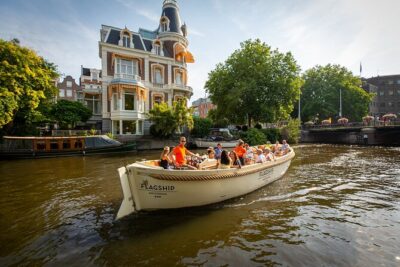
Amsterdam Luxury Canal Cruise + Unlimited Drinks & Bites option
Read our review →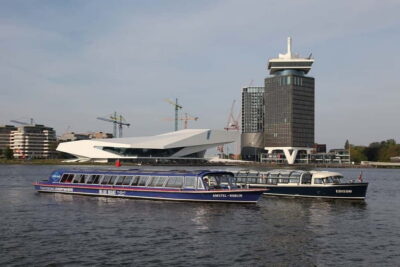
75 Minute City Canal Cruise with Audio Guide
Read our review →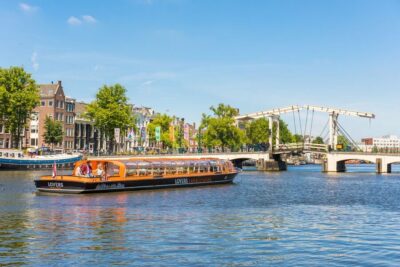
City Canal Cruise and Heineken Experience Ticket
Read our review →
Amsterdam Canal Cruise in Open Boat with Unlimited Drinks Option
Read our review →

Amsterdam Evening Canal Cruise with Live Guide and Onboard Bar
Read our review →
Browse the lists this tour appears in