

Reviewed · MAASTRICHT TOURS
Highlight Running Tour
Maastricht is made for seeing on the move. This 90-minute running tour links Roman-era streets, old fortifications, handsome squares, and the river in one useful circuit, covering far more ground than a walking tour without turning the morning into a race. Guide Raoul is known for matching the pace to the person in front of him, even when that means slowing down for a family or a first-time runner.
I like two things right away: the small group, listed as no more than eight in the practical details, and the route’s mix of famous sights and quieter corners. I also like the flexible spirit shown in Raoul’s approach, with the route adjusted to your interests when possible. The main consideration is simple: you need a moderate level of fitness, and cobblestones, stops, and city traffic make this sightseeing with running rather than a smooth training session.
Key points at a glance

- Raoul sets the pace: The guide can adjust the run to your speed and tailor the route to your interests.
- A compact tour with broad coverage: In about 90 minutes, you reach the Jekerkwartier, Helpoort, Vrijthof, Market Square, Sphinxpassage, and Sint Servaasbrug.
- A genuinely small outing: The tour is advertised for small groups, with the additional information listing a maximum of eight people.
- History arrives in short bursts: Each stop lasts about five minutes, giving you time to hear the story without standing still for a long lecture.
- You run through several sides of Maastricht: Expect Roman-era streets, city parks, medieval defenses, grand homes, former industry, and views toward Wyck.
- Useful extras: Digital running-tour photographs are included, and pickup is offered from hotels in postal codes 6211 or 6221.
Why running is a smart way to see Maastricht
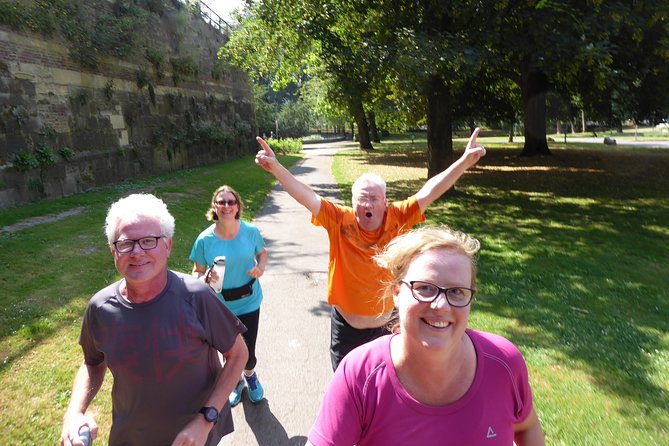
Maastricht’s center is compact, but its sights are spread across different quarters. On foot, you can spend much of a morning covering the same route. A run lets you connect the old center, the southern fortifications, the main squares, the former ceramic district, and the Maas crossing in one outing.
This is not presented as a hard workout. The group runs at a pace suited to all levels, and Raoul’s strongest practical skill is his ability to adjust. One family outing included children and an early start, while another participant had the route changed to fit personal interests. That matters more than a fixed pace or a rigid script.
You should still be comfortable with moderate physical activity. The route includes cobblestone streets, city paths, and repeated stops. You may run for a few minutes, pause for an explanation, and then move on again. It is a good format for seeing the city while keeping your body active, but it is not ideal if you want a leisurely stroll or a focused endurance run.
A few more days out around Maastricht worth weighing up
- e-Scavenger hunt Maastricht: Explore the city at your own pace
★ 4.5 · 110 reviews - Maastricht: Museum of Illusions Entry Ticket
★ 4.2 · 82 reviews - Maastricht Privat Sightseeing City Walk
★ 5.0 · 76 reviews
Starting at the former ceramic factory
The meeting point is at Beluga Loves You, Plein 1992 12, in the former ceramic-factory area. This gives the tour an unusual opening. You do not begin only with old stone and church towers. You start in a modern residential and cultural quarter built on industrial ground.
The nearby Sphinxpassage later returns to this part of the story. The old factory site has been turned into a modern living area and a cultural center, so the first and later sections of the route help you see how Maastricht has changed. I like that framing. You get a sense of the city as a working place as well as an old one.
Hotel pickup is offered from hotels in postal codes 6211 or 6221, so check your location before booking. The details describe the tour as starting from your hotel in those areas, with no extra travel required. If you are outside those postal codes, plan on reaching the stated meeting point yourself.
Stokstraat and the Roman heart
The run moves toward the Stokstraat quarter, a group of streets between the central shopping area and the Jekerkwartier. These streets lead toward Onze Lieve Vrouweplein, one of the key areas connected with Maastricht’s Roman beginnings.
This is a good early stop because it puts the city’s age in context without asking you to stand through a long history talk. The streets are close together, and a running guide can point out how the old center fits together as you move through it.
The short stop, around five minutes, is enough for orientation. You will not get a museum-length explanation at each location, so listen for the details that help you read the streets around you. The value here is the sequence: you are not just seeing an attractive quarter, you are learning why this part of Maastricht became its main heart.
Jekerkwartier, where the old city feels local
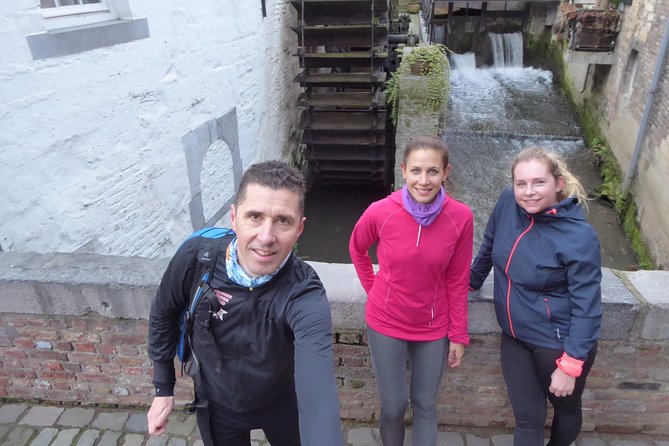
The Jekerkwartier is described as an original, authentic neighborhood in the city center. It is one of the tour’s most appealing stretches because it offers a change from the larger squares and better-known landmarks.
You run through a quarter with small streets and a more intimate feel. Later, the route returns to the western part of the Jekerkwartier, where you see cobblestones, old wall remains, handsome mansions, and decorative gable stones. These details reward a slower eye, and the running format gives you several brief chances to stop and take them in.
Cobblestones are also a practical issue. Keep your stride short and watch the surface, particularly if the pace picks up. The route is designed for sightseeing, but the ground is still historic city pavement, not a running track.
Same canals, a completely different sort of afternoon:
- 2H Walking Tour Maastricht
★ 4.8 · 57 reviews - Maastricht 2-Hour Walking Tour | Discover The City With A Local
★ 4.5 · 57 reviews - Maastricht Hidden Gems Tour Uncover the Unexpected
★ 4.7 · 44 reviews - Explore Maastricht with Passionate Tour Guides
★ 3.9 · 32 reviews
Helpoort and the city parks
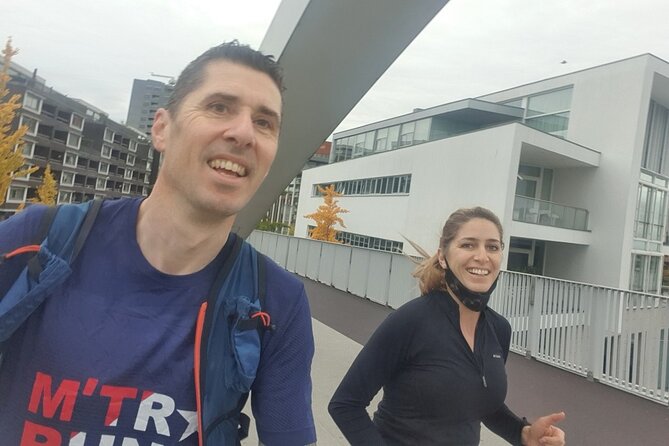
The Helpoort is the oldest surviving land gate in the Netherlands and the only one still visible in Maastricht. It is the sort of sight that can be missed if you only follow the main shopping streets, yet it explains the city’s defensive past at a glance.
From there, the route follows the ancient walls and enters the city park. The park section gives your legs a break from tight streets and adds a little breathing room to the tour. Along the walls, the guide can point out interesting stops that connect the green space with the fortifications.
I like this pairing of gate, wall, and park. You see the defensive structure, then understand how parts of that old edge now serve as a pleasant public area. The stop itself is short, so do not expect every stone or military detail to be explained. The experience works best if you want a clear sense of the city’s shape rather than a specialist lecture on fortifications.
Vrijthof, Maastricht’s grand stage
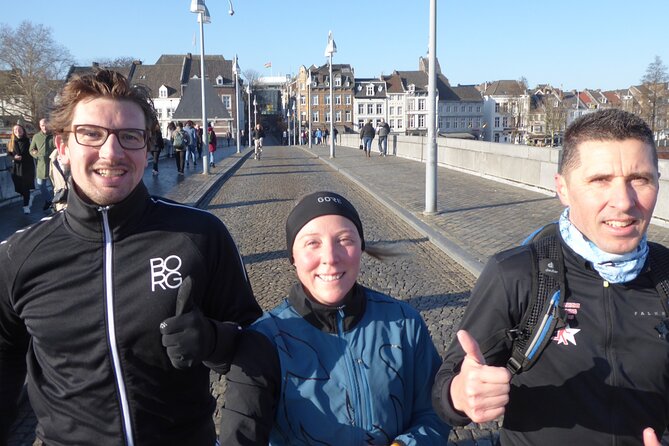
The route then reaches Vrijthof, the city’s main square. It is an important contrast to the narrow lanes of the Jekerkwartier. Here, the scale opens up, with the Basilica of Saint Servatius and Saint John’s Church forming a dramatic backdrop.
Vrijthof is also associated with André Rieu’s annual concerts. That gives the square a modern public role alongside its religious and civic past. The former governor’s palace adds another layer to the setting, and the guide has plenty to explain in a short stop.
This is one of the places where running is especially useful. You arrive with a sense of how the smaller streets feed into the city’s main gathering place. You can pause, look across the square, and then continue before the tour loses its rhythm.
Market Square and Minckeleers
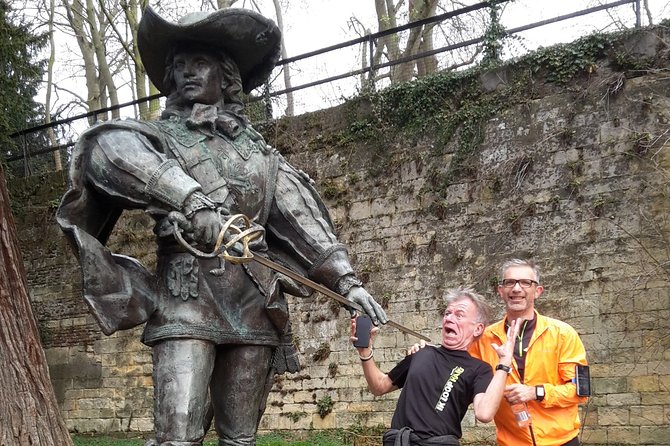
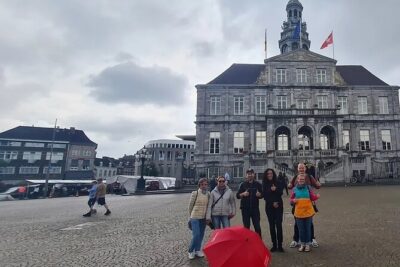
Market Square brings a more civic side of Maastricht into view. The town hall anchors the square, while the statue of Minckeleers recalls the inventor of gaslight.
The stop is brief but well chosen. You get a major building, a public monument, and a practical story about invention in one place. It also helps break up the religious and defensive themes that appear elsewhere on the route.
The square can be a busy urban space, and a moving group has less time to study architectural details than a dedicated walking tour might allow. If the town hall or Minckeleers interests you most, tell Raoul. The tour has room for personal interests, and the guide’s flexible approach is one of its best features.
Sphinxpassage and Maastricht’s modern side
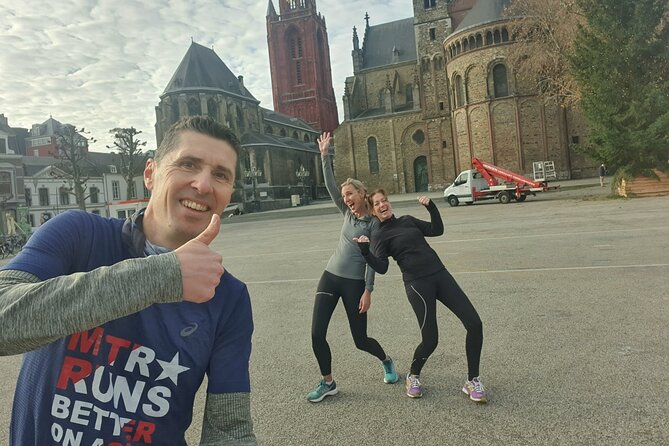
The Sphinxpassage brings the route back to the former ceramic-factory district. The industrial zone has been converted into modern housing and a cultural area, creating one of Maastricht’s clearest examples of old industry gaining a new purpose.
This is more than a quick photo stop. It helps you understand the opening and closing sections of the tour. You began in a former factory area, visited Roman and medieval Maastricht, and then returned to a neighborhood shaped by recent redevelopment.
For me, this is one of the route’s smartest choices. Many city tours treat old buildings as if the city stopped developing centuries ago. Here, the former industrial zone shows a living city that keeps changing. You can compare the factory setting with the historic center instead of seeing each as an isolated attraction.
Sint Servaasbrug and the final river view
The final major stop is Sint Servaasbrug, the oldest bridge in the Netherlands. The bridge has a long story of its own, and it provides a fitting finish because it connects the old center with Wyck across the river.
From the bridge, you also see the former Heineken-owned local brewery. That view adds another reminder that Maastricht’s identity includes trade, industry, and everyday work, not only churches and old walls.
The bridge is a satisfying endpoint for the sightseeing portion, but the activity ends back at the meeting point. You are not left on the far side of the river. The return keeps the logistics simple, though the exact route back is not specified, so you should allow the full 90-minute estimate rather than planning a tight appointment immediately afterward.
What the pace and group size mean for you
The experience is listed as a small-group tour with a maximum of 12 in the headline information, while the additional details give a maximum of eight. Either way, this is much more personal than a large city group. I would use eight as the more useful working expectation, but confirm the final group size when you book if that matters to you.
A small group makes it easier for Raoul to hear your questions and change the pace. The strongest examples from the experience point to exactly that: he adjusted to one person’s speed, gave a family generous time, and changed the route to match a participant’s interests.
The tour is offered in English. A mobile ticket makes the booking easy to carry, and digital running-tour photos are included. The photographs are a nice bonus, especially since you may not want to stop often to take your own pictures while running.
Price, timing, and practical value
At $29.02 per person, the tour sits at a reasonable price for a 90-minute guided city experience, particularly when you count the small-group setting, local commentary, hotel pickup in the specified postal codes, and included digital photographs. You are paying for an active introduction to Maastricht rather than admission to a single attraction.
The value depends on your plans. If you already know the old center and only want a workout, the historical stops may slow you down. If you want to see several districts quickly and prefer activity to standing in a crowd, the price makes more sense.
The tour is often booked about seven days ahead, so I would reserve early if your schedule is fixed. Confirmation is normally provided at booking, although reservations made within two days of the date may receive confirmation within 48 hours and remain subject to availability.
Severe weather is the stated reason for cancellation by the operator. You can cancel for a full refund up to 24 hours before the start time. Inside that window, the amount paid is not refunded and changes are not accepted.
Who should book this running tour?
I would recommend it to an active solo visitor, a couple, or a family that wants an easy way to get oriented. It also suits people who have only one morning in Maastricht and want to connect the main sights without spending the whole time on foot.
It is particularly useful early in a visit. After running through Stokstraat, the Jekerkwartier, Vrijthof, Market Square, and the bridge, you will have a working map of the center and several ideas for places to revisit at a slower pace.
The tour is less suitable if you have limited mobility, dislike uneven streets, or want deep architectural detail at every stop. The information calls for moderate physical fitness, and the route includes cobblestones and repeated running. Service animals are allowed, and the meeting point is near public transportation, but the supplied details do not describe a specific vehicle or accessibility arrangement.
Should you book Maastricht Running Tours?
Book it if you want history with movement, a small group, and a guide who can adjust to your pace. Raoul’s personal approach is the key reason this works better than a fixed sightseeing jog. You can see old neighborhoods, walls, squares, and the river while still feeling that the outing is shaped around you.
Skip it if you want a slow walk, a hard training run, or long indoor visits. For the right visitor, $29.02 buys a lively first look at Maastricht, with enough local context to make the city’s Roman streets, medieval defenses, industrial past, and modern quarters fit together.
FAQ
How long does the Maastricht running tour last?
The tour lasts approximately 1 hour and 30 minutes.
How much does the tour cost?
The listed price is $29.02 per person.
What language is the tour offered in?
The tour is offered in English.
Where does the tour start?
The stated meeting point is Beluga Loves You, Plein 1992 12, 6221 JP Maastricht, Netherlands.
Is hotel pickup available?
Yes. Pickup is offered from hotels in postal codes 6211 or 6221, and the tour details say no extra travel is required from those hotels.
How many people can join the tour?
The experience is described as a small-group tour. The practical details list a maximum of eight travelers, while the highlights mention a maximum of 12, so confirm the final group size when booking if this is important to you.
What happens if I need to cancel?
You can cancel up to 24 hours before the start time for a full refund. Cancellations or changes made less than 24 hours before the experience are not accepted for a refund.
Just added around Maastricht
- e-Scavenger hunt Valkenburg: Explore the city at your own pace★ 4.5 · 20 reviews
- Maastricht Highlights, Architecture & Heritage Tour★ 5.0 · 7 reviews
- Maastricht Medieval Mystery: Interactive City Game & Tour★ 4.0 · 25 reviews
- Maastricht Heritage and Nature Tour★ 5.0 · 6 reviews
- Discover Maastricht with a Smile! Culture, History and People★ 5.0 · 16 reviews
- Maastricht Private Walking Tour With A Professional Guide★ 4.0 · 6 reviews
- Maastricht Self Guided Sherlock Holmes Murder Mystery Game★ 3.5 · 6 reviews
- Maastricht Evening Sightseeing Tour★ 4.5 · 7 reviews
Maastricht Tours, compared.

e-Scavenger hunt Maastricht: Explore the city at your own pace
Read our review →
Maastricht 2-Hour Walking Tour | Discover The City With A Local
Read our review →

Discover Maastricht with a self-guided Outside Escape city game
Read our review →Browse the lists this tour appears in