
Reviewed · WALKING TOURS
Amsterdam: Small-group Guided Walking Tour (French/English)
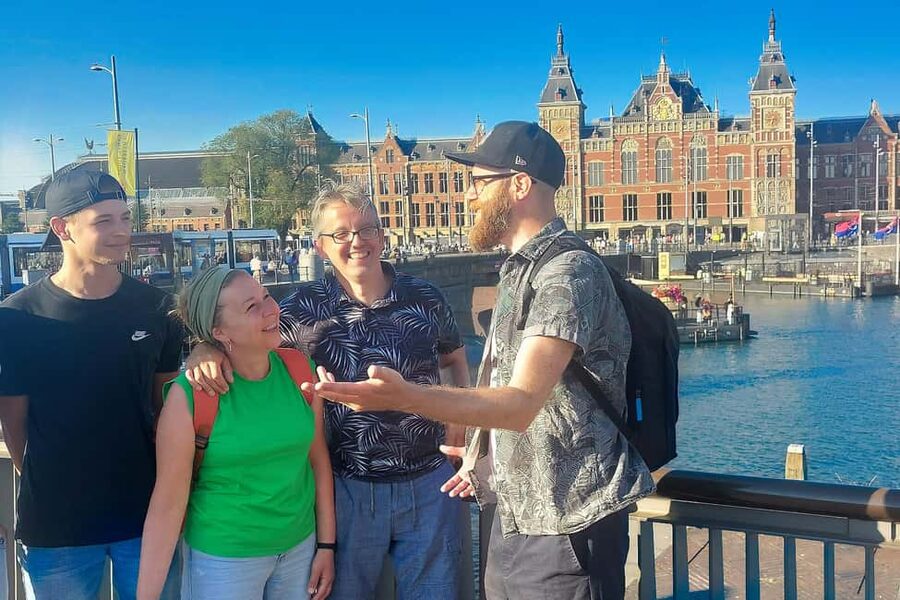
Amsterdam’s best introduction may be a walk that links the city’s grand sights with its odd little details. This tour moves from Amsterdam Centraal through the old center, past crooked canal houses, Chinatown, the Red Light District area, Dam Square, the canal belt, and Jordaan. Along the way, Chris uses stories, historic images, and fun facts to make the city easier to read.
I like two things here. First, the route covers a lot of ground efficiently, which is useful when you have only a day or two. Second, Chris is praised for practical help, from restaurant and café suggestions to directions for areas you may not have found on your own. The main consideration is time: with 21 listed stops in two to three hours, this is an orientation walk, not an in-depth visit inside each attraction.
Key points at a glance
- A strong first-day walk: Start near Amsterdam Centraal and finish in Jordaan with a clear sense of how the center fits together.
- Chris brings the stories: Expect explanations of the Golden Age, tulip mania, Dutch daily life, Anne Frank, and the city’s growth along the Amstel.
- French or English: A live local guide leads the walk in either language.
- Many landmarks, mostly from outside: You stop for photos and commentary rather than entering every museum or church.
- Useful follow-up advice: You receive links and suggestions for food, drinks, shopping, boat trips, and sightseeing.
- Small-group or private options: The format allows questions and possible route adjustments when practical.
Starting beside the ferries at Amsterdam Centraal
The meeting point is behind Amsterdam Centraal Station, beside the water where the white and blue ferries leave for Amsterdam Noord. Look for Pancakes Amsterdam at the IJ, the large D ferry halte sign beside the bike lane, and the guide wearing glasses, a beard, and a baseball hat.
This is a handy place to begin, but give yourself time to find it. Amsterdam Centraal has several exits, layers of bicycle traffic, and a steady stream of people heading for trains and ferries. If you arrive by train, follow signs toward the rear waterfront side of the station rather than the main city-center frontage.
The walk lasts two to three hours. That range matters. A smaller group, lots of questions, or a flexible route can make the walk longer, while a brisk group may finish closer to two hours. Wear comfortable shoes, carry water, and bring an umbrella and clothing suited to the weather. Food and drinks are not included.
More Walking Tours in Amsterdam
- Anne Frank’s Story – Guided Walking Tour through Amsterdam
★ 5.0 · 11,619 reviews - Amsterdam: Life of Anne Frank and World War II Walking Tour
★ 4.8 · 10,467 reviews - Absolutely Amsterdam – the Essential Introductory Walking Tour
★ 5.0 · 3,629 reviews
The station, dancing houses, and old harbor edge
The first stop is Amsterdam Centraal itself, usually a short guided photo stop. The station is more than a transport hub. It gives your guide a natural place to explain Amsterdam’s position as a trading city and the way the waterfront shaped its growth.
From there, you see the Dancing Houses, a row of narrow buildings famous for their leaning and uneven appearance. This is a quick stop, but it sets the tone for the walk. Amsterdam is full of buildings that look slightly impossible, and a local guide can explain what you are looking at rather than leaving you with a quick photograph and no context.
The Basilica of Saint Nicholas comes next. Its domes and towers offer a strong contrast with the narrow merchant houses nearby. The tour treats these early landmarks as visual clues, helping you connect religious buildings, trade, housing, and the city’s changing identity.
Zeedijk, Chinatown, and Amsterdam’s mixed character
Zeedijk Street leads you through one of the oldest parts of central Amsterdam. It is a useful place to see how the city has changed while retaining traces of its earlier street plan.
The route includes the Major Alida Bosshardt Statue, honoring the Salvation Army figure associated with work in Amsterdam’s center. This stop adds a social side to the tour. You are not only looking at buildings and dates, but also at people who shaped city life.
You then pass Ons’ Lieve Heer op Solder, the Our Lord in the Attic Museum. The museum is famous for its concealed church inside a canal house, but this walking tour lists it as a photo and commentary stop. If you want to see the interior, plan a separate visit and do not expect admission to be part of the walk.
The route continues to Amsterdam Chinatown. Its presence adds another layer to the city center and gives the guide a chance to discuss Amsterdam’s multicultural character. This is one of the tour’s useful features: the old center is not presented as a preserved museum piece. It is still a place where people live, work, eat, worship, and shop.
Oude Kerk and the old east side
The Oude Kerk is one of Amsterdam’s major historic landmarks and one of the clearest reminders that the city’s oldest core predates the elegant canal belt. You stop outside for a guided look and photographs.
The tour then crosses through Burgwallen Oude Zijde, the old eastern side of the center. This area can feel crowded and fast-moving, especially around the Red Light District. The guide’s role is especially helpful here, since the narrow streets can be confusing and the area is easy to misunderstand if you only see it as a nightlife zone.
De Waag is another quick stop. The building has served different roles over time, and its heavy medieval appearance makes an interesting contrast with Amsterdam’s lighter canal architecture. Nearby, the route touches on the VOC, or Dutch East India Company, placing the city’s wealth in the context of overseas trade.
That context is valuable, but it should also prompt questions. Amsterdam’s Golden Age brought impressive buildings and commercial power, yet it was tied to exploitation and colonial trade. A good walking tour should help you see both the achievement and the cost, and the supplied description indicates that the guide discusses the city’s evolution rather than offering only postcard views.
A few more days out around Amsterdam worth weighing up
- Amsterdam: Van Gogh Museum Ticket
★ 4.7 · 52,054 reviews - Amsterdam Classic Saloon Boat Cruise with Drinks and Cheese
★ 5.0 · 31,825 reviews - Amsterdam Luxury Canal Cruise + Unlimited Drinks & Bites option
★ 5.0 · 30,518 reviews - Amsterdam: Heineken Experience Ticket
★ 4.6 · 30,055 reviews
The narrowest house and the heart of Amsterdam
The Narrowest House in Europe is a classic quick-stop attraction. It is exactly the sort of detail that is easy to miss when walking alone, and it gives your guide an opening to explain why Amsterdam’s historic houses were built so narrow and tall.
Next comes Dam Square, the city’s central public space. You see the Royal Palace, a major landmark that began as Amsterdam’s town hall, along with Magna Plaza across the way. These buildings help show the shift from a merchant republic with civic ambitions to a modern capital filled with shops, public institutions, and visitors.
Dam Square can be busy, so do not expect a quiet pause. The benefit is orientation. After this point, you should have a better sense of how the station, old center, palace, shopping streets, and canals connect.
Because the stop at the Royal Palace is guided from outside, you will not tour its rooms on this activity. If the palace interior is important to you, treat this walk as a useful preview and arrange separate admission.
Torensluis and the 400-year-old canal belt
Torensluis Bridge is one of the most attractive points on the route. From here, the tour moves toward the Grachtengordel, Amsterdam’s historic canal belt and a UNESCO World Heritage site.
This is where the city’s famous layout begins to make real sense. Instead of seeing canals as isolated pretty views, you can understand them as part of a planned expansion tied to trade, wealth, transport, and housing. The canal houses are not just scenic backdrops. Their narrow fronts, tall proportions, and varied details reflect the pressures and possibilities of building in a valuable city center.
The guide also brings in stories of tulip mania and other Dutch anecdotes. These lighter stories help break up the architecture and dates. Chris is repeatedly praised for small details, humor, visual aids, and answers to questions, so this section should suit you if you prefer a walk led by conversation rather than a memorized speech.
The canal belt is also a point where pace matters. There are many tempting photographs, but this is still a walking tour with a route to cover. You will get a broad introduction rather than time to linger at every bridge.
Anne Frank House, Westerkerk, and the Jordaan
The Anne Frank House is a major stop, but the tour does not include entry. The guide discusses Anne Frank and the wartime story connected with the house, then continues to nearby Westerkerk.
This is a meaningful part of the walk, but it can also be emotionally weighty. You should see the stop as historical orientation, not as a substitute for visiting the museum. Anne Frank House tickets are a separate matter, and this tour does not provide access.
Westerkerk adds architectural and local context to the same area. Its tower is one of Amsterdam’s best-known landmarks, and the church helps anchor the canal-side setting around the Anne Frank House.
The final area is Jordaan. This is a fitting place to finish because it lets the tour move from major landmarks to neighborhood character. You may see a mix of canals, small streets, local businesses, and the residential feel that gives Jordaan its appeal. The itinerary may be adjusted for construction, local conditions, or your interests when possible, so the exact finish can vary.
What Chris adds beyond the sights
The strongest part of this experience is the guide’s storytelling. Chris is described as friendly, funny, easy to talk with, and highly prepared. He answers questions rather than rushing past them, and he has used visual material to explain historic places and buildings.
That makes a difference in Amsterdam. A short walk can easily become a string of photographs: church, palace, canal, bridge, next stop. A guide who explains why the city developed as it did gives you a useful framework for the rest of your stay.
The practical advice is another real benefit. At the end, you receive electronic links and suggestions covering Dutch food, restaurants, cafés, pubs, souvenir shops, boat trips, shopping, and further sightseeing. If you ask about an area you have not visited, the guide may point you toward it or explain how to get there.
Past recommendations have included bitterballen, a classic Dutch snack. That kind of food tip is more useful than a generic list of top restaurants because it gives you something specific to try after the walk.
How much ground do you cover?
The route is ambitious for two to three hours. It includes the station, old center, Zeedijk, Chinatown, the canals, Dam Square, the Royal Palace, Anne Frank House, Westerkerk, and Jordaan. You get breadth, but not long visits at individual sights.
Most listed stops are about five minutes of guided commentary and photographs. That format works best if you want to get your bearings early in your visit, learn what deserves a return visit, and ask a local how to spend the rest of your time.
It is less suitable if you want extended time inside museums, detailed architectural study, or a slow photography walk. There is no food or drink included, and the experience remains outdoors. Rain will not necessarily cancel the walk, so the umbrella on the packing list is practical advice.
The route is listed as wheelchair accessible. Since the path moves through busy historic streets and includes many outdoor stops, it is still sensible to confirm current route conditions when booking if you have specific mobility needs.
Is $33 a fair price?
At $33 per person, this is good value if you use it as a city orientation rather than a collection of admissions. You are paying for a local guide, a long central route, live commentary in English or French, and practical follow-up information.
The value grows if you are visiting Amsterdam for the first time. In a single walk, you can identify the main districts, see the canal belt, learn which landmarks deserve more time, and get restaurant and sightseeing suggestions before you spend the rest of your budget.
The price is less compelling if you already know the center well or only want one specific attraction. Since the tour does not include food, drinks, or entry to places such as the Anne Frank House, Our Lord in the Attic Museum, or the Royal Palace, budget separately for those visits.
Small groups and private bookings are available. A small group should give you a better chance to ask questions than a large coach-style tour, while a private option may suit families or groups with particular interests. The itinerary can sometimes shift to fit your interests, construction, or other unexpected problems.
Who should book this walk?
I would choose this tour for a first visit, especially if you arrive with limited time and want to understand central Amsterdam quickly. It also fits returning visitors who want local stories, less obvious details, and fresh suggestions for food or neighborhoods.
It suits people who enjoy history told through places, not just formal museum displays. The mix of tulip mania, Dutch daily life, Anne Frank, trade, architecture, and small street details keeps the walk varied.
French speakers have a clear reason to consider it, since French is offered alongside English. Families and curious independent explorers may also like the question-friendly format, provided everyone is comfortable walking for two to three hours.
I would look elsewhere if your main goal is a museum visit, a canal cruise, or a slow stroll with long café breaks. This is a fairly full route with many short stops. You will see more by moving steadily, but you will need to return later to the places that catch your eye.
Should you book the Amsterdam walking tour?
Book it if you want a smart first look at Amsterdam with a guide who explains the city and then helps you plan the rest of your stay. Chris receives consistent praise for clear history, humor, patience, useful links, and restaurant advice, all of which add value beyond the route itself.
Go in with the right expectation. You are not entering every major sight, and you are not getting a relaxed half-day visit to each neighborhood. You are getting a well-packed walk through Amsterdam’s old center, canal belt, and Jordaan, with enough stories to turn confusing streets into a city you can explore on your own.
Free cancellation is available up to 24 hours before the start, and you can reserve while paying later. Those flexible terms help if your arrival plans are still shifting.
FAQ
How long does the Amsterdam walking tour last?
The tour lasts two to three hours. The exact duration can depend on the group, questions, pace, and any route changes.
What languages are available?
A live guide leads the tour in English or French.
Where does the tour meet?
It meets behind Amsterdam Centraal Station, beside the IJ waterfront where the white and blue ferries leave for Amsterdam Noord. Look near Pancakes Amsterdam at the IJ and the large D ferry halte sign beside the bike lane.
How can I identify the guide?
The meeting information says the guide will wear glasses, have a beard, and wear a baseball hat.
Does the tour enter the Anne Frank House?
No. The Anne Frank House is included as an outdoor guided stop and photo stop. Entry is not listed as part of the activity.
Are food and drinks included?
No. Food and drinks are not included, although the guide provides recommendations for restaurants, cafés, pubs, Dutch food, and drinks.
Is the tour wheelchair accessible?
Yes. The activity is listed as wheelchair accessible.
Are private tours available?
Yes. You can book a private option or join a small group.
Can I cancel the booking?
You can cancel up to 24 hours in advance for a full refund. Reserve-now, pay-later booking is also available.
Just added around Amsterdam
- From Amsterdam: The Hague Private Trip and Mauritshuis Entry★ 4.3 · 4 reviews
- VIP Private Full Day Tour of the Netherlands★ 4.8 · 6 reviews
- Amsterdam Old-West Vegan Food Tour with Local Guide★ 4.7 · 3 reviews
- Amsterdam: Van Gogh Museum Guided Tour★ 4.8 · 262 reviews
- Van Gogh Museum Private Guided Tour★ 4.2 · 10 reviews
- Vecht River: Full-day Cruise with Lunch★ 4.8 · 9 reviews
- Van Gogh and Rijksmusuem Tour: Small Group Tour with Entry★ 4.7 · 3 reviews
- Amsterdam: Van Gogh Museum Ticket & Guided Tour★ 4.4 · 187 reviews
Walking Tours, compared.

Anne Frank’s Story – Guided Walking Tour through Amsterdam
Read our review →
Life of Anne Frank and World War II Walking Tour
Read our review →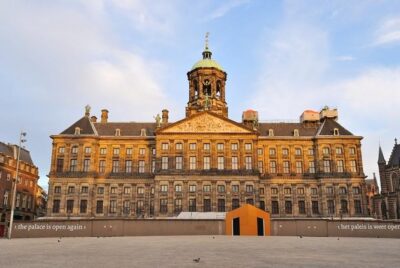
Absolutely Amsterdam – the Essential Introductory Walking Tour
Read our review →

Anne Frank Walking Tour – Guided in EN/DE/IT/ES
Read our review →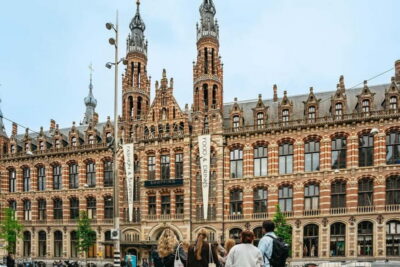

Anne Frank Walking Tour Amsterdam Including Jewish Cultural Quarter
Read our review →Browse the lists this tour appears in