
Reviewed · WALKING TOURS
Amsterdam Small-Group Walking Tour
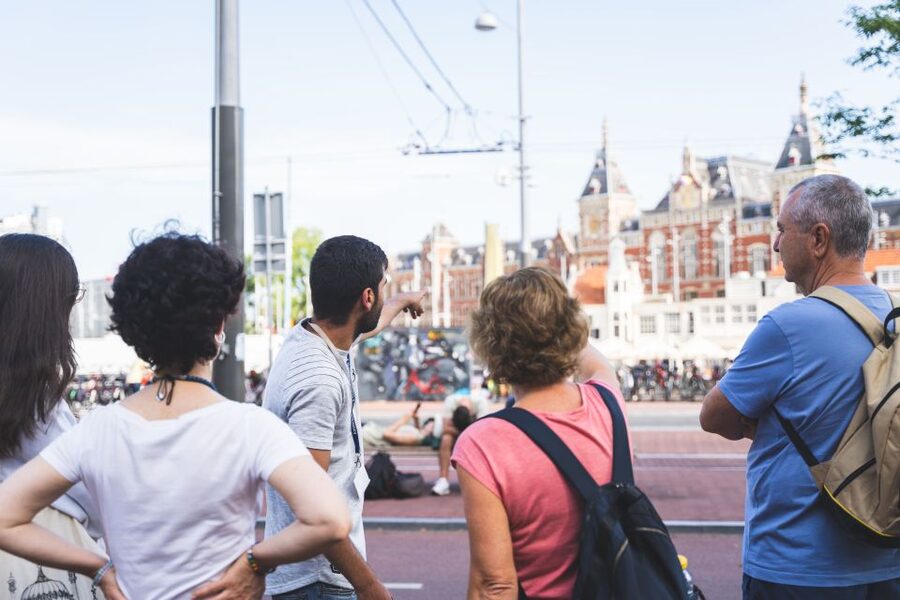
Amsterdam’s story changes every few streets. A grand palace gives way to a narrow lane, a medieval church sits near the Red Light District, and a quiet courtyard hides behind the city center’s noise. This 2.5-hour walking tour connects those contrasts with clear stories and plenty of local context.
I like the small groups of up to 10 because you can ask questions without shouting across a crowd. I also like the practical finish: your guide offers tips for cafés, food, shopping, and places to explore next. The main drawback is simple: you cover a lot on foot, so cold, rain, or tired legs can affect the experience.
Key points at a glance
- A useful first look at Amsterdam: Cover the central sights before setting out on your own.
- Small groups up to 10 people: Guides can adjust the pace and answer personal questions.
- More than postcard views: Hear about the Golden Age, prostitution, drug policy, Nazi occupation, and Dutch life today.
- A well-spread route: Visit Dam Square, Zeedijk, Nieuwmarkt, Begijnhof, the Flower Market, and other central stops.
- Guide style matters: Rob, Claire, Karl, Pia, Toni, Laura, and others are praised for humor, warmth, and clear explanations.
- Good value at $20: You get a broad city orientation without museum admission fees or transport costs.
Why this makes a smart first activity in Amsterdam
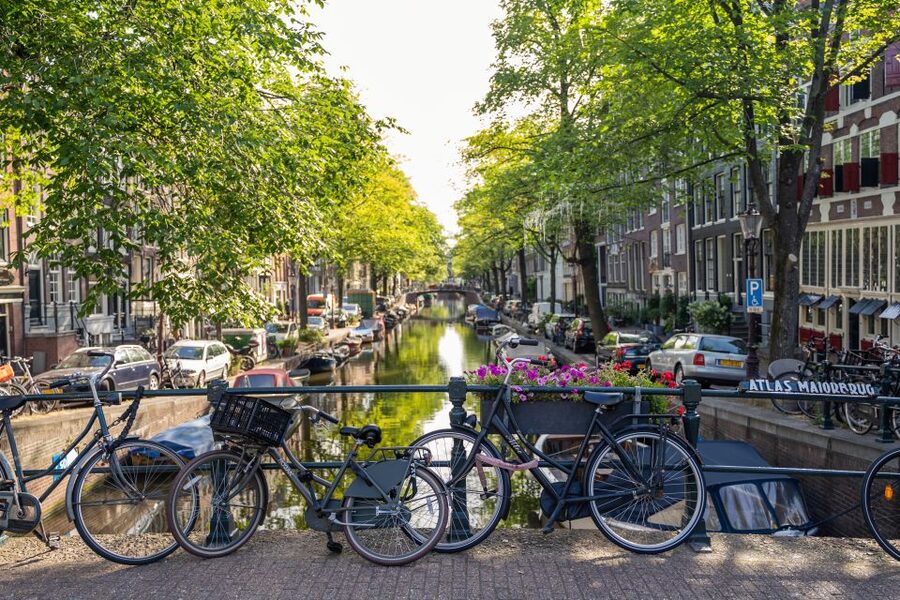
I like this walk because it gives you a mental map before you spend time inside museums or wander farther from the center. Amsterdam can feel confusing at first. Canals bend the streets, bicycles move quickly, and several major sights sit close together but tell very different stories.
The tour begins at Beursplein, near the center of the city. From there, you move through Amsterdam’s oldest core and finish back at the same square. That makes the tour easy to fit into a first day, especially if you want an introduction before choosing which museums, neighborhoods, and cafés deserve more of your time.
The guide’s job here is not only to point at buildings. You hear how a muddy settlement along the Amstel became a major trading center during the Dutch Golden Age. You also hear about the city’s more uncomfortable subjects, including prostitution, drug policy, religious tolerance, the Nazi occupation, and the loss of Amsterdam’s Jewish population during World War II.
That range is important. A tour that only celebrates canals and wealthy merchants gives you a polished but incomplete picture. This one aims to explain Amsterdam’s contradictions, including its tolerant image and the difficult questions behind it.
More Walking Tours in Amsterdam
- Anne Frank’s Story – Guided Walking Tour through Amsterdam
★ 5.0 · 11,619 reviews - Amsterdam: Life of Anne Frank and World War II Walking Tour
★ 4.8 · 10,467 reviews - Absolutely Amsterdam – the Essential Introductory Walking Tour
★ 5.0 · 3,629 reviews
Starting at Beursplein and entering the old center
Meet your guide in front of the Cafe Bistro at Beursplein 1, beside the bull figure. Look for a blue umbrella or a tag marked with the Amsterdam Guides & Tours logo.
Beursplein is a practical starting point because it puts you directly into the historic center. The opening guided section lasts about 20 minutes, giving the guide time to set the scene before the group moves on. You can expect an overview of Amsterdam’s growth, trade, architecture, and present-day character.
The small group changes the feel of this opening. Guides such as Toni and Claire have been praised for encouraging questions and keeping the pace relaxed. If you want to ask how Amsterdam works today, rather than only hear dates and names, this is a good moment to do it.
Dam Square, Nieuwe Kerk, and the Royal Palace
The walk continues to Dam Square, where the guided portion lasts about 10 minutes. This is one of the city’s main public spaces, and the guide uses it to connect Amsterdam’s civic life with its royal and religious past.
You then stop at Nieuwe Kerk for about five minutes and the Royal Palace for another five-minute photo stop. These are brief pauses, not full interior visits. That matters if you hoped to tour the palace or church. Entrance fees are not included, and the route does not promise time inside either attraction.
Still, the outside views are useful early in your stay. Your guide can explain what you are looking at, and you can return later if one of the buildings catches your interest. I prefer this approach on an orientation walk because it keeps the group moving instead of turning a short introduction into a string of ticketed visits.
Zeedijk and Nieuwmarkt: Amsterdam’s older, livelier side
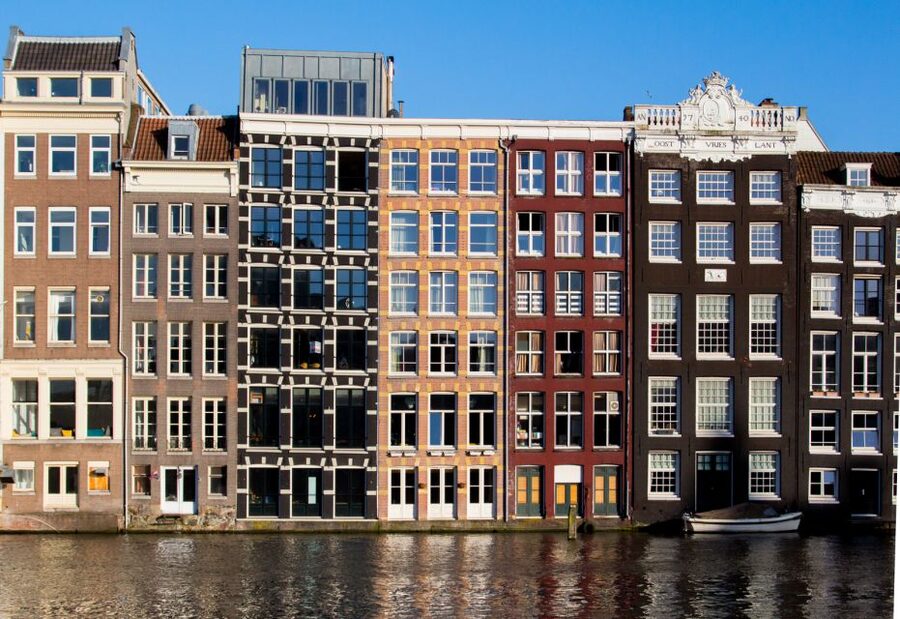
At Zeedijk Street, the guide spends around 10 minutes discussing the area and its place in Amsterdam’s development. The street helps show how the city’s historic center is not one single style. You move through an old urban setting where commerce, nightlife, religion, and daily life sit close together.
The next stop is Nieuwmarkt Square, with about 15 minutes of guided explanation. Here, the city’s past comes into sharper focus. You may hear more about the medieval center, Amsterdam’s changing trade patterns, and the buildings that survived as the city grew.
This section is also a good example of why a local guide can add value beyond a map. Without context, a square can look like just another attractive stop. With the right explanation, you begin to see how streets and public spaces reflect the city’s changing needs.
A few more days out around Amsterdam worth weighing up
- Amsterdam: Van Gogh Museum Ticket
★ 4.7 · 52,054 reviews - Amsterdam Classic Saloon Boat Cruise with Drinks and Cheese
★ 5.0 · 31,825 reviews - Amsterdam Luxury Canal Cruise + Unlimited Drinks & Bites option
★ 5.0 · 30,518 reviews - Amsterdam: Heineken Experience Ticket
★ 4.6 · 30,055 reviews
The Jewish Cultural District and Zuiderkerk
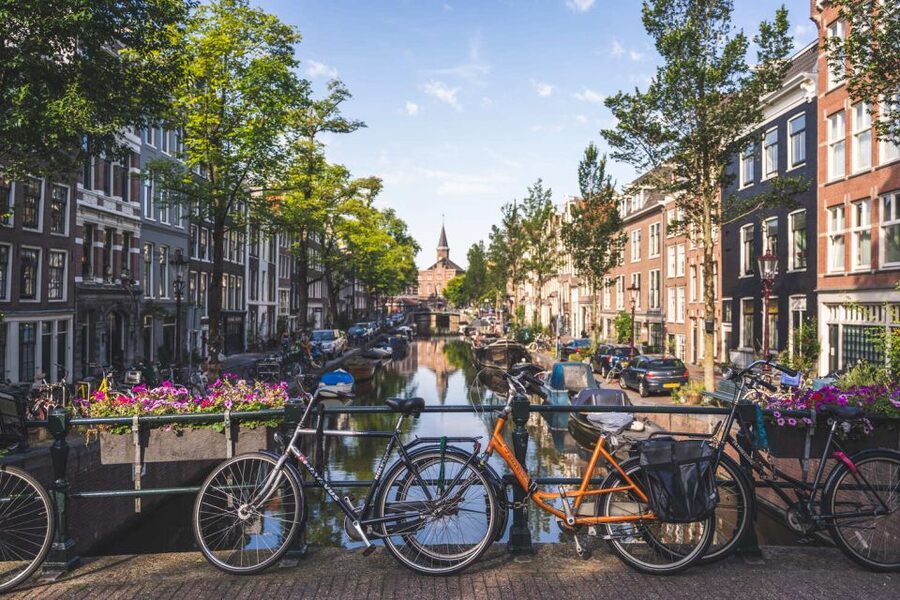
The tour then reaches the Jewish Cultural District for about 10 minutes of guided discussion. This is one of the more serious parts of the walk. The guide addresses Jewish life in Amsterdam, the Nazi occupation, and the devastating loss of Jewish residents during World War II.
The Anne Frank story is part of the wider historical picture, but this tour is not a substitute for visiting the Anne Frank House. No museum entrance is included, and the route does not promise admission there. If Anne Frank’s life is a central reason for your visit, use this stop as background and reserve a separate museum visit.
Zuiderkerk follows as a short photo stop. The church provides another chance to see how religion shaped the old city, even as Amsterdam developed a reputation for tolerance and commercial openness. I appreciate that the tour places this material among everyday streets and public spaces rather than treating it as a detached lecture.
Begijnhof and Amsterdam’s quieter details
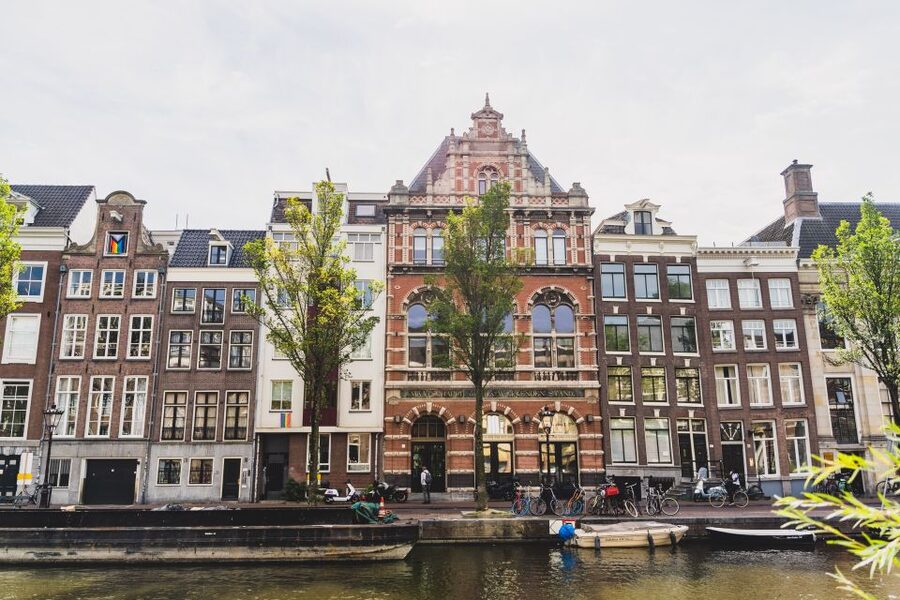
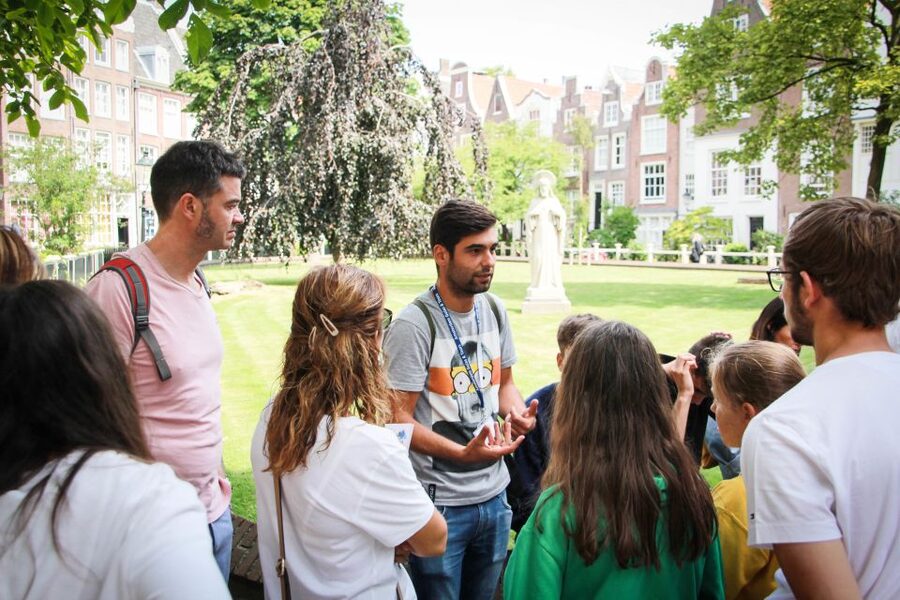
The visit to Begijnhof lasts about 20 minutes, making it one of the longer stops. This secluded courtyard is a welcome change after the busier central streets. The guide can help you notice details you might otherwise pass without understanding.
Begijnhof also supports one of the tour’s main strengths: showing that Amsterdam’s character is found in small spaces as well as major monuments. The route includes famous landmarks, but it also points out streets, courtyards, churches, and stories that are easy to miss when you explore without local guidance.
Keep your expectations practical. This is still a group visit, not an extended private photography session. If the group is full, you may have less time to linger than you would alone. The limited size helps, though, and guides are able to answer questions and give the group a little breathing room.
The Flower Market and Muntplein

The Amsterdam Flower Market receives about 20 minutes, the longest stop on the final stretch of the route. It gives you time to see one of the city’s well-known shopping areas and hear how it fits into Amsterdam’s modern visitor economy.
I would treat this as an introduction rather than a required shopping stop. You can look around, ask your guide where locals shop, and decide if anything interests you. The guide can also offer suggestions for food, drinks, and other parts of the city.
The final stop is Muntplein, used mainly for a five-minute photo stop. From there, the group returns to Beursplein 1. Because the walk ends where it began, you can move on easily to another central attraction or follow your guide’s suggestions for lunch, coffee, or an evening outing.
The subjects are broad, including the uncomfortable ones
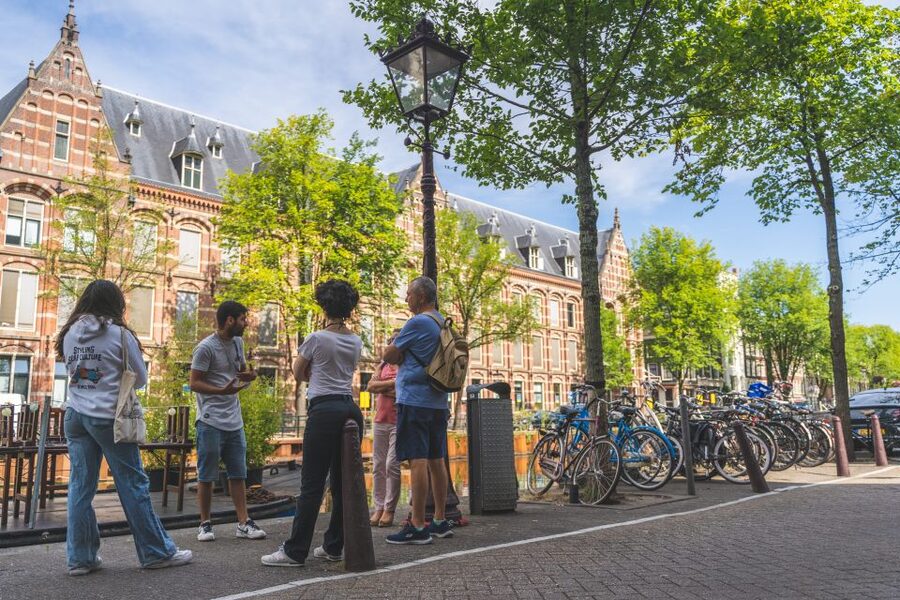
The tour’s subject list is unusually wide for a two-and-a-half-hour city walk. You cover:
- Amsterdam’s beginnings along the Amstel River
- The Dutch Golden Age and international trade
- Dutch culture and the city’s tolerant reputation
- The Red Light District and the changing role of prostitution
- Dutch drug decriminalization policies
- Religious and Jewish history
- The Nazi occupation and World War II
- Anne Frank’s story as part of Amsterdam’s wartime memory
- Present-day life, food, shopping, and local customs
The guide’s tone matters with topics such as prostitution and drugs. The material is presented as part of Amsterdam’s legal, social, and political development, not only as sensational entertainment. You should still expect some frank discussion, since these subjects are central to the route’s promise.
Several guides are especially noted for mixing humor with serious material. Ilyan is described as using dry humor and foreshadowing. Karl is praised for random facts, personal warmth, and easy conversation. Claire is repeatedly described as funny, friendly, and good at making facts approachable. Rob, Pia, Laura, Toni, and others are also praised for answering questions and adjusting their approach to the group.
The exact guide and storytelling style can vary. That is normal for a small-group experience with several guides. You might get a more comic presentation, a more historical one, or a relaxed conversation that follows your group’s questions.
Small groups, pace, and the real meaning of $20

At $20 per person, the tour is inexpensive for a 2.5-hour introduction to central Amsterdam. You are paying for a guide’s time and interpretation, not for admission to attractions or transportation. If you plan to visit several museums, those costs come later.
The value is strongest if this is your first visit or if you want help getting oriented. A good guide can save you from treating every old building as just another photo stop. You also leave with suggestions for where to eat, drink, shop, and continue exploring.
The group limit of 10 is another reason the price works. A large city walk can become a listening exercise in which you struggle to hear and cannot ask much. Here, the guide can pause for questions, take photos, and adjust the pace more easily. Some departures may be even smaller, particularly in the colder months, though you should not book expecting a private tour.
Pacing is generally described as comfortable. The route includes many stops, so the walk is not simply two and a half hours of continuous movement. You should still wear comfortable shoes and bring a drink. Rain and cold wind are possible concerns, and one January departure took place in icy conditions, so dress for the weather.
The activity information calls the tour wheelchair accessible but also says it is not suitable for people with mobility impairments. Those statements do not fully match. If you have limited mobility, contact the provider before booking and ask about the route, surfaces, rest opportunities, and current accessibility arrangements.
Who will get the most from this walk
I would choose this tour for a first or second day in Amsterdam. It gives you enough background to make later visits more meaningful, especially if you plan to see the Anne Frank House, major museums, or neighborhoods such as Jordaan.
It also suits you if you enjoy:
- History explained through real streets and buildings
- A guide who can answer questions about modern Dutch life
- A mix of famous sights and lesser-seen corners
- Small groups rather than large crowds
- Humor alongside serious subjects
- Practical food, café, and shopping suggestions
I would not choose it as your only Amsterdam activity. The tour does not include museum entries, a canal cruise, or transport to sights outside the central walking route. It gives you a framework, then you need to follow up on the subjects that interest you.
It may also be less suitable if you dislike walking, want a very slow photography outing, or prefer a tightly scripted historical lecture. The route covers a wide area and many themes, so some stops receive only five or 10 minutes.
Booking details that matter
The tour runs for approximately 2.5 hours, with start times shown when you check availability. English and Spanish tours are offered, and the group is limited to 10 participants.
The meeting and ending point is Beursplein 1. Transportation to and from the meeting point is not included, so plan your own way there. Food and drinks are also not included, though the guide can suggest places to eat and drink.
You can cancel up to 24 hours before the tour for a full refund. A reserve-now, pay-later option is available, which helps if your Amsterdam schedule is still changing.
Should you book the Amsterdam Small-Group Walking Tour?
I would book it if you want a broad, good-value introduction before exploring Amsterdam on your own. The strongest features are the small group, the central route, the mix of major sights and overlooked stories, and the guides’ ability to keep the material human and entertaining.
Book with realistic expectations. You will not enter every landmark, and the tour cannot explain every corner of Amsterdam in 2.5 hours. But for $20, you get a useful city framework, serious historical context, practical local suggestions, and the confidence to plan the rest of your visit.
FAQ
Where does the Amsterdam walking tour start?
The tour starts at Beursplein 1, in front of the Cafe Bistro beside the bull figure. The guide carries a blue umbrella or wears a tag with the Amsterdam Guides & Tours logo.
Where does the tour finish?
The walk returns to Beursplein 1, the same place where it begins.
How long does the tour last?
The tour lasts approximately 2.5 hours. The exact route and stories may vary depending on the guide and the needs of the group.
What languages are available?
The live tour is offered in English and Spanish.
How many people are in the group?
The group is limited to 10 participants.
Are museum entrance fees included?
No. Entrance fees to museums and other attractions are not included.
Is food or drink included?
No. Food and drinks are not included. The guide can recommend local places to eat and drink.
What should I bring?
Bring comfortable shoes and drinks. The activity involves walking, so prepare for a sustained walk through the city center.
Just added around Amsterdam
- From Amsterdam: The Hague Private Trip and Mauritshuis Entry★ 4.3 · 4 reviews
- VIP Private Full Day Tour of the Netherlands★ 4.8 · 6 reviews
- Amsterdam Old-West Vegan Food Tour with Local Guide★ 4.7 · 3 reviews
- Amsterdam: Van Gogh Museum Guided Tour★ 4.8 · 262 reviews
- Van Gogh Museum Private Guided Tour★ 4.2 · 10 reviews
- Vecht River: Full-day Cruise with Lunch★ 4.8 · 9 reviews
- Van Gogh and Rijksmusuem Tour: Small Group Tour with Entry★ 4.7 · 3 reviews
- Amsterdam: Van Gogh Museum Ticket & Guided Tour★ 4.4 · 187 reviews
Walking Tours, compared.

Anne Frank’s Story – Guided Walking Tour through Amsterdam
Read our review →
Life of Anne Frank and World War II Walking Tour
Read our review →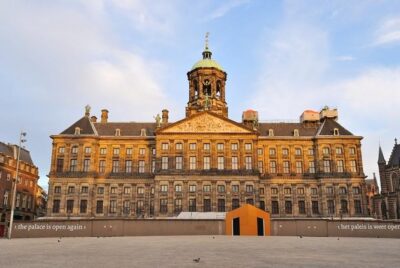
Absolutely Amsterdam – the Essential Introductory Walking Tour
Read our review →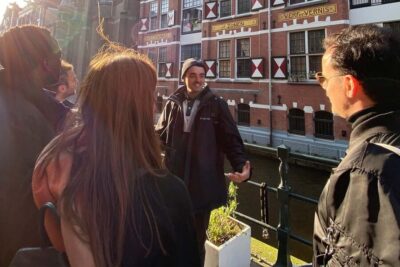

Anne Frank Walking Tour – Guided in EN/DE/IT/ES
Read our review →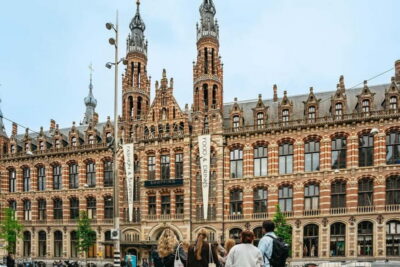

Anne Frank Walking Tour Amsterdam Including Jewish Cultural Quarter
Read our review →Browse the lists this tour appears in