
Reviewed · ANNE FRANK WALKING TOURS
Liberal Amsterdam: Small-Group Walking Tour & Anne Frank VR
Amsterdam’s liberal spirit comes through in the small, human details on this walk: resistance stories, Jewish families in hiding, unusual toilets, leaning houses, houseboat life, and quiet corners near the Red Light District. Antonis uses books, chalk drawings, humor, and questions to make the city feel like a conversation rather than a lecture.
I like the route’s mix of serious places and everyday Amsterdam, especially the Holocaust Names Monument and the lesser-seen streets between the main sights. I also like the personal touches: coffee, chocolate, a Polaroid, and a handwritten postcard. The main consideration is pace and access. You walk for about two hours on city streets and bridges, and the experience is not suitable for wheelchair users. The VR section is also optional and uses one shared headset, so it is informal rather than a full exhibit.
Key points to know before booking
- WWII stories with a human focus: Hear about resistance, Jewish families in hiding, and Anne Frank’s wartime story.
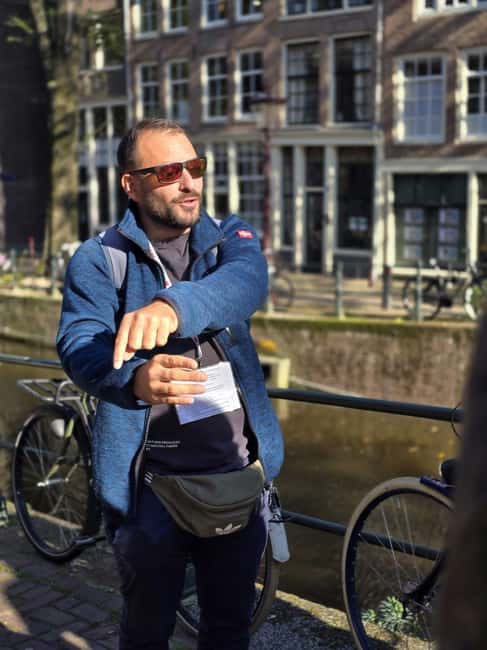
- A local guide with personality: Antonis brings humor, chalk sketches, questions, and practical city advice.
- A thoughtful route: The walk links Centraal Station, the Jewish Quarter, the Holocaust Names Monument, Magere Brug, Nieuwmarkt, and Waag.
- Small-group feel: The activity is advertised for a limited group, with capacity details listed as either six or ten, so check the date when booking.
- Coffee and keepsakes: A coffee break, bottled water, chocolate or another Dutch sweet, a Polaroid, and a personalized postcard are included.
- Optional Anne Frank VR: You can step into a virtual Secret Annex after the walk, but one headset is passed around.
Amsterdam’s liberal soul, told through ordinary lives
This is a good choice if you want Amsterdam explained through people and choices, not just dates and building names. The tour connects WWII, resistance, education, water management, social tolerance, and modern city life without treating them as separate subjects.
Antonis is the guide, and his approach is notably personal. He brings books and chalk drawings, asks questions, and leaves room for conversation. That matters on a topic as heavy as wartime Amsterdam. You are not simply marched from one plaque to another. You are encouraged to think about how a city works, how people protect one another, and how Amsterdam’s ideals have changed over time.
The tone is not solemn for three straight hours. You may hear about leaning houses, strange toilets, houseboats, local food shops, and restaurant tips alongside stories of occupation and persecution. I like that contrast. Amsterdam can feel like a postcard city until someone explains the engineering, social rules, and private lives behind the façades.
The walk costs about $33 per person. For three hours, a small group, a live guide, coffee, a sweet, water, a Polaroid, a postcard, and the VR session, that is a fair price. The value depends most on whether you want interpretation and discussion. If you only want quick photos at major sights, a free self-guided route will cost less. If you want context and a guide who points out details you might pass without noticing, this paid walk makes more sense.
More Walking Tours in Amsterdam
- Anne Frank’s Story – Guided Walking Tour through Amsterdam
★ 5.0 · 11,619 reviews - Amsterdam: Life of Anne Frank and World War II Walking Tour
★ 4.8 · 10,467 reviews - Absolutely Amsterdam – the Essential Introductory Walking Tour
★ 5.0 · 3,629 reviews
Starting at Kattengat and meeting wartime Amsterdam
The stated meeting point is in front of De Silveren Spiegel at Kattengat 4-6, near the center. The tour begins outside a WWII-related building where Jewish families were hidden. That is a strong opening because it places the war in a normal Amsterdam street rather than in a distant museum room.
From the start, expect a relaxed pace. The guide pauses for stories, questions, and photographs, so this is not a march. Wear comfortable shoes, bring water, and dress for the weather. Amsterdam’s bridges and paved streets can feel tiring if you arrive in poor footwear.
The route then moves toward the HIV/AIDS Monument and Amsterdam Centraal Station. The HIV/AIDS stop adds a modern social dimension to the idea of Amsterdam as a city shaped by compassion, activism, and openness. Centraal Station gives you a familiar landmark, but the point is not simply to photograph the grand façade. Antonis uses central Amsterdam to explain how the city grew, moved, and managed life around water.
You also stop near Tony’s Chocolonely Super Store. This is a short visit, listed at about five minutes, so think of it as a quick cultural marker rather than a chocolate tasting. Chocolate is included as part of the tour, but extra snacks and drinks are not.
Bridges, canals, and the practical side of Amsterdam
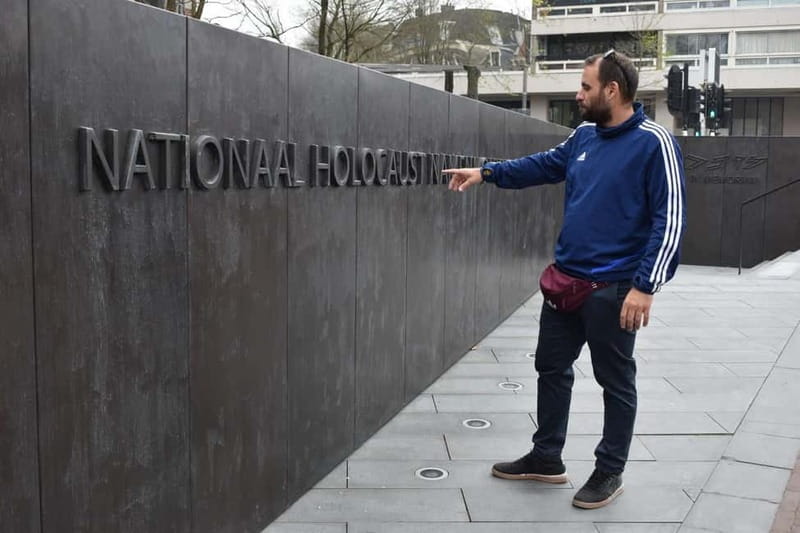
Amsterdam’s bridges are not filler between major sights. They help explain how the city functions. At the Aluminium Bridge, you have time for a guided stop and photographs. The Staalmeestersbrug receives a longer pause, with the guide using the crossing and nearby water to discuss Amsterdam’s canals, bridges, and water management.
This part should appeal to anyone who wants more than the usual canal photograph. Amsterdam exists because people learned to control, drain, and live with water. The city’s layout, narrow plots, bridges, and canals are practical answers to a difficult setting, not just decorative features.
The tour also covers leaning houses. Those tilted façades are one of Amsterdam’s most recognizable quirks, and Antonis explains why they became part of the city’s character. The discussion may also touch on houseboat life, giving you a look at how residents use limited space and water in daily life.
These are useful details because they change the way you see the streets after the tour. A leaning building is no longer just a funny photo. A canal is not just a scenic strip. It becomes part of a long argument between land, water, commerce, housing, and city planning.
The Jewish Quarter and the Holocaust Names Monument
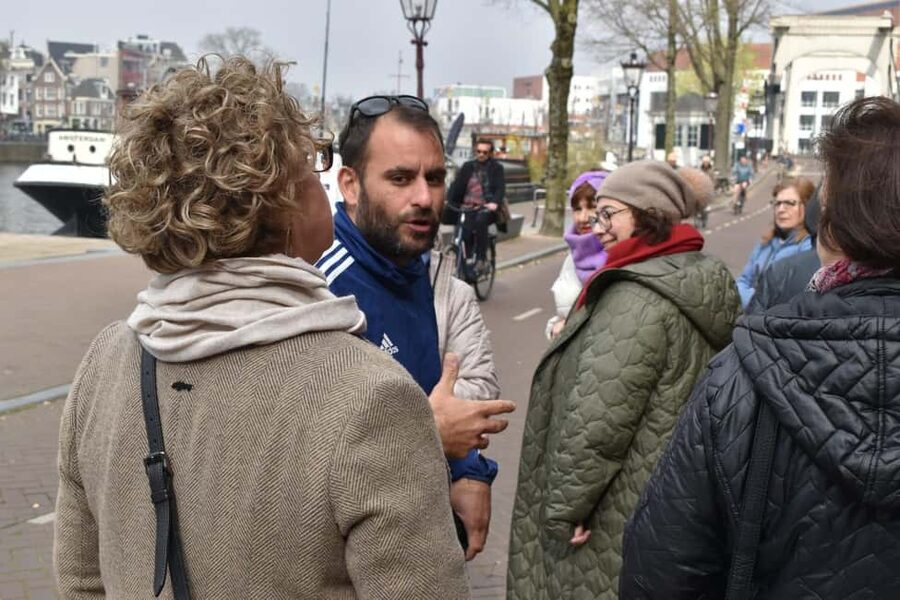
The Jewish Quarter receives about fifteen minutes of guided attention. This is one of the most important parts of the route, since the tour links Amsterdam’s WWII past to specific streets and communities rather than presenting the war as an abstract chapter.
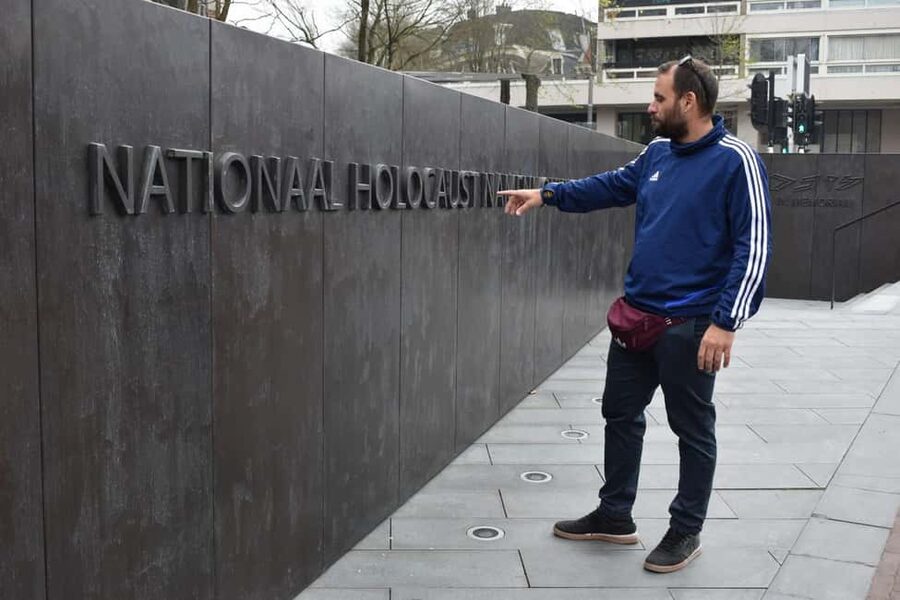
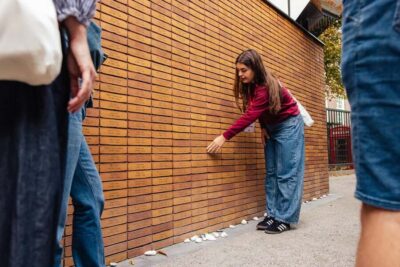
You then reach the National Holocaust Names Monument. Plan for a more reflective pause here. The memorial is a serious place, and the guide’s role is to give context without rushing you through it. This stop may be especially meaningful if you have already read about Anne Frank or visited other WWII sites in Amsterdam.
The walk does not replace a visit to a museum or the Anne Frank House itself. It gives you a framework for understanding the city before or after those visits. If you have an Anne Frank House ticket, this tour can add street-level context. If you do not have a ticket, the later VR session offers a modest alternative, though it is not the same as entering the actual building.
The route also passes through quieter streets and parts of the Red Light District. The emphasis is on surprising corners and social history, not on gawking at workers or chasing sensational stories. That is an important distinction. You get a broader view of Amsterdam’s liberal culture, including its tensions and contradictions.
More Anne Frank and Jewish Quarter walks:
- Amsterdam: Anne Frank Guided Small Group Walking Tour
★ 4.8 · 2,722 reviews - Amsterdam: Anne Frank Walking Tour – Guided in EN/DE/IT/ES
★ 4.9 · 2,676 reviews - Anne Frank Walking Tour Amsterdam Including Jewish Cultural Quarter
★ 5.0 · 1,879 reviews - Anne Frank’s Last Walk & See Anne Frank House in Virtual Reality
★ 5.0 · 957 reviews
Magere Brug, Blauwbrug, and the city’s changing identity
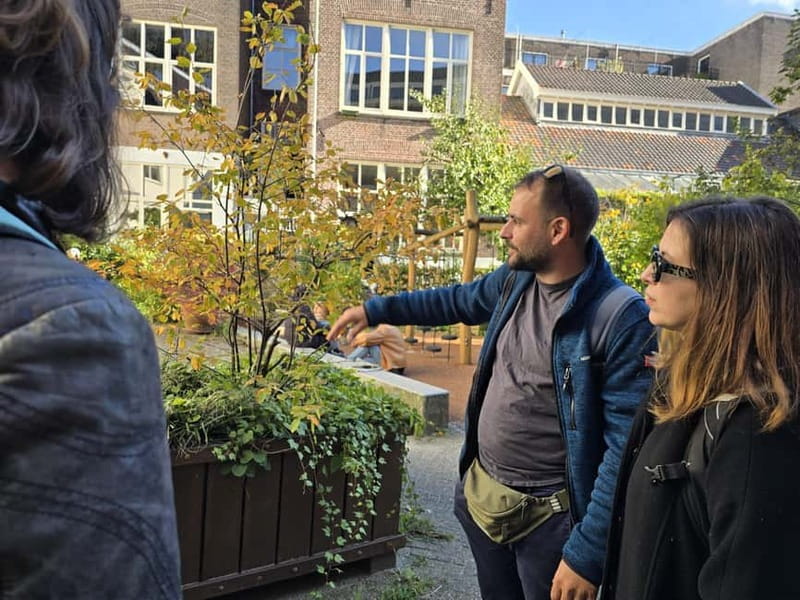
At Magere Brug, you have another photo stop and a chance to hear how Amsterdam’s bridges shape movement and views. The stop is short, around ten minutes, so it is best to arrive ready to listen while you take photographs.
Blauwbrug Bridge follows, with another guided pause. Together, these bridges help tie the city’s physical form to its social story. Amsterdam’s famous openness did not appear out of nowhere. It developed through trade, migration, urban pressure, political choices, and the need to make room for different kinds of people.
The tour also addresses the Dutch educational system and how it contributes to the country’s progress. This is an unusual subject for a city walk, and that is part of its appeal. You are asked to look at Amsterdam not only through old buildings, but also through institutions that shape modern life.
Do not expect a formal seminar on education policy. The available details suggest a conversational explanation woven into the walk. If you enjoy asking questions, this is the kind of stop where Antonis’s discussion-based style should work best.
Zuiderkerk, Nieuwmarkt, and the finish at Waag
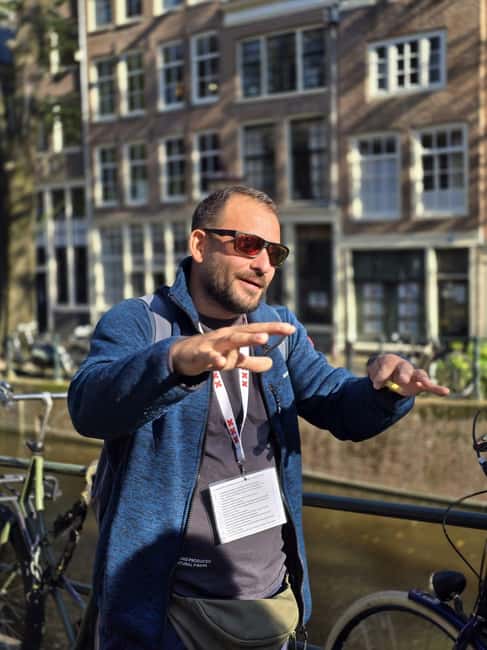
Zuiderkerk provides another architectural and historical pause. The guide uses the church and its surroundings to continue the story of Amsterdam’s development, while the group has time for photographs.
Nieuwmarkt is one of the longer stops, at about fifteen minutes. It is a useful place to bring several threads together: trade, public space, old buildings, wartime memory, and modern city life. The tour ends at Waag, a striking historic building on the square.
The route includes plenty of recognizable locations, but the appeal lies in the links between them. You are not simply collecting landmarks. You move from station to bridge, from memorial to neighborhood, and from architecture to education and social culture.
The route details say the activity ends at Waag, while the meeting information says it ends back at the meeting point. Those descriptions do not fully match. Check the exact end location when you reserve, especially if you have a timed museum visit, dinner booking, or train to catch.
Coffee, chocolate, and the Anne Frank VR session
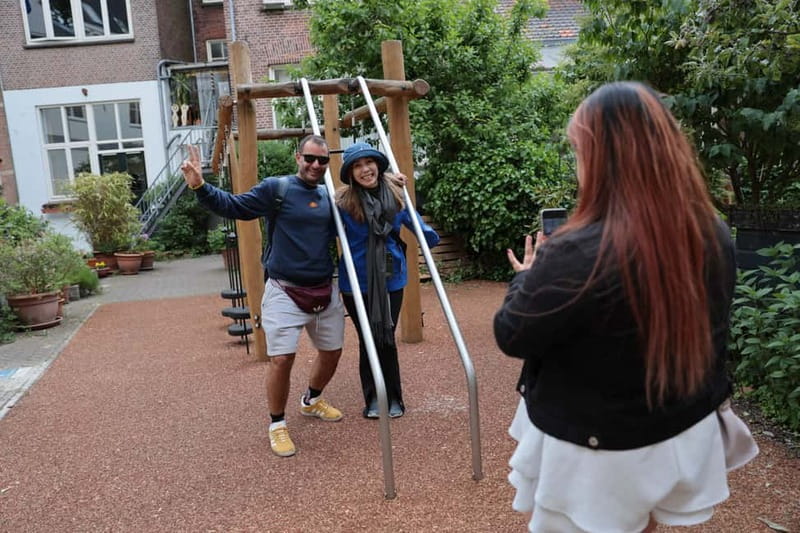
After roughly two hours of walking, the group takes a break with warm coffee, bottled water, and a local sweet. The treat may be chocolate or Dutch cookies. This pause is more than a snack stop. It gives you time to ask the questions that come up during the walk and get restaurant or bar suggestions from Antonis.
A mini Polaroid is included, along with an Amsterdam postcard carrying a personalized handwritten message and official stamp. These are small gifts, but they fit the tone of the experience better than a standard souvenir. The Polaroid is taken during the tour, making it a simple record of your time in the city.
The final hour includes a high-quality Anne Frank House VR experience. You can virtually enter the Secret Annex and use the session to picture the spaces connected to Anne Frank’s wartime story. This can be useful if Anne Frank House tickets are unavailable, though you should keep expectations in check. VR gives you a visual sense of the place, but it cannot reproduce the feeling, scale, or quiet of the real museum.
The VR is optional. There is only one headset, and it is passed around while people sit, drink coffee, and talk. This is not a timed group performance or a private headset session for each person. If you dislike shared equipment, want a longer virtual visit, or expect everyone to use the headset at once, you may find this part limited. If you see it as a conversation starter and a bonus, it fits nicely at the end.
Group size, pace, and who will enjoy it
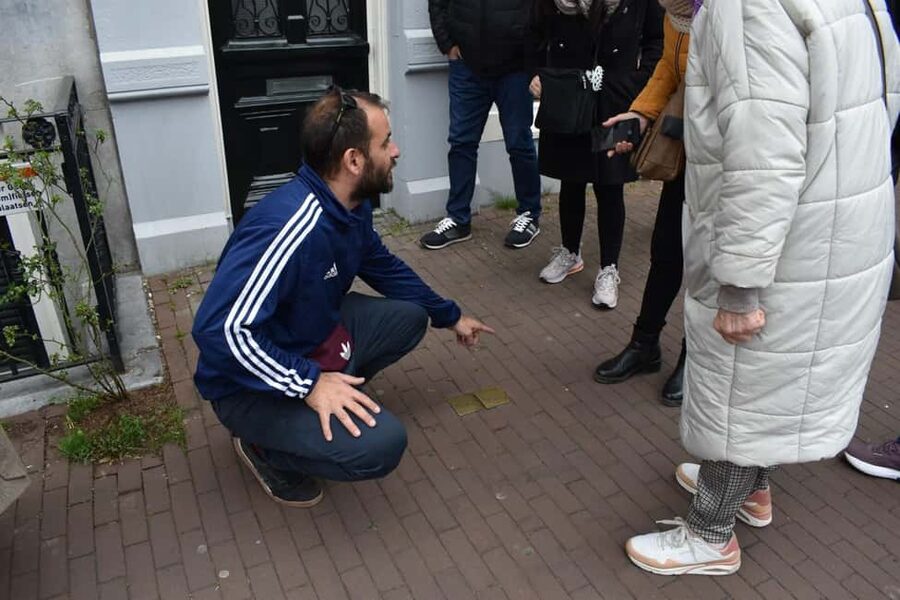
The activity is described as a small-group tour, but the capacity appears in two ways: limited to six participants in one set of details and a maximum of ten in another. Ask for the confirmed group size if this matters to you. Either way, the format is intended to feel more personal than a large walking tour.
The pace is relaxed, with regular pauses. You need to be comfortable walking for around two hours over Amsterdam streets and bridges. The experience is not suitable for wheelchair users, so check carefully before booking if mobility is a concern.
I would choose this for a first or second visit if you want to understand Amsterdam beyond the standard canal cruise and museum circuit. It also suits solo visitors and couples who prefer conversation, local suggestions, and serious history mixed with lighter city details.
Families may enjoy the stories and VR, but the WWII and Holocaust sections require attention and maturity. Anyone looking mainly for nightlife, architecture, or a fast list of photo stops should choose a different tour.
Practical value and booking advice
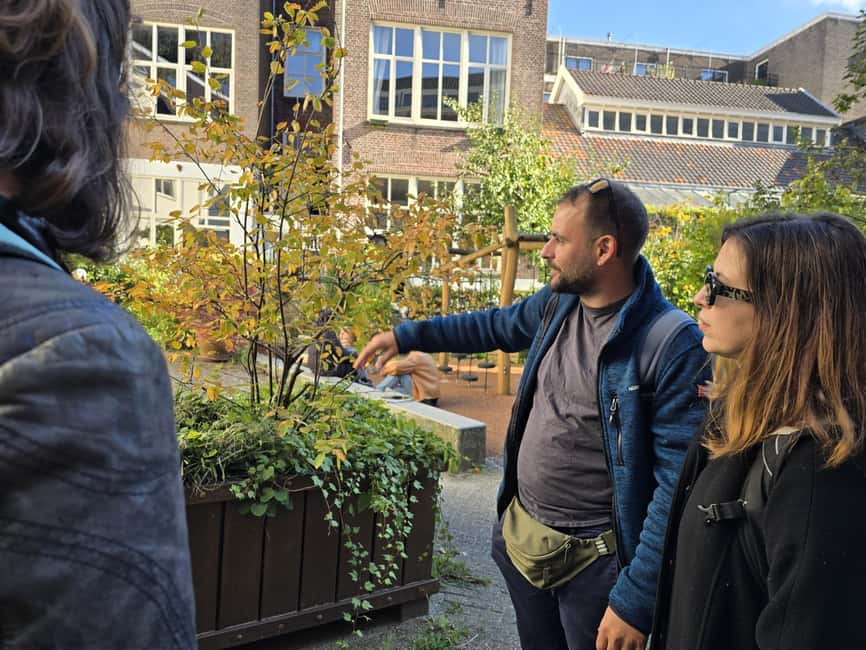
The $33 price is reasonable when you count the three-hour duration and included extras. You receive a live English guide, the walking route, coffee, water, a sweet, VR access, a Polaroid, a postcard, and local recommendations.
Still, the price is not mainly for the chocolate or the headset. You are paying for Antonis’s framing of the city. His energy, humor, and ability to connect social history with ordinary streets are central to the experience. The strongest feedback focuses on his enthusiasm, clear explanations, hidden streets, useful food suggestions, and the way he keeps the walk from feeling generic.
Book with free cancellation up to 24 hours before the start if your schedule is uncertain. You can also reserve and pay later, which helps if you are arranging several Amsterdam activities. Starting times vary, so check availability rather than assuming a morning or afternoon departure.
Should you book this Amsterdam walking tour?
Book it if you want WWII history, Anne Frank context, Amsterdam’s liberal culture, bridges, canals, local customs, and practical food advice in one relaxed outing. The small keepsakes and coffee make it feel personal, while the serious memorial stops give the walk weight.
Skip it if you want a formal museum tour, a private VR headset, a fully accessible route, or a quick highlights circuit. Also confirm the group limit and finishing point before you pay, since those details are presented differently.
For most curious visitors, this is a well-priced introduction to Amsterdam’s human side. Antonis’s storytelling is the main reason to choose it, and the Polaroid, postcard, coffee, and optional VR give you a few pleasant extras along the way.
FAQ
How long does the tour last?
The activity lasts three hours in total. About two hours are spent walking, followed by roughly one hour for coffee and the VR session.
What language is the tour in?
The live tour guide speaks English.
Where does the tour start?
It starts at Kattengat 4-6, in front of the restaurant De Silveren Spiegel.
Where does the tour finish?
The route details state that the tour finishes at Waag. Other meeting information says it ends back at the meeting point, so confirm the exact end location when booking.
Is the Anne Frank VR session required?
No. The VR experience is optional. One headset is passed around during the coffee and conversation period.
What is included in the price?
The price includes the local guide, recommendations, coffee, bottled water, chocolate or another local sweet, a mini Polaroid photo, an Amsterdam postcard with a handwritten message and official stamp, and the VR experience.
Is the tour suitable for wheelchair users?
No. The activity is listed as not suitable for wheelchair users. Comfortable shoes and weather-appropriate clothing are recommended.
Just added around Amsterdam
- From Amsterdam: The Hague Private Trip and Mauritshuis Entry★ 4.3 · 4 reviews
- VIP Private Full Day Tour of the Netherlands★ 4.8 · 6 reviews
- Amsterdam Old-West Vegan Food Tour with Local Guide★ 4.7 · 3 reviews
- Van Gogh Museum Private Guided Tour★ 4.2 · 10 reviews
- Vecht River: Full-day Cruise with Lunch★ 4.8 · 9 reviews
- Amsterdam: Van Gogh Museum Guided Tour★ 4.8 · 262 reviews
- Van Gogh and Rijksmusuem Tour: Small Group Tour with Entry★ 4.7 · 3 reviews
- Amsterdam: Van Gogh Museum Ticket & Guided Tour★ 4.4 · 187 reviews
Anne Frank Walking Tours, compared.

Anne Frank’s Story – Guided Walking Tour through Amsterdam
Read our review →
Life of Anne Frank and World War II Walking Tour
Read our review →
Anne Frank Walking Tour – Guided in EN/DE/IT/ES
Read our review →
Anne Frank Walking Tour Amsterdam Including Jewish Cultural Quarter
Read our review →
Anne Frank’s Last Walk & See Anne Frank House in Virtual Reality
Read our review →
Anne Frank and Jewish Quarter Amsterdam Private Walking Tour
Read our review →
Browse the lists this tour appears in