
Reviewed · HISTORICAL TOURS
Amsterdam: Historic Walking Tour
Amsterdam’s past is written into its streets, canals, churches, and narrow houses. This two-hour walk takes you through the historic center with a licensed local guide, covering major sights such as Dam Square, the Nieuwe Kerk, and the canal district, while also pointing out places you could easily miss on your own.
I like the way the tour connects grand events with ordinary city life. You learn how Amsterdam grew through international banking, trade, art, and architecture, then hear how locals use the center today for coffee, food, beer, and daily errands. I also like the small-group feel reported on some departures, which lets guides such as Arre or Scarlet adjust the walk to the group.
The main consideration is pace. Two hours is enough for a strong introduction, but not enough to enter every major building or explore each neighborhood in detail. Food and drinks are not included, and the tour is focused on seeing and understanding the city rather than stopping for long breaks.
Key points at a glance
- Dam Square’s palace began as a city hall: You’ll see how Amsterdam’s civic power later became tied to the Dutch Royal Family.
- The Nieuwe Kerk adds religious and royal context: The church helps explain Amsterdam’s changing faith, politics, and monarchy.
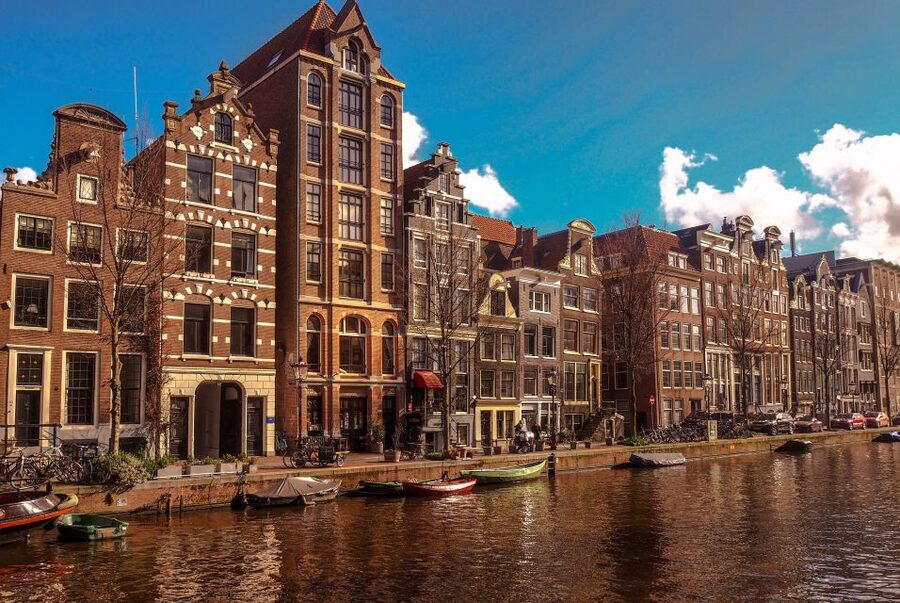
- Canals are treated as city-building tools: You learn why the canal district was created, not just where to take photographs.
- Hidden courtyards break up the main sights: Your guide takes you beyond the obvious streets and into quieter corners.
- Guides adapt to the group: Arre, James, Maria, Scarlet, and Aaron are among the guides praised for clear explanations and flexible pacing.
- The tour works well at the start of a visit: You get a useful orientation before choosing which museums, churches, cafés, and neighborhoods deserve more time.
Starting at Damrak 1 and entering old Amsterdam
The meeting point is in front of the main entrance of the Park Plaza Victoria Hotel at Damrak 1-5, 1012LG, Amsterdam. This is a practical place to begin because it puts you right beside the central historic area, close to Amsterdam’s main arrival zone and the streets leading toward Dam Square.
I would arrive a little early. The meeting point is easy to identify, but the center can be busy, and a walking tour loses time if the group spends its first minutes trying to gather. Wear shoes that can handle several kinds of paving and bring a layer suitable for changing weather.
The opening part of the walk is useful because it gives you a framework for the city. Amsterdam was built over seven centuries, and its center now contains more than 100 canals and more than 1,000 bridges. Those numbers matter less as statistics than as a reminder that water shaped nearly every part of the city’s growth.
Your guide introduces the contrast between Amsterdam’s formal public spaces and its tightly packed streets. The city can look picturesque at first glance, but the tour helps you see the practical decisions behind it: where people traded, how canals supported movement, and why civic buildings were placed where they were.
More history walks around Netherlands:
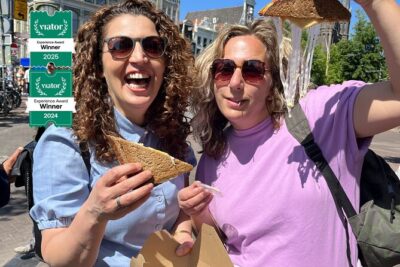
- Amsterdam Food and Cultural Tour with Tastings
★ 5.0 · 2,442 reviews - Rotterdam: Kinderdijk UNESCO World Heritage Entry Ticket
★ 4.6 · 1,477 reviews - The Hague: Hop-on Hop-off Old-Fashioned Heritage Tram Tour
★ 4.4 · 1,083 reviews
Dam Square and the palace that began as city hall
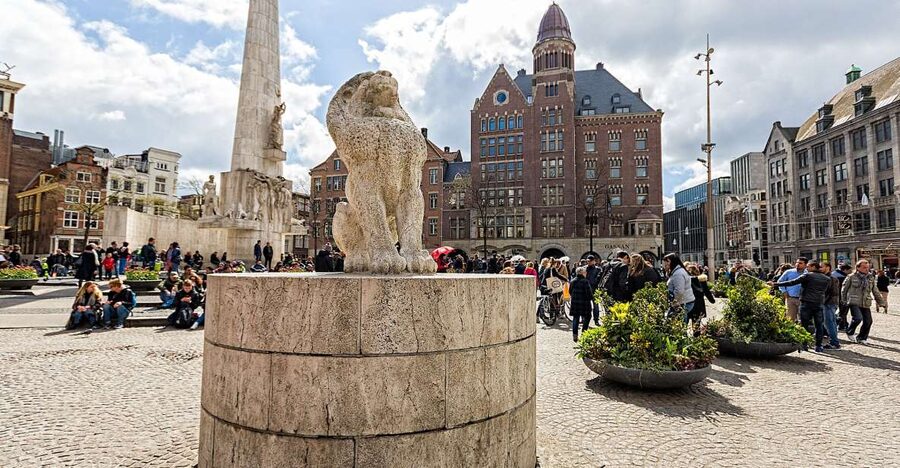
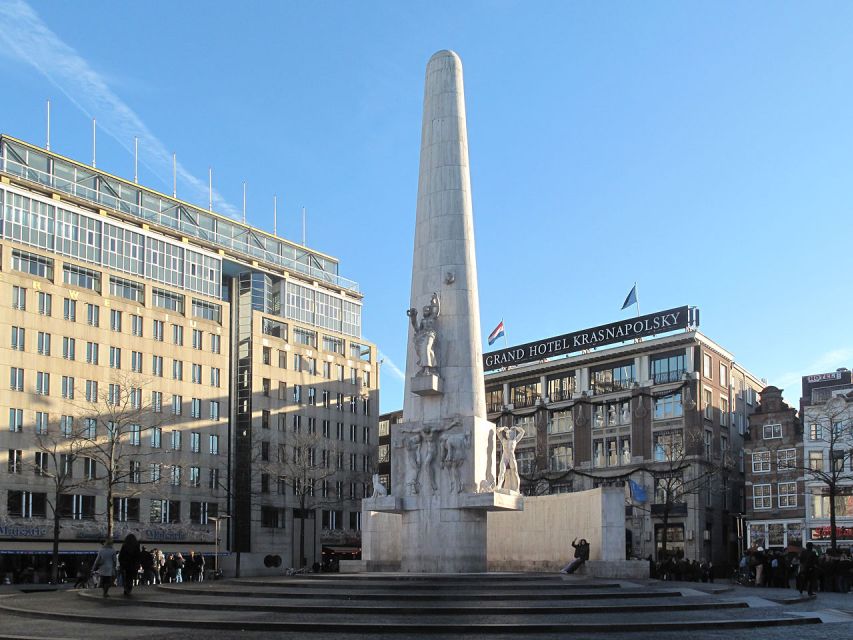
Dam Square is one of the essential stops, but it becomes more interesting when you know what you are looking at. The palace here was originally built as Amsterdam’s city hall. That change in purpose tells you something about the city’s rise from a commercial center to a place closely linked with the Dutch monarchy.
A guide can help you read the square as more than a large open space surrounded by famous buildings. It is a place where civic government, royal power, public ceremony, religion, and commerce meet. You learn about the Dutch Royal Family while also hearing how the city once managed its own affairs through a powerful urban government.
I especially value this kind of explanation because Amsterdam’s architecture can otherwise feel disconnected from its story. A palace is impressive, but knowing that it began as a city hall gives it a sharper meaning. You are not simply looking at a royal building. You are seeing a former symbol of municipal wealth and control.
The square is also one of the busiest parts of the route. Your guide may need to keep the group together and speak clearly over city noise. That is a normal tradeoff of a central Amsterdam walk, and it makes the quieter lanes later in the tour even more welcome.
The Nieuwe Kerk and Amsterdam’s changing identity
The Nieuwe Kerk is another important landmark on the route. Its name means New Church, though it is a historic building, and it provides a way into the religious and political story of Amsterdam.
The church is connected to the city’s changing faith, older Dutch institutions, and the monarchy. One guide-led walk also covered Amsterdam’s oldest Dutch churches and the way the country’s religious makeup developed. You should expect context rather than a full interior visit, since the experience is a walking tour and no admission to attractions is listed.
That distinction matters. This is not a ticketed church tour or a museum visit. The value comes from the explanation you receive while standing in the historic center, then from knowing what to look for if you decide to return later.
The church also helps place Amsterdam’s modern identity in context. The city is often reduced to canals, bicycles, nightlife, and cafés, but its public buildings carry centuries of political and religious change. A good guide makes those layers easier to follow without turning the walk into a classroom lecture.
Canals, bridges, and the making of a trading city
The canals are not just scenic decoration. They were part of the city’s working structure, helping Amsterdam move goods, people, and money during its great period of international trade.
During the walk, you learn about Amsterdam’s role in banking, commerce, art, and architecture during the 16th, 17th, and 18th centuries. That period is central to understanding why the center contains such a dense collection of historic buildings and waterways.
I like having a guide explain the canal district at street level. From a bridge, you see water, façades, and boats. With context, you can start to understand how the canals supported trade and urban expansion, and why the city developed in such a distinctive pattern.
The more than 1,000 bridges also change the rhythm of the walk. You cross water repeatedly, shift between broad streets and narrow lanes, and see how close together the city’s major areas remain. Two hours gives you a taste of this structure without asking you to commit to a longer city tour.
Do not expect a leisurely canal cruise. This is a walking experience, so you see the waterways from the streets and bridges. If you want time on the water, that would be a separate activity.
More walking tours in Netherlands:
- Anne Frank’s Story – Guided Walking Tour through Amsterdam
★ 5.0 · 11,619 reviews - Amsterdam: Life of Anne Frank and World War II Walking Tour
★ 4.8 · 10,467 reviews - Absolutely Amsterdam – the Essential Introductory Walking Tour
★ 5.0 · 3,629 reviews - Amsterdam: Anne Frank Guided Small Group Walking Tour
★ 4.8 · 2,722 reviews
The former main post office and the city’s public face
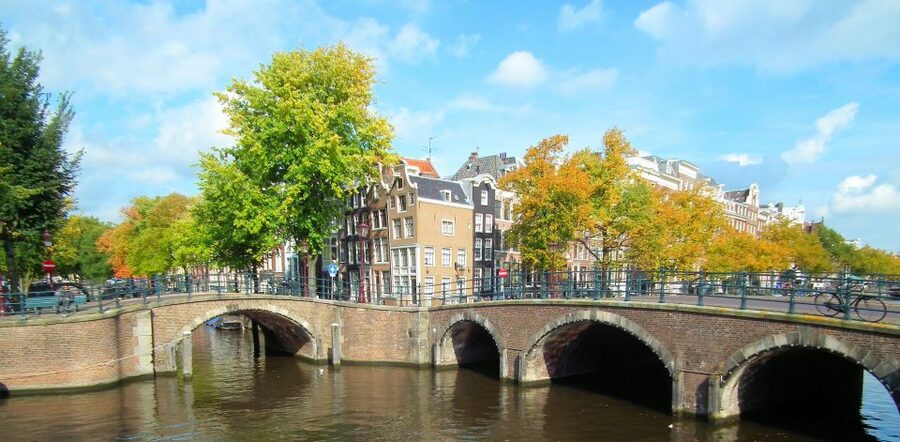
The route also passes the former main post office. This is the sort of stop that can be easy to overlook when you are focused on Amsterdam’s famous canals and churches.
A former post office helps widen the story beyond royal buildings and old religious sites. Public services, communication, and commerce all played a part in the city’s daily life. Your guide can use this kind of building to show how Amsterdam worked for residents, not only how it looked in historic photographs.
This is one of the tour’s practical strengths. You are shown important sights, but you also receive clues about the city’s less obvious places. James, who led one departure, was praised for answering questions and showing things that would have been missed without a guided walk. That is exactly where a local guide earns the fee.
You should still keep your expectations realistic. The tour does not promise entry into the former post office, and the information provided does not list interior access. The stop is about seeing the building and understanding its role as part of the city’s public fabric.
Hidden courtyards and quieter corners
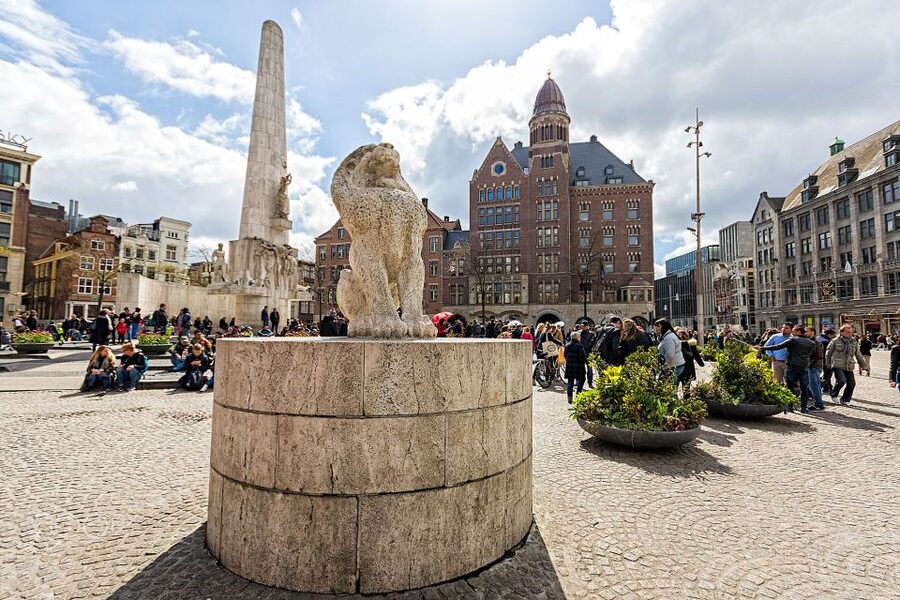
The walk is not limited to the main squares. You also pass hidden courtyards and local corners that are easy to miss when you follow a standard sightseeing route.
These spaces matter because they soften Amsterdam’s busy center. After the traffic and crowds around Dam Square, a quiet courtyard can make the city feel more private and residential. You get a glimpse of how the historic center contains more than grand façades and commercial streets.
The exact courtyards can vary with the guide, access, group size, or current conditions. I would treat them as a welcome part of the route rather than a fixed checklist. The promise is a local view of the center, not a guaranteed visit to one named courtyard.
This is also where guide personality becomes important. Scarlet was noted for adjusting the walk to the size and age of the group. That sort of flexibility can make a short tour work better for families, mixed-age groups, or anyone who prefers a less rigid route.
Amsterdam today: cafés, food, and local habits
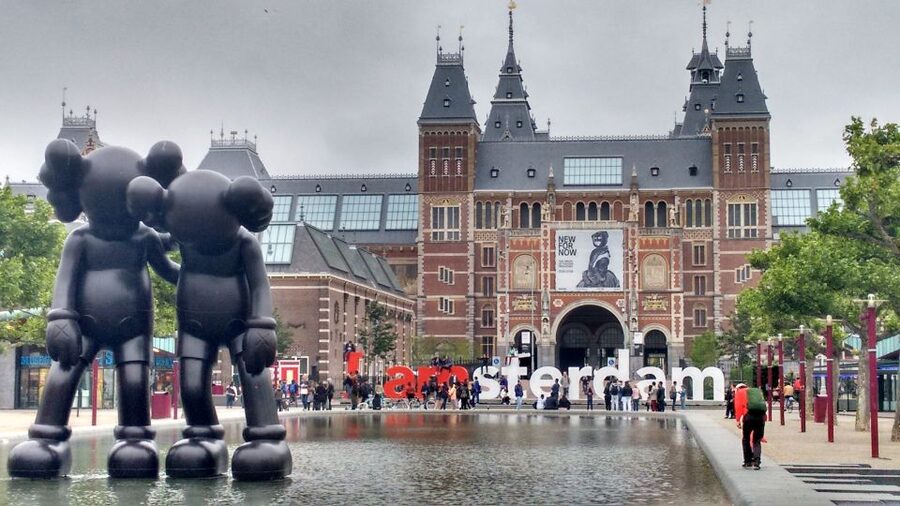
The tour does not stop in the past. You also hear about present-day Amsterdam and the way people use the center’s bars, cafés, restaurants, and public spaces.
Food and drinks are not included, so plan to buy anything you want after the walk. That is not necessarily a weakness. It keeps the tour moving and lets you choose a café or restaurant that suits your budget and interests rather than accepting a fixed stop.
I like the link between historic trade and today’s food and drink culture. Amsterdam has long been shaped by movement, exchange, and commerce. A guide can show you how those old patterns still echo in the way the city eats, drinks, shops, and welcomes people.
The experience is not a food tour, though. If your priority is tastings, market visits, or restaurant recommendations, you will need a different format. Here, food and drink are part of the modern city story, not an included activity.
How the guides shape the experience
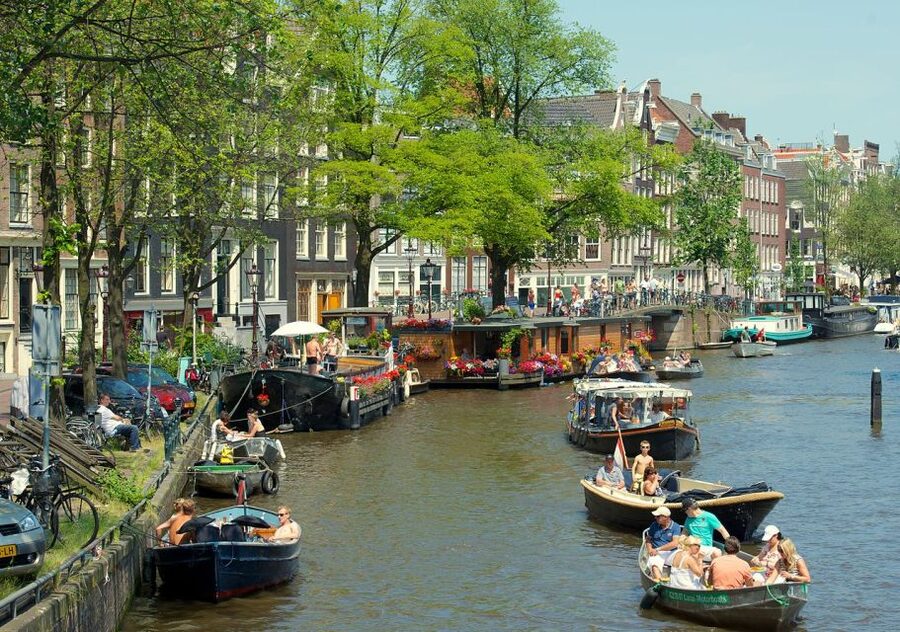
The tour is offered in English and German, with a live local guide. Several guide names appear in the experience feedback, including Arre, James, Maria, Scarlet, and Aaron. Their shared role is to turn a compact route into a readable story about Amsterdam.
Arre was praised for tailoring the sights to the group and for offering ideas about places to visit after the tour. That is especially helpful if this is your first time in Amsterdam and you want to decide how to spend the rest of your day.
James was singled out for answering questions and showing lesser-known sights. Maria was described as friendly and clear when explaining the city’s history and highlights. Scarlet adapted the walk to the group’s size and age, while Aaron led a tour built around stories and a sense of moving through time.
I would not book this expecting a scripted performance with exactly the same emphasis every time. The guide can shape the experience around questions, group makeup, and what is happening in the center that day. That flexibility is a benefit, though it also means the precise route and depth at each stop may vary.
The strongest pattern is the quality of explanation. The guides are repeatedly praised for clear information, humor, patience, and the ability to point out things you would not notice alone. For a first visit, that can be more useful than rushing through a longer list of sights.
Is two hours enough for the historic center?
Two hours is a good length for orientation. You can see several major landmarks, cross parts of the canal district, hear the city’s main historical story, and still have time for your own plans afterward.
The limit is depth. You will not have time to enter every church, inspect every building, or pause at length in each neighborhood. If you want a museum-heavy day, a full architectural study, or detailed attention to the Dutch Royal Family, use this tour as an introduction and continue independently.
The short format also suits a busy itinerary. You can fit it before an afternoon museum visit, after arriving in the city, or near the start of a longer stay. The experience is most useful when you still have time afterward to return to a place that catches your interest.
A small group can make the two hours feel more productive. One departure had only five people, and the guide was still willing to give the group a full experience. Group size is not guaranteed, but a smaller departure allows easier questions and faster movement through the center.
Price, flexibility, and practical value
At $35 per person, the tour is reasonably priced for two hours with a local licensed guide. You are paying for orientation, interpretation, and access to local knowledge, not for food, drinks, attraction admission, or transport.
The value is strongest if you are new to Amsterdam. A guide can help you understand why the canals matter, recognize the role of Dam Square, and spot details that would otherwise pass unnoticed. That foundation can save time later, since you can choose museums and neighborhoods with a clearer idea of what interests you.
The value is weaker if you already know the historic center well or prefer to explore entirely at your own pace. You will be walking with a group and following a guide’s rhythm, even if the route can adapt.
Booking is flexible: you can cancel up to 24 hours before the start for a full refund, and you can reserve now and pay later. Check the available starting times when booking, since the tour lasts two hours and departure times can affect the rest of your day.
Who should book this Amsterdam walk?
I would choose this tour for a first visit, especially if you want a clear introduction before tackling museums and neighborhoods on your own. It also suits anyone who enjoys history explained through buildings, streets, and small details rather than through a long indoor lecture.
Families and mixed-age groups may benefit from the guide’s ability to adjust the route and explanations. The walk can also work well for couples, solo visitors, and short-stay visitors who need to get their bearings fast.
You should think twice if you want a food-focused outing, a canal cruise, or extensive interior visits. You should also allow for the fact that central Amsterdam can be busy and that two hours may feel brisk if you stop often for photographs.
Final verdict: a strong first look at Amsterdam
Book this walking tour if you want to understand Amsterdam before exploring it on your own. Its best features are the local perspective, the mix of famous landmarks and quieter corners, and the guides’ ability to connect royal, religious, commercial, and modern city life.
The tour will not replace a museum visit or a full canal cruise. It does something more basic and useful: it gives you a working map of the historic center and explains why the city looks and behaves as it does. At $35, that is good value for a focused two-hour introduction, particularly when you still have time afterward to follow up on the places that catch your attention.
FAQ
Where does the Amsterdam Historic Walking Tour meet?
Meet the guide in front of the main entrance of the Park Plaza Victoria Hotel at Damrak 1-5, 1012LG, Amsterdam.
How long does the tour last?
The walking tour lasts two hours.
What language is the tour offered in?
The live tour guide is available in English or German.
Is the guide licensed?
Yes. The experience includes a local guide who is also described as a professional and licensed guide.
What does the tour cost?
The listed price is $35 per person.
What sights are included?
The route covers Amsterdam’s historic center and includes Dam Square, the palace that was originally built as city hall, the Nieuwe Kerk, the former main post office, canals, historic architecture, and lesser-known local places such as hidden courtyards.
Are food and drinks included?
No. Food and drinks are not included.
Can I cancel for a full refund?
Yes. You can cancel up to 24 hours in advance for a full refund.
Can I reserve now and pay later?
Yes. The tour allows you to reserve your place and pay later.
Is the group size fixed?
A fixed group size is not provided. Some departures have been small, including one with five people, and guides may adapt the walk to the group.
Just added around Netherlands
- 1 Hour of Whisky Distillery Experience★ 4.5 · 33 reviews
- Hattem’s Windmills, Bakeries and Ghosts: A Self-Guided Audio Tour★ 3.5 · 3 reviews
- e-Scavenger hunt Amersfoort: Explore the city at your own pace★ 4.0 · 18 reviews
- e-Scavenger hunt Zwolle: Explore the city at your own pace★ 4.5 · 23 reviews
- e-Scavenger hunt Roosendaal: Explore the city at your own pace★ 3.5 · 5 reviews
- e-Scavenger hunt Deventer: Explore the city at your own pace★ 4.0 · 34 reviews
- Discover Enschede in this Outside Escape city game tour!★ 4.0 · 5 reviews
- 3 hour boarding ticket Summer sailing from Wemeldinge (Zeeland)★ 5.0 · 17 reviews
Historical Tours, compared.
Amsterdam Food and Cultural Tour with Tastings
Read our review →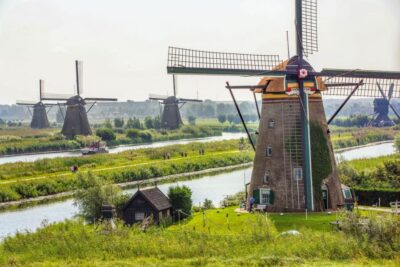
Kinderdijk UNESCO World Heritage Entry Ticket
Read our review →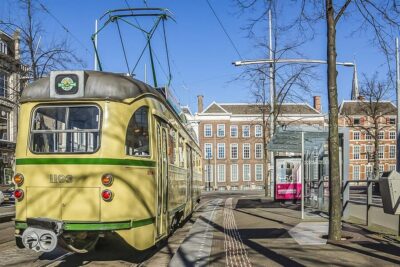
Hop-on Hop-off Old-Fashioned Heritage Tram Tour
Read our review →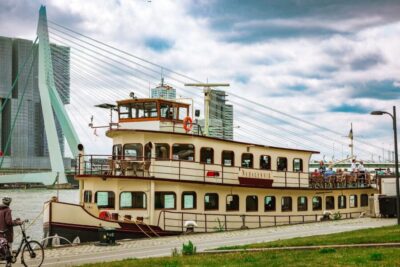


Amsterdam High-End Dutch Food & History Tour – Up to 8 guests
Read our review →
Cruise through the Historic City Center with Guide
Read our review →
Browse the lists this tour appears in