
Reviewed · WALKING TOURS
5 hrs Golden Age Amsterdam Private Walking Tour With Local Guide
Amsterdam’s story comes at you fast on this five-hour private walk. You begin at Centraal Station and trace the city’s growth through medieval gates, canal houses, secret churches, royal buildings, Jewish landmarks, and the Red Light District. It is a good way to get your bearings before exploring Amsterdam on your own.
I like the small size, with a maximum of four people, and I like the guide’s personal approach. Aleksandar, also called Alex or Aca, is praised for adjusting his explanations for adults and children, sharing offbeat stops, and offering useful ideas for later outings. The main drawback is the pace: twenty stops in five hours means many places are viewed from outside, and entrance fees are extra.
Key points at a glance
- Start at Centraal Station: Meet at Amsterdam’s main railway station and return there at the end.
- Twenty stops across the old city: The route covers canals, medieval buildings, Chinatown, De Wallen, Dam Square, Begijnhof, the Amstel, and Jodenbuurt.
- A private group of up to four: You get room for questions and can benefit from a guide who adapts the walk to your family or friends.
- Serious history with lighter local detail: Expect stories about Henry Hudson, Rembrandt, Dutch drug policy, canal houses, Catholic worship, and Amsterdam’s Jewish community.
- Several worthwhile admissions cost extra: The Royal Palace, Anne Frank House, Westerkerk, Nieuwe Kerk, Our Lord in the Attic Museum, and another old-center admission are not included.
- Plan the Anne Frank House well ahead: Tickets are online only and must be booked at least six weeks in advance.
Why this route works for a first day in Amsterdam
Amsterdam can feel confusing at first. The station, canal belt, medieval lanes, museums, shopping streets, and nightlife districts all sit close together, but they do not tell their stories in a neat order. This walk gives you a map in your head.
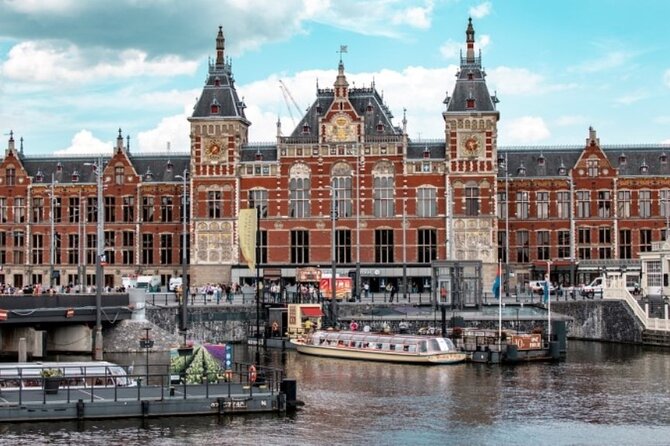
You begin at Centraal Station, whose late nineteenth-century building rests on 6,059 wooden poles. That detail quickly explains something basic about Amsterdam: the city was built on soft, wet ground, and engineering has always been part of daily life.
The route then moves into the old center. You will see major sights, but the guide also points out narrow homes, leaning facades, bridges, carved stone tablets, and streets that are easy to miss if you are simply following a phone map. That mix is the real value here. You are not just collecting photographs. You are learning how the city fits together.
The guide’s style matters on a route this full. Aleksandar, known as Alex or Aca, is described as flexible with timing and good with families. He has worked with children, teenagers, seniors, and adults, and he is praised for changing the level of detail to suit the group. If you have a curious family, that can make a long walk feel far less tiring.
More Private Tours in Amsterdam
- Rijksmuseum Amsterdam Small-Group Tour with Private Upgrade
★ 4.5 · 1,547 reviews - Van Gogh Museum Tour Reserved Entry Semi Private
★ 5.0 · 1,437 reviews - Private Amsterdam Red Light District and Coffee Shop Tour
★ 5.0 · 763 reviews
From Centraal Station to the medieval waterfront
The first section packs several layers of Amsterdam into a short distance.
Centraal Station is both a meeting point and a useful introduction. The station was built in the second half of the nineteenth century in a Dutch neoclassical style. Its foundations, supported by thousands of wooden poles, are a reminder that Amsterdam is a city shaped by water and careful construction.
Nearby, the Basilica of St. Nicholas gives you a different view of Dutch history. It is the country’s largest Catholic church and dates from the same broad nineteenth-century period as the station. Its presence is especially useful context in a city often associated with Protestant merchants and religious tolerance. The tour allows about fifteen minutes here, with admission listed as free.
Next comes the Weeping Tower, once part of Amsterdam’s fifteenth-century defensive wall. The site is tied to Henry Hudson, who sailed from here on his journey toward North America. It is a short stop, but it connects Amsterdam’s medieval defenses with the city’s later role in overseas trade and exploration.
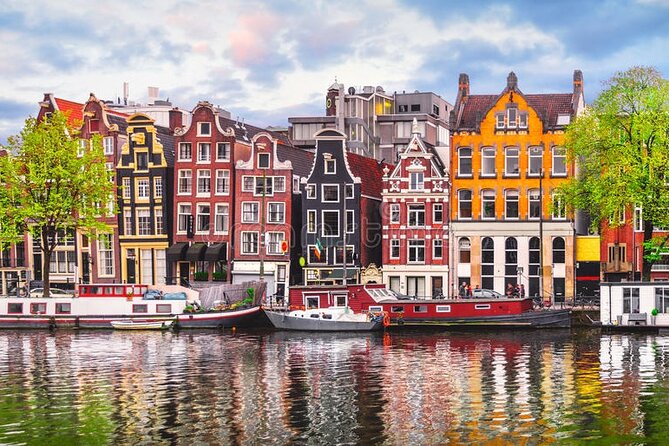
At the smallest house on Singel, the guide turns from grand events to ordinary urban life. You hear about the canals, including their purpose, upkeep, and place in the city’s growth. The narrow, tall, sometimes leaning homes and the bridges around them make more sense once you understand why land and building space were so limited.
This is one of the best parts of the walk for photographs, but you should expect explanation rather than a long interior visit. The tour is primarily a walking and interpretation experience.
The Waag, Chinatown, and the Red Light District
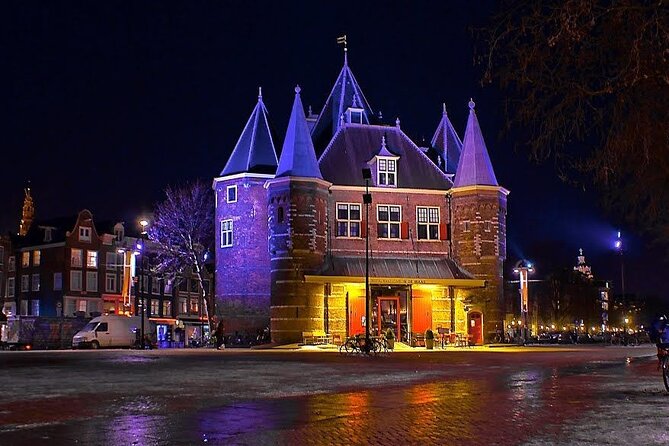
The Waag is one of Amsterdam’s strongest medieval reminders. Built in the early fifteenth century, it was once a city gate, customs building, and meeting place for guilds. A guide can make this more than an attractive brick structure by explaining how trade, regulation, and craft organizations worked in the old city.
The route then reaches Our Lord in the Attic Museum, one of Amsterdam’s most famous secret churches. This hidden Catholic church was built inside canal houses when Catholic worship faced restrictions. The stop is listed for only five minutes, and entry is not included, so you should not assume you will have time for a full museum visit during the walk.
Fo Guang Shan, a Chinese Buddhist temple in the heart of Amsterdam’s Chinatown, adds another layer. The temple is described as the second-largest traditional Chinese Buddhist temple of its kind in Europe. It is a useful reminder that Amsterdam’s old center is not one single story. Trade, migration, religion, and modern city life meet in the same few streets.
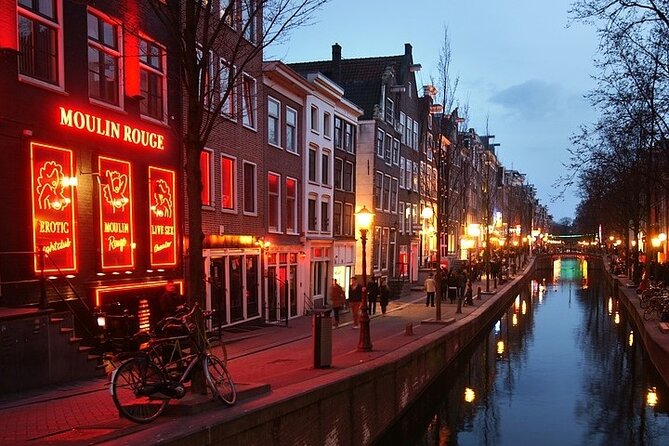
The thirty-minute Red Light District stop is not just a photo opportunity. The guide discusses prostitution, Dutch drug policy, the history of the area, and practical ways to behave within the law. That is valuable because De Wallen can be easy to misunderstand. You receive context about what you are seeing, along with guidance about respectful conduct.
The stop also gives you a break from continuous walking. Still, this is a public nightlife district with working businesses, crowds, and sensitive sights. Families can take part, but parents may want to decide in advance how much detail is suitable for younger children.
Dam Square and Amsterdam’s royal center
Dam Square is the city’s central stage. It is linked to Amsterdam’s beginnings and surrounded by buildings with very different roles: the Royal Palace, Nieuwe Kerk, the National Monument, Madame Tussauds, Magna Plaza, and Hotel Krasnapolsky.
The square can be noisy and crowded, but that is exactly why a guide is useful. Instead of seeing a broad paved space with impressive facades, you learn how political power, royal ceremony, shopping, tourism, and national memory share the same address.
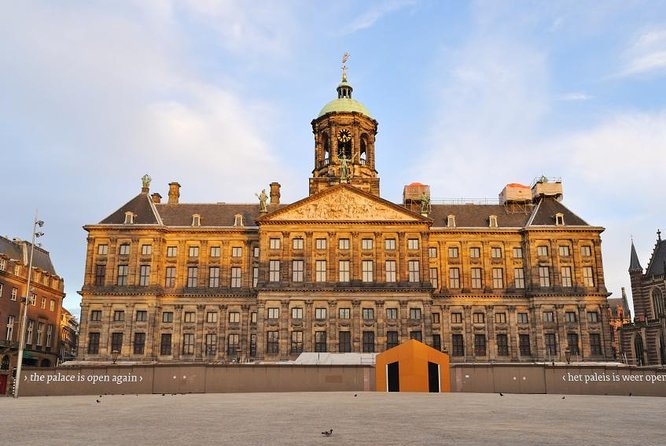
The Royal Palace was originally Amsterdam’s seventeenth-century city hall. It now serves as one of three official residences of the Dutch royal family. Like Centraal Station, it rests on an enormous foundation of wooden poles, 13,659 according to the tour information.
The National Monument, built in 1956 and twenty-two meters high, commemorates those killed in the Second World War and later armed conflicts. It is easy to walk past without pausing. The fifteen-minute explanation gives the memorial its proper place in the square.
Nieuwe Kerk dates from the fifteenth century and remains in use for royal weddings and coronation ceremonies. Entry is not included, and the itinerary allows fifteen minutes, so treat this as an exterior orientation unless you and the guide arrange otherwise.
More Walking Tours in Amsterdam
- Anne Frank’s Story – Guided Walking Tour through Amsterdam
★ 5.0 · 11,619 reviews - Amsterdam: Life of Anne Frank and World War II Walking Tour
★ 4.8 · 10,467 reviews - Absolutely Amsterdam – the Essential Introductory Walking Tour
★ 5.0 · 3,629 reviews - Amsterdam: Anne Frank Guided Small Group Walking Tour
★ 4.8 · 2,722 reviews
Begijnhof and the quieter canal streets
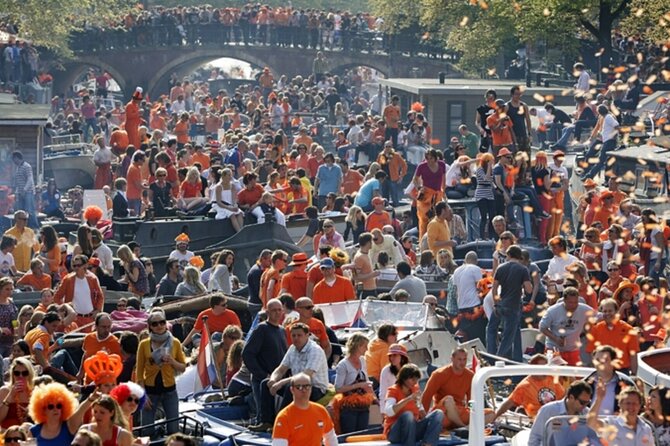
Begijnhof is one of the route’s most rewarding changes of mood. This enclosed area was associated with the Beguines, a semi-closed religious sisterhood similar in some ways to nuns, though not identical. Its calm courtyards feel far removed from the traffic and commercial energy nearby.
The guide covers several stories here: the English Church, a secret Catholic church, Amsterdam’s oldest wooden house, the Miracle of Amsterdam from 1345, and the legend of Sister Cornelia Arens. These details show why Amsterdam rewards slow looking. A plain doorway or small courtyard can carry more local memory than a famous facade.
Because Begijnhof is still a living place, keep your voice low and follow any posted rules. The twenty-minute stop is long enough to appreciate its character, but not long enough for a leisurely wander through every corner.
The route continues toward the Munt Tower, or Munttoren, at the meeting point of the Amstel and the Singel. The tower began as part of a fifteenth-century city gate and later became connected with coin minting in the seventeenth century. It is a compact landmark, but it helps you understand where Amsterdam’s old defensive edge met its waterways.
Nearby, the flower market offers a change from architecture and politics. It is the city’s best-known market for flowers and garden supplies, with tulip bulbs and other plants for sale. If you want to buy bulbs, ask about practical packing and transport rules before purchasing. The stop is especially pleasant for plant lovers, though the market can feel more commercial than the quieter parts of the route.
Rembrandt, Anne Frank, and Westerkerk
At the Rembrandt Monument, you get stories about Rembrandt van Rijn, his private life, and The Night Watch. A three-dimensional presentation of the famous painting is included in the explanation. This section works well if you enjoy art but do not want a full museum visit.
The next stretch reaches Sint Luciënsteeg and the former city orphanage, dating from 1580. The lane is known for stone gables and carved stone tablets that once helped identify houses. These small details show how medieval and early modern Amsterdam communicated before modern street numbering became standard.
The Anne Frank House is discussed as part of the route, with attention to Anne’s life, the secret shelter, the Nazi occupation, human solidarity, and the worldwide reach of her diary. The house itself requires a separate ticket. Tickets can be booked only online and at least six weeks in advance, so this is the one admission you should arrange before building your Amsterdam schedule.
The itinerary lists just fifteen minutes at Anne Frank House. That is enough to understand where it is and hear the historical background, but it is not a substitute for the museum visit. If you have a ticket for a later time, ask the guide to help you judge the walking distance and timing.
Westerkerk, close to the Anne Frank House, dates from 1631 and was built for Protestant worship. Its leaning tower is a familiar Amsterdam landmark. The church is associated with the wedding of former Queen Beatrix and with the possible burial place of Rembrandt, though the burial claim has never been precisely proven.
Entry to Westerkerk costs extra. Again, the short stop suggests that the main service here is orientation and storytelling, not a full church visit.
The Amstel and Amsterdam’s Jewish Quarter
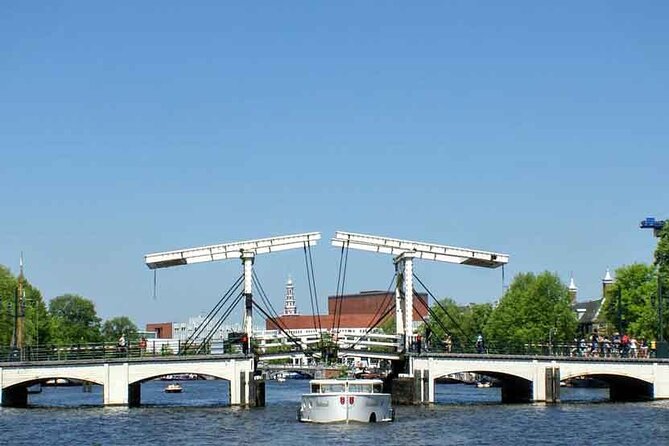
The walk later reaches the Amstel and views toward the Blue Bridge and Skinny Bridge. This is a useful pause after the dense old center. The river helps explain the city’s name and its early development, while the bridges show how Amsterdam connects districts divided by water.
The final major section is Jodenbuurt, also called Plantage in the tour description. The area was home to Amsterdam’s Jewish community from the late sixteenth century until the Second World War. The guide points out important buildings, Holocaust monuments, and memorials, with more detail available about specific sites.
This part gives the tour emotional weight. Amsterdam’s history is not only canals, paintings, trade, and attractive houses. The Jewish Quarter brings in community life, persecution, loss, and remembrance. You should allow yourself time to listen here rather than treating it as simply another sightseeing stop.
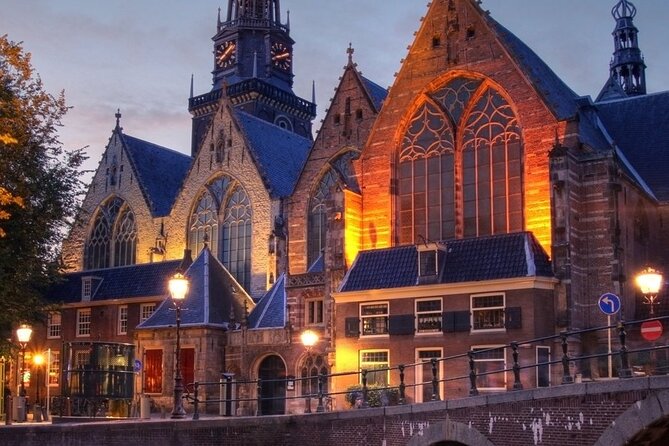
The route also passes the Old Church, coffeeshops, restaurants, theaters, museums, and the windows of De Wallen. The city’s contradictions sit close together. A guide can help you see those contrasts without reducing Amsterdam to a collection of clichés.
Five hours, twenty stops, and the walking pace
The advertised duration is about five hours, and the itinerary includes twenty numbered stops plus several nearby sights. That is a lot of ground and a lot of information. Some stops last only five or ten minutes, so expect a brisk orientation walk rather than a slow museum tour.
You should wear comfortable shoes and keep your schedule clear afterward. The tour returns to Amsterdam Centraal, but the listed times are approximate and questions can lengthen a stop. Pickup is offered, though the specified start and finish are Amsterdam Centraal railway station, so confirm the exact meeting arrangement when booking.
The group limit of four is a real advantage. You can ask about food, museums, transport, neighborhoods, or details that interest your family without competing with a large group. The guide has also been praised for flexibility with schedules and group needs.
The listed opening period shows Monday availability from 11 a.m. to 5 p.m. Confirm the current operating day and time before you reserve, especially if your visit falls outside that stated schedule.
What the $540.69 price buys you
The price is $540.69 per group of up to four, not per person. For four people, that works out to about $135 per person before admissions. For a couple, the per-person cost is much higher, so the value depends on how much you care about having a private guide.
Only guide services are included. Most outdoor stops have no admission charge, but the listed paid entries are:
- Royal Palace Amsterdam: €10 per person
- Westerkerk: €7 per person
- Old-center admission: €13.50 per adult
- Anne Frank House: €16 per person
- Nieuwe Kerk: €10 per person
- Our Lord in the Attic Museum: €16.50 per person
If you paid for every listed adult admission, the additional cost would total €73 per person. In practice, the five-hour route does not appear designed for full visits to all of them. Pick one or two that matter most to you, and treat the other stops as outside explanations unless you have arranged extra time.
The price makes the most sense for a family or group of four that wants a private introduction to Amsterdam. It is harder to justify if you prefer museums, quiet wandering, or a low-cost group tour. The guide’s local advice and ability to shape the explanation are the main product, not included entry tickets.
Free cancellation is available up to 24 hours before the start time. Changes or cancellations inside that window are not refunded.
Who should book this Amsterdam walking tour?
I would choose this for a first visit, especially if you have only one full day to understand the center. It covers the major landmarks while adding useful context about religion, migration, art, royal history, wartime memory, and local law.
Families may also like it. Alex has been described as patient with children and able to make art history and city stories accessible at different ages. A private group lets you pause for questions or adjust the emphasis.
It is less suitable if you want a relaxed stroll with long café breaks. It is also not the best choice for a museum-focused day. The route introduces the Anne Frank House, Royal Palace, Nieuwe Kerk, Westerkerk, and Our Lord in the Attic Museum, but it does not include their admission fees or enough listed time for full visits to all of them.
FAQ
Where does the tour start?
It starts at Amsterdam Centraal railway station, at Stationsplein, 1012 AB Amsterdam, Netherlands.
Where does the tour finish?
The tour ends back at the Amsterdam Centraal meeting point.
How long does the experience last?
The walking tour lasts approximately five hours.
How many people can join the private group?
The activity has a maximum of four travelers.
Is hotel pickup included?
Pickup is offered, but the specified meeting point is Amsterdam Centraal railway station. Confirm the pickup arrangement when booking.
Are entrance fees included?
No. Guide services are included, while admissions to the Royal Palace, Westerkerk, the old-center attraction, Anne Frank House, Nieuwe Kerk, and Our Lord in the Attic Museum cost extra.
How far ahead should I book Anne Frank House tickets?
Anne Frank House tickets can be booked only online and at least six weeks in advance.
Can I cancel for a full refund?
Yes, if you cancel at least 24 hours before the experience begins. Cancellations or changes made less than 24 hours before the start time are not refunded.
Should you book it?
Book this tour if you want a private, history-filled introduction to Amsterdam and value a guide who can explain the city in a personal way. The strongest reasons are the small group, the wide route, and Aleksandar’s reported ability to connect with both adults and children.
Before booking, accept the tradeoff: the schedule is packed, the pace is brisk, and admissions are separate. If you reserve Anne Frank House, plan that ticket at least six weeks ahead and tell the guide your priorities. For four people sharing the cost, it offers a practical first look at Amsterdam that can save you from wandering without context.
Just added around Amsterdam
- From Amsterdam: The Hague Private Trip and Mauritshuis Entry★ 4.3 · 4 reviews
- VIP Private Full Day Tour of the Netherlands★ 4.8 · 6 reviews
- Amsterdam Old-West Vegan Food Tour with Local Guide★ 4.7 · 3 reviews
- Amsterdam: Van Gogh Museum Guided Tour★ 4.8 · 262 reviews
- Van Gogh Museum Private Guided Tour★ 4.2 · 10 reviews
- Vecht River: Full-day Cruise with Lunch★ 4.8 · 9 reviews
- Van Gogh and Rijksmusuem Tour: Small Group Tour with Entry★ 4.7 · 3 reviews
- Amsterdam: Van Gogh Museum Ticket & Guided Tour★ 4.4 · 187 reviews
Walking Tours, compared.

Anne Frank’s Story – Guided Walking Tour through Amsterdam
Read our review →
Life of Anne Frank and World War II Walking Tour
Read our review →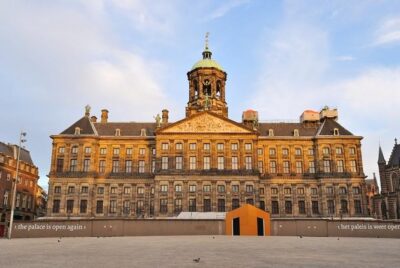
Absolutely Amsterdam – the Essential Introductory Walking Tour
Read our review →

Anne Frank Walking Tour – Guided in EN/DE/IT/ES
Read our review →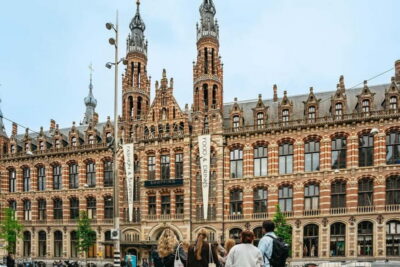

Anne Frank Walking Tour Amsterdam Including Jewish Cultural Quarter
Read our review →Browse the lists this tour appears in