
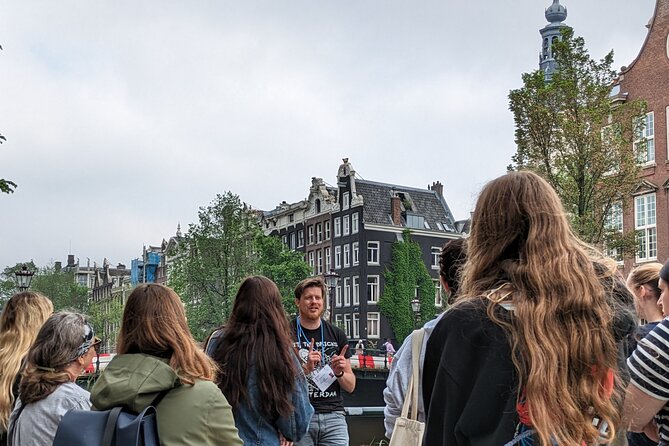
Reviewed · HISTORICAL TOURS
Amsterdam 2 Hour History Walking Tour
Amsterdam’s story is really a story about water, trade, faith, and stubborn survival. In two hours, this walk connects the canal ring, De Wallen, Dam Square, the Jewish Quarter, the old Dutch East India Company headquarters, and several quieter corners that are easy to miss on your own.
I like the small maximum of 10 people, which keeps the walk social without turning it into a moving crowd. I also like the mix of serious history and humor, especially the practical tips that help you get oriented early in your visit. The main drawback is the brisk schedule: ten stops in two hours means you get sharp introductions, not long visits or inside tours.
Key points to know before you book
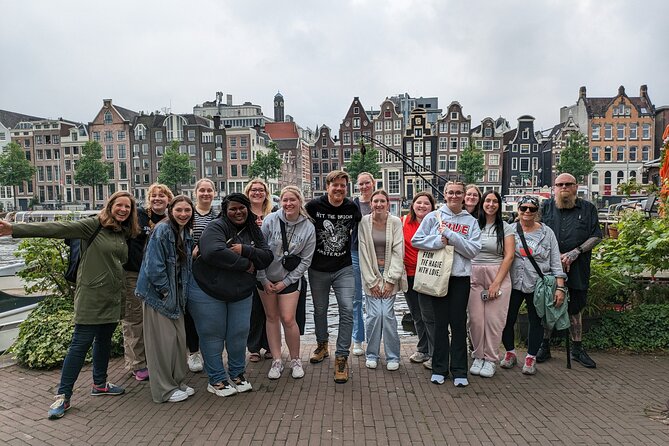
- Ten major stops in two hours: You cover Amsterdam’s central story at a quick but manageable pace.
- A genuinely small group: The maximum is 10 people, useful if you want to ask questions and hear the guide clearly.
- History with a local point of view: Water management, religion, empire, Jewish life, the monarchy, and modern Amsterdam all get a place.
- The Monet bridge photo stop: Groenburgwal offers one of the walk’s best quick picture opportunities.
- Strong choice for a first day: The guide adds neighborhood context, travel advice, and ideas for what to do next.
- Bring a refillable bottle: Water is not supplied, though there are places to refill along the way.
Why this short walk gives Amsterdam shape
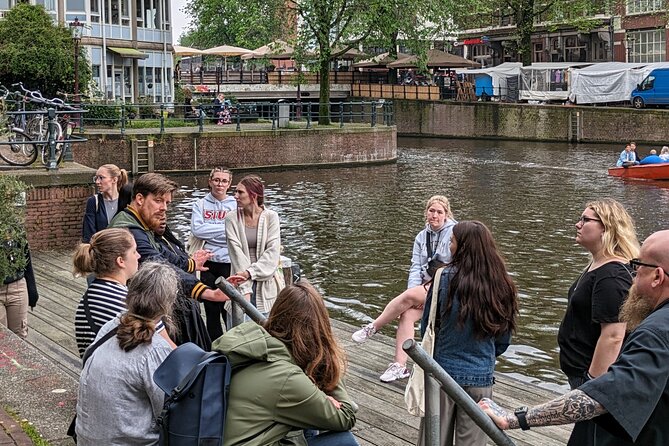
At about $30.04 per person, this is not the cheapest way to spend two hours in Amsterdam, but it can be good value at the start of a trip. You are paying for a local guide, a small group, and a compact explanation of why the city looks and works as it does.
Amsterdam can seem easy to understand at first glance. Canals, narrow houses, bicycles, coffee shops, and grand old buildings provide the postcard view. The harder part is seeing how water control, religious conflict, global trade, occupation, and modern civic life fit together. This walk gives you that framework.
The route is especially useful if you are new in town. You move through the center without spending much time inside paid attractions, so you get your bearings before deciding which museums, neighborhoods, or boat trips deserve your money. I would take it near the beginning of a stay, not at the end.
The tone matters, too. The guide uses humor alongside difficult subjects. That helps keep the two hours from feeling like a lecture, but the serious parts are not skipped. Axel received particular praise for making the city’s past and present easy to follow, while Mark handled an unexpected tour problem with a helpful attitude.
More History Tours in Amsterdam
- Amsterdam Food and Cultural Tour with Tastings
★ 5.0 · 2,442 reviews - Amsterdam: Haunted History and Ghost Walking Tour
★ 4.5 · 488 reviews - Amsterdam High-End Dutch Food & History Tour – Up to 8 guests
★ 5.0 · 482 reviews
Starting with canals and a city built against water
The walk begins at Hit the Bricks Walking Tours, at Prinsenstraat 13, in the canal belt. The meeting time is 11 a.m., so arrive ready to start on foot.
The first stop takes you into Amsterdam’s central canal ring, known as the Grachtengordel. Here, the guide explains how people learned to live with water and how that struggle shaped Dutch habits and attitudes. This is the right place to begin because the canals are not just pretty scenery. They are part of the city’s basic structure.
You will not spend long at this first stop, about five minutes, but the short talk gives the rest of the walk a useful theme. Amsterdam’s practical approach to water appears again at Dam Square and in the city’s wider story of cooperation, planning, and survival.
The relaxed pace is one of the better features here. You are walking, stopping, listening, and taking pictures rather than racing from one attraction to the next. Still, expect street-level explanations rather than a formal museum presentation.
De Wallen explained without the usual cheap jokes
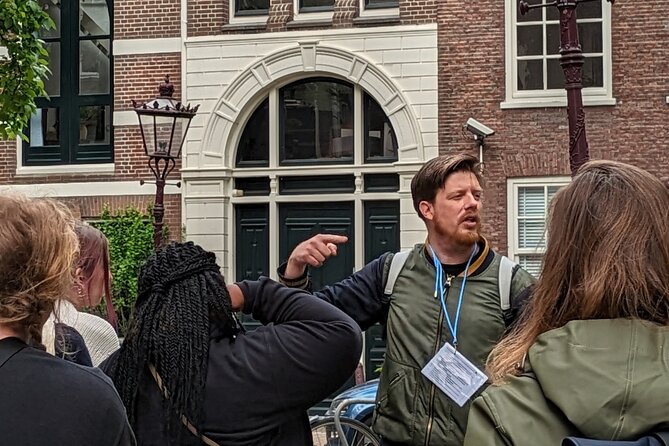
The Red Light District, or De Wallen, gets about ten minutes. This is one of the most famous parts of Amsterdam, and the guide explains why the district exists, how it operates, and how Dutch society views it.
That context is more useful than simply pointing at the windows and moving on. De Wallen is tied to the city’s port, commerce, laws, and long relationship with regulated activity. The guide’s job here is to explain the place without turning it into a spectacle.
You should expect a public neighborhood, not a private tour of the sex industry. The stop is outdoors and brief. If you want a careful introduction before exploring the area on your own, this works well. If you are looking for an extended discussion of current policy or social issues, two hours cannot provide that level of detail.
Dam Square and the making of Dutch identity
Dam Square is Amsterdam’s central public space and another five-minute stop. The talk returns to the struggle against water and links it to Dutch culture and ways of thinking.
The square is also a useful orientation point. It is easy to reach by public transportation and sits at the center of many walking routes, so learning its role helps you navigate later. The Royal Palace is here as well, though the palace admission ticket is not included in the tour.
The short timing means you will hear the main idea, take in the setting, and continue. You will not have time for a palace visit during the walk. If the building interests you, plan a separate visit after the tour.
More Walking Tours in Amsterdam
- Anne Frank’s Story – Guided Walking Tour through Amsterdam
★ 5.0 · 11,619 reviews - Amsterdam: Life of Anne Frank and World War II Walking Tour
★ 4.8 · 10,467 reviews - Absolutely Amsterdam – the Essential Introductory Walking Tour
★ 5.0 · 3,629 reviews - Amsterdam: Anne Frank Guided Small Group Walking Tour
★ 4.8 · 2,722 reviews
South Church and the break with Catholic tradition
At South Church, the group pauses in the calm inner courtyard beside the church for about five minutes. This quieter setting gives the guide room to explain how and why the Dutch moved from Catholicism to Protestantism.
A church courtyard is a better place for this subject than a noisy square. The change was not just about worship. It affected power, public life, buildings, and the identity of the young Dutch Republic.
The stop is brief, so you receive a clear introduction rather than a full study of the Reformation. I like the contrast with De Wallen and Dam Square. The route moves from public spectacle to a peaceful corner, then into some of Amsterdam’s hardest wartime history.
Jodenbreestraat and the city’s painful wartime story
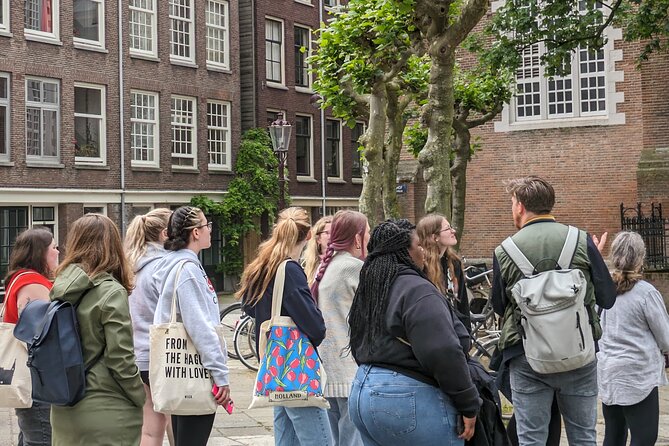
The stop on Jodenbreestraat, at the start of Amsterdam’s Jewish Quarter, is one of the most serious parts of the walk. The guide discusses the tens of thousands of Jewish people who lived in Amsterdam before and during the war, along with the disastrous Hunger Winter.
This section deserves attention. It shows that Amsterdam’s past is not only about merchants, canals, and attractive old buildings. The city also carries the memory of persecution, loss, and hunger.
You may find the transition from lighter subjects to wartime suffering abrupt, but that is part of the route’s value. Amsterdam’s history cannot be told honestly without it. The five-minute stop is not enough for a full account, yet it points you toward the deeper memorials and museums you may wish to visit later.
The Dutch East India Company and the cost of empire
At the former Dutch East India Company headquarters, called the Bushuis and Oost-Indisch Huis, the guide turns to trade, spices, and empire. This ten-minute stop gives the economic story more room than most of the other locations.
You learn how a small country built a huge trading network and fought to protect its independence. The company headquarters helps make that story tangible. Amsterdam’s wealth was tied to shipping and global commerce, not just local canal trade.
The explanation also gives you a chance to think about the less comfortable side of that wealth. A story about spices, trade, and national success is also a story about colonial power and the people affected by it. The guide appears to frame the subject as part of the full Dutch story rather than as a simple tale of triumph.
For me, this is one of the most useful stops because it connects attractive canal houses and grand civic buildings with the wider world. You begin to see why Amsterdam became so wealthy and why its past still raises difficult questions.
Stopera Pier and Amsterdam’s modern civic face
At Stopera Pier, beside the Amstel River, the route shifts to the present. You learn why locals call the modern city hall and opera complex Stopera, and why Amsterdammers can feel pride in a building many consider unattractive.
This is a good reminder that city identity is not always based on beauty. Residents can claim a building because of its public role, its history, or the debates around it. The guide also explains how modern Amsterdam relates to the river and to civic life.
The stop takes about five minutes. It is mainly an exterior look, so do not expect an architectural tour inside the complex. Its value comes from the local attitude: Amsterdam is not only a museum of old buildings. It is also a living city with strong opinions about its own public spaces.
Begijnhof, a quiet courtyard behind the city noise
Begijnhof offers one of the route’s most striking changes in mood. The group spends about ten minutes learning about the beguine women who built and lived in this enclosed community.
The courtyard feels removed from the nearby streets, even though it sits in the city center. That contrast makes it memorable. You get a glimpse of a form of religious and communal life that does not fit neatly into the grand stories of kings, merchants, and armies.
This is also a good picture stop, though the Monet bridge later is the designated photo moment. Take your time with the atmosphere, but remember that the walk is moving on a schedule and the courtyard is a shared public space. Keep your voice low and follow the guide’s directions.
The Royal Palace, French influence, and the color orange
The Royal Palace Amsterdam gets about five minutes from the outside. The guide explains how the Dutch royal family came to be, what France had to do with that story, and why the national color is orange even though the flag is red, white, and blue.
Those are exactly the sort of details that make a short city walk useful. They answer questions you might otherwise never think to ask. The royal story is not presented as a detached palace fact, but as part of Dutch politics and national identity.
Admission to the palace is not included. That is reasonable for a two-hour walking tour, since entering would take more time than the schedule allows. If you want to see the interior, buy a separate ticket and return after the walk.
Groenburgwal and the famous Monet bridge
The final stop is Groenburgwal, where you pause for about three minutes to see the well-known Monet bridge and take a picture.
This is a quick finish, but a pleasant one. After the heavier material on war, empire, and religion, the bridge gives you a simple visual reward. It is the kind of place where you can make a strong Amsterdam photograph without spending half a day hunting for the right angle.
The route ends at Dam Square, about two minutes from the starting point. That makes the finish practical. You are close to public transportation and can continue to another attraction, find lunch, or return to the palace.
Group size, guide style, and what the walk feels like
The maximum group size is 10. That is small enough for a conversational feel and makes it easier to hear the guide on busy streets. It also gives you a better chance to ask about restaurants, museums, boat rides, and neighborhood choices.
The guides bring different personalities. Axel is described as informative, engaging, and funny, with a knack for adding facts you will remember. Mark is also named in connection with a tour that had a booking mix-up and was replaced by a 90-minute canal trip. The important practical point is that the operator handled the problem graciously, though the booking failure itself was frustrating.
The walk is offered in English and uses a mobile ticket. Most people can participate, and service animals are allowed. The tour runs near public transportation, but no special accessibility details are provided, so you should contact the operator if you have specific mobility needs.
Bring comfortable shoes and a refillable water bottle. Bottled water is not included, but refill points are available. Since the experience requires good weather, rain or poor conditions can lead to a different date or a full refund.
Is $30.04 a fair price?
For $30.04, you receive about two hours with an expert local guide, a small group, practical Amsterdam advice, and discount codes for the company’s other tours if requested.
The value is strongest if this is your first visit or your first full day in the city. A good orientation walk can prevent wasted time later. You learn which parts of the center deserve a second look, which stories need more time, and how the major areas connect.
The value is weaker if you already know Amsterdam well or want long stops at each sight. Ten locations in two hours requires compression. You will hear the main story at each place, but you will not enter most attractions or spend much time lingering.
The tour currently has a 4.9 rating from 31 reviews, with 97 percent of people recommending it. Those figures suggest a consistently positive experience, though the booking problem described above is a reminder to carry your confirmation and arrive at the correct meeting point.
Who should book this Amsterdam walk?
I would recommend it to first-time visitors, solo travelers, couples, and small groups who want a friendly introduction without committing to a full-day tour. It also suits anyone who likes history served in short, memorable sections rather than long academic talks.
Families may appreciate the humor and short stops, though the serious wartime material requires some maturity. Anyone with limited time can use the route as a fast survey of central Amsterdam.
You should consider another option if you want interior visits, a slow photography walk, or a detailed focus on one subject such as Jewish Amsterdam, the Dutch Golden Age, or the Red Light District. This experience gives you range, not depth at every stop.
Should you book the Amsterdam 2 Hour History Walking Tour?
Book it if you want to understand Amsterdam quickly, enjoy a small group, and prefer a guide who can mix facts, humor, and honest discussion. The strongest reasons are the compact route, the maximum of 10 people, and the useful advice for the rest of your stay.
Skip it if your schedule is too tight for a two-hour walk, if you already know the center well, or if you want to enter major sights rather than view them from outside. For most first visits, though, $30.04 is a sensible price for a clear introduction to the canals, the city’s difficult past, its global ambitions, and its modern character.
FAQ
How long is the Amsterdam history walking tour?
The tour lasts approximately two hours.
What time does the tour begin?
The scheduled start time is 11 a.m.
Where does the tour start?
It starts at Hit the Bricks Walking Tours, Prinsenstraat 13, 1015 DA Amsterdam, Netherlands.
Where does the tour end?
It ends at Dam Square, which is about two minutes on foot from the starting area and close to public transportation.
What language is the tour offered in?
The tour is offered in English.
How large is the group?
The tour has a maximum of 10 people.
Is admission to the Royal Palace included?
No. Admission to the Royal Palace is not included.
Is bottled water provided?
No. Bottled water is not included, but there are several places to refill a water bottle, so bring a refillable bottle.
More 2-Hour Experiences in Amsterdam
- Amsterdam: 2-Hour Canal Cruise incl. Drinks & Dutch Snacks
★ 5.0 · 594 reviews - Amsterdam 2-hour Private Canal Cruise with Live Guide and Drinks
★ 5.0 · 296 reviews - Amsterdam 2-Hour Evening Cruise With Live Guide and Bar
★ 5.0 · 134 reviews - Amsterdam: 2-Hour Sightseeing Tour by Rickshaw
★ 4.7 · 81 reviews
More History Walks around Amsterdam
- Amsterdam: Historic City Sightseeing Canal Cruise
★ 4.5 · 444 reviews - Anne Frank and the Jewish History of Amsterdam Private Tour
★ 5.0 · 307 reviews - Amsterdam: 3-Course Meal in Historic 1st Class Waiting Rooms
★ 4.5 · 292 reviews - Amsterdam: Highlights & History Walking Tour
★ 4.8 · 266 reviews
Just added around Amsterdam
- From Amsterdam: The Hague Private Trip and Mauritshuis Entry★ 4.3 · 4 reviews
- VIP Private Full Day Tour of the Netherlands★ 4.8 · 6 reviews
- Amsterdam Old-West Vegan Food Tour with Local Guide★ 4.7 · 3 reviews
- Amsterdam: Van Gogh Museum Guided Tour★ 4.8 · 262 reviews
- Van Gogh Museum Private Guided Tour★ 4.2 · 10 reviews
- Vecht River: Full-day Cruise with Lunch★ 4.8 · 9 reviews
- Van Gogh and Rijksmusuem Tour: Small Group Tour with Entry★ 4.7 · 3 reviews
- Amsterdam: Van Gogh Museum Ticket & Guided Tour★ 4.4 · 187 reviews
Historical Tours, compared.
Amsterdam Food and Cultural Tour with Tastings
Read our review →
Kinderdijk UNESCO World Heritage Entry Ticket
Read our review →
Hop-on Hop-off Old-Fashioned Heritage Tram Tour
Read our review →


Amsterdam High-End Dutch Food & History Tour – Up to 8 guests
Read our review →
Cruise through the Historic City Center with Guide
Read our review →
Browse the lists this tour appears in