
Reviewed · HISTORICAL TOURS
Amsterdam: Private World War Two History Walking Tour
Amsterdam’s wartime story is written into ordinary streets, hotel facades, monuments, and squares you could otherwise pass without a thought. This private walk connects those places to the German occupation, the deportation of Amsterdam’s Jewish population, the Hunger Winter, and the tense days around liberation.
I like the tiny group size, capped at four, because you can ask questions without speaking over a crowd. I also like the personal use of photographs and paper material, including a small book tracing the fate of every Jewish resident from one Amsterdam street.
The main consideration is emotional weight. This is not a light sightseeing stroll, and it does not include the Anne Frank House, the Resistance Museum, or the Hollandsche Schouwburg. You will see the places from outside and hear their stories, but museum tickets are not part of the experience.
Key Points to Know Before You Book
- Meet at 9:30 in front of Prinsengracht 263: The guide waits by the old Anne Frank House with a large notebook and an Anne Frank Huis sign.
- Follow the occupation through real locations: The walk covers the German army’s arrival, resistance activity, Dam Square, the Hunger Winter, and postwar remembrance.
- See a street-by-street record of deportation: A small book identifies Jewish residents from one Amsterdam street and the camps where they died.
- Expect a personal, question-friendly tour: Three retired historians lead groups of no more than four, without an audio system.
- Plan for a coffee stop: About halfway through, you can pause for refreshments or a restroom visit. You pay for drinks and food yourself.
- Bring an umbrella: Amsterdam weather can change quickly, and the tour takes place outdoors.
Starting at Prinsengracht 263, Not Inside the Anne Frank House
The meeting point is easy to identify but worth reading carefully. You begin at 9:30 in front of the old Anne Frank House at Prinsengracht 263, between the museum and the Lunch Cafe. Look for the number plate 263, the Anne Frank Huis sign, and a guide holding a large notebook.
This is only the meeting point. The walk does not include entry to the Anne Frank House. That distinction matters because many people arrive expecting a combined museum and walking tour. If you want to visit the house, you need to arrange that separately.
Beginning here gives the tour an immediate connection to wartime Amsterdam, but the guide does not limit the story to Anne Frank. The focus is wider: how the occupation changed daily life, how resistance took shape, how Jewish residents were deported, and how Amsterdam remembered the years after 1945.
The tour lasts about three hours, though it can run a little longer. That flexible timing is useful if you want to stop for something to eat at the coffee break. It is best treated as a substantial morning walk rather than a tightly timed attraction.
More History Tours in Amsterdam
- Amsterdam Food and Cultural Tour with Tastings
★ 5.0 · 2,442 reviews - Amsterdam: Haunted History and Ghost Walking Tour
★ 4.5 · 488 reviews - Amsterdam High-End Dutch Food & History Tour – Up to 8 guests
★ 5.0 · 482 reviews
How the German Occupation Changed Amsterdam
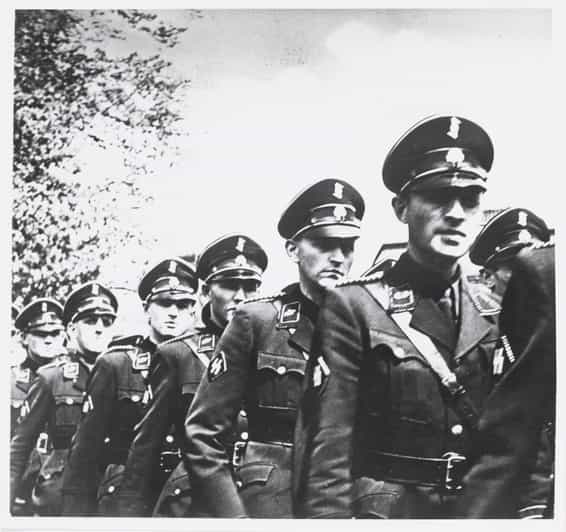
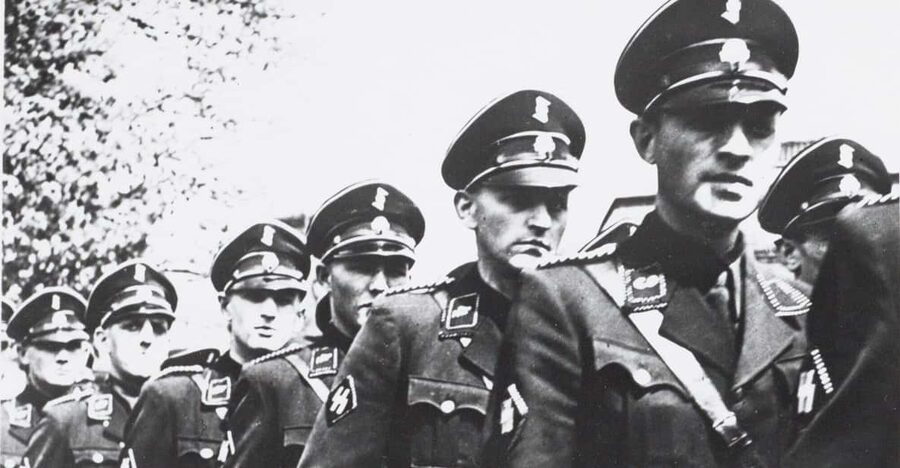
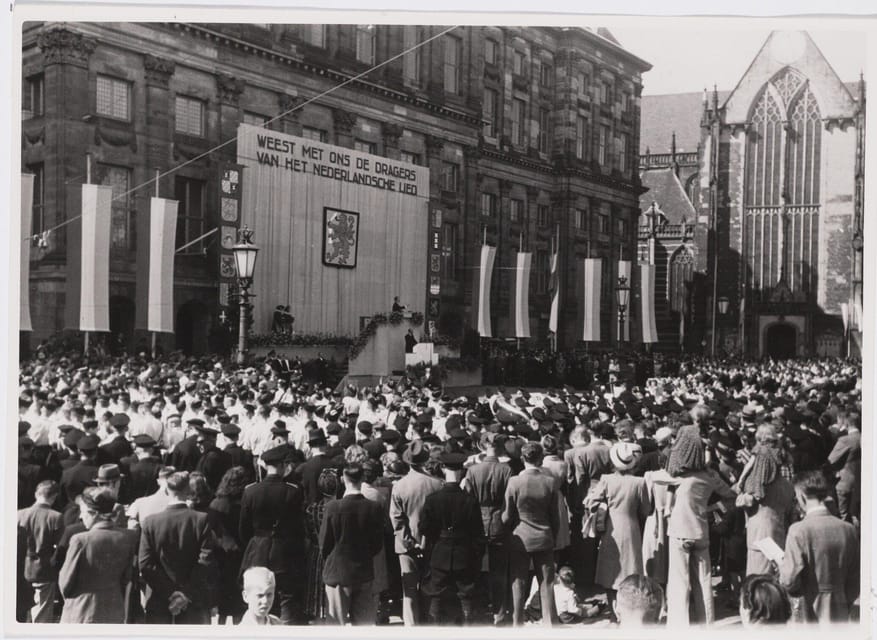
One early subject is the entry of the German army, the Wehrmacht, into Amsterdam. The guide uses photographs taken at the time, including images connected to the former town hall, now the Grand hotel.
The value here is the contrast between a familiar city setting and the shock of occupation. You are not simply hearing a date and moving on. You are looking at the same urban spaces through photographs of German arrival, public reaction, and the later welcome given to Canadian forces.
That pairing helps you see the occupation as a period with a beginning, a daily middle, and an end. The story moves from the arrival of German troops to resistance, repression, hunger, deportation, and liberation. The locations give the discussion a physical anchor.
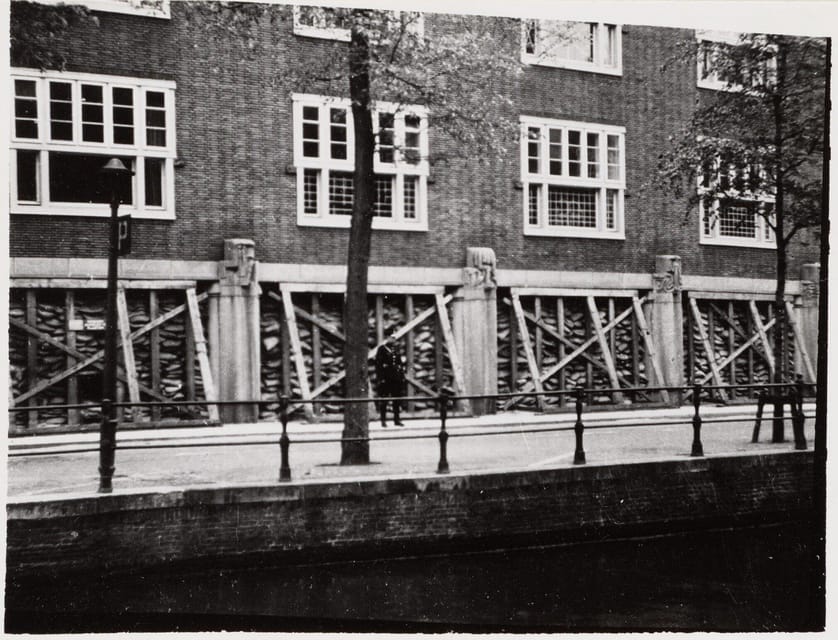
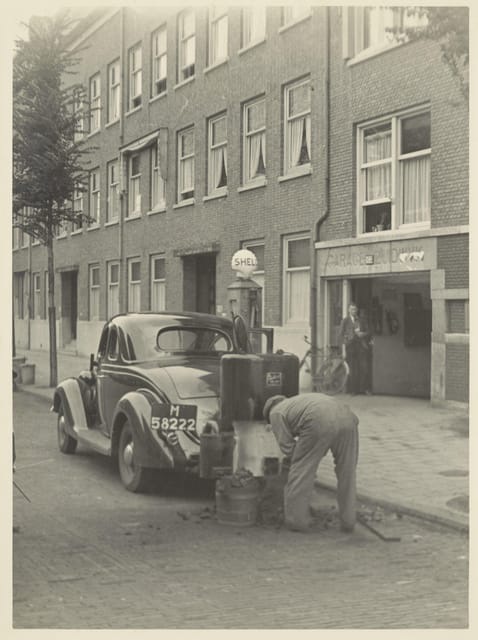
The guide also shows photographs preserved by Dutch resistance workers. These images add a careful local viewpoint to the walk. You can ask about the background of a photograph while standing close to the place where the event or scene took place.
This is one of the tour’s strongest features. A large group might give you a broad lecture. Here, the retired historians can pause, explain a detail, and follow your questions. Peter Schaapman is one of the named guides, and past visitors have singled out his extensive command of the subject and his storytelling.
Dam Square and the Shooting of May 7, 1945
Dam Square is one of Amsterdam’s most open and familiar public spaces. During the tour, it becomes the setting for the shooting incident of May 7, 1945, just after the war in the Netherlands had ended.
The guide explains the event at the location rather than treating it as a footnote in a timeline. That makes the stop especially useful for visitors who want to understand how uncertain the first days of liberation could be. The end of German rule did not mean that every danger disappeared at once.
This is also a good example of what the tour does best. It does not only point out grand monuments. It uses a central city square to discuss a specific episode, then places that episode in the larger story of occupation and liberation.
Do not expect a long stop with a formal museum display. The experience depends on the guide’s explanation, photographs, and your questions. If you prefer objects behind glass and a fixed exhibition route, the Resistance Museum may suit you better. If you want the event explained where it happened, this walk offers more direct contact with the city.
The Hunger Winter and the Search for Food
The tour also covers the food shortages of the Hunger Winter. You hear about food being dropped during this desperate period, one of the details that brings wartime deprivation down to the level of ordinary families.
This part of the walk broadens the subject beyond military occupation and deportation. War affected what people could eat, how they moved around the city, and how they endured the final months before liberation. The focus is not only on commanders and governments. It is also on the basic problem of finding food.
The precise impact of this stop will depend on the guide and the questions you bring. The supplied details do not promise a surviving food-drop site or a preserved object. Instead, you should expect an explanation tied to Amsterdam’s wartime experience and supported by historical images and printed material.
I appreciate that this subject appears alongside the larger political story. It helps you understand why the occupation was not only a matter of uniforms and decrees. It reached kitchens, streets, transport, and family life.
More Private Tours in Amsterdam
- Rijksmuseum Amsterdam Small-Group Tour with Private Upgrade
★ 4.5 · 1,547 reviews - Van Gogh Museum Tour Reserved Entry Semi Private
★ 5.0 · 1,437 reviews - Private Amsterdam Red Light District and Coffee Shop Tour
★ 5.0 · 763 reviews - Anne Frank and Jewish Quarter Amsterdam Private Walking Tour
★ 5.0 · 684 reviews
One Amsterdam Street, Named Resident by Named Resident
The most unusual part of the experience is the small book about the Jewish residents of one Amsterdam street. The guide has assembled names and photographs, then identified the extermination camp in which each person died.
This is a powerful way to discuss deportation. A number on a chart can feel distant. A list of residents from one street gives the subject a human scale and shows how an entire neighborhood could be torn apart.
The discussion includes the deportations of Amsterdam’s Jewish population and the fate of people sent to Auschwitz and Sobibor. You should be prepared for direct and difficult material. The point is not shock for its own sake. The point is to connect individual names and homes with the machinery of persecution and murder.
The book is also something you can keep. That gives the experience a lasting element that many city walks lack. You leave with printed material to read later, rather than relying on memory alone.
At the same time, this section can be emotionally demanding. If you are visiting Amsterdam with young children, consider their ability to handle an adult subject before booking. The tour description does not set a minimum age, so you should ask the provider if that matters for your group.
Resistance Monuments and Photographs at the Original Sites
Along the route, the guides point out resistance monuments and explain the stories behind them. The walk also uses photographs taken by Dutch resistance fighters, shown at or near the locations connected with them.
That method changes how you look at a memorial. You are not only asked to admire a statue or plaque. You hear why it exists, what it commemorates, and how it fits into the wartime story of Amsterdam.
The personal format matters here. With no audio system, the guide can adjust the pace and stop longer when a monument raises questions. You can ask about the people being remembered, the nature of the resistance, or the difference between a wartime photograph and a later memorial.
The route is not described as a full survey of every resistance location in Amsterdam. It selects sites connected with the tour’s main story. That is a sensible approach for three hours, but history fans wanting a complete resistance itinerary should pair this walk with a visit to the Resistance Museum.
The Violin Player Statue and Auschwitz
One highlighted stop is a statue of the famous violin player linked to Auschwitz. The monument gives the tour another way to approach the camps and the people whose lives were destroyed there.
The supplied information does not provide the violinist’s name or a full account of the statue. You should therefore expect the guide to explain the figure and the monument on site rather than arrive with a detailed printed profile already promised.
This stop will appeal most to people who want remembrance connected to a person, not just a location. It also ties Amsterdam’s Jewish story to Auschwitz and the broader system of extermination camps discussed during the walk.
As with the street book, this is not a casual photo stop. The subject is serious, and the guide’s role is to provide context rather than entertainment. The tour’s tone remains respectful and focused throughout.
Why Four People Makes a Difference
The group never exceeds four people. At the listed price of $188 per group, that works out to $47 each when four people share the cost. For one person or a couple, the price per head is higher, but you are paying for a private experience rather than joining a large scheduled group.
I see the best value for families or small groups with a shared interest in wartime history. You receive direct access to a retired historian, can ask questions at any point, and do not need to follow an audio recording or a fixed lecture style.
The lack of an audio system is intentional. You hear a live voice and can request a slower pace or clarification. That will appeal to you if you learn through conversation. It may be less appealing if you prefer a polished recording with maps, sound effects, or a set narration.
The guides walk at a pace chosen by the group. Wheelchair users can take part, but you should email ahead so the route and coffee stop can be considered. The information provided does not promise that every pavement, monument, or street surface is fully step-free, so advance contact is the sensible move.
The Midway Coffee Stop and Walking Practicalities
About halfway through, the group takes a short break for coffee and a restroom visit. Refreshments are not included, and you can also eat something, such as a late breakfast, if the timing suits you.
This break makes the three-hour length easier to manage. It gives you a chance to sit down, warm up, or regroup before the second half. Still, the tour remains an outdoor walking experience, so wear comfortable shoes and bring an umbrella.
The start time is 9:30 in the morning. That leaves much of the day open for the Anne Frank House, the Resistance Museum, the Hollandsche Schouwburg, or other Amsterdam plans, though you need separate admission for those sites.
The walking pace is flexible, but the tour covers several locations over three hours. If you have limited mobility, let the provider know in advance. If you want a fast, tightly packed sightseeing route, this may feel too conversational. If you want time to stop and discuss details, the pace is a plus.
What the Tour Does Not Include
The experience does not include admission to the Anne Frank House, the Resistance Museum, or the Hollandsche Schouwburg, which was used as a deportation center. It also does not include drinks or food at the break.
That is not necessarily a weakness. Keeping museum visits separate lets the walking tour concentrate on outdoor locations and personal interpretation. You can choose the museums that fit your schedule and interest.
It does mean you should not book this as your only look at Amsterdam during the occupation. The walk gives you location-based explanation and selected stories. Museums can add documents, objects, exhibitions, and longer accounts.
I would pair the tour with at least one museum if this period is a main reason for your visit. The walk helps you understand the city around you, while a museum can give you more time with artifacts and archival material.
Who Will Get the Most From This Walk
This tour is a strong match for you if you like history explained through streets and monuments, prefer a small private group, and want the freedom to ask questions. It is also well suited to visitors who have already seen Amsterdam’s famous highlights and want a more focused subject.
The best fit is a history-minded adult or family group that can handle accounts of persecution, deportation, starvation, and murder. The tone is serious, and the Auschwitz and Sobibor material is not softened.
You may want another option if you are mainly looking for architecture, canals, art, or general orientation. This is not a broad introduction to Amsterdam. It is a three-hour walk about the Nazi occupation and its human cost.
The strong praise for Peter Schaapman centers on his extensive subject knowledge and exceptional stories. Since three retired historians lead the tours, your exact guide may vary, but the format is built around a guide who can speak from long study and personal conversation rather than a recorded script.
Should You Book the Amsterdam World War Two Walk?
Book it if you want a private, serious look at Amsterdam’s occupation, especially if the idea of seeing real locations with a retired historian appeals to you. The four-person limit, flexible pace, photographs, resistance monuments, and street-by-street record of Jewish residents give it more personal force than a standard city walk.
At $188 per group, the value improves sharply when four people share the cost. Couples should decide if the subject and private format justify the higher per-person price. You also need to budget separately for coffee and any museum admissions.
Skip it if you want to visit the Anne Frank House as part of the same booking, or if you prefer a museum-based presentation. Book it if you want to stand in Dam Square, examine wartime photographs beside the places they show, and hear how occupation affected Amsterdam residents one street and one story at a time.
FAQ
Where does the tour meet?
The meeting point is in front of the old Anne Frank House at Prinsengracht 263. It is between the museum and the Lunch Cafe. Look for an Anne Frank Huis sign and a guide holding a large notebook.
What time does the tour start?
The tour starts at 9:30 A.M.
How long does the walking tour last?
It lasts about three hours, although it may run a little longer.
Is entry to the Anne Frank House included?
No. The tour begins outside the old Anne Frank House, but admission is not included.
Does the tour visit the Resistance Museum or the Hollandsche Schouwburg?
No. The walk passes locations connected with the Second World War, but it does not include visits to those museums or the former deportation center.
How many people can join the private group?
The group size is never more than four people.
What language is the tour given in?
The tour is given in English.
Is the tour wheelchair accessible?
Yes, you can participate in a wheelchair. Email the provider in advance so the route and coffee stop can be taken into account.
Are refreshments included?
No. The coffee stop is included in the route, but you pay separately for drinks and any food.
More History Walks around Amsterdam
- Amsterdam: Historic City Sightseeing Canal Cruise
★ 4.5 · 444 reviews - Anne Frank and the Jewish History of Amsterdam Private Tour
★ 5.0 · 307 reviews - Amsterdam: 3-Course Meal in Historic 1st Class Waiting Rooms
★ 4.5 · 292 reviews - Amsterdam: Highlights & History Walking Tour
★ 4.8 · 266 reviews
More Walking Tours in Amsterdam
- Anne Frank’s Story – Guided Walking Tour through Amsterdam
★ 5.0 · 11,619 reviews - Amsterdam: Life of Anne Frank and World War II Walking Tour
★ 4.8 · 10,467 reviews - Absolutely Amsterdam – the Essential Introductory Walking Tour
★ 5.0 · 3,629 reviews - Amsterdam: Anne Frank Guided Small Group Walking Tour
★ 4.8 · 2,722 reviews
Just added around Amsterdam
- From Amsterdam: The Hague Private Trip and Mauritshuis Entry★ 4.3 · 4 reviews
- VIP Private Full Day Tour of the Netherlands★ 4.8 · 6 reviews
- Amsterdam Old-West Vegan Food Tour with Local Guide★ 4.7 · 3 reviews
- Amsterdam: Van Gogh Museum Guided Tour★ 4.8 · 262 reviews
- Van Gogh Museum Private Guided Tour★ 4.2 · 10 reviews
- Vecht River: Full-day Cruise with Lunch★ 4.8 · 9 reviews
- Amsterdam: Van Gogh Museum Ticket & Guided Tour★ 4.4 · 187 reviews
- Van Gogh and Rijksmusuem Tour: Small Group Tour with Entry★ 4.7 · 3 reviews
Historical Tours, compared.
Amsterdam Food and Cultural Tour with Tastings
Read our review →
Kinderdijk UNESCO World Heritage Entry Ticket
Read our review →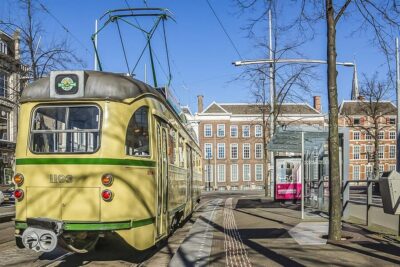
Hop-on Hop-off Old-Fashioned Heritage Tram Tour
Read our review →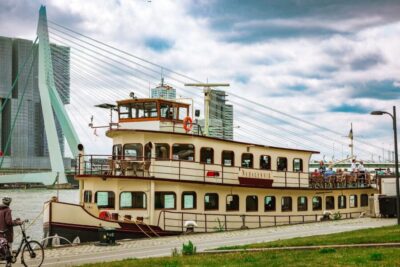


Amsterdam High-End Dutch Food & History Tour – Up to 8 guests
Read our review →
Cruise through the Historic City Center with Guide
Read our review →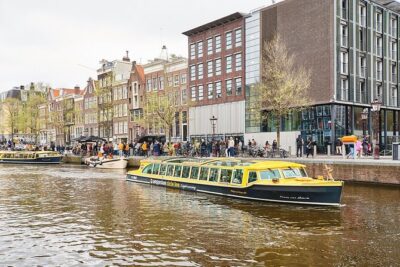
Browse the lists this tour appears in