

Reviewed · WORKSHOPS
Workshop ‘Paint your own Delft Blue Tile!’
The best part of this Amsterdam workshop is the small surprise at the end: your tile looks pale or nearly black before firing, then turns the familiar Delft blue in the kiln. You spend about 90 minutes learning the technique, painting a real souvenir, and enjoying coffee, tea, lemonade, and a stroopwafel-style Dutch treat.
I like the hands-on format and the central Muntplein location. I also like that you do not need artistic skill. Instructors such as Barbara, Joao, and Maartje help with the brushwork, templates, and small decisions that make a tile look polished. The main drawback is practical: you cannot take the finished tile with you that day. You collect it after about 14 days or pay a small shipping fee.
Key points before you book
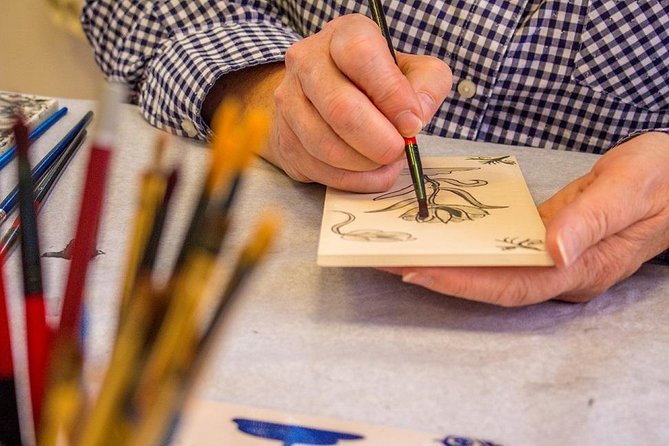
- Your tile changes color in the kiln: The paint does not look like the final Delft blue until after glazing and firing.
- Small classes mean real help: Groups range from 2 to 15 people, with a professional painter available throughout the session.
- Coffee and a Dutch treat are included: This makes the workshop feel relaxed rather than like a hurried craft lesson.
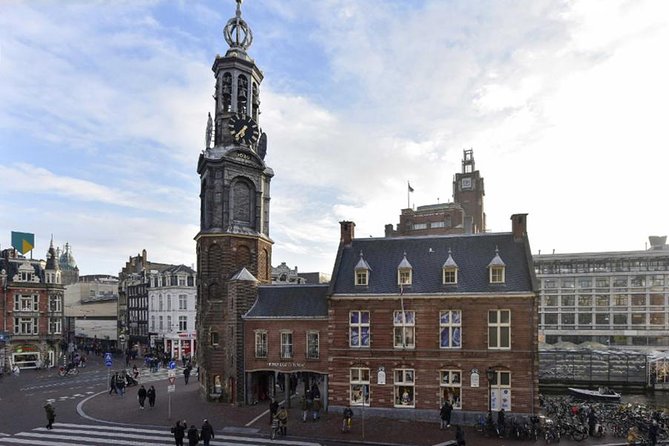
- The location is easy to reach: Meet at De Munt, Muntplein 12, in central Amsterdam.
- Plan for a second step after the class: Pick up the fired tile in Amsterdam, Delft, or Putten after about 14 days, or arrange shipping.
- It suits beginners: Practice work and prepared patterns make the activity manageable even if you rarely paint.
Why painting a Delft blue tile works so well in Amsterdam
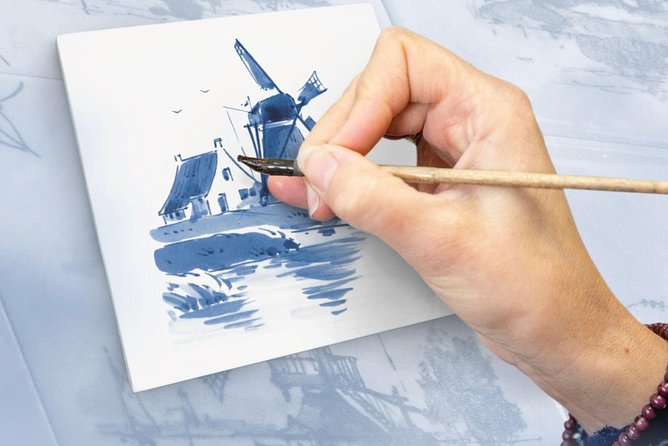
Amsterdam gives you plenty of museums, canal walks, and grand historic buildings. Those are worthwhile, but a quiet craft session gives your day a different rhythm. Here, you do not just look at Dutch design behind glass. You handle the brush and make a small piece of it yourself.
Delft blue pottery is one of the Netherlands’ best-known decorative arts. The workshop gives you a short introduction to its history before moving quickly to the practical part. That balance matters. You get enough context to understand what you are making, but you do not spend the whole session listening to a lecture.
The final tile also has a useful advantage over many souvenirs: it is personal. You choose a design, paint it yourself, and wait for the kiln to reveal the finished color. It may not be museum-perfect, but it carries your hand and your trip with it.
More Workshops in Amsterdam
- Amsterdam: Traditional Dutch Syrup Waffle Making Workshop
★ 4.8 · 4,093 reviews - Amsterdam Traditional Dutch Syrup Waffle Making Workshop
★ 5.0 · 960 reviews - Amsterdam: Bols Cocktail Experience and Cocktail Workshop
★ 4.8 · 666 reviews
Arriving at De Munt on Muntplein
The workshop takes place in the De Munt building at Muntplein 12, 1012 WR Amsterdam. This is a central meeting point, near public transportation and within easy reach of many central Amsterdam sights.
You start and finish at the same location. That makes the activity simple to fit between other plans. You do not need to organize transport to a distant pottery studio or worry about finding a separate ending point.
The workshop is offered Wednesday through Sunday at 2:30 p.m. It is reservation-only, and the minimum group size is two people. The maximum is 15. If you want another day or time, the provider says it may be possible to arrange one directly, but the standard schedule is the afternoon session.
Give yourself enough time to find Muntplein. Central Amsterdam can be busy, and the meeting point is a city address rather than a large tour terminal. A mobile ticket is accepted, and confirmation is sent when you book.
Starting with coffee, a Dutch treat, and Delft pottery
The session begins with coffee, tea, or lemonade and a small Dutch treat. This is a modest detail, but it helps set the tone. You can settle in, meet the instructor, and look at the materials before picking up a brush.
The introduction covers Delft blue pottery and the basic painting process. One especially useful point is the difference between the paint on the table and the finished tile. The piece may not look blue while you work. The glaze and firing process create the familiar result later.
That delayed finish adds some suspense, but it also means you need to follow the instructions carefully. You cannot judge the final color entirely from the wet paint in front of you. The instructor’s advice is important for line weight, shading, and how much paint to use.
The class is not designed as a formal art course. It is a compact cultural activity with enough instruction to help you create something attractive. If you want a long lesson on ceramic chemistry or traditional production, this will feel brief. If you want a pleasant introduction with a physical souvenir, the format makes sense.
Practicing before you paint the real tile

A useful part of the class is the practice tile. You learn how the brushes behave and try the different techniques before working on your final piece.
This is where many beginners relax. Painting ceramic tile is not quite like painting on paper, and the brush can feel unfamiliar at first. A practice surface gives you a chance to test pressure and line thickness without worrying about ruining your souvenir.
You then choose a pattern for the actual tile. The prepared designs give you a guide to follow, so you do not have to invent a full composition from scratch. You can focus on tracing, brush control, and filling in the design.
That structure is one reason the workshop works for mixed skill levels. You may be comfortable drawing, or you may barely trust yourself with a straight line. Either way, you have a pattern and a professional painter nearby to offer suggestions.
More ways to spend a day in Delft:
- From Amsterdam: Rotterdam, Delft & The Hague Guided Day Tour
★ 4.2 · 1,765 reviews - Rotterdam, Delft, the Hague, Madurodam from Amsterdam
★ 4.0 · 793 reviews - Rotterdam, Delft and The Hague Small Group Tour from Amsterdam
★ 4.5 · 599 reviews - From Amsterdam: Guided Trip to Rotterdam, Delft & The Hague
★ 4.2 · 529 reviews
Painting with Barbara, Joao, Maartje, or another studio instructor
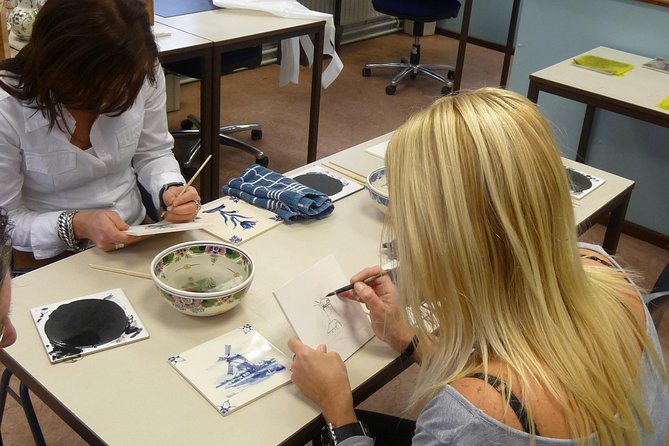
The workshop is taught by a professional painter, and the instructor stays involved as you work. Barbara is described as patient and encouraging, while Joao brings a friendly manner and stories to the session. Maartje is also noted for her strong painting skills and helpful guidance.
Because the class can be as small as two people, the amount of individual attention may be excellent. A full group of 15 will feel different from a session with two or four participants, but the advertised cap keeps the class from becoming a large demonstration.
You should expect advice rather than a rigid step-by-step lecture. The instructor can help you decide where to place details, how to handle the brush, and how to make the design work. That support is valuable, but you still do the painting yourself. The finished tile is not produced for you by the studio.
I would approach the activity with a willingness to make small mistakes. The point is not to create a flawless copy of a historic tile. It is to learn a traditional technique and leave with a piece that reflects your afternoon in Amsterdam.
What the 90-minute schedule feels like
The official duration is about 1.5 hours. That includes the introduction, refreshments, practice work, selection of a pattern, and painting of the final tile.
The timing is long enough to feel like a real activity, but not so long that it takes over your day. You can schedule it as an afternoon break from museums or sightseeing. Some sessions may take closer to two hours depending on the pace of the group, so avoid booking something immediately afterward if you need to be across town at a fixed time.
The class does not appear designed to rush you. You have time to work through the design and receive help. Still, the painting period is limited. If you are highly detail-oriented, you may wish for longer, especially once you become comfortable with the technique.
For most people, that limit is helpful. A blank tile can invite endless second-guessing. A defined session encourages you to make decisions and finish the piece.
The kiln wait is part of the experience
When your painting is complete, the studio glazes and fires the tile. This is why the finished piece is not available at the end of the workshop.
You can collect it after about 14 days from a branch in Amsterdam, Delft, or Putten. If you are staying in the Netherlands for two weeks, collection may be easy to arrange. If you are leaving sooner, shipping is available for a small extra fee.
One participant from the United States paid to have the tiles shipped home and received them about a week after the class. That timing is not a guarantee, but it shows why shipping can be the sensible choice for an international visitor. Ask about the current fee and delivery arrangements when booking or during the session.
The waiting period has a pleasant side to it. You leave Amsterdam with the knowledge that the souvenir is not quite finished, then see the final blue color later. The downside is obvious: if you want to pack a finished object in your suitcase that afternoon, this is not the right souvenir activity.
Is the $72 price good value?
The advertised price is $72, while the workshop information lists an adult price of €39 and a child price of €29 for ages 6 to 12. Since the displayed booking price and the local euro price do not match, check the final amount, currency, and any booking fees before payment.
At the local listed adult price, the value is strong for a 90-minute guided activity in central Amsterdam. You receive instruction, materials, refreshments, kiln firing, and a handmade souvenir. Shipping is extra, so add that cost if you will not be able to collect the tile.
At $72, the value depends more on how much you enjoy creative activities. You are paying for a small-group lesson and the complete process, not simply for a pre-made tile. If you would happily spend that amount on a museum ticket, a craft class, or a special souvenir, it can be worthwhile. If your main goal is inexpensive sightseeing, it may feel costly.
Children ages 6 to 12 can join for the listed child price when accompanied by an adult. The activity is also a good choice for couples, friends, families, and solo participants who enjoy making something together.
Who will enjoy this workshop most
I would recommend this workshop to you if you like art but do not necessarily have formal training. The practice tile, templates, and instructor support remove much of the pressure.
It also suits couples who want to break up a museum-heavy itinerary. You can talk while you work, compare designs, and leave with two related but different souvenirs. Friends have used it as a birthday activity, and the small-group setting makes it easy to share the experience without turning it into a loud party.
Families can consider it for children age 6 and up, provided an adult accompanies each child according to the stated rules. Younger children may need close help with the brushes and pattern, but the activity is designed for broad participation.
I would hesitate to recommend it if you dislike delayed souvenirs, have no room for a 90-minute indoor activity, or want a finished object immediately. It is also not the best match if you want advanced instruction in freehand ceramic painting. The class focuses on a pleasing first result, not on training professional ceramic artists.
Practical details that affect your plans
The experience has free cancellation if you cancel at least 24 hours before the start time. Cancellations or changes made inside that window are not refunded or accepted, and the cut-off uses Amsterdam local time.
Service animals are allowed, and the location is near public transportation. The activity states that most people can participate, but you should contact the provider directly about any specific access needs.
The class requires at least two participants. If you are booking alone, confirm that the session will run before arranging the rest of your day. The normal group limit is 15, so you should not expect a private lesson unless you arrange one separately.
Bring a little patience and wear something you can comfortably work in. The provided information does not specify a dress code or protective clothing, so ask the studio if you have concerns about paint or want to know what is supplied.
Should you book the Delft blue tile workshop?
Book it if you want a hands-on Dutch souvenir, a calm break from sightseeing, and the chance to try a traditional painting style with an instructor nearby. The class is friendly to beginners, the central location is convenient, and the firing process gives the finished tile a genuine element of surprise.
Think twice if you need to take your souvenir home the same day or if the higher displayed price of $72 feels out of proportion to a 90-minute activity. Confirm the final price and shipping cost, then leave room in your schedule for the workshop to run longer than the stated 1.5 hours.
For most people who enjoy making things, this is a smart Amsterdam afternoon choice. You do not need to be an artist. You only need enough curiosity to pick up a brush and see what the kiln does with your work.
FAQ
Where does the Delft blue tile workshop take place?
The workshop takes place in the De Munt building at Muntplein 12, 1012 WR Amsterdam, Netherlands. The activity ends at the same meeting point.
How long does the workshop last?
The stated duration is about 1.5 hours. Some sessions may take closer to two hours depending on the pace of the class, so allow some flexibility afterward.
What is included in the workshop?
Coffee, tea, lemonade, and a Dutch treat are included. Instruction, tile painting, glazing, and firing are part of the activity.
Can I take my finished tile home that day?
No. The studio must glaze and fire the tile first. You can collect it after about 14 days in Amsterdam, Delft, or Putten, or arrange shipping for a small additional fee.
Do I need painting experience?
No previous experience is required. You practice first, choose a pattern, and receive help from a professional painter during the activity.
When are the workshops held?
The regular workshops take place Wednesday through Sunday at 2:30 p.m. The activity is available by reservation, and the provider may discuss other dates or times if you contact them.
Just added around Amsterdam
- From Amsterdam: The Hague Private Trip and Mauritshuis Entry★ 4.3 · 4 reviews
- VIP Private Full Day Tour of the Netherlands★ 4.8 · 6 reviews
- Amsterdam Old-West Vegan Food Tour with Local Guide★ 4.7 · 3 reviews
- Amsterdam: Van Gogh Museum Guided Tour★ 4.8 · 262 reviews
- Van Gogh Museum Private Guided Tour★ 4.2 · 10 reviews
- Vecht River: Full-day Cruise with Lunch★ 4.8 · 9 reviews
- Amsterdam: Van Gogh Museum Ticket & Guided Tour★ 4.4 · 187 reviews
- Van Gogh and Rijksmusuem Tour: Small Group Tour with Entry★ 4.7 · 3 reviews
Workshops, compared.

Traditional Dutch Syrup Waffle Making Workshop
Read our review →Amsterdam Traditional Dutch Syrup Waffle Making Workshop
Read our review →
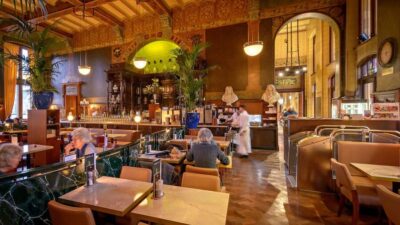
3-Course Meal in Historic 1st Class Waiting Rooms
Read our review →

Amsterdam Light Festival Winter Walk with Stroopwafel Workshop
Read our review →
Distilling Class @ Spirited Union Rum Co. (Amsterdam)
Read our review →
Cocktail workshop @ Spirited Union Rum Co. (Amsterdam)
Read our review →Browse the lists this tour appears in