
Reviewed · WORKSHOPS
The Hague: Beginner’s Surf Lesson
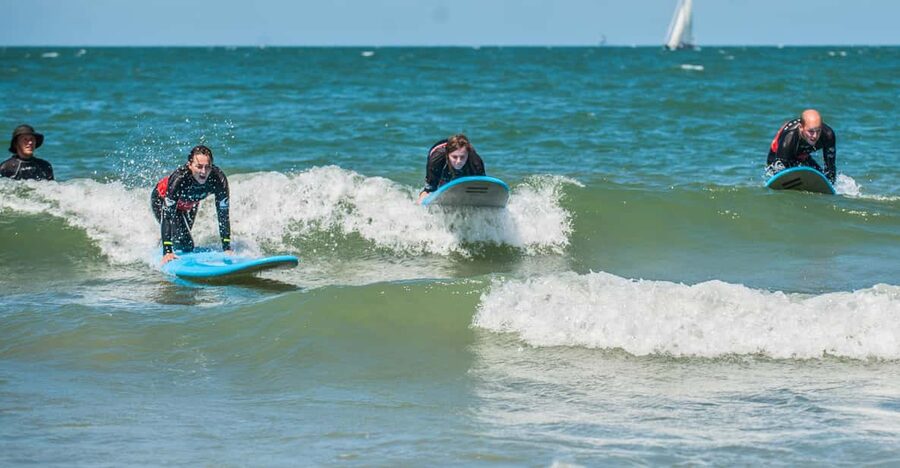
The best part of this Scheveningen lesson is that you get into the North Sea on your first visit, rather than spending the whole session watching someone else demonstrate. An instructor starts on the beach with safety, wave reading, and basic technique, then helps you put those lessons to work on a soft-top board.
I like the small groups of six or fewer, which gives a beginner a better chance to get help when the board squirms or a wave arrives early. I also like the warm wetsuit, cap, boots, and gloves when needed, plus the €15 rental credit for more time on the water later. The main consideration is age: you must be at least 16, and the sea conditions can affect how much actual riding you manage in two hours.
Key points at a glance
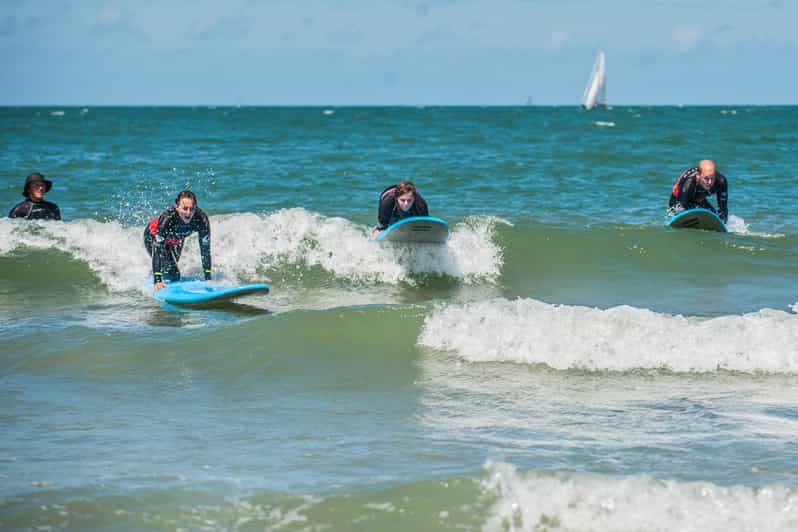
- First-wave focus: Learn how to stand, steer, time your takeoff, and catch a wave.
- Six students or fewer: A compact group keeps instruction more personal.
- Warm North Sea kit: Wetsuits and caps are provided, with winter gloves and boots when needed.
- Friendly named instructors: Ayoub, Gijs, and Connor have received praise for kind, helpful, fun, and professional teaching.
- Useful follow-up credit: The €15 rental credit lets you continue surfing after the lesson.
- Easy beach base: Meet and finish at Strandweg 3 in Scheveningen, with changing rooms, lockers, and hot showers.
Starting at Hart Beach in Scheveningen
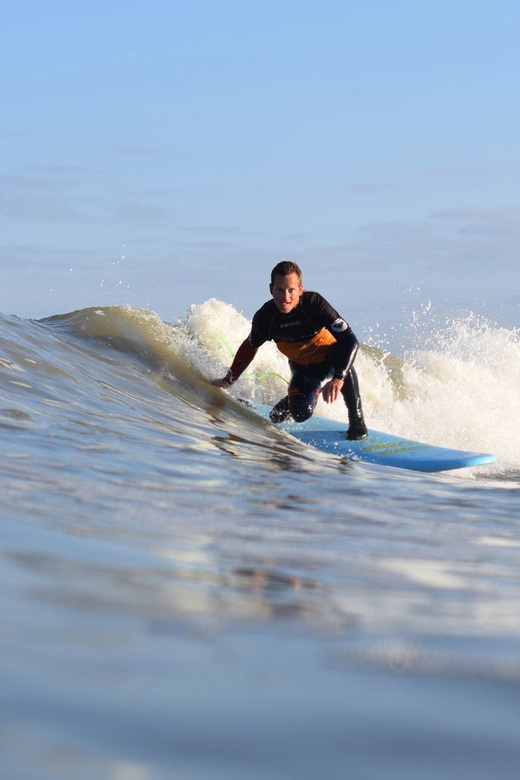
Your lesson begins at Strandweg 3, 2586JK Scheveningen, the seaside district of The Hague. This is a practical setting for a first attempt because the meeting point, changing facilities, equipment, and beach access are all tied to the same surf school.
You should arrive ready to change into a wetsuit. Bring your own swimwear and towel, since neither is supplied. The school provides the rest of the main kit: a soft-top surfboard, a warm wetsuit and cap, and, in winter, gloves and boots if conditions call for them.
The soft-top board is a sensible choice for a beginner. It is designed to be more forgiving than a hard board, which matters when you are still learning how to carry it, position it, and keep it under control. You are not being handed a delicate performance board and expected to know what to do with it.
Separate changing rooms, lockers, and hot showers make the experience easier before and after the water time. That may sound like a small detail, but the North Sea is not a place where you want to linger in wet clothes while searching for somewhere to change.
A few more days out around The Hague worth weighing up
- The Hague: City Canal Cruise
★ 4.6 · 2,024 reviews - The Hague: Madurodam Miniature Park Entry Ticket
★ 4.6 · 1,559 reviews - The Hague: Hop-on Hop-off Old-Fashioned Heritage Tram Tour
★ 4.4 · 1,083 reviews
The first beach briefing
The instruction begins on the beach, before you are asked to paddle into the water. This is where the teacher explains how to stay safe, how to carry and control the board, and how to go out through the waves.
That order matters. Surfing is not only about standing up. You need to know how to move through the water without losing the board, how to watch what is coming toward you, and how to avoid creating trouble for another person in the group.
You will also hear about several techniques for catching waves. The instructor explains what to look for, when to begin your takeoff, and how to keep the board pointed in a useful direction. For a first lesson, this gives you a simple set of jobs to focus on instead of one vague command to just stand up.
The teaching is offered in Dutch and English. If you are visiting The Hague and do not speak Dutch, English instruction keeps the lesson accessible. The group limit of six or fewer is especially useful at this point, since you can ask questions without competing with a large class.
Getting your board into the North Sea
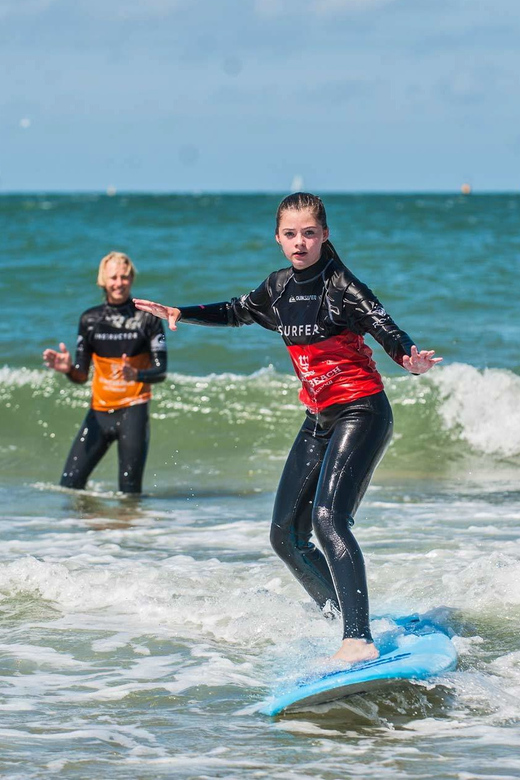
After the beach talk, you take your board into the water and begin practicing. The precise amount of time spent riding depends on the lesson conditions, but the plan is clear: control the board, read the waves, time your takeoff, and try to catch one.
That first stage can feel awkward. A surfboard is long, the water keeps moving, and the wave rarely arrives at exactly the moment you want. The instructor’s job is to turn that confusion into a few manageable steps.
You will work on keeping the board under control as you move through the water. You will also learn to watch the shape and movement of the waves instead of reacting at the last second. These are basic skills, but they are the part of surfing that makes later practice more productive.
The lesson is not sold as a private coaching session. You share the water with a small group, so the instructor’s attention moves among several students. Still, six or fewer is a reasonable balance for a first outing. You get the social energy of learning together without the crowd of a large class.
The moment you catch a first wave
The goal is not polished surfing. It is the thrill of catching a wave and learning what makes the board move beneath you. You may stand only briefly at first, but that short ride gives you a useful sense of timing and balance.
The instructor shows you how to prepare for takeoff and how to get your feet into position. You learn to keep the board on course and respond to the wave rather than fighting every movement. This is where the lesson becomes more than a beach safety talk.
I like that the experience treats the first wave as an achievable target. You are not expected to master turns or surf independently at a high level. The focus stays on the essential building blocks, which makes the two-hour format a good introduction for someone who wants to test the sport without committing to a full course.
The lesson has also earned praise for the human side of the instruction. Ayoub and Gijs have been singled out for being kind and helpful, while Connor has been praised for a fun but professional teaching style. Instructors can change from one session to another, so these names are useful context rather than a promise that a particular teacher will lead your class.
One useful sign of a good introduction is that you may finish wanting another go. The €15 rental credit helps with that. It can be used when it suits you after the lesson, giving you a chance to return to the water rather than treating the class as a one-off activity.
More workshops and classes in The Hague:
- Guided Pottery Workshop on a Turntable in Choorstraat
★ 5.0 · 11 reviews - Scheveningen Full-day Surfing lessons with Lunch
★ 4.3 · 8 reviews - Amsterdam: Traditional Dutch Syrup Waffle Making Workshop
★ 4.8 · 4,093 reviews - Amsterdam Traditional Dutch Syrup Waffle Making Workshop
★ 5.0 · 960 reviews
What the gear and facilities add to the value
At $45 per person, this is not simply a payment for two hours of advice. The price includes the soft-top board, warm wetsuit, and cap. Winter equipment can include gloves and boots when needed, and the surf school provides changing rooms, lockers, and hot showers.
Those inclusions make the cost easier to assess. If you had to arrange a board and wetsuit separately, the total would be less predictable, and you would have to work out the equipment before learning anything. Here, the school handles the main practical pieces.
The €15 rental credit is another reason the experience can offer fair value, especially if you already suspect you will want to surf again. It does not make the lesson free, but it gives part of your payment a second use.
I would not choose this activity solely for the rental credit. The main value is the guided introduction and the chance to learn safe water habits from a qualified instructor. Think of the credit as a useful extra, not the central reason to book.
The facilities also help if you are fitting the lesson into a day in The Hague. You finish back at the meeting point, and the hot shower means you can change before moving on. The activity lasts two hours, though you should allow additional time around it for arrival, changing, and getting ready.
Who will get the most from this lesson
This is a strong fit for an adult or older teenager who wants a first taste of surfing in The Hague. You must be at least 16, so it is not an option for younger children.
You do not need to arrive as a surfer. The lesson is built around first steps: basic safety, board control, wave reading, and the first attempt at standing and riding. If you have never surfed before, you are the person this format is designed for.
It also suits you if you prefer instruction with a bit of company. A class of six or fewer gives you fellow beginners nearby, while keeping the group small enough for individual guidance. If you want a fully private lesson with every minute focused on you, this is not that product.
The session may appeal to older beginners as well. One especially useful piece of feedback came from a 54-year-old grandmother who felt she was treated no differently from younger participants. That points to an encouraging atmosphere rather than a class aimed only at athletic twenty-somethings.
You should be comfortable with the fact that surfing is weather-dependent in the broadest sense. The lesson teaches you how to work with the waves available that day, but no beginner class can promise perfect conditions or a long, graceful ride.
Planning your visit to Scheveningen
Bring swimwear and a towel. Those are the only items specifically required, while the school supplies the board, wetsuit, cap, and seasonal cold-weather accessories.
The meeting point is Strandweg 3, 2586JK Scheveningen, The Hague. The activity ends there too, so you do not need to arrange a separate return point after the lesson.
Check the available starting times before you book. The total lesson length is two hours, and the schedule can affect how easily you fit it around other plans in The Hague. You may also want to leave yourself time to use the changing rooms and shower without rushing away in damp clothes.
Dutch and English are the stated teaching languages. If you need instruction in another language, this experience does not promise it, so you should consider that before reserving.
You can cancel up to 24 hours ahead for a full refund. You can also reserve now and pay later, which is handy if your plans are still shifting. These policies reduce the risk of booking a beach activity several days before your schedule is settled.
Is $45 a fair price?
For a two-hour beginner lesson, $45 is a reasonable price when you count the equipment and facilities. You receive instruction, a soft-top board, a warm wetsuit and cap, access to changing rooms and lockers, and a hot shower afterward.
The value improves if you use the €15 rental credit later. That gives you a practical reason to continue practicing while the basic skills are still fresh. If you know you will never surf again, the credit matters less, but the included equipment still saves you from arranging a board and wetsuit separately.
The small-group format is the main feature I would compare with cheaper options. Six or fewer students is not the same as private teaching, but it should give you a better shot at personal corrections than a large introductory class.
The price does not include swimwear or a towel, so pack both. Also remember that a two-hour activity is not two uninterrupted hours of standing on waves. Some of that time goes to safety, beach instruction, carrying equipment, and repeated attempts. That is normal for a first lesson and part of what makes it useful.
Should you book the Scheveningen surf lesson?
I would book this if you want a friendly, structured first attempt at surfing and like the idea of practicing in a small group. The combination of qualified Dutch and English-speaking instructors, warm equipment, hot showers, and a €15 follow-up rental credit gives the experience practical value beyond the first ride.
I would hesitate only if you are under 16, need instruction in another language, or want a private class. You should also accept that your first session may bring a few short rides rather than constant surfing.
For most eligible beginners, this is a sensible way to try the sport from The Hague. Pack swimwear and a towel, arrive ready to learn, and treat standing up as a bonus rather than a guarantee. If you catch that first wave, the rental credit gives you a good excuse to try again.
FAQ
Where does the surf lesson take place?
The lesson takes place in Scheveningen, a district of The Hague. Meet at Strandweg 3, 2586JK Scheveningen, The Hague.
How long does the activity last?
The surf lesson lasts two hours. Starting times depend on availability.
What languages do the instructors speak?
The instructors teach in Dutch and English.
How many people are in each group?
The activity uses small groups limited to six participants.
What equipment is included?
You receive a soft-top surfboard, a warm wetsuit, and a cap. Gloves and boots are also provided when needed in the winter months.
Are changing facilities available?
Yes. Separate changing rooms, lockers for personal belongings, and hot showers are available.
What should I bring?
Bring swimwear and a towel. These are not included.
Is there a minimum age?
Yes. You must be at least 16 years old to take part.
What is included after the lesson?
The lesson includes €15 in rental credit, which you can use at a suitable time after completing the class.
Just added around The Hague
- Your Own Hague. Behind The Scenes of The Royal City★ 4.5 · 5 reviews
- e-Scavenger hunt The Hague: Explore the city at your own pace★ 3.5 · 10 reviews
- 3 Course Walking Dinner in Delft with Guided Tours in Between★ 5.0 · 3 reviews
- Delft: City Walk with Audio Guide in 7 Languages on your Phone★ 5.0 · 4 reviews
- The Hague Must-See attractions Private Walking Tour With A Guide★ 5.0 · 5 reviews
- The Hague: City Walk Audio Guide in 7 Languages on your Phone★ 3.5 · 5 reviews
- Surfing at The Shore in The Hague★ 4.5 · 3 reviews
- Surprise Walk of The Hague with a Local★ 4.5 · 3 reviews
Workshops, compared.

Traditional Dutch Syrup Waffle Making Workshop
Read our review →Amsterdam Traditional Dutch Syrup Waffle Making Workshop
Read our review →

3-Course Meal in Historic 1st Class Waiting Rooms
Read our review →
Amsterdam Light Festival Winter Walk with Stroopwafel Workshop
Read our review →
Distilling Class @ Spirited Union Rum Co. (Amsterdam)
Read our review →
Cocktail workshop @ Spirited Union Rum Co. (Amsterdam)
Read our review →
Browse the lists this tour appears in