
Reviewed · ROTTERDAM TOURS
Rotterdam: Architecture Highlights Tour including the Depot
Rotterdam’s architecture is the main event here, and the best surprise is how much of the city you can read from a pavement walk. You’ll move from the old Het Witte Huis to the curved mirrored shell of Depot Boijmans van Beuningen, with Markthal, Central Station, and the Cube Houses filling in the story. I especially like the rooftop access and the way the guide explains structure, not just style.
I also like that this is a private tour for up to six people, so you can ask direct questions. Guides such as Frank Schipper have been praised for clear explanations, warmth, and strong knowledge of building methods. The main caution is the brisk 2.5-hour route, plus a confusing accessibility note: the activity is marked wheelchair accessible but also says it may not suit people with mobility impairments. Confirm the route and rooftop access before booking.
Key points at a glance
- Depot’s double-curved mirror facade: Learn how reflective panels and aviation engineering help make the huge entrance doors work.
- Two different rooftop options: Weekday tours use a Timmerhuis terrace, while weekend tours begin at the roof of Het Witte Huis.
- A compact private group: The $494 rate covers up to six people, making the per-person cost far better when your group is full.
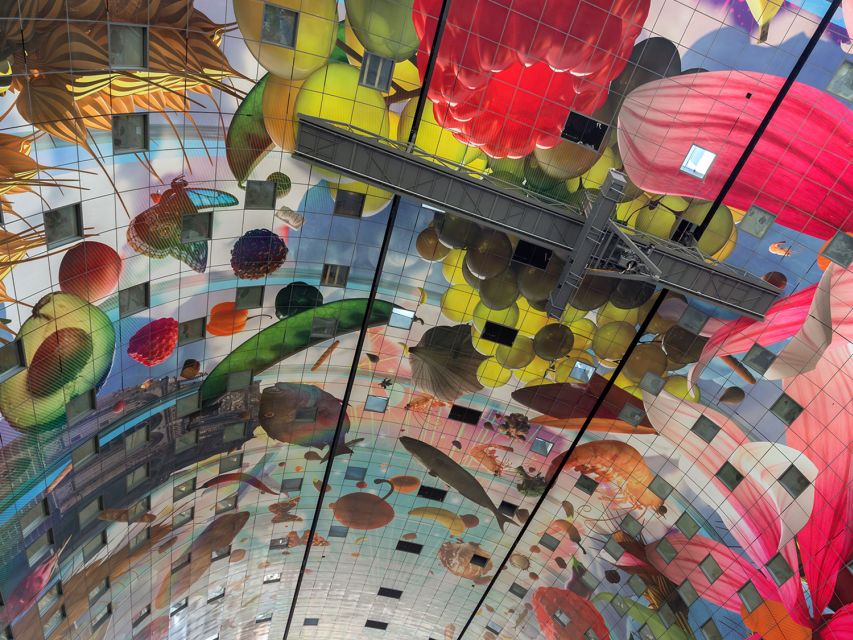
- Markthal explained from inside: See how housing, food stalls, public space, and a giant interior artwork fit into one building.
- A full city-center route: Connect Central Station, post-war landmarks, Museumpark, the Cube Houses, and Depot in one walk.
- Extra value for architecture fans: You receive three postcards by Rotterdam photographer Ossip van Duivenbode and a 50 percent discount on Cube Houses admission.
Why Rotterdam works so well as an architecture tour
Rotterdam gives you something rare in a European city: a clear view of several generations of building ideas in a small area. Historic buildings sit beside post-war repairs, daring housing projects, glass towers, and public spaces designed for modern city life.
This tour is less about ticking off famous sights and more about understanding why Rotterdam looks the way it does. Your guide explains the city’s urge to keep rebuilding and testing new ideas. That context matters. Without it, the buildings can seem like unrelated oddities. With it, you begin to see a conversation between old city blocks, reconstruction-era monuments, and new experiments.
The pace is useful if you have only a short stay in Rotterdam. In 2.5 hours, you cover a long list of important buildings without spending your day inside museums. The tradeoff is that you will not get a long, relaxed stop at every site. This is a moving walking tour, so comfortable shoes and a willingness to keep going will help.
Because the group is private, you can shape the conversation more easily than on a large city tour. If you care about engineering, housing, public space, or the work of Rotterdam firms such as OMA and MVRDV, say so early. A guide like Frank Schipper has been praised for answering questions fully, including questions about construction and the structural side of tall buildings.
A few more days out around Rotterdam worth weighing up
- Rotterdam: Harbor Sightseeing Cruise
★ 4.3 · 7,599 reviews - Rotterdam: 1-Hour Sightseeing Splash Tour
★ 4.5 · 3,299 reviews - Rotterdam: Rotterdam Zoo Blijdorp Entry Ticket
★ 4.6 · 2,754 reviews
Starting outside Het Witte Huis
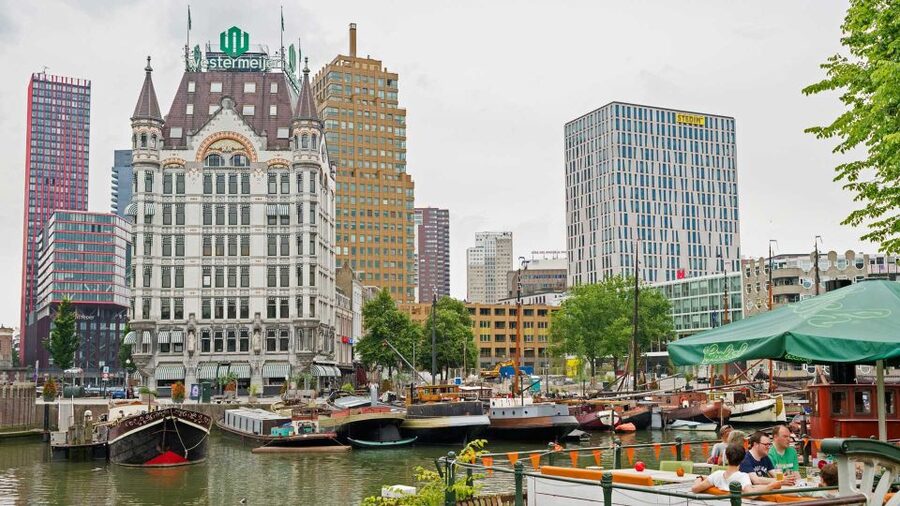
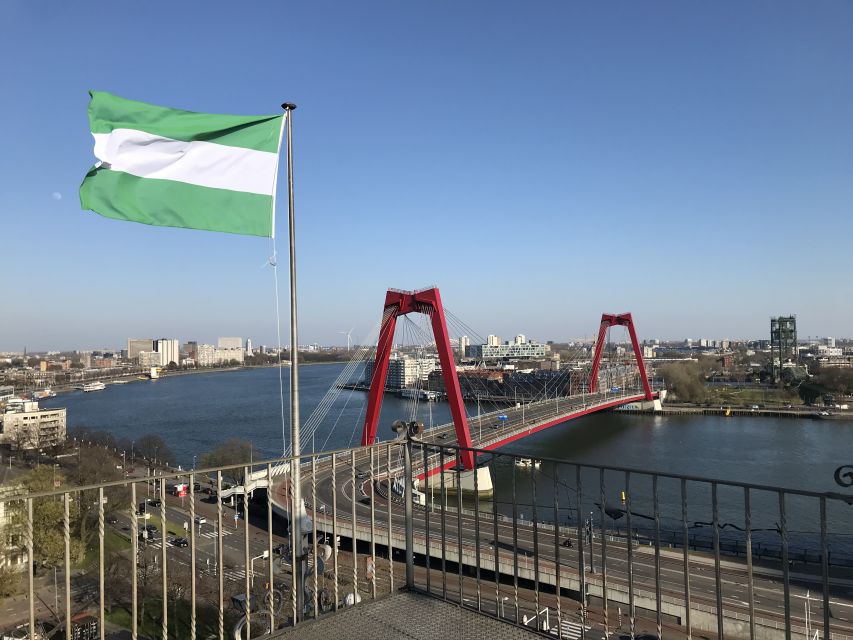
The meeting point is outside the entrance of Het Witte Huis, an easy place to begin because the building itself sets the tone. It is presented as Europe’s oldest skyscraper, and weekend tours start on its roof.
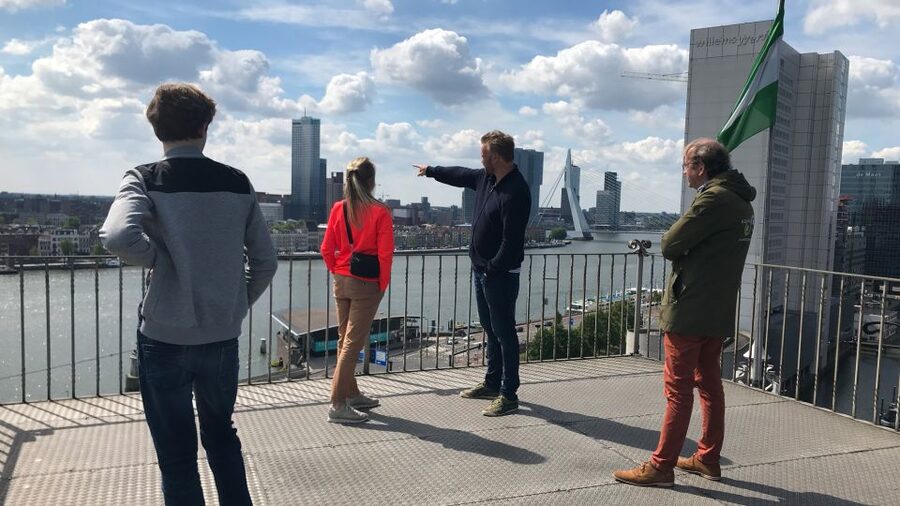
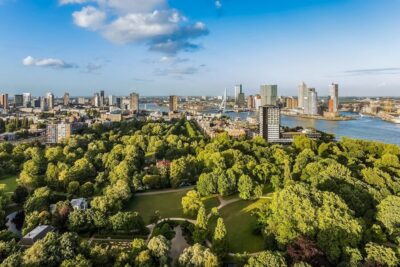
That rooftop is one of the strongest features of the weekend schedule. From above, you can take in Markthal, the Cube Houses, the Erasmus Bridge, the Willems Bridge, and De Rotterdam. These views help you understand how the city fits together. Instead of seeing each building from street level as an isolated object, you can compare their shapes, heights, and positions at once.
The view also gives the guide a useful teaching platform. You can look toward a building while hearing why it was placed there or how its form affects the surrounding streets. The experience is visual, but it is not only about taking photographs.
Weekend access to Het Witte Huis has a practical advantage: you begin with the widest view and then walk into the city. If you have a strong preference for rooftop photography, check the day of the week before booking. The weekday option is different, not necessarily lesser, but it uses a terrace at the Timmerhuis instead.
Markthal and the Cube Houses
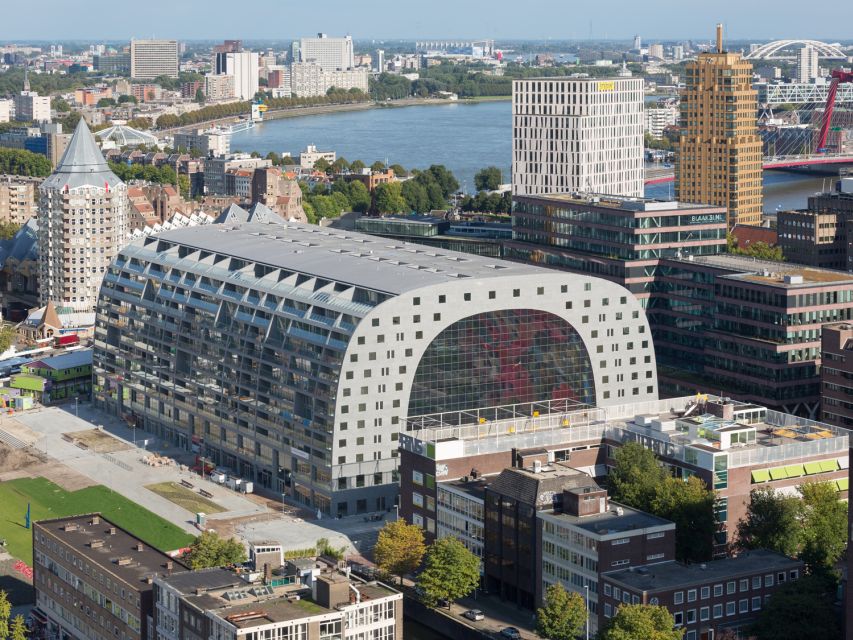
The route takes you through Markthal, one of Rotterdam’s most recognizable recent buildings. Its design combines apartments with a large indoor food hall, creating a building that works as housing, shopping space, and a public gathering place.
I like this stop because it shows architecture being asked to do several jobs at once. The curved building contains homes around the market area, while the interior gives the food scene a theatrical setting. Your guide explains the design concept rather than simply pointing out the colorful artwork and unusual shape.
Markthal can be visually busy, so a guide adds order. You can focus on the building’s structure, how people move through it, and the way private homes share space with a public market. It is also a useful contrast with the Cube Houses nearby. The Cube Houses make a bold statement about angled homes and unusual domestic space, while Markthal is a much larger mixed-use project.
The tour includes a 50 percent discount on admission to the Cube Houses. That does not replace the guided walk, and the discount is most useful if you want to look inside after the tour. The information provided does not specify the final ticket price, so treat the discount as a helpful extra rather than the main reason to book.
Grotekerkplein and the rooftop choice
Near Grotekerkplein, the route shows a newer public-space project, including a city park and a public stage for music and dance. This stop gives the tour a break from famous facades and asks a more practical question: how does architecture shape everyday city life?
On weekday tours, you enter a rooftop terrace near Grotekerkplein, described as having a strong view over the city center and Markthal. The included rooftop entrance is also described as access to the Timmerhuis. Check the exact meeting instructions for your selected day, since the activity information uses both descriptions.
This rooftop option is a good reason to choose a weekday if you prefer to see the city from a more modern office and redevelopment project. The weekend Het Witte Huis roof offers a broader opening view, while the weekday terrace connects more directly with the Timmerhuis section of the walk.
Rooftop access can depend on safe conditions and building operations, so it is sensible to confirm the arrangement when you book. The advertised schedule is clear about the weekday and weekend difference, but the exact terrace details are worth checking if that view is central to your plans.
Same canals, a completely different sort of afternoon:
- Rotterdam: Euromast Lookout Tower Ticket
★ 4.4 · 2,549 reviews - Rotterdam: Pancake Cruise
★ 4.4 · 1,986 reviews - Rotterdam: Harbor Cruise with Live Guide
★ 4.0 · 1,270 reviews - Rotterdam: Harbor Cruise on a Historic Ship
★ 4.2 · 812 reviews
Timmerhuis and Rotterdam’s practical modernism
After passing Dudok’s Dudok, you reach the Timmerhuis. This is one of the most useful stops for understanding Rotterdam’s approach to old and new construction.
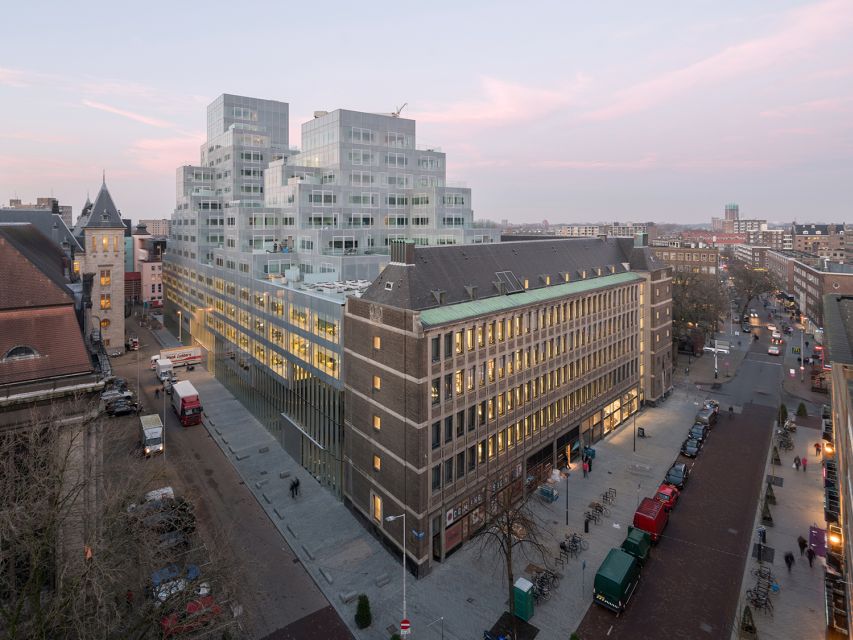
OMA combined a municipal office block from the 1950s with a pixel-like steel-and-glass structure. Rather than clearing the older building away, the project adds a new form around it and turns the meeting of periods into the point of the design.
I find this kind of project more revealing than a flashy landmark viewed in isolation. It shows how a city can add new offices and services while keeping part of an earlier building. Your guide can explain the design choices, the structure, and the way the project changes the block around it.
If you take the weekday tour, the rooftop access here makes the Timmerhuis more than a passing photo stop. You see both the building’s exterior concept and the city from above. The route still moves quickly, so do not expect a long interior architectural visit unless the guide confirms one.
Post-war landmarks and the route to Central Station
The walk continues past Dudok’s building, the post office, and the de Bijenkorf warehouse. These stops help explain the city’s rebuilding and its changing commercial center.
The post office and de Bijenkorf are especially useful because they show how Rotterdam’s public and retail architecture developed after wartime destruction. Your guide links these buildings with later projects rather than treating them as disconnected monuments.
You then pass Forum on the way to Schouwburgplein. The square is an important public-space stop, and the route continues to Kruiskadeplein, where you see the Groothandelsgebouw, Rotterdam Central Station, and de Delftse Poort.
Central Station deserves attention even if you have already used it for your train. Its architecture is designed to handle a large flow of people while also giving the city a strong modern gateway. Seeing it as part of this walking sequence helps you compare it with the older buildings and post-war structures nearby.
The route’s coverage is impressive, but this is also where the walking can feel most packed. You are seeing many sites in a limited time. I would treat this as a guided introduction, then return to one or two favorite buildings later if you want photographs or a slower look.
Calypso, Pauluskerk, and de Unie
At the Kruiskadeplein area, the tour continues to Calypso, Pauluskerk, and de Unie. These buildings add variety to the route and reinforce Rotterdam’s willingness to test different forms and uses.
You will not get a single, tidy architectural style here. That is part of the appeal. The buildings reflect different periods, functions, and design attitudes. A good guide turns that visual jumble into a useful lesson about how Rotterdam keeps adapting its center.
This section is also a reminder that architecture is not only about landmark towers. Churches, cultural buildings, housing, offices, and public facilities all affect how a city feels and functions. If your interest is limited to famous photo locations, the number of stops may feel like too much. If you want to understand the city as a working place, this variety is valuable.
The guide’s role matters most here. Frank Schipper has received particular praise for explaining buildings and architects in an engaging way, with enough technical detail to satisfy an architecture office on an educational visit. You can expect the most value from this section if you ask questions instead of treating it as a silent photo walk.
Museumpark and the final stop at Depot
The route heads toward Museumpark, where you see Sonneveld House and Het Nieuwe Instituut. These buildings broaden the tour beyond the commercial center and show how Rotterdam’s design culture connects with museums, homes, and creative institutions.
Sonneveld House gives you a glimpse of a different architectural approach from the large public projects earlier in the walk. Het Nieuwe Instituut adds a design and culture angle. The supplied details do not promise an interior visit to either building, so plan to view them from the route unless your guide says otherwise.
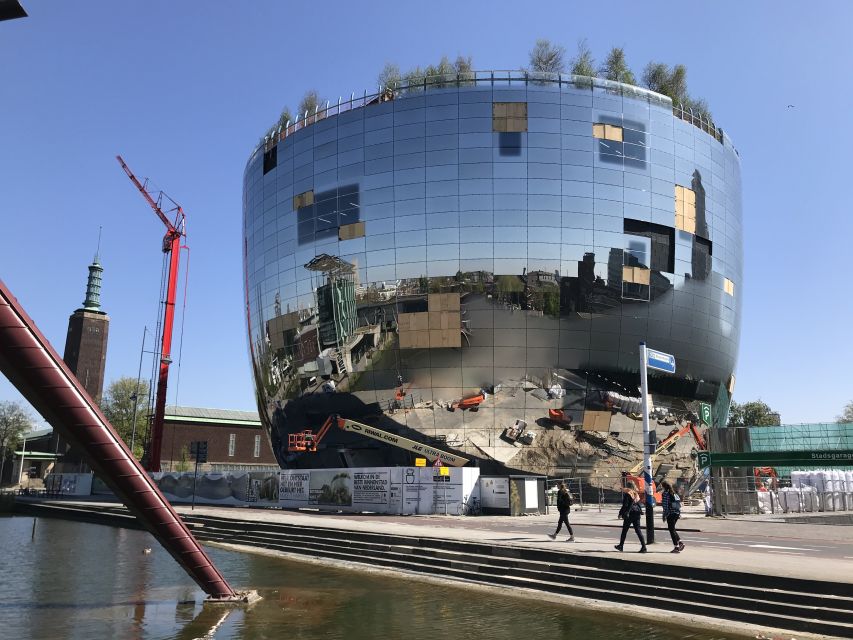
The final destination is Depot Boijmans van Beuningen, the tour’s newest eye catcher. Its curved mirror facade reflects the surrounding city and sky, giving the building a changing appearance instead of one fixed color or texture.
The guide explains the idea behind the double-curved facade and the reflective panels. You also learn about the aviation engineering methods needed to operate the huge entrance doors. That is a fine detail because it shows the technical demands behind the smooth exterior. The building may look simple from a distance, but its shape and moving parts required unusual solutions.
The tour brings you to Depot and explains its design. The provided information does not say that the standard tour includes entry to the art depot itself. If you want to see the collection or go inside beyond the entrance area, confirm whether a separate ticket is needed.
What the $494 group price really means
The price is $494 for a private group of up to six people. At the maximum group size, that works out to about $82 per person for 2.5 hours. For two people, the effective cost is $247 each, so the value depends heavily on how many people join your booking.
For a full group, the price is reasonable if you care about architecture and want a private guide who can respond to your interests. You are paying for a focused route, rooftop access, local interpretation, and the convenience of not having to organize the city’s major buildings yourself.
The price is harder to justify for a solo visitor or a couple who mainly want to see the outside of famous buildings. Rotterdam has plenty to explore on foot without a private guide. The tour earns its cost through explanation, route planning, and access to rooftops that are not generally open to the public.
Three postcards by Rotterdam architectural photographer Ossip van Duivenbode are included. They are a small but fitting extra, especially if you collect design-related souvenirs. The 50 percent Cube Houses discount adds some value, though you should check the current admission price before counting it heavily in your budget.
Timing, language, and walking demands
The experience lasts 2.5 hours and is available as a private group tour. Guides speak Dutch, English, or German. If you want a specific language or hope to request Frank Schipper, ask when booking rather than assuming a particular guide is guaranteed.
The meeting point is outside Het Witte Huis. Since the tour covers many districts and buildings on foot, plan for continuous city walking rather than short transfers between stops. The route includes rooftops and a large number of architectural viewpoints, so it suits people who are comfortable keeping to a set pace.
The activity information marks the tour as wheelchair accessible but also says it is not suitable for people with mobility impairments. Those statements do not fully match. Ask the provider about stairs, rooftop lifts, surface conditions, walking distance, and access to each viewpoint before paying.
Pets are not allowed, although assistance dogs are permitted. Cancellation is free up to 24 hours before the tour, and you can reserve now and pay later. Those policies make the booking less risky if your Rotterdam schedule is still changing.
Who will get the most from this walk
I would choose this tour for a first visit to Rotterdam if you want the city to make sense quickly. It is also a strong fit for architecture students, designers, photographers, and anyone who enjoys learning how buildings are put together.
A private group of friends or family members can get good value from the fixed price, especially with six people sharing it. The tour also suits visitors who prefer a local guide’s explanation to reading plaques or planning a route from a map.
I would think twice if you dislike brisk walks, have limited mobility, or want long interior visits. Much of the appeal comes from the sequence of exterior buildings, public squares, rooftops, and street views. The activity is about the city’s architecture as you move through it, not a leisurely tour of one museum.
Should you book the Rotterdam architecture tour?
Book it if you want a well-organized introduction to Rotterdam’s bold building culture and can fill most of the six-person capacity. The rooftop choices, Markthal, Central Station, Timmerhuis, and Depot create a strong mix of viewpoints and design ideas.
Choose a weekend for the Het Witte Huis roof and its broad view over the bridges, Markthal, Cube Houses, and De Rotterdam. Choose a weekday if the Timmerhuis terrace and Grotekerkplein area appeal more to you.
Skip it if your main goal is entering Depot, since interior admission is not clearly included. Also confirm accessibility details before booking. For architecture-minded visitors, though, the private format and guides such as Frank Schipper make this one of the more useful ways to get your bearings in Rotterdam’s rebuilt center.
FAQ
How long does the Rotterdam architecture tour last?
The tour lasts 2.5 hours.
How much does the tour cost?
The price is $494 for a private group of up to six people.
Is this a private tour?
Yes. The activity is offered for a private group.
Where does the tour meet?
You meet your guide outside the entrance of Het Witte Huis.
Which languages are available?
The tour is available in Dutch, English, and German.
Which rooftop do you visit on a weekend tour?
Weekend tours visit the roof of Het Witte Huis.
Which rooftop do you visit on a weekday tour?
Weekday tours include rooftop access at the Timmerhuis, described as a terrace near Grotekerkplein with views over the city center and Markthal.
Is entry to Depot Boijmans van Beuningen included?
The tour takes you to Depot and includes an explanation of its facade, entrance doors, and construction. The provided details do not confirm full interior admission to the art depot.
Is the Cube Houses entrance included?
A 50 percent discount on the Cube Houses entrance ticket is included.
Can I cancel for a full refund?
Yes. You can cancel up to 24 hours in advance for a full refund.
Are pets allowed?
Pets are not allowed, but assistance dogs are permitted.
Is the tour wheelchair accessible?
The activity is marked wheelchair accessible, but it is also listed as unsuitable for people with mobility impairments. Contact the provider to confirm the walking route, rooftop access, and any stairs before booking.
Just added around Rotterdam
- e-Scavenger hunt Rotterdam: Explore the city at your own pace★ 4.5 · 13 reviews
- Rotterdam: City Walk Audio Guide in 7 Languages on your Phone★ 3.5 · 6 reviews
- Rotterdam Must Do Tour: Highlights, History, WW2 and Architecture★ 5.0 · 20 reviews
- Breda Fun Puzzle Quest: True Lord Self-Guided Tour★ 4.0 · 9 reviews
- e-Scavenger hunt Breda: Explore the city at your own pace★ 4.5 · 27 reviews
- Delfshaven Self-Guided Tour: A Guide to Rotterdam’s Old Town★ 5.0 · 4 reviews
- Skip the Line: SS Rotterdam Steam Ship Entrance Ticket★ 4.5 · 18 reviews
- Discover Rotterdam: Classic Highlights Bike Tour with a Local★ 5.0 · 22 reviews
Rotterdam Tours, compared.

Browse the lists this tour appears in