
Reviewed · RED LIGHT DISTRICT TOURS
Private Amsterdam Red Light District tour with food tastings
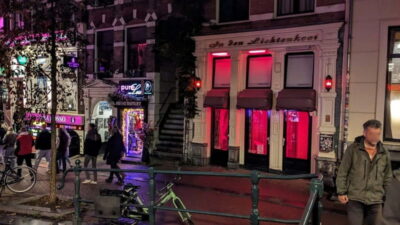
Amsterdam’s Red Light District is more than neon windows. It is the oldest part of the city, packed with stories about trade, religion, building methods, prostitution, coffeeshops, and daily life. This private walk uses food tastings and sharp local commentary to give the area more context than a quick stroll can provide.
I like the private format, since your guide can answer your questions and adjust the pace. I also like the unusual mix of stops, from the Old Church and the medieval Waag to the smallest house and a condom shop operating since 1987.
The main consideration is price: at $121.52 per person, this costs more than a shared walking tour. You are paying for a private group, customization, and a guide focused only on your party, so the value improves when several people book together.
Key points to know before you book
- Private two-hour walk: Only your group takes part, with room for questions and a pace suited to your needs.
- Food tastings included: The stops add a practical, local touch to a tour that could otherwise feel like a history lecture.
- More than red lights: Expect stories about the Old Church, Chinatown, the Waag, wooden foundations, and Amsterdam’s tiny houses.
- Guides praised by name: Aaron, Sander, and Tony are identified as guides, with Tony noted for answering questions and adjusting the walking pace.
- Central starting point: Meet at the ParkBee Parking NH Collection Amsterdam Barbizon Palace on Prins Hendrikkade.
- Book ahead: The experience is booked about 53 days in advance on average, a useful sign that early planning may be wise.
Why this private Red Light District walk works
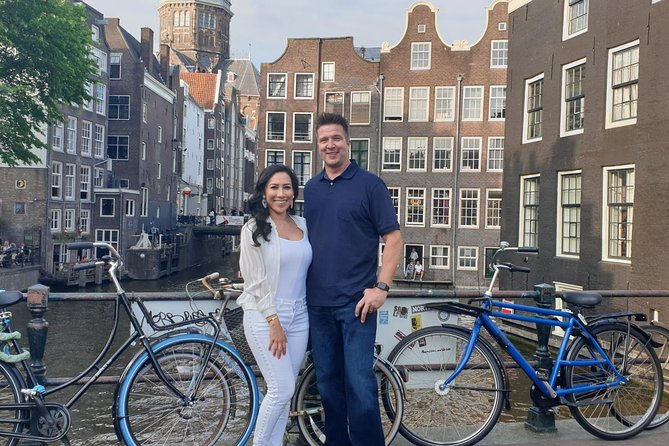
I find this tour appealing because it treats the district as part of Amsterdam’s old city rather than as a single adult-themed attraction. You learn about prostitution and coffeeshop culture, but you also hear why the streets look the way they do and how the city developed around trade, water, and unstable ground.
That wider view matters. If you only walk through the district on your own, you may notice the windows, signs, and crowds but miss the reasons the area became so important. A guide can connect those details to Amsterdam’s older buildings, former city defenses, religious landmarks, and trading past.
The private setup also changes the feel of the walk. You are not trying to keep up with a large group or wait while a guide answers someone else’s question. If you want more detail about architecture, social history, food, or coffeeshop culture, you can make that clear during the tour.
The experience lasts about two hours. That is long enough for a useful introduction without taking over your day. You end back at the meeting point, making it easy to continue sightseeing afterward.
More Food Tours in Amsterdam
- 10 Tastes of Amsterdam: Food Tour by UNESCO Canals and Jordaan
★ 5.0 · 3,020 reviews - Amsterdam Food and Cultural Tour with Tastings
★ 5.0 · 2,442 reviews - Amsterdam Jordaan Food & Drinks Tour with Eating Europe
★ 5.0 · 2,425 reviews
Starting at Amsterdam’s old center
The meeting point is the ParkBee Parking NH Collection Amsterdam Barbizon Palace at Prins Hendrikkade 59, near Amsterdam’s central old town. The location is close to public transportation, which helps if you are arriving from another part of the city.
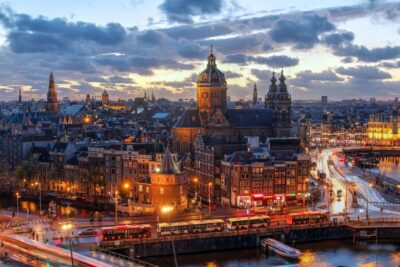
From there, the walk takes you into the historic center and the Red Light District. This is not a modern entertainment zone placed on the edge of town. It is part of Amsterdam’s Old Town, and that fact gives the tour much of its substance.
One early subject is the city’s unusual foundation system. Amsterdam was built on a thick layer of fen and clay, so many buildings rest on wooden poles driven down to a sandy layer about 11 meters below ground. You may look at a leaning or narrow building differently after hearing how much engineering lies beneath it.
The foundation story is a good example of the tour’s approach. A simple street scene becomes a lesson in geography, construction, and city planning. It also explains why Amsterdam’s buildings have such a distinctive character.
Dam Square and the city built on poles
The Dam is another useful piece of context. Amsterdam’s old buildings had to cope with wet, shifting ground, and wooden foundation piles became a central part of the city’s building tradition.
You will not simply be shown a square and given a date. The guide can explain how the ground beneath Amsterdam shaped its buildings and affected the way the city grew. For first-time visitors, this kind of explanation helps the rest of the walk make sense.
The information is especially useful if you plan to explore Amsterdam on your own afterward. Many of the city’s narrow facades, odd angles, and old structures make more sense once you know that the ground itself presented a major problem.
Int Aepjen and Amsterdam’s surviving wooden buildings
Pub The Ape, known in Dutch as Int Aepjen, dates to around 1540. It is one of only two remaining wooden buildings in Amsterdam, which makes it a striking stop in a city now known for brick facades.
The reason wooden buildings became so rare is tied to a major fire in 1452. Afterward, the government required brick facades, changing the look of Amsterdam’s streets. That small regulation had a lasting effect, and Int Aepjen gives you a clear, physical example of what came before.
I like this stop because it is easy to miss when you are focused on the district’s more famous sights. It also adds a bit of humor and atmosphere to the walk. The pub’s name and old structure give the guide something tangible to point out, rather than relying only on dates and general background.
More Private Tours in Amsterdam
- Rijksmuseum Amsterdam Small-Group Tour with Private Upgrade
★ 4.5 · 1,547 reviews - Van Gogh Museum Tour Reserved Entry Semi Private
★ 5.0 · 1,437 reviews - Private Amsterdam Red Light District and Coffee Shop Tour
★ 5.0 · 763 reviews - Anne Frank and Jewish Quarter Amsterdam Private Walking Tour
★ 5.0 · 684 reviews
The Waag and the medieval city gate
The Waag dates to around the 1400s and was once one of Amsterdam’s city gates, built into the defensive wall. It is also described as the second-oldest building in Amsterdam.
Later, the building served as a guild center. Craftsmen’s organizations had offices there and around the square, showing how trade and skilled work were organized in the old city.
This stop helps place the Red Light District within Amsterdam’s larger economic story. The area was not separate from the city’s commercial life. Its streets, buildings, and institutions developed alongside trade, craft, religion, and travel.
For me, the Waag is one of the stronger architectural stops on the route because it connects a visible building to several periods of city life. You get military history, civic history, and working history in one place.
The smallest house and the trading company connection
The smallest house of Amsterdam was built around the 1700s. It first served as a storage place for the VOC trading company before later becoming a residence.
The building’s size gives the guide a natural way to explain how crowded and valuable space could be in the old center. It also brings the city’s trading past into the walk without requiring a separate museum visit.
You should keep your expectations measured here. The stop is about seeing the building and understanding its use, not spending a long time inside a major attraction. Still, it is the kind of compact detail that makes a walking tour memorable. A tiny facade can say quite a lot about land, commerce, and urban life.
The Red Light District, prostitution, and coffeeshop culture
The central part of the tour focuses on the district itself. Your guide discusses the history of prostitution and coffeeshop culture, subjects that can be difficult to understand from a guidebook paragraph or a casual walk.
A private guide is useful here because you can ask direct questions in a more comfortable setting. The tone can also be adjusted to suit your group. The supplied details describe the tour as customizable, so you can place more attention on social history, local culture, architecture, or the district’s changing identity.
The area is part of Amsterdam’s Old Town, which adds another layer. You are looking at a working part of the historic city, not just a row of attractions designed for visitors. That can make the experience more thoughtful, though the subject matter may not suit every group.
Parents should consider the adult themes before booking. The tour specifically covers prostitution and coffeeshop culture, and the district itself is known for its red-lit windows. The private format lets you control the conversation to some degree, but it does not change the nature of the neighborhood.
Food tastings break up the history
The walk includes stops at different places for food tastings. The available details do not specify the foods, so you should not book this expecting a fixed menu or a full meal.
What the tastings do offer is a useful change of rhythm. Two hours of information about buildings and social history can feel dense, while small food stops give you a chance to pause and experience the area in a more ordinary way.
I also see practical value in pairing food with the district’s history. Amsterdam’s old center is tied to commerce and movement, and tasting something along the route keeps the tour connected to everyday city life rather than making it purely academic.
If you have food allergies or dietary restrictions, ask about the tastings before you commit. The provided information does not list the foods or dietary options.
What the guide can add
The guide is the main variable in any private walking tour. Here, the named guides include Aaron, Sander, and Tony. The feedback about them points to the qualities that matter most on a short city walk.
Aaron is credited with giving plenty of information and descriptions while covering a lot of the area. Sander is described as combining Red Light District information with broader lessons about Amsterdam and its culture. Tony is noted for answering questions and pacing the walk around the group’s needs.
Those details give you a useful picture of what to request. Tell the guide at the start if you want a slower walk, more time for questions, or extra attention to architecture and city history. Since the activity is private, your interests can shape the experience more than they would on a standard group outing.
The guide also needs to handle the district with good judgment. It is a place with real social issues, not just colorful stories. A balanced explanation of prostitution and coffeeshop culture will serve you better than sensational commentary.
Is $121.52 per person good value?
The listed price is $121.52 per person, which is not cheap for a two-hour walk. The price makes more sense if you are booking with family or friends and can use the group discount, or if you place a high value on having a private guide.
You are paying for several things at once:
- A private experience for only your group
- An English-speaking guide
- A flexible route and conversation
- Food tastings during the walk
- A focused introduction to one of Amsterdam’s most talked-about areas
A shared tour may cost less, but it will not offer the same control over pace and questions. On the other hand, if you only want to see the main streets and take a quick look around, this private option may be more than you need.
I would see the tour as best value for first-time visitors who want orientation and context in one outing. It is also a sensible choice for a small group that prefers a personal guide and does not want to join strangers.
Timing, meeting details, and practical notes
The tour runs for about two hours and returns to the starting point. Allow a little extra time to find the meeting location at the NH Collection Amsterdam Barbizon Palace, especially if you are arriving by public transportation.
A mobile ticket is available, and confirmation is received at booking. The activity is offered in English. Service animals are allowed, and most people can participate, but you should remember that this is a city walking tour through an old district.
The experience is commonly booked about 53 days in advance. That does not guarantee that every date will sell out, but it is a good reason to plan ahead if your Amsterdam schedule is fixed.
Free cancellation is available if you cancel at least 24 hours before the start time. Cancellations or changes made inside that 24-hour window are not accepted for a refund.
Who should book this Amsterdam tour?
I would recommend it to first-time visitors who want a clear introduction to the Red Light District without treating it as a quick novelty stop. The mix of old buildings, city foundations, food tastings, prostitution, and coffeeshop culture gives you a fuller picture of the neighborhood.
It also suits couples, families of adults, and friend groups who prefer a private conversation. Tony’s noted ability to adjust the pace is especially relevant if your group walks at different speeds or wants time for questions.
I would think twice if you are looking for a low-cost tour, a museum-style experience, or a detailed food tour with a listed menu. The food tastings are part of the walk, but the main purpose is learning about the district and Amsterdam’s old center.
Should you book it?
Book this tour if you want the Red Light District explained rather than simply observed. The strongest features are the private format, the broad range of historic stops, the chance to ask direct questions, and the food tastings that keep the two-hour walk varied.
At $121.52 per person, it is a premium choice. I would book it for a small group that values personal attention, especially if you want to set the pace and shape the conversation. If your budget is tight, you may find better value elsewhere, but you will likely give up the private guide and customization.
FAQ
How long does the private Amsterdam Red Light District tour last?
The tour lasts about two hours.
Where does the tour start?
It starts at ParkBee Parking NH Collection Amsterdam Barbizon Palace, Prins Hendrikkade 59, 1012 AD Amsterdam, Netherlands.
Where does the tour end?
The activity ends back at the meeting point.
Is this a private tour?
Yes. Only your group participates in the activity.
What language is the tour offered in?
The tour is offered in English.
Does the tour include food?
Yes. You stop at different places for food tastings during the walk. Specific foods are not listed.
What sights are included?
The route includes the Red Light District, the Dam, Amsterdam’s wooden foundation system, Int Aepjen, the Waag, the smallest house of Amsterdam, and the world’s first condom shop. You also pass near the Old Church and Chinatown.
Can I cancel for a full refund?
Yes. You can receive a full refund if you cancel at least 24 hours before the experience’s start time. Changes or cancellations made less than 24 hours before the start are not accepted for a refund.
More Food and Drink Tours in Amsterdam
- Amsterdam: Premium Henri Willig Cheese Tasting Experience
★ 4.7 · 1,106 reviews - Amsterdam: Cheese & Wine Cruise Tasting Experience
★ 4.5 · 1,090 reviews - Amsterdam: Food and Culture Walking Tour with Tastings
★ 4.9 · 838 reviews - Zaanse Schans and Cheese Tasting Guided Tour from Amsterdam
★ 4.0 · 661 reviews
More Red Light District Walks
- Amsterdam: Red Light Secrets Museum Entry Ticket
★ 4.2 · 5,722 reviews - Amsterdam: Red Light District Tour in German/English/Italian
★ 4.9 · 5,623 reviews - Amsterdam Red Light District & Coffee Shop Tour
★ 4.6 · 4,134 reviews - Amsterdam: Red Light District Pub Crawl with Unlimited Shots
★ 4.1 · 2,130 reviews
Just added around Amsterdam
- From Amsterdam: The Hague Private Trip and Mauritshuis Entry★ 4.3 · 4 reviews
- VIP Private Full Day Tour of the Netherlands★ 4.8 · 6 reviews
- Amsterdam Old-West Vegan Food Tour with Local Guide★ 4.7 · 3 reviews
- Amsterdam: Van Gogh Museum Guided Tour★ 4.8 · 262 reviews
- Van Gogh Museum Private Guided Tour★ 4.2 · 10 reviews
- Vecht River: Full-day Cruise with Lunch★ 4.8 · 9 reviews
- Amsterdam: Van Gogh Museum Ticket & Guided Tour★ 4.4 · 187 reviews
- Van Gogh and Rijksmusuem Tour: Small Group Tour with Entry★ 4.7 · 3 reviews
Red Light District Tours, compared.

Red Light District Tour in German/English/Italian
Read our review →
Amsterdam Red Light District & Coffee Shop Tour
Read our review →
Red Light District Pub Crawl with Unlimited Shots
Read our review →
Private Amsterdam Red Light District and Coffee Shop Tour
Read our review →Browse the lists this tour appears in