
Reviewed · WORKSHOPS
Kintsugi Workshop “The art of Imperfection”
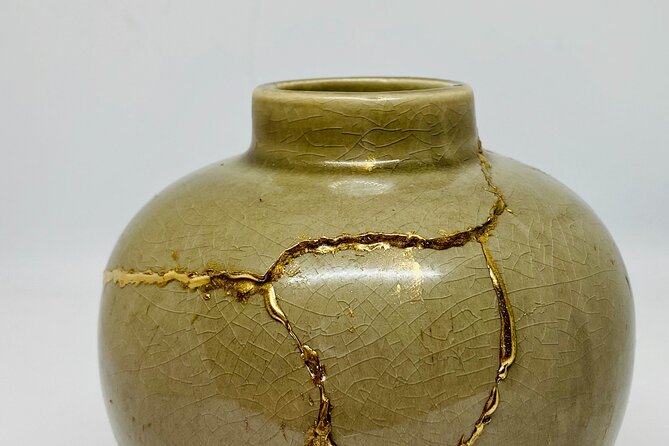
Kintsugi turns a broken plate into a one-of-a-kind keepsake by tracing its cracks with golden leaf glue. In this Amsterdam workshop, you break a plate, patiently fit the pieces back together, and see damage become the main design.
I like the small six-person group, which gives this careful work room to breathe. I also like the thoughtful rhythm: a quiet introduction, a symbolic break, and focused handwork. The drawback is simple: at $90.11, this is not a cheap craft class, and the activity may feel slow if you want a fast-moving sightseeing stop.
Key points
- Break and rebuild a plate: The workshop provides the pottery, so you do not need to bring an item from home.
- Golden repairs: You use golden leaf glue to make the cracks part of the finished design.
- A calm two-hour pace: The session is built around focus, patience, and careful hand movement.
- Small group of six: The limited size should make it easier to follow the process and ask questions.
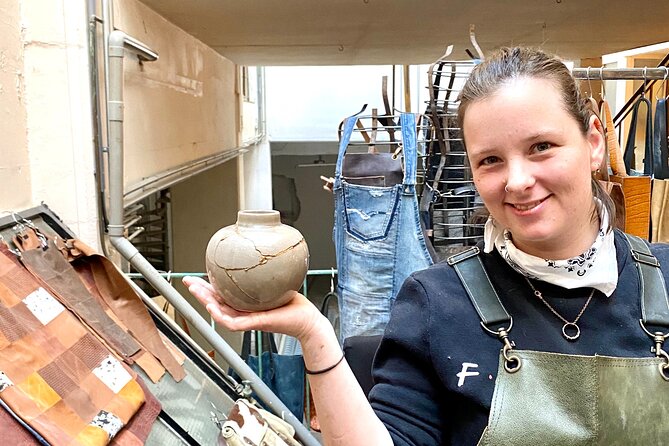
- Led in English: Annelies welcomes participants and guides the work in English.
- Central Amsterdam meeting point: Start and finish at Paleisstraat 107, near public transportation.
What kintsugi means before you touch the plate
Kintsugi is a Japanese repair tradition that dates to the 15th century. Instead of hiding a crack, the method marks it with gold, treating the break as part of the object’s story.
That idea gives this workshop more weight than a standard souvenir-making class. You are not simply decorating pottery. You are working with a Japanese approach often linked to wabi-sabi, the acceptance of change, age, and imperfection.
The lesson is easy to understand, but the handwork asks for patience. A crack will not disappear, and a repaired plate will not look factory-new. Its value comes from the fact that it has changed.
I find that a useful frame for the two-hour session. You are given a small task, but the point reaches beyond the plate. The workshop presents repair as a fresh start and a scar as something that can carry meaning.
More Workshops in Amsterdam
- Amsterdam: Traditional Dutch Syrup Waffle Making Workshop
★ 4.8 · 4,093 reviews - Amsterdam Traditional Dutch Syrup Waffle Making Workshop
★ 5.0 · 960 reviews - Amsterdam: Bols Cocktail Experience and Cocktail Workshop
★ 4.8 · 666 reviews
Arriving at Paleisstraat 107
The meeting point is Paleisstraat 107, 1012 ZL Amsterdam. The activity begins and ends at this address, so you will not need to arrange transport between separate locations.
The workshop is near public transportation, which helps if you are fitting it into a day in Amsterdam. Still, leave enough time to find the address without rushing. The session depends on a calm start, and arriving flustered is not ideal for an activity built around concentration.
This is a practical choice for a short city break. At about two hours, the workshop takes less time than a full museum visit or a day trip, yet it gives you something physical to take home. Since the activity is offered in English, you can follow the instructions without needing Dutch.
Confirmation arrives when you book. The workshop runs on Wednesdays from 2 to 4 p.m. during the listed operating periods, from November 9, 2025, through January 31, 2026, and again from November 9, 2026, through January 31, 2027. Check the date carefully before planning the rest of your afternoon.
A quiet introduction to the art of repair
The session opens with a serene introduction to kintsugi. This matters because the technique is more deliberate than it first appears. You need to understand the idea behind the repair before you start handling shards.
Annelies sets the tone with a welcoming approach and guides the group through the activity. The small maximum of six people is a real advantage here. You are not one person in a large room trying to see a demonstration from the back. The format allows the work to remain personal and measured.
Do not expect a loud, social craft party. This workshop is better suited to someone who enjoys close attention and quiet making. You may chat with the others, but the central experience is your own concentration.
That calm opening also gives you time to consider the symbolism. The break in the plate represents a new beginning, not simply an accident. It is a gentle way to enter the practical part of the workshop without making the idea feel overly serious.
Breaking the plate and making a fresh start
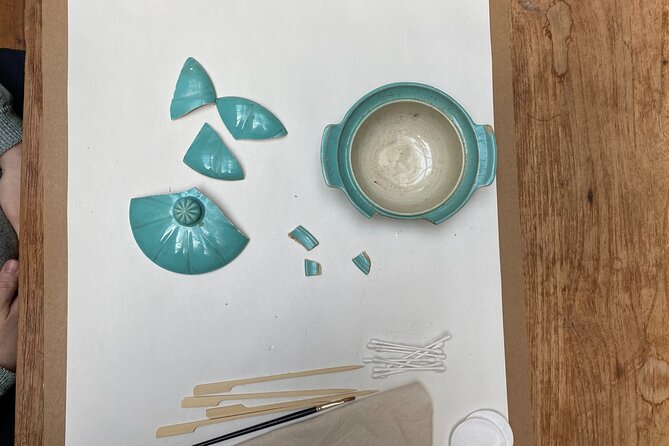
The central moment is also the most unusual: you break a plate on purpose. The materials are supplied, including the item used for the activity, so you do not need to risk a favorite dish from home.
This is useful for first-time participants. You can focus on learning the method rather than worrying about ruining a personal object. The supplied pottery also keeps the activity fair for a small group, since everyone starts with an item selected for the workshop.
The symbolic break may feel strange at first. Most craft classes ask you to protect the material. Here, the damage is the starting point. That reversal gives the workshop its character.
The available information does not specify the exact way the plate is broken, so you should follow the instructor’s directions rather than assume you will control every detail. The important point is that the plate becomes a collection of pieces that you must study and reunite.
A few more days out around Amsterdam worth weighing up
- Amsterdam: Van Gogh Museum Ticket
★ 4.7 · 52,054 reviews - Amsterdam Classic Saloon Boat Cruise with Drinks and Cheese
★ 5.0 · 31,825 reviews - Amsterdam Luxury Canal Cruise + Unlimited Drinks & Bites option
★ 5.0 · 30,518 reviews - Amsterdam: Heineken Experience Ticket
★ 4.6 · 30,055 reviews
Reassembling shards with golden leaf glue
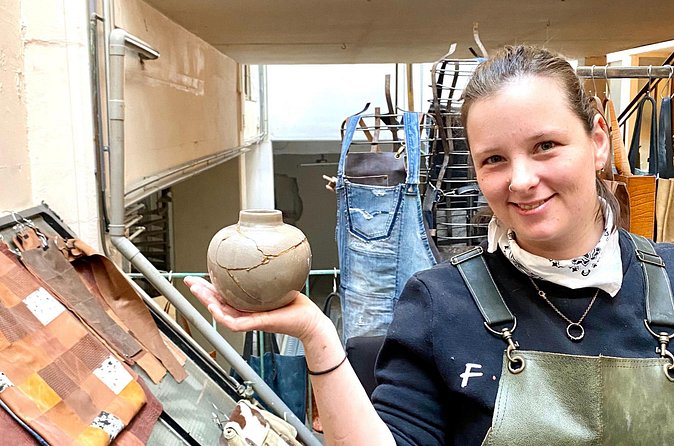
After the break, the work becomes slower and more exact. You fit the pieces together, then use golden leaf glue to mark and hold the repaired sections.
This is where the workshop earns its two-hour length. The appeal is not a quick result. You need to look at how the fragments meet, keep track of their edges, and accept that the final pattern will be shaped by the original break.
The golden lines are not meant to imitate an untouched plate. They make the repair visible. Each fracture becomes part of the design, and the finished piece carries evidence of the process.
You may find the work calming, but it also requires moderate physical fitness according to the activity information. That does not mean strenuous exercise. It suggests that you should be comfortable sitting, handling materials, and working with your hands for the session.
The workshop also supports fine motor skills. Picking up small pieces and placing them carefully takes control. If you prefer activities that keep your hands busy while your mind settles, this is a strong fit.
One useful detail comes from the way the session is set up: the workshop provides items for you to break and repair. A participant noted that bringing a personal object to fix could have been fun, but that is not listed as part of the standard arrangement. Do not plan on bringing your own pottery unless the organizer confirms that option beforehand.
Why the small group changes the experience
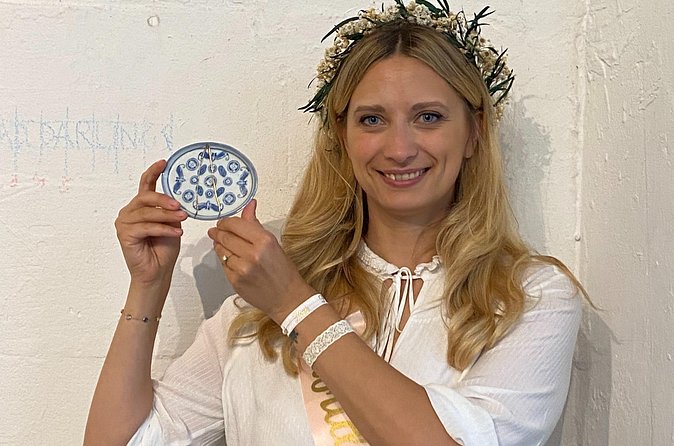
A maximum of six people is one of the strongest practical features. Kintsugi is close-up work. You need to see what you are doing, hear the instructions, and have a reasonable chance to ask for help when a piece does not fit.
A small class also suits the reflective side of the activity. You have room to concentrate instead of competing with a large crowd for attention. Annelies is described as welcoming, and her direct involvement helps the workshop feel personal rather than mass-produced.
That said, a group of six is still a group. If you want complete solitude, this is not a private session based on the information provided. You will share the setting and the general pace with other people.
The compact format may also mean limited flexibility if you work much faster or slower than everyone else. The supplied details do not promise a private schedule or a custom project. You should choose this knowing that it is a guided class with a set time.
What the $90.11 price includes
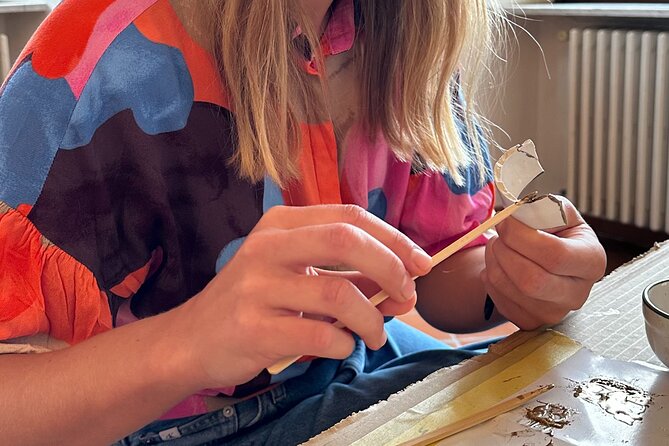
At $90.11 per person, the fee covers all materials needed for the workshop. That includes the pottery used for the break and the supplies for the golden repair.
The value depends on what you want from an Amsterdam activity. If you only want a low-cost craft souvenir, the price may feel high. You could spend less on a simple museum ticket or a casual coffee stop.
I see more value if you want a hands-on activity with a clear theme and a finished object. You are paying for the instruction, the materials, the small group, and the time set aside for careful work. The result is also more personal than a mass-produced souvenir because your plate’s final pattern comes from your own break and reassembly.
Coffee and tea are not included. That is a minor detail, but it is worth knowing because the quiet setting may suggest a café-style workshop. Bring your own expectations: this is a craft session, not a refreshment stop.
Who will enjoy this Amsterdam workshop
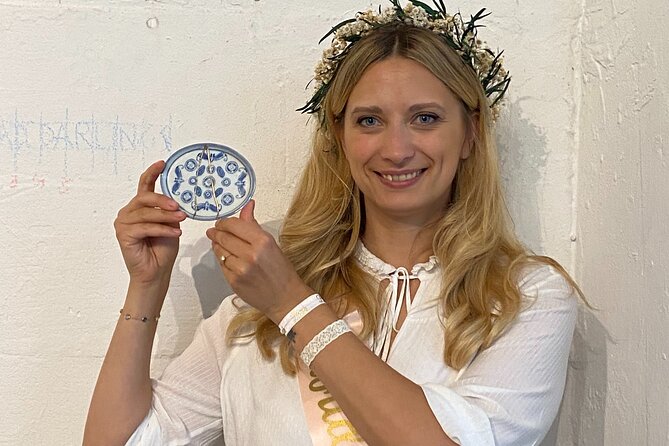
I would recommend this to adults and children aged 10 or older who like making things by hand. It should appeal to anyone curious about Japanese art, wabi-sabi, design, or the idea of giving a damaged object a second life.
It is also a good rainy-day option. The activity does not depend on weather, and the two-hour schedule can fit between other Amsterdam plans.
You may especially like it if you prefer meaningful souvenirs. Instead of buying something made for every visitor, you create an object marked by your own decisions. The finished plate may not be perfect, but that is exactly the point.
This is less suitable for very young children, since the workshop is not appropriate under age 10. It may also disappoint anyone looking for a lively demonstration, a large social group, or a broad tour of Amsterdam. No city sights are part of the activity. The focus stays on the plate and the ideas behind its repair.
Booking, timing, and cancellation details
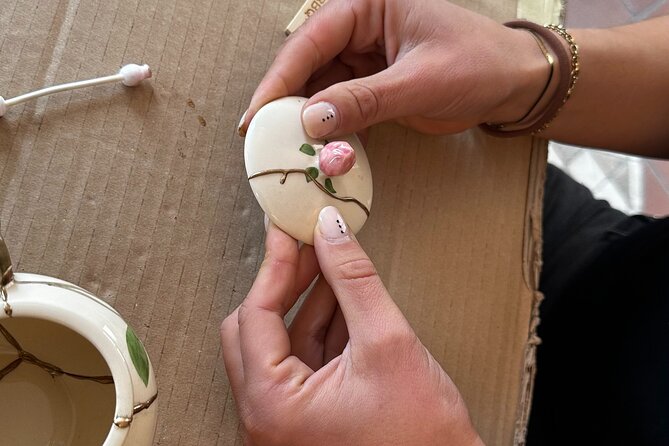
The workshop is offered on Wednesdays from 2 to 4 p.m. during the stated operating periods. Since it is booked an average of 90 days ahead, planning early makes sense, especially if your Amsterdam dates are fixed.
Mobile tickets are accepted, and the activity is offered in English. Service animals are allowed, and the meeting point is near public transportation.
You can cancel for a full refund up to 24 hours before the local start time. Changes made within 24 hours are not accepted, and a late cancellation is not refunded. The workshop also requires a minimum number of participants. If that minimum is not met and the session is canceled, you will be offered another date or experience, or a full refund.
Is this kintsugi class worth booking?
Book it if you want a calm, hands-on Amsterdam activity that gives you a physical reminder of the day. The small group, supplied materials, English instruction, and thoughtful repair process make the format easy for a first attempt.
At $90.11, I would not call it a bargain. I would call it a specialized experience with a clear purpose. Choose it for the process, not just the finished plate. If you like careful work, Japanese design, and the idea that flaws can become part of an object’s beauty, this two-hour workshop is a worthwhile choice.
FAQ
Where does the kintsugi workshop start and finish?
It starts and finishes at Paleisstraat 107, 1012 ZL Amsterdam, Netherlands.
How long does the workshop last?
The activity lasts approximately two hours, with the listed session running from 2:00 p.m. to 4:00 p.m.
What days is the workshop available?
The listed operating periods show the workshop running on Wednesdays.
Is the workshop offered in English?
Yes. The workshop is offered in English.
What is included in the price?
All materials needed for the workshop are provided, including the pottery and supplies used for the repair.
Are children allowed to attend?
Children under the age of 10 are not permitted. The workshop is suitable for ages 10 and older.
What is the cancellation policy?
You can cancel at least 24 hours before the start time for a full refund. Cancellations or changes made less than 24 hours before the activity are not accepted or refunded.
Just added around Amsterdam
- From Amsterdam: The Hague Private Trip and Mauritshuis Entry★ 4.3 · 4 reviews
- VIP Private Full Day Tour of the Netherlands★ 4.8 · 6 reviews
- Amsterdam Old-West Vegan Food Tour with Local Guide★ 4.7 · 3 reviews
- Amsterdam: Van Gogh Museum Guided Tour★ 4.8 · 262 reviews
- Van Gogh Museum Private Guided Tour★ 4.2 · 10 reviews
- Vecht River: Full-day Cruise with Lunch★ 4.8 · 9 reviews
- Van Gogh and Rijksmusuem Tour: Small Group Tour with Entry★ 4.7 · 3 reviews
- Amsterdam: Van Gogh Museum Ticket & Guided Tour★ 4.4 · 187 reviews
Workshops, compared.

Traditional Dutch Syrup Waffle Making Workshop
Read our review →Amsterdam Traditional Dutch Syrup Waffle Making Workshop
Read our review →

3-Course Meal in Historic 1st Class Waiting Rooms
Read our review →

Amsterdam Light Festival Winter Walk with Stroopwafel Workshop
Read our review →
Distilling Class @ Spirited Union Rum Co. (Amsterdam)
Read our review →
Cocktail workshop @ Spirited Union Rum Co. (Amsterdam)
Read our review →Browse the lists this tour appears in