
Reviewed · AUDIO TOURS
Castles, Canals and Good Folk: A Self-Guided Audio Tour of Utrecht
Utrecht’s story unfolds through markets, churches, old streets, and a wartime bunker on this easy self-guided walk. You begin outside Hoog Catharijne and finish near Janskerk, passing from everyday city life to religious, academic, and military history without committing to a fixed group schedule.
I like the freedom to pause for cheese, coffee, or a look inside Oudaen, and I like that the app includes offline maps and audio after you download it. The main drawback is navigation at the start: the first directions can feel a little vague, so keep the map open until you get your bearings.
Key points at a glance
- A northern Utrecht route: See parts of the city beyond the usual canal-side stroll, including older working-class and university districts.
- A 13th-century city castle: Stop at Oudaen, built around 1276, with a craft brewery in its cellars.
- Food and local life: The route passes a city market, cafés, and the Netherlands’ largest and oldest fabric market.
- A compact history walk: Allow about one hour to 90 minutes, longer if you stop for food or visit an attraction.
- Offline access: Download the VoiceMap app, audio, maps, and geodata before setting out.
- A flexible private experience: Only your group takes part, with no live guide or set departure time.
Starting at Hoog Catharijne and finding your way
The walk begins outside the east entrance to Hoog Catharijne, Utrecht’s large shopping complex. The listed meeting point is near P5 at Interparking on Daalsesingel, within easy reach of public transportation.
This is a practical starting place because you can arrive by train, tram, or bus connections before beginning the walk. Still, give yourself a few minutes to locate the precise starting point. One user found an early direction, involving a big tree, less clear than it could have been. I would download the tour before leaving your hotel, open the map, and confirm that your phone has located the starting point.
Once the audio begins, the route guides you from the modern shopping area toward older parts of Utrecht. That contrast is useful. You do not simply enter a preserved old town and admire façades. You begin with the contemporary city, then watch the streets change as the walk introduces markets, churches, local neighborhoods, and older institutions.
The tour is designed for independent use. You walk at your own pace, pause the narration when you want, and continue when you are ready. There is no guide waiting for you at a certain hour, and no other group to keep up with.
A few more days out around Utrecht worth weighing up
- Utrecht: City Canal Cruise
★ 4.3 · 2,895 reviews - Utrecht: DOMunder Entry Ticket with Guide
★ 4.4 · 706 reviews - Utrecht: Dom Tower Entry Ticket and Guided Tour
★ 4.6 · 513 reviews
Markets, croquettes, and everyday Utrecht
One of the early stops brings you to a Dutch city center market. This is the kind of place where a short audio stop can lead naturally into a snack break. You might find croquettes, pickled herring, fresh bread, and a wide selection of Dutch cheeses.
The appeal here is not only the food. Markets show you how a city works in ordinary life. A museum can explain Utrecht’s past, but a market lets you see how people shop, eat, and meet in the present. If you have never tried pickled herring or a Dutch croquette, this is a good point to make the walk your own.
The timing of the market may affect what you see, since the tour runs every day but the specific market activity is not guaranteed at every hour. The experience information does not give market opening days or times, so do not build your whole meal plan around this stop. Think of it as a pleasant chance to browse if the market is operating when you arrive.
This is also where the flexible format helps. A live guide may need to continue, while you can stop for ten minutes and let the audio wait.
Working-class Utrecht in the 1920s
The route then points you toward a small museum about the people who lived in Utrecht’s working-class neighborhoods during the difficult years of the 1920s. The museum offers a more personal angle than grand civic buildings do.
This stop matters because it shifts attention away from wealthy merchants, church leaders, and university figures. You get a sense of how ordinary residents lived through hard economic times and how neighborhoods shaped daily life. The museum is described as small but impressive, which suggests a focused visit rather than a major half-day institution.
Entrance is not included in the $8.99 tour price. You will need to decide on the spot if you want to go inside, and the audio walk can continue without a museum visit. That makes the stop useful for both history-minded visitors and people who prefer to keep moving.
I would allow extra time here only if the museum is open and its subject interests you. The advertised walk itself takes about one to 90 minutes, but the stated duration does not include extended museum visits, food stops, or detours.
Jacobikerk and Utrecht’s religious story
The Jacobikerk introduces Utrecht’s long role in the religious life of the Netherlands. It is an important Protestant church and marks the beginning of a section filled with stories about faith and commitment.
The value of this stop lies in the neighborhood setting. You are not being shown one isolated church and then sent back to the main sightseeing route. The walk uses the church as a starting point for understanding the surrounding area and the people connected with it.
The tour does not include entrance tickets to attractions, so you should treat the church primarily as an exterior stop unless you independently choose to enter. Opening details for the church are not supplied, and the audio route can be completed without going inside.
This is one of the stronger parts of the walk for anyone who wants more than a postcard view of Utrecht. The city is often associated with canals and attractive historic streets, but religious institutions explain a good deal about how its communities were organized. The audio format gives you that context while you stand in the neighborhood itself.
More self-guided walks in Utrecht:
- Discover Utrecht with a self-guided Outside Escape city game tour
★ 4.5 · 51 reviews - Utrecht Scavenger Hunt and Highlights Self Guided Audio Tour
★ 4.0 · 10 reviews - Utrecht Historic City: a Self-Guided Augmented Reality Tour
★ 4.5 · 7 reviews - Uniquely Utrecht: An Audio Tour of its Charming City Centre
★ 5.0 · 4 reviews
Oudaen, a castle with beer in the cellar
Oudaen is one of the most memorable stops because it is a city castle in the middle of Utrecht. Built around 1276, it has had centuries to become part of the city rather than sitting apart from it.
The building also offers a practical break. Oudaen is a good place to stop for refreshment, and its cellars contain a craft brewery. You can pause here for a drink before continuing, though food and drink are not included in the tour price.
I like this pairing of history and everyday use. You do not have to admire a sealed monument from behind a barrier. You can connect the old building with a current social setting, then continue the walk when it suits you.
Keep your expectations measured. The tour passes Oudaen and gives it a place in the story, but the information provided does not promise a brewery tour, a reserved table, or an included tasting. If you want to spend time there, allow for your own refreshments and any entrance arrangements.
Neude Square and the Netherlands’ finest post office
The route continues to Neude square, home to what is described as the most beautiful post office in the Netherlands. Even if you have no letter to send, this is a worthwhile architectural pause.
A former post office is an especially good city stop because it links public design with ordinary services. It was made for daily use, not only for tourists, and that gives the building a different character from a palace or church. The audio helps explain why it deserves attention.
Neude is also a natural place to pause because the walk passes through a central part of Utrecht with cafés nearby. The tour does not include a drink, but the route is planned with breaks in mind. You can make this a quick photo stop or linger longer if you want to sit down.
The audio tour does not force a strict order beyond the route itself. You can pause when you reach the square, look around, and resume once you are ready.
Four centuries of fabric trading
Another stop covers the largest and oldest fabric market in the Netherlands, which has been running for about 400 years. That age gives the market a useful role in the walk. It shows that Utrecht’s commercial life was not limited to food, books, or grand trade routes.
Fabric markets also offer a glimpse of how goods shaped neighborhoods. Textiles were practical, valuable, and connected to work, clothing, and household life. The stop adds a commercial layer to the religious and social stories heard earlier.
The experience information does not specify the market’s operating hours or the exact range of goods available on the day you go. I would enjoy it as part of the route rather than plan a shopping trip around it. If a market is active, take time to browse. If it is quiet, the audio still gives the place historical purpose.
From an old eye hospital to the university quarter
The walk passes a boutique hotel that once housed an eye hospital. This is a small detail, but it is the sort of change that makes city streets more interesting. A building can keep its exterior presence while its purpose shifts completely.
You then pass through Utrecht’s old University neighborhood. This section gives the route a different mood from the market and working-class stops. It brings education, research, and student life into the story of the city.
The tour does not list specific university buildings for interior visits, nor does it include admission to any attraction. You should expect an outdoor walk with narrated context rather than a guided campus tour.
I find this progression useful because it keeps the city from feeling like one long period piece. Utrecht appears as a place where old institutions continue beside new uses. A former hospital can become a hotel, a medieval building can house a brewery, and a historic quarter can remain part of an active university area.
A powerful sculpture and a wartime bunker
The route also includes a powerful sculpture of a remarkable young woman whose memory continues to carry meaning. The information does not identify her by name, so the audio itself is where you will get the full story and the explanation of the sculpture’s continuing importance.
This is likely to be one of the more emotional stops. It connects public art with memory, showing how a single person’s life can remain part of the city’s public conversation long after her death.
The walk also reaches a wartime bunker in Utrecht’s northern quarters. That stop adds a sober, physical reminder of the 20th century. Unlike a church or market, a bunker points to fear, conflict, and the need for protection.
These two stops help widen the tour’s subject. You are not only hearing about buildings that survived for centuries. You are also seeing how Utrecht remembers people and difficult events. The route’s northern focus makes this especially useful for visitors who have already seen the central canals and want a broader look at the city.
Ending near Janskerk and the Knights of Utrecht
The tour ends near Janskerk, close to cafés and not far from the starting area. That makes the finish convenient. You can stop for a drink, continue exploring, or work your way back toward Hoog Catharijne and the transport links.
The closing story concerns the Order of the Knights of Utrecht. It gives the walk a final connection to the city’s religious and civic past, tying together the churches, old neighborhoods, and institutions encountered along the way.
Because the end point is not the same as the start, you should check the map before setting out. The distance back is described as manageable, but the tour does not provide a separate return route or transportation. Your phone’s map will be useful if you plan to continue elsewhere.
How the VoiceMap format works
You receive lifetime access to the tour in English through the VoiceMap app for Android and iOS. The package includes the audio, map, and geodata, with offline access after download.
That offline feature matters in practice. Download everything before you leave, then you can listen without depending on a strong mobile connection. You still need your own smartphone and headphones, neither of which is included.
The map is helpful, but you should not need to stare at it for the whole walk. The audio gives directions as you go, and one user found the map easy to use and useful for checking progress. I would keep it available during the first part, then rely more on the spoken instructions once the route becomes clear.
The tour is private in the sense that only your group participates, but it is not a private live guide service. You do not have someone beside you to answer questions or correct a wrong turn. That is the tradeoff for the low price and flexible timing.
Is $8.99 good value?
At $8.99 per person, this is inexpensive for an activity lasting about one hour to 90 minutes. You are paying for a structured route, historical narration, directions, a map, and lifetime access rather than for a live person’s time.
I see the strongest value for a first visit to Utrecht, especially if you want an introduction without joining a scheduled group. The route covers several types of place: food markets, social history, religion, architecture, commerce, education, public memory, and wartime remains. That range gives you more than a simple list of pretty streets.
The price is less attractive if you want admission to museums, guided access inside churches, or a personal conversation with a local guide. Those costs are separate, as are food, drinks, transportation, and headphones.
The non-refundable booking rule also deserves attention. You cannot change or cancel for a refund, so purchase only when your Utrecht plans are firm.
Who should choose this Utrecht walk?
I would recommend it to independent visitors who like to stop often, take photos, and choose their own pace. It works well for a solo visit, a couple, or a small private group that does not want to coordinate with strangers.
It also suits anyone who knows little about Utrecht. One user took an unplanned trip with almost no background about the city and found the route a useful way to get oriented while learning about local people and places.
You may prefer a live guide if you enjoy asking questions, want exact navigation from the first minute, or need a tour adapted to a special interest. Families and groups should also remember that each person needs access to the audio setup, and food or museum stops can stretch the timing beyond 90 minutes.
Most people can participate, and the route is near public transportation. The available information does not give a detailed accessibility assessment, so check the route and app needs directly if you require specific access arrangements.
Final decision: book it for flexible Utrecht context
Book this tour if you want a low-cost introduction to Utrecht that goes beyond the main canal views. Oudaen, the markets, Jacobikerk, the university quarter, and the wartime bunker create a varied route with plenty of chances to pause.
Skip it if you want a live storyteller, included attraction tickets, or a carefully managed group walk. For everyone else, the $8.99 price, offline access, private format, and flexible timing make this a sensible way to spend an hour or two, provided you download the app first and stay alert during the opening directions.
FAQ
How long does the Utrecht audio tour take?
The tour takes approximately one hour to one hour and 30 minutes. Extra time may be needed for food, drinks, museum visits, or longer stops.
What language is the tour offered in?
The tour is offered in English.
Where does the tour start?
It starts outside the east entrance to Hoog Catharijne. The listed starting point is Hoog Catharijne P5 at Interparking on Daalsesingel, Utrecht.
Where does the tour end?
It ends near Janskerk, close to the Faculty of Law, Economics, Governance and Organization. The end point is near several cafés and not far from the starting area.
What is included in the price?
The price includes lifetime access to the English tour, the VoiceMap app for Android and iOS, and offline access to the audio, maps, and geodata.
Do I need to bring anything?
You need your own smartphone and headphones. Food, drinks, transportation, museum admission, and other attraction tickets are not included.
Can I cancel or change my booking?
No. The experience is non-refundable and cannot be changed for any reason.
More Audio-Guided Walks in Utrecht
- Utrecht: Hoge Woerd Museum Entry Ticket with Audio Tour
★ 3.3 · 3 reviews - Amsterdam: 75 Minute City Canal Cruise with Audio Guide
★ 4.4 · 17,501 reviews - Amsterdam: Royal Palace Entry Ticket and Audio Guide
★ 4.6 · 6,475 reviews - Amsterdam: Canal Cruise with Live Commentary & Audio Guide
★ 4.4 · 1,034 reviews
Just added around Utrecht
- Utrecht: Food Tour with many stops at vegan restaurants!★ 5.0 · 8 reviews
- Utrecht: Vegan Food Bike Tour – 6 Tastings (excl. bike)★ 5.0 · 7 reviews
- Utrecht Walking Tour with a local comedian as guide★ 4.8 · 5 reviews
- Utrecht: Rietveld Schröderhuis UNESCO Entry Ticket★ 4.8 · 119 reviews
- Utrecht: Ludwig’s Original Pub Crawl with VIP Club Entry★ 3.3 · 42 reviews
- Utrecht: Hoge Woerd Museum Entry Ticket with Audio Tour★ 3.3 · 3 reviews
- Utrecht Quiz Tour★ 3.2 · 31 reviews
- Utrecht: De Haar Castle, Park Entry Ticket★ 4.6 · 153 reviews
Audio Tours, compared.
75 Minute City Canal Cruise with Audio Guide
Read our review →
Canal Cruise with Live Commentary & Audio Guide
Read our review →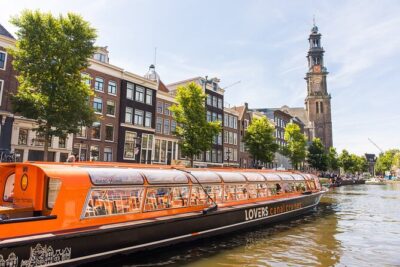
Amsterdam Sightseeing Canal Cruise with Audio Guide
Read our review →
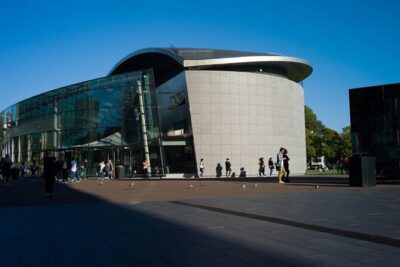
Amsterdam Van Gogh Museum with Audio or Guided Tour
Read our review →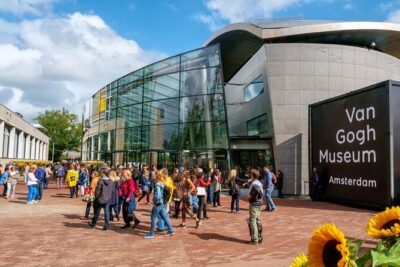
Van Gogh Museum Skip the Queue with Audio Guide
Read our review →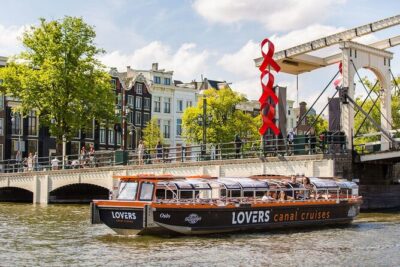
Amsterdam 1h Canal Cruise by Semi-Open Boat with Audio Guide
Read our review →Browse the lists this tour appears in