
Reviewed · UTRECHT TOURS
Utrecht: Rietveld Schröderhuis UNESCO Entry Ticket
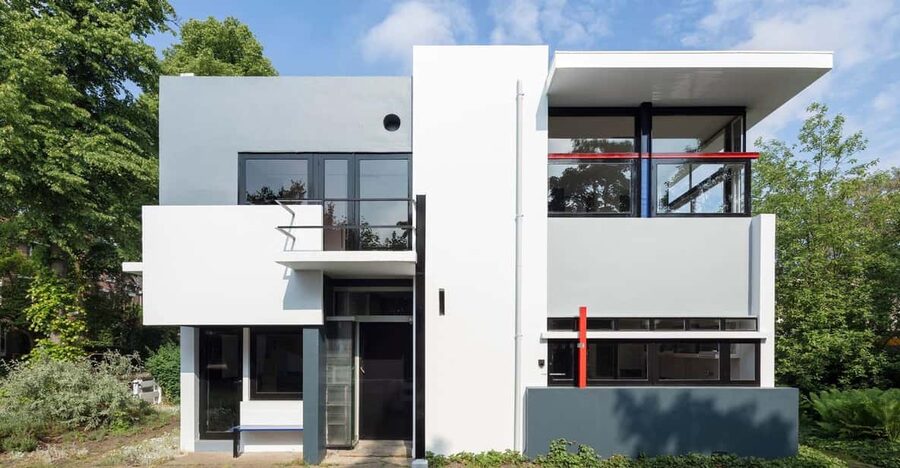
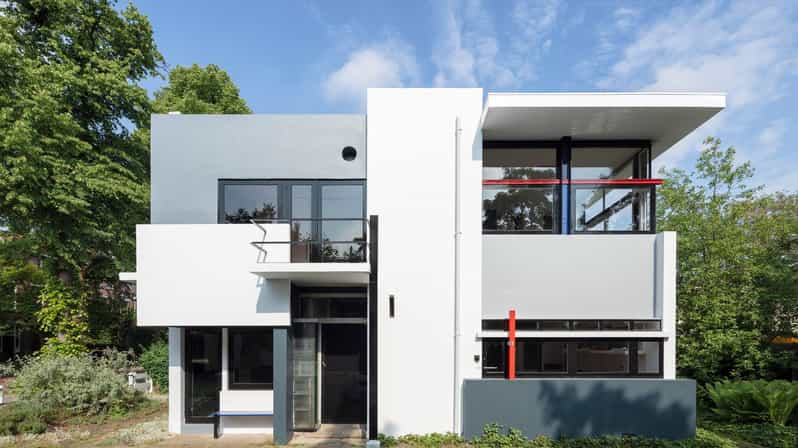
The Rietveld Schröder House is not a grand palace or a room-filled museum. It is a compact 1924 home where walls slide, furniture moves, and a new idea of daily life takes shape right in front of you. I like that the visit lets you see the house as a working design project, not just admire it from the street.
I especially like the self-guided audio tour, which explains how Gerrit Rietveld and Truus Schröder used the house. I also like the clever upstairs rooms, where movable walls change the layout. The main consideration is the short visit, about 30 to 40 minutes, and the house is not suitable for wheelchair users or people with mobility impairments.
Key points at a glance
- See Rietveld’s first residence as an architect: The 1924 house marks an important early point in Gerrit Rietveld’s career.
- Watch rooms change shape: Upstairs, sliding walls and movable furniture show how the home adapted to different needs.
- Hear the story in eight languages: The audio tour is offered in Dutch, English, German, French, Spanish, Italian, Japanese, and Chinese.
- Visit a UNESCO World Heritage site: The house has held UNESCO status since 2000.
- Plan on 30 to 40 minutes: This is a focused architectural visit, not a half-day museum outing.
- Allow time for the shop: The museum shop sells special products and souvenirs linked to the house and its design.
Why this small Utrecht house matters
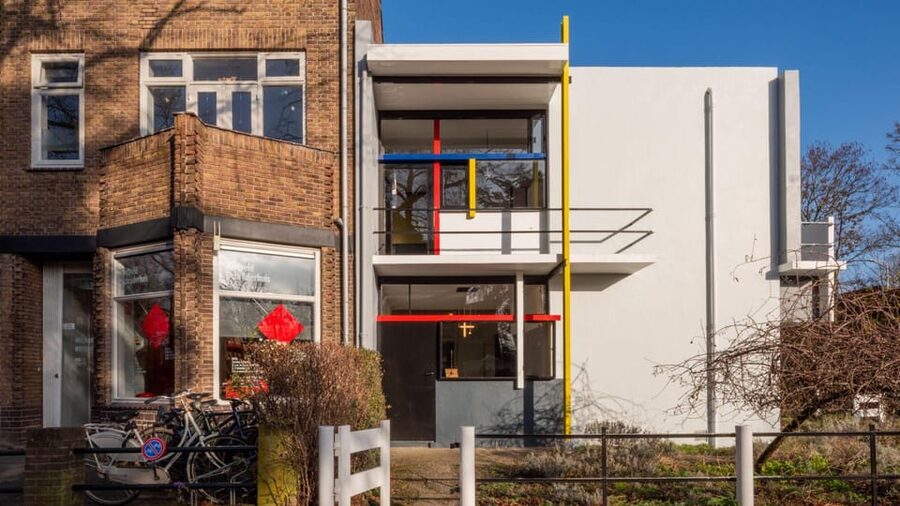
The Rietveld Schröder House gives you a close look at one of the boldest changes in modern home design. Built in 1924, it was designed by Gerrit Rietveld for Truus Schröder, whose ideas about living shaped the project as much as the architect’s skill did.
That partnership matters. This was not simply a house commissioned from an architect and then filled with ordinary furniture. Schröder wanted a different kind of home, one that could respond to family life and changing needs. Rietveld gave those ideas form through open areas, movable parts, strong lines, and a very deliberate use of color and space.
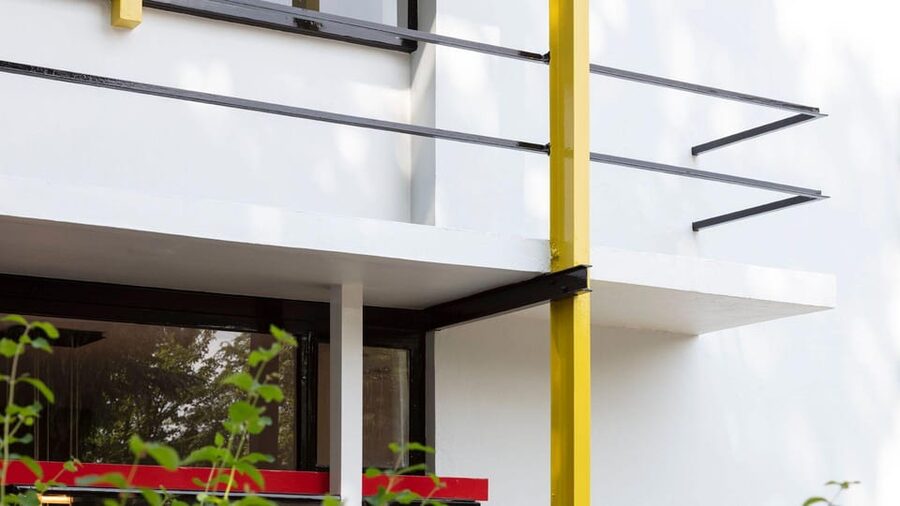
The house is tied to De Stijl, the Dutch modern art and design movement known for clear geometry, primary colors, and carefully balanced horizontal and vertical lines. You do not need a background in art or architecture to appreciate it. The audio tour helps you see how the design affects daily routines, where people sit, how rooms connect, and how a home can feel open without being large.
The house became a UNESCO World Heritage site in 2000. That designation adds context, but the real value is being inside the rooms where these ideas were tested. You can see the difference between looking at a famous architectural photograph and standing close to the details that make the design work.
A few more days out around Utrecht worth weighing up
- Utrecht: City Canal Cruise
★ 4.3 · 2,895 reviews - Utrecht: DOMunder Entry Ticket with Guide
★ 4.4 · 706 reviews - Utrecht: Dom Tower Entry Ticket and Guided Tour
★ 4.6 · 513 reviews
Checking in beside the Rietveld Schröder House
Your visit begins at the ticket office to the left of the house. Check in there before entering. You receive either a museum media player or instructions for using your own device.
The supplied player has built-in speakers, so you do not need a headset. If you prefer to listen privately, you can connect your own headphones with a mini-jack connection. You can also scan a QR code at the ticket desk and use your own device, but you should bring headphones for that option.
This setup keeps the visit independent. You are not tied to a guide’s pace, and you can focus on the parts that interest you most. At the same time, there is no live guide to answer questions or adjust the explanation for your interests. If you want a personal conversation about architecture, this format may feel limited.
The audio is available in eight languages: Dutch, English, German, French, Italian, Spanish, Japanese, and Chinese. That makes the house easier to understand for a broad range of visitors, especially since many of its ideas are visual and can be easy to miss without explanation.
Living inside De Stijl design
Once inside, the audio guide introduces the house and the people behind it. You learn about Rietveld’s approach, Schröder’s role, and the historical setting in which the home was created.
The strongest part of the visit is the connection between design and ordinary life. Rietveld’s work is not presented as decoration alone. Lines, planes, colors, furniture, and openings all have a job. They help shape how the rooms are used.
You may first notice the house’s clean geometry. Look longer, and you begin to see how each element supports the next. A wall is not merely a wall. A piece of furniture is not always fixed in one place. The home is built around change, choice, and flexibility.
That makes the visit more useful than a quick photo stop. The audio stories explain what it was like to live in this unusual home, giving the design a human scale. Instead of asking you to admire an abstract theory, the tour shows how the theory affected the people who used the rooms.
The experience is self-guided, so you can move through the house at your own pace within the visit’s time frame. The total stay is short, but the content is concentrated. I would plan to listen carefully rather than hurry through for photographs.
The upstairs rooms and their movable walls
The upstairs area is the architectural highlight. Here, you see demonstrations of the sliding walls and movable furniture that can change the arrangement of the living spaces.
This is where the house’s central idea becomes easy to grasp. A conventional home often assigns one fixed purpose to each room. Rietveld and Schröder took a more flexible approach. The interior could be adjusted as the needs of its inhabitants changed.
The sliding walls are not just clever mechanical features. They change the sense of the house. Open the spaces, and the rooms can work together. Shift the layout, and smaller areas can provide more separation. The furniture plays a similar role, helping the rooms adapt instead of forcing daily life into one permanent arrangement.
You may find this more interesting than the exterior, especially if you enjoy practical design. The outside is the famous image, but the moving parts explain why the house still feels fresh a century after it was built.
The demonstrations also help you understand the house as a place where people lived, not simply an art object. That is a useful distinction. You are seeing design tested against real needs: privacy, shared space, movement, and changing routines.
Same canals, a completely different sort of afternoon:
- Utrecht: De Haar Castle, Park Entry Ticket
★ 4.6 · 153 reviews - Utrecht 2-Hour Walking Tour | Discover The City With A Local
★ 5.0 · 138 reviews - Utrecht Food Tour with local guide
★ 5.0 · 112 reviews - Utrecht: Guided Highlights Walking Tour
★ 4.7 · 80 reviews
Rietveld’s first home as an architect
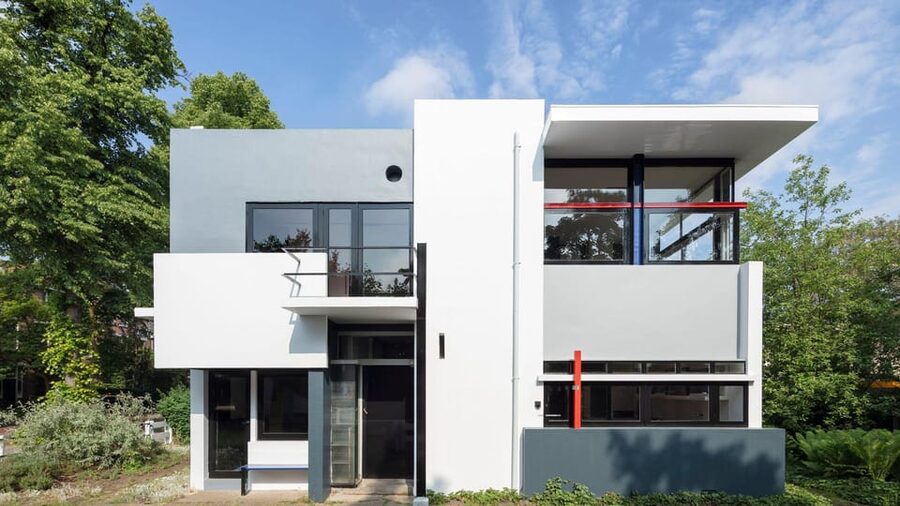
The Rietveld Schröder House was the first residence designed by Gerrit Rietveld and helped launch his career as an architect. That fact gives the building extra weight. You are not just visiting one of his later, polished projects. You are seeing an early statement of his ideas.
The house also shows how much can be done with a modest amount of space. Rather than relying on grand scale, it uses proportion, movement, and visual balance. Each choice matters because there is little room for waste.
Truus Schröder’s part in the story is equally important. The home owes its name to both people, and the audio tour explains the connection between her wishes and Rietveld’s design. That shared story keeps the visit from becoming a simple portrait of a famous male architect.
The house celebrated its 100-year anniversary in 2024. That milestone is a helpful reminder of its age, but the design does not depend on nostalgia. Its main questions remain current: How much space do you need? Should rooms have only one purpose? Can furniture and walls change with the way you live?
How the audio tour shapes the visit
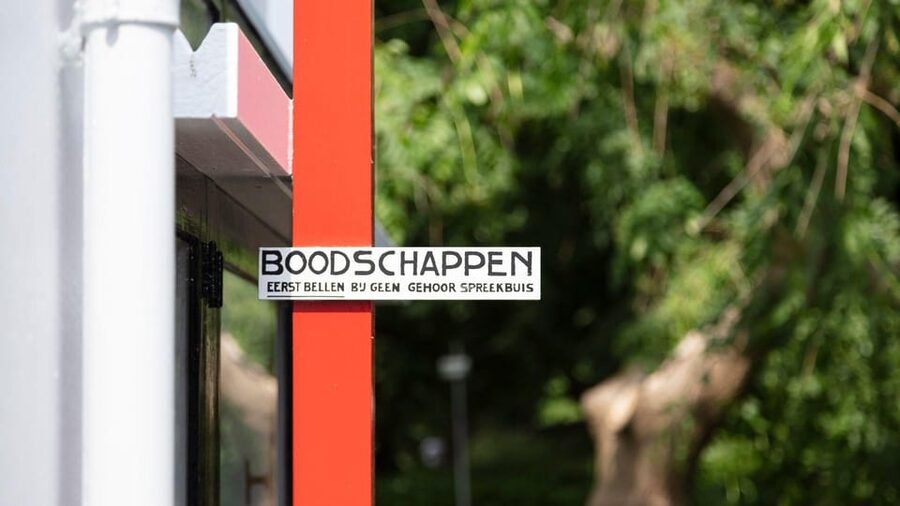
The audio guide is designed to explain the rooms as you move through them. You hear historical context, design details, and personal stories about life in the house.
I like this format for the Rietveld Schröder House because the building can be hard to read on its own. A plain wall may look simple until you learn why it is placed there. A piece of furniture may seem spare until you understand how it supports the room’s changing function.
The built-in speaker option is practical, particularly if you do not want to carry extra equipment. Your own headphones may be more comfortable, though, especially if the house is busy or you prefer to concentrate.
The guide is not a substitute for a live architectural specialist. It gives you a set path through the ideas rather than a conversation. Still, for a visit of only 30 to 40 minutes, it provides a good amount of information without requiring a long commitment.
A German booking from February 2026 described the experience as simply very interesting and very good, with no suggested improvements. That fits the strength of this visit: it is focused, clear, and built around one remarkable house rather than padded with unrelated material.
Is $22 a fair price for 40 minutes?
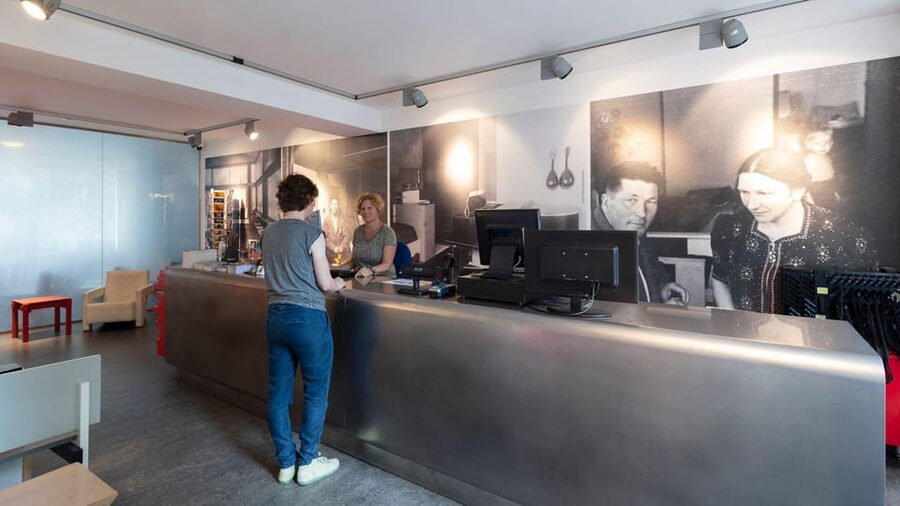
At $22 per person, this is not the cheapest short stop in Utrecht. You are paying for access to a UNESCO World Heritage site, a structured audio guide, and the chance to see interior features that cannot be understood from an exterior view.
The value depends on your interest. If you enjoy architecture, modern design, furniture, or social history, $22 is a reasonable price for a concentrated visit. The movable walls alone make the experience more than a standard house tour.
If you are comparing it with a large museum, the cost per minute may seem high. The visit is brief, and food, drinks, transportation, and pickup are not included. You should think of it as a specialist attraction, not a full afternoon activity.
The short duration can also be an advantage. You can fit the house into a day of sightseeing in Utrecht without giving up several hours. If you have limited time in the city, a 40-minute architectural stop may be easier to justify than a longer museum visit.
The museum shop adds a small extra reason to allow a few more minutes around the visit. It offers distinctive products and souvenirs connected with the house, De Stijl, and its design. The shop is not included in the ticket, but it may appeal if you want something more thoughtful than a standard city memento.
Who will get the most from this visit
I would choose this experience if you like buildings that make you think about how people live. It suits architecture students, design fans, art lovers, and anyone curious about the origins of modern interiors.
It also works well for a short Utrecht itinerary. The visit lasts about 40 minutes at most, so you can place it between other plans. The audio guide means you do not need to arrange a separate architectural tour.
Families may find the moving walls and adaptable furniture interesting, though the house is not designed as a broad, hands-on attraction. The main pleasure comes from looking closely and listening to the explanations.
You should reconsider the visit if you have mobility impairments or use a wheelchair, since the experience is listed as unsuitable for both. Babies under one year are also not considered suitable for this activity.
There is no pickup or drop-off. You make your own way to the house and check in at the ticket office on the left. Exact starting times depend on availability, so choose a time that leaves room for your other Utrecht plans.
Practical tips before you book
Reserve ahead if the available time slots fit your schedule, since the house has a limited duration and a focused format. The booking offers free cancellation up to 24 hours in advance, and you can reserve now and pay later, which helps if your city plans are still changing.
Bring headphones if you plan to use your own phone through the QR code. A mini-jack connection is needed if you want to connect headphones to the supplied media player.
Set aside 30 to 40 minutes for the house itself. Add a little extra time if you want to browse the museum shop, but do not expect food or drinks to be part of the visit.
Most important, listen for the relationship between the house and its occupants. The best details are not only the bold lines and colors. They are the ways the design changes movement, privacy, furniture placement, and the use of space.
Should you book the Rietveld Schröder House?
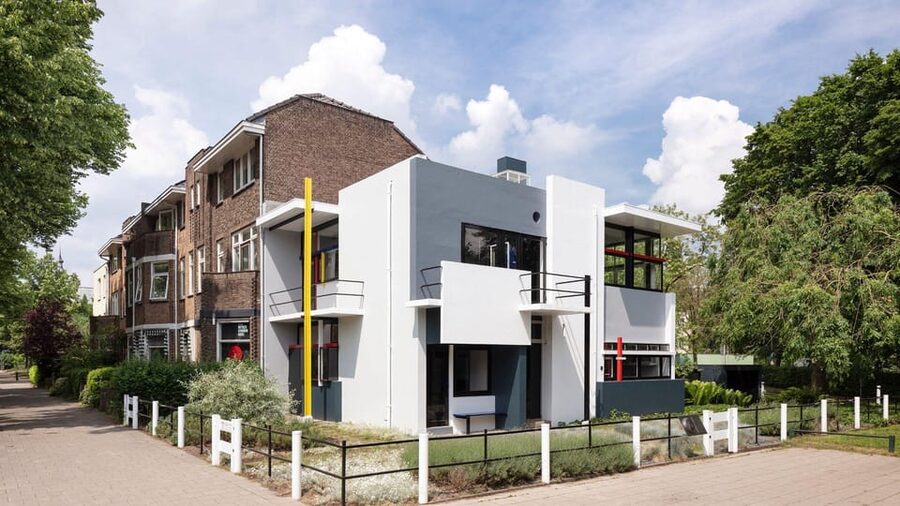
Book it if you want a close look at a major modern design work and you enjoy learning how an unusual building functions. The audio tour, eight language choices, and upstairs demonstrations make the visit easy to follow, even if you are new to De Stijl.
Skip it if you want a long museum outing, a live guide, or a casual attraction that requires little attention. At $22 for up to 40 minutes, the value comes from the house’s importance and its working design, not from the length of the visit.
For the right audience, this is one of Utrecht’s most focused architectural experiences. You enter a small home, watch its rooms change, and leave with a clearer sense of how radical a house can be.
FAQ
Where is the Rietveld Schröder House?
The house is in Utrecht Province in the Netherlands. Check in at the ticket office to the left of the Rietveld Schröder House.
How long does the visit take?
The visit takes about 30 minutes to a maximum of 40 minutes.
What does the ticket include?
The ticket includes entrance to the Rietveld Schröder House and an audio tour.
How much does admission cost?
The listed price is $22 per person.
Is the Rietveld Schröder House a UNESCO World Heritage site?
Yes. The house has been a UNESCO World Heritage site since 2000.
Which languages are available for the audio tour?
The audio tour is available in Dutch, English, German, French, Italian, Spanish, Japanese, and Chinese.
Do I need to bring headphones?
No. The supplied media player has built-in speakers. You may use your own headphones with a mini-jack connection, or scan the QR code at the ticket desk to use your own device. Bring headphones if you choose the QR code option.
Can I use my own phone for the audio tour?
Yes. Scan the QR code at the ticket desk and bring headphones for listening.
Is the house accessible to wheelchair users?
No. The activity is not suitable for wheelchair users or people with mobility impairments.
Can I cancel or pay later?
You can cancel up to 24 hours in advance for a full refund. You can also reserve your place and pay later.
Just added around Utrecht
- Utrecht: Food Tour with many stops at vegan restaurants!★ 5.0 · 8 reviews
- Utrecht: Vegan Food Bike Tour – 6 Tastings (excl. bike)★ 5.0 · 7 reviews
- Utrecht Walking Tour with a local comedian as guide★ 4.8 · 5 reviews
- Utrecht: Ludwig’s Original Pub Crawl with VIP Club Entry★ 3.3 · 42 reviews
- Utrecht: Hoge Woerd Museum Entry Ticket with Audio Tour★ 3.3 · 3 reviews
- Utrecht Quiz Tour★ 3.2 · 31 reviews
- Utrecht: Lofen Palace with Entry Ticket & Guide (Dutch)★ 4.4 · 41 reviews
- Utrecht: De Haar Castle, Park Entry Ticket★ 4.6 · 153 reviews
Utrecht Tours, compared.

Utrecht 2-Hour Walking Tour | Discover The City With A Local
Read our review →
Browse the lists this tour appears in