
Reviewed · FOOD & DRINK
Amsterdam: Self-Guided Food Tour in De Pijp Neighbourhood
Amsterdam’s De Pijp is at its best when you eat your way through it. This self-guided route sends you from a traditional croquette at FEBO to Surinamese pom, Israeli deli food, Dutch fish, poffertjes, stroopwafels, takoyaki, and loaded fries around Albert Cuyp Market. You get a useful taste of the city’s mixed food culture without being tied to a guide or fixed group.
I like the family-owned stops and the freedom to set your own pace. I also like the practical PDF guide, which includes map links, food stories, restaurant tips, and discounts or special tastings at seven of the eight stops. The main catch is opening hours: at least six places should be open, but some stops can close early or be absent, so timing matters.
Key points at a glance
- Start at FEBO on Ferdinand Bolstraat: Begin with a classic Dutch croquette before walking onward.
- Taste eight food traditions in one neighborhood: The route includes Dutch, Surinamese, Israeli, Japanese, and market specialties.
- Albert Cuyp Market is the setting: You explore Europe’s largest day market while following the food trail.
- Food costs extra: The booking price is $15 per group up to one person, with about €20 per person suggested for food.
- Seven stops offer a deal or tasting: Each person needs their own PDF guide on a phone to receive the offers.
- Plan around opening hours: The route runs rain or shine, and not every stop is open every day.
Why De Pijp makes a good food route
De Pijp gives you a useful snapshot of Amsterdam beyond canals and museums. The neighborhood is known here through its food counters, market stalls, and small family-run businesses rather than through grand sights. That makes the route feel local in a practical way: you eat what the neighborhood sells every day.
The main focus is Albert Cuyp Market, a long outdoor market with a mix of food stalls and other vendors. The route uses the market and surrounding streets as its stage, so you are not simply moving from one restaurant to another. You are also seeing how Amsterdam’s Dutch roots connect with food brought by Surinamese, Israeli, and Japanese cooks.
I like this format for independent-minded visitors. You can stop for a photo, skip a food you dislike, or spread the route across several hours. The guide is valid for seven days, so you are not forced to complete every stop in one sitting.
That seven-day window needs a little explanation. This is not a seven-day guided food tour. It means you can use the self-guided experience during that period, subject to the businesses’ opening hours.
More Food Tours in Amsterdam
- 10 Tastes of Amsterdam: Food Tour by UNESCO Canals and Jordaan
★ 5.0 · 3,020 reviews - Amsterdam Food and Cultural Tour with Tastings
★ 5.0 · 2,442 reviews - Amsterdam Jordaan Food & Drinks Tour with Eating Europe
★ 5.0 · 2,425 reviews
Starting with a Dutch croquette at FEBO
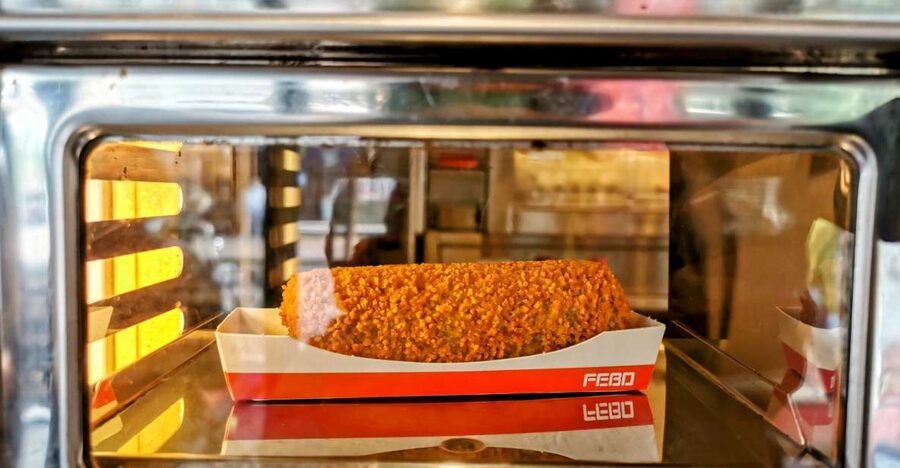
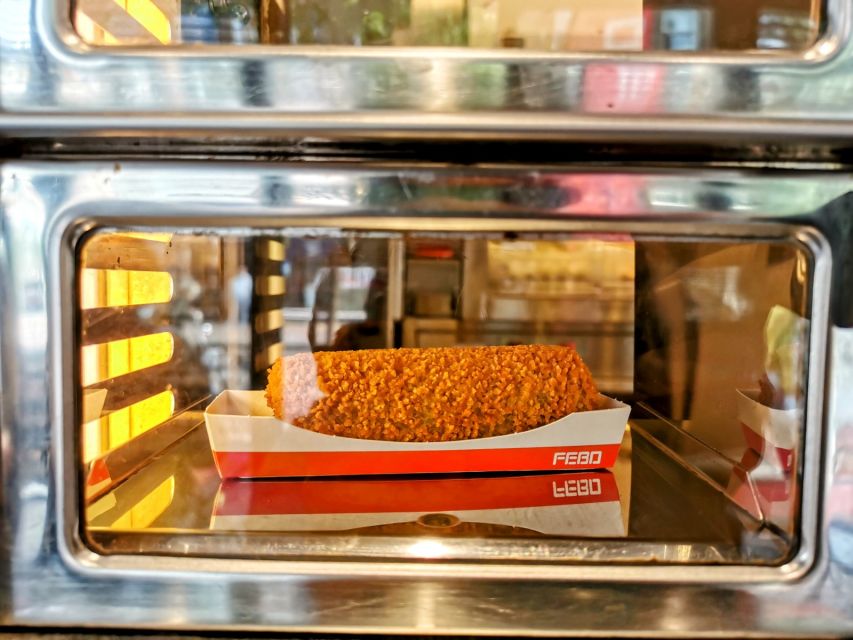
The route starts at FEBO on Ferdinand Bolstraat with a traditional Dutch croquette. FEBO is a familiar name in the Netherlands, and the croquette gives you an immediate introduction to one of the country’s best-known quick snacks.
A croquette is typically a crisp fried shell with a soft savory filling. It is inexpensive, filling, and easy to eat while walking, though it can also set the tone for the rest of the route: small bites add up quickly.
Take the guide seriously when it suggests managing your appetite. One person who completed the route found the food excellent but recommended sharing portions because it is easy to become full early. That is sound advice, especially if you want to reach the later sweets and Japanese snack.
Surinamese pom and a full plate of flavor
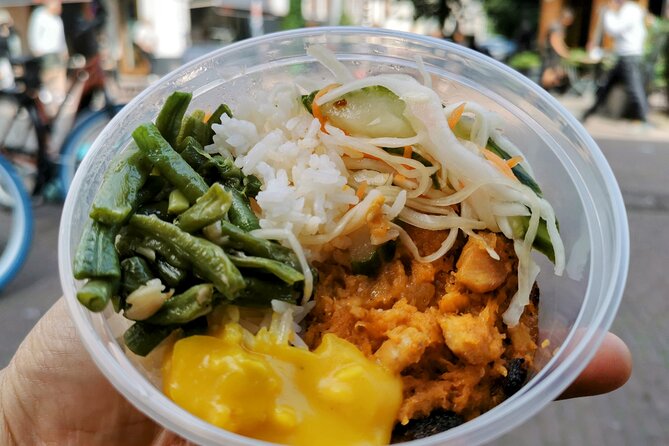
The next major taste is Surinamese food at a local eatery known for pom, a dish often described here as Suriname’s national dish. The serving combines oven-baked root vegetable with chicken, long beans, rice, homemade pickles, and hot sauce.
This is more than a quick market nibble. The combination gives you several textures and flavors in one stop: soft pom, rice, vegetables, sharp pickles, and heat from the sauce. You can ask for care with the hot sauce if you prefer a milder bite, though the supplied information does not specify how each shop handles substitutions.
This stop is one of the strongest reasons to choose the route. You are not only sampling another snack. You are getting a compact introduction to Surinamese food, a meaningful part of Amsterdam’s wider food culture.
Vegetarian choices are available at seven stops, but this particular pom combination includes chicken. If you do not eat meat, check each stop’s options in the guide before ordering.
Israeli deli food with brisket and chicken roulade
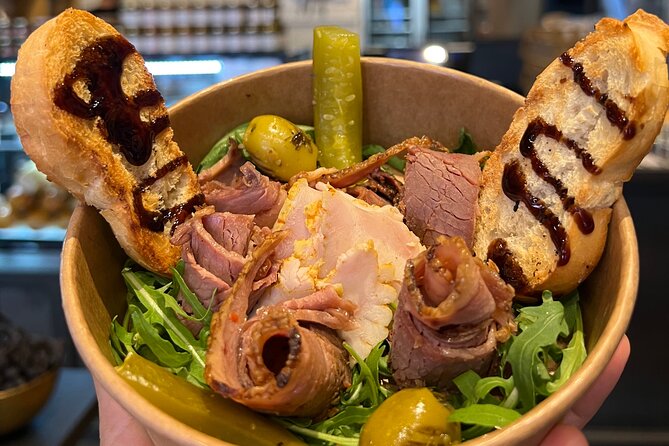
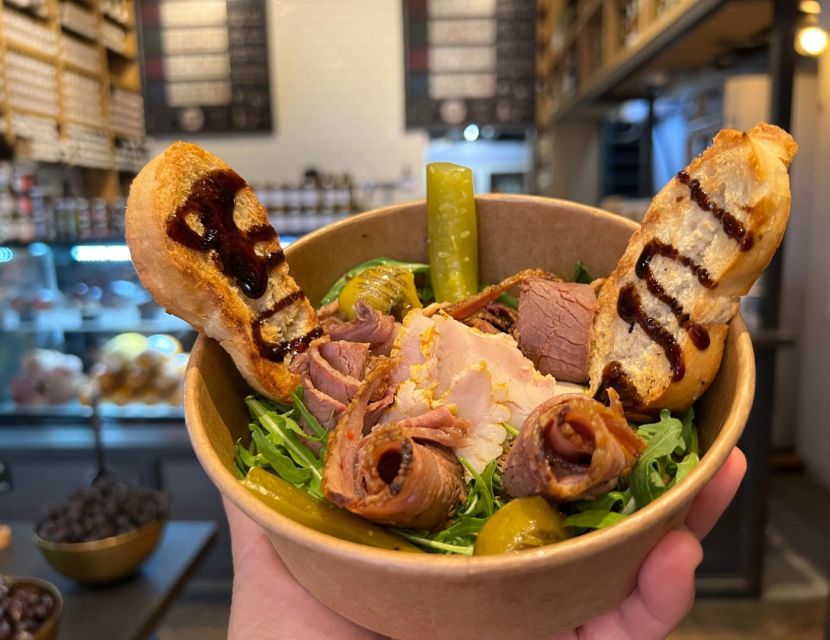
The route then shifts to an Israeli boutique deli. Here you receive smoked beef brisket and chicken roulade with Israeli pickle, olives, bread, and balsamic vinaigrette.
This is a more substantial savory tasting, and it adds another layer to the food route. The pickles and olives bring sharp, salty notes, while the bread and meat make the stop filling. If you are visiting with another person, sharing makes sense again.
The food stops are appealing because they come from small businesses rather than a single tour kitchen. You get to see the neighborhood through places that have their own specialties and stories. The guide also explains the local food heroes connected with the stops, giving some context to what you are eating.
Do not expect a full restaurant meal at every location. The route is designed as a series of tastings and special offers. The amount served may differ by stop, and one tasting is specifically described as limited to peppernuts rather than a broad sample. Keep your expectations at snack level, not all-you-can-eat level.
More Self-Guided Tours in Amsterdam
- Amsterdam: 75 Minute City Canal Cruise with Audio Guide
★ 4.4 · 17,501 reviews - Amsterdam: Royal Palace Entry Ticket and Audio Guide
★ 4.6 · 6,475 reviews - Amsterdam: Canal Cruise with Live Commentary & Audio Guide
★ 4.4 · 1,034 reviews - Amsterdam Sightseeing Canal Cruise with Audio Guide
★ 3.5 · 828 reviews
Herring and kibbeling at a family fish stall
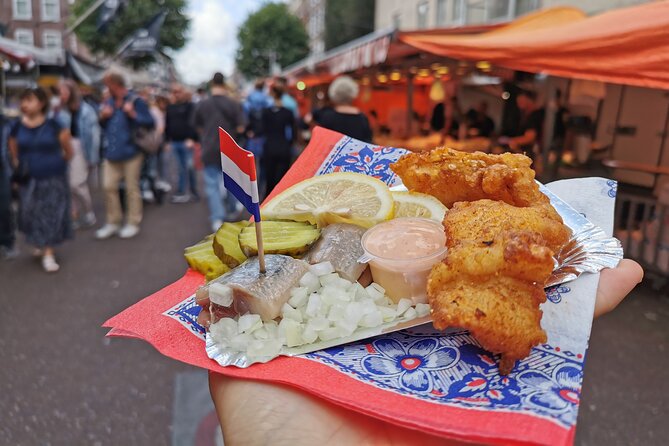
Dutch fish comes next, with fresh herring and kibbeling. Herring is one of the country’s classic foods, while kibbeling consists of fried cod pieces. Together, they offer two very different ways to try Dutch seafood.
The herring is the more traditional choice, with a fresh, briny character. Kibbeling is easier for many first-time visitors because the fish is fried and served in bite-sized pieces. If you are unsure about herring, this pairing lets you try both without making the entire stop depend on one taste.
This is also where the market setting matters. A fish stall is a natural place to eat these foods, and the route makes good use of that everyday setting. You are not being taken to a formal presentation. You are trying familiar local food where it is sold.
People with seafood allergies should take care at this stop. The tour is not suitable for vegans, and the route includes several meat and fish items. Vegetarian options are available at most stops, but the information does not promise a fully vegetarian route.
Poffertjes cooked before your eyes
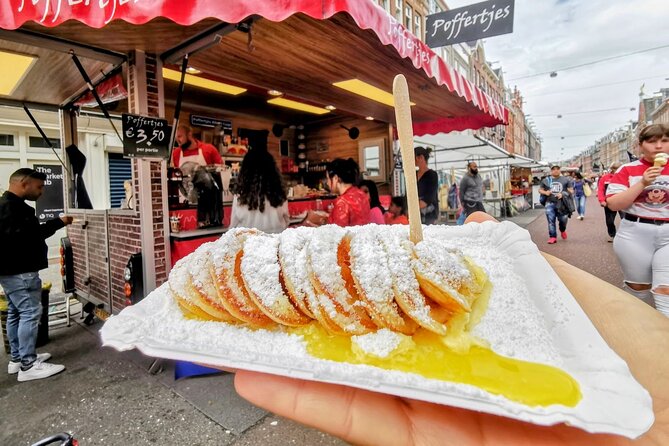
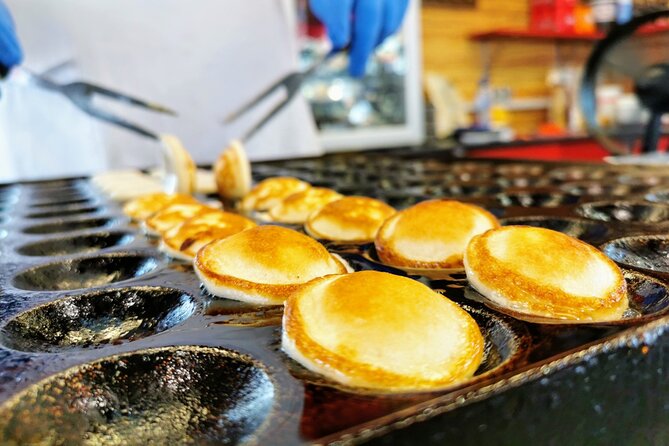
The sweet course begins with poffertjes, tiny Dutch pancakes cooked fresh as you watch. Their small size makes them easy to share, which is useful after the croquette, pom, deli food, and fish.
Poffertjes are a simple but pleasant stop because you see the preparation rather than receiving a packaged sweet. The guide’s route lets you follow the food from market-style savory dishes to a distinctly Dutch dessert.
This is a good point to slow down. You can treat the tour as a walk with food breaks rather than a race from one pin on the map to the next. De Pijp is best handled at a relaxed pace, especially when stalls have queues or when you need time to find the next location.
Stroopwafels from a long-running family maker
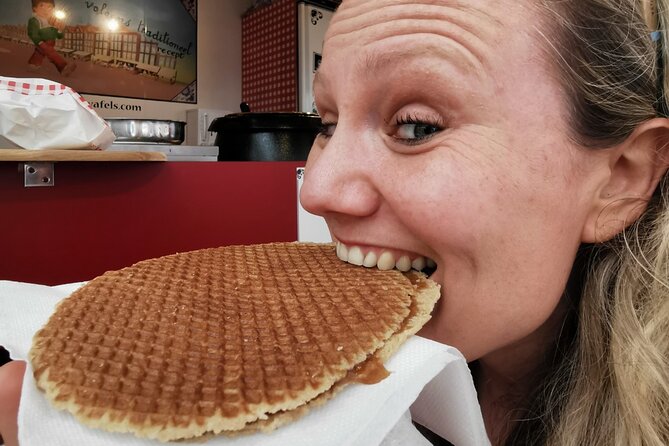
The next sweet is a traditional Goudse stroopwafel from a family that has made them for more than 45 years. Stroopwafels consist of thin waffle layers joined by syrup. They are one of the Netherlands’ most recognizable treats, but a fresh version is more useful than buying a factory package as a souvenir.
The route presents this as Amsterdam’s best traditional stroopwafel, but you should treat that as promotional wording rather than a measurable fact. What you can reasonably expect is a chance to try a well-established family recipe and compare it with the packaged versions sold across the city.
This stop is another reason to share. A stroopwafel is sweet and filling, and you still have Japanese food and fries ahead. If you are walking alone, consider saving part of it rather than eating every portion immediately.
Takoyaki from chefs connected to Osaka and Tokyo
The savory route returns with authentic takoyaki balls. These are made by a takoyaki chef from Osaka working with a ramen specialist from Tokyo.
That background gives this stop a clear identity. Takoyaki are small Japanese batter balls, commonly associated with a hot, soft center and savory toppings. The supplied details do not specify every topping or portion size, so use the guide for the exact offer available when you visit.
This is a nice change of pace after the Dutch sweets. It also shows how the route moves beyond the usual cheese, pancakes, and herring version of Amsterdam food. You get a better sense of the neighborhood’s international cooking without sitting through a long meal.
The stop may be especially useful for people traveling with mixed tastes. A group can split the portions and keep room for the final fries. If you are very hungry, you may want to budget more than the suggested €20 food allowance, since prices and serving sizes can change.
Finishing with patatje oorlog
The final stop serves award-winning hand-cut fries with patatje oorlog, a Dutch sauce combination of peanut sauce, mayonnaise, and onions. The name is often translated as war fries, a reference to the crowded mix of toppings.
This is a bold ending, and it is not a light snack. The fries are filling, while the peanut sauce and mayonnaise make the dish rich. If you have followed the full route without sharing, this may be the point where your appetite gives up before your feet do.
Still, it is a useful final taste because it shows the Dutch fondness for turning a simple food into a heavily dressed snack. You can finish with something familiar, but the sauce combination keeps it distinctly Dutch.
How the self-guided format works
You receive a PDF guide with directions and Google Map links to the stops. The booking confirmation and download links are sent within 24 hours of booking, so you should not wait until you are already standing at FEBO to sort out your phone.
Bring a charged smartphone, internet access, a credit card, and some cash. Each person in your group needs their own copy of the PDF on their phone to qualify for the discounts and special tastings. That requirement is easy to overlook, especially if one person normally handles all travel documents.
The route runs rain or shine. Since much of the experience involves an outdoor market and walking between stops, bring weather protection if rain is possible. The information says the route is wheelchair accessible, though individual market crowds and shop layouts can still affect how easy each stop feels in practice.
The tour is flexible, but flexibility comes with responsibility. Check the opening hours before you set out, follow the recommended timing in the guide, and keep an eye on the clock. One person completed only the first three stops because the remaining places had closed by the time they arrived. Another found one stop missing, while still considering the food very good.
The promise is that at least six of the eight stops will be open, not that every stop will operate every day. If tasting all eight foods is important to you, build in time and confirm the day’s hours before starting.
Is the $15 price good value?
The booking price is $15 per group up to one person, and food is not included. You should plan on about €20 per person for the tastings, with extra money available if you want drinks or larger portions.
That makes the total cost more than the headline price suggests. Still, the value can be good if you use the discounts at seven locations and visit most of the stops. The PDF also includes a free three-day Amsterdam itinerary and restaurant recommendations, which may help if this is your first visit.
The weaker value appears when several stops are closed or unavailable. You still pay for the route even if you only reach a few places, and food purchases are made separately. The self-guided format saves you from paying for a live guide, but it also means there is no one to redirect you when a stall closes or a queue becomes long.
I would see the $15 as payment for research, directions, food stories, and access to the special offers. The €20 food budget is the real tasting cost. Compare it with what you would spend on several snacks independently, then decide if the planning help and neighborhood route are worth the difference.
Who should book this food walk?
I would recommend it to independent eaters who enjoy trying small portions and can adapt their plan. It suits couples and friends particularly well because sharing helps you reach more stops without getting stuffed.
It is also a good choice for a first visit to Amsterdam if you want food guidance without a fixed group schedule. The free itinerary and restaurant recommendations add practical value beyond the food walk itself.
I would not choose it for a vegan diet, since the experience is specifically marked unsuitable for vegans. People with gluten intolerance should also avoid it. Vegetarians have better prospects because options are available at seven stops, but you should still inspect the details for each location.
This route is less suitable if you need a guaranteed timetable or a single guided explanation from start to finish. You need your phone, internet, patience, and a willingness to change course when a business is closed.
Should you book the De Pijp food tour?
Book it if you want a flexible introduction to Amsterdam’s food culture and like the idea of mixing croquettes, pom, herring, poffertjes, stroopwafels, takoyaki, and fries in one neighborhood. The strongest parts are the family-run businesses, the international range, and the chance to explore Albert Cuyp Market while eating.
Before paying, make two checks. First, confirm that your visit falls within the seven-day validity period and review the opening hours. Second, decide if about €20 per person for food fits your budget. Go early enough to reach the later stops, bring the PDF on every phone, and share portions when possible.
If you accept that not every stop is guaranteed, this is a useful, low-pressure way to eat through De Pijp. If you need every tasting to be available at a precise time, choose a guided food tour with confirmed reservations instead.
FAQ
Where does the self-guided food tour start?
The tour starts at FEBO on Ferdinand Bolstraat in Amsterdam’s De Pijp neighborhood.
How long is the tour?
The experience is valid for seven days, allowing you to complete it at your own pace during that period. It is not described as a fixed seven-day food tour.
How many food stops are included?
The route visits between six and eight family-owned businesses. At least six locations should be open, but not every stop operates daily.
Is food included in the booking price?
No. Food tastings and drinks are not included. The expected food cost is around €20 per person.
What should I bring?
Bring a credit card, some cash, a charged smartphone, and internet access. Each person joining needs their own copy of the PDF guide on their phone to receive the special discounts and tastings.
Are vegetarian options available?
Yes. Vegetarian options are available at seven stops. The experience is not suitable for vegans.
Can I cancel the booking?
Yes. You can cancel up to 24 hours in advance for a full refund. You can also reserve now and pay later.
More Self-Guided Walks in Amsterdam
- Amsterdam Van Gogh Museum with Audio or Guided Tour
★ 4.0 · 266 reviews - Van Gogh Museum Skip the Queue with Audio Guide
★ 4.0 · 261 reviews - Amsterdam 1h Canal Cruise by Semi-Open Boat with Audio Guide
★ 3.5 · 197 reviews - Amsterdam: Museum of the Canals Ticket with Audio Guide
★ 4.7 · 150 reviews
More Food and Drink Tours in Amsterdam
- Amsterdam: Premium Henri Willig Cheese Tasting Experience
★ 4.7 · 1,106 reviews - Amsterdam: Cheese & Wine Cruise Tasting Experience
★ 4.5 · 1,090 reviews - Amsterdam: Food and Culture Walking Tour with Tastings
★ 4.9 · 838 reviews - Zaanse Schans and Cheese Tasting Guided Tour from Amsterdam
★ 4.0 · 661 reviews
Just added around Amsterdam
- From Amsterdam: The Hague Private Trip and Mauritshuis Entry★ 4.3 · 4 reviews
- VIP Private Full Day Tour of the Netherlands★ 4.8 · 6 reviews
- Amsterdam Old-West Vegan Food Tour with Local Guide★ 4.7 · 3 reviews
- Amsterdam: Van Gogh Museum Guided Tour★ 4.8 · 262 reviews
- Van Gogh Museum Private Guided Tour★ 4.2 · 10 reviews
- Vecht River: Full-day Cruise with Lunch★ 4.8 · 9 reviews
- Van Gogh and Rijksmusuem Tour: Small Group Tour with Entry★ 4.7 · 3 reviews
- Amsterdam: Van Gogh Museum Ticket & Guided Tour★ 4.4 · 187 reviews
Food & Drink, compared.

10 Tastes of Amsterdam: Food Tour by UNESCO Canals and Jordaan
Read our review →
Amsterdam Food and Cultural Tour with Tastings
Read our review →
Amsterdam Jordaan Food & Drinks Tour with Eating Europe
Read our review →
Premium Henri Willig Cheese Tasting Experience
Read our review →
Zaanse Schans and Cheese Tasting Guided Tour from Amsterdam
Read our review →
Browse the lists this tour appears in