
Reviewed · CITY TOURS
Amsterdam: Queer City Walking Tour With Local Guide
Amsterdam’s queer story is written into the oldest streets of the city, but it is easy to miss if you only follow the usual canal route. This two-hour walking tour with Sanne brings those stories forward, linking public monuments, nightlife, protest, gender history, and everyday queer life.
I like the tour’s personal approach, especially Sanne’s stories about falling in love and being gay and single in Amsterdam. I also like the route itself: the Homomonument, the Red Light District, Zeedijk, and Café ’t Mandje give the history a real sense of place. The main consideration is that this is a walking and listening experience, not a conventional sightseeing tour with grand interiors or long museum visits.
Key points to know before you book
- Personal stories from Sanne: The guide connects Amsterdam’s past with her own queer experiences, giving the walk an intimate tone.
- The Homomonument: Spend about 20 minutes hearing how this important memorial came to be, including the controversy around its creation.
- Old Amsterdam at street level: The route passes through Dam Square, the Red Light District, Zeedijk, and the city’s historic queer nightlife district.
- A useful final stop: The tour ends at Café ’t Mandje, one of Amsterdam’s oldest queer bars.
- Rain or shine: Bring comfortable shoes and weather protection because the tour goes ahead in all conditions.
- Good value for a focused history walk: At $59 per person, the price makes the most sense if you want stories, context, and a personal guide rather than a broad city overview.
Amsterdam’s queer past begins at Dam Square
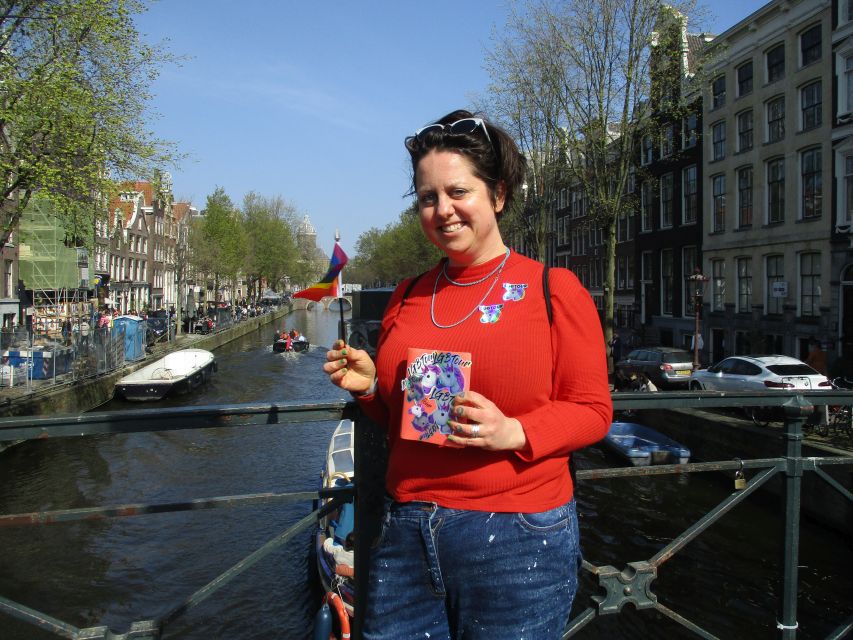
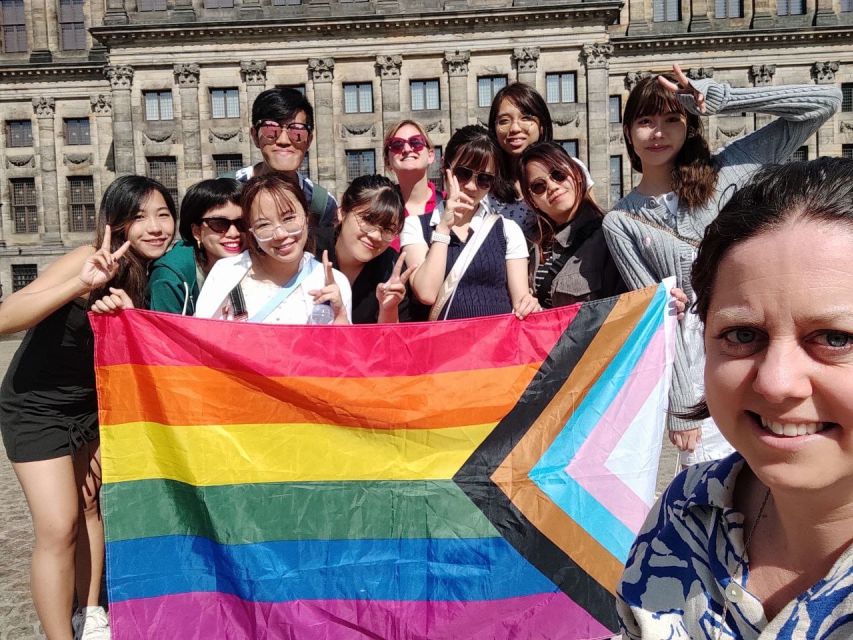
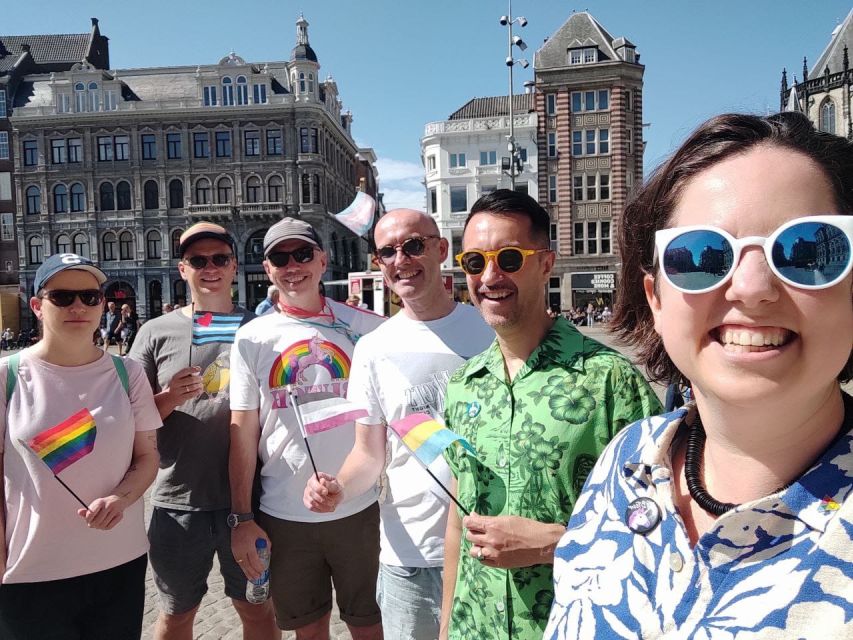
Meet Sanne at the National Monument in Dam Square. Look for the tiny rainbow flag. This is a simple meeting point, but it places you right in the center of Amsterdam’s public life, surrounded by the Royal Palace, major streets, and the constant movement of the city.
The tour uses this central setting to ask a useful question: how much of Amsterdam’s history changes when you view it through queer lives and queer activism? The answer is more than you might expect. Royal symbols, public celebrations, nightlife, religious spaces, health campaigns, and demonstrations all become part of the story.
Sanne leads in English or Dutch. Her style, based on the experience description and the strong praise for her care and personal connection, is warm rather than formal. You should expect conversation and storytelling, not a scripted lecture.
The small-group format matters here. Queer history often includes sensitive subjects such as discrimination, AIDS, gender identity, and public protest. A smaller group gives the guide more room to explain, pause, and connect the historical material to questions from people on the walk.
More City Tours in Amsterdam
- Amsterdam: 75 Minute City Canal Cruise with Audio Guide
★ 4.4 · 17,501 reviews - Amsterdam: City Centre Canal Cruise
★ 4.2 · 12,827 reviews - Amsterdam: Smoke and Lounge City Boat Cruise
★ 4.7 · 8,572 reviews
The Homomonument and the politics of remembrance
The first major stop is the Homomonument, where you spend about 20 minutes with a guided explanation. This is the emotional center of the route.
The monument remembers gay men and women persecuted because of their sexuality, while also recognizing ongoing struggles for acceptance. It is located beside the Westermarkt, close to the canals and the city center, but its meaning reaches far beyond its physical setting.
Sanne also discusses the controversial stories behind the monument and the arguments that shaped its creation. That detail is important. Memorials are not simply placed in a city and universally accepted. People debate who is represented, what a monument should say, and how the past should be remembered.
Give yourself time to listen here. This is not a quick photo stop. The tour description allows around 20 minutes, which gives the subject the attention it needs. You may find this part moving, particularly if you connect with stories of persecution or the long fight for public recognition.
The practical point is that the Homomonument can set a serious tone early in the walk. If you want only light nightlife stories, this may feel heavier than expected. If you want a tour that treats queer history as a real part of Amsterdam’s civic story, it is one of the strongest reasons to book.
Belle and the story of gender identity
The next stop, Belle, receives about 10 minutes. This section focuses on a woman who was the first to change her gender on her passport.
The tour frames this as part of the T in LGBTQI+, making room for transgender history rather than focusing only on gay and lesbian life. That broader view is one of the walk’s strengths. Amsterdam’s queer story is not a single story, and Sanne uses individual people to show how law, identity, and public life have changed.
A short stop cannot explain every part of that history, but it can give you a name and a starting point for further thought. The emphasis is on the person and what her action meant, not simply on dates and labels.
The Condomerie and the AIDS era
At the Condomerie, Sanne spends around 10 minutes explaining the world’s first condom shop and why it became important during the AIDS crisis.
This is a practical stop with a serious purpose. It shows how queer communities responded to health fears and the need for safer sex information. Rather than treating the AIDS era as a distant historical chapter, the stop links a physical shop to the urgent choices people had to make.
The Condomerie also gives the walking tour a change of tone. After the memorial and gender history, you move into public health, daily life, and the way a business can become part of a community’s story.
You should not expect an extended shopping visit. This is a guided explanation, listed at about 10 minutes. The value comes from the context Sanne adds, not from spending time inside the shop.
More Walking Tours in Amsterdam
- Anne Frank’s Story – Guided Walking Tour through Amsterdam
★ 5.0 · 11,619 reviews - Amsterdam: Life of Anne Frank and World War II Walking Tour
★ 4.8 · 10,467 reviews - Absolutely Amsterdam – the Essential Introductory Walking Tour
★ 5.0 · 3,629 reviews - Amsterdam: Anne Frank Guided Small Group Walking Tour
★ 4.8 · 2,722 reviews
The Red Light District beyond the usual spectacle
The route then moves into Amsterdam’s Red Light District for about 15 minutes. This is the oldest part of the city and, in the tour’s framing, part of its old gay town as well as its better-known adult nightlife district.
That distinction matters. Many visitors see the Red Light District through a narrow lens. This walk asks you to notice the area as a place where queer nightlife, sex work, tourism, religion, commerce, and public debate have crossed paths.
The stop is a visit rather than a long guided session, so the exact balance between walking and commentary may depend on the group and the pace. You will likely get more out of it if you listen for the connections Sanne draws between the street itself and the people who used it.
This part of the route may feel crowded or visually intense, especially at popular times, but the tour keeps moving. Wear shoes you can walk in and stay aware of the group as you move through the oldest streets.
Eagle Amsterdam, Zeedijk, and old gay town
The group passes by Eagle Amsterdam for about five minutes before continuing along Zeedijk Street for roughly 15 minutes. These stops place queer nightlife within the working streets of central Amsterdam.
Passing a venue rather than entering it keeps the tour moving and avoids turning the experience into a bar crawl. That is useful if you want history and local context, but it also means you should not book this expecting drinks, club access, or a nightlife event.
Zeedijk adds another layer to the route. It is one of the city’s old streets, and the walk uses it to show how queer life is part of a larger urban setting rather than an isolated district. You are not simply being taken from one LGBTQI+ venue to the next. You are walking through the city and learning how different communities shared, shaped, and sometimes contested the same spaces.
The stop at Pride Clothing is also a brief pass-by of about five minutes. It connects the historic material to present-day pride culture, including the public symbols and clothing that make queer identity visible in Amsterdam.
Kokopelli and the city’s less expected connections
Kokopelli receives a guided stop of about 10 minutes. The broader theme here is that the least expected places and people can connect to queer Amsterdam.
That idea runs through the whole walk. A palace may carry queer clues in its decoration. A health shop may reflect a public crisis. A monument may represent both remembrance and disagreement. A café may become a landmark because of who was allowed to gather there.
The tour’s description points to unicorns at the Royal Palace as one example of this playful way of looking. You may never have thought to connect those symbols with the city’s queer perspective, but Sanne uses details like this to make familiar Amsterdam look different.
This is where the tour feels less like a standard list of attractions. You are encouraged to question what you see. A building is not just a building, and a street name does not tell you everything about the people who used it.
The Dancing Houses and a final canal-side pause
The Dancing Houses provide a 10-minute photo stop. These narrow, leaning canal houses are among Amsterdam’s most recognizable sights, so this is a chance to take in a familiar view while keeping the queer perspective in mind.
The stop also gives the group a natural pause after several serious subjects. You can take photographs, look across the water, and absorb the contrast between postcard Amsterdam and the personal stories you have heard.
Do not expect a long architectural explanation here. The tour is not primarily about canal houses. The buildings work as a visual pause and a reminder that queer stories unfold in the same public spaces featured in every standard city guide.
Café ’t Mandje, where the walk ends
The final stop is Café ’t Mandje, described as Amsterdam’s oldest queer bar. This is a fitting finish because it brings the story back to a place associated with gathering, nightlife, and community.
Ending here gives you a useful next step after the tour. You can ask Sanne for more recommendations, use the personal LGBTQI+ favorites list provided with the meeting information, or continue exploring Amsterdam’s queer venues on your own.
The tour does not state that drinks or a reserved table are included, so treat Café ’t Mandje as the endpoint rather than a guaranteed bar experience. The value is in reaching a place with historical meaning and finishing the route in a social setting.
For many people, this will be more satisfying than ending at a random street corner. It gives the walk a clear sense of arrival and leaves you with a practical place to consider visiting again.
What the $59 price really buys you
At $59 per person, this is not the cheapest way to walk around central Amsterdam. You can see Dam Square, the Red Light District, Zeedijk, and the Dancing Houses without paying for a guide.
The price makes more sense when you consider what you would miss on your own. The tour provides a queer reading of familiar places, personal stories from Sanne, a focused route, and context about the Homomonument, AIDS history, transgender identity, pride, and protest.
I would compare it with the cost of a general city tour rather than with a free stroll. You are paying for a specialist subject and a guide who brings personal experience to the discussion. That is good value if queer history is a central reason for your visit or if you want to understand Amsterdam beyond its standard attractions.
It is less useful if you mainly want photographs, museum interiors, or a broad introduction to Dutch history. The route stays in central Amsterdam and does not cover every part of the city’s LGBTQI+ life.
Who will get the most from this walk
This tour suits LGBTQI+ visitors who want Amsterdam’s history told from a perspective that includes their own experiences. It also welcomes allies and people who simply want to learn.
The personal angle should appeal to you if you prefer a guide who talks about real life as well as public events. Sanne’s stories about love, relationships, and being single make the walk feel connected to ordinary life, not just famous names and dates.
It is also a good choice for people traveling alone. The tour is designed as a shared experience, and its focus on connecting queer people and allies from different countries gives you a natural topic of conversation.
Parents should use their own judgment about the Red Light District and the adult themes connected with the route. The supplied information does not set a minimum age, so check the current booking details if that matters for your group.
The walk is wheelchair accessible, but Amsterdam’s historic center can still be busy and uneven in places. Bring comfortable clothes and shoes, and allow extra care when moving between stops.
Practical advice for a rain-or-shine walk
The meeting point is the National Monument at Dam Square. Sanne carries a tiny rainbow flag, which should make the group easy to identify.
The tour lasts two hours, with several stops lasting between five and 20 minutes. That is a steady pace rather than an all-day outing. You should have time to hear the stories without committing half a day to the experience.
Bring a sun hat and sunscreen in warm weather, plus rain gear in wet weather. The tour runs rain or shine, so do not rely on a last-minute weather cancellation.
Comfortable shoes matter more than stylish footwear. The route covers old central streets, and you will be standing or walking for most of the two hours.
You can cancel up to 24 hours before the start for a full refund, and the reserve-now, pay-later option helps if you are still arranging your Amsterdam plans. The tour is offered in English and Dutch.
Should you book Amsterdam’s Queer City Walking Tour?
Book it if you want a focused queer history walk led by someone who connects public events with personal experience. The Homomonument, the AIDS-era Condomerie, transgender history, old gay town, Pride, and Café ’t Mandje create a thoughtful route through central Amsterdam.
Skip it if you want a general sightseeing tour, a museum visit, or an evening of bar hopping. Much of the value comes from listening, reflection, and conversation.
With a 5.0 rating from 24 ratings and repeated praise for Sanne’s warmth, care, and personal connection, this is a strong pick for visitors who want more than the standard Amsterdam postcard. At $59, it earns its price through focus and human detail, not through the number of sights packed into two hours.
FAQ
Where does the Queer City Walking Tour meet?
Meet at the National Monument in Dam Square. Sanne will carry a tiny rainbow flag so you can recognize her.
How long does the tour last?
The tour lasts two hours.
What languages are available?
The live tour is available in English and Dutch.
Does the tour visit the Homomonument?
Yes. The Homomonument is a guided stop of about 20 minutes, including discussion of the stories and controversy connected with its creation.
Where does the tour finish?
The tour finishes at Café ’t Mandje, described as Amsterdam’s oldest queer bar.
Does the tour run in bad weather?
Yes. The tour takes place rain or shine, so bring rain gear when wet weather is expected. Comfortable shoes, a sun hat, and sunscreen are also recommended.
Just added around Amsterdam
- From Amsterdam: The Hague Private Trip and Mauritshuis Entry★ 4.3 · 4 reviews
- VIP Private Full Day Tour of the Netherlands★ 4.8 · 6 reviews
- Amsterdam Old-West Vegan Food Tour with Local Guide★ 4.7 · 3 reviews
- Amsterdam: Van Gogh Museum Guided Tour★ 4.8 · 262 reviews
- Van Gogh Museum Private Guided Tour★ 4.2 · 10 reviews
- Vecht River: Full-day Cruise with Lunch★ 4.8 · 9 reviews
- Van Gogh and Rijksmusuem Tour: Small Group Tour with Entry★ 4.7 · 3 reviews
- Amsterdam: Van Gogh Museum Ticket & Guided Tour★ 4.4 · 187 reviews
City Tours, compared.
75 Minute City Canal Cruise with Audio Guide
Read our review →


City Canal Cruise and Heineken Experience Ticket
Read our review →

Browse the lists this tour appears in