
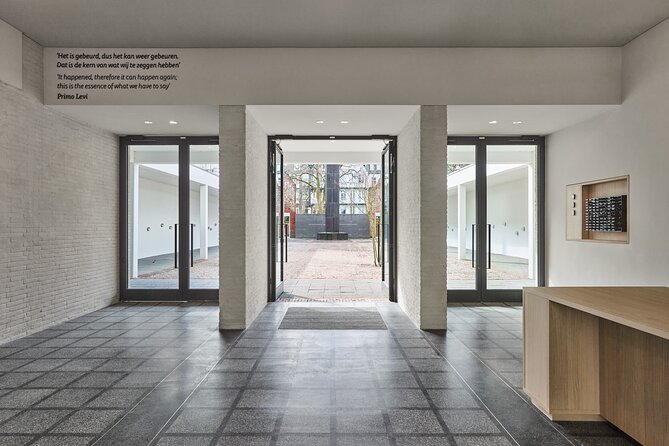
Reviewed · MUSEUMS
Amsterdam National Holocaust Museum and Memorial Entry Ticket
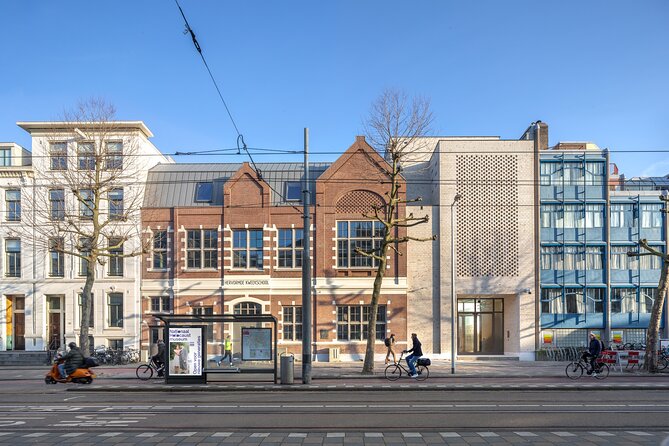
The most powerful part of this experience is its setting. The National Holocaust Museum occupies a former teacher training school where Jewish children were secretly moved to safety from the crèche next door. You then continue to the Hollandsche Schouwburg, the former theatre where tens of thousands of Jews were assembled before deportation. This is a serious, personal history lesson, not a quick museum stop.
I like the prebooked entry time, which helps you fit a focused visit into a busy Amsterdam day. I also like the audio guide and the use of letters, photographs, art, and personal accounts, which give the history individual voices. The main drawback is that the audio guide is offered in English, and its connection to the displays may not always feel clear. You also need to visit two separate sites.
Key points to know
- The former school building matters: Jewish children were hidden and helped to escape from the nearby crèche.
- Two sites tell different parts of the story: the museum explains the Holocaust in the Netherlands, while the Schouwburg serves as a memorial and place of remembrance.
- An English audio guide is included: plan on about 1 hour 15 minutes at the museum, plus 30 minutes at the memorial.
- The wall of names is especially moving: it commemorates Jewish victims who were deported and murdered.
- This is a small, focused visit: the experience allows a maximum of 15 people, but it is not a guided tour.
- The $24.03 price covers both locations: it does not include the Jewish Museum or Portuguese Synagogue.
A Former School Where Children Were Rescued
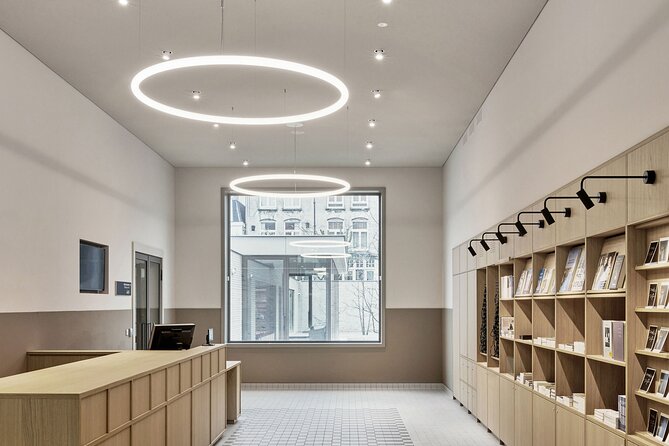
The National Holocaust Museum tells its story from a building with a painful and meaningful past. During the Second World War, the former teacher training school was used in connection with the Jewish crèche next door. Hundreds of children held there were smuggled out and taken to places considered relatively safe, often with help from the Dutch resistance.
That history gives the first stop a particular weight. You are not simply entering a neutral exhibition hall. The building itself is part of the story, and the story includes both persecution and rescue. The museum places the Holocaust in the Netherlands within a wider account of Nazi rule, Jewish life, resistance, collaboration, deportation, and survival.
The exhibitions change, so the exact displays can vary. You can expect the museum to use photographs, letters, objects, artwork, and recorded or written personal accounts. The approach is not based only on graphic images of violence. Instead, it gives attention to the chronology of events and to the choices made by rescuers, collaborators, victims, and survivors.
I find that approach useful because it helps you follow how persecution developed step by step. You see more than the final horror. You gain a clearer sense of how ordinary places, institutions, and decisions became part of a system that led to deportation and murder.
Allow around 1 hour 15 minutes here, though you may need longer if you read every panel. One floor reportedly has a large amount of hanging text, so you will need to choose what to read closely. The audio guide can help you focus, but it may not always point neatly to the object or display directly in front of you.
More Museum Tours in Amsterdam
- Amsterdam: Van Gogh Museum Ticket
★ 4.7 · 52,054 reviews - Amsterdam: The Upside Down Museum Entrance Ticket
★ 4.4 · 9,506 reviews - Amsterdam: Red Light Secrets Museum Entry Ticket
★ 4.2 · 5,722 reviews
Personal Accounts Give the Museum Its Human Scale
The strongest material here is the personal material. Letters and family stories turn the Holocaust from a distant historical subject into a record of individual lives. A name, a photograph, or a short account can make the scale of the crime easier to understand without reducing people to statistics.
The audio guide adds context at each station. Small handheld listening devices are used, and they help bring the written material and artwork into a clearer story. If you read English, you can use the audio to connect the exhibits to the wider timeline and to understand why a particular object matters.
The audio is not a substitute for a human guide. No live guide is included, and there are no guide names to note because this is a self-guided visit. That gives you control over your pace, but it also means you must make your own decisions about where to pause and how much information to take in.
If you are visiting with someone who does not speak English, plan carefully. The experience is offered in English, and one recorded account specifically noted that a Spanish audio option was not available. You may need to translate key information yourself, which can slow the visit and reduce the value of the audio guide.
Hollandsche Schouwburg: From Theatre to Memorial
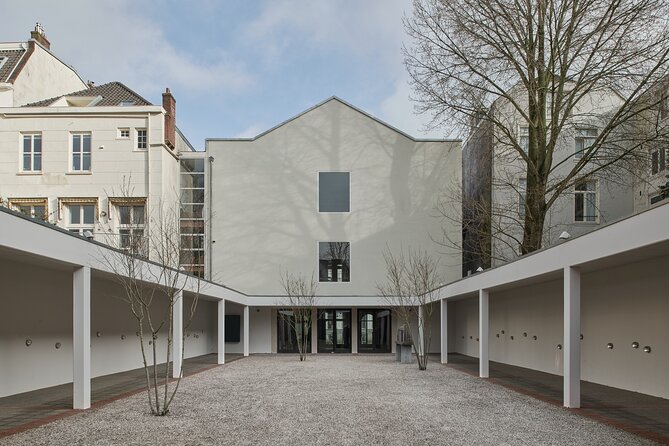
After the museum, continue to the Hollandsche Schouwburg. This former theatre was used by the occupying forces as an assembly point for Jewish people during the war. Tens of thousands were held there before being deported to concentration and extermination camps.
The Schouwburg is now a memorial site. Its wall of names is the emotional center of the visit. Reading the names makes the loss personal and immediate, especially after you have already seen the wider historical account at the museum.
Allow about 30 minutes here. That is enough time to take in the memorial, read names, and visit the exhibition about the Holocaust in the Netherlands. You may need less time if you want only a quiet moment of remembrance, or more if you read the information in detail.
The two stops work well together because they serve different purposes. The museum asks you to understand the history. The Schouwburg asks you to remember the people caught in it. I recommend visiting both rather than treating the memorial as an optional extra.
Why the Two-Site Format Works
The National Holocaust Museum and Hollandsche Schouwburg are not interchangeable. The museum is more educational and exhibition-focused. The Schouwburg is more direct and memorial-based. Visiting the pair gives you a fuller picture than spending the same amount of time in only one type of institution.
The museum also puts more attention on rescuers and collaborators than some Holocaust museums do. That does not make the experience less serious. It shows how the Holocaust depended on a mixture of state power, forced cooperation, resistance, silence, and individual choices.
That balance can be helpful for anyone trying to understand the Dutch experience rather than only the broad European story. You will encounter the facts of deportation and extermination, but you will also see how people responded under pressure. The inclusion of artistic material gives the museum another way to approach a subject that can be difficult to explain through documents alone.
At the same time, the museum may feel less straightforward if you prefer a simple room-by-room chronology. One account found the displays moving but poorly organized, with the audio not always matching the location of the objects. I would treat the visit as a quiet, self-directed experience rather than expecting a perfectly guided route.
A few more days out around Amsterdam worth weighing up
- Amsterdam Classic Saloon Boat Cruise with Drinks and Cheese
★ 5.0 · 31,825 reviews - Amsterdam Luxury Canal Cruise + Unlimited Drinks & Bites option
★ 5.0 · 30,518 reviews - Amsterdam: Heineken Experience Ticket
★ 4.6 · 30,055 reviews - Amsterdam: Rijksmuseum Entry Ticket
★ 4.7 · 25,535 reviews
The Audio Guide: Useful, But Bring Patience
An audio guide is included in the ticket price, which is a real advantage for a museum dealing with complex events. It can explain the background behind an item and help you understand how separate personal stories fit into the larger story of the Holocaust.
Use it as a support, not as a strict walking route. The audio may not always connect exactly to the display in front of you, and you may find yourself checking the room before starting the next section. That small inconvenience matters because this is a compact visit, and you do not want to spend your time figuring out the device.
English speakers will have the simplest experience. The product information identifies English as the offered language. If you need another language, confirm the current options before booking. The absence of Spanish audio was a clear problem for at least one family, even though the museum staff were described as friendly and helpful.
The museum staff are there to assist with practical questions, but they are not providing a guided tour. If you want a personal historian leading you from room to room, this is not that kind of activity. If you prefer to pause, reflect, and move at your own speed, the self-guided format may suit you better.
Is $24.03 Good Value?
At $24.03 per person, the ticket is reasonably priced for entry to two significant Amsterdam sites and an audio guide. The value comes from the combination rather than the length alone. The full visit lasts about 1 hour 15 minutes to 1 hour 45 minutes, depending on how carefully you read and how long you spend at the memorial.
You are paying for a focused historical experience, not a full-day attraction. The ticket does not include the Jewish Museum or the Portuguese Synagogue, so you should not assume it covers the whole Jewish Cultural Quarter. Those sites require separate access.
The price makes the most sense if you already intend to visit Amsterdam’s Jewish Cultural Quarter and want a structured way to understand the Holocaust in the Netherlands. It is less useful if you are looking for an entertaining or highly interactive museum, or if you have very little time and can visit only one site.
The ticket is also a practical choice for a tightly planned itinerary. Entry is arranged for a selected timeslot, and the average booking point is about 21 days ahead. That suggests you should not leave the decision until the last minute if a particular day or time matters to you.
Planning the Visit Without Rushing
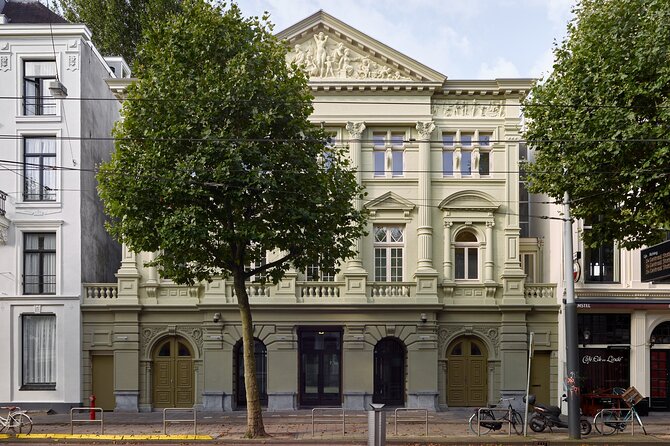
The experience is offered near public transportation, so you can reach the area without needing a car. The two locations should be treated as separate stops, even though they form one historical visit. Leave enough time between them to walk over, orient yourself, and avoid turning the memorial into a hurried final stop.
A sensible plan is to visit the National Holocaust Museum first, then go to the Hollandsche Schouwburg. The museum gives you the historical framework, while the memorial allows you to end with reflection. You can reverse the order, but the museum-first sequence makes the story easier to follow.
The maximum group size is 15 people. That is small enough to keep the setting relatively calm, though it does not turn the visit into a private tour. Since there is no live guide, your pace will depend mostly on how many displays you choose to read and how you use the audio device.
Service animals are allowed, and most people can participate. The subject matter is emotionally heavy, so think about your own timing. You may not want to place this visit immediately before a lighthearted activity. A quiet café stop or open time afterward would give you room to process what you have seen.
Free cancellation is available if you cancel at least 24 hours before the start time. Changes or cancellations made within 24 hours are not accepted for a refund, and the cut-off follows local Amsterdam time.
Who Will Get the Most From This Experience?
I would choose this experience if you want a serious account of the Holocaust told through Dutch places and personal stories. It suits adults, older children, students, and anyone with a strong interest in twentieth-century history, provided they are prepared for difficult subject matter.
It is also a meaningful choice for people with a personal or family connection to the Holocaust. The focus on names, letters, children, survivors, and family life can feel especially close to home. One account described the experience as deeply significant for children of survivors, which reflects how directly these sites can touch personal memory.
You should also consider it if you plan to visit the Anne Frank House. The two experiences address different places and stories, but together they can give you a broader sense of Jewish life, persecution, hiding, deportation, and survival in Amsterdam. You will need a separate ticket for Anne Frank House, and this experience does not provide access to it.
I would hesitate if you do not speak English and need a fully translated audio experience. I would also hesitate if you dislike self-guided museums or want staff to explain every display in person. The audio guide has some organizational limits, and the amount of written material can feel heavy if you try to read everything.
Should You Book the Amsterdam Holocaust Museum Ticket?
Book it if you want a concentrated and respectful visit to two important Amsterdam sites, with the convenience of timed admission and an included English audio guide. The former school, the rescued children, the Schouwburg, and the wall of names give the experience a clear local focus that complements larger Holocaust museums elsewhere in Europe.
Give yourself at least 1 hour 45 minutes if you want to visit both locations without rushing. Go for the history, the personal accounts, and the memorial atmosphere, not for entertainment. At $24.03, it offers solid value for a short but emotionally demanding visit, especially when you use both admissions.
Skip it only if the English-only format is a serious barrier, if you need a live guide, or if you already know that a heavy memorial experience would not fit your day. For most visitors seeking a thoughtful account of Amsterdam during the Holocaust, this is time well spent.
FAQ
How long does the experience take?
The National Holocaust Museum takes about 1 hour 15 minutes, and the Hollandsche Schouwburg takes about 30 minutes. The total visit usually lasts approximately 1 hour 15 minutes to 1 hour 45 minutes.
What does the ticket include?
The ticket includes entry to the National Holocaust Museum, entry to the Hollandsche Schouwburg National Holocaust Memorial, and an audio tour.
Is a guided tour included?
No. This is a self-guided visit with an audio guide. A live guided tour is not included.
Is the audio guide available in English?
Yes. The experience is offered in English, and the included audio guide is available in English. Spanish audio was not available according to one account, so check current language options if you need another language.
Does the ticket include the Jewish Museum or Portuguese Synagogue?
No. Access to the Jewish Museum and Portuguese Synagogue is not included.
Can I cancel for a full refund?
Yes, if you cancel at least 24 hours before the scheduled start time. Cancellations or changes made less than 24 hours before the start time are not accepted for a refund.
More Museums in Amsterdam
- Amsterdam’s Weirdest Museum: Believe It or Not!
★ 4.5 · 4,086 reviews - Amsterdam: Van Gogh Museum Ticket and City Canal Cruise
★ 4.6 · 3,899 reviews - Amsterdam: Van Gogh Museum Ticket & Canal Cruise
★ 4.5 · 3,304 reviews - Amsterdam: NEMO Science Museum Ticket
★ 4.4 · 2,979 reviews
Just added around Amsterdam
- From Amsterdam: The Hague Private Trip and Mauritshuis Entry★ 4.3 · 4 reviews
- VIP Private Full Day Tour of the Netherlands★ 4.8 · 6 reviews
- Amsterdam Old-West Vegan Food Tour with Local Guide★ 4.7 · 3 reviews
- Amsterdam: Van Gogh Museum Guided Tour★ 4.8 · 262 reviews
- Van Gogh Museum Private Guided Tour★ 4.2 · 10 reviews
- Vecht River: Full-day Cruise with Lunch★ 4.8 · 9 reviews
- Van Gogh and Rijksmusuem Tour: Small Group Tour with Entry★ 4.7 · 3 reviews
- Amsterdam: Van Gogh Museum Ticket & Guided Tour★ 4.4 · 187 reviews
Museums, compared.


Moco Museum Amsterdam Entrance Tickets with Banksy & More
Read our review →





Browse the lists this tour appears in