
Reviewed · HISTORICAL TOURS
Amsterdam: Jewish Quarter and History Guided Tour
Amsterdam’s Jewish Quarter is not a museum behind glass. It is a real neighborhood where homes, synagogues, offices, and memorials reveal how Jewish life changed under Nazi occupation. This two-hour walk connects those places to the daily choices, fears, and losses of Amsterdam’s Jewish community during World War II.
I like the route’s human scale: the guide explains what happened in specific buildings instead of giving you a string of dates. I also like the small-group and private options, since guides such as James, Aaron, Jyry, and Marsha have been praised for clear, careful answers to difficult questions. The main drawback is pace. There is a lot to cover, and one stop may begin before you have fully absorbed the last one.
Key points at a glance
- Start beside the Amstel River: Begin with the setting of Jewish Amsterdam and the Nazi occupation from 1940 to 1945.
- See the quarter through its landmarks: The Portuguese Synagogue, Jewish Historical Museum, and former Jewish Council headquarters give the story a physical shape.
- Pause at the Dokwerker and Auschwitz Monument: These memorials help explain resistance, deportation, memory, and loss.
- Learn about ordinary life under occupation: The focus is not only on major events, but also on how restrictions affected work, family life, and movement.
- Finish near Anne Frank House: The walk places Anne Frank’s diary within the larger story of Amsterdam’s Jewish community.
- Choose a private or small-group format: The $23 price is especially strong for a shared walk, while a private booking gives you more room for questions.
Why this two-hour walk matters
Amsterdam is easy to admire from a canal boat or a stroll through the Jordaan. Its Jewish Quarter requires more attention. Many of the important places are modest from the outside, and without context, you could pass them without understanding what took place there.
That is the real value of this tour. You are not simply shown a synagogue or a monument. You are told how each place fits into the life of the city before, during, and after the German occupation. The guide’s job is to turn a quiet street and an ordinary facade into part of a connected story.
The tour focuses on the years 1940 through 1945, but it also looks at Jewish life before the war. That broader view matters. The community was not defined only by persecution. You hear about its institutions, religious life, neighborhoods, and place in Amsterdam before the Nazi period destroyed so much of it.
The subject is serious, and the walk does not try to soften it with tourist gloss. Guides have been praised for presenting the material with care and for handling personal or sensitive questions calmly. That makes this a good choice if you want a serious history experience rather than a quick photo stop.
More History Tours in Amsterdam
- Amsterdam Food and Cultural Tour with Tastings
★ 5.0 · 2,442 reviews - Amsterdam: Haunted History and Ghost Walking Tour
★ 4.5 · 488 reviews - Amsterdam High-End Dutch Food & History Tour – Up to 8 guests
★ 5.0 · 482 reviews
Beginning beside the Amstel River
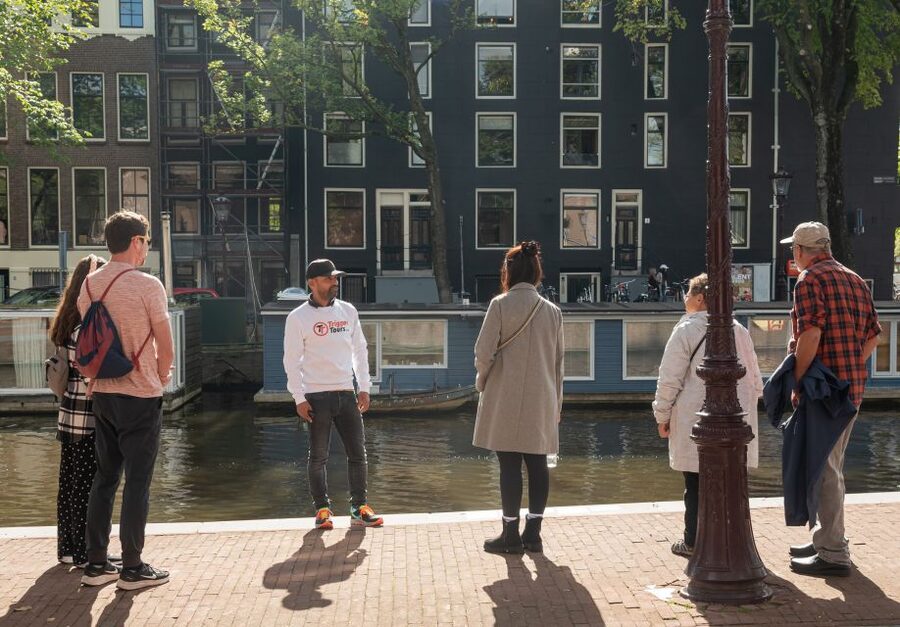
The exact meeting point can vary with the option you book, so check your confirmation carefully. The walk begins by the Amstel River, a useful starting place because it puts the Jewish Quarter into Amsterdam’s wider city setting.
Your guide introduces the Nazi occupation of the Netherlands and explains how it affected Amsterdam, with special attention to Jewish residents. This opening is important because it gives you the basic timeline before you move among the sites. You can then follow the later stops without trying to sort out the history as you walk.
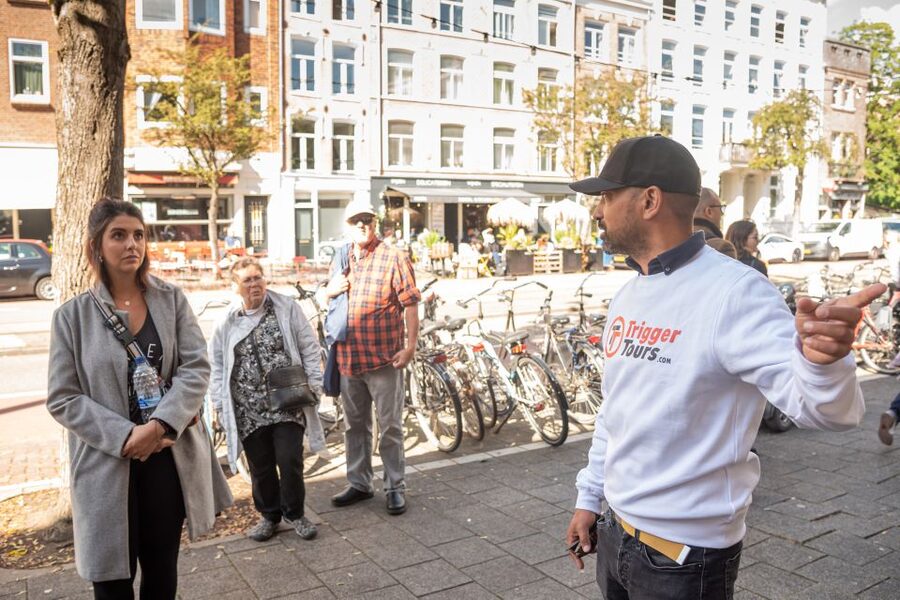
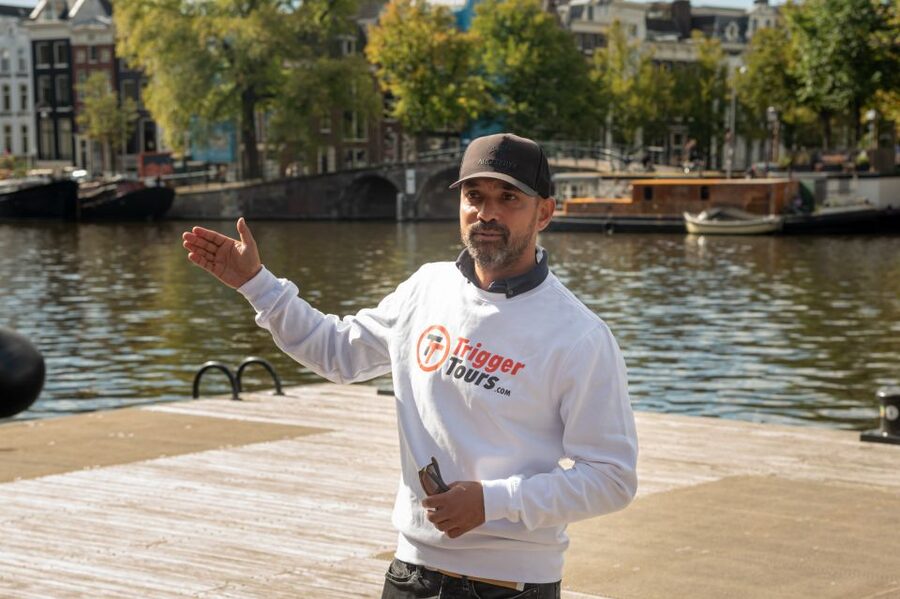
A live guide also lets you ask questions at the moment they arise. That is useful here, since the tour deals with subjects that can be difficult to understand from a short museum label. The guides who receive the strongest praise, including James, Aaron, Jyry, and Marsha, are described as clear, patient, and willing to adjust their explanations to the group.
If you choose a shared group, expect the experience to depend partly on group size and the questions asked along the way. Small groups are likely to feel more personal. A private option costs more than the basic $23 shared price, but it can make sense if you have family questions, a particular interest in Dutch Jewish history, or simply prefer a quieter pace.
The Portuguese Synagogue and Jewish Amsterdam before the war
The Portuguese Synagogue is one of the route’s major landmarks. Here, the guide can move the story beyond World War II and show you the long presence of Jewish communities in Amsterdam.
The point is not just to admire the building. The synagogue helps you understand that Jewish Amsterdam had its own institutions, traditions, and daily rhythms long before the occupation. That context gives the later wartime story more weight. You see what was put at risk, not just what was lost.
The tour is primarily a walking experience, so you should expect to view important places from the route rather than treat the walk as a series of lengthy indoor visits. The Portuguese Synagogue, Jewish Historical Museum, and other sites are used as points for explanation and reflection.
This distinction matters if you are looking for museum entry or an extended visit inside a synagogue. Food, drinks, and admission to other attractions are not included. The $23 pays for the guided walk and the guide, not a package of indoor tickets.
The Jewish Historical Museum and the shape of a community
The Jewish Historical Museum adds another layer to the walk. Its presence points to the institutions that preserve and explain Jewish life in the Netherlands.
A good guide uses this part of the route to connect buildings and people. You may hear about the role of religious and civic organizations, and about how a community functioned before restrictions took hold. This helps you see the quarter as a lived neighborhood, not merely a wartime memorial zone.
The best part of this approach is that you can ask for clarification. Several guides have been praised for answering questions on personal and sensitive subjects without losing the thread of the tour. The material is factual and sober, but it is not delivered as a lifeless lecture.
You should allow yourself time to look around at each stop. One piece of practical advice is to avoid treating the walk like a race from one pin on a map to the next. The route covers a lot in two hours, and taking a photograph or reading a plaque can mean missing part of the next explanation. Stay close enough to hear, then take extra pictures after the guide finishes speaking.
A few more days out around Amsterdam worth weighing up
- Amsterdam: Van Gogh Museum Ticket
★ 4.7 · 52,054 reviews - Amsterdam Classic Saloon Boat Cruise with Drinks and Cheese
★ 5.0 · 31,825 reviews - Amsterdam Luxury Canal Cruise + Unlimited Drinks & Bites option
★ 5.0 · 30,518 reviews - Amsterdam: Heineken Experience Ticket
★ 4.6 · 30,055 reviews
The Jewish Council headquarters and life under occupation
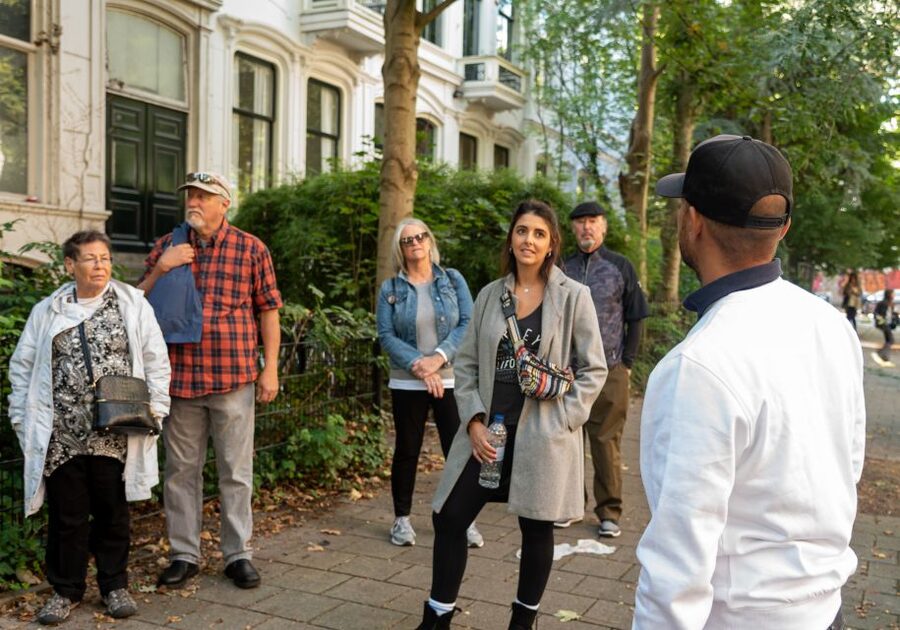
The former Headquarters of the Jewish Council is one of the most important stops because it raises hard questions about administration, pressure, and survival under Nazi rule.
The guide explains how the council fit into the occupation and how decisions made under coercion affected Jewish residents. This is a part of the story that benefits greatly from a live explanation. A building alone cannot show the fear, uncertainty, and impossible choices faced by people inside the system.
The tour also addresses day-to-day life during the occupation. You learn how the Jewish community was affected by Nazi rules and how Dutch people behaved toward Jewish residents. That last point is especially useful because it avoids reducing the story to a simple division between victims and villains. The guide presents the period as a difficult history of persecution, cooperation, resistance, fear, and individual action.
Expect the tone to remain serious. This is not a stop for light sightseeing, but it is one of the places where the walk feels most useful. It takes a complicated institution and connects it to the people whose lives were controlled through it.
The Dokwerker and the meaning of public memory
The Dokwerker is a key memorial on the route. Your guide gives meaning to the monument and explains its place in Amsterdam’s memory of the war.
A monument can be easy to glance at and leave behind. The guide slows that process down by explaining what the sculpture represents and why it matters. This is one reason I would not recommend seeing the Jewish Quarter entirely on your own if your goal is understanding rather than simply locating landmarks.
The Dokwerker also provides a chance to consider Amsterdam’s response to persecution. The walk does not treat monuments as decoration. Instead, each one becomes a prompt to think about protest, courage, suffering, and the way later generations remember the war.
The pace can be brisk here. If you want time to study the monument or take photographs, listen to the explanation first and return to the details before the group moves on. A private guide may be able to give you more flexibility, though the exact pace still depends on the booked format.
The Auschwitz Monument and the weight of loss
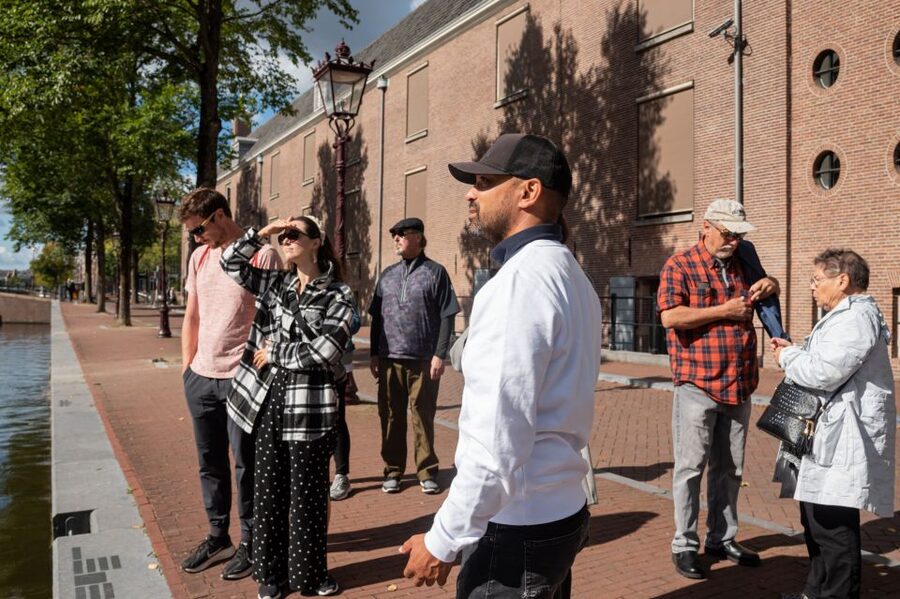
The Auschwitz Monument brings the story to its darkest point. Its purpose is explained as part of the memory of those murdered in the Holocaust, and the stop gives the tour a quiet, reflective center.
This is not a place where a long speech is needed. The value comes from understanding what the memorial represents and seeing it within the neighborhood that once held a living Jewish community. The guide helps connect the monument to the earlier stops, so the story moves from community life to persecution, deportation, and remembrance.
Several descriptions of the guiding style emphasize sensitivity and impartiality. That is important here. You want enough historical detail to understand the event, but you also need a guide who knows when the subject calls for restraint.
The exact endpoint may vary by booking. The route description places the finish in front of Anne Frank House, while one account describes ending at the Holocaust memorial. Confirm the meeting and finishing point for your chosen departure, especially if you have a timed visit or another activity afterward.
Ending near Anne Frank House
The walk finishes near Anne Frank House, where the guide explains Anne’s diary, its publication by her father Otto Frank, and its worldwide fame.
This is a sensible ending because Anne Frank is often the first name people associate with Amsterdam during the Holocaust. The walk helps you place her story inside the larger experience of Jewish residents across the city. Anne’s hiding place was important, but it was not the whole story of Jewish Amsterdam.
Do not assume the walking tour includes admission to Anne Frank House. The listed inclusions are the walk and guide, while food, drinks, and other admissions are not included. If you want to visit the house, arrange that separately and do not count on finding a ticket at the end of the walk.
Ending here also gives you a useful next step. You can continue with Anne Frank’s story if you have a ticket, or simply use the tour’s wider context to understand the significance of the house from outside.
What the $23 price delivers

At $23 per person, this is a strong value for a two-hour guided walk, particularly if you book the shared option. You are paying for interpretation, route planning, and the chance to ask questions at places that can otherwise seem disconnected.
The price is less about the number of sights than the quality of the links between them. You could walk past the Portuguese Synagogue, Jewish Historical Museum, Dokwerker, and Auschwitz Monument on your own, but you would miss much of the meaning behind the buildings and memorials.
The value improves if you are new to Amsterdam’s Jewish history or have limited time in the city. Two hours is long enough to build a clear framework without taking up an entire day. It also leaves room to visit a museum or revisit a few of the stops independently.
Private and small-group formats offer a different kind of value. If the private price fits your budget, you gain more room for conversation and personal questions. A shared walk is the better bargain, and the private format is best viewed as a choice for flexibility rather than a necessity.
Free cancellation up to 24 hours before the tour and reserve-now, pay-later booking make it easier to fit the walk into a changing Amsterdam schedule. Starting times vary, so check availability before planning your day around it.
Language, pace, and the right kind of preparation
The tour is offered in English and Spanish. You should choose the language in which you can comfortably follow a serious historical discussion, since much of the value comes from the guide’s explanations rather than visual spectacle.
Wear comfortable shoes. The experience lasts two hours and takes place on foot, with repeated stops at streets, buildings, and memorials. Amsterdam’s weather can change quickly, so a rain layer is a sensible addition, though the tour information does not promise shelter or indoor time.
I would also prepare yourself for a thoughtful, sometimes painful subject. This is not a cheerful city walk with a brief wartime aside. It deals directly with Nazi occupation, persecution, Jewish life under threat, and the Holocaust.
Bring questions, but give the guide room to tell the story in order. The guides are praised for patience, clarity, and personal attention, especially in smaller groups. You will get more from the tour if you listen closely at the first stops, since later explanations build on that opening context.
Who should book this Amsterdam Jewish Quarter tour
I recommend this walk if you want to understand Amsterdam beyond canals and famous paintings. It suits history-minded visitors, people exploring Jewish heritage, and anyone planning to visit Anne Frank House who wants a broader setting first.
It is also a good choice for families with older children or teenagers who can manage a serious subject for two hours. The guide-led format gives them a clear story to follow and a chance to ask questions rather than absorb the material only from a book or display.
If you have already spent a great deal of time studying Amsterdam during the occupation, you may find the route’s pace or introductory material less useful. One four-star assessment felt the tour could have been shorter, while another wished for more time at individual stops. That tells you what to expect: broad coverage, solid context, and limited time for lingering.
I would book the small-group or private version if conversation matters most to you. If price is the priority, the $23 shared walk gives you the essential route and explanation at a reasonable cost.
Final decision: book it for context, not just landmarks
Book this tour if you want a clear, human account of Jewish Amsterdam during the Nazi occupation, anchored by real streets and memorials. The strongest part is the guiding. James, Aaron, Jyry, Marsha, Joshua, and other guides have been praised for clear explanations, careful pacing, and respectful answers to difficult questions.
Skip it if you want a light sightseeing walk or a tour built around long indoor visits. The subject is grave, the route can feel fast, and admission to Anne Frank House or museums is not included.
For most visitors interested in Amsterdam’s wartime past, the $23 price is easy to justify. I would schedule it early in your stay, then use what you learn to revisit the Jewish Quarter, Anne Frank House, or a Holocaust museum with a better sense of how the pieces fit together.
FAQ
How long is the Amsterdam Jewish Quarter tour?
The guided walking tour lasts two hours.
How much does the tour cost?
The listed price is $23 per person.
Is the tour private or shared?
You can book a private tour or choose a small-group option, depending on availability.
Which languages are available?
Live guiding is available in English and Spanish.
Where does the tour begin?
The walk begins by the Amstel River, but the exact meeting point may vary depending on the option you book.
Which landmarks are included on the route?
The route includes the Portuguese Synagogue, Jewish Historical Museum, Headquarters of the Jewish Council, Dokwerker, Auschwitz Monument, and Anne Frank House area.
Does the tour include admission to Anne Frank House or museums?
No. The inclusions are the walking tour and guide. Food, drinks, and admission tickets are not included.
Can I cancel the tour and receive a refund?
You can cancel up to 24 hours in advance for a full refund. You can also reserve now and pay later.
More History Walks around Amsterdam
- Amsterdam: Historic City Sightseeing Canal Cruise
★ 4.5 · 444 reviews - Anne Frank and the Jewish History of Amsterdam Private Tour
★ 5.0 · 307 reviews - Amsterdam: 3-Course Meal in Historic 1st Class Waiting Rooms
★ 4.5 · 292 reviews - Amsterdam: Highlights & History Walking Tour
★ 4.8 · 266 reviews
Just added around Amsterdam
- From Amsterdam: The Hague Private Trip and Mauritshuis Entry★ 4.3 · 4 reviews
- VIP Private Full Day Tour of the Netherlands★ 4.8 · 6 reviews
- Amsterdam Old-West Vegan Food Tour with Local Guide★ 4.7 · 3 reviews
- Vecht River: Full-day Cruise with Lunch★ 4.8 · 9 reviews
- Amsterdam: Van Gogh Museum Guided Tour★ 4.8 · 262 reviews
- Van Gogh Museum Private Guided Tour★ 4.2 · 10 reviews
- Van Gogh and Rijksmusuem Tour: Small Group Tour with Entry★ 4.7 · 3 reviews
- Amsterdam: Van Gogh Museum Ticket & Guided Tour★ 4.4 · 187 reviews
Historical Tours, compared.
Amsterdam Food and Cultural Tour with Tastings
Read our review →
Kinderdijk UNESCO World Heritage Entry Ticket
Read our review →
Hop-on Hop-off Old-Fashioned Heritage Tram Tour
Read our review →


Amsterdam High-End Dutch Food & History Tour – Up to 8 guests
Read our review →
Cruise through the Historic City Center with Guide
Read our review →
Browse the lists this tour appears in