
Reviewed · CITY TOURS
Amsterdam City Center Guided Walking Tour Semi-Private 12ppl Max
Amsterdam’s story comes alive on foot here, from its beginnings as a small fishing village to its canals, sea dikes, trading houses, and grand Golden Age mansions. In 2.5 hours, you’ll cover a surprisingly large slice of the old center, including places many first-time visitors might otherwise pass without understanding.
I like the small group of no more than 12 and the route’s wide range, from the medieval Schreierstoren and Chinatown area to Begijnhof and the Anne Frank House exterior. I also like that guides such as Josje B. and Hanneke bring a strong local angle, with Hanneke described as a born-and-raised Amsterdammer.
The trade-off is pace. Twenty stops in 150 minutes means many are short photo and explanation points rather than inside visits. The tour also requires steady walking over cobblestones and is not suited to people with walking disabilities or wheelchair users.
Key Points at a Glance
- A broad old-center route: Cover the Basilica of Saint Nicholas, Nieuwmarkt, the Waag, Rembrandt’s former home, Begijnhof, Dam Square, the canals, and more.
- A genuinely small group: The maximum is 12 people, with some departures potentially much smaller.
- Local stories matter here: Learn how Amsterdam grew from watery beginnings, how sea dikes shaped streets, and why houses became so narrow.
- Mostly an exterior tour: You will look inside some courtyards, but admission to museums, churches, towers, and other attractions is not included.
- Useful for the rest of your stay: Your guide can point out neighborhoods and sights worth returning to after the walk.
- A practical finish: The route ends at Het Papeneiland, a historic brown café on the Prinsengracht.
Why This Amsterdam Walk Works So Well
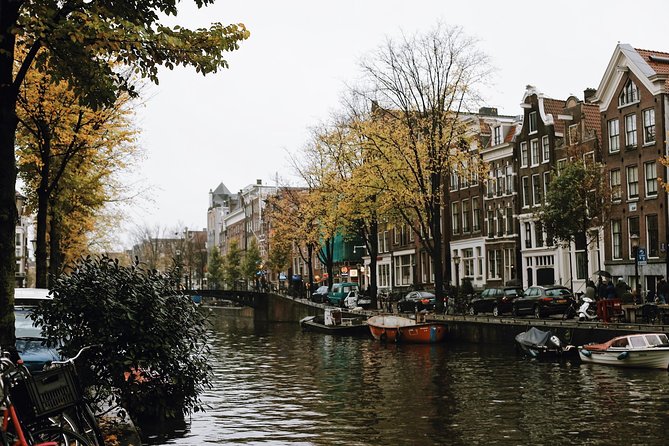
I see this as a city-orientation tour with real historical substance. It does not focus on one museum or one neighborhood. Instead, it connects Amsterdam’s key themes: water control, religious change, trade, art, architecture, and daily life.
That range is valuable early in a visit. You’ll learn why the streets bend, why the canals were built, why some homes are pencil-thin, and how Amsterdam’s wealth shaped its houses and public buildings. Later, when you pass a canal mansion or enter the Jordaan, the city should make more sense.
The group limit is another real advantage. A guide can answer questions more easily with 12 people than with a large crowd. You’ll also have more room to stop for photos without losing the group. On one reported departure, Josje B. led only the booked party, creating an especially personal walk. That smaller format cannot be guaranteed, but the 12-person ceiling is clear.
You should also set your expectations correctly. This is not a series of full attraction visits. The itinerary includes many stops, but most last only five minutes. Admission is not included at the Weeping Tower, Oost-Indisch Huis, Rembrandt House, Begijnhof, the Anne Frank House, and several other locations. The point is to understand the setting and make a note of places you may want to visit later.
At $59.28 per person, the price is reasonable if you value a private-feeling group, a professional guide, and a carefully connected route. It is less compelling if you mainly want museum entry or a relaxed stroll with long pauses. You are paying for interpretation and orientation, not tickets.
More City Tours in Amsterdam
- Amsterdam: 75 Minute City Canal Cruise with Audio Guide
★ 4.4 · 17,501 reviews - Amsterdam: City Centre Canal Cruise
★ 4.2 · 12,827 reviews - Amsterdam: Smoke and Lounge City Boat Cruise
★ 4.7 · 8,572 reviews
Starting at the Basilica of Saint Nicholas
Meet at the Basilica of Saint Nicholas on Prins Hendrikkade, a central location near Amsterdam’s main station area. The basilica is a fitting starting point because it introduces one of the city’s long-running tensions: public religious change.
Built in the late 19th century, it became Amsterdam’s primary Roman Catholic church after centuries when Catholic worship faced prohibition. Its architecture mixes several styles, which gives your guide an opening to explain how the city’s religious rules changed over time.
You have about 10 minutes here. The ticket is free, but this tour does not promise an extended interior visit. Bring your camera, but pay closer attention to the explanation than to trying to inspect every detail.
Medieval Towers, Sea Dikes, and Chinatown Streets
The next stretch brings you to the Schreierstoren, often called the Weeping Tower. This medieval structure is tied to the women who said goodbye to loved ones leaving by ship. The story gives human scale to Amsterdam’s maritime past, which can otherwise feel like a string of dates and trading terms.
From there, you walk along Zeedijk, one of Amsterdam’s oldest streets. The name points to its original purpose as a sea dike holding back the waters of the IJ. The street also leads through the city’s Chinatown area, adding another layer to the old center’s changing identity.
At the Kolksluis, look for the picturesque lock bridge. This is one of the tour’s better photo pauses because it links engineering, water management, and Amsterdam’s familiar bridge-and-canal views in one place.
You then reach Nieuwmarkt, a square that has served trade and social life since the 17th century. Its location just inside the old city gate made it useful for shoppers and traders. The stop is listed at only five minutes, so expect a quick introduction rather than time to browse the market or linger at a café.
The Waag and Amsterdam’s Trading Past
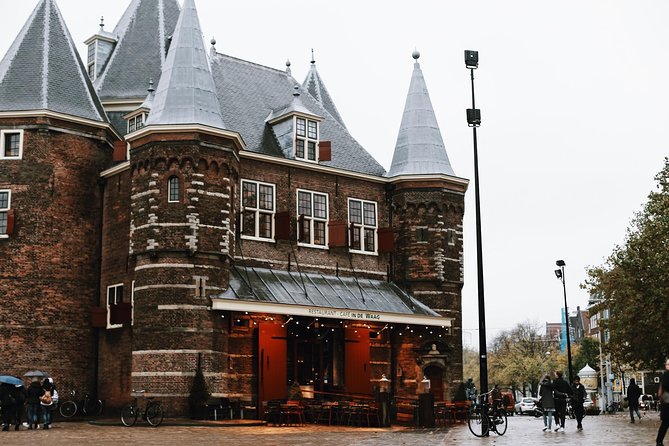
At Nieuwmarkt, you’ll see De Waag, one of Amsterdam’s oldest surviving non-religious buildings. It began as a city gate and part of the defensive walls, then took on several roles, including guildhall, museum, and fire station.
This is a strong example of how Amsterdam’s older buildings were reused as the city changed. A good guide can help you read the building as more than a striking façade. Its location, shape, and former functions reveal how civic life worked inside the old walls.
The route then moves toward Trippenhuis and Klein Trippenhuis. The contrast is the point. Trippenhuis is Amsterdam’s widest home, stretching about 22 meters, while the Kleine Trippenhuis opposite is among the city’s narrowest.
Amsterdam’s narrow homes were not simply a style choice. High land taxes encouraged owners to build upward on tight plots. You’ll see this idea repeated in several parts of the tour, so the city’s famous thin houses become part of a bigger economic story.
More Private Tours in Amsterdam
- Rijksmuseum Amsterdam Small-Group Tour with Private Upgrade
★ 4.5 · 1,547 reviews - Van Gogh Museum Tour Reserved Entry Semi Private
★ 5.0 · 1,437 reviews - Private Amsterdam Red Light District and Coffee Shop Tour
★ 5.0 · 763 reviews - Anne Frank and Jewish Quarter Amsterdam Private Walking Tour
★ 5.0 · 684 reviews
Courtyards, Churches, and Rembrandt’s Amsterdam
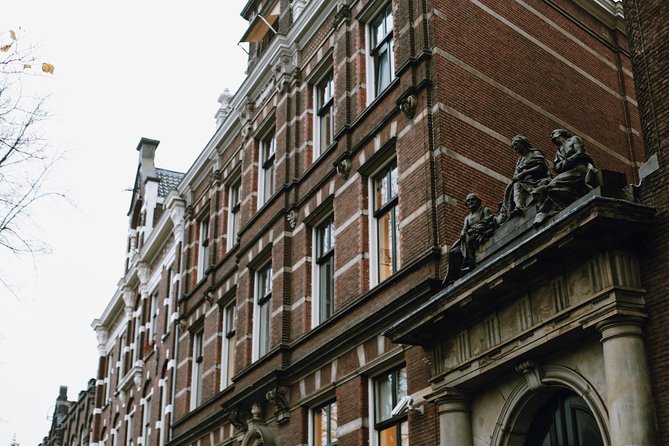
At the Oost-Indisch Huis, the route reaches the former headquarters of the Dutch East India Company. You’ll step into its courtyard and hear about the company’s role as an early multinational business. This stop adds trade and empire to the tour’s broader picture of Amsterdam’s wealth.
The walk continues past Zuiderkerk, Amsterdam’s first purpose-built Protestant church. Its tower is a familiar city marker, while the church’s design reflects the needs of a changing religious community. The tour does not include admission, so treat this as an exterior stop unless your guide confirms otherwise.
Next comes Museum Het Rembrandthuis, where Rembrandt lived and worked from 1639 to 1656. The museum now holds his etchings and paintings by artists from his circle and time. You will pass the building rather than take a museum tour, which makes this a useful place to mark for a separate visit.
The National Opera and Ballet, part of the Stopera complex, shifts the story into modern Amsterdam. The building also houses city hall, and its long planning process took at least 60 years. The contrast with the medieval tower and 17th-century homes is useful: Amsterdam is not a preserved stage set, but a working city built in layers.
A Canal House at Three Canals and the Quiet Begijnhof
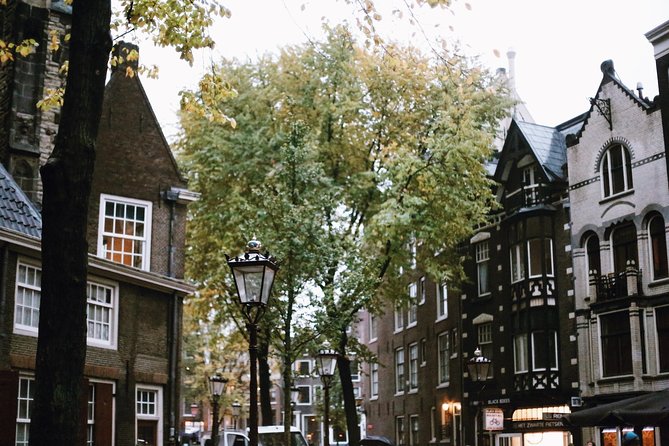
Huis Aan De Drie Grachten is one of the route’s more unusual architectural stops. This 17th-century canal house sits where three canals meet, with façades facing in three directions. It is a small detail, but it rewards anyone who enjoys Amsterdam’s odd corners and smart use of limited space.
Begijnhof offers a different mood. This enclosed courtyard once housed Beguines, unmarried women who lived together under vows of chastity. The group of homes surrounds a secluded garden, and two churches are located on the grounds.
You should keep your voice low here and respect the residential setting. Begijnhof is not simply a photogenic courtyard. It remains a place with a quieter character than the city streets outside, and the short stop gives you a taste of that contrast.
Because the tour moves on quickly, you may want to return later if you hope to inspect the courtyard, churches, or houses in detail. This is a recurring pattern on the route: the walk introduces places, then you decide where to spend more time.
Dam Square and the Golden Bend
Dam Square is one of Amsterdam’s best-known public spaces, framed by the Royal Palace, the Nieuwe Kerk, and the National Monument. It can feel crowded and event-filled, but it remains central to the city’s story and civic life.
The stop is brief, about five minutes. You will get the essential orientation and a chance for photos, not a full explanation of every building. If the square is being used for a national celebration, the route may change. The company says an alternative route will still cover the highlights, but refunds or discounts are not provided for that adjustment.
From Dam Square, the tour reaches the Herengracht and its Golden Bend. This section is lined with some of the city’s richest and most ornate canal mansions from the Dutch Golden Age. Here, I would slow down mentally even if the group keeps moving. Look at the width of the homes, the gables, and the way façades advertise status without needing a large street frontage.
The Anne Frank House Exterior and Jordaan Details
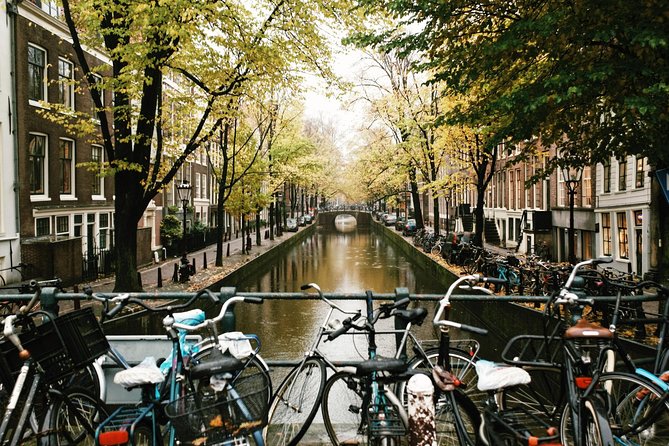
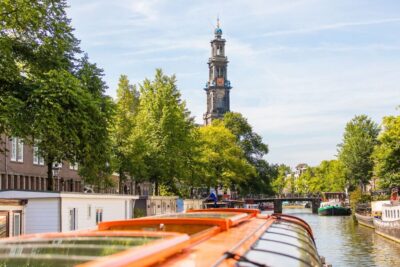
The walk pauses outside the Anne Frank House, where Anne Frank and her family hid during World War II. The nearby Westerkerk has Amsterdam’s tallest church tower, creating one of the city’s most recognizable pairings of canal house and church spire.
You will not enter the Anne Frank House on this tour, and no admission is included. That matters because tickets for the museum require separate planning. This stop helps you understand the location, but it does not replace a museum visit.
At Bloemgracht, look up for gable stones and carved symbols on the façades. These details can show former trades, religious references, or allegories. Amsterdam rewards people who look above street level, and a guide’s explanation makes these small carvings easier to notice.
The route then refers to Rembrandt Square and its bronze representation of The Night Watch. The sculpture was installed for the artist’s 400th birthday in 2006. This is a quick public-art stop, not a visit to the painting itself.
Noorderkerk and the Final Stop at Papeneiland
Noorderkerk was built in the 17th century for the Jordaan district. Its cross-shaped floor plan reflects the changing ideals of Protestant worship. Again, you should expect an exterior view and a short explanation, not an included church visit.
The tour ends at Het Papeneiland on Prinsengracht. This brown café dates from 1642 and is known for its apple pie. The finish is well chosen: after a long walk, you are left at a place where you can stop for a drink or food, though the tour price does not include anything there.
The end point is not the starting point, so plan your next move. You can continue exploring the canal belt or arrange your own taxi or Uber. Hotel pickup and drop-off are not included.
Timing, Walking Effort, and What to Bring
The tour lasts about 2.5 hours and runs in rain or shine. Amsterdam’s old center is easy to explore on foot, but cobblestones, bridges, and frequent stops still require moderate physical fitness.
Wear comfortable shoes. Bring water, an umbrella if rain is possible, and a hat in summer. Large bags and suitcases are not allowed, and increased security at some attractions means certain buildings cannot be entered from the inside.
The meeting point is near public transportation, but you should arrive with enough time to find the Basilica of Saint Nicholas. You must provide a mobile phone number with country code when booking, which allows the operator to contact you about the meeting or route.
Children must be accompanied by an adult. The group needs at least two people to operate. If that minimum is not reached, you will be offered another date or a full refund.
Free cancellation is available up to 24 hours before the start time. Cancellations or changes made inside that window are not refunded or accepted.
Who Will Get the Most from This Tour?
I would choose this walk for a first or second day in Amsterdam. It gives you a mental map of the old center and points out places you may wish to revisit, including the Rembrandt House, Begijnhof, Westerkerk, and the canal districts.
It also suits you if you prefer history explained through streets and buildings rather than a lecture indoors. The route keeps moving, and the local perspective can make ordinary corners more memorable. Hanneke’s local background and Josje B.’s detailed approach suggest that the guide can shape the experience around questions and interests, though guide assignment is not guaranteed.
You may want another option if you have limited mobility, dislike walking in poor weather, or want long visits inside major sights. You should also compare the price carefully if your main goal is museum admission. This tour gives you no included entry tickets and only short stops at most buildings.
Should You Book the Amsterdam City Center Walk?
Book it if you want a compact, small-group introduction to Amsterdam’s old center, with plenty of local stories and a route that reaches well beyond the usual canal photo stops. The best value comes from the guide’s explanations, the 12-person maximum, and the practical suggestions you can use for the rest of your stay.
Skip it if you want a slow walk, wheelchair access, or a ticketed tour of the Anne Frank House, Rembrandt House, churches, and other interiors. For most able walkers visiting Amsterdam for the first time, this is a strong orientation tour. Just wear good shoes, keep your bag small, and think of the many stops as a preview for places you may return to on your own.
FAQ
How long does the walking tour last?
The tour lasts approximately 2.5 hours, or 150 minutes.
What is the maximum group size?
The tour allows a maximum of 12 people.
Is the tour offered in English?
Yes. The tour is offered in English.
Where does the tour begin?
The meeting point is the Basilica of Saint Nicholas at Prins Hendrikkade 73, 1012 AE Amsterdam.
Where does the tour end?
The tour ends at Het Papeneiland at Prinsengracht 2, 1015 DV Amsterdam.
Is hotel pickup included?
No. Hotel pickup and drop-off are not included. Uber or a taxi is recommended for those arrangements.
Are entrance tickets included?
Most stops are exterior visits, and admission tickets are not included for locations such as the Weeping Tower, Rembrandt House, Begijnhof, the Anne Frank House, and several churches or historic buildings.
Is the tour suitable for wheelchair users?
No. The tour is not recommended for people with walking disabilities or those using a wheelchair.
What should I bring?
Wear comfortable shoes and bring a bottle of water. An umbrella is recommended in case of rain, and a hat is useful in summer. Large bags and suitcases are not allowed.
Can I cancel for a full refund?
Yes, if you cancel at least 24 hours before the experience start time. Cancellations made less than 24 hours before the start are not refunded.
More Walking Tours in Amsterdam
- Anne Frank’s Story – Guided Walking Tour through Amsterdam
★ 5.0 · 11,619 reviews - Amsterdam: Life of Anne Frank and World War II Walking Tour
★ 4.8 · 10,467 reviews - Absolutely Amsterdam – the Essential Introductory Walking Tour
★ 5.0 · 3,629 reviews - Amsterdam: Anne Frank Guided Small Group Walking Tour
★ 4.8 · 2,722 reviews
Just added around Amsterdam
- From Amsterdam: The Hague Private Trip and Mauritshuis Entry★ 4.3 · 4 reviews
- VIP Private Full Day Tour of the Netherlands★ 4.8 · 6 reviews
- Amsterdam Old-West Vegan Food Tour with Local Guide★ 4.7 · 3 reviews
- Amsterdam: Van Gogh Museum Guided Tour★ 4.8 · 262 reviews
- Van Gogh Museum Private Guided Tour★ 4.2 · 10 reviews
- Vecht River: Full-day Cruise with Lunch★ 4.8 · 9 reviews
- Van Gogh and Rijksmusuem Tour: Small Group Tour with Entry★ 4.7 · 3 reviews
- Amsterdam: Van Gogh Museum Ticket & Guided Tour★ 4.4 · 187 reviews
City Tours, compared.
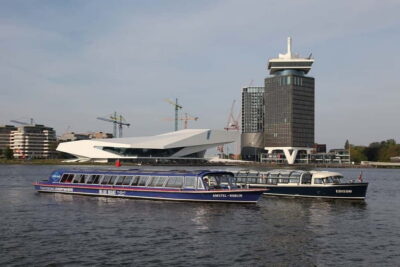
75 Minute City Canal Cruise with Audio Guide
Read our review →


City Canal Cruise and Heineken Experience Ticket
Read our review →

Browse the lists this tour appears in