
Reviewed · CITY TOURS
Delft: City Center Walking Tour
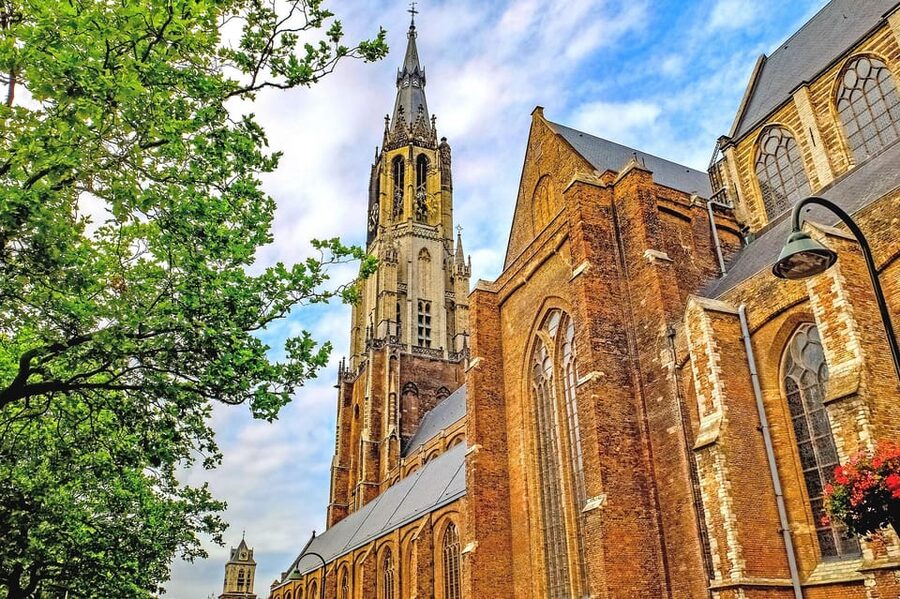
Delft’s lopsided Old Church is the star of this walk, but it is not the only reason to go. In 90 minutes, you move from the royal Market Square to the Prinsenhof, with stories about Willem van Oranje, Johannes Vermeer, Delft Blue pottery, and the city’s canals along the way. I like the tour’s two strongest features: its compact route gives you a useful first look at central Delft, and guides such as Frans and Astride turn architecture into human stories.
I also like the relaxed pace and the chance to ask questions. Frans has been praised for using questions of his own to keep people involved, then offering restaurant and sightseeing ideas afterward. The tradeoff is simple: this is an introduction, not a full city tour. One participant felt the route covered too little ground, and on a hot day you may wish for more time in the shade.
Key points to know before you book
- The tilted Old Church gives the walk its best visual punch: You finish near one of Delft’s most recognizable oddities and learn why it is off balance.
- The route links Delft’s biggest stories: Royal burials, Willem van Oranje, Vermeer, pottery, civic buildings, and canal-side streets all fit into one short walk.
- Frans and Astride are named guides praised for clear, engaging tours: Guide assignments can vary, but Do DELFT offers Dutch, English, and German.
- The tour is built for orientation, not museum visits: You see and discuss major places, but the $24 fee covers guiding services rather than admission to museums.
- The 1.5-hour length suits a first visit: You get a useful framework for exploring alone afterward without giving up half a day.
- Access is relatively easy: Wheelchairs and dogs are allowed, though Delft’s old streets and canals may still require ordinary care.
Why Delft makes a strong first walking tour
Delft is easy to underestimate. It sits between better-known Dutch destinations, yet its compact old center packs together royal history, canal scenery, painting, pottery, and a strong sense of place. This walk gives you a way to connect those subjects instead of seeing them as unrelated stops.
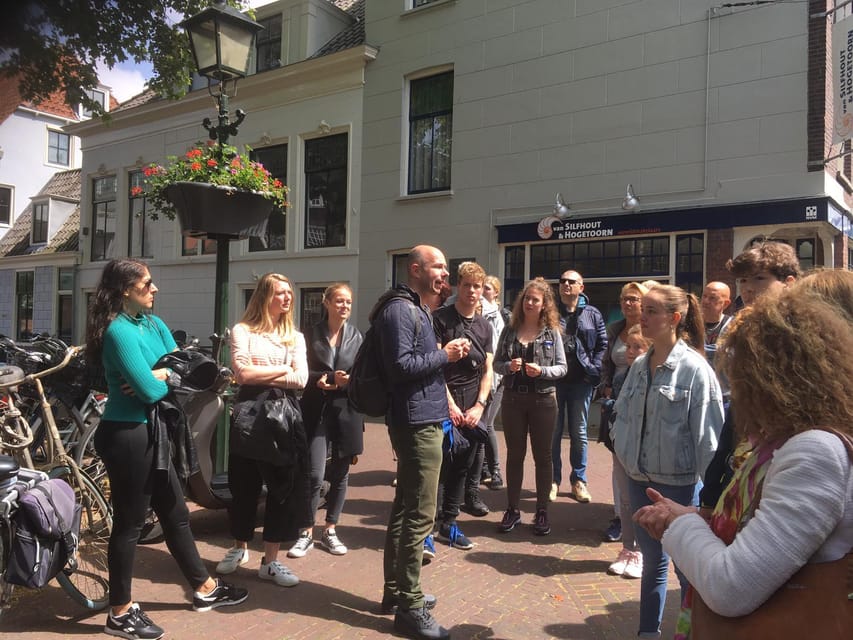
The meeting point is in front of the New Church on the Market Square. That is a sensible starting place because the square is one of Delft’s main reference points, and the church helps you get oriented right away. From there, the route loops through the old center and returns to the New Church.
I like the route because it does not treat Delft as a string of postcard views. You hear why the buildings matter, how the city’s public spaces function, and where local stories fit into the larger Dutch past. The guide’s job here is not simply to point at a church and name it. It is to explain why that church, square, or street deserves your attention.
The tour has a 4.7 rating from 88 verified bookings, with particularly strong praise for the guides’ clear English, warm manner, and ability to answer questions. Frans is named several times, while Astride also receives specific praise. Since the guide can vary, book this for the style and route rather than for a guarantee of one person.
More City Tours in Delft
- Visit the Girl with the Pearl Earring, The Hague & Delft City
★ 5.0 · 63 reviews - Walking Tour of Delft – The City of Orange and Blue
★ 5.0 · 50 reviews - Discover Delft with a self-guided Outside Escape city game tour!
★ 5.0 · 32 reviews
New Church and the royal story in Market Square
Your first stop is the New Church, formally one of Delft’s central landmarks and the home of the royal crypt. The tour allows about 10 minutes here, enough for an explanation of the building and its royal connection rather than a long interior visit.
This is where the guide can answer one of the questions that draws many people to Delft: which members of the Dutch royal family are buried here? The royal vault gives the church a living role in the country’s public story, not just an architectural one.
The square also offers an immediate lesson in Delft’s character. Civic buildings, religious buildings, open public space, and old commercial streets sit close together. You do not need a long walk to move between major themes, which is one reason the tour works well early in a stay.
Do not expect a full church tour or a detailed visit to the crypt. The listed activity includes 1.5 hours of guiding, not museum or church admission. If you want to go inside afterward, ask your guide for current advice and allow separate time.
Delft City Hall and the Market Square
From the New Church, the group continues to Delft City Hall, with another 10-minute stop. The building gives the walk a civic counterpoint to the church. Here, the guide focuses on the town’s public identity and the architectural details that are easy to miss when you are simply crossing the square.
The traditional Meat House is also part of the city-center story described for this route. It adds a practical, everyday layer to Delft’s grander subjects. Royal vaults and famous painters may attract attention, but old market buildings help explain how the city worked for ordinary residents.
This section should appeal to you if you enjoy tours that explain how a place functioned, not just who lived there. The guide can help separate the old center’s decorative details from its useful ones. In a short tour, that sort of context is valuable because it gives you things to notice later on your own.
Vermeer and Delft’s blue pottery connections
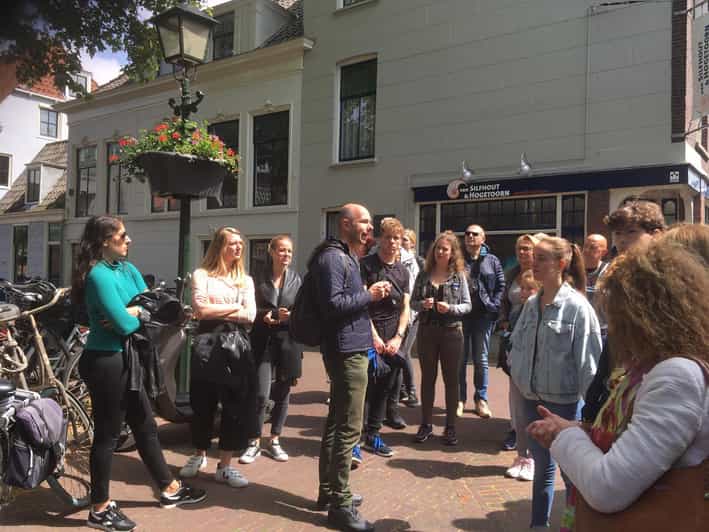
A stop near Vermeer Centrum Delft brings in Johannes Vermeer, the city’s most famous painter. Vermeer worked in Delft, and the tour uses that connection to place his art within the city where he lived and painted.
The stop is listed as a guided sightseeing visit of about 10 minutes. That means you should not assume the museum admission is part of the tour. Instead, think of this as a short introduction that can help you decide if you want to return for a longer visit.
The same is true of Delft’s blue pottery. The famous blue-and-white style is so closely tied to the city that it can seem like a simple souvenir theme. A guide adds useful context by explaining why Delft became associated with this look and how pottery became part of the city’s identity.
I like having these two subjects together. Vermeer represents Delft through painting, while Delft Blue represents it through craft and trade. You get a better feel for the city when you see both as local stories rather than isolated attractions.
More Walking Tours in Delft
- Private Walking Tour of Delft: Dive into the Dutch Golden Age
★ 5.0 · 33 reviews - Delft: Dive into the Golden Age on a Private Walking Tour
★ 4.6 · 16 reviews - Get the best out of Delft by creating memories during our private walking tour!
★ 5.0 · 15 reviews - Delft: Guided Walking Tour
★ 4.7 · 9 reviews
Cameretten, canal streets, and the less obvious Delft
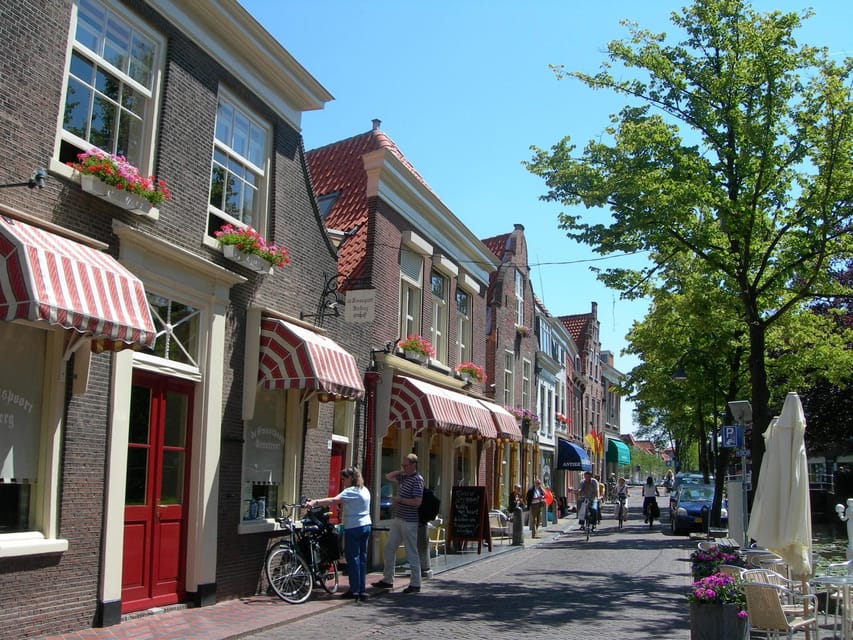
The itinerary includes a stop at Cameretten, a viewpoint, and a designated secret corner, each with roughly 10 minutes of guiding. The supplied details do not specify every exact feature at these points, so it is best to treat them as flexible parts of the walk rather than guaranteed major attractions.
That uncertainty is not necessarily a weakness. Delft rewards close looking, and an experienced local guide may use a modest street, canal angle, or building detail to explain something that would not appear on a standard sightseeing list. The promise here is less about a famous monument and more about seeing the city through local eyes.
You should expect to walk through the old center, along canals, and across royal squares. The tour is described as informative, practical, relaxed, and welcoming, which fits a route where the guide pauses often to explain rather than rushing from one landmark to the next.
One practical caution: a participant felt the group did not walk far enough and saw only a small section of the center. If you want a broad survey of Delft’s full historic area, this may feel limited. If you prefer a short orientation with plenty of explanation, the compact route may be exactly right.
The Prinsenhof and the death of Willem van Oranje
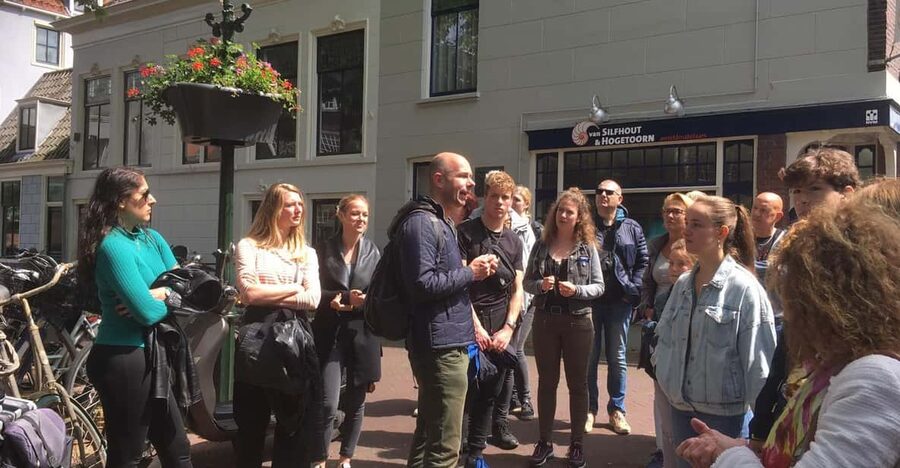
The longest stop is at Museum Prinsenhof Delft, with about 15 minutes of guided sightseeing. The former monastery is one of the most important places on the route because Willem van Oranje, often called the Father of the Nation, was murdered here.
That story gives the building unusual force. You are not just looking at an old monastery. You are standing at a place tied to the formation of the Netherlands and to the violent political struggles of the sixteenth century.
Again, the short stop is an outside introduction rather than a complete museum visit. The Prinsenhof contains more than can be covered in a quarter hour, so you may want to return separately if the guide’s story catches your interest.
I find this part especially useful because it gives Delft political weight. Without it, the city can seem defined mainly by canals, pottery, and pretty architecture. The Prinsenhof reminds you that Delft was also a place where national history took a sharp and tragic turn.
Why the Old Church is the memorable finale
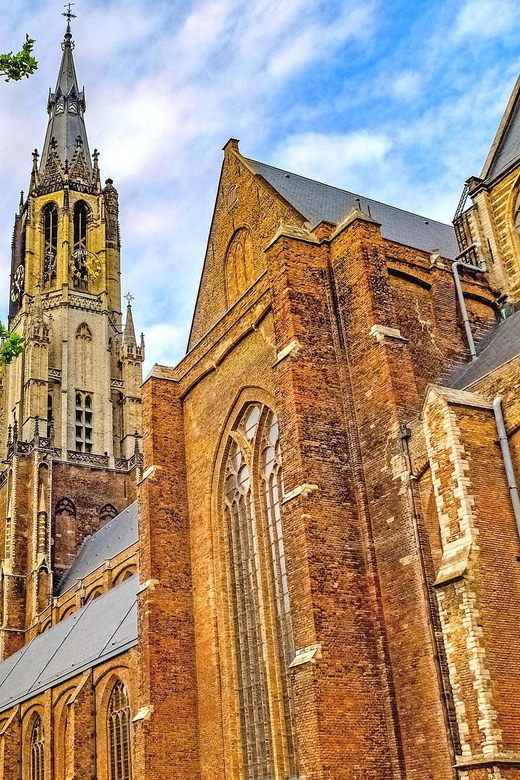
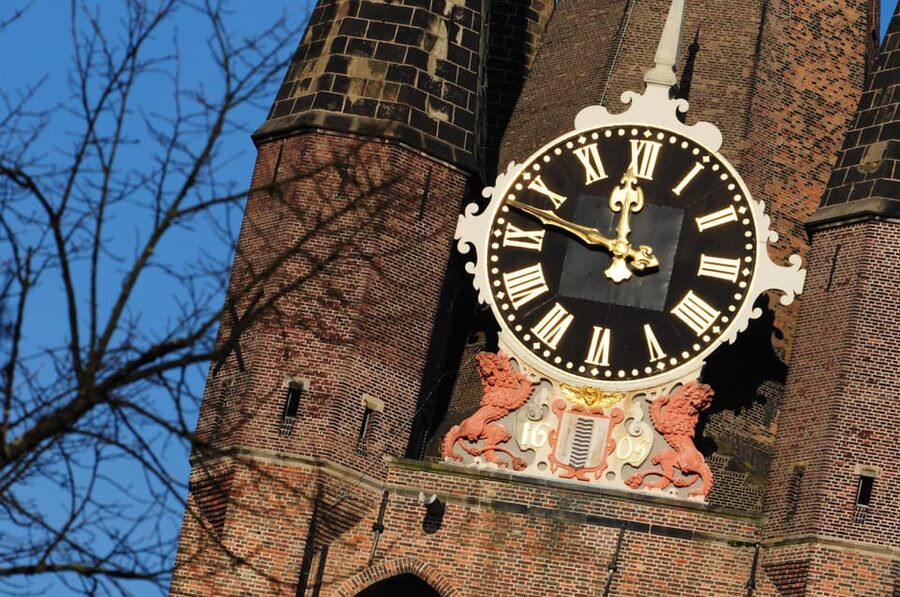
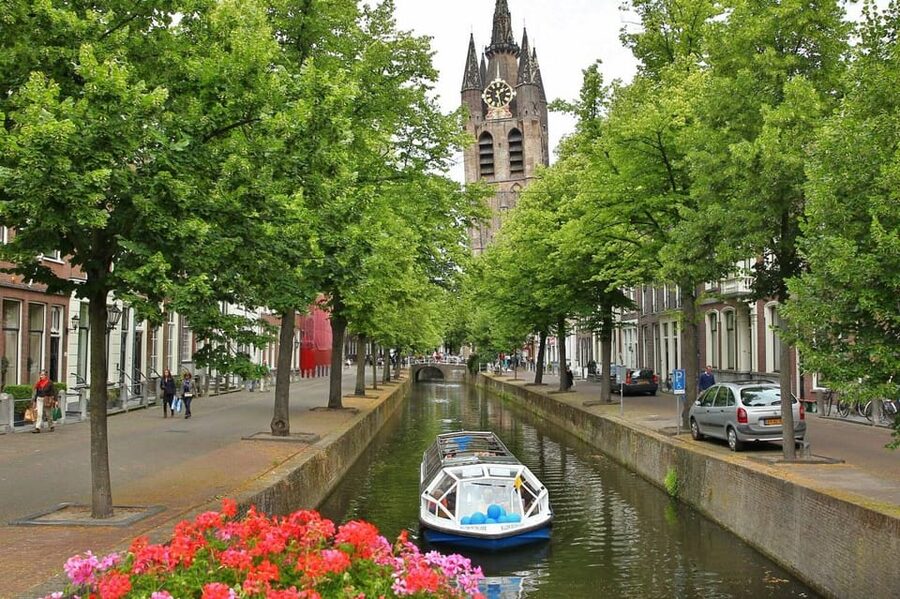
On the way back to the New Church, the group visits Delft’s Old Church, known for its pronounced tilt. The stop lasts about 10 minutes, and it is likely to be the most memorable visual moment of the tour.
The obvious question is why the tower is leaning. The guide explains the conditions behind its unbalanced appearance, turning an amusing sight into a lesson about Delft’s ground, construction, and long history. You do not need specialist architecture knowledge to enjoy this stop. The building makes its own argument as soon as you see it.
The Old Church also creates a nice contrast with the New Church. One is tied to the royal crypt and the Market Square, while the other is famous for its unusual angle and old character. Seeing both in one loop helps you understand Delft’s center as a connected place.
The route then returns to the Binnenstad, or inner city, before arriving back at the New Church. The final five minutes are enough to close the loop and leave you in a useful position for lunch, a museum visit, or further independent walking.
What $24 buys you in practical terms
At $24 per person, this is priced as a modest orientation tour rather than a full day of sightseeing. The fee covers 1.5 hours of guiding. It does not list admissions to the New Church, Vermeer Centrum, Prinsenhof, or other attractions, so budget separately if you want to enter them.
That can still be good value. A guide helps you use later museum time wisely and gives you the background needed to appreciate Delft’s streets. The price is easiest to justify if you are visiting for the first time, have limited time, or prefer learning the basic layout before exploring alone.
It is less compelling if you already know Delft well or want a long route through every district. The short format favors explanation over mileage. One useful detail from the feedback is that Frans gave suggestions for later activities and places to eat, which can add value beyond the scheduled walk.
The pace also matters. A guide who pauses for questions can make 90 minutes feel full, while a very small route can make it feel brief. The strongest comments describe the guides as cheerful, clear, and willing to personalize the experience. Frans is specifically praised for setting a comfortable pace, asking questions, and responding thoughtfully.
Timing, languages, and comfort
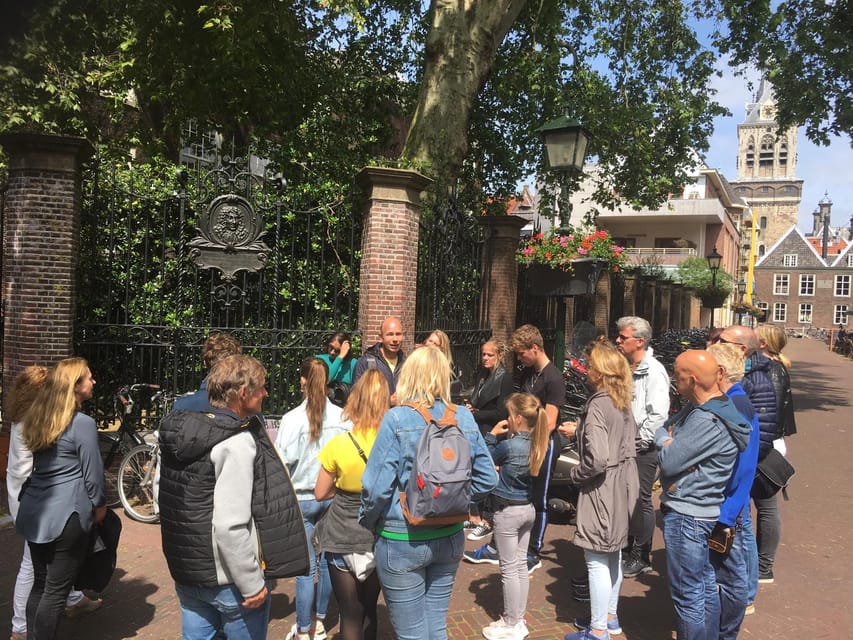
The tour runs for 1.5 hours, with starting times shown when you check availability. Since Delft’s streets are exposed in places, weather affects comfort. On a warm day, bring water and a hat, and do not be surprised if shade is limited at some stops.
Dutch, English, and German are available. The English received particularly strong praise, including comments about clear explanations and easy conversation. You can ask questions during the walk, which is useful if you want more detail about painting, royal history, architecture, or practical places to visit afterward.
Wheelchairs and dogs are allowed, and the activity is listed as wheelchair accessible. Still, the old center includes canals, historic paving, and busy public spaces. If you use a wheelchair, contact the provider if you need route-specific details, since general accessibility does not describe every surface or crossing.
Children under 10 are not considered suitable for this experience. For older children and adults interested in stories, the question-based approach may work well, but the tour is clearly designed more for history and orientation than for entertainment aimed at young children.
You can cancel up to 24 hours before the start for a full refund, and the reserve-now, pay-later option keeps your plans flexible. Those terms are useful if your Delft visit is part of a changeable Netherlands itinerary.
Who will get the most from Do DELFT?
I would choose this walk for a first visit to Delft, especially if you want a clear introduction before deciding which museums deserve more time. It also suits you if you enjoy hearing the story behind a building and prefer a calm pace to a fast checklist of sights.
It works well for:
- First-time visitors with only part of a day in Delft
- Adults and children over 10 who enjoy history and city stories
- Visitors who want advice for further sightseeing and food
- People comfortable with a compact walking route
- English, Dutch, or German speakers
- Wheelchair users who have confirmed their specific needs with the provider
I would think twice if you want to cover a large part of Delft on foot or expect admission to several attractions. You will see the key places from the outside and receive guided context, but the tour does not replace a museum visit or a longer city exploration.
Should you book this Delft walking tour?
Book it if you want a friendly, story-led introduction to Delft for $24 and 90 minutes. The New Church, City Hall, Vermeer connection, Prinsenhof, canals, and leaning Old Church create a well-chosen first route, and guides such as Frans and Astride bring a personal touch to the history.
Skip it if you already know the center or want a physically extensive tour. The limited walking distance is the main drawback, not a surprise hidden in the fine print. For many people, though, that compact route is a benefit: you get your bearings, learn why Delft matters, and still have most of the day left to explore at your own pace.
FAQ
Where does the Delft walking tour start?
It starts in front of the New Church on Delft’s Market Square and returns to the same area at the end.
How long does the tour last?
The walking tour lasts 1.5 hours.
Which languages are available?
The live tour guide is available in Dutch, English, and German.
Are museum and church admissions included?
The activity includes 1.5 hours of guiding services. Separate admission to attractions is not listed as included.
Are wheelchairs and dogs allowed?
Yes. Wheelchairs and dogs are allowed, and the activity is listed as wheelchair accessible.
Is the tour suitable for children under 10?
No. Children under 10 are listed as not suitable for this experience.
Just added around Delft
- 3 Course Walking Dinner in Delft with Guided Tours in Between★ 5.0 · 3 reviews
- Delft: City Walk with Audio Guide in 7 Languages on your Phone★ 5.0 · 4 reviews
- e-Scavenger hunt Delft: Explore the city at your own pace★ 4.5 · 26 reviews
- Private Tour of Delft + Visit to Delft Blue Museum & Factory★ 4.5 · 8 reviews
- Private Walking Tour: Delft’s Royal History and Pottery★ 4.0 · 5 reviews
- Photographic Tour in Delft Historical Center★ 5.0 · 11 reviews
- Private Tour of Vermeer’s Delft + Tickets to Vermeer Museum★ 5.0 · 3 reviews
- Private Tour of Delft & Rotterdam with Cube House and Transfer★ 5.0 · 12 reviews
City Tours, compared.
75 Minute City Canal Cruise with Audio Guide
Read our review →

City Canal Cruise and Heineken Experience Ticket
Read our review →

Browse the lists this tour appears in