
Reviewed · MUSEUMS
Amsterdam: The Kattenkabinet Cat Museum Entry Ticket
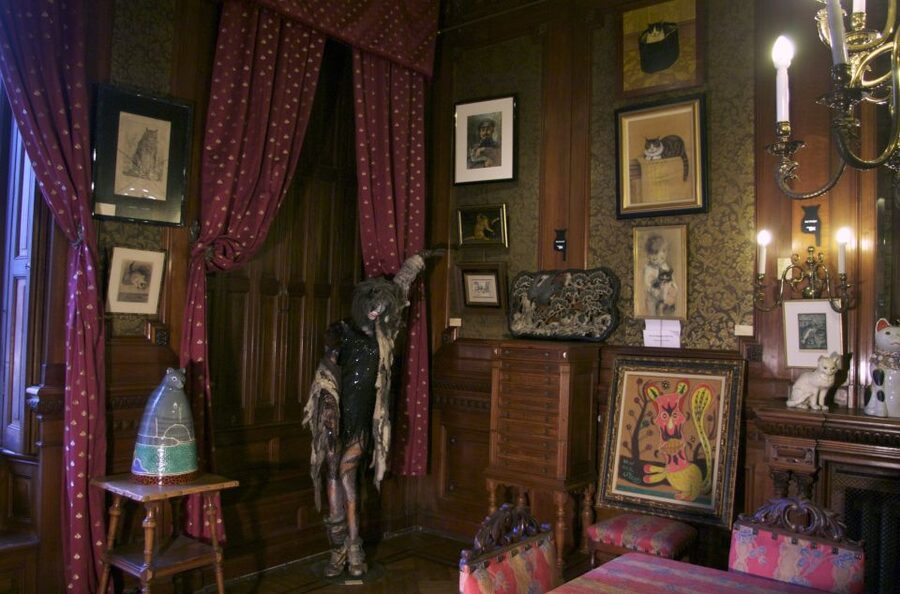
Amsterdam’s Kattenkabinet is part art museum, part memorial, and part cat sanctuary. Inside a handsome Herengracht canal house, you’ll find paintings, posters, sculptures, photographs, ceramics, and other cat-themed objects, along with the occasional living cat strolling through the rooms.
I like the museum’s personal origin story, tied to owner Bob Meijer and the cat who inspired the collection. I also like the contrast between serious works by Rembrandt and Picasso and the playful pieces by lesser-known artists. The main drawback is size: many people finish in 20 minutes to an hour, though careful art lovers and families may stay closer to two hours.
Key Points

- Resident cats may join your visit: Friendly house cats often wander through the museum and sometimes accept a stroke or two.
- A real canal-house setting: The collection occupies a beautiful building on Amsterdam’s Herengracht, with an impressive 17th-century ceiling painting.
- More than framed pictures: Expect paintings, lithographs, posters, photographs, sculptures, ceramics, and unusual artefacts.
- Famous names among the cats: The collection includes work by Rembrandt, Picasso, Toulouse-Lautrec, Corneille, and Jože Ciuha.
- Small but densely packed: The museum is spread over two floors and several rooms, so the visit is short but full of visual detail.
- A thoughtful memorial room: You can leave a photograph, note, or drawing of your own cat in the area dedicated to personal memories.
A Cat Museum in a 17th-Century Canal House
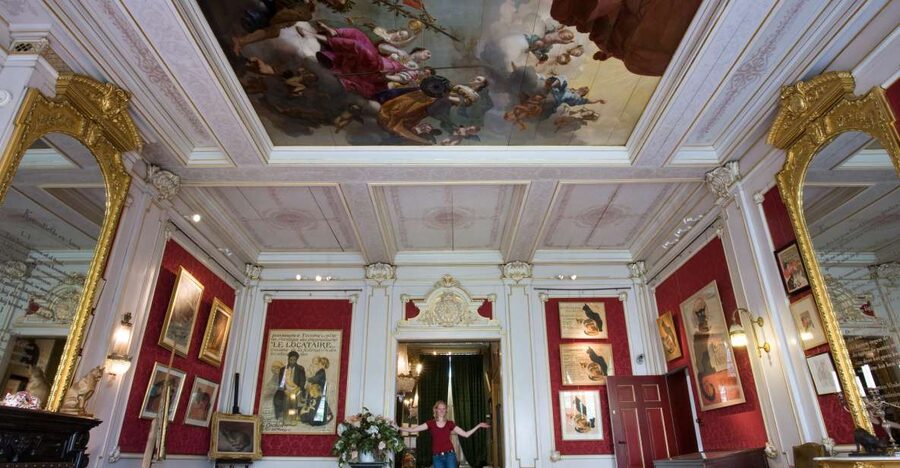
The first surprise is the building. Kattenkabinet is not housed in a plain modern gallery, but in an Amsterdam canal house on the Herengracht. The rooms, stairways, ceilings, and domestic scale give the museum a warm, slightly eccentric feel.
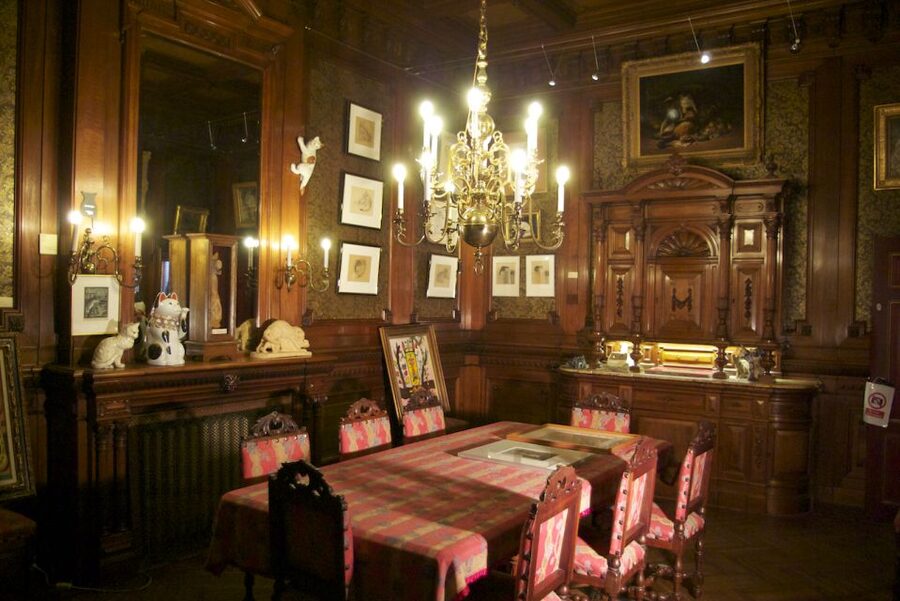
That setting matters. A cat painting in a grand white gallery would feel formal. Here, the work is surrounded by the atmosphere of an old Amsterdam home. You move from room to room rather than through one large exhibition hall, and the building itself becomes part of the visit.
The museum’s history begins with Bob Meijer, a cat lover who created the collection in memory of the cat that inspired him. That story gives the museum more heart than a simple display of animal-themed art. It explains why the collection includes both respected works and whimsical objects that might not fit neatly into a traditional art institution.
You can also pay your respects in a shrine-like area where people leave photographs, notes, and drawings of their own cats. If you want to add something, bring a cat photo with you. This small feature connects the museum to its visitors without turning the experience into a formal memorial.
More Museum Tours in Amsterdam
- Amsterdam: Van Gogh Museum Ticket
★ 4.7 · 52,054 reviews - Amsterdam: The Upside Down Museum Entrance Ticket
★ 4.4 · 9,506 reviews - Amsterdam: Red Light Secrets Museum Entry Ticket
★ 4.2 · 5,722 reviews
Rembrandt, Picasso, and the Wide Range of Cat Art
The collection is not limited to cute pictures of household pets. You’ll see art from different periods, countries, and styles, with cats treated as subjects of humor, affection, symbolism, and design.
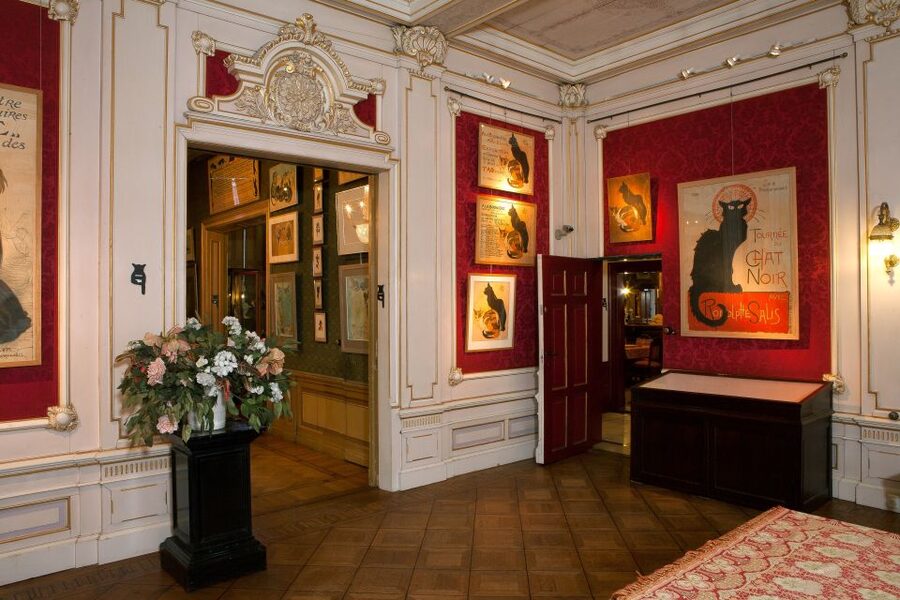
Works by Rembrandt, Picasso, and Toulouse-Lautrec give the museum artistic weight. Corneille and Jože Ciuha add further variety. The presence of well-known names is useful for visitors who want more than a novelty attraction, though you should not expect a major museum devoted to full bodies of work by these artists. The focus remains cats.
The less famous pieces are often just as entertaining. Posters, lithographs, sculptures, photographs, and decorative objects fill the rooms. Some are polished and serious. Others are knowingly silly. That change of mood keeps the collection from feeling repetitive.
One of the museum’s strengths is its range of materials. A family can look at a sculpture, then search for a funny poster, then pause over a carefully made painting. Children do not need a background in art to enjoy the collection, while adults can spend more time noticing technique, style, and period.
A mummified cat dating from around 200 BC has also been noted among the unusual objects. It adds an unexpected historical edge to a museum that otherwise moves freely between fine art, popular culture, and personal keepsakes.
The Ceiling Painting and the Amsterdam City Virgin
One room contains a 17th-century ceiling painting from the school of De Lairesse. It depicts the Amsterdam City Virgin and was uncovered during renovation work in the 1980s.
This is easy to miss if you rush toward the cat pictures, so look up. The painting gives you a direct link to the building’s earlier life and shows that the house is worth studying even when no cat is in sight.
The ceiling also helps explain the museum’s unusual character. You are not simply entering a themed exhibition space. You are visiting an old Amsterdam interior that has been adapted for a collection devoted to cats. The result is informal and sometimes crowded with objects, but that is part of its appeal.
Meeting the Resident Cats
The living cats are the museum’s most unpredictable feature. They are not a scheduled animal show, and they are not placed in cages for display. You might see one stretched out in a room, another moving up the stairs, or none at all during a short visit.
Several cats are known to wander around the building, including a tortoiseshell named Nala and a tuxedo cat named Oscar. Other visitors have encountered only one cat, or two, depending on the day. That uncertainty is important when you decide how to spend your $15.
If a cat is resting, give it space. The museum feels best when the animals are treated as residents rather than performers. When one chooses to approach, you may be able to pet it, and that quiet contact can become the most memorable part of the visit.
Families should explain this to children before entering. The cats may be friendly, but they are still free to walk away. The museum works better for children who can watch and wait than for children expecting a hands-on animal attraction.
I would not book Kattenkabinet solely on the promise of petting a cat. The animals may be absent, hiding, or uninterested. Book it because you like the art and the building, then regard a feline encounter as an extra.
A few more days out around Amsterdam worth weighing up
- Amsterdam Classic Saloon Boat Cruise with Drinks and Cheese
★ 5.0 · 31,825 reviews - Amsterdam Luxury Canal Cruise + Unlimited Drinks & Bites option
★ 5.0 · 30,518 reviews - Amsterdam: Heineken Experience Ticket
★ 4.6 · 30,055 reviews - Amsterdam: Rijksmuseum Entry Ticket
★ 4.7 · 25,535 reviews
How Long You’ll Really Need
The ticket is valid for one day, but that does not mean the museum fills an entire day. The exhibition occupies two floors and roughly three or four rooms, depending on how you count the spaces.
A quick look can take about 20 minutes. A slower visit, with time for the captions, ceiling painting, photographs, gift shop, garden, and resident cats, can stretch to an hour or more. One family found enough to keep children aged nine and thirteen engaged for about two hours, but that is a generous visit rather than the normal minimum.
The museum is compact and densely filled. You may want to walk through once to see the layout, then return to the rooms that interest you most. This works well because the collection includes small details that are easy to miss on the first pass.
The short length makes Kattenkabinet easy to fit between larger Amsterdam attractions. It can work as a change of pace after a long museum morning, or as a light afternoon stop while walking along the canal district. It is less suitable if you want one major attraction to occupy several hours.
The Garden and Seasonal Limits
An outdoor garden adds breathing room to the visit. It gives you a place to pause after the tightly packed rooms and makes the building feel less confined.
The garden is not always fully available. It has been closed during colder or transitional periods, and seating is limited even when it is open. Check the current conditions if the outdoor space is important to your plans.
When open, the garden helps justify lingering. You can take a break, look back at the canal-house setting, and wait to see if a cat appears. Still, treat it as a pleasant extra rather than a major garden attraction.
The indoor rooms remain the core experience. If you visit when the back area is closed, the museum can feel especially quick. That does not remove the art collection, but it does reduce the space available for sitting and relaxing.
The Gift Shop and Small Cat-Themed Extras
The gift shop is more useful than a simple ticket counter. It includes posters, tote bags, and other cat-themed items, with enough variety to make a short stop worthwhile.
You can find souvenirs tied closely to the museum’s subject, including playful cat money and art prints. If you enjoy collecting posters or want something lighter than a standard Amsterdam souvenir, this is a good place to browse.
The shop also reinforces the museum’s informal mood. You are not leaving a grand national collection with an expensive catalogue. You are leaving a small, personal institution where the theme continues right through to the souvenirs.
Is $15 Good Value?
At $15 per person, Kattenkabinet is fairly priced for a specialized Amsterdam attraction, but value depends heavily on your interests and your pace.
If you love cats and enjoy art, the ticket buys access to a distinctive collection in a beautiful historic house. You are not paying only to see a few resident animals. You are paying for the combination of fine art, popular imagery, unusual objects, architecture, a garden when open, and the personal story behind the museum.
If you are only mildly interested in cats, the price may feel high for a visit that lasts 20 to 60 minutes. The collection is small, and there is not enough space to create the scale of a major Amsterdam museum.
For families, the value improves if everyone enjoys the theme. Children can look for cats in different forms, while adults can spend time with the art and architecture. The visit is also short enough to suit younger attention spans.
Flexible booking helps if your Amsterdam schedule may change. You can cancel up to 24 hours before the visit for a full refund, and the reserve-now, pay-later option lets you hold a place without paying immediately. Starting times depend on availability, so check the selected date rather than treating the one-day validity as unlimited access at any hour.
Who Will Enjoy Kattenkabinet Most?
I would recommend it first to dedicated cat lovers, especially those who also like unusual museums. The collection feels made for people who enjoy seeing a familiar subject treated in many artistic forms.
It also suits families with children who can manage stairs and several compact rooms. The cats add a live element, while the artwork gives the visit more substance than a standard animal encounter.
Art fans may enjoy the range, but expectations matter. This is not a substitute for the Rijksmuseum or a major Picasso collection. Famous artists appear within a cat-focused display, and the overall experience is playful rather than scholarly.
Couples, solo visitors, and repeat visitors can also have a good time. One repeat visitor found changing displays across several annual visits, which suggests that returning may bring something different. The museum’s small size makes a repeat stop easy to fit into another Amsterdam trip.
You may want to skip it if you dislike cats, need a large museum with extensive seating, or want a long indoor attraction at a low price. You should also reconsider if a guaranteed animal encounter is essential.
Practical Tips for a Better Visit
- Bring a cat photograph if you would like to leave a memory in the shrine area.
- Look up at the ceilings, especially for the De Lairesse school painting.
- Allow at least an hour if you want to read, browse the shop, and wait for a cat to appear.
- Allow less time only if necessary, since a quick visit can be finished in about 20 minutes.
- Check the garden status before you count on outdoor seating.
- Do not bring food or drinks into the museum.
- Do not smoke in the garden.
- Let the cats set the pace, since they are free-roaming residents rather than scheduled performers.
Should You Book Amsterdam’s Kattenkabinet?
Book this ticket if the words cat art sound better to you than another conventional museum. The strongest reasons to go are the unusual canal-house setting, the huge variety packed into a small space, the personal story of Bob Meijer, and the chance of meeting cats such as Nala or Oscar.
I would plan for a compact, cheerful visit rather than a full-day museum outing. At $15, it offers good value for cat lovers and families who will take time with the art, but it can feel expensive if you rush through in 20 minutes or arrive expecting a cat cafe.
My practical call is simple: cat lovers should book it, especially when the garden is open and you have enough time to browse slowly. Everyone else should go only if the architecture, unusual museums, or cat-themed art genuinely appeals.
FAQ
Where is the Kattenkabinet located?
The museum is located on the Herengracht canal in Amsterdam, in North Holland, Netherlands.
What does the entry ticket include?
The ticket includes entry to Museum Het Kattenkabinet.
How much does entry cost?
The listed price is $15 per person.
How long is the ticket valid?
The ticket is valid for one day. You should check availability for the starting times offered on your chosen date.
How long does a visit usually take?
The museum can take about 20 minutes for a quick visit. Allow an hour or more if you want to study the art, visit the shop, spend time in the garden, and wait for resident cats.
Are there real cats inside the museum?
Yes. Resident cats may wander through the museum, and you may be able to pet them. Their presence is not guaranteed during every visit.
Which artists are represented?
The collection includes works by Rembrandt, Picasso, Toulouse-Lautrec, Corneille, and Jože Ciuha, along with pieces by other artists.
What types of objects are on display?
You can see paintings, drawings, lithographs, posters, photographs, sculptures, ceramics, and other cat-related artefacts.
Is there a garden?
Yes. The museum has a garden, although parts of the outdoor area may be closed at certain times of year. Seating in the garden is limited.
Can I bring food or drinks?
No. Food and drinks are not allowed inside the museum, and smoking is not allowed in the garden.
Can I cancel the booking?
You can cancel up to 24 hours in advance for a full refund. A reserve-now, pay-later option is also available.
More Museums in Amsterdam
- Amsterdam’s Weirdest Museum: Believe It or Not!
★ 4.5 · 4,086 reviews - Amsterdam: Van Gogh Museum Ticket and City Canal Cruise
★ 4.6 · 3,899 reviews - Amsterdam: Van Gogh Museum Ticket & Canal Cruise
★ 4.5 · 3,304 reviews - Amsterdam: NEMO Science Museum Ticket
★ 4.4 · 2,979 reviews
Just added around Amsterdam
- From Amsterdam: The Hague Private Trip and Mauritshuis Entry★ 4.3 · 4 reviews
- VIP Private Full Day Tour of the Netherlands★ 4.8 · 6 reviews
- Amsterdam Old-West Vegan Food Tour with Local Guide★ 4.7 · 3 reviews
- Amsterdam: Van Gogh Museum Guided Tour★ 4.8 · 262 reviews
- Van Gogh Museum Private Guided Tour★ 4.2 · 10 reviews
- Vecht River: Full-day Cruise with Lunch★ 4.8 · 9 reviews
- Amsterdam: Van Gogh Museum Ticket & Guided Tour★ 4.4 · 187 reviews
- Van Gogh and Rijksmusuem Tour: Small Group Tour with Entry★ 4.7 · 3 reviews
Museums, compared.


Moco Museum Amsterdam Entrance Tickets with Banksy & More
Read our review →





Browse the lists this tour appears in