
Reviewed · MUSEUMS
Amsterdam: Rembrandt House Museum Entrance Ticket
The most revealing part of the Rembrandt House Museum is not a famous canvas. It is the chance to walk through the Amsterdam house where Rembrandt lived, worked, taught, collected, and eventually lost control of his finances. His studio, paint room, collections room, and domestic spaces make the artist feel like a working person rather than a name in a gallery.
I especially like the excellent multimedia tour, which explains both Rembrandt’s life and the purpose of each room. I also like the live demonstrations of paint-making and etching, performed in spaces tied to the artist’s work. The main drawback is practical: this is a narrow, multi-floor historic house with steep stairs, and crowded rooms can make it hard to pause and listen.
Key points to know before you go
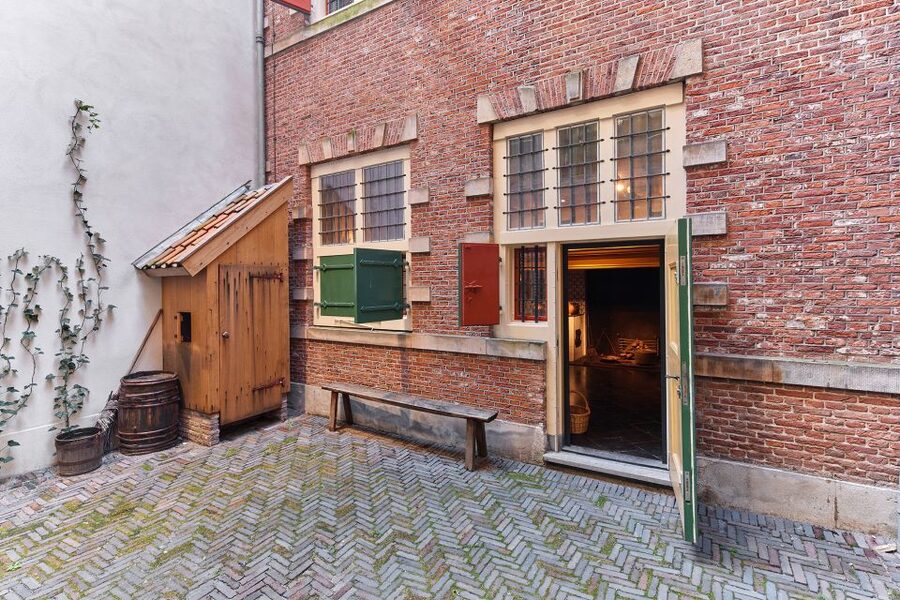
- Rembrandt’s actual former home: Explore the Jodenbreestraat house where he lived and worked before bankruptcy forced his departure.
- Almost complete etching collection: See a large selection of Rembrandt’s prints, along with work by his contemporaries, pupils, and artistic followers.
- Strong audio and multimedia guide: Choose from English, Dutch, Spanish, French, German, Italian, or Russian.
- Live working demonstrations: Watch staff mix pigments and explain period paint-making, then see how etching and printing worked.
- A real historic-house visit: Expect several floors, tight rooms, and steep stairs with railings.
- A special 2026 exhibition: Rembrandt’s Masterclass runs from January 30 through May 25, 2026, with hands-on activities and The Anatomy Lesson of Jan Deijman.
Entering Rembrandt’s Amsterdam home
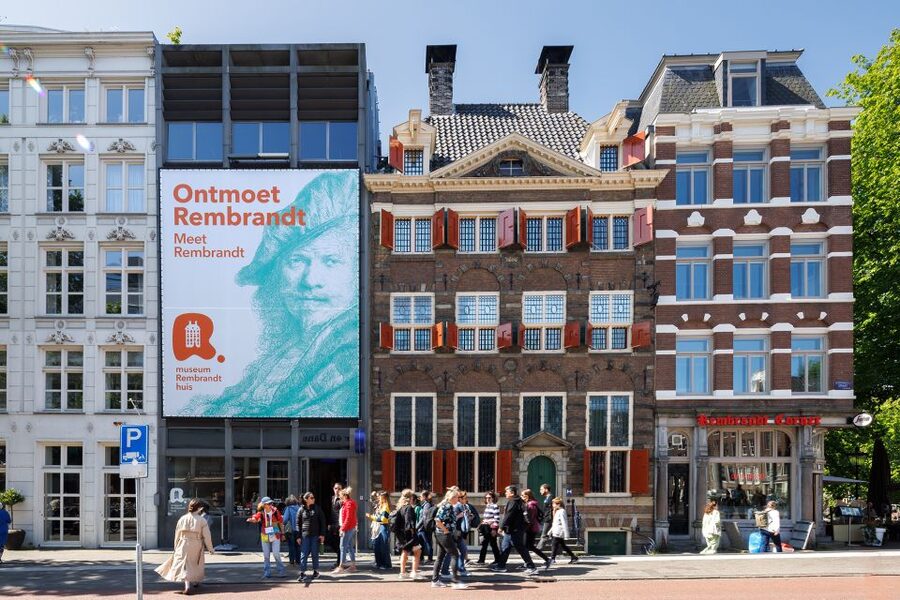
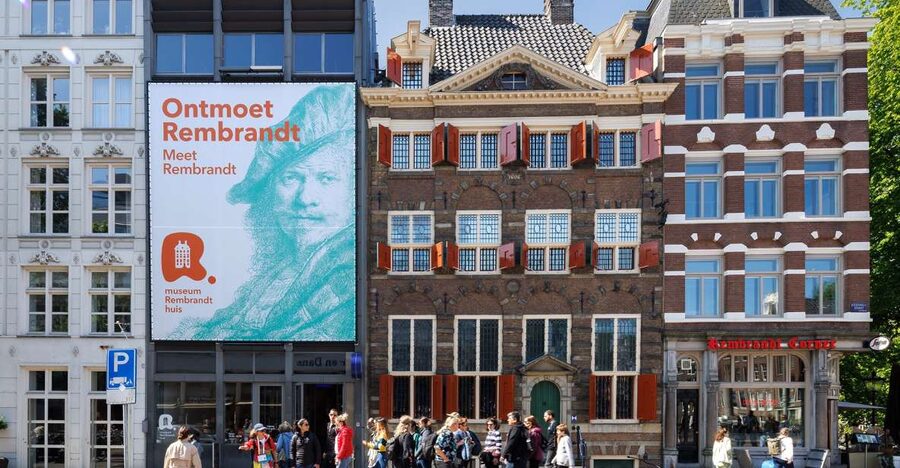
The museum sits at Jodenbreestraat 4, in a part of central Amsterdam closely linked with Rembrandt’s working life. You enter a house, not a grand museum hall. That distinction matters. The building gives you a sense of how rooms connected, how cramped an artist’s workplace could be, and how daily life shared space with serious artistic production.
Rembrandt bought the house during the successful part of his career. He was a celebrated artist, teacher, collector, and art dealer, but his spending and debts eventually caught up with him. The museum follows that arc from confident arrival to forced departure, so the visit has a clear human story rather than a simple display of objects.
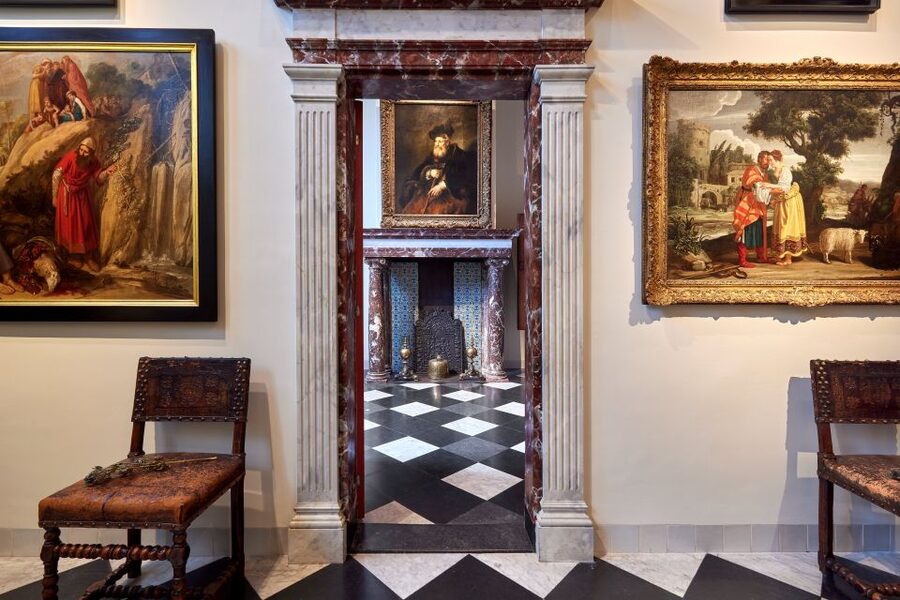
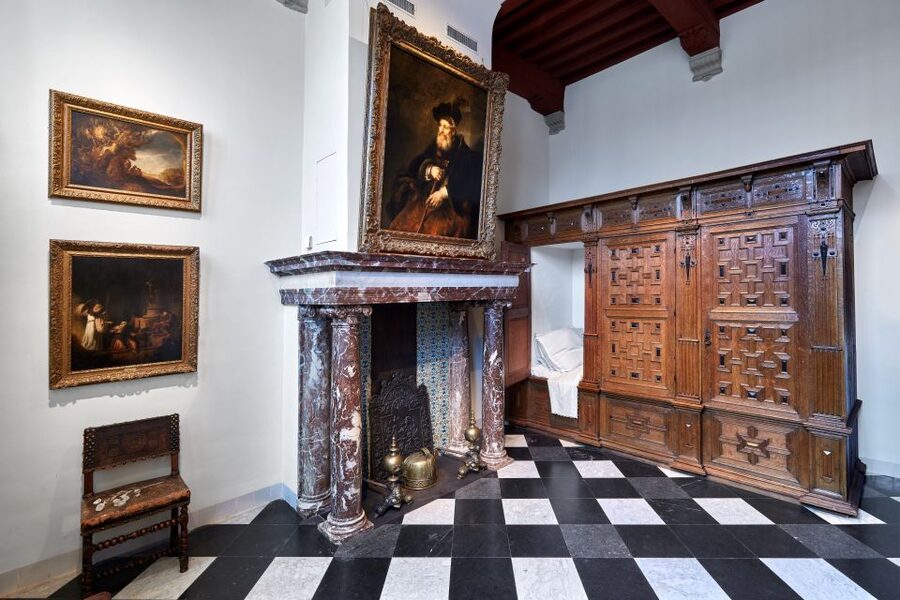
The house has been carefully restored and furnished with possessions based on historical records. Some pieces are reconstructions or replicas, and the museum explains their basis. That approach lets you see how Rembrandt lived without pretending that every object on display sat in exactly that spot four centuries ago.
You will move through domestic rooms, work areas, and exhibition spaces. The layout is not always obvious at the beginning. Take a moment to match the audio guide with the room you are standing in, especially downstairs. Once you reach the upper floors, the route becomes easier to follow.
More Rembrandt houses and walks:
- Rembrandt House Museum Amsterdam Entrance Ticket
★ 4.5 · 355 reviews - Amsterdam: Van Gogh and Rembrandt Immersive Experience Entry
★ 4.2 · 334 reviews - Private Rijksmuseum Tour- The Dutch Masters, Rembrandt & Vermeer
★ 5.0 · 54 reviews
Why the audio guide matters here
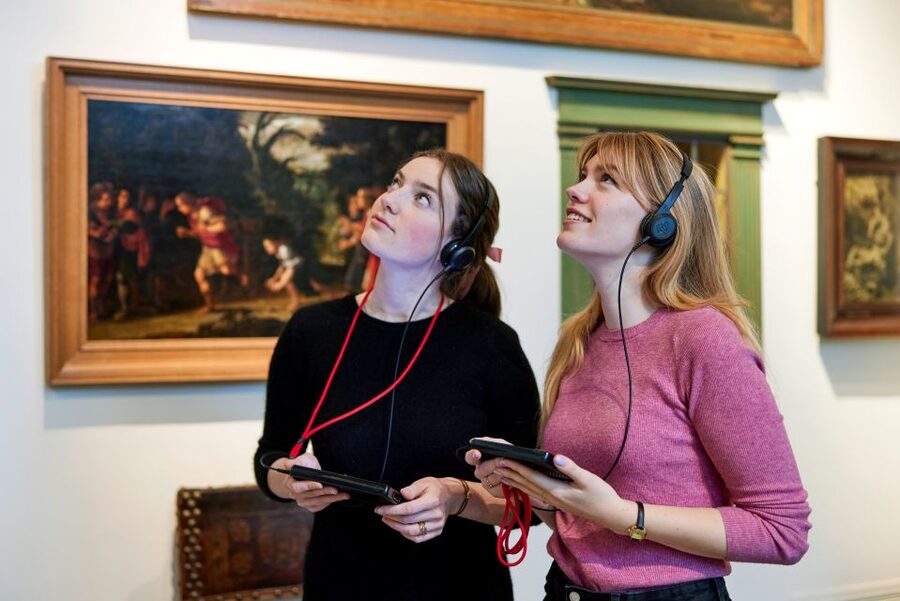
You can look around the rooms without the audio guide, but I would not recommend it. The house is interesting on its own, yet the guide supplies the details that turn furniture, tools, and walls into part of Rembrandt’s story.
The included multimedia tour covers Rembrandt’s biography, his family, his students, his collecting habits, his working methods, and the role of each room. It also includes visual material, and the room-by-room sections often take about five minutes. The living room, studio, and collections room offer longer explanations, so you should not rush through them.
English, Dutch, Spanish, French, German, Italian, and Russian audio options are listed. English and Dutch are also the host languages. You receive the tour as part of admission, which makes the $23 price easier to justify than a ticket to a house museum with little interpretation.
I like that the audio does not treat Rembrandt as a flawless genius. It follows his ambition, success, family life, working habits, and financial collapse. You come away with a more useful picture of the man behind the self-portraits.
One small issue is orientation. The first room or two can be confusing, and clearer room numbers or floor arrows would help. If you find yourself listening to the wrong section, stop and check the space before continuing. A little patience at the start saves confusion later.
The studio where Rembrandt made his paint
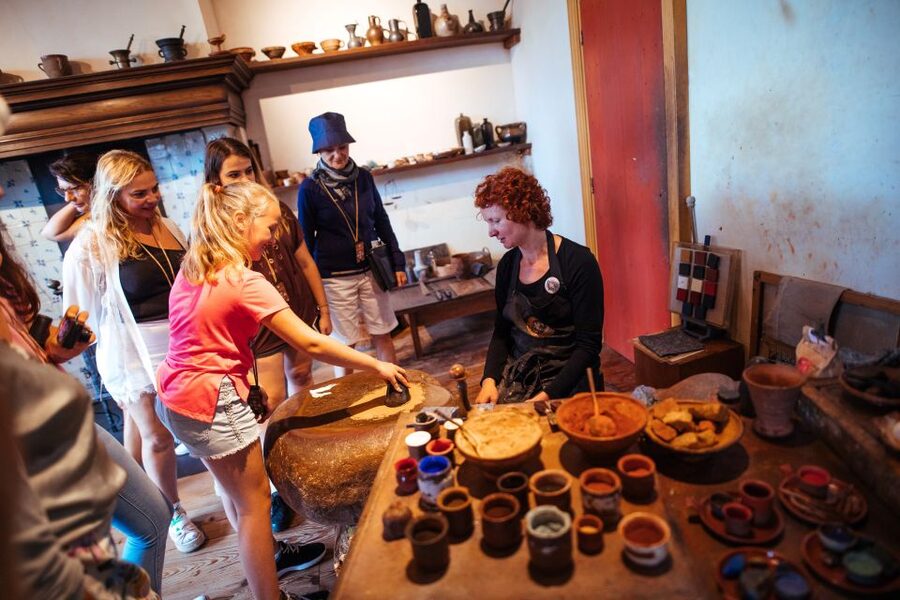
The studio is the emotional center of the visit. This is where the museum helps you picture Rembrandt not simply applying paint, but preparing materials, managing assistants and pupils, and making choices before a brush touched a canvas.
A live paint-making demonstration shows how artists of Rembrandt’s period prepared oil paint. Staff explain the pigments and processes used at the time. This is one of the museum’s most useful additions because it connects the finished image with the physical labor behind it.
You might see a demonstration at a set time during your visit, so check the schedule when you arrive. The sessions are short enough to fit into a normal museum stop, but engaging enough to slow you down. They work well for adults and older children because the subject is practical: what the materials were, how they were made, and why they mattered.
The demonstration also gives the studio a purpose. Without it, a reconstructed workspace can feel static. With it, you start to notice the room as a place of production, not just a period interior.
The etchings and printing demonstration

The museum is particularly strong on Rembrandt’s etchings. It holds an almost complete collection of his etching work, making this one of the best places in Amsterdam to study the graphic side of his career.
Etching can seem secondary if you know Rembrandt mainly from paintings. Do not skip this section. The prints show his control of line, light, texture, and expression in a form that could be reproduced and circulated. They also reveal a more experimental artist, willing to revise an image and test what the medium could do.
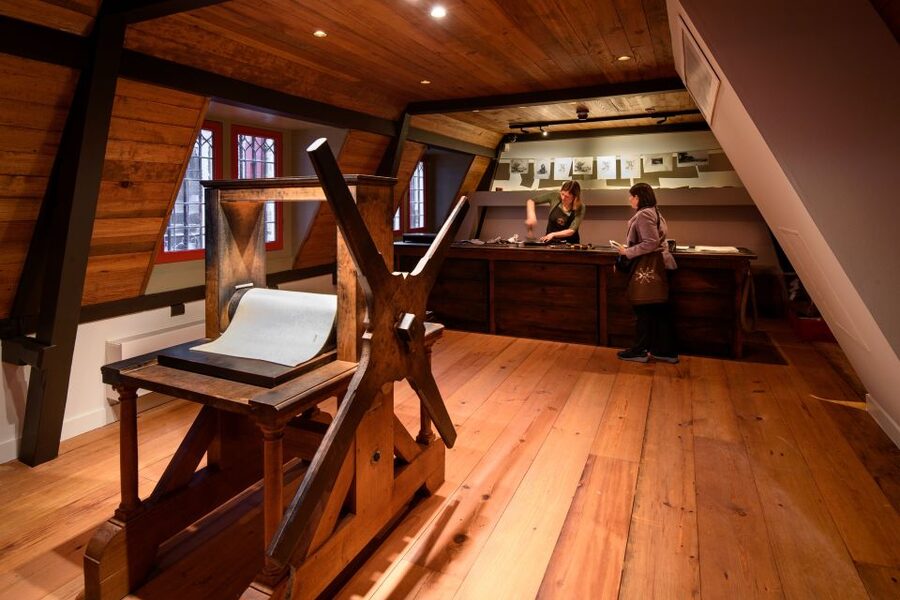
The new etching attic explains the technique and gives you a better sense of how an image moved from a copper plate to a printed sheet. A live etching and printing demonstration adds the missing physical step. You see that this was not a quick sketching exercise. It involved preparation, pressure, ink, paper, and careful handling.
I would plan extra time here if prints interest you. The displays are not simply a parade of small black-and-white images. They help you read the marks and understand why Rembrandt’s etchings are so admired.
The collection also reaches beyond Rembrandt. You will see works by artists from his circle, people who influenced him, and artists he influenced. That wider view helps place him in Amsterdam’s art world rather than presenting him as an isolated figure.
More museums and galleries in the Netherlands:
- Amsterdam: Van Gogh Museum Ticket
★ 4.7 · 52,054 reviews - Moco Museum Amsterdam Entrance Tickets with Banksy & More
★ 4.4 · 10,088 reviews - Amsterdam: The Upside Down Museum Entrance Ticket
★ 4.4 · 9,506 reviews - Amsterdam: Red Light Secrets Museum Entry Ticket
★ 4.2 · 5,722 reviews
Rooms, possessions, and the daily life of an artist
The domestic rooms give the visit its sense of time travel. You see where household life and artistic work met, and the audio explains what Rembrandt’s family, students, and associates would have encountered.
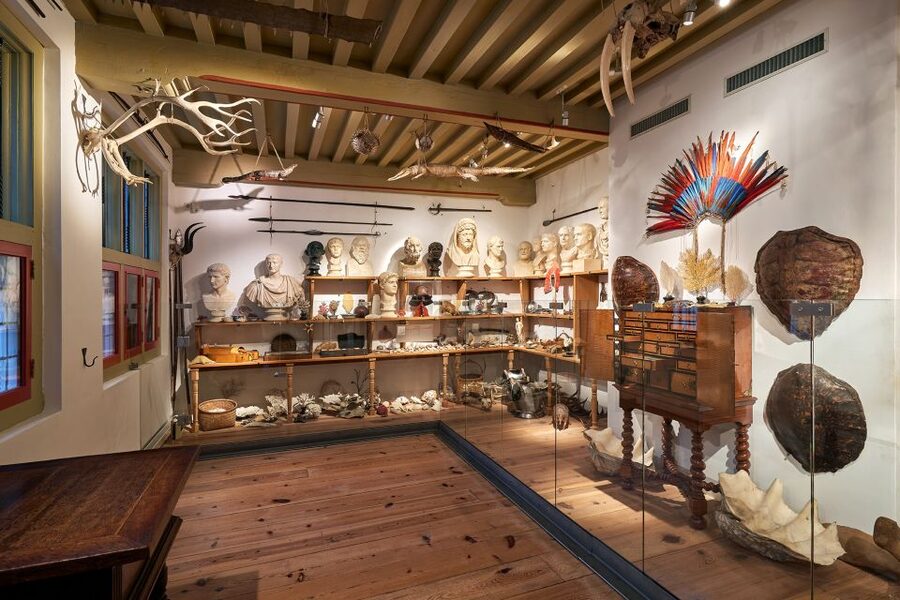
The collections room is especially telling. Rembrandt was a serious collector, and his interests ranged beyond paintings. Objects in this room help explain his appetite for visual material and unusual things. They also suggest how collecting could support an artist’s ideas while adding to his financial problems.
The rooms are attractive, but they are not filled with major original Rembrandt paintings. That is important when you decide how this museum fits into your Amsterdam plans. The focus is the house, the biography, the etchings, drawings, working materials, and art connected with Rembrandt.
If you want to stand before famous Rembrandt paintings, you will need a major art museum elsewhere in the city. If you want to understand how he lived and worked, this house supplies something a picture gallery cannot.
The museum also displays original sketches and drawings. These smaller works reward close attention, especially after you have heard how Rembrandt approached observation and expression. Keep your camera flash switched off, as required for sensitive museum displays.
The 2026 exhibition, Rembrandt’s Masterclass
From January 30 through May 25, 2026, the museum presents Rembrandt’s Masterclass. The exhibition asks how Rembrandt became so skilled and breaks his approach into five themes: Looking, Technique, Emotion, Experimenting, and Selling.
That structure should appeal beyond committed art specialists. You can think about how an artist studies a subject, handles materials, creates feeling, tests new ideas, and finds buyers. The exhibition also includes activities such as drawing an elephant, identifying a genuine Rembrandt, and practising a self-portrait pose.
At the end, a slow-watching room focuses on The Anatomy Lesson of Jan Deijman. The idea is to look at the painting step by step, rather than glance at it and move on. That is a good match for the museum’s wider message: careful looking is a skill, not an automatic response.
The exhibition includes Rembrandt’s etchings, paintings, and a drawing. Because it adds practical exercises to the historical material, it may work particularly well for families, young artists, and anyone who feels unsure about art museums.
If you visit outside those dates, the permanent displays remain the main reason to come. Do not book solely for the special exhibition unless your date falls within its stated run.
How long should you allow?
The ticket is valid for one day, but the visit itself is usually best treated as a two to three hour stop. A quick visit can cover the main rooms and demonstrations in less time, but you will miss much of the audio content.
I would allow at least two hours if you plan to listen carefully. Add more time for the etching attic, paint demonstration, temporary exhibition, and close study of the prints. The house rewards a steady pace more than a hurried circuit.
Crowding can affect that pace. Some rooms are small, and when a large group gathers, you may need to skip a section and return later. Loud guided groups can also make audio listening difficult. If you have flexibility, a quieter period will help you get more from the house.
The ticket gives you entry for the day rather than a multi-attraction pass. At $23 per person, the value depends on your interest. For an art or history fan, the room-by-room interpretation, etching collection, demonstrations, and time spent inside the house make it a fair Amsterdam admission price. If you only want a quick look at a famous painting, this is not the right purchase.
Stairs, comfort, and access
This is a historic house, and the layout comes with limits. Expect several floors and steep stairs, though there are good railings. The activity is not suitable for wheelchair users or people with mobility impairments according to the stated access information.
Some visitors who need to avoid stairs may find that a lift is available, but you should confirm its use with the museum before booking. The rooms can also feel tight when busy, so anyone who needs extra space or easy movement should plan carefully.
There are lockers downstairs. Allow time to get oriented before starting the audio tour, since the first part of the route can be less clear than the upper floors.
The museum is a good choice for families with older children who can manage stairs and listen for several minutes at a time. A 14-year-old with an interest in art or history could find the demonstrations and house layout more engaging than a silent gallery visit.
Who will get the most from this museum?
You do not need to be a Rembrandt expert. The audio guide explains the basic story, and the demonstrations make the techniques easy to grasp. The museum suits you particularly well if you like:
- Dutch art and seventeenth-century Amsterdam
- Historic homes and domestic interiors
- Etching, drawing, printing, or painting materials
- Artist biographies with personal and financial detail
- Museums that explain how objects were made
- A quieter, focused stop lasting two or more hours
If your priority is a large collection of finished paintings, temper your expectations. The house does not replace a visit to an art museum with Rembrandt’s best-known canvases.
I also would not choose this as a rushed stop between several timed attractions. The audio is one of the ticket’s best features, and it takes time. You will get more from the visit if you let the rooms unfold rather than trying to finish in 45 minutes.
Is the $23 admission worth it?
For $23, you receive entry to the Rembrandt House Museum, the multimedia tour, the permanent displays, and any included special exhibition available on your date. The demonstrations add real value because they show processes that are difficult to understand from labels alone.
The price is strongest for anyone who plans to listen to most of the audio and spend time with the etchings. It is less compelling if you only want to see original paintings, since the museum’s central subject is Rembrandt’s home and working life.
Buying ahead may save money compared with the museum’s own price on some dates, though the exact difference can change. If your schedule is firm, advance booking is sensible. Free cancellation is available up to two days in advance for a full refund, which gives you some room to adjust plans.
Should you book the Rembrandt House Museum?
I would book this ticket if you want the personal story behind Rembrandt’s art, enjoy historic interiors, or want to understand etching and paint-making. The audio guide is unusually important here, and the demonstrations give the visit energy.
Skip it if stairs are a serious problem or if your Amsterdam art plan already has no room for a two-hour museum stop. Also choose another museum first if seeing major Rembrandt paintings is your main goal.
For most art and history visitors, this is a well-priced, thoughtful stop. Come for the house, stay for the working methods, and leave with a clearer idea of how Rembrandt’s talent was built through looking, testing, teaching, and making.
FAQ
Where is the Rembrandt House Museum?
The museum is at Jodenbreestraat 4 in Amsterdam, in North Holland, Netherlands.
How much does admission cost?
The listed price is $23 per person.
How long is the ticket valid?
The ticket is valid for one day.
Is an audio guide included?
Yes. The new multimedia tour is included with museum admission.
Which audio guide languages are available?
The listed audio languages are Spanish, Dutch, English, French, German, Italian, and Russian.
What languages are used by the host or greeter?
The host or greeter languages are English and Dutch.
Does the museum show Rembrandt’s paintings?
The museum focuses on his former home, etchings, drawings, working methods, and art by contemporaries and artists he inspired. It is not primarily a display of his major finished paintings.
Are there live demonstrations?
Yes. The museum presents daily demonstrations related to painting and etching, including how paint was made and how etching techniques worked.
Is the museum wheelchair accessible?
The activity is listed as unsuitable for wheelchair users and people with mobility impairments. The house also has steep stairs.
Can I cancel the ticket for a refund?
Yes. You can cancel up to two days in advance for a full refund.
Just added around the Netherlands
- Volendam: E-Bike Rental including Highlights-Routes★ 4.9 · 23 reviews
- Volendam: E-Scooter Rental★ 4.5 · 41 reviews
- Volendam: Volendams Museum Entry Ticket★ 4.4 · 14 reviews
- Volendam: 2.5-Hour Cheesemaking Workshop & Clog Making Tour★ 4.5 · 17 reviews
- From Amsterdam: The Hague Private Trip and Mauritshuis Entry★ 4.3 · 4 reviews
- Vlissingen: Maritime Museum Entry Ticket★ 4.6 · 7 reviews
- Volendam: 2-Hour Clogmaking Workshop and Cheese Tour★ 3.9 · 17 reviews
- Zundert: Vincent van Gogh House Entrance Ticket★ 3.9 · 43 reviews
Museums, compared.


Moco Museum Amsterdam Entrance Tickets with Banksy & More
Read our review →





Van Gogh Museum Amsterdam Exclusive Tour w/ Reserved Entry
Read our review →Browse the lists this tour appears in