
Reviewed · RED LIGHT DISTRICT TOURS
Amsterdam: Red Light Tour Exclusive + Peep Show
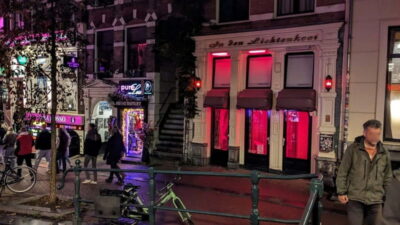
Amsterdam’s Red Light District is more than neon windows and late-night crowds. This 1.5-hour walk looks at the area’s sex-work system, politics, and history, then ends with a short visit to one of the last live peep shows of its kind.
I like the tiny groups, limited to four people, because you can hear the guide on narrow, crowded streets and ask direct questions. I also like the serious tone: guides such as Noemi, Ginevra, Lili, and Joschka mix humor with care instead of treating the district as a joke. The main drawback is value. At $61 per person, plus €2 for the peep show, this is not a cheap stroll, especially if you mainly want photographs or a quick look around.
Key points to know before you book
- Small groups of up to four: You get a quieter, more personal walk through the district than you would with a large crowd.
- A serious look at sex work: The guide explains earnings, working arrangements, politics, and efforts to protect sex workers.
- The peep show costs extra: The tour includes the visit, but you pay a separate €2 entry fee.
- No cameras are allowed: You must respect strict rules around privacy, and photographing sex workers is forbidden.
- About 1.8 kilometers of walking: The route moves at a comfortable pace from Dam Square to Nieuwmarkt.
- English or German only: Choose one language when booking, since the tour is not bilingual.
Starting beneath the National Monument at Dam Square
Meet your guide on the steps of the white National Monument in Dam Square. Look for the red name tag around the guide’s neck. This is an easy central meeting point, but Dam Square can be noisy and crowded, so arrive with enough time to spot the right person.
The walk covers about 1.8 kilometers, or 1.2 miles, over 90 minutes. It is not a long-distance hike, but you will be on your feet for the entire tour and moving through narrow streets. The pace is described as comfortable, and one guide adjusted the walk for a participant using walking sticks, which is useful to know if you need a slower rhythm.
The guide speaks either English or German. The tour is not bilingual, so pick carefully. The group limit of four is one of the experience’s best features. In the Red Light District, where streets can be tight and noisy, a small group makes it easier to hear explanations and ask questions without shouting.
More Red Light District walks:
- Amsterdam: Red Light Secrets Museum Entry Ticket
★ 4.2 · 5,722 reviews - Amsterdam: Red Light District Tour in German/English/Italian
★ 4.9 · 5,623 reviews - Amsterdam Red Light District & Coffee Shop Tour
★ 4.6 · 4,134 reviews
Dam Square and the changing face of Amsterdam
The first stop is Dam Square, where the guide sets the district in its wider city context. You are not simply being led toward red windows. You are starting with the political and social forces that shaped Amsterdam’s center.
Expect about 10 minutes here. The guide introduces the area and explains how Amsterdam manages a district that is at once a workplace, a historic quarter, and a major tourist draw. This opening helps you listen to the rest of the tour with more care.
The setting also makes the limits of the experience clear. This is an outdoor walking tour in a working neighborhood, not a staged attraction. The city continues around you, and the guide must balance explanation with the privacy of people who live and work nearby.
The Condomerie and practical sexual health
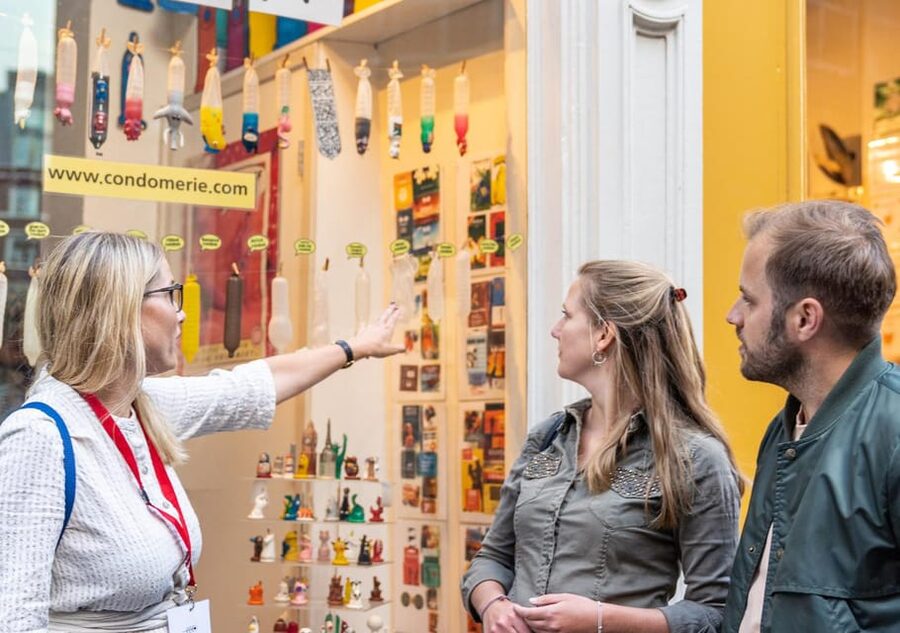
The route continues to the Condomerie, with about 15 minutes of guided explanation. This stop adds a practical and cultural angle to the district. It shows how sexual health, public discussion, and the commercial side of sexuality have found a place in Amsterdam.
I find this kind of stop useful because it moves the subject away from simple shock value. The tour is meant to explain how the district operates and how sex work has been discussed and managed in the Netherlands. You can ask questions about the system, what workers earn, and how people make a living.
The guide’s approach matters here. Noemi was praised for combining fun with clear explanations, while Lili was noted for handling delicate topics in a tasteful way. That gives you a good sense of the expected tone: light humor may appear, but the subject is not treated as a free-for-all.
Oude Kerk beside the red windows
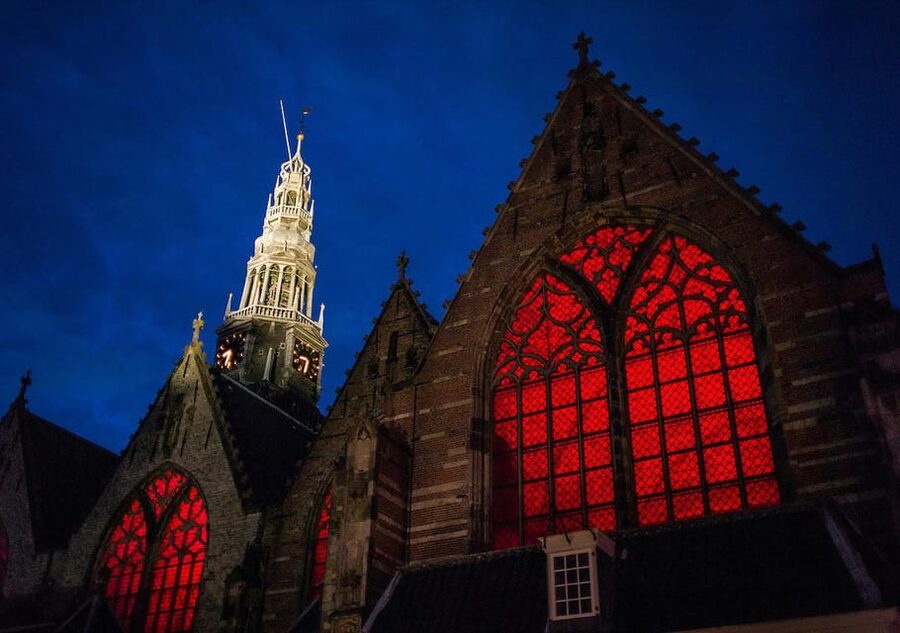
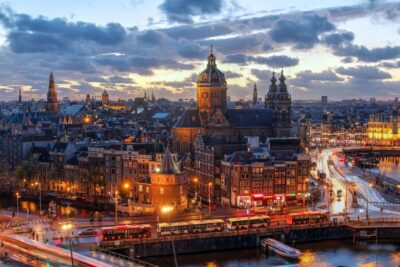
At the Oude Kerk, the tour spends around 15 minutes examining one of Amsterdam’s most striking contrasts. A major historic church sits in the middle of the Red Light District, surrounded by narrow lanes, bars, windows, and modern crowds.
The church helps explain why this area cannot be reduced to adult entertainment. It is part of Amsterdam’s older center, and the district’s religious, commercial, and social layers sit side by side. Your guide uses the setting to talk about the area’s past and its present political questions.
This is also where respectful behavior becomes especially important. You are walking through a real neighborhood, not a theme park. Keep your voice down when appropriate, follow the guide’s instructions, and do not photograph sex workers. The rule is firm, and it protects the people whose workplaces you are viewing.
A few more days out around Amsterdam worth weighing up
- Amsterdam: Van Gogh Museum Ticket
★ 4.7 · 52,054 reviews - Amsterdam Classic Saloon Boat Cruise with Drinks and Cheese
★ 5.0 · 31,825 reviews - Amsterdam Luxury Canal Cruise + Unlimited Drinks & Bites option
★ 5.0 · 30,518 reviews - Amsterdam: Heineken Experience Ticket
★ 4.6 · 30,055 reviews
Warmoesstraat and Amsterdam’s narrow streets
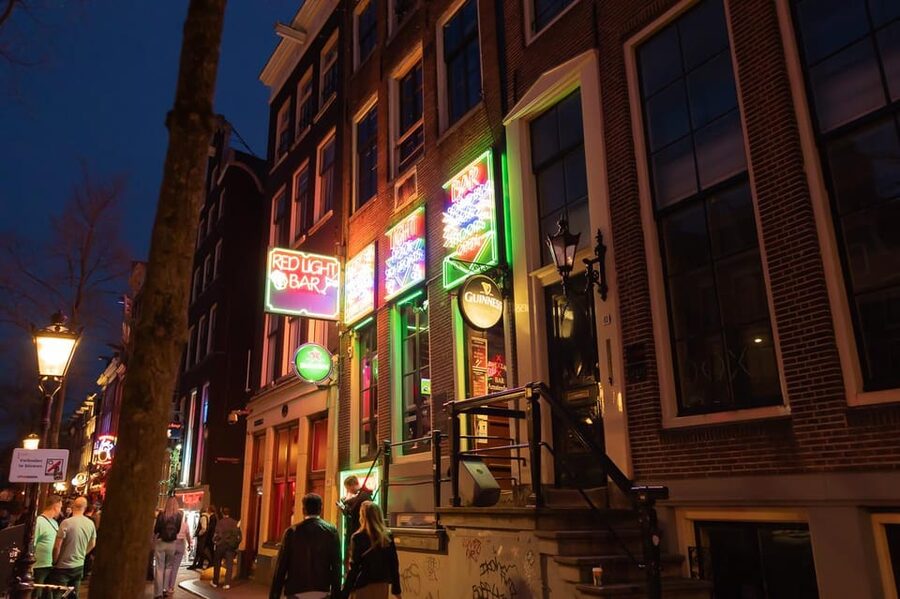
Warmoesstraat is a 10-minute stop for photographs of the surroundings and more guided discussion. The street gives you a feel for how compressed the district can be, with old buildings, narrow lanes, and businesses packed closely together.
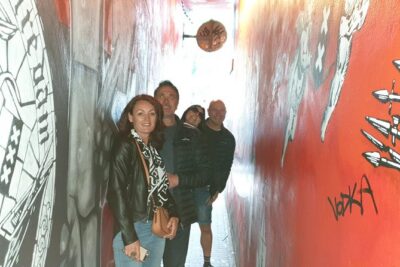
The walk then reaches one of Amsterdam’s narrowest alleys. The guide explains why it was once considered one of the hottest places in the Red Light District. The detail is memorable because it connects a physical space with the district’s changing reputation.
You may find this part more interesting than simply walking past a famous window. The guide provides a reason to notice the street layout, rather than rushing from one landmark to the next. At the same time, do not expect long stops at every location. The schedule is fairly full, and the group continues at a steady pace.
Dancing Houses and the odd details of the canal city
The Dancing Houses receive about 15 minutes of commentary and a photo stop. These leaning buildings are among Amsterdam’s familiar visual oddities, but they also help keep the walk connected to the city beyond the adult district.
The stop gives you a pause from the more sensitive material. You can look at Amsterdam’s unusual architecture while the guide continues to explain local stories and the character of the area. The mix of history, architecture, politics, and sex work keeps the walk from feeling like a one-topic tour.
This is also a good moment to judge the guide’s style. Joschka was praised for keeping a small group engaged with appropriate jokes, while Ginevra was appreciated for making people laugh while still explaining the solemn side of the district. The best guides appear to know when humor helps and when it would be out of place.
Borstplaat in brons and the small art stop
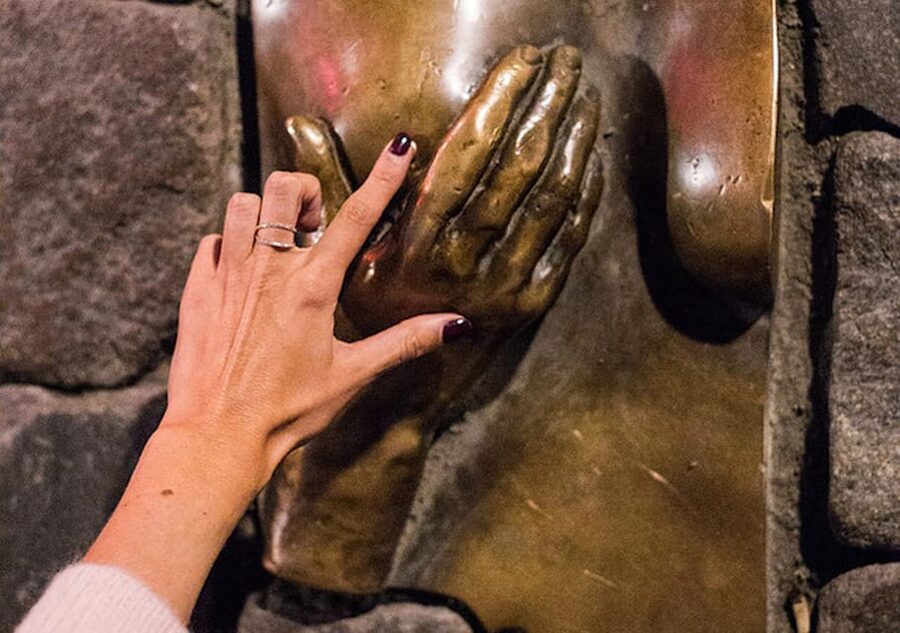
The short stop at Borstplaat in brons lasts about five minutes. It is not the longest part of the route, but it adds a piece of public art to the walk.
Short stops like this are useful because the tour is not built around a single sensational attraction. You are seeing small details that help describe the district’s culture and public identity. The guide can use the artwork as another way to discuss how Amsterdam represents sexuality, commerce, and everyday life.
Do not expect a large museum visit here. This is an outdoor point of interest within a moving walking route. Its value comes from the explanation rather than the length of the stop.
The Bulldog and coffeeshop politics
The Bulldog The First Coffeeshop gets around 15 minutes of guided discussion. The tour does not include an inside visit to a coffeeshop, so you are learning about the setting and its social and political background from the street.
This distinction matters. If you want to sit inside, buy something, or sample cannabis, this experience will not provide it. Instead, the guide discusses the history and politics of coffeeshops and their place in Amsterdam’s system.
I like this part because it broadens the tour beyond prostitution. Sex work and coffeeshops are often lumped together by first-time visitors, but they involve different rules and public debates. A guide can help separate the subjects and explain why the district developed the way it did.
The discussion also suits people who want more than surface facts. Kendra’s experience with guide Kubra focused on the connection between prostitution, local culture, and efforts to protect women and normalize the work. That is the kind of framework this stop can provide.
The live peep show at Sex Palace
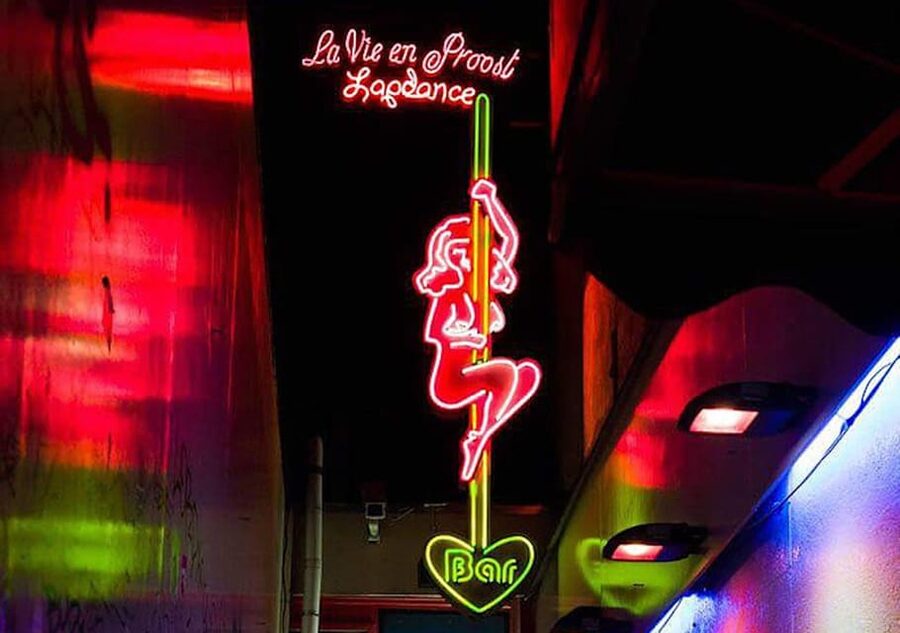
The final major stop is Sex Palace, an iconic 1970s-style live peep show. The visit takes about 10 minutes, including the guide’s explanation and a short dance show. The activity itself is described as a fun two-minute experience with no physical contact with another person.
You pay an additional €2 entry fee. The tour includes the visit, but it is not covered by the advertised price. This is a small extra cost, yet it is worth knowing before you arrive because the experience may feel awkward to request at the end if the guide does not clearly raise it.
One booking experience ended without the peep show being offered, leaving the participant unsure about asking. I would treat this as a practical point: if you want to go, confirm the timing with the guide during the walk. The peep show is optional, so you can also skip it without missing the main historical and political part of the tour.
This stop will not suit everyone. It is not a museum display or a theatrical performance for all ages. The tour does not accept children under 16, and participants aged 16 to 18 must be with a parent or guardian. Anyone under 16 can only join a private tour, which may be adjusted for age.
Ending near Nieuwmarkt
The tour ends at Nieuwmarkt rather than returning to Dam Square. This makes the route useful if you plan to continue exploring the old center afterward.
You finish with a clearer idea of how the district fits into Amsterdam’s broader city structure. The route has moved from Dam Square through historic streets, past the Oude Kerk and coffeeshop culture, and into the heart of the red windows before reaching Nieuwmarkt.
Because this is a one-way walk, wear shoes suited to city streets and prepare for rain. The tour runs in all weather, so an umbrella is a sensible addition. Friday and Saturday nights are especially crowded. If you want more room to hear the guide and less pressure from large crowds, choose another day when possible.
What the small group really adds
The group size is not just a marketing detail. A maximum of four people changes how the walk works.
In a large group, you may miss remarks on a narrow street or hesitate to ask a personal question. Here, you can usually stay close to the guide and take part in a more natural conversation. Jessica appreciated being able to hear everything on busy streets, and Victoria found four people to be the right size for asking questions without slowing others down.
Small groups also allow the guide to take you directly through the center of the district. New city rules limit larger tour groups from walking directly through parts of the area, so the small format helps preserve the route’s central focus.
Private tours are also available. The supplied details do not specify the private-tour price or exact adjustments, so check those details before paying. Younger participants under 16 require a private tour, with the route adapted according to age.
A respectful tour, not a permission slip
The most important expectation is behavioral. Cameras are not allowed, and photographing sex workers is forbidden. Alcohol, drugs, intoxication, littering, and unaccompanied minors are also prohibited.
These rules are not minor footnotes. They shape the experience. You are passing real workplaces and residential streets, and people in the windows are not performers waiting for your camera. If your interest is based mainly on taking provocative photographs, this is not the right activity.
The guide takes a critical view of sex work in Amsterdam. You will hear about how workers earn money, how the system functions, and the political arguments around regulation and protection. The goal is not to tell you what to think, but to show that the district involves real work, legal questions, public policy, and human consequences.
Guides such as Deborah also appear to handle difficult crowd conditions with care. During Pride, she adjusted the experience around the activity in the streets and kept the pace manageable for someone using walking sticks. That suggests the small format can help when the center is unusually busy.
Is $61 a fair price?
At $61 per person, this is a premium walking tour. The 1.5-hour length alone would not justify that price for everyone. A casual self-guided walk through the district costs nothing, and you can see many streets and landmarks without a guide.
The value comes from access to interpretation and a very small group. You are paying for an English or German-speaking guide, a route through the heart of the district, political context, explanations of sex work, coffeeshop history, and the included €1.50 city tax. The peep show requires another €2.
I would consider it good value if you want to ask questions and understand what you are seeing. I would consider it poor value if you simply want a quick walk past the red windows. The guided explanation is the core product, not the number of landmarks.
The strong overall rating of 4.9 from 63 reviews fits the experience’s main strengths: guides are repeatedly praised for warmth, clear explanations, appropriate humor, and care with sensitive subjects. Noemi, Ginevra, Lili, Joschka, Kubra, Josh, and Deborah are among the guides singled out for making the walk engaging and considerate.
One lower rating raised a fair concern about price and the peep show not being clearly offered. That is the main practical weakness I would keep in mind.
Who should book this Red Light District walk?
I would recommend it to adults who want context rather than shock value. It works especially well for first-time visitors who want to understand the district’s history, politics, sex-work system, and coffeeshop culture in one compact walk.
It also suits people who dislike huge tour groups. The four-person limit makes it easier to hear the guide and discuss subjects that can feel awkward in a crowd.
I would not choose it for children, anyone looking for a nightlife crawl, or anyone hoping to take photographs of the windows. It is also not the best match if you want to enter a coffeeshop, since the tour does not include an inside coffeeshop visit.
Book it if the guided explanation is worth more to you than the landmarks themselves. Skip it if you prefer to wander independently and do not want the peep-show component. If you do book, choose English or German carefully, avoid Friday and Saturday if possible, bring rain protection, and ask early about the optional €2 peep show.
FAQ
How long does the Red Light District tour last?
The tour lasts 1.5 hours, with about 1.8 kilometers of walking at a comfortable pace.
Where does the tour start?
It starts at the National Monument in Dam Square. Your guide waits on the steps of the white obelisk and wears a red name tag.
Where does the tour finish?
The walk ends at Nieuwmarkt.
Is the tour offered in English?
Yes. It is offered in English or German. The tour is not bilingual, so choose your language when booking.
How large is the group?
The experience is offered in private or small groups, with small groups limited to four people.
Is the peep show included in the price?
The visit is part of the tour, but the €2 entry fee is not included. The peep show is optional.
Can I visit a coffeeshop during the tour?
No. The tour discusses coffeeshop history and politics, including The Bulldog The First Coffeeshop, but it does not include an inside coffeeshop visit.
Can I take photographs?
No cameras are allowed on the tour, and photographing sex workers is forbidden.
More Show in Amsterdam
- Coqtales Show: The Hottest Male Show in Amsterdam, Magic Mike
★ 5.0 · 216 reviews - Amsterdam: ‘Boom Chicago’ English Comedy Show
★ 4.5 · 213 reviews - English Comedy Show Amsterdam: Boom Chicago
★ 4.5 · 112 reviews - Amsterdam: VEGAS Dinner Show with 3-Course Sharing Menu
★ 4.4 · 99 reviews
Just added around Amsterdam
- From Amsterdam: The Hague Private Trip and Mauritshuis Entry★ 4.3 · 4 reviews
- VIP Private Full Day Tour of the Netherlands★ 4.8 · 6 reviews
- Amsterdam Old-West Vegan Food Tour with Local Guide★ 4.7 · 3 reviews
- Amsterdam: Van Gogh Museum Guided Tour★ 4.8 · 262 reviews
- Van Gogh Museum Private Guided Tour★ 4.2 · 10 reviews
- Vecht River: Full-day Cruise with Lunch★ 4.8 · 9 reviews
- Van Gogh and Rijksmusuem Tour: Small Group Tour with Entry★ 4.7 · 3 reviews
- Amsterdam: Van Gogh Museum Ticket & Guided Tour★ 4.4 · 187 reviews
Red Light District Tours, compared.

Red Light District Tour in German/English/Italian
Read our review →
Amsterdam Red Light District & Coffee Shop Tour
Read our review →
Red Light District Pub Crawl with Unlimited Shots
Read our review →
Private Amsterdam Red Light District and Coffee Shop Tour
Read our review →Browse the lists this tour appears in