
Reviewed · RED LIGHT DISTRICT TOURS
Amsterdam: Red Light District and Coffeeshop tour
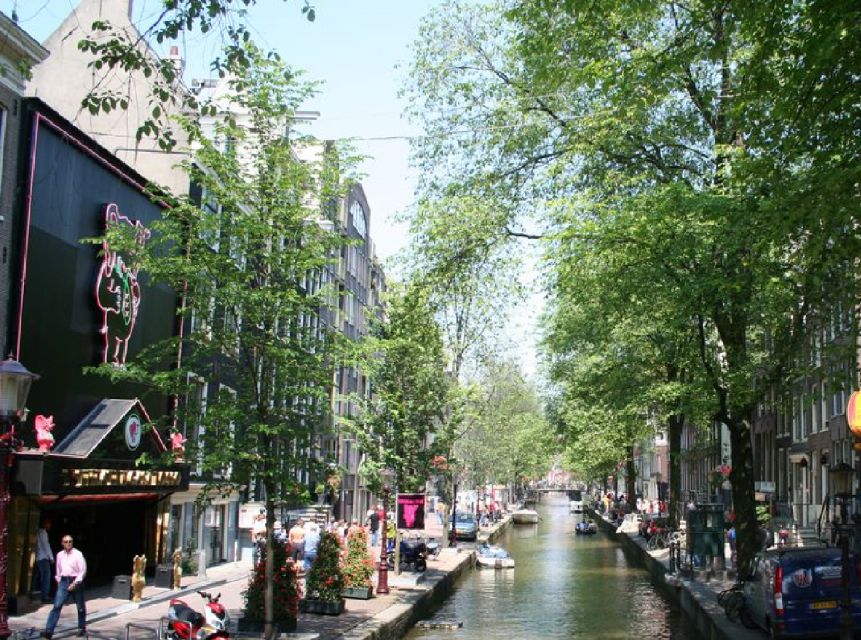
Amsterdam’s Red Light District is not just a row of glowing windows. It is one of Amsterdam’s oldest quarters, packed with canals, wooden houses, old pubs, Chinatown streets, and a modern debate about prostitution and drug policy. This two-hour walking tour helps you read the neighborhood instead of simply staring at it.
I like the way the walk connects the red-window streets with the district’s older buildings and canals. I also like its attention to people, especially the effort to explain prostitution as a profession and to humanize the workers rather than treat the area as a sideshow.
The main drawback is that two hours goes quickly. You will see many major sights, but the tour is more of a guided introduction than a complete study of Amsterdam’s laws, nightlife, and coffeeshop culture. Starting points can also vary by booking option, so check the details before setting out.
Key points to know before you book
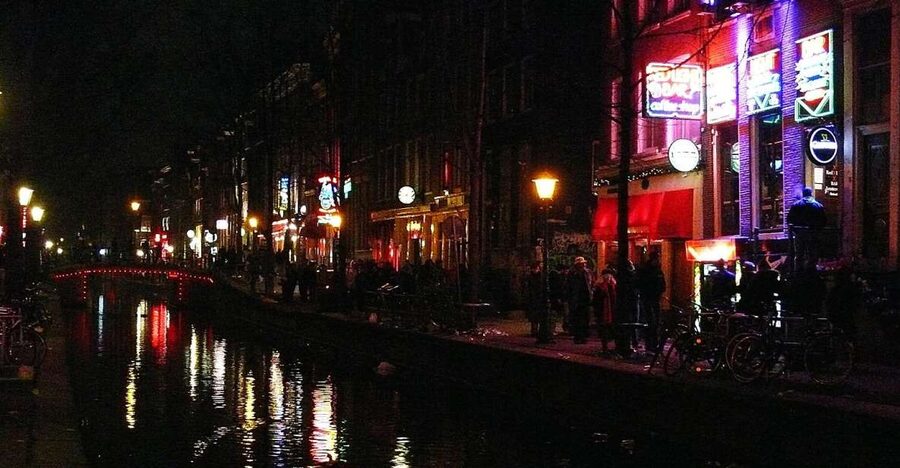
- Red-window streets with context: Learn how the district developed and how prostitution is regulated.
- Amsterdam’s oldest quarter: See historic canals, wooden houses, and the city’s oldest building.
- Chinatown and Zeedijk: Walk past old pubs and hear how Amsterdam’s Chinatown took shape.
- Coffeeshop culture: Discuss laws, regulations, production, and landmarks such as The Bulldog.
- A thoughtful guide matters: Guides such as Aarre have been praised for being friendly, clear, and engaging.
- Short, focused format: The two-hour English walk suits a first look, not a full evening of independent exploration.
Walking into Amsterdam’s oldest quarter
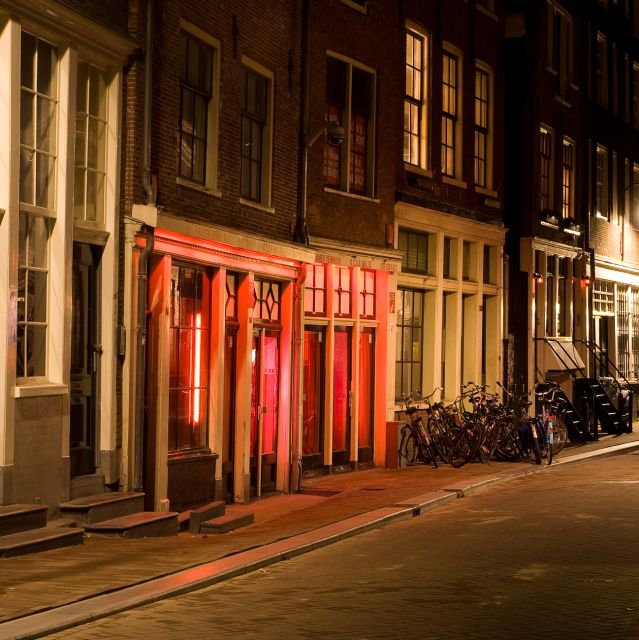
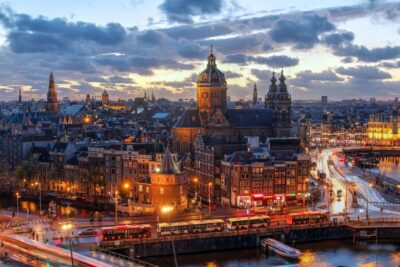
The tour begins in the historic center, where the Red Light District occupies some of the oldest ground in Amsterdam. You will not be walking through a purpose-built entertainment zone. The setting includes canals, narrow streets, old buildings, and beautiful wooden houses, all mixed with bars, nightclubs, sex shops, and red-lit windows.
That contrast is the heart of the experience. Amsterdam’s reputation for liberal attitudes did not appear in isolation. The guide links the present-day district to the city’s long urban history, giving you a better sense of why this part of town looks and functions as it does.
You will see the oldest building in Amsterdam during the walk. The supplied details do not name it or provide its construction date, but its place on the route gives the tour useful historical weight. You get more than a look at today’s nightlife. You also see the older city beneath it.
I would pay close attention to the canals and wooden houses here. They are easy to overlook when the red lights and crowds draw your eyes elsewhere, yet they help explain why this neighborhood feels like a historic district first and a nightlife district second.
More Red Light District walks:
- Amsterdam: Red Light Secrets Museum Entry Ticket
★ 4.2 · 5,722 reviews - Amsterdam: Red Light District Tour in German/English/Italian
★ 4.9 · 5,623 reviews - Amsterdam Red Light District & Coffee Shop Tour
★ 4.6 · 4,134 reviews
Red windows, working women, and the district today
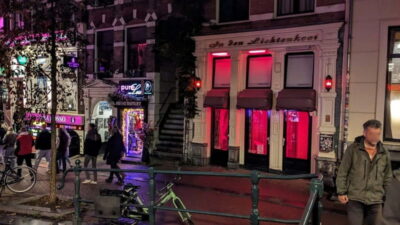
The famous red windows are the tour’s main subject, but the guide does not present them only as a photo opportunity. You will walk along the prostitute streets and learn about the women who work there, the history of the area, and the district’s current situation.
That human focus is one of the strongest reasons to book a guided walk instead of wandering without context. The area can invite quick judgments. A good explanation gives you room to understand the profession, the surrounding culture, and the policies that shape what you see.
The tour also covers the laws and policies connected with prostitution and the red windows. The supplied information does not promise legal advice or a detailed political lecture, so I would expect a clear overview rather than an exhaustive account of every rule.
You should also remember that this is a working neighborhood, not a theme park. The tour’s subject involves real people and real workplaces. Listen carefully, follow the guide’s instructions, and treat the red-window streets with basic respect. The value of the walk comes from understanding the area, not from turning it into a spectacle.
One guide praised for this kind of approach is Aarre, described as friendly, engaging, and clear in answering questions. Another guide was noted for tying the district’s past to its present and for presenting workers and the profession in human terms. The exact guide may vary, but those are useful qualities to look for during the walk.
Zeedijk and Amsterdam’s Chinatown
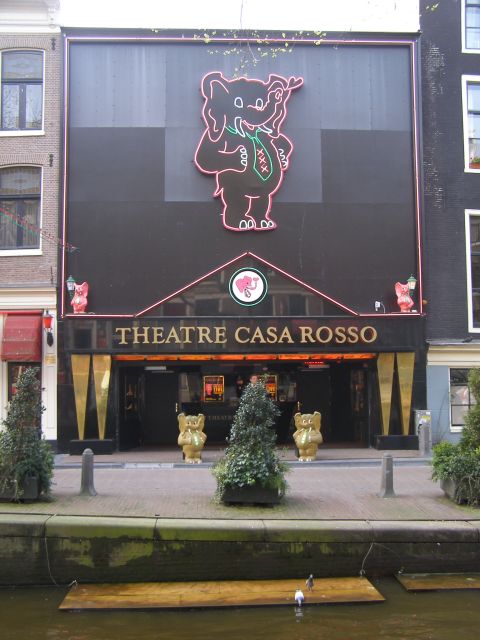
The route includes Amsterdam’s Chinatown, centered around Zeedijk. This gives the tour a useful change of pace. The area is not presented as a separate stop unrelated to the Red Light District. Instead, the guide explains its place within the neighborhood’s history and points out some of the city’s oldest pubs.
Zeedijk helps show how different communities, businesses, and nightlife traditions share the same compact part of Amsterdam. You might arrive expecting only red windows and coffeeshops, then find yourself looking at older streets and long-running pubs.
The tour details do not specify the names of the pubs or whether you enter them. Plan to view them from the street unless your guide says otherwise. Food and drinks are not included, so any stop for refreshments would be at your own expense.
This section should appeal to you if you want more than the district’s most famous adult attractions. Chinatown and the old pubs add local texture, while the guide’s commentary helps connect the streets to the city’s wider past.
Coffeeshop culture beyond the shopfronts
Amsterdam’s coffeeshops are another central part of the walk. The guide explains the culture, laws, regulations, and production process, helping you separate popular images from the way the system is actually presented in the city.
You will see places connected with coffeeshop culture, including The Bulldog. The tour is designed to explain the setting rather than provide food or drinks, and the supplied information does not say that a purchase or tasting is included.
This distinction matters. At $40 per person, you are paying for a guided explanation and a two-hour route, not for cannabis, refreshments, or entry to a special attraction. If you mainly want to buy something, this is not the right reason to book. If you want to understand the role of coffeeshops and the policies around them, the walk offers more value.
The guide also discusses drug laws and regulations. Because rules can be detailed and subject to change, treat the talk as an introduction to local policy. For current legal requirements, check official Dutch sources rather than relying only on a tour conversation.
You may also see a smartshop during the walk. The itinerary includes this type of business alongside sex shops, The Bulldog, and the Condomerie. Together, these stops show how Amsterdam’s adult and drug-related commercial culture is presented openly within a historic city center.
A few more days out around Amsterdam worth weighing up
- Amsterdam: Van Gogh Museum Ticket
★ 4.7 · 52,054 reviews - Amsterdam Classic Saloon Boat Cruise with Drinks and Cheese
★ 5.0 · 31,825 reviews - Amsterdam Luxury Canal Cruise + Unlimited Drinks & Bites option
★ 5.0 · 30,518 reviews - Amsterdam: Heineken Experience Ticket
★ 4.6 · 30,055 reviews
Small details that make the route memorable
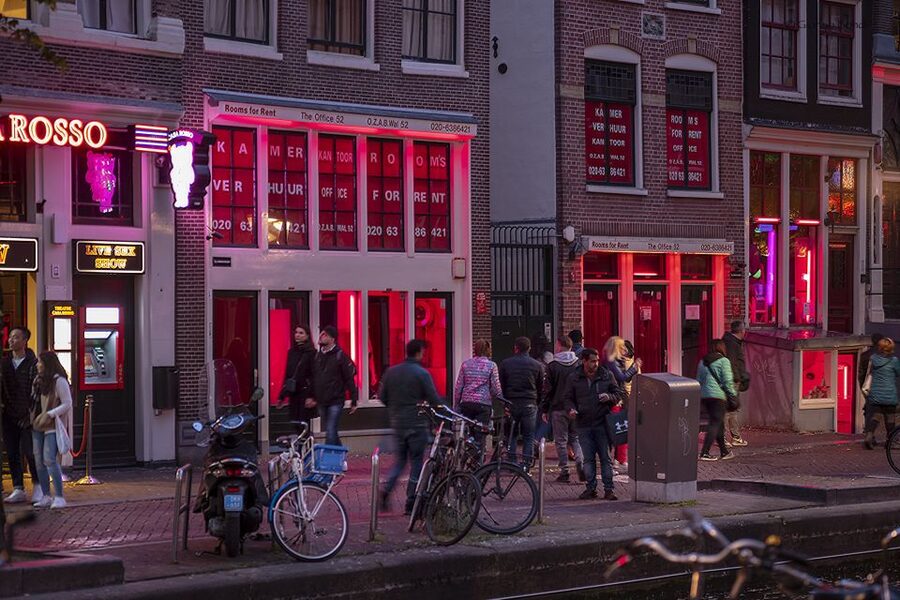
The itinerary includes Amsterdam’s narrowest street, though it does not provide its name or exact dimensions. This is the kind of quick visual detail that can make a walking tour easier to remember, especially when the main theme is already familiar from photographs and guidebooks.
The Condomerie is another unusual stop. Its inclusion gives the guide a chance to explain how sexual health and commercial sex appear within the neighborhood, rather than treating the district as nightlife alone.
You will also pass sex shops and bars, and you may see nightclubs along the route. The tour does not include food or drinks, so come prepared to walk for two hours without a scheduled meal break.
The route seems built around variety: historic buildings, canals, wooden houses, Chinatown, pubs, red windows, coffeeshops, smartshops, and adult businesses. That mix is helpful because the Red Light District can otherwise feel repetitive after the first few streets.
What the two-hour format does well
Two hours is a sensible length for a first introduction. It is long enough to move beyond the most obvious streets and include Chinatown, historic sights, coffeeshop culture, and the red-window area without taking up an entire day.
The trade-off is depth. You will receive a structured overview, but you should not expect a detailed investigation into every legal, social, and historical question. The guide must keep moving, and some stops will be viewed from the street.
I like this format for your first day or two in Amsterdam. It gives you a map in your head and a set of terms to think about before you return to the area on your own. It can also help you decide which parts deserve more of your time.
The tour finishes back at the meeting point. Since the exact meeting point may vary according to the option you choose, read the booking information carefully and allow enough time to reach the stated location.
How much value do you get for $40?
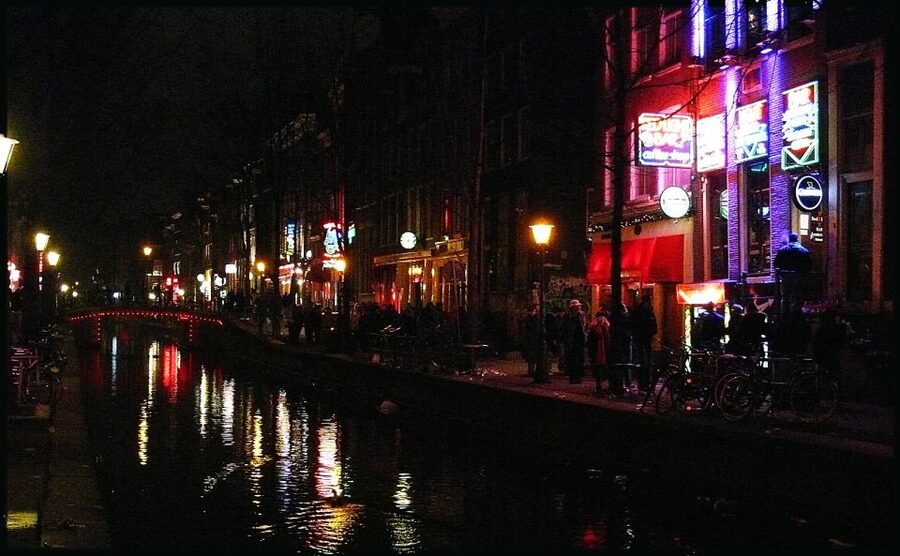
At $40 per person, this is not a cheap casual stroll, but the cost is reasonable if you want an English-speaking local guide to explain a complicated neighborhood in a short time. You are paying for interpretation, route planning, and the chance to ask questions while seeing the main sights.
The value is strongest when you care about context. A self-guided walk can show you the windows, canals, shops, and buildings, but it may not explain how prostitution, coffeeshops, drug policy, Chinatown, and the district’s older history fit together.
The value is weaker if you want nightlife, drinks, or a private experience. Food and drinks are not included, the group size is not stated, and the tour is conducted in English. You also should not expect admission to a club or a private meeting with workers.
The five-star rating and praise for guides such as Aarre support the idea that the guide is a major part of what you are buying. The most important qualities are friendliness, clear answers, and the ability to discuss a sensitive subject without reducing it to jokes.
Who will enjoy this Red Light District walk?
I would recommend it to first-time visitors who want to understand why Amsterdam became associated with prostitution, marijuana, and progressive drug policies. It also suits you if you prefer a walking tour that combines social history with visible landmarks.
It is a good match for curious adults who want to ask questions. The guide’s role is especially useful here because the neighborhood raises subjects that can be confusing when viewed only from the street.
The tour may also suit you if historic Amsterdam interests you as much as the nightlife. The oldest building, canals, wooden houses, Zeedijk, Chinatown, and old pubs give the walk a broader frame.
I would be more cautious about booking it for young children or for anyone seeking a quiet architectural walk. The route includes red-window streets, sex shops, smartshops, bars, nightclubs, and adult themes. The supplied information does not set an age limit, so check the booking conditions if that matters to your group.
It is also not ideal if you want a highly specialized legal or social policy course. You will hear about laws, regulations, and the current district, but the experience lasts only two hours and covers a wide area.
Practical advice before you go
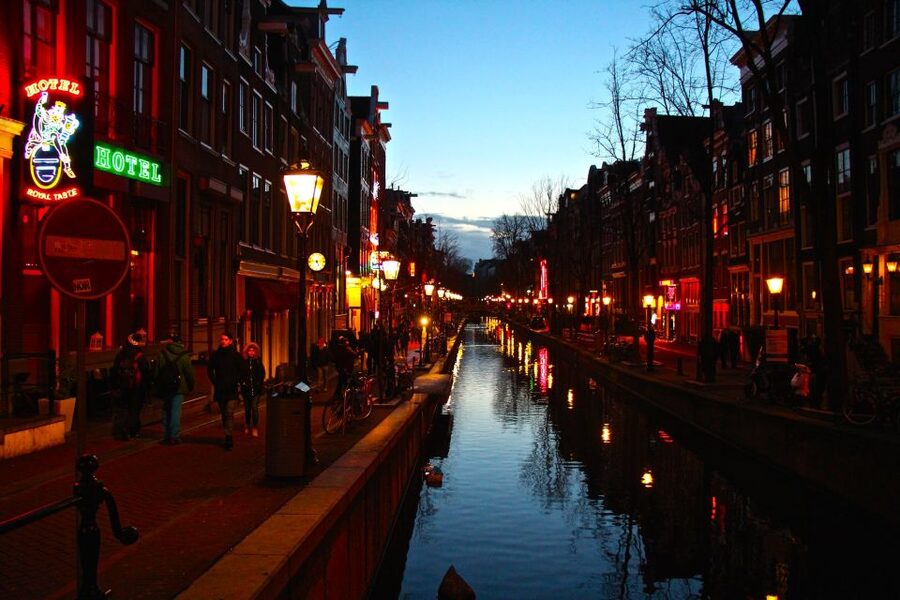
Choose a starting time that leaves room for the rest of your day. The tour lasts two hours, and the neighborhood can be a useful orientation for a later independent visit.
Wear comfortable shoes. The experience is entirely a guided walking tour, with no included transport and no mention of a seated portion. Your meeting point may vary, so confirm the exact location for your selected option.
Bring questions about the subjects that interest you most. The guide is expected to answer questions, and the strongest part of the experience may be the explanation that helps you understand what you are seeing.
Keep your camera away from the red windows unless the guide clearly indicates that photography is acceptable. The supplied information does not give a formal photography policy, but respectful behavior is essential in a working district.
You can cancel up to 24 hours before the tour for a full refund, according to the booking terms. A reserve-now, pay-later option is also available, which helps if your Amsterdam schedule is still shifting.
Should you book this tour?
Book it if you want a short, thoughtful introduction to Amsterdam’s most controversial neighborhood. The mix of red-window streets, old canals, Chinatown, coffeeshop landmarks, historic buildings, and clear discussion of local policies gives you far more than a quick look at the lights.
I especially recommend it if you value a guide who can humanize the workers and answer questions without turning the subject into cheap entertainment. A two-hour walk with a guide such as Aarre can give you useful context before you explore the district on your own.
Skip it if you want drinks, food, club entry, or a private tour. At $40, the price makes sense for explanation and orientation, not for included extras. For most curious first-time visitors, though, it is a practical way to see the area with better judgment and a clearer understanding of what is behind the famous windows.
FAQ
How long does the Amsterdam Red Light District and Coffeeshop tour last?
The walking tour lasts two hours. Starting times depend on availability.
What language is the tour conducted in?
The live guided tour is conducted in English.
What areas and sights does the tour include?
The route includes the Red Light District, red-window streets, historic canals, wooden houses, Amsterdam’s oldest building, Chinatown, Zeedijk, old pubs, coffeeshop landmarks, sex shops, smartshops, the Condomerie, and Amsterdam’s narrowest street.
Does the tour visit a coffeeshop?
The tour includes information about coffeeshop culture, laws, regulations, and production. It also passes places such as The Bulldog, but the provided details do not state that a purchase or tasting is included.
Are food and drinks included?
No. Food and drinks are not included in the tour price.
Where does the tour begin and end?
The meeting point can vary according to the option booked. The activity ends back at the meeting point.
Who guides the tour?
A professional local guide leads the walk. The guide may vary, and Aarre is one guide associated with the experience.
Can I cancel for a full refund?
Yes. You can cancel up to 24 hours in advance for a full refund. A reserve-now, pay-later option is also available.
Just added around Amsterdam
- From Amsterdam: The Hague Private Trip and Mauritshuis Entry★ 4.3 · 4 reviews
- VIP Private Full Day Tour of the Netherlands★ 4.8 · 6 reviews
- Amsterdam Old-West Vegan Food Tour with Local Guide★ 4.7 · 3 reviews
- Amsterdam: Van Gogh Museum Guided Tour★ 4.8 · 262 reviews
- Van Gogh Museum Private Guided Tour★ 4.2 · 10 reviews
- Vecht River: Full-day Cruise with Lunch★ 4.8 · 9 reviews
- Amsterdam: Van Gogh Museum Ticket & Guided Tour★ 4.4 · 187 reviews
- Van Gogh and Rijksmusuem Tour: Small Group Tour with Entry★ 4.7 · 3 reviews
Red Light District Tours, compared.

Red Light District Tour in German/English/Italian
Read our review →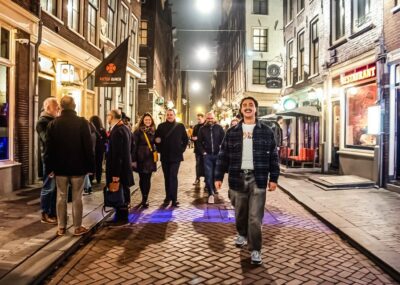
Amsterdam Red Light District & Coffee Shop Tour
Read our review →
Red Light District Pub Crawl with Unlimited Shots
Read our review →
Private Amsterdam Red Light District and Coffee Shop Tour
Read our review →Browse the lists this tour appears in