
Reviewed · RED LIGHT DISTRICT TOURS
Amsterdam: Red Light District & City Tour German or English
Amsterdam’s canal belt and Red Light District make an unusual pair, but that is exactly why this two-hour private walking tour works. You move from royal buildings and old churches to window prostitution, coffeeshops, Chinatown, and the city’s daily life without treating Amsterdam as a postcard set.
I like the way the tour explains both how Amsterdam developed and how it functions now. I also like the practical tips on food, neighborhoods, and cycling, which help you plan the rest of your stay. The main drawback is time: two hours is brisk for so many stops, and the Red Light District discussion may feel too frank for some families or visitors.
Key points to know before booking

- A private tour for up to four people: At $271 per group, the per-person cost drops to $67.75 when four people share it.
- One language at a time: Choose German or English when booking. The tour is not bilingual.
- A frank look at sex work: Expect discussion of prices, room rent, taxes, income, safety, and negotiations between clients and sex workers.
- A useful first-day orientation: The route links Dam Square, the canal belt, Chinatown, the old center, and the Red Light District.
- Named guides with strong praise: Chantal, Shari, and Amelie are singled out for lively, personal guiding in the available feedback.
- Rain or shine walking: Wear shoes for city streets and come prepared for Amsterdam weather.
Starting at Dam Square with Amsterdam in view
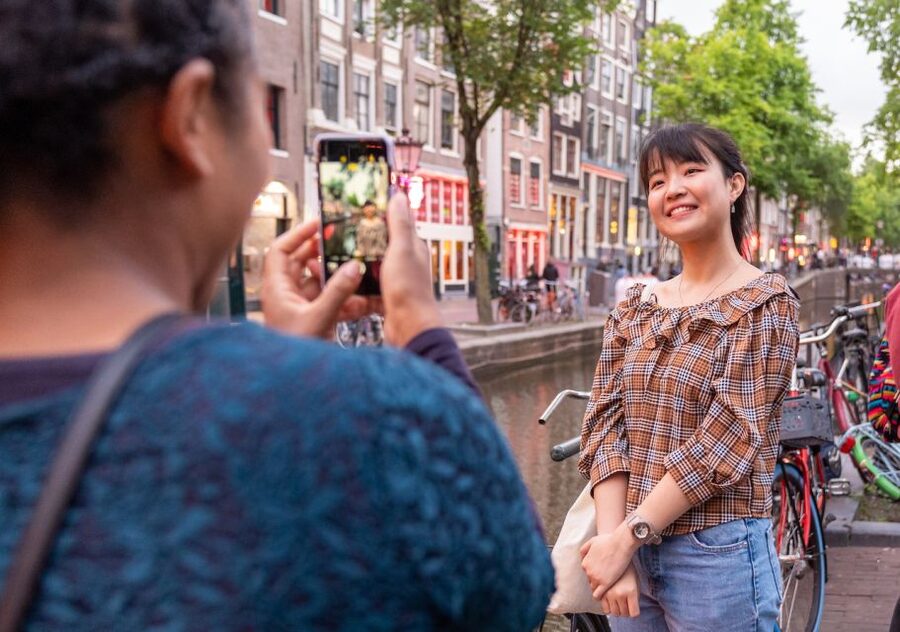
The walk begins at or near the National Monument at Dam 3, though the exact meeting point can vary with the option you book. Dam Square is a sensible place to start because it puts several major sights within a short walk and gives your guide room to explain Amsterdam’s past before the route turns toward more complicated subjects.
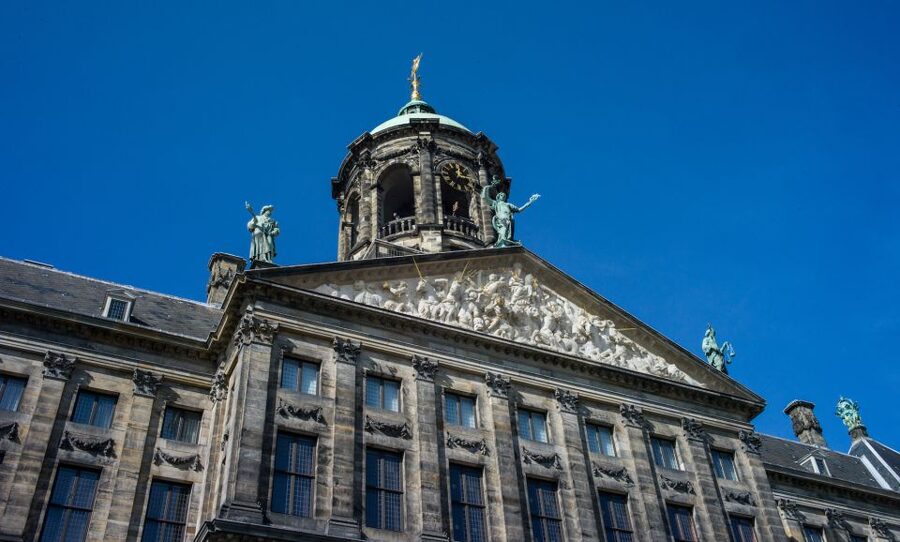
You’ll pause at Dam Square for about 10 minutes. This is not just a quick photo stop. The square brings together the Royal Palace, Nieuwe Kerk, the National Monument, shops, street traffic, and a steady flow of people, so it offers a first look at Amsterdam’s public face.
The Royal Palace follows, with another roughly 10-minute explanation. You will learn about the building’s place in Amsterdam’s civic and royal story, while the guide connects it to the city’s growth and changing role. Since the tour stays outside, you should think of this as an orientation stop rather than a palace visit.
At Nieuwe Kerk, the pause is shorter, around five minutes. That keeps the route moving, but it also means you should not expect a detailed interior tour. The value here is the setting and the way the guide links the church to the square and the city around it.
More City Tours in Amsterdam
- Amsterdam: 75 Minute City Canal Cruise with Audio Guide
★ 4.4 · 17,501 reviews - Amsterdam: City Centre Canal Cruise
★ 4.2 · 12,827 reviews - Amsterdam: Smoke and Lounge City Boat Cruise
★ 4.7 · 8,572 reviews
From the old church to the trading city
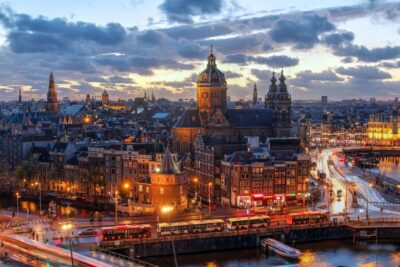
The route then moves toward the Oude Kerk, Amsterdam’s oldest church, for about 15 minutes. Its location in the Red Light District is one of the walk’s most striking contrasts. Sacred architecture and sex businesses occupy the same compact area, and that physical closeness helps explain why the district cannot be reduced to a modern entertainment zone.
Your guide uses the Oude Kerk area to discuss how Amsterdam changed over time. The tour’s history is not presented as a separate lecture followed by sightseeing. Instead, buildings and streets become prompts for explaining trade, religion, tolerance, business, and the choices that shaped the center.
Next comes the Beurs van Berlage, the former exchange building, with another 15-minute stop. This is where Amsterdam’s commercial identity comes into sharper focus. The building helps connect the old city to finance, trade, and the practical business culture that affected the canal belt and surrounding streets.
I appreciate this part of the route because it gives the Red Light District some context. You are not simply being taken from one curiosity to another. You are shown how commerce, religion, housing, tourism, and public life have long shared the same central streets.
Seeing the Red Light District with context
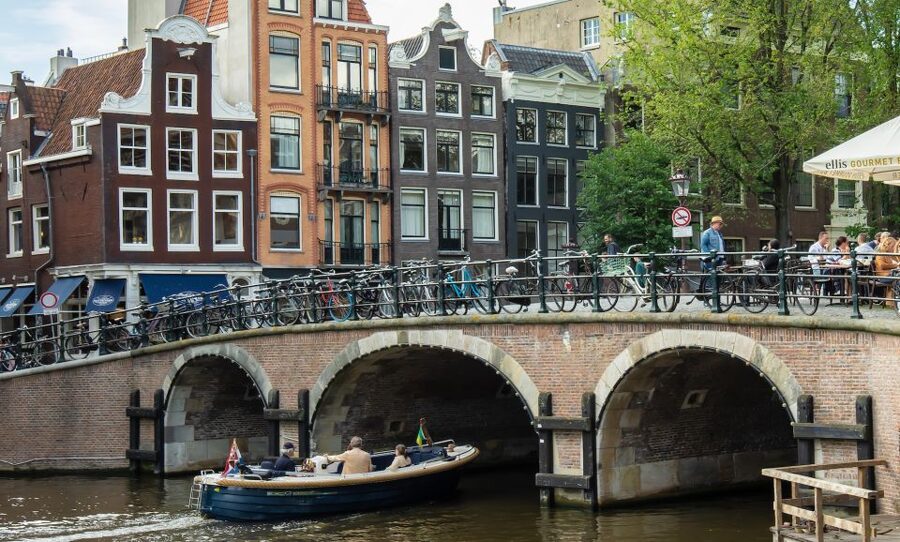
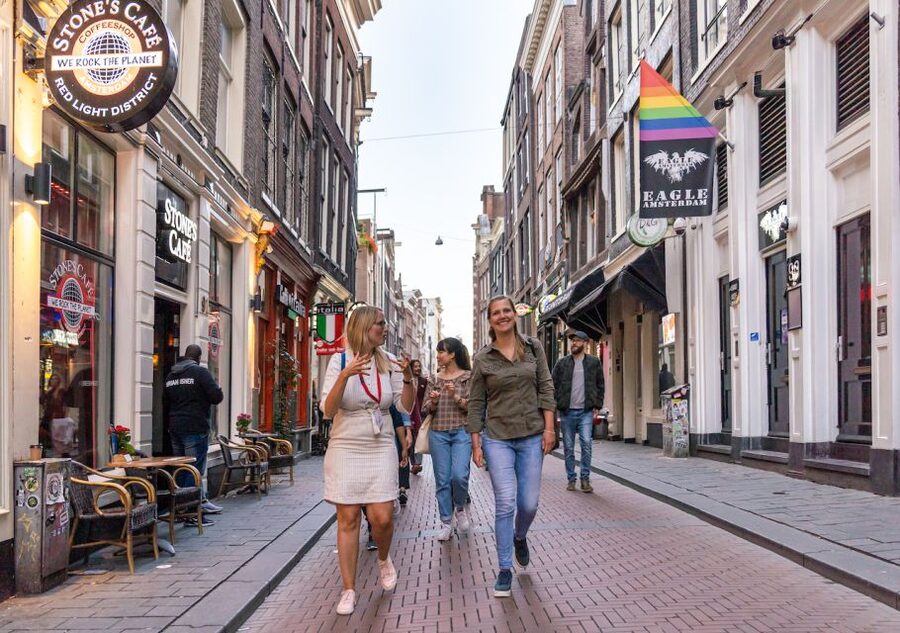
The Red Light District portion lasts about 10 minutes on the listed route, though the subject runs through the wider tour. This is a guided walk through a working neighborhood, not a performance or a theatrical show. You should expect frank discussion and respectful observation rather than sensational treatment.
The guide explains how negotiations between clients and sex workers work, along with income, expenses, room rent, pricing, taxation, and safety. You also hear about the daily work routine and the control systems used in the area. That information gives you a clearer sense of the business structure behind the famous red-lit windows.
This is useful because many visitors see only the surface. The tour asks you to consider who controls the rooms, how costs affect earnings, and how safety is handled. It also encourages questions about the limits and effects of regulation.
You should still use good judgment. Do not photograph sex workers, windows, or people who are simply going about their evening. The tour focuses on explanation, but the district remains a busy neighborhood with residents, workers, businesses, and people seeking entertainment. Keep your voice low, listen to your guide, and treat the area as a real part of the city.
The material may not suit young children or anyone who prefers to avoid sexual subjects. For adults who want a clear account without relying on rumor, it offers useful background. The guide’s tone matters here, and the strongest feedback points to guides who made the subject informative, witty, and approachable.
Dancing Houses and the canal belt
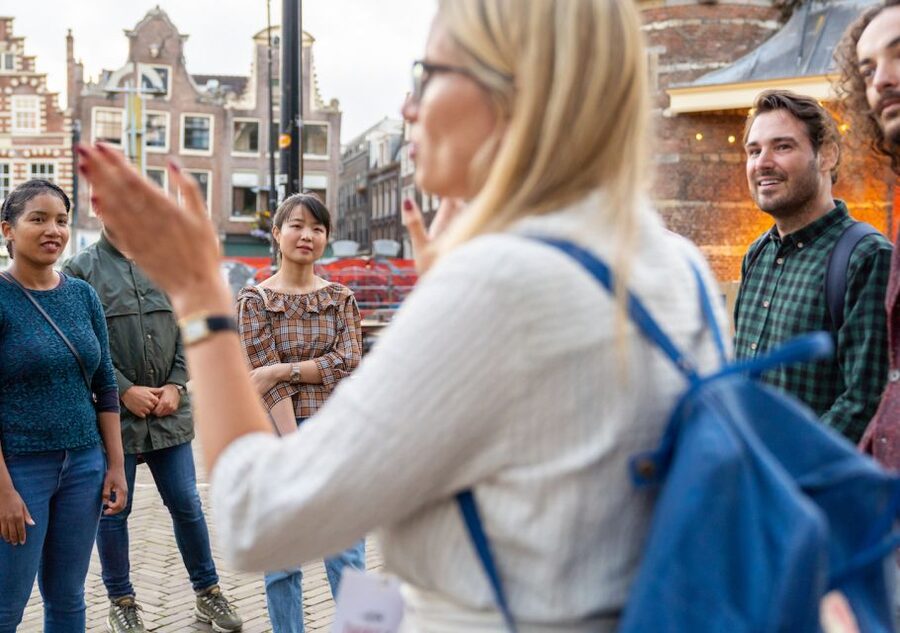
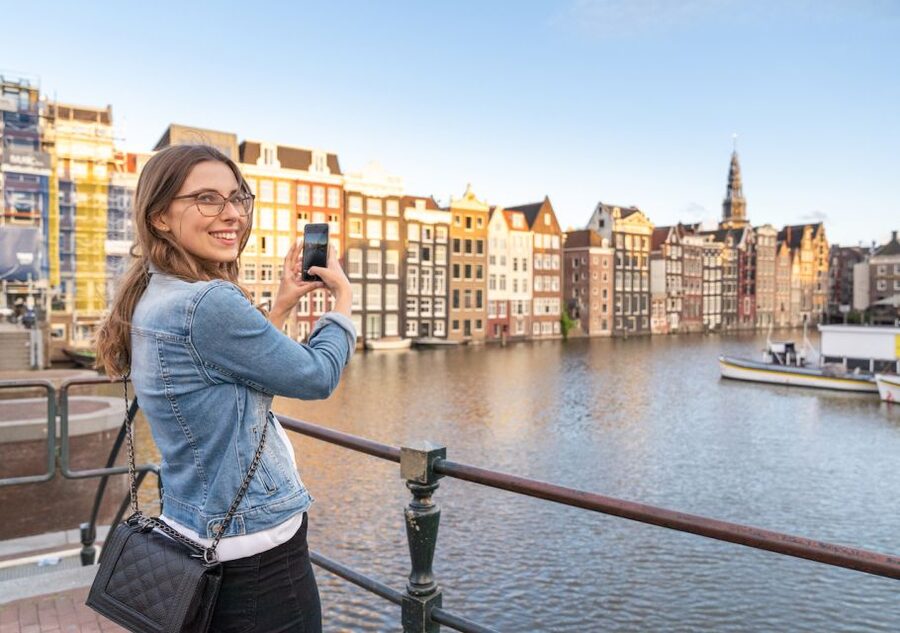
From the district, the walk continues to Amsterdam’s famous Dancing Houses. You will get about 10 minutes for a photo and explanation. These narrow, leaning buildings are a quick visual lesson in Amsterdam’s old building conditions, crowded plots, and canal-side architecture.
This is one of the lighter moments in the route. After the serious discussion of sex work, the crooked façades offer a simple reminder that Amsterdam’s character is also built from odd angles, narrow houses, and practical urban choices.
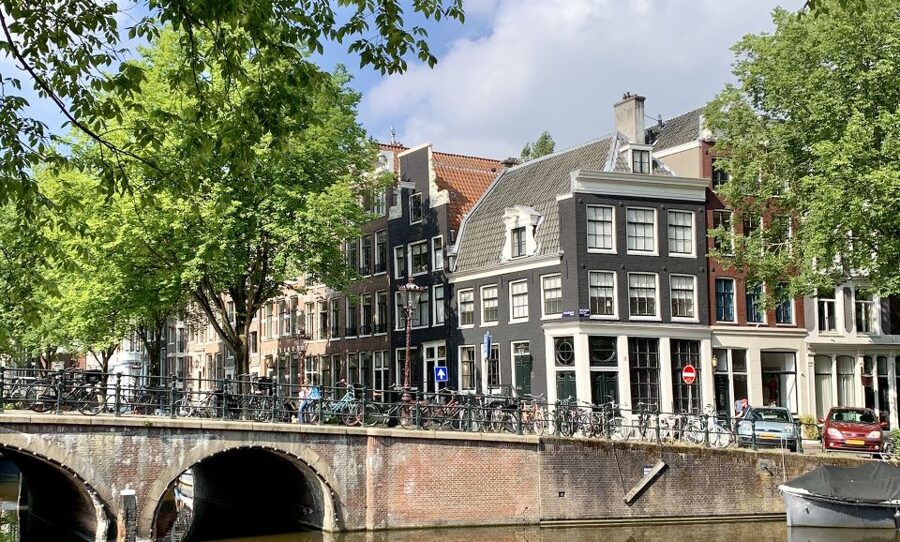
The canal-belt section is best approached as a moving introduction rather than a long architectural study. You will stroll along picturesque canals and see how the waterways frame the center. Your guide also points you toward districts worth exploring by bike and areas where you might find good food.
Those tips can be more useful than another list of famous buildings. A two-hour introduction cannot cover every neighborhood, but it can help you decide what to do next. If you are staying several days, ask your guide for specific suggestions during the walk.
More Red Light District walks:
- Amsterdam: Red Light Secrets Museum Entry Ticket
★ 4.2 · 5,722 reviews - Amsterdam: Red Light District Tour in German/English/Italian
★ 4.9 · 5,623 reviews - Amsterdam Red Light District & Coffee Shop Tour
★ 4.6 · 4,134 reviews - Amsterdam: Red Light District Pub Crawl with Unlimited Shots
★ 4.1 · 2,130 reviews
Centraal Station and the city’s mixed center
Amsterdam Centraal receives about 10 minutes of attention. The station is more than a transport hub. Its position at the edge of the historic center helps explain how visitors enter the city and how the canal area connects to the wider region.
You will not be touring the station’s platforms or taking a train as part of this experience. Instead, expect an exterior stop and a discussion of its place in Amsterdam. This is practical for first-time visitors because the station is a key reference point for later sightseeing.
The route then reaches Amsterdam Chinatown for another 10-minute guided section. Chinatown adds a different layer to the center’s identity, showing how several cultures and businesses share streets near the oldest parts of town.
The tour describes Amsterdam as free-spirited, tolerant, and multicultural, but it does not leave those words floating in the air. The route gives you visible examples: a royal palace, a historic church, sex businesses, coffeeshops, Asian restaurants and shops, canals, and a major railway station all within a compact area.
That mix is one of the experience’s strongest features. You get a more useful picture of Amsterdam than you would from a landmark-only walk. At the same time, the short timing means each stop receives a focused explanation, not a full historical treatment.
Coffeeshop culture and Nieuwmarkt
The stop at Coffeeshop The Jolly Joker lasts about 15 minutes, including a photo stop and guided explanation. The tour does not include food, drinks, or a purchase, so think of this as a chance to understand the place within Amsterdam’s wider culture and rules.
The guide can help separate local practice from the assumptions many visitors bring with them. Since the route also covers questions of regulation and control in the Red Light District, this stop fits the larger theme of how Amsterdam manages activities that are restricted, tolerated, or carefully watched.
You then continue to Nieuwmarkt Square for roughly 15 minutes. Nieuwmarkt gives the walk another strong public space and leads naturally toward De Waag, where the tour ends. The square is also a useful place to continue exploring on your own after the guide leaves.
The finish at De Waag is convenient for extending your day in the old center. Since the tour ends in the same general area as several earlier stops, you can use the guide’s suggestions right away rather than spending time getting back across town.
What the two-hour pace feels like
The route includes around 13 points, with several 10- or 15-minute stops. That is a lot for two hours, especially once walking time, questions, street crossings, and pauses are included.
I would book this as an orientation walk, not as a slow sightseeing tour. You will see many central areas and learn what deserves a longer visit, but you will not linger at every building. If you want lengthy architectural detail or inside visits, choose a more focused tour.
The private format helps. Your group can ask questions, adjust the conversation, and hear explanations suited to your interests. With a maximum of four people, the guide can keep the walk personal without the feel of a large crowd.
The listed price is $271 per group, including up to four people. For a full group, that works out to $67.75 each. For one or two people, it becomes a more expensive experience, but you are paying for a private guide rather than a seat on a large shared walk.
That value depends on what you want. If you care about privacy, German-language guiding, direct questions about sex work, and a flexible conversation, the price can make sense. If you mainly want a cheap introduction to the canals, a shared city walk may cost less.
A small city tax of $1.50 per passenger is included. Food, drinks, and gratuities are not included, so budget separately if you plan to stop afterward.
German or English, but not both
You must select German or English when booking. The tour is not bilingual, which is important if your group includes people with different language preferences.
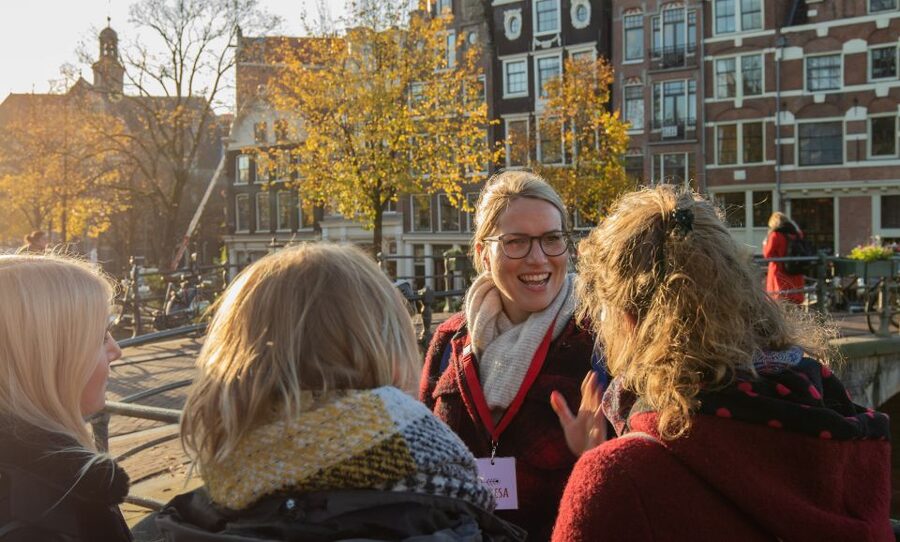
The available feedback gives several guide names worth noting. Shari led a private tour that combined Amsterdam highlights with many Red Light District details and local tips. Chantal was praised for an engaging, funny, and informative approach, while Amelie received a short but strongly positive mention.
The overall rating is 4.6 from 40 reviews, with repeated praise for informative guiding and personal energy. One booking was recorded as canceled because the tour did not take place, so I would confirm the meeting details and starting time before setting your day around it.
The experience is offered by Amsterdamliebe. It is suitable for a private group and is listed as wheelchair accessible, though Amsterdam’s historic streets and crowded central areas can still affect how comfortable the walking feels. The tour runs in rain or shine, so bring weather protection and shoes you can use on wet pavement.
Who should book this Amsterdam walk?
I would recommend it most strongly to first-time visitors who want history, local orientation, and the Red Light District in one outing. It is also a good fit if you prefer a private conversation to a large group and want to ask direct questions without feeling rushed by strangers.
German-speaking visitors have a clear reason to choose it, since the German option is led by a professional native speaker. English speakers can also book the English version, but your group should choose one language rather than expecting a mixture.
The tour suits adults who want a factual account of sex work and Amsterdam’s approach to regulation. It is less suitable if you are looking for a quiet canal stroll, a family activity, or an inside tour of major attractions.
I would also use this early in your stay. The food suggestions, cycling advice, and neighborhood pointers can shape the rest of your Amsterdam plans. You may finish with a list of places to return to, which is exactly what a good introductory walk should provide.
Should you book it?
Book this tour if you want Amsterdam’s famous sights and its more complicated realities explained together. The private group format, German or English choice, named guides such as Chantal, Shari, and Amelie, and practical local advice give it a personal feel.
Skip it if you want extensive time inside the Royal Palace, churches, or museums, since the route is outdoors and moves quickly. Also think carefully about the frank Red Light District material before bringing children or anyone uncomfortable with explicit discussion.
For four people, the $271 group price is easier to justify. For a couple, it is a splurge, but the focused route and private access to a guide may be worth it if you want a direct introduction to Amsterdam rather than a standard landmark checklist.
FAQ
How long does the Amsterdam city and Red Light District tour last?
The tour lasts two hours.
Is the tour offered in German and English?
Yes. You can choose German or English when booking, but the tour is not bilingual.
How many people can join the private group?
The price covers a private group of up to four people.
What is included in the price?
A licensed and experienced tour guide is included, along with a $1.50 city tax per passenger.
Does the tour run in bad weather?
Yes. The tour takes place rain or shine.
Where does the tour end?
The walk ends at De Waag in the Nieuwmarkt area.
Just added around Amsterdam
- From Amsterdam: The Hague Private Trip and Mauritshuis Entry★ 4.3 · 4 reviews
- VIP Private Full Day Tour of the Netherlands★ 4.8 · 6 reviews
- Amsterdam Old-West Vegan Food Tour with Local Guide★ 4.7 · 3 reviews
- Amsterdam: Van Gogh Museum Guided Tour★ 4.8 · 262 reviews
- Van Gogh Museum Private Guided Tour★ 4.2 · 10 reviews
- Vecht River: Full-day Cruise with Lunch★ 4.8 · 9 reviews
- Van Gogh and Rijksmusuem Tour: Small Group Tour with Entry★ 4.7 · 3 reviews
- Amsterdam: Van Gogh Museum Ticket & Guided Tour★ 4.4 · 187 reviews
Red Light District Tours, compared.

Red Light District Tour in German/English/Italian
Read our review →
Amsterdam Red Light District & Coffee Shop Tour
Read our review →
Red Light District Pub Crawl with Unlimited Shots
Read our review →
Private Amsterdam Red Light District and Coffee Shop Tour
Read our review →Browse the lists this tour appears in