
Reviewed · MUSEUMS
Amsterdam: National Holocaust Museum Entry Ticket
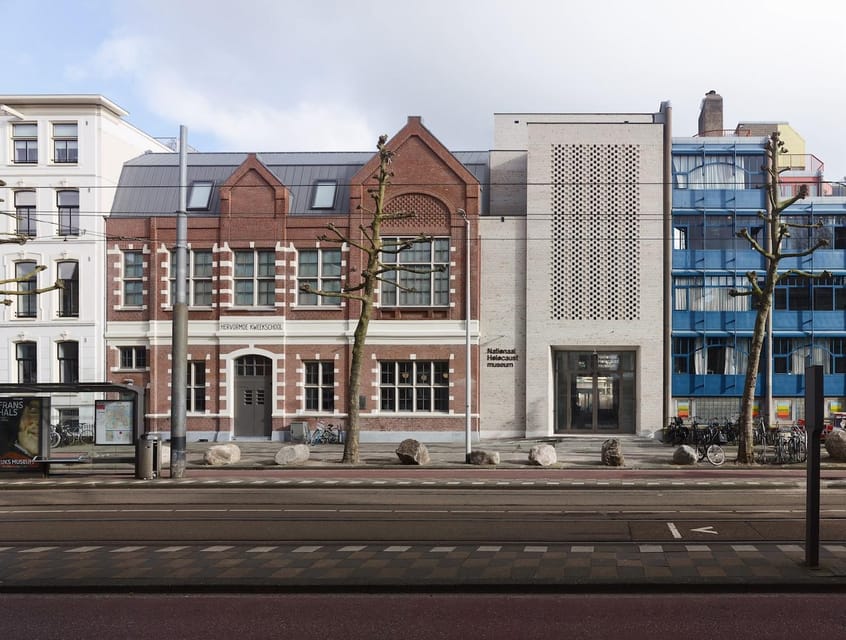
The most powerful part of this Amsterdam visit is the building itself. The National Holocaust Museum occupies the former Hervormde Kweekschool, where Henriëtte Pimentel helped hundreds of Jewish children escape from the nearby daycare before deportation. I like the museum’s personal approach, especially its recognizable faces and individual stories. I also like that your ticket includes the Hollandsche Schouwburg, giving you two connected places rather than one isolated exhibition.
This is not a quick stop. The material is heavy, and the museum has a great deal to read, hear, and consider. You may need several hours, and some visitors have found the final closing time too abrupt to see everything. The $24 price is fair if you use both locations and take your time, but it is best suited to visitors ready for a serious, emotional afternoon.
Key points to know before you go
- The former Hervormde Kweekschool: See the school building used in the rescue of Jewish children during the Nazi occupation.
- Two important Amsterdam sites: Your admission covers both the National Holocaust Museum and Hollandsche Schouwburg National Holocaust Memorial.
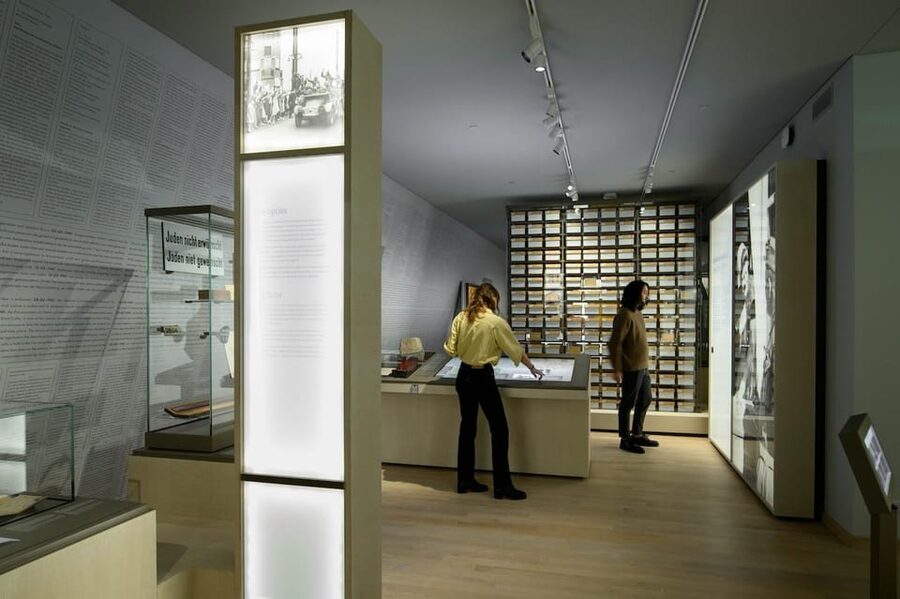
- Personal accounts and artifacts: Expect photographs, portraits, suitcases, written testimony, and an audio guide that adds detail.
- Interactive holograms: Some displays let you ask questions and hear answers from recorded historical figures.
- A self-paced visit: You can move at your own speed, but the quantity of material makes a half day a sensible plan.
- A sobering Dutch story: The museum explains how three-quarters of the Jewish population in the Netherlands was murdered during the Holocaust.
Entering the former Hervormde Kweekschool
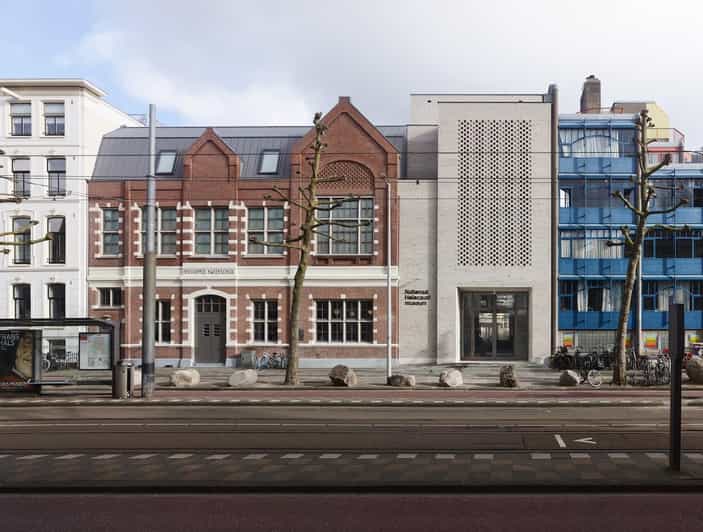
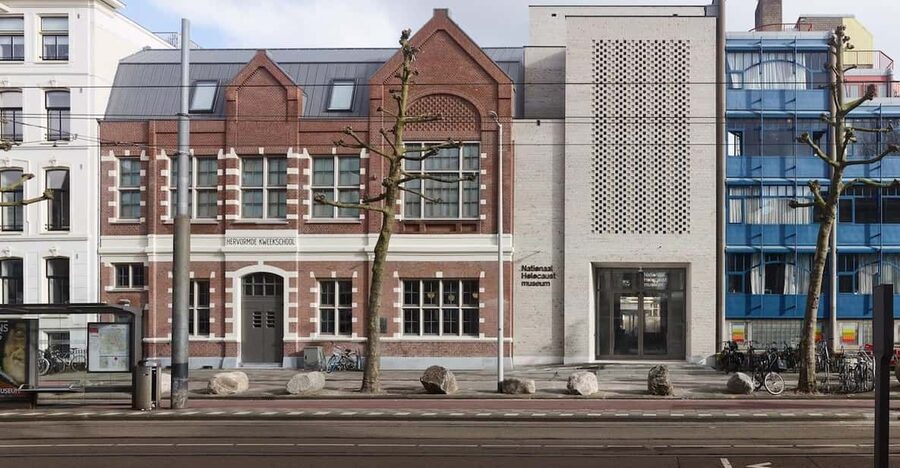
I find the setting gives this museum much of its force. You are not entering a neutral gallery built to imitate the past. You are entering a former teacher-training school linked directly to the rescue and deportation of Jewish children.
During the occupation, the Nazis used the adjacent daycare as a gathering point for Jewish children before deportation. Henriëtte Pimentel, the daycare director, helped hundreds escape. Some were taken through the Kweekschool, making the building part of a story that includes both danger and acts of courage.
That detail matters because it keeps the history grounded in real rooms and real choices. The museum does not treat the Holocaust as a distant sequence of dates. It shows how ordinary buildings, institutions, and streets became part of a system of persecution.
You should allow time at the beginning to get your bearings. The museum covers Jewish life before the war, the occupation, deportation, murder, liberation, and the later struggle over how the Holocaust was remembered in the Netherlands. It is easy to move quickly through the first rooms and then find yourself needing much longer later on.
More Museum Tours in Amsterdam
- Amsterdam: Van Gogh Museum Ticket
★ 4.7 · 52,054 reviews - Amsterdam: The Upside Down Museum Entrance Ticket
★ 4.4 · 9,506 reviews - Amsterdam: Red Light Secrets Museum Entry Ticket
★ 4.2 · 5,722 reviews
Jewish life in the Netherlands before the war
The visit begins with the lives of Jews in the Netherlands before the Second World War. This is an important choice. Before the Nazi occupation, Jewish and non-Jewish people lived alongside each other with the same legal rights.
You see a society in which Jewish life was not limited to the Holocaust. The museum’s approach helps you understand people as neighbors, workers, parents, children, and members of a wider Dutch community. That context makes the later persecution harder to reduce to a simple story of victims and perpetrators.
I appreciate this section because it gives the people in the exhibition an identity beyond what happened to them. Portraits and personal material help you picture lives already in progress. The later crimes become an attack on families and communities, not merely an abstract tragedy.
The museum gives recognizable faces to the victims. That is one of its strongest choices. You may find the early displays slower than expected because there is so much personal information, but that slower pace pays off once the exhibition turns to the occupation.
How persecution became a system
The exhibition explains the gradual way in which Nazi persecution was put into practice. It does not present the Holocaust as a single sudden event. Instead, you follow the tightening of restrictions and the machinery that led from exclusion to deportation and murder.
The Dutch setting is central. You learn how the occupation changed daily life for Jewish people in the Netherlands and how places such as the daycare and Hollandsche Schouwburg became tied to deportation. The museum also places the Dutch experience within the wider Holocaust, in which the Nazis murdered approximately six million Jews across Europe.
The scale is shocking, but the museum keeps returning to individual lives. That balance works well. Statistics show the size of the crime, while personal accounts show what those numbers mean.
You should not expect a light or entertaining museum visit. The subject is treated plainly and without softening the violence. Still, the presentation is restrained rather than sensational. Photographs, documents, and testimony are used to explain what happened, not to create shock for its own sake.
The rescue story inside the Kweekschool
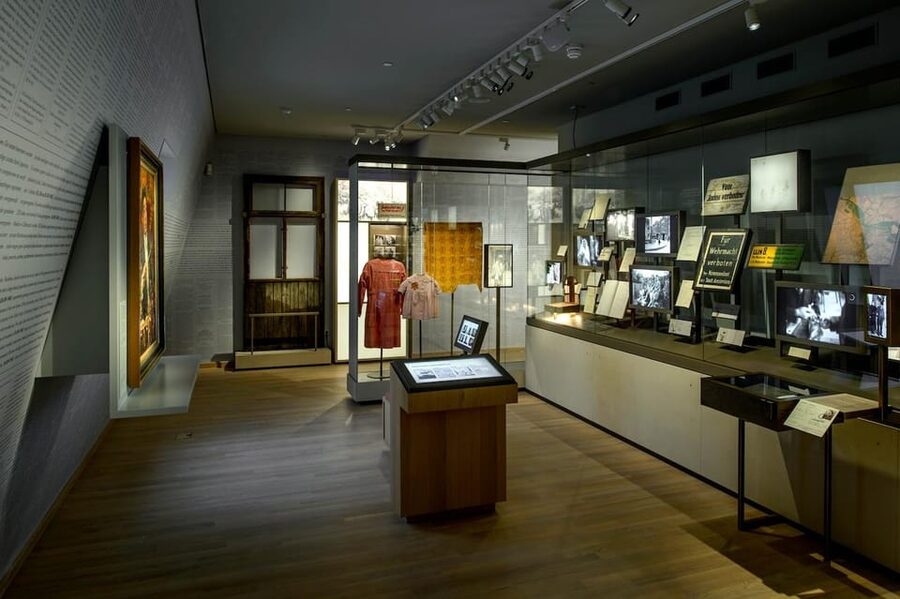
The story of Henriëtte Pimentel gives the Kweekschool a particular emotional weight. Jewish children were gathered at the daycare before deportation, and Pimentel helped hundreds escape. The school offered one route through which children could be moved to safety.
The museum does not turn this into a simple heroic tale. The surrounding history remains one of danger, fear, and mass murder. Yet these rescue efforts show that individuals could make choices even inside a system designed to remove choice from others.
I recommend taking your time with this part of the museum. The building’s role is easy to miss if you focus only on objects in cases. Its value lies partly in understanding the relationship between the school, the daycare, and the deportation process.
This is also where the museum’s focus on children becomes especially painful. Personal stories make clear that deportation did not remove only names from a register. It tore children from families and placed them in a process that led to death for most of those targeted.
A few more days out around Amsterdam worth weighing up
- Amsterdam Classic Saloon Boat Cruise with Drinks and Cheese
★ 5.0 · 31,825 reviews - Amsterdam Luxury Canal Cruise + Unlimited Drinks & Bites option
★ 5.0 · 30,518 reviews - Amsterdam: Heineken Experience Ticket
★ 4.6 · 30,055 reviews - Amsterdam: Rijksmuseum Entry Ticket
★ 4.7 · 25,535 reviews
Holograms, audio, and personal testimony
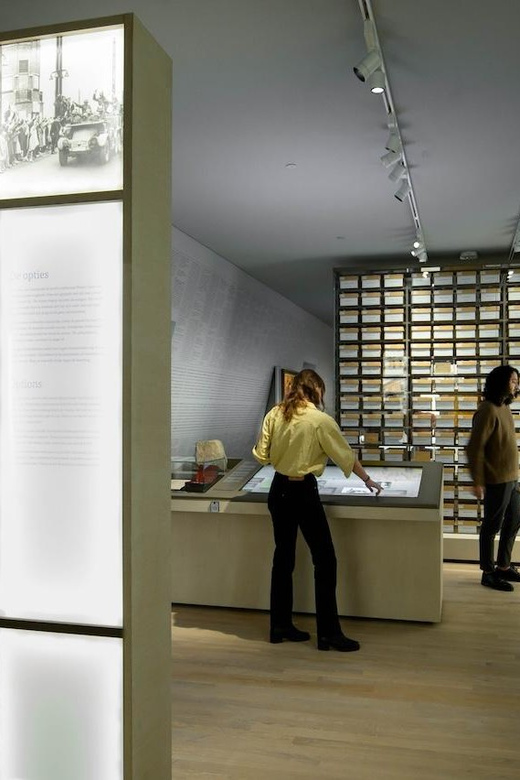
The museum uses several forms of interpretation. Alongside written labels and artifacts, you may encounter interactive holograms that answer questions. This is one of the more unusual parts of the visit and gives the exhibition a direct, human voice.
The holograms will not suit everyone. Some people prefer quiet reading and original objects, while others find the question-and-answer format helps bring the material into focus. I see it as a useful addition, particularly for younger visitors who may respond better to spoken and interactive displays.
An audio guide adds another layer. It is reported to be clear and informative across the museum, though an occasional language switch from English to Dutch has been noted. If you use the guide, pay attention to the selected language before starting each account.
The amount of material is a real consideration. I would not try to absorb every label in one hurried pass. Pick up the main sequence first, then return to the stories or objects that hold your attention. The museum is more rewarding when you give yourself permission to pause rather than treating it like a checklist.
Artifacts that make the history tangible
The exhibition includes photographs, portraits, suitcases, and other artifacts. These objects are not decorative extras. They connect the large historical account to the physical evidence of lives interrupted.
Display lighting can be an issue in places. Reflective glass has made it difficult to see some items clearly, including suitcases and portraits. This is a small practical flaw, but it matters when an object is meant to carry much of the emotional weight of a room.
Labels are generally clear and well organized. I like that the museum gives you enough explanation to follow the story without requiring prior knowledge, though the sheer quantity of information can feel overwhelming. A visitor who wants only a short introduction may find the experience demanding.
For you, the best approach is to plan a focused visit. Read the introductory material, follow the main route, and then spend extra time with the displays that help you understand Dutch Jewish life or the mechanics of deportation. That way, you leave with a coherent picture rather than a blur of tragic details.
Hollandsche Schouwburg adds a second perspective
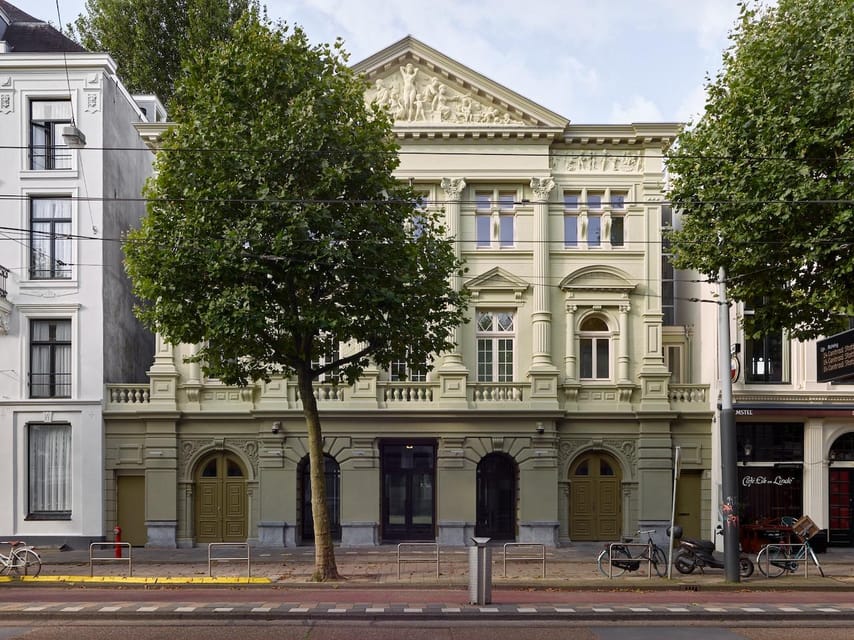
The ticket also includes the Hollandsche Schouwburg National Holocaust Memorial. This gives the experience added value and helps connect the museum’s building-based story to another important place in Amsterdam’s wartime history.
The Hollandsche Schouwburg is tied to the deportation of Jews from the Netherlands. Visiting both sites lets you consider different stages of the same history: life before persecution, the gathering and rescue of children, deportation, murder, liberation, and remembrance.
You should treat the two admissions as parts of one historical visit. The sites are not interchangeable, and seeing only the main museum means missing half of what the ticket offers.
Since the museum itself can take hours, do not schedule the second site so tightly that you must rush. One visitor had to leave before seeing everything because the museum was closing. Another found the closing announcement came right at the official time, with no extra buffer. Give yourself a generous window.
How much time should you allow?
The ticket is valid for seven days from first activation, which is useful if you want to split the experience across your Amsterdam schedule. You do not have to force both locations into one rushed outing.
For a single visit, I would set aside at least several hours. A half day is sensible if you plan to read the labels, listen to the audio guide, study the artifacts, and spend time with the personal accounts.
The museum is self-paced. That is a major advantage for a subject like this because you can pause when needed and avoid being pushed along by a group. It also means you must manage your own time. Poor signage in parts of the exhibition can make the route less obvious, and a few narrow displays may allow only two people to view them comfortably at once.
The museum café is a useful place to regroup, particularly after an emotional visit. It is not a reason to book the ticket, but it helps make a longer stay more practical.
Is the $24 ticket good value?
At $24 per person, this is not the cheapest museum admission in Amsterdam. I think the price works because it includes two significant locations and gives you time to visit them over seven days.
The value is strongest if you care about modern European history, Jewish heritage, or the way museums explain difficult subjects. The ticket also makes sense if you prefer to move independently rather than join a scheduled walking tour.
The value is weaker if you want a short sightseeing stop. You could spend only an hour here, but you would miss much of the material. This is a place where the cost is tied to attention and time. The more patiently you visit, the more useful the ticket becomes.
Reserve and pay later is available, and cancellation is allowed up to 24 hours in advance for a full refund. Those terms help if your Amsterdam plans are still shifting. The museum is wheelchair accessible, and photography is allowed, though you should be respectful around sensitive displays and other people.
Who will get the most from this visit?
I would recommend the National Holocaust Museum to adults and older children who can engage with a serious subject for several hours. It suits anyone who wants more than a general account of the Holocaust and wants to understand what happened specifically in the Netherlands.
It is also a strong choice for visitors interested in Dutch memory culture. The museum does not stop at liberation. It looks at how the Holocaust was handled in national remembrance, which adds an important layer to the visit.
You may want to choose another activity if you are looking for an upbeat museum, a brief rainy-day stop, or a casual attraction between canal walks. The atmosphere is somber, and the subject can stay with you after you leave.
For families, I would consider the age and temperament of each child. The holograms may help some young people connect with the material, but the stories and artifacts are difficult. There is no need to rush a child through the exhibition simply to say you visited.
Should you book the National Holocaust Museum ticket?
Book it if you want a careful, personal account of the Holocaust in the Netherlands and can give the museum real time. The former Hervormde Kweekschool, the rescue story connected with Henriëtte Pimentel, the personal testimony, and the included Hollandsche Schouwburg make this more than a standard museum admission.
I especially recommend using the seven-day validity to split the two sites if your schedule allows. That solves the main problem, which is not a lack of material but having too much to take in during one visit.
The $24 cost is reasonable for a serious, self-guided museum experience with two included locations. Go slowly, expect strong emotions, and leave room in your day to think about what you have seen.
FAQ
Where is the National Holocaust Museum located?
The meeting point is the National Holocaust Museum in Amsterdam, in North Holland, Netherlands.
What does the entry ticket include?
The ticket includes entry to the National Holocaust Museum and the Hollandsche Schouwburg National Holocaust Memorial.
How long is the ticket valid?
The ticket is valid for seven days from the first activation.
How much does admission cost?
The listed price is $24 per person.
Can I cancel the booking?
Yes. You can cancel up to 24 hours in advance for a full refund.
Can I reserve now and pay later?
Yes. The activity offers a reserve-now-and-pay-later option.
Is the museum wheelchair accessible?
Yes. The activity is listed as wheelchair accessible.
Is photography allowed?
Yes. Photography is allowed, but you should be respectful while photographing sensitive displays.
What does the museum cover?
The museum covers Jewish life in the Netherlands before the Second World War, Nazi persecution and deportation, the rescue of children connected with the Hervormde Kweekschool, liberation, and the place of the Holocaust in Dutch national memory culture.
More Museums in Amsterdam
- Amsterdam’s Weirdest Museum: Believe It or Not!
★ 4.5 · 4,086 reviews - Amsterdam: Van Gogh Museum Ticket and City Canal Cruise
★ 4.6 · 3,899 reviews - Amsterdam: Van Gogh Museum Ticket & Canal Cruise
★ 4.5 · 3,304 reviews - Amsterdam: NEMO Science Museum Ticket
★ 4.4 · 2,979 reviews
Just added around Amsterdam
- From Amsterdam: The Hague Private Trip and Mauritshuis Entry★ 4.3 · 4 reviews
- VIP Private Full Day Tour of the Netherlands★ 4.8 · 6 reviews
- Amsterdam Old-West Vegan Food Tour with Local Guide★ 4.7 · 3 reviews
- Amsterdam: Van Gogh Museum Guided Tour★ 4.8 · 262 reviews
- Van Gogh Museum Private Guided Tour★ 4.2 · 10 reviews
- Vecht River: Full-day Cruise with Lunch★ 4.8 · 9 reviews
- Van Gogh and Rijksmusuem Tour: Small Group Tour with Entry★ 4.7 · 3 reviews
- Amsterdam: Van Gogh Museum Ticket & Guided Tour★ 4.4 · 187 reviews
Museums, compared.


Moco Museum Amsterdam Entrance Tickets with Banksy & More
Read our review →





Browse the lists this tour appears in