
Reviewed · UTRECHT TOURS
Utrecht: DOMunder Entry Ticket with Guide
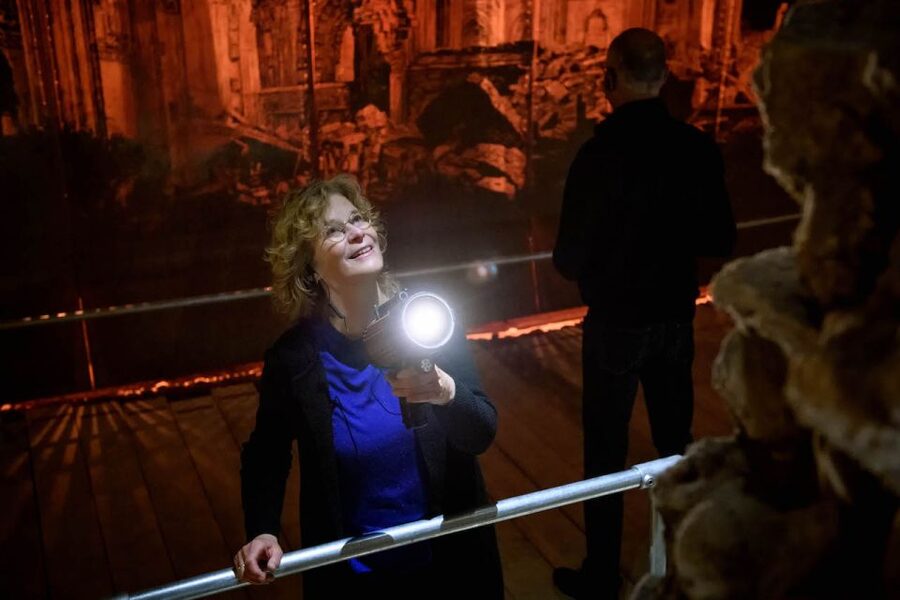
Under Utrecht’s Dom Square, DOMunder turns archaeology into an active, hands-on history lesson. You walk among the oldest remains of the city, use a smart flashlight to trigger short explanations, and follow the story from Roman Trajectum to the medieval Dom Church and the storm of 1674.
I like two things right away: the ruins are real and tactile, with some stonework bearing tiny paw prints from more than 2,000 years ago, and the technology lets you move at your own pace underground. The main consideration is access: this tour is not suitable for wheelchair users, and the opening talk may be easier if you can sit or stand comfortably.
- Roman foundations beneath Dom Square: See Utrecht’s earliest surviving remains in their original underground setting.
- A flashlight that acts as your guide: Point it at marked features to hear short stories and explanations.
- A clear story from Rome to 1674: The tour links the city’s Roman past, medieval growth, and the collapse of the Dom Church nave.
- A dramatic reconstruction of the storm: Films and visual effects help explain how the present-day square was formed.
- English and Dutch access: A live guide and audio material are available in both languages.
- A compact 75-minute visit: The tour fits neatly into a day of exploring Utrecht’s cathedral quarter.
Beneath Dom Square, Utrecht’s History Is Under Your Feet
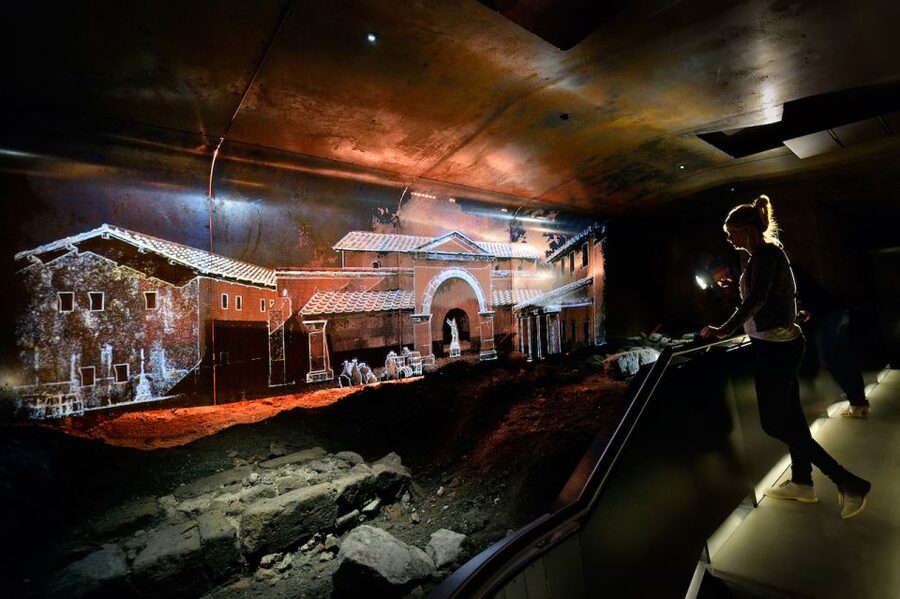
DOMunder is located directly below Domplein, the open square beside Utrecht’s famous Dom Church and Dom Tower. From street level, the square can seem like a handsome pause in the city center. Underground, it becomes a record of changing buildings, beliefs, and disasters.
The attraction takes you through roughly 2,000 years of local history. That time span is the main reason to choose it. You are not looking at a single isolated ruin. You are following one site as it changes from a Roman settlement into a medieval religious center, then into the square shaped by the collapse of the church nave.
I find that sequence easier to remember than a pile of unrelated dates. The setting also gives the history weight. You are close to masonry that was built and rebuilt long before modern Utrecht took shape.
The ticket costs about $17 per person. That is fair value if you enjoy history and want more than a quick look at the Dom Church from outside. The visit lasts 75 minutes, includes a guide, and uses an interactive system instead of relying only on display cases and written labels.
If you have already climbed the Dom Tower, DOMunder makes a useful companion. The tower gives you an upward view across Utrecht. This experience gives you the underground story of the same cathedral area.
Starting at Tourist Information on Domplein 9
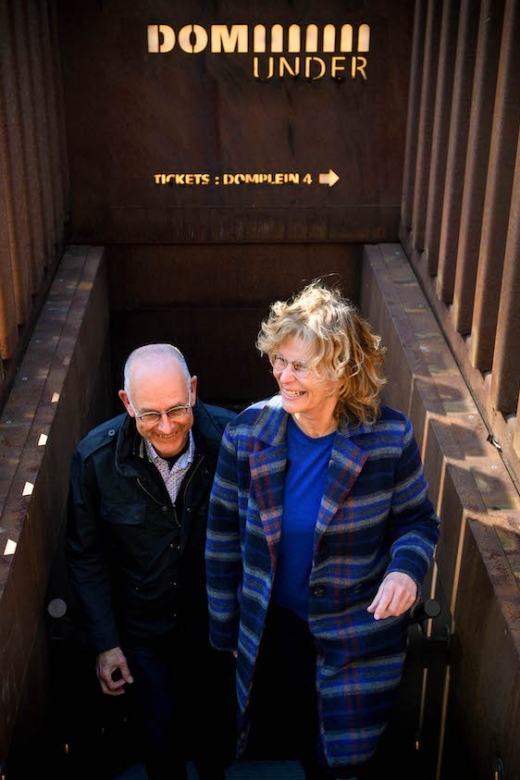
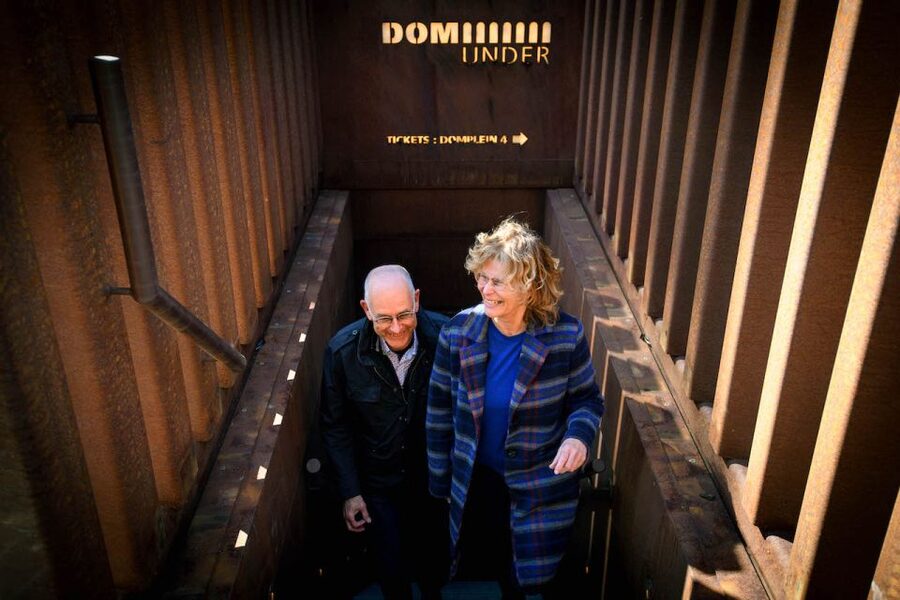
Your visit begins by scanning your ticket at the desk of the Tourist Information Centre at Domplein 9. Allow a few extra minutes to find that desk, since the excavation entrance and the meeting point can be easy to confuse when you first arrive.
The instructions around the square may not feel perfectly obvious. Signs near the excavation area can lead you toward the wrong doorway, so use Domplein 9 as your anchor and confirm the location at the Tourist Information Centre.
Once the group is assembled, the guide sets up the story before you go below ground. This introduction matters. It gives you a framework for understanding why the ruins are there, what the buildings once did, and how the square changed over time.
Guides have included Christine, Stefan, and Joanna, among others. Their approach can make a noticeable difference, especially during the opening explanation. Joanna, an English-speaking volunteer guide, used maps and visual material to connect the tower and church to the underground remains. Christine was praised for taking the story from Roman times through the 1674 destruction in a clear way.
English and Dutch tours are available, and audio material is offered in both languages. If you book in English, the live introduction should help you follow the main story before the self-guided underground portion begins.
A few more days out around Utrecht worth weighing up
- Utrecht: City Canal Cruise
★ 4.3 · 2,895 reviews - Utrecht: Dom Tower Entry Ticket and Guided Tour
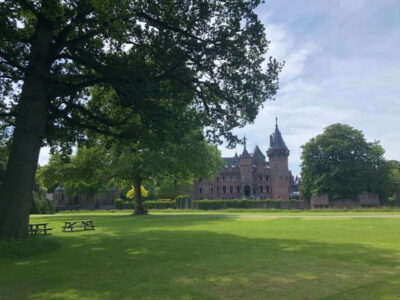
★ 4.6 · 513 reviews - Utrecht: De Haar Castle, Park Entry Ticket
★ 4.6 · 153 reviews
The Roman Layer and Utrecht’s Earliest Remains
The first major historical layer is Utrecht’s Roman past. The city began as a Roman settlement known as Trajectum, and the material beneath Domplein helps you picture how early construction shaped the site.
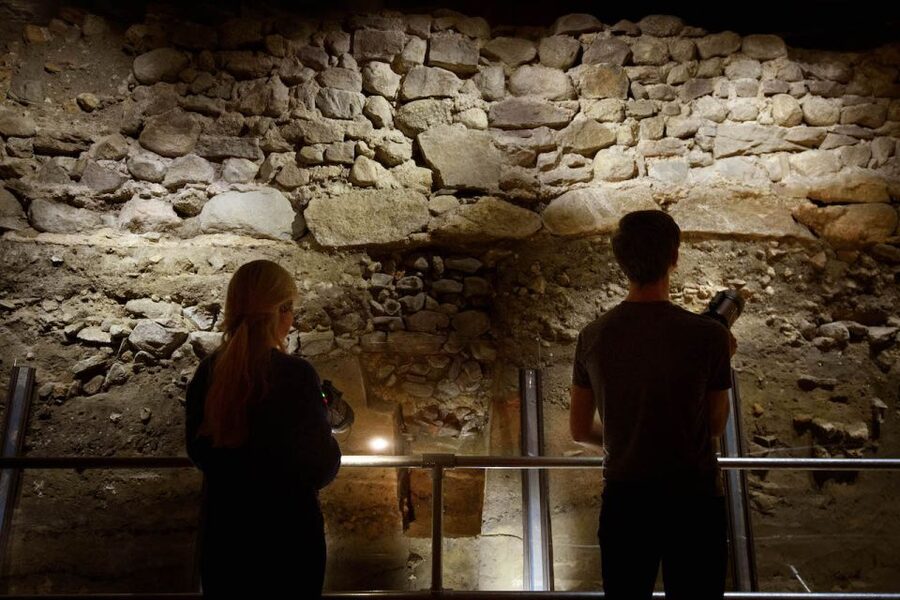
You will see old stonework and archaeological remains rather than a fully rebuilt Roman street. That distinction is important. This is not a theme park reconstruction. You are looking at fragments, foundations, and surviving traces, then using the guide’s explanation and the visual displays to understand what they once meant.
Some of the recovered stonework includes tiny paw prints that are more than 2,000 years old. It is a small detail, but it makes the ancient past feel unusually close. A footprint pressed into building material can be more affecting than a large, polished object in a glass case.
The underground setting also changes how you read the ruins. Above ground, modern buildings and paving hide the layers. Below, the walls and foundations are arranged as evidence. You can see how construction methods and building styles changed across different periods.
The tour presents these changes in a time sequence. That organization was one of its strongest features for me because it prevents the Roman, medieval, and later stories from blending into one vague account of old Utrecht.
Medieval Utrecht and the Making of the Dom Complex
After the Roman section, the story moves into Utrecht’s medieval period. This was when the Dom complex became the heart of the city’s religious and civic life.
The guide explains building styles and construction methods as you move through the site. That practical detail adds value. Instead of hearing only that a church was important, you get a better sense of how such a huge structure was assembled and altered over time.
The underground remains are particularly useful for showing scale and continuity. The church above ground is a powerful Gothic landmark, but the ruins below help you understand that the cathedral quarter was built in layers. Earlier walls and foundations did not simply vanish when a new building rose above them.
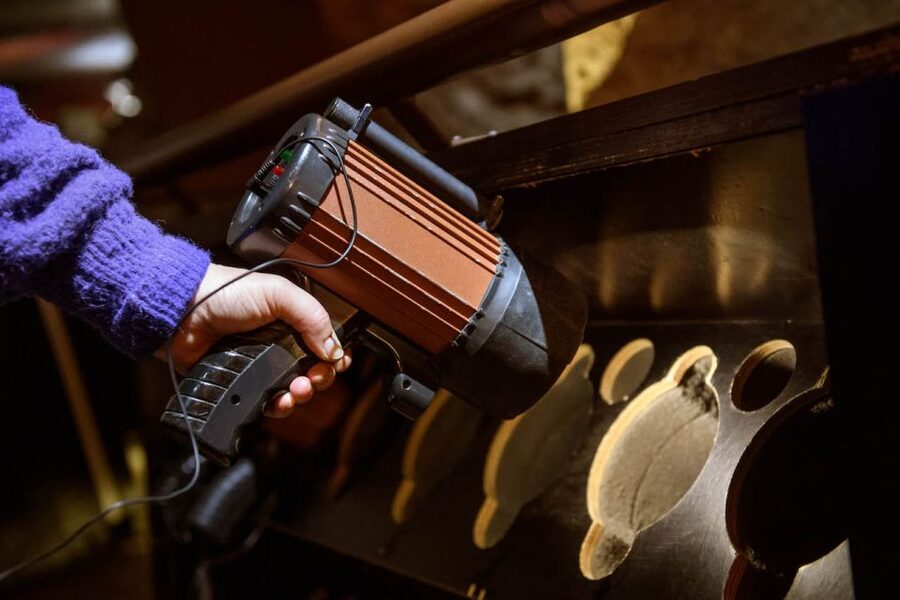
The tour does not ask you to stand passively in one spot for the entire visit. Once you receive the flashlight and earpiece, you can inspect the marked areas and listen to information linked to what you are seeing.
That independent pace is a real advantage. You can spend a little longer on a wall, foundation, or archaeological object that catches your attention. The tradeoff is that some of the flashlight-triggered points can be tricky to activate. Aim carefully, and do not worry if the system takes a moment to respond.
Using the Smart Flashlight Underground
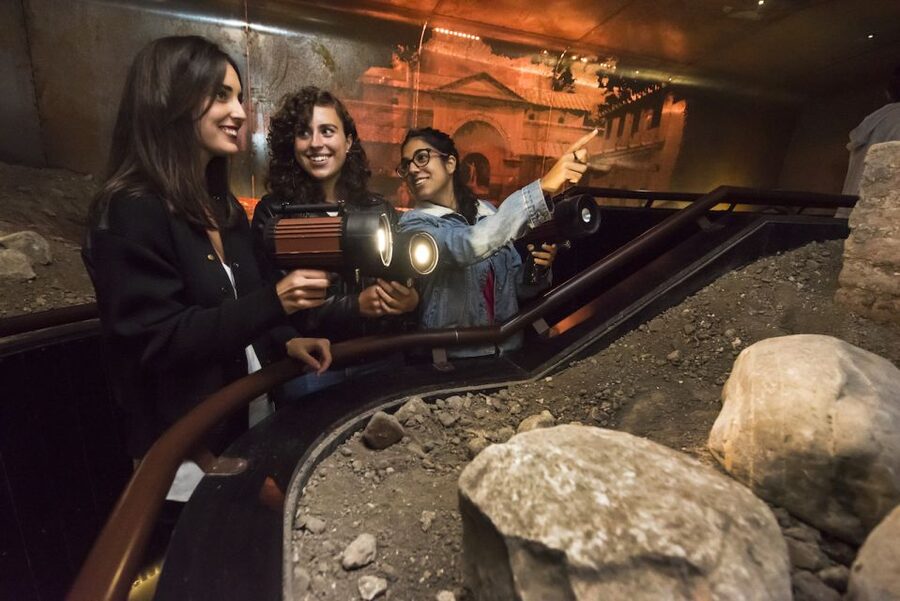
The smart flashlight is the most distinctive part of DOMunder. It is not simply a light for dark corridors. You point it toward designated features, and it activates audio or other information connected with that spot.
The system combines the freedom of a self-guided visit with the structure of a tour. You are not left to guess what you are looking at, but you are also not required to move in lockstep with the guide.
An earpiece lets you hear the short explanations while examining the remains. The format works well for visitors who like to explore rather than listen to one long speech. It also gives the underground visit a sense of discovery, though the experience remains educational rather than physically adventurous.
The films and projections add another layer. They explain the buildings and events that cannot be seen directly in the surviving stone. Used well, this technology fills gaps without pretending that the missing structures are still intact.
A little patience helps. One visitor found some items difficult to activate with the flashlight, and that is a fair warning for anyone expecting a completely effortless system. Still, the interactive approach is more engaging than walking past unlabeled walls.
For children, the flashlight may be a hook, but the historical content is probably better suited to older children and adults. The material covers many centuries, and the opening explanation may be demanding for very young kids.
Same canals, a completely different sort of afternoon:
- Utrecht 2-Hour Walking Tour | Discover The City With A Local
★ 5.0 · 138 reviews - Utrecht: Rietveld Schröderhuis UNESCO Entry Ticket
★ 4.8 · 119 reviews - Utrecht Food Tour with local guide
★ 5.0 · 112 reviews - Utrecht: Guided Highlights Walking Tour
★ 4.7 · 80 reviews
The 1674 Storm and the Birth of Today’s Square
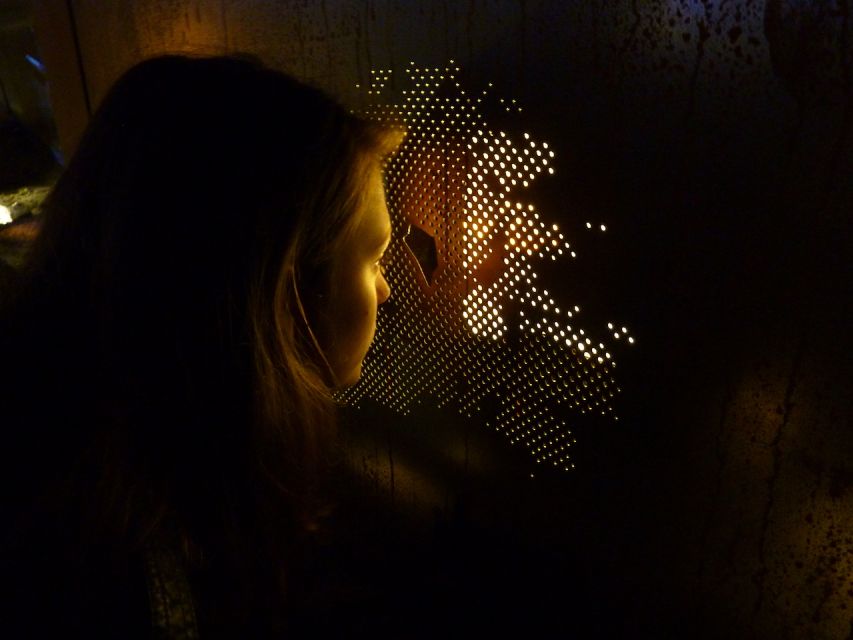
The tour’s most dramatic chapter is the storm of 1674, when the nave of the Dom Church collapsed. That destruction created the open Dom Square you see today.
This event gives the whole visit a satisfying shape. At the beginning, you learn about the buildings that occupied the site. At the end, you understand why the present square looks so different from the medieval complex.
The attraction uses film and reconstruction to show the fateful day. The visual presentation helps you picture the collapse in a way that a date and a paragraph of text cannot. It also explains why the church and tower now appear separated.
Pay attention when the storm sequence begins. The sound and effects can resemble a fire alarm, which may briefly startle you if you are not expecting it. The spectacle is useful, but the transition could be clearer.
I appreciate that the storm is not treated as a random disaster added for drama. It is part of the site’s physical explanation. The missing nave is not an abstract historical fact. It is the reason you are standing in a square rather than inside one continuous cathedral.
What the 75-Minute Schedule Feels Like
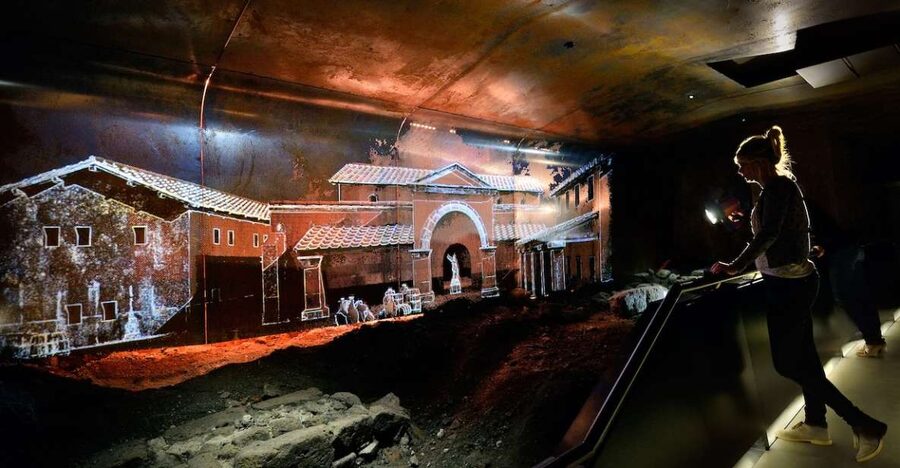
Seventy-five minutes is enough time to receive a proper introduction and explore the main underground displays without turning the visit into an all-day commitment. The opening talk uses maps, images, and spoken explanation to establish the setting.
The underground section then gives you time to move between points and listen through the device. Some of the strongest moments come when you stop trying to absorb everything and focus on one detail, such as a building technique, an old wall, or the ancient paw prints.
The schedule can feel slightly short if you want to examine every feature at length. The attraction has several historical layers, and the self-guided format can tempt you to linger. If you are a serious archaeology enthusiast, you may wish for more time below ground.
For most visitors, though, the length is practical. You can place DOMunder before or after seeing the Dom Church, climbing the Dom Tower, or walking through Utrecht’s central streets. At $17, the price becomes easier to justify because it gives you a focused historical visit rather than another brief photo stop.
Practical Details Before You Book
The meeting point is the Tourist Information Centre at Domplein 9, where you scan your ticket at the desk. I would not head straight toward the excavation signs without checking this first.
The experience is available with a live guide in English or Dutch. English and Dutch audio content is also included. If language matters to your decision, select the correct option when checking availability.
You can cancel up to 24 hours before the scheduled visit for a full refund. The reserve-now, pay-later option also lets you hold a place without paying immediately, which is useful when your Utrecht plans may shift.
Accessibility needs careful thought. The experience is not suitable for wheelchair users. If you have slight mobility issues, the beginning may be more comfortable with a seat, so mention your needs when arranging the visit rather than discovering the problem at the entrance.
The attraction suits adults, history fans, architecture fans, and families with children old enough to follow a guided explanation. It is especially good for anyone who wants context for Utrecht’s Dom Church and tower.
It is less suitable if you want a broad museum collection, a long free-form archaeological visit, or a completely quiet experience. The tour depends on spoken explanation, audio equipment, and visual effects.
How DOMunder Compares With a Standard Museum Visit
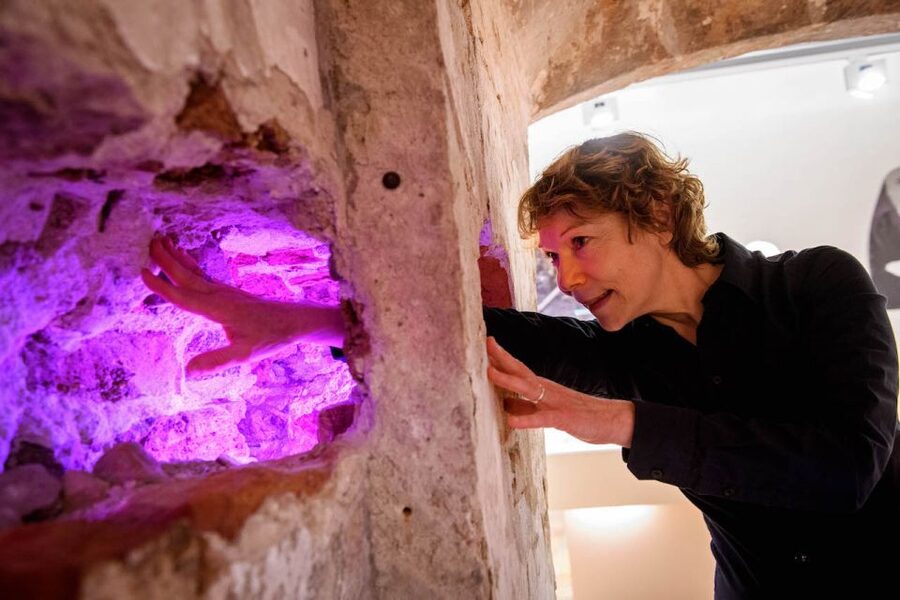
A conventional museum often gives you objects arranged behind glass. DOMunder gives you the place itself, which changes the way you understand the material.
You can touch or stand beside old masonry, see the physical relationship between foundations, and use the flashlight to connect a story with the exact feature being described. That direct contact is the experience’s greatest strength.
The format also keeps the visit moving. You are learning about Roman Utrecht, medieval construction, and the 1674 storm while physically moving through the site. The history is not separated from the setting.
There are limits. An underground ruin cannot show every part of the city’s past, and the technology may occasionally frustrate you. The tour also depends on a good opening guide. A strong guide such as Christine, Stefan, or Joanna can make the chronology lively and easy to follow, while a less confident presentation would leave more work to the devices.
Still, DOMunder offers more than a quick look at old stones. It explains why those stones matter and how the square above them came to be.
Should You Book DOMunder?
I would book this tour if you have an interest in Utrecht’s origins, medieval churches, or archaeology and want a well-structured visit in the city center. The $17 price is reasonable for a 75-minute experience with a live guide, audio content, films, and access to genuine underground remains.
Book it alongside the Dom Tower if you want both views of the cathedral quarter, one from above and one below. The interactive flashlight is a strong reason to choose DOMunder over a standard museum, especially for older children and adults who enjoy handling technology while learning.
Think twice if you use a wheelchair, need a completely smooth access route, or prefer to spend a long time examining ruins without a set schedule. Also arrive with enough time to find Domplein 9 and collect your equipment.
For most history-minded visitors, this is a smart addition to a Utrecht day. It is compact, direct, and unusually good at making the city’s long past feel like something beneath your feet rather than something sealed away in a textbook.
FAQ
Where does the DOMunder tour begin?
Meet at the Tourist Information Centre at Domplein 9 in Utrecht. Scan your ticket at the desk there.
How long does the experience last?
The visit lasts 75 minutes.
How much does the entry ticket cost?
The listed price is $17 per person.
What languages are available?
The live tour guide and audio guide are available in English and Dutch.
Is a guide included?
Yes. The ticket includes entry to DOMunder and a guide.
What will I see underground?
You will see archaeological remains beneath Dom Square connected with Utrecht’s Roman past, medieval development, and later history.
What is the 1674 storm section about?
The tour explains the storm that caused the nave of the Dom Church to collapse and led to the creation of the open Dom Square.
Is the experience suitable for wheelchair users?
No. The activity is listed as not suitable for wheelchair users.
Can I cancel my booking?
Yes. You can cancel up to 24 hours in advance for a full refund. You can also reserve now and pay later.
Just added around Utrecht
- Utrecht: Vegan Food Bike Tour – 6 Tastings (excl. bike)★ 5.0 · 7 reviews
- Utrecht Walking Tour with a local comedian as guide★ 4.8 · 5 reviews
- Utrecht: Food Tour with many stops at vegan restaurants!★ 5.0 · 8 reviews
- Utrecht: Ludwig’s Original Pub Crawl with VIP Club Entry★ 3.3 · 42 reviews
- Utrecht: Rietveld Schröderhuis UNESCO Entry Ticket★ 4.8 · 119 reviews
- Utrecht: Hoge Woerd Museum Entry Ticket with Audio Tour★ 3.3 · 3 reviews
- Utrecht Quiz Tour★ 3.2 · 31 reviews
- Utrecht: De Haar Castle, Park Entry Ticket★ 4.6 · 153 reviews
Utrecht Tours, compared.
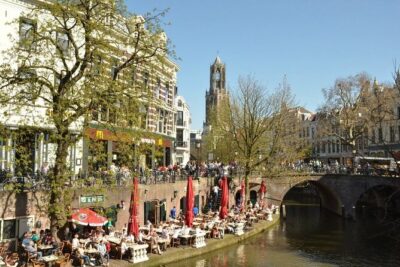
Utrecht 2-Hour Walking Tour | Discover The City With A Local
Read our review →

Browse the lists this tour appears in