
Reviewed · VAN GOGH MUSEUM TICKETS
Van Gogh Museum Amsterdam Small Group Guided Tour
Van Gogh’s paintings are famous, but seeing them in sequence changes the story. This two-hour tour leads you from his dark Dutch studies to the bright, restless color of Paris and Arles, then on to the troubled final months in Provence and Auvers. The brushwork becomes a record of a life in motion.
I like the small group limit of 14, which gives your guide room to answer questions and point out details you might miss alone. I also like the wireless headphone system, especially in a crowded museum, where a guide speaking softly beside one painting can otherwise be hard to follow. The main drawback is that two hours moves quickly, and the opening section on self portraits may feel too long if you mainly came for Sunflowers or The Bedroom.
Key details before you book
- Follow Van Gogh’s development in order: The tour connects his early Dutch paintings with his Paris, Arles, Saint-Rémy, and Auvers periods.
- See major works up close: The route includes The Potato Eaters, Sunflowers, Almond Blossoms, The Bedroom, Irises, and Wheatfield with Crows.
- Expect an English-speaking guide: Guides such as Martina, Claire, Kawika, Marlene, Holly, Roland, and Sylvia have led this experience.
- Use the whisper system: Wireless headphones make the guide easier to hear without crowding around each painting.
- Stay after the tour: The visit ends inside the museum, so you can continue through the permanent collection until closing time.
- Plan for an adult-only visit: Every participant must be at least 18 years old, and the tour lasts about two hours.
Starting at Cobra Café near Museumplein
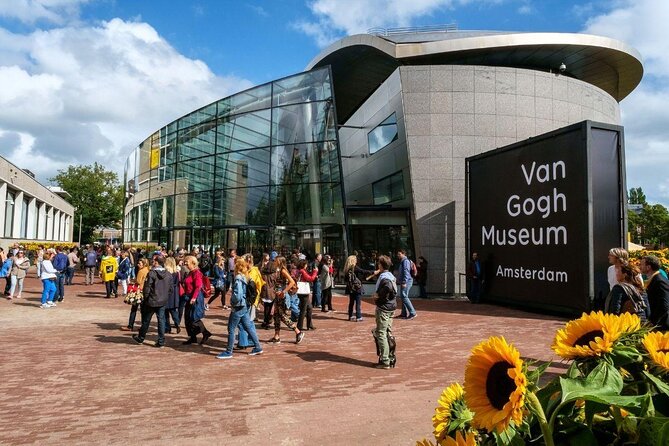
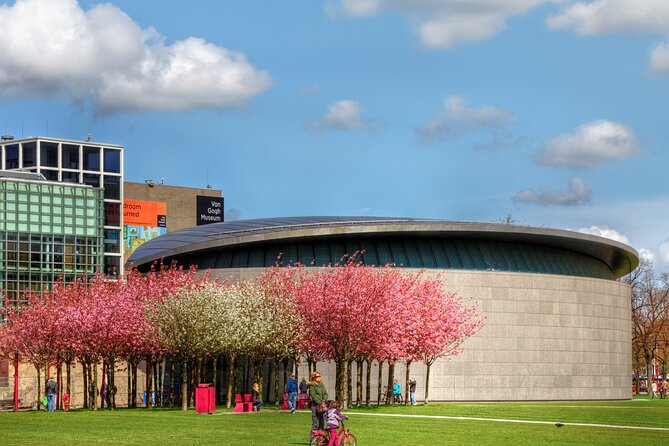
The meeting point is Cobra Café at Hobbemastraat 18, close to Amsterdam’s Museumplein. You begin outside the museum rather than at the main entrance, so allow enough time to find the café and locate your guide. The area is near public transportation and surrounded by Amsterdam’s major museums.
This small detail matters. Museumplein can feel confusing when several tour groups are gathering, and arriving early gives you time to settle in before the museum portion begins. Confirmation is provided at booking, so keep the meeting information handy.
The tour is offered in English and is limited to 14 people. That is small enough for a guide to keep the group together without turning the visit into a private tour price. It also lets you ask about a detail that catches your eye, although the guide still has to keep moving through a busy museum.
More Museum Tours in Amsterdam
- Amsterdam: Van Gogh Museum Ticket
★ 4.7 · 52,054 reviews - Amsterdam: The Upside Down Museum Entrance Ticket
★ 4.4 · 9,506 reviews - Amsterdam: Red Light Secrets Museum Entry Ticket
★ 4.2 · 5,722 reviews
The opening self portraits: meeting Vincent face to face
The first stop focuses on Van Gogh’s self portraits and lasts about 20 minutes. This is a sensible place to begin because the paintings show more than the artist’s face. They introduce his changing technique, mood, clothing, and use of color.
You will see how each portrait can feel like a different version of the same man. Some are direct and restrained. Others are built from energetic strokes and sharper color contrasts. A guide can help you notice how Van Gogh used himself as a readily available model while testing new ideas.
Still, this section requires patience. If you already know the self portraits well, 20 minutes may feel generous. One person found the time spent here longer than necessary compared with the famous works later in the route. If you prefer to study each canvas slowly, though, the opening gives you a useful visual framework for the rest of the visit.
The Dutch years and The Potato Eaters
The next 20-minute section moves to Van Gogh’s early Dutch period. Here the focus is on his interest in ordinary working people, rural life, and the influence of artists such as Jean-François Millet and Jules Breton.
The key painting is The Potato Eaters, a dark, serious work showing a peasant family gathered around a meal. Its earthy colors and rough faces are far removed from the sunny yellows many people associate with Van Gogh. That contrast is exactly why this stop earns its place.
You will also see Woman Lifting Potatoes and the wall of portraits known as Head of a Peasant Woman. These works help you understand that Van Gogh did not begin as a painter of bright flowers and swirling skies. He first worked through difficult subjects with heavy tones and strong human feeling.
A good guide will connect the paintings rather than treating them as isolated objects. The references to Millet and Breton show Van Gogh learning from artists he admired. The studies of rural labor show his wish to portray people whose work was physically demanding and often overlooked.
The lighting and darker colors can make this section feel slower than the later galleries. Give it time. The vivid Arles paintings have more immediate visual appeal, but the early work makes Van Gogh’s later transformation far more striking.
Paris from 1886 to 1888: color begins to change
Van Gogh moved to Paris between 1886 and 1888, and the tour then shifts into a lighter, more experimental part of his career. This is where you can see his palette and brushwork loosen.
The route includes Self Portrait with Felt Hat, Still Life with Absinthe, and In the Café: Agostina Segatori in Le Tambourin. These paintings reveal his contact with new artistic ideas and urban subjects. His colors become brighter, and his strokes begin to break the image into small marks rather than building everything from dark, solid tones.
Garden with Courting Couples adds another angle. Instead of focusing only on portraits or still life, it shows Van Gogh responding to outdoor light and relaxed public scenes. A guide may use this point to explain the shift from the somber Dutch paintings to the more colorful work that followed.
This stop is especially useful if you know Van Gogh mainly through a few famous images. You get to watch the change happen rather than simply hearing that he became more colorful. The 20-minute limit keeps the section focused, but it also means you may need to choose between listening closely and examining every work at length.
More Van Gogh Museum tickets:
- Amsterdam: Van Gogh Museum Ticket and City Canal Cruise
★ 4.6 · 3,899 reviews - Amsterdam: Van Gogh Museum Ticket & Canal Cruise
★ 4.5 · 3,304 reviews - Van Gogh Museum Amsterdam Exclusive Tour w/ Reserved Entry
★ 5.0 · 1,760 reviews - Van Gogh Museum Tour Reserved Entry Semi Private
★ 5.0 · 1,437 reviews
Arles and the South of France: the famous yellow period
The Arles section is likely the emotional center of the tour. Van Gogh moved to Arles in 1888, and the paintings here include Sunflowers, Almond Blossoms, The Bedroom, The Yellow House, and copies of Japanese prints.
This is the part many people anticipate, but it is better when you understand what came before. The strong yellows and intense blues are not just a recognizable style. They show Van Gogh pushing color, pattern, and paint handling toward a more personal language.
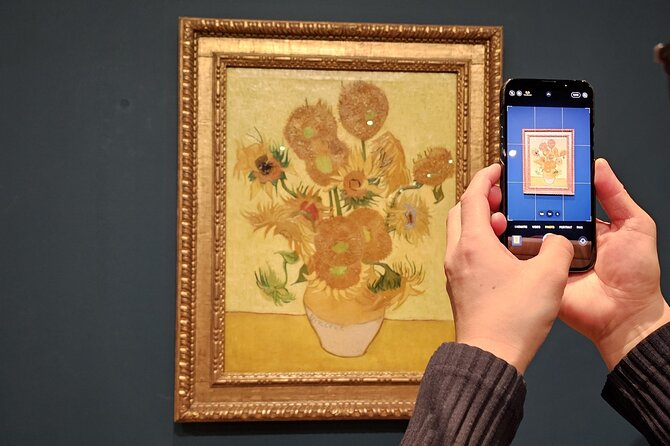
Sunflowers rewards close attention. Look beyond the overall yellow glow and notice the differences among the flowers, from fresh blooms to drying heads. The thick paint gives the still life physical force. With the guide’s help, you can examine how the paint itself becomes part of the subject.
The Bedroom is quieter but just as revealing. Its simplified furniture, bold outlines, and unusual perspective create a private room that feels both familiar and slightly unsettled. A guide can help you see how Van Gogh used color and shape to express a feeling rather than reproduce a room with exact realism.
The Yellow House connects the art to Van Gogh’s hopes for a shared working life with other artists. The Japanese paintings and copies from prints show another important influence. Van Gogh admired Japanese prints for their flat areas of color, strong outlines, and fresh compositions.
This 20-minute stop can feel packed. There are several major works and several ideas to cover, so the guide has to make choices. If Sunflowers or The Bedroom is your priority, stay near the guide and use the headphones. You will get the explanation first, then can return to favored paintings after the tour.
Saint-Rémy on level three: beauty under pressure
The tour continues on level three with works from Saint-Rémy-de-Provence. This section includes another Almond Blossoms, Wheatfield with a Reaper, Irises, and Pieta after Delacroix.
The paintings here carry both beauty and tension. Irises has an immediate decorative appeal, but its sharp shapes and lively strokes also show Van Gogh working with great intensity. Wheatfield with a Reaper places a solitary worker in a broad field, creating a subject that can feel peaceful at first glance and more troubling when you consider its repeated themes of labor, mortality, and nature.
Pieta after Delacroix is useful for understanding Van Gogh as an artist who studied and reworked images by others. He was not cut off from art history. He absorbed earlier pictures, then translated them through his own color and brushwork.
The guide can help you connect technique with biography without reducing every painting to a symptom or crisis. That balance matters. Van Gogh’s mental health is part of his story, but it should not replace attention to his choices as a painter.
This stop also benefits from the wireless system. The upper galleries can be busy, and you may need to stand a little away from the painting to let other people pass. Hearing the guide clearly means you can keep looking instead of constantly stepping closer to catch each sentence.
Auvers and the final paintings
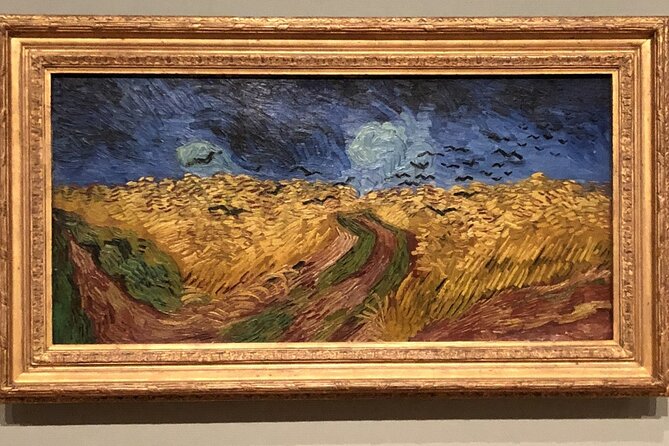
The final stop takes about 15 minutes in the Auvers room. It includes Tree Roots and Wheatfield with Crows, two works associated with Van Gogh’s last period.
Tree Roots is particularly important because it does not offer the tidy, postcard image many people expect. The subject fills the picture with tangled forms, forceful color, and uncertain direction. It asks you to look closely rather than settle into a single reading.
Wheatfield with Crows is one of the best-known works in the museum. Its broad field and dark birds can invite dramatic interpretations, but the painting deserves attention on its own terms too. Look at the movement of the brushwork and the way the paths pull your eye through the scene.
With only 15 minutes, this is a short ending. It can feel abrupt, especially after the earlier sections receive about 20 minutes each. The advantage is that the tour finishes with a clear sense of Van Gogh’s changing work. The disadvantage is that you may want more time in this room.
Because the tour ends inside the museum, you are not rushed out with the group. Stay after the guided portion and return to Tree Roots, Wheatfield with Crows, or any earlier favorite at your own pace.
What the guides add to the visit
The strongest part of this experience is the human explanation beside the paintings. Martina is repeatedly described as articulate, warm, and deeply familiar with Van Gogh’s work. She has used an iPad to show extra photographs and facts, which can make a painting’s setting or influence easier to understand.
Claire has a gift for linking Van Gogh’s life with his art and for making the subject accessible to someone who is not already interested in art. Kawika has explained paint types, painting methods, artistic development, and the wider European art scene with humor and energy.
Marlene has been praised for her careful pacing and patience, including returning to a painting that some people did not want to miss. Roland’s explanations and the headphone system were especially useful for someone wearing hearing aids. Holly has been noted for giving enough background without turning the tour into a lecture.
The exact guide depends on the day, so you should not book on the assumption that one particular person will lead your group. Still, these examples show what this tour can offer at its best: a guide who points out brushwork, explains influences, answers questions, and helps you see how the paintings changed over time.
There is one important caution. A guided tour depends heavily on the individual guide. One poor experience was judged less useful than using the museum’s audio guide, and one booking had a serious problem when the guide did not arrive. Those cases appear to be exceptions beside the very high overall rating, but they are worth keeping in mind when deciding how much a live guide matters to you.
Is $77.43 a fair price?
At $77.43 per person, this is not the cheapest way to enter the Van Gogh Museum. You are paying for museum admission, a two-hour guided visit, an English-speaking guide, and the whisper system. Special exhibitions and food are not included.
I see the price as reasonable if you want interpretation rather than a simple museum visit. Van Gogh’s work is easy to recognize but not always easy to place in context. A strong guide can show you the progression from Millet-influenced Dutch studies to Parisian experiments, Arles color, Saint-Rémy intensity, and the final Auvers paintings.
The value is weaker if you prefer long, quiet periods with each painting. The planned route covers many works in about two hours, and the group must keep moving. In that case, admission plus an audio guide may suit you better, though you lose the chance to ask questions or have a guide adjust the pace.
The best value comes from treating the tour as an introduction, then staying afterward. You can let the guide handle the structure and background, then revisit the paintings that caught your attention without having to follow anyone else.
Timing, age rules, and practical planning
You can choose a morning or afternoon departure. Pick the time that fits your day, but remember that the museum visit itself lasts about two hours and you may want extra time afterward. The tour does not include food or drinks, so plan those separately around your museum visit.
Only adults aged 18 or older can join. Most people can participate, and the meeting point is near public transportation. The maximum group size is 14, but the exact number on your departure may be smaller.
Free cancellation is available if you cancel at least 24 hours before the start time. Changes or cancellations made within 24 hours are not accepted and are not refunded. Keep the local Amsterdam cut-off time in mind when changing plans.
Who should book this Van Gogh tour?
I would choose this tour if you want a clear path through Van Gogh’s career and prefer a real person to an audio recording. It suits first-time visitors, art fans who want more context, and couples or friends who enjoy asking questions as they look.
It is also a good choice if one person in your group is less interested in art. A guide who connects the paintings with Van Gogh’s working methods, travels, influences, and personal life can make the museum easier to follow.
I would think twice if you are under 18, want to visit a special exhibition as part of the ticket, or plan to spend most of your time on a single famous painting. The tour is built around a broad selection, not a slow study of just Sunflowers or The Bedroom.
Should you book it?
Book this tour if you want the Van Gogh Museum to feel like a connected story rather than a room-by-room collection. The small group, headphones, major works, and chance to stay inside afterward make the format practical.
At $77.43, it costs more than visiting independently, and the quality depends on the guide assigned to your group. But with guides such as Martina, Claire, Kawika, Marlene, Holly, Roland, and Sylvia, the experience can add real value, especially if you want to understand how Van Gogh became Van Gogh.
FAQ
How long does the Van Gogh Museum guided tour last?
The guided tour lasts approximately two hours.
What language is the tour offered in?
The tour is offered in English with a live English-speaking guide.
Is museum admission included?
Yes. Admission to the permanent collection is included in the tour.
Can I stay in the museum after the tour?
Yes. The tour ends inside the Van Gogh Museum, and you can stay until closing time to continue exploring on your own.
Are special exhibitions included?
No. Special exhibitions are not included, but you can visit them afterward at your own pace if you have the required access.
What happens if I cancel?
You receive a full refund if you cancel at least 24 hours before the experience start time. Cancellations or changes made less than 24 hours before the start time are not refunded.
More Museums in Amsterdam
- Amsterdam’s Weirdest Museum: Believe It or Not!
★ 4.5 · 4,086 reviews - Amsterdam: NEMO Science Museum Ticket
★ 4.4 · 2,979 reviews - Moco Museum Amsterdam Admission Ticket with Banksy and more
★ 4.0 · 1,745 reviews - Amsterdam: Cannabis Museum Entry Ticket
★ 4.2 · 1,244 reviews
Just added around Amsterdam
- From Amsterdam: The Hague Private Trip and Mauritshuis Entry★ 4.3 · 4 reviews
- VIP Private Full Day Tour of the Netherlands★ 4.8 · 6 reviews
- Amsterdam Old-West Vegan Food Tour with Local Guide★ 4.7 · 3 reviews
- Van Gogh Museum Private Guided Tour★ 4.2 · 10 reviews
- Vecht River: Full-day Cruise with Lunch★ 4.8 · 9 reviews
- Amsterdam: Van Gogh Museum Guided Tour★ 4.8 · 262 reviews
- Van Gogh and Rijksmusuem Tour: Small Group Tour with Entry★ 4.7 · 3 reviews
- Amsterdam: Van Gogh Museum Ticket & Guided Tour★ 4.4 · 187 reviews
Van Gogh Museum Tickets, compared.



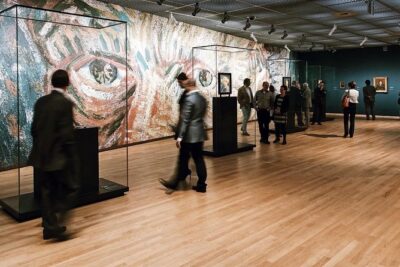
Van Gogh Museum Amsterdam Exclusive Tour w/ Reserved Entry
Read our review →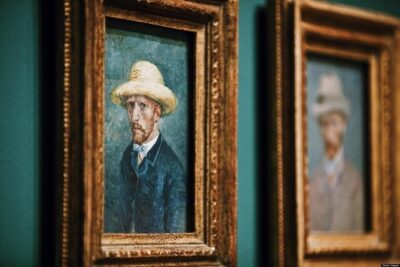
Van Gogh Museum Tour Reserved Entry Semi Private
Read our review →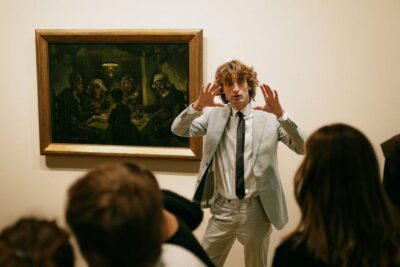

Combo Ticket: Van Gogh Museum Ticket and 1-Hour Canal Cruise
Read our review →
Browse the lists this tour appears in