
Reviewed · FOOD & DRINK
Guided Walking Street Food Tour of De Pijp & Beyond
Amsterdam’s best food stories often sit in small shops, market stalls, and narrow neighborhood streets rather than on a formal restaurant menu. This De Pijp food walk takes you through Albert Cuyp Market and nearby local businesses for at least seven bites, from herring and stroopwafels to Indonesian, Surinamese, and Japanese specialties.
I like the small group of no more than eight, which should make it easier to ask questions and keep up as you move between stops. I also like the way the food is tied to everyday Amsterdam life, with guides such as Sara and Sharmain bringing humor, local context, and a feel for the group. The main consideration is the $155.68 price, which is a serious sum for a walking tour, so you’ll want to arrive hungry and make full use of the food and drinks included.
- Albert Cuyp Market sets the scene: Begin among the Netherlands’ best-known market stalls and family-run food businesses.
- At least seven tastings: Expect a mix of Dutch classics and international foods linked to Amsterdam’s daily life.
- De Pijp beyond the market: Continue through local toko shops, narrow streets, older food counters, and newer eateries.
- A genuinely small group: The maximum is eight people, useful for conversation and a more personal pace.
- Guides shape the experience: Sara is praised for connecting food with history, while Sharmain brings warm banter and a good feel for group dynamics.
- A half-day commitment: The walk lasts about four to five hours and starts at 11:00 a.m., so plan your morning around it.
Starting with Herring and Stroopwafels at Albert Cuyp Market
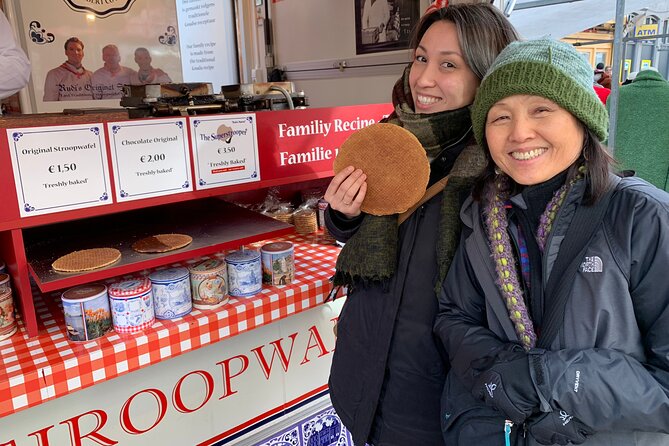
The tour begins at Albert Cuypstraat 75 at 11:00 a.m. This puts you directly beside Albert Cuyp Market, a fitting starting point for a food walk that aims to show you how Amsterdam eats beyond the usual restaurant circuit.
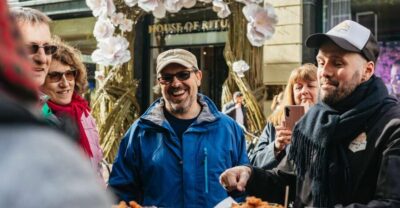
The market is the most popular street market in the Netherlands, and the first 45 minutes focus on small family businesses, long-running vendors, and newer food entrepreneurs. That mix matters. You are not being led only to the most polished stalls. You are also introduced to the modest shops and counters that local residents return to over many years.
The food list gives you a useful preview of Amsterdam’s mixed culinary identity. You might try herring, a Dutch classic with a strong flavor and a firm place in local food culture. You may also encounter a broodje pom, a Surinamese sandwich featuring pom, or a kroket, the crisp, filled snack found across the Netherlands.
A stroopwafel adds a sweeter note. These thin waffle cookies joined by syrup are familiar to many people, but tasting one in the setting where locals buy everyday snacks gives it more meaning than picking up a packaged version at the airport.
The market stop is free to enter, but food tastings are the point of the visit. Since the tour promises at least seven foods across the full outing, not every named item should be treated as a guaranteed dish on a fixed menu. Think of the examples as a guide to the style of food you’ll encounter.
Three Hours in De Pijp’s Small Food Businesses
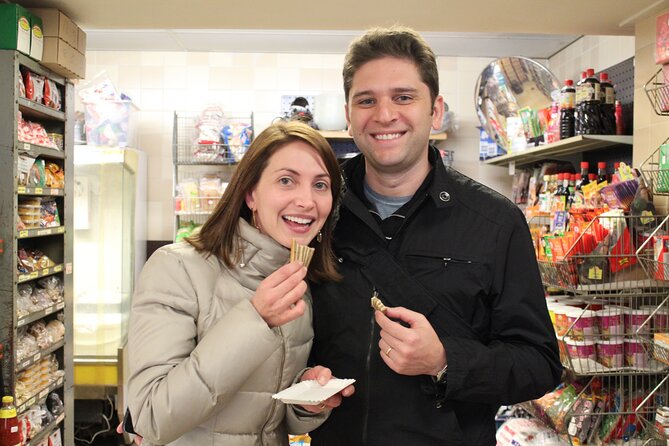
After the market, the walk continues for about three hours through De Pijp. This is the main part of the experience, and it moves beyond the market’s obvious sights into the neighborhood’s smaller streets and local businesses.
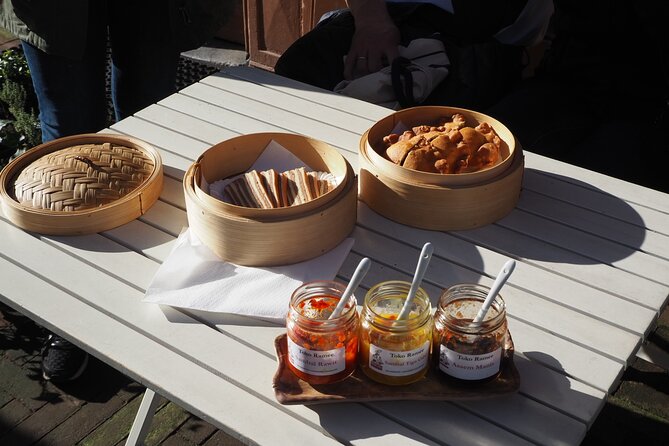
De Pijp is known for its mix of food traditions, and the route brings together Dutch street food, Indonesian and Surinamese cooking, Asian groceries, and newer international food spots. The local toko is especially important here. These small shops and eateries often sell Indonesian or Surinamese foods alongside Asian ingredients and prepared dishes.
You might stop for more herring, fries, kroketten, poffertjes, or stroopwafels. Poffertjes are small, soft Dutch pancakes, usually associated with a sweet snack rather than a full meal. Sampling several foods in small portions lets you compare textures and flavors without committing to one large dish.
The international side of the route may include Japanese sandos. These sandwiches are a newer addition to Amsterdam’s casual food scene, and their place alongside Dutch and Surinamese food says a lot about how neighborhoods change while keeping older habits alive.
I like this part of the plan because it gives you a better sense of De Pijp than a quick walk along the market alone. You are not just checking off a famous address. You are using food to understand the neighborhood’s mix of old, new, Dutch, Indonesian, Surinamese, and other Asian influences.
The tradeoff is that the route is built around narrow local businesses, not a single comfortable dining room. You should expect to walk from stop to stop and eat along the way. The supplied details do not specify seating at each stop, so anyone who needs a seated meal should ask before booking.
More Food Tours in Amsterdam
- 10 Tastes of Amsterdam: Food Tour by UNESCO Canals and Jordaan
★ 5.0 · 3,020 reviews - Amsterdam Food and Cultural Tour with Tastings
★ 5.0 · 2,442 reviews - Amsterdam Jordaan Food & Drinks Tour with Eating Europe
★ 5.0 · 2,425 reviews
How the Guides Add More Than a Food List
A food walk can easily become a string of samples with little connection between them. This one is designed to include conversation about everyday life in Amsterdam, which gives the tastings a wider purpose.
Sara brings food into a historical context. That is useful when you are trying dishes that may be unfamiliar, such as broodje pom or Indonesian and Surinamese specialties. Instead of treating each bite as an isolated novelty, the guide can help you see how food connects with the city’s past and present.
Sharmain is noted for good banter and for reading the mood of the group. That may sound like a small detail, but it matters on a four to five hour walk. A guide who adjusts the conversation and keeps people included can make a long outing feel relaxed rather than rigid.
The guide’s role is also practical. You get an introduction to small businesses that you might pass without noticing, along with a better sense of where locals buy snacks and casual food. The focus is explicitly on avoiding tourist traps and supporting independent businesses in De Pijp.
That does not mean every stop will be unknown or completely free of visitors. Albert Cuyp Market is a major Amsterdam attraction. The more local character comes from the family shops, toko businesses, market vendors, and neighborhood food counters selected around it.
What You May Taste Along the Route
The promised seven or more foods make this a substantial eating experience rather than a quick sampling tour. The exact order and selection may vary, but the stated examples give you a clear idea of the range.
Herring is one of the classic Dutch foods you may meet early or later on the route. It is worth approaching with an open mind, especially if you have only seen it served in a jar or on a supermarket shelf.
Kroket offers a different kind of Dutch snack. Its crisp outer shell and savory filling make it easy to understand why it is such a common quick bite. Fries and poffertjes provide more familiar options if you prefer milder flavors.
Broodje pom introduces Surinamese influence. The name alone may be new to you, and that is part of the value of the tour. A local guide can explain what you are eating and how it fits within Amsterdam’s food culture.
Indonesian dishes are another key part of the experience. De Pijp’s toko shops and eateries make space for foods that reflect the city’s long connection with Indonesia. The available information does not name specific Indonesian dishes, so you should treat this as a broad category rather than a guaranteed tasting.
Japanese sandos show a newer side of the neighborhood. These sandwiches contrast with herring, kroket, and stroopwafels, giving the tour a useful sense of both tradition and change.
Finally, stroopwafels and perhaps other pastries bring a sweet finish to the food lineup. A few drinks are also included, though the type and number are not specified.
Because the tour includes at least seven foods plus drinks, eat lightly before you meet the guide. Arriving after a large breakfast would make it harder to sample the full range. At the same time, do not assume every stop is a full meal. The experience is best understood as a long series of small bites.
Why the Eight-Person Limit Matters
The maximum group size is eight people. For a food walk, that is a useful limit. Small counters and narrow shops can become awkward with a large crowd, while a smaller group can gather without blocking every doorway.
A group of this size also suits the social side of the tour. The comments attached to the experience point to good conversation and friendly banter, including a relaxed interaction between people from different places. You should expect the atmosphere to depend partly on the people who book that day, but the size gives the guide room to involve everyone.
The group limit also helps when you have questions. You can ask about ingredients, local habits, or the neighborhood without needing to shout over twenty other people. If you enjoy food tours as a way to meet others, eight is large enough for conversation but small enough to remain personal.
The flip side is that this is not a private tour. You will share the pace, tastings, and guide with other members of the group. If you want to choose every stop or linger over one food, a private arrangement would offer more control, but no private option is described here.
More Walking Tours in Amsterdam
- Anne Frank’s Story – Guided Walking Tour through Amsterdam
★ 5.0 · 11,619 reviews - Amsterdam: Life of Anne Frank and World War II Walking Tour
★ 4.8 · 10,467 reviews - Absolutely Amsterdam – the Essential Introductory Walking Tour
★ 5.0 · 3,629 reviews - Amsterdam: Anne Frank Guided Small Group Walking Tour
★ 4.8 · 2,722 reviews
Is $155.68 Fair for a Four to Five Hour Walk?
At $155.68 per person, this is not a cheap way to grab lunch. The price needs to be judged against what you receive: roughly four to five hours of guiding, at least seven street foods, a few drinks, access to local food businesses, and a group capped at eight.
If you bought seven separate snacks and drinks on your own, the food alone would still not explain the full price. You are also paying for route planning, introductions to small businesses, neighborhood context, and the guide’s ability to connect the dishes into a story.
I see the value most clearly for a first visit to Amsterdam, when you want help finding food outside the standard tourist circuit. You can spend half a day learning what to look for, then return to De Pijp later on your own.
The value is weaker if you already know Amsterdam’s food scene well or mainly want a large sit-down meal. You might find it cheaper to explore Albert Cuyp Market independently, but you would lose the organized route, guide commentary, and broader selection of neighborhood stops.
The tour is also a better deal for someone who enjoys trying many different foods. If you are selective about food or expect to skip several tastings, the cost per bite rises quickly. Dietary needs are not described in the available information, so ask the provider before booking if that affects your decision.
Timing, Meeting Point, and Practical Details
The start time is 11:00 a.m., and the meeting point is Albert Cuypstraat 75, 1072 CN Amsterdam. The tour ends somewhere different, but the exact end point is not provided in the details available here. Allow four to five hours and avoid scheduling a tight afternoon appointment.
The experience is offered in English and uses a mobile ticket. Confirmation is sent within 48 hours of booking, subject to availability. It requires a minimum number of participants, so a cancellation is possible if that minimum is not met. In that case, you are offered another date or experience, or a full refund.
The tour is near public transportation, and service animals are allowed. Most people can participate, but the description does not give a precise walking distance or explain the seating arrangements at food stops. If you need those details, contact Hungry Birds Street Food Tours Amsterdam before you pay.
Free cancellation is available up to 24 hours before the 11:00 a.m. start time for a full refund. Changes made within 24 hours are not accepted, and cancellations inside that period are not refunded.
Who Will Enjoy This De Pijp Food Walk?
I would recommend this experience to you if you want food and neighborhood context in equal measure. It is especially suited to a first or early visit to Amsterdam, when a local guide can help you get your bearings and point out places you might otherwise miss.
It also fits people who like variety. The route may move from Dutch herring to a Surinamese sandwich, an Indonesian dish, a kroket, Japanese sandos, and a sweet pastry in the same half-day. That range is the heart of the experience.
The tour may suit solo visitors and couples who like meeting a small group. The eight-person maximum gives you a better chance of conversation than a large coach outing, and Sharmain’s easy banter suggests a friendly tone.
I would think twice if you dislike walking, need a guaranteed seated lunch, or have strict dietary requirements that have not been cleared with the provider. The duration is long, and the appeal depends on sampling several different foods rather than choosing one meal.
Should You Book It?
Book this De Pijp tour if you want a guided introduction to Amsterdam through local snacks, small businesses, and the city’s Dutch, Indonesian, Surinamese, and newer international food influences. The strongest reasons are the four to five hour route, the maximum group size of eight, and the chance to connect food with everyday life rather than simply visit a market.
The price is high, but the experience includes enough tastings and guiding to make it reasonable for food-focused visitors who will sample widely. I would book it early, especially since it is often reserved about 34 days ahead, and I would keep the rest of the day flexible.
Skip it if you want a bargain lunch, a short market visit, or a fully predictable menu. For everyone else, it offers a practical way to meet De Pijp through the foods people actually buy and eat.
FAQ
Where does the tour start?
The tour starts at Albert Cuypstraat 75, 1072 CN Amsterdam, Netherlands, at 11:00 a.m.
How long does the experience last?
The walking tour lasts approximately four to five hours.
How many foods are included?
The experience includes at least seven local street foods and a few drinks. Examples include herring, broodje pom, kroket, stroopwafels, fries, poffertjes, Indonesian foods, and Japanese sandos.
Is the tour offered in English?
Yes. The experience is offered in English.
How large is the group?
The tour has a maximum of eight participants.
Can I cancel for a full refund?
Yes. You can cancel at least 24 hours before the start time for a full refund. Cancellations made less than 24 hours before the start time are not refunded.
More Food and Drink Tours in Amsterdam
- Amsterdam: Premium Henri Willig Cheese Tasting Experience
★ 4.7 · 1,106 reviews - Amsterdam: Cheese & Wine Cruise Tasting Experience
★ 4.5 · 1,090 reviews - Amsterdam: Food and Culture Walking Tour with Tastings
★ 4.9 · 838 reviews - Zaanse Schans and Cheese Tasting Guided Tour from Amsterdam
★ 4.0 · 661 reviews
Just added around Amsterdam
- From Amsterdam: The Hague Private Trip and Mauritshuis Entry★ 4.3 · 4 reviews
- VIP Private Full Day Tour of the Netherlands★ 4.8 · 6 reviews
- Amsterdam Old-West Vegan Food Tour with Local Guide★ 4.7 · 3 reviews
- Van Gogh Museum Private Guided Tour★ 4.2 · 10 reviews
- Vecht River: Full-day Cruise with Lunch★ 4.8 · 9 reviews
- Amsterdam: Van Gogh Museum Guided Tour★ 4.8 · 262 reviews
- Van Gogh and Rijksmusuem Tour: Small Group Tour with Entry★ 4.7 · 3 reviews
- Amsterdam: Van Gogh Museum Ticket & Guided Tour★ 4.4 · 187 reviews
Food & Drink, compared.
10 Tastes of Amsterdam: Food Tour by UNESCO Canals and Jordaan
Read our review →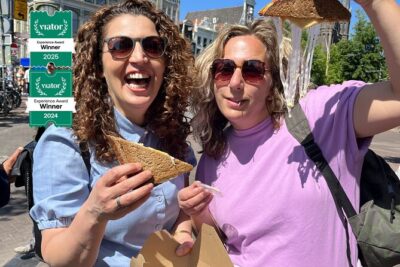
Amsterdam Food and Cultural Tour with Tastings
Read our review →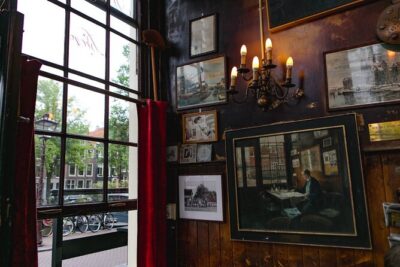
Amsterdam Jordaan Food & Drinks Tour with Eating Europe
Read our review →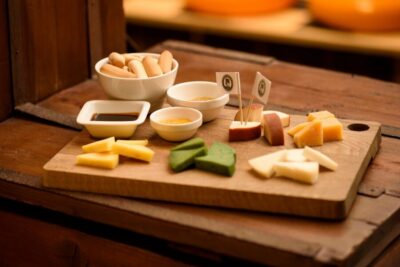
Premium Henri Willig Cheese Tasting Experience
Read our review →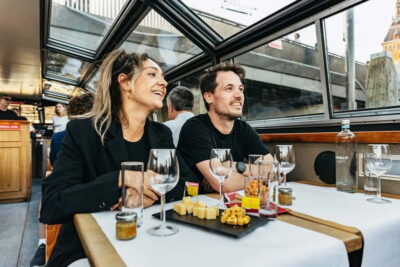
Zaanse Schans and Cheese Tasting Guided Tour from Amsterdam
Read our review →
Browse the lists this tour appears in