
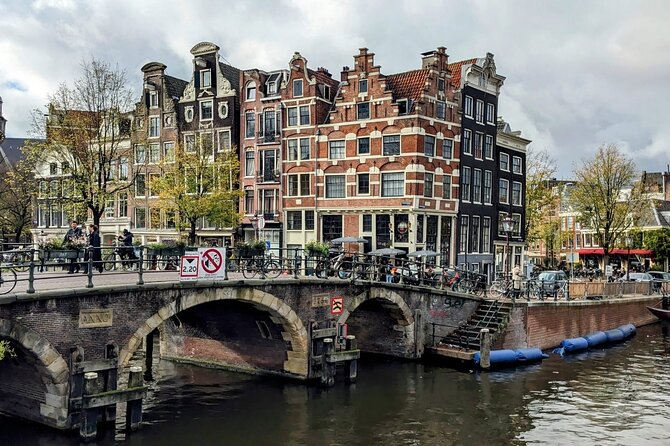
Reviewed · HISTORICAL TOURS
History & culture tour in Amsterdam with a local
Amsterdam’s story comes alive on this compact walk from Beursplein to Centraal Station. In two to two and a half hours, you’ll move from the city’s medieval beginnings to its 17th-century economic rise, religious tolerance, wartime memory, and present-day street life.
I like the small maximum group of 15, which gives you a fair chance to hear the guide and ask questions. I also like the route’s mix of major sights and lesser-known details, from the city’s old guilds to its so-called bicycle bridge, plus a classic stroopwafel along the way.
The main consideration is pace. This is a walking tour with several stops and plenty of discussion between them, so it is best for you if you enjoy learning as you walk rather than spending long periods inside museums or historic buildings.
Key points to know before you book
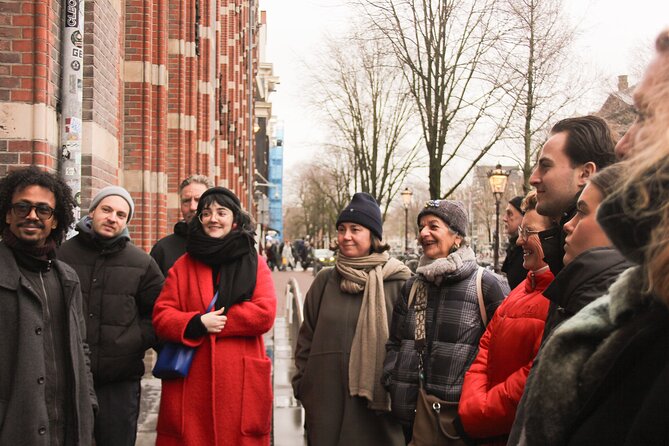
- Amsterdam’s story in one walk: Follow the city from fishing village to global trading center.
- A carefully chosen route: See Beursplein, Dam Square, Begijnhof, Nieuwmarkt, Zeedijk, and Centraal Station.
- Small-group format: The group is limited to 15 people, with private tours also possible.
- Local guides: Manouk and Malik are associated with the experience, and the tour can be shaped around your interests in some cases.
- A useful first-day activity: The walk gives you historical bearings before you explore Amsterdam on your own.
- Simple practical setup: It is offered in English, uses a mobile ticket, begins and ends at Beursplein, and costs $30.07 per person.
Starting at Beursplein, where Amsterdam began
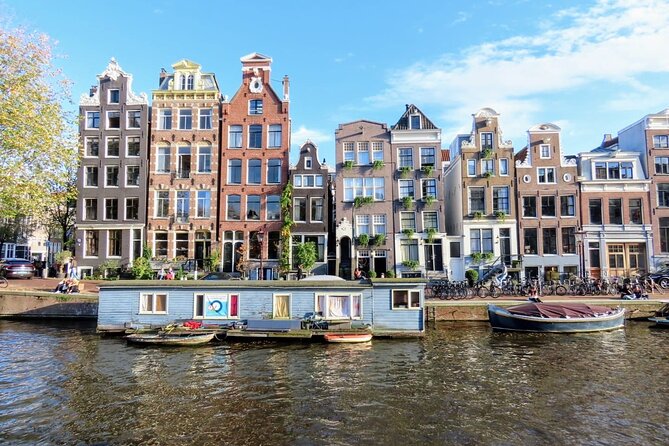
Beursplein is a sensible place to begin because the tour starts with Amsterdam’s basic question: where did the city come from, and how did it get its name?
Here you’ll hear how a small fishing settlement grew into one of the world’s major economic centers during the 17th century. That change is the central thread of the tour. Amsterdam was not simply built as a grand capital. It developed through water, trade, commerce, and the steady growth of its urban center.
I find this opening useful because it gives the rest of the walk a clear purpose. As you pass through older streets and squares, you can connect the buildings and waterways to the city’s rise in power. The stop lasts about 10 minutes, so expect a focused introduction rather than a long lecture.
Beursplein is also near public transportation, which makes it practical for your first morning in Amsterdam. Since the tour returns here at the end, you can continue exploring from the same central area.
More History Tours in Amsterdam
- Amsterdam Food and Cultural Tour with Tastings
★ 5.0 · 2,442 reviews - Amsterdam: Haunted History and Ghost Walking Tour
★ 4.5 · 488 reviews - Amsterdam High-End Dutch Food & History Tour – Up to 8 guests
★ 5.0 · 482 reviews
Dam Square and the city’s public memory
The next stop is Dam Square, one of Amsterdam’s best-known public spaces. The guide explains how the square helped shape the city and points out the Royal Palace on the Dam.
The palace gives the square its grandest visual feature, but the discussion also reaches into the difficult parts of Amsterdam’s past. You’ll hear about the square’s role during the Second World War, adding a serious historical layer to a place that can otherwise feel like a busy meeting point for visitors.
The stop lasts around 10 minutes. That is enough time to understand why Dam Square matters without getting bogged down in dates. You should expect to remain outside, taking in the setting while the guide connects the buildings and open space to Amsterdam’s formation.
This is one reason I would take the tour early in a visit. Once you understand the square’s civic and historical role, later walks through central Amsterdam become more meaningful.
A quiet pause at Begijnhof
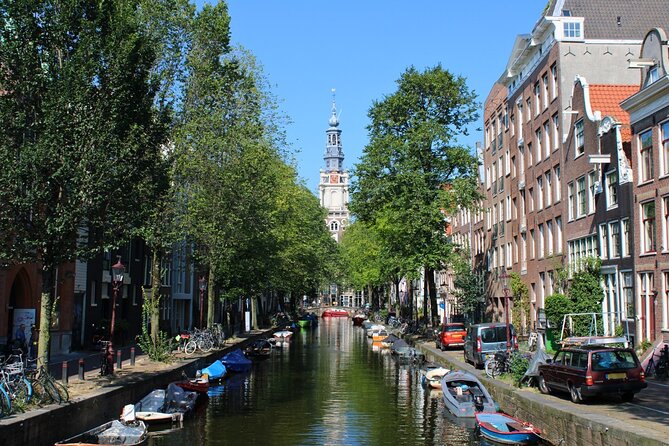
Begijnhof changes the mood. After the open public space of Dam Square, you enter a peaceful courtyard with a religious past and a strong connection to Amsterdam’s tradition of tolerance.
The guide explains the women who lived here and what the courtyard reveals about religion and daily life in the city. Amsterdam’s reputation for tolerance was never simple or perfect, but places such as Begijnhof show how different religious communities found ways to live and worship within the city.
You’ll also see one of Amsterdam’s oldest houses, one of the two surviving wooden cottages. That detail gives the stop a physical sense of age. Instead of only hearing that Amsterdam is old, you get a chance to look at a rare wooden structure in a city better known for brick canal houses.
The visit takes about 15 minutes, making it the longest stop on the route. Keep your voice low and treat the courtyard as a place of residence and reflection, not just a photo stop. The quiet setting is part of what makes it memorable.
The house on three canals and Amsterdam’s odd details
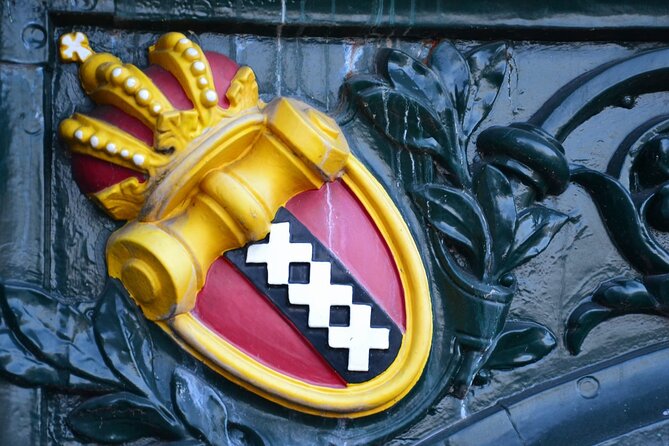
The route then turns toward a house situated on three canals. This is the kind of stop that helps explain why a walking tour can offer more than a checklist of famous buildings.
You’ll learn about the house itself and the bicycle bridge. The supplied details do not spell out every feature of this bridge, so you should expect the guide to provide the explanation on site rather than treat it as a major monument.
The stop lasts about 10 minutes. Its value is in the small details that you might pass without noticing if you were walking alone. Amsterdam rewards close attention. A narrow bridge, an unusual house angle, or a building’s position between waterways can reveal how the city was shaped by canals and limited urban space.
This section also breaks up the larger historical subjects. You move from broad ideas about trade and religion to the practical, sometimes quirky details of city life.
A few more days out around Amsterdam worth weighing up
- Amsterdam: Van Gogh Museum Ticket
★ 4.7 · 52,054 reviews - Amsterdam Classic Saloon Boat Cruise with Drinks and Cheese
★ 5.0 · 31,825 reviews - Amsterdam Luxury Canal Cruise + Unlimited Drinks & Bites option
★ 5.0 · 30,518 reviews - Amsterdam: Heineken Experience Ticket
★ 4.6 · 30,055 reviews
Nieuwmarkt, the Waag, and the old guild system
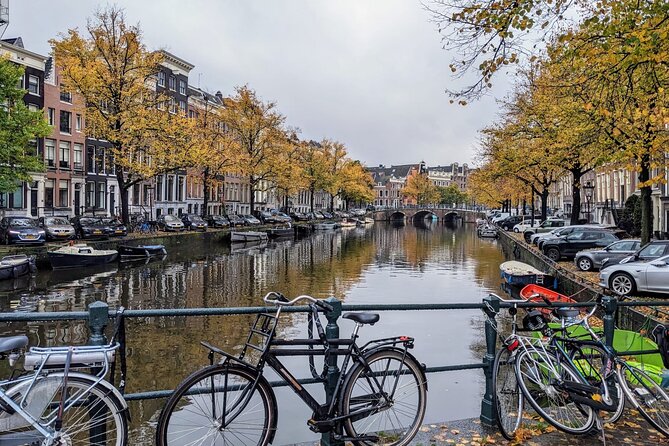
At Nieuwmarkt, the focus shifts to the Waag, a former city gate that later became a guild hall. This stop brings Amsterdam’s medieval defenses and working life into the same picture.
The guide explains why guilds mattered. These organizations helped regulate trades and shaped the social and economic order of the city. For you, this makes the Waag more than an attractive old building. It becomes a clue to how Amsterdam organized work, commerce, and civic life before modern institutions took over.
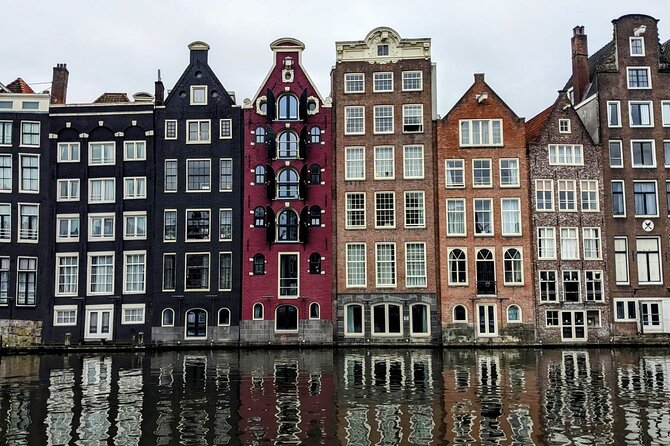
You’ll also see the dancing houses, the narrow and sometimes leaning buildings that are among Amsterdam’s most recognizable sights. Their appearance is fun, but the guide’s historical context helps you look beyond the postcard image.
Nieuwmarkt is covered in about 10 minutes. As with the other stops, the tour does not appear to include an interior visit. If you want to spend substantial time inside the Waag or other historic buildings, you’ll need to plan that separately.
Zeedijk and the changing face of Chinatown
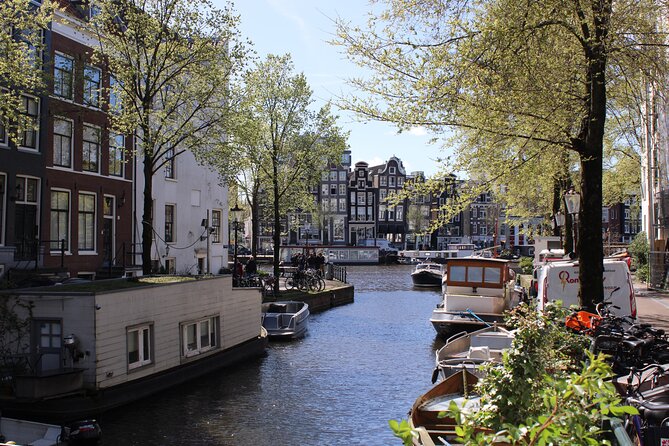
Zeedijk adds a more recent and social chapter to the route. You’ll discover Amsterdam’s Chinatown and hear how the street was once considered the most dangerous part of the city during the 1970s.
The story then moves toward decline and renewal, explaining how Zeedijk changed into one of the favorite places for many Amsterdammers. This gives you a chance to think about Amsterdam as a living city rather than a preserved historical display.
I especially like this part of the route because it connects the past to the present. Amsterdam’s identity is not fixed in the 17th century. Streets change, reputations shift, and neighborhoods take on new roles.
The stop lasts approximately 10 minutes. That is enough for a clear overview, though not enough for a detailed study of Chinatown’s food, businesses, or community history. If Zeedijk interests you, use the tour as an introduction and return later at your own pace.
Centraal Station, connection, and prosperity
The final listed stop is Amsterdam Centraal Station, one of the city’s most impressive buildings. The discussion focuses on its architecture and its position as a transportation hub.
The station’s location matters for more than convenience. For centuries, Amsterdam’s connection to the wider world helped drive its prosperity. Today, the station remains a powerful symbol of arrival, departure, and connection, making it a fitting end point for a tour about the city’s growth.
You’ll spend roughly 10 minutes here. The tour then returns to Beursplein, its starting point. Because the walk covers the central city rather than ending at a distant suburb, you can easily continue sightseeing, find lunch, or use public transportation afterward.
Centraal Station can be crowded and active, so listen closely when the guide begins the explanation. The building is visually striking, but the historical point about movement and trade is the real reason it belongs on this route.
What the two-hour pace feels like
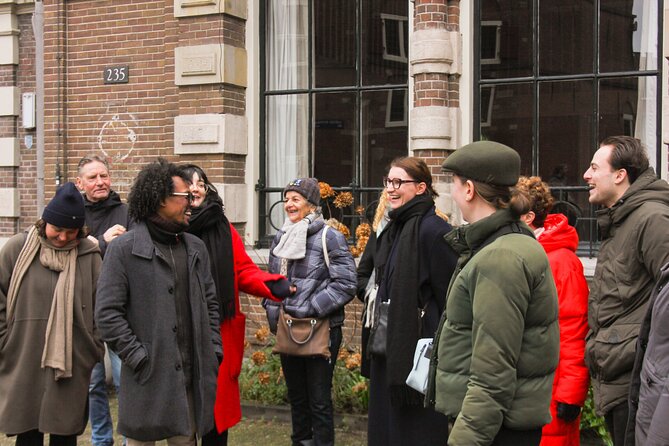
The stated duration is about two hours, while the practical guidance places the walk closer to two to two and a half hours. The difference probably depends on walking speed, questions, and how much time the guide spends between the main stops.
The six listed stops are relatively short, generally 10 minutes each, with Begijnhof receiving about 15 minutes. The rest of the time is spent walking through central Amsterdam while the guide discusses additional subjects.
That format suits you if you like a steady flow of information. It is less suitable if you want long periods for photography or quiet exploration at each location. Wear comfortable shoes, leave some room in your schedule, and avoid booking an appointment immediately afterward.
The tour is offered in English and uses a mobile ticket. Most people can participate, and service animals are allowed. No special physical requirements are stated, but this is still a city walk with several sections on foot.
How the guide affects the experience
The guide is important here because the route depends on explanation rather than admission to major attractions. Manouk is associated with the experience, and the details also refer to Malik as a guide. Manouk is described as tailoring a private walk to the group’s interests, which suggests that private bookings can offer more flexibility than the standard small-group format.
The guiding style appears to combine historical facts with a sense of present-day Amsterdam. That balance matters. You are not only hearing how the city developed, but also learning how places such as Zeedijk and Dam Square fit into the city now.
A thoughtful treat is included at the end, and the tour highlights a classic Dutch stroopwafel along the way. It is a small touch, but it gives the walk a local food connection without turning the experience into a food tour.
If you have a particular interest, such as religious history, World War II, trade, architecture, or neighborhood change, tell the guide early. The available information shows that customization is possible in private tours, and asking questions should help you get more from the route.
Is $30.07 a fair price?
At $30.07 per person, this is not the cheapest way to walk around Amsterdam, since you could follow much of the route independently. The price pays for structure, interpretation, local guidance, and the chance to ask questions as the city passes around you.
The value is strongest if Amsterdam is new to you. A good guide can help you understand why the canals matter, how trade shaped the city, and how historic places relate to modern neighborhoods. That context can save you from seeing central Amsterdam as a series of attractive but disconnected buildings.
The value is also better for visitors who want a social experience. With a maximum of 15 people, the group is small enough to feel personal without requiring the cost of a fully private tour.
The price is less compelling if you already know Amsterdam well or prefer to explore silently with a map. You also should not book it expecting extensive indoor access, since the route is built around outdoor landmarks and street-level explanation.
Who should book this Amsterdam walking tour?
I would recommend it to first-time visitors who want a clear introduction before exploring museums, canals, and neighborhoods independently. It also fits history lovers who prefer stories about urban growth, religion, trade, war, and social change rather than a simple list of photo stops.
It suits solo visitors and couples who enjoy meeting a small group. Families may find the changing subjects helpful, though the walk’s appeal will depend on how much interest younger children have in city history.
Private booking makes more sense if you want the guide to shape the route around your interests. The experience has already been adapted to individual needs in private settings, according to the supplied information.
You might skip it if your main goal is a museum visit, a canal cruise, or a food-focused outing. This is a broad introduction to Amsterdam on foot. Its strength is the connection between places, not a long stay at any one attraction.
Booking details worth keeping in mind
The tour starts and ends at Beursplein, 1012 JW Amsterdam. It is near public transportation, and confirmation is issued when you book.
Free cancellation is available up to 24 hours before the start time for a full refund. Cancellations or changes made within 24 hours are not accepted for a refund, and the cut-off follows local Amsterdam time.
The activity is often booked well ahead, with an average lead time of 79 days. That does not guarantee that every date requires early booking, but it is a useful warning if your Amsterdam schedule is fixed.
Should you book it?
Book this tour if you want a friendly historical orientation to central Amsterdam, especially on your first day. The route covers the city’s origins, Dam Square, Begijnhof, guilds, Chinatown, and Centraal Station, giving you a strong framework for later sightseeing.
Skip it if you want extensive time inside buildings or a narrow specialty tour. For $30.07, the experience offers solid value when you want interpretation and company, with the stroopwafel and small group adding a pleasant local touch. It is a practical way to get your bearings before setting off on your own.
FAQ
How long does the Amsterdam history and culture tour last?
The tour lasts about two hours, though the practical duration is stated as two to two and a half hours. Walking between the stops and discussion along the route account for the extra time.
Where does the tour start and finish?
The tour starts at Beursplein, 1012 JW Amsterdam, and ends back at the same meeting point.
Which places are included?
The route includes Beursplein, Dam Square, Begijnhof, the House on the Three Canals, Nieuwmarkt, Zeedijk, and Amsterdam Centraal Station.
Is the tour offered in English?
Yes. The experience is offered in English.
How large is the group?
The maximum group size is 15 people. Private tours are also possible, and the route can be tailored to suit the group’s needs in that format.
Can I cancel for a full refund?
Yes. You can cancel at least 24 hours before the experience start time for a full refund. Cancellations or changes made less than 24 hours before the start time are not refunded.
More History Walks around Amsterdam
- Amsterdam: Historic City Sightseeing Canal Cruise
★ 4.5 · 444 reviews - Anne Frank and the Jewish History of Amsterdam Private Tour
★ 5.0 · 307 reviews - Amsterdam: 3-Course Meal in Historic 1st Class Waiting Rooms
★ 4.5 · 292 reviews - Amsterdam: Highlights & History Walking Tour
★ 4.8 · 266 reviews
Just added around Amsterdam
- From Amsterdam: The Hague Private Trip and Mauritshuis Entry★ 4.3 · 4 reviews
- VIP Private Full Day Tour of the Netherlands★ 4.8 · 6 reviews
- Amsterdam Old-West Vegan Food Tour with Local Guide★ 4.7 · 3 reviews
- Amsterdam: Van Gogh Museum Guided Tour★ 4.8 · 262 reviews
- Van Gogh Museum Private Guided Tour★ 4.2 · 10 reviews
- Vecht River: Full-day Cruise with Lunch★ 4.8 · 9 reviews
- Van Gogh and Rijksmusuem Tour: Small Group Tour with Entry★ 4.7 · 3 reviews
- Amsterdam: Van Gogh Museum Ticket & Guided Tour★ 4.4 · 187 reviews
Historical Tours, compared.
Amsterdam Food and Cultural Tour with Tastings
Read our review →
Kinderdijk UNESCO World Heritage Entry Ticket
Read our review →
Hop-on Hop-off Old-Fashioned Heritage Tram Tour
Read our review →


Amsterdam High-End Dutch Food & History Tour – Up to 8 guests
Read our review →
Cruise through the Historic City Center with Guide
Read our review →
Browse the lists this tour appears in