

Reviewed · RED LIGHT DISTRICT TOURS
Amsterdam: Red Light District guided tour (TOP RATED)
Amsterdam’s Red Light District is more than neon windows. It is the oldest part of the city, packed into narrow lanes where medieval city walls, trading wealth, wooden foundations, coffee shop culture, and modern debates about sex work all meet. This two-hour walking tour gives you a local guide to help sort fact from tourist folklore.
I like the small group, capped at 15 people, because the streets can be tight and the subject calls for questions. I also like the way the walk connects De Wallen to Amsterdam’s wider story, from wooden foundation poles to the old city gate at the Waag. The main drawback is that this is a walking tour in an exposed, crowded area, so poor weather, limited mobility, and busy evening foot traffic may affect your comfort.
Key points to know before you book
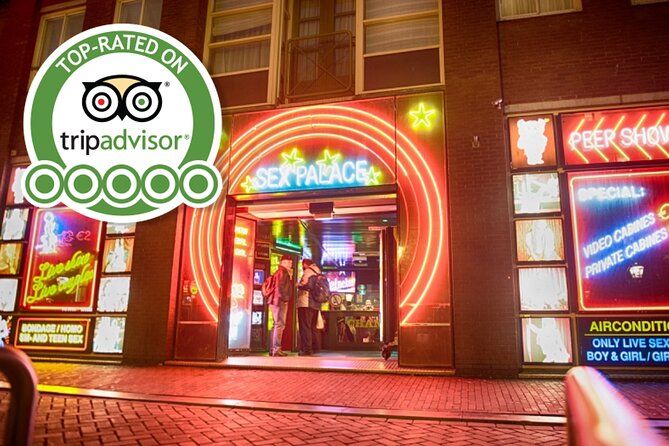
- The tour covers more than red-lit windows: You’ll see old Amsterdam landmarks including the Dam area, Int Aepjen, the Waag, the smallest house, and the city’s first specialty condom shop.
- Small groups make a real difference: With no more than 15 people, you should hear the guide more easily and have a better chance to ask questions.
- Guide quality is central to the experience: Ben, Robin, Aarre, Andrea, Catherine, and other English-speaking guides are praised for humor, local context, and respectful explanations.
- The tone is educational, not just sensational: Expect discussion of laws, regulations, workers, coffee shops, the district’s past, and possible changes ahead.
- The meeting point is easy to find: The walk starts and ends on Damrak, near public transportation, with no hotel pickup or drop-off.
- The price is fair for a focused city walk: At $34.17 per person, you are paying for local interpretation and orientation rather than admission to attractions.
Why a guided walk helps in De Wallen
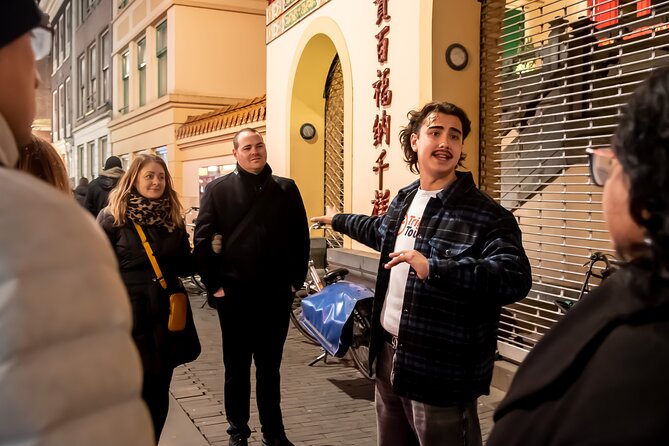
You can walk through De Wallen on your own, but it is easy to miss what you are seeing. A red-lit window tells you very little about how the district developed, how Dutch law treats the sex trade, or why this part of Amsterdam looks so different from newer neighborhoods.
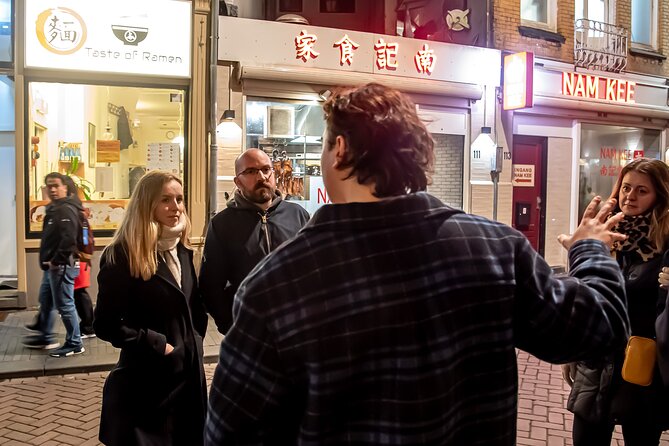
A guide adds the missing frame. You learn how the area grew around trade, shipping, taverns, religion, and Amsterdam’s position as a port. The discussion then moves toward the present day, including the rules around the district, coffee shops, working women, and plans or debates affecting De Wallen.
That context matters because the area can feel like a spectacle if you only wander through with a camera and a map. A good guide helps you look at it as a working neighborhood with residents, businesses, employees, historic buildings, and real social questions.
The best tone here is respectful and direct. The strongest guides do not turn the walk into a lecture, but they also do not treat the district as a joke. Ben is repeatedly praised for giving clear historical context and answering difficult questions without sugarcoating the past. Robin is noted for connecting the district to the city’s broader story and offering personal suggestions for places to eat or visit afterward.
More Red Light District walks:
- Amsterdam: Red Light Secrets Museum Entry Ticket
★ 4.2 · 5,722 reviews - Amsterdam: Red Light District Tour in German/English/Italian
★ 4.9 · 5,623 reviews - Amsterdam Red Light District & Coffee Shop Tour
★ 4.6 · 4,134 reviews
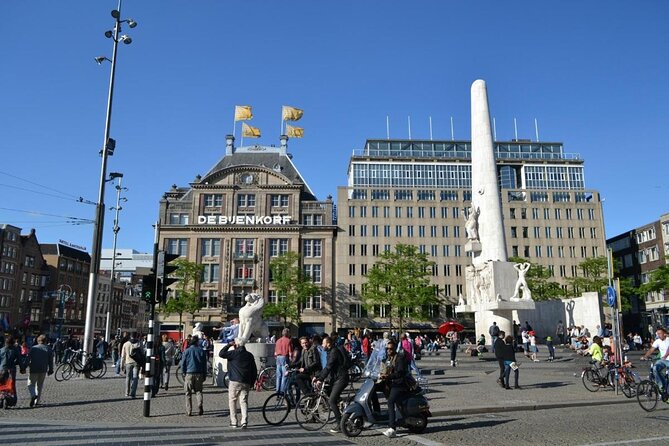
Starting at Damrak and the Dam
The walk begins on Damrak, 1012 Amsterdam, and returns to the same area. This is useful if you are new to Amsterdam because Damrak is central, easy to reach by public transportation, and close to several major sights.
One early point concerns the Dam and Amsterdam’s unusual foundations. The city sits on thick layers of fen, clay, and waterlogged soil, so many buildings were supported by wooden poles driven down to a deeper layer of sand. The practical result is a city that had to solve an engineering problem before it could grow upward.
This is a small detail, but it helps you understand Amsterdam. The city’s narrow houses, leaning facades, canals, and dense old center are not random. They reflect centuries of building on unstable ground while making the most of limited space.
For a first visit, this opening also helps you get your bearings. The Red Light District is close to the center, but its maze of lanes can be confusing. Starting near Damrak gives you a clear reference point before the group moves into the older streets.
Walking through De Wallen’s oldest streets
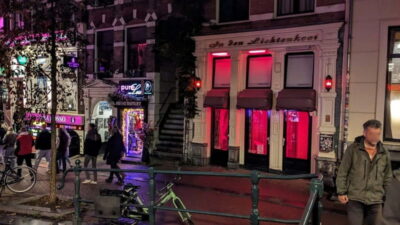
De Wallen is part of Amsterdam’s Old Town, which makes it the oldest section of the city. The red-lit windows are now the most famous feature, but the district’s age is just as important. You are walking through an area shaped by the city’s early trade, defense, faith, and port activity.
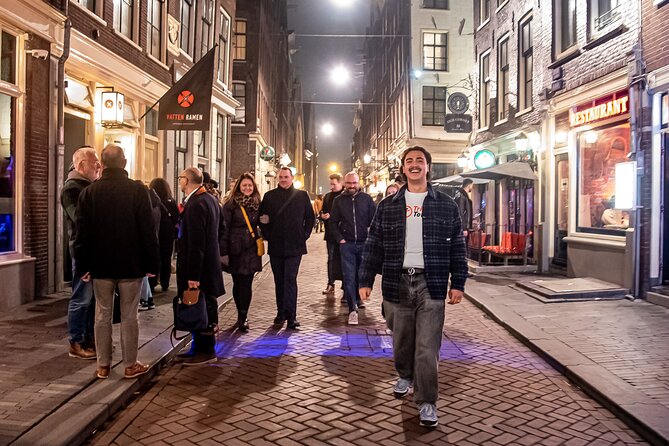
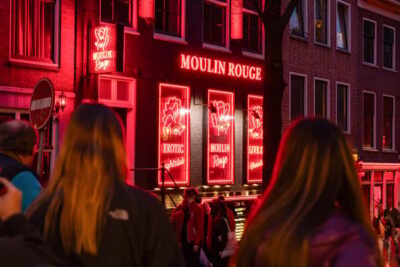
Expect narrow streets and a steady flow of people, especially on an evening tour. The guide will point out the current setup of the district while explaining how it formed and how it functions today. The experience is less about checking off windows and more about understanding why this particular quarter became associated with sex work.
The group size matters here. A maximum of 15 people is small enough to make moving through the lanes less awkward than with a large crowd. It also makes it easier to hear safety reminders, ask a question, or speak with the guide at a landmark without being pushed to the back.
One practical note: Amsterdam’s bicycle traffic is fast and can appear from behind with little warning. A guide can help you stay alert, but you still need to pay attention when crossing lanes and moving through narrow streets.
Int Aepjen, one of Amsterdam’s last wooden buildings
One of the more surprising stops is Pub The Ape, known in Dutch as Int Aepjen. Built around 1540, it is one of only two remaining wooden buildings in Amsterdam.
That fact becomes more interesting when you hear about the major fire of 1452. After the fire, the city government required brick facades to reduce the risk of another disaster. Int Aepjen survived as a rare reminder of the construction methods used before that change.
This stop gives the walk a welcome change of pace. Instead of focusing only on the district’s adult entertainment, you are looking at an old building and the rules that shaped Amsterdam’s architecture. It also shows how much history can sit beside a modern business without drawing attention to itself.
You will not need an admission ticket for this stop. The value comes from the guide’s explanation and from knowing what to look for as you pass the building.
A few more days out around Amsterdam worth weighing up
- Amsterdam: Van Gogh Museum Ticket
★ 4.7 · 52,054 reviews - Amsterdam Classic Saloon Boat Cruise with Drinks and Cheese
★ 5.0 · 31,825 reviews - Amsterdam Luxury Canal Cruise + Unlimited Drinks & Bites option
★ 5.0 · 30,518 reviews - Amsterdam: Heineken Experience Ticket
★ 4.6 · 30,055 reviews
The Waag and Amsterdam’s former city gate
The Waag is another major historic landmark along the route. It began as one of Amsterdam’s city gates and formed part of the defensive wall. Built around the 1400s, it is described as the second-oldest building in Amsterdam.
Later, the building served as a meeting place for guilds, the craft organizations that shaped daily commercial life. Guilds and their members were based in and around the Waag, making the nearby square an important center for work and trade.
For you, this stop adds a useful layer to the Red Light District. The area was never only about nightlife. It was also connected to the city’s defenses, markets, crafts, shipping, and growing wealth.
A guide can make the Waag easier to appreciate because its exterior alone does not explain its changing roles. Once you understand that it began as part of the city’s defenses and later became a place for organized trades, the building feels less like a photogenic old structure and more like a record of Amsterdam’s growth.
The smallest house and the pressure of limited space
The smallest house on the route dates from around the 1700s. It was first used as storage for the Dutch East India Company, known as the VOC, before eventually becoming a home.
This is a simple but telling stop. Amsterdam had valuable land, a dense center, and narrow plots. A building that began as storage could later become a place where people lived for a long time, showing how carefully space was used in the old city.
The smallest house also connects the district to Amsterdam’s trading past. The VOC helped make the city wealthy through maritime commerce, and that wealth shaped the streets, buildings, and social structure you see today.
Ben is particularly praised for connecting the city’s sea trade and wealth to its modern independent and tolerant culture. That kind of explanation is useful because it moves beyond isolated facts. You begin to see the Red Light District as part of a long chain of economic and social change.
The specialty condom shop since 1987
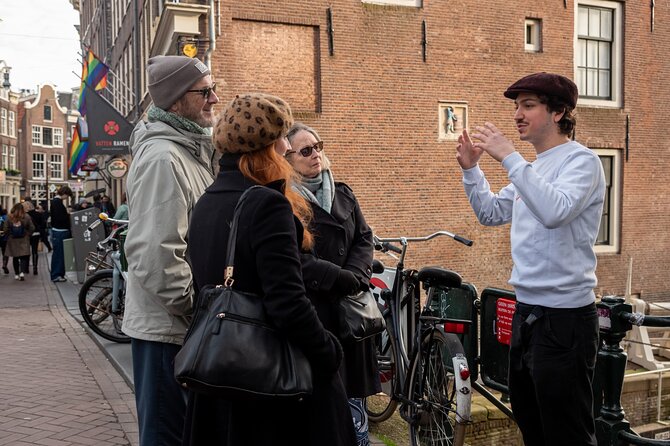
The route includes the world’s first shop dedicated specifically to condoms, in business at this location since 1987. You can find unusual designs and even request a size-customized condom.
This stop is lighter in tone, but it also reflects Amsterdam’s practical and open approach to sexual health and adult commerce. The guide can explain why the shop became part of the district’s identity without making the entire tour feel like a series of jokes.
The stop may appeal to some people more than others. If you prefer a strictly architectural walking tour, this is one of the more playful moments. If you want to understand the district as it exists today, it helps show the range of businesses that have developed around its reputation.
What the guides add to the experience
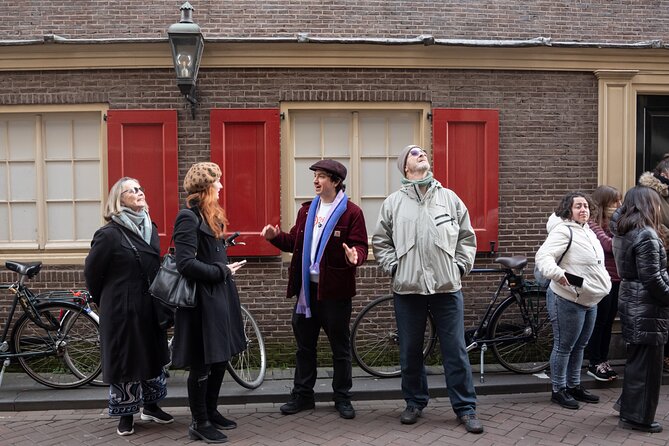
This tour depends heavily on who leads it. The strongest feedback centers on guides who combine history, humor, clear answers, and respect for the people who work in the district.
Ben is praised for his command of Amsterdam’s past, the coffee shop tradition, and the development of the Red Light District. He is also noted for making the history feel connected rather than scattered. Robin receives similar praise for being energetic, approachable, and generous with recommendations for food and other activities around the city.
Aarre is described as patient, funny, and willing to handle a long run of questions. That matters because this is a subject where people often arrive with assumptions or awkward questions. Aarre and other guides are also praised for treating sex workers with dignity.
Catherine receives special mention for making the discussion of women’s work informative and respectful. Andrea led an evening walk that gave particular attention to the district after dark, when more of its nightlife is active.
The exact guide cannot be guaranteed, so you should book for the format and subject rather than for one specific person. Still, the repeated praise for several named guides suggests that the company has a strong group of presenters.
Daytime or evening: choosing the right atmosphere
The tour is offered in English, but the supplied details do not give a fixed schedule of departure times. One evening departure at 8 p.m. received especially positive attention because more nightlife was visible after dark.
An evening walk may give you a better sense of the district as an active nightlife area. It can also feel more crowded and visually intense. Daytime conditions may be calmer and better for noticing the buildings, though the district will have a different mood.
I would choose the timing based on your purpose. Pick an earlier walk if you want to use the tour to understand the architecture and history before exploring elsewhere. Pick an evening walk if you want to see the area in its working nightlife setting and are comfortable with more foot traffic.
In either case, wear comfortable shoes. The walk lasts about two hours, takes place on city streets, and includes narrow areas where standing still for a long time may be less comfortable.
Who will get the most from this walk
This is a strong choice for first-time visitors who want to get their bearings and understand a part of Amsterdam that can be confusing alone. It also suits anyone who wants more than a surface-level look at the district.
You will likely enjoy it most if you:
- Want historical context alongside the modern Red Light District
- Prefer a small group over a large organized walk
- Have questions about Dutch laws, regulations, and coffee shop culture
- Appreciate a frank but respectful guide
- Want local suggestions for food and other things to do
- Are comfortable walking through a busy, adult-oriented neighborhood
Families can take the tour, and one review specifically describes a family appreciating Robin’s historical approach. Still, you should decide if the subject matter fits your group. This is an adult district, and the conversation openly addresses sex work and related laws.
The tour is not recommended for people with limited mobility. Service animals are allowed, and most people can participate, but the narrow streets and walking format may be difficult if you need frequent seating or have trouble navigating crowded areas.
Is $34.17 a good value?
At $34.17 per person, the tour is not the cheapest way to walk through De Wallen. You can enter the area without paying an admission fee. The question is what you want to gain from the two hours.
If you wander alone, you will see the windows, historic buildings, shops, and crowds, but you may not understand how they fit together. This tour charges for interpretation, local knowledge, group guidance, and the chance to ask questions. A small group makes that fee more reasonable than a large walk where you can barely hear.
Food, drinks, hotel pickup, and drop-off are not included. Since the tour starts and ends on Damrak, you will need to make your own way there and plan your next stop afterward. The return to the same area is convenient, especially if you are still learning the city center.
Free cancellation is available if you cancel at least 24 hours before the start time. Changes or cancellations made within 24 hours are not refunded, and poor weather can lead to a new date or a full refund. The experience requires suitable weather, so check the forecast before you set out.
My call: book it if you want context, not spectacle
I would book this tour early in an Amsterdam visit, especially if you want a clear introduction to De Wallen and the old center. With an average booking lead time of 45 days, popular dates may fill well ahead, and the 15-person limit is worth preserving.
Book it if you want a respectful guide, useful city history, and a better understanding of the laws and customs behind the district. Skip it if you only want to take a quick look at the windows, dislike walking in crowded streets, or would rather explore the area privately without adult-focused commentary.
For most first-time visitors, the value is in the connections: the wooden poles beneath the city, the trading wealth behind its old buildings, the Waag’s changing purpose, and the modern rules shaping De Wallen today. That makes this more than a nightlife walk. It is a compact way to understand one of Amsterdam’s most misunderstood neighborhoods.
FAQ
How long is the Amsterdam Red Light District guided tour?
The tour lasts approximately two hours.
Where does the tour start and end?
It starts and ends at Damrak, 1012 Amsterdam, Netherlands.
Is the tour offered in English?
Yes. The experience is offered in English.
How large is the tour group?
The tour has a maximum of 15 participants. Small-group bookings and group discounts are available.
Are food, drinks, or hotel transfers included?
No. Food, drinks, hotel pickup, and hotel drop-off are not included. The tour includes a local guide.
Can I cancel for a full refund?
Yes, if you cancel at least 24 hours before the experience start time. Cancellations or changes made less than 24 hours in advance are not refunded. If poor weather causes the tour to be canceled, you will be offered another date or a full refund.
Just added around Amsterdam
- From Amsterdam: The Hague Private Trip and Mauritshuis Entry★ 4.3 · 4 reviews
- VIP Private Full Day Tour of the Netherlands★ 4.8 · 6 reviews
- Amsterdam Old-West Vegan Food Tour with Local Guide★ 4.7 · 3 reviews
- Amsterdam: Van Gogh Museum Guided Tour★ 4.8 · 262 reviews
- Van Gogh Museum Private Guided Tour★ 4.2 · 10 reviews
- Vecht River: Full-day Cruise with Lunch★ 4.8 · 9 reviews
- Van Gogh and Rijksmusuem Tour: Small Group Tour with Entry★ 4.7 · 3 reviews
- Amsterdam: Van Gogh Museum Ticket & Guided Tour★ 4.4 · 187 reviews
Red Light District Tours, compared.

Red Light District Tour in German/English/Italian
Read our review →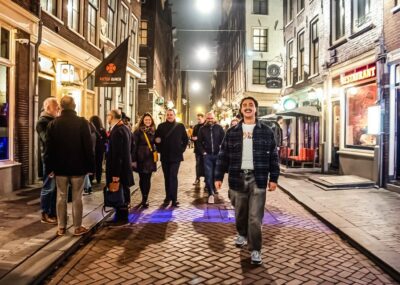
Amsterdam Red Light District & Coffee Shop Tour
Read our review →
Red Light District Pub Crawl with Unlimited Shots
Read our review →

Private Amsterdam Red Light District and Coffee Shop Tour
Read our review →Browse the lists this tour appears in