
Reviewed · CITY TOURS
Amsterdam: City walking experience with a local
Amsterdam is easiest to understand on foot, and this tour gets quickly to the city’s big questions: how a small medieval settlement became a liberal capital, why canals shape daily life, and where Amsterdam’s famous tolerance comes from. Guide Manouk is especially good at mixing history with practical advice about cafés, restaurants, bookshops, and museums.
I like the small-group format, which leaves room for questions, and the easy mix of major sights and less obvious corners. I also like the stroopwafel stop and small souvenir, modest touches that make a two-hour orientation feel personal. The drawback is that the tour moves briskly and does not include entry to the Royal Palace, so it suits first impressions better than deep museum visits.
Key points to know before booking
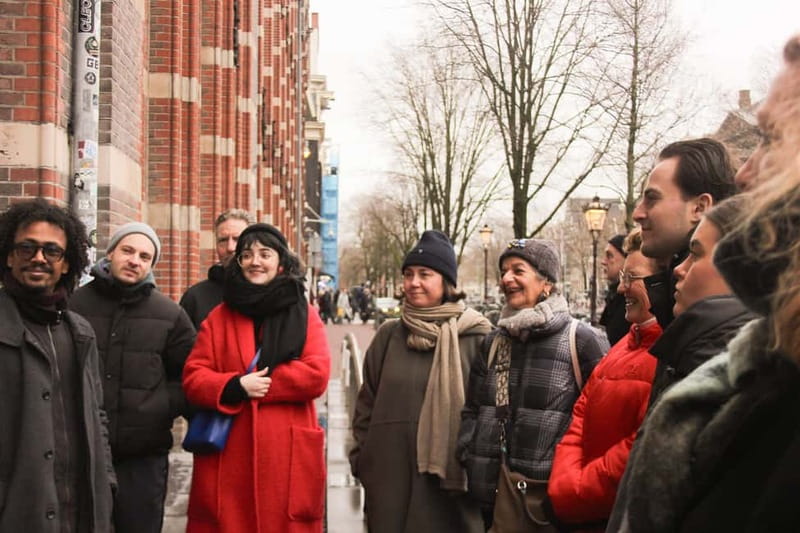
- Manouk brings the city to life: Her style combines historical facts, modern Amsterdam, and useful recommendations for the rest of your stay.
- The route covers central highlights: You walk from Beursplein through Dam Square, Spui, Begijnhof, the canal area, Nieuwmarkt, and Centraal Station.
- Big topics are handled openly: Expect discussion of the three XXXs, coffeeshops, prostitution, WWII, bikes, and Amsterdam’s changing needs.
- A stroopwafel is part of the experience: You get a Dutch snack during the walk and a small souvenir at the end.
- It is an orientation tour, not a palace visit: The Royal Palace may be discussed or viewed from outside, but its interior is not included.
- Practical terms are flexible: The tour lasts two hours, costs $28 per person, is wheelchair accessible, and allows cancellation up to 24 hours before departure for a full refund.
Why this two-hour Amsterdam walk works
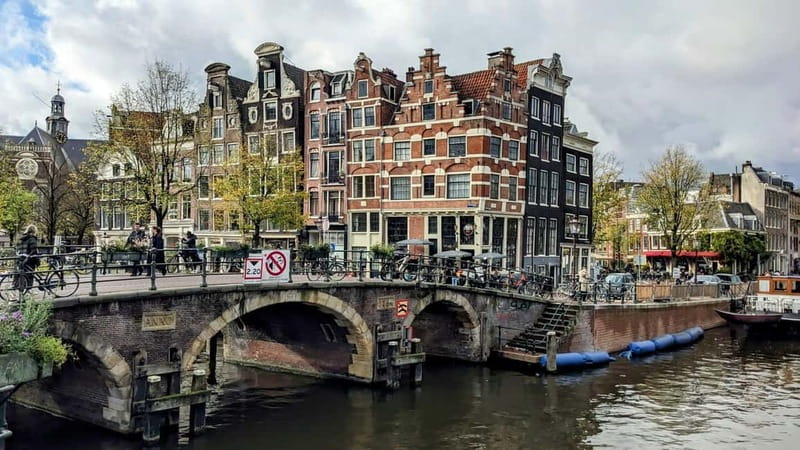
Amsterdam can feel simple at first glance: canals, narrow houses, bicycles, and a compact center. Then you notice how much is packed into a few streets. This walk gives you a framework for reading the city instead of simply collecting photographs.
The route links famous places with conversations about how Amsterdam functions today. You will hear about trade, tolerance, WWII, coffeeshops, prostitution, and bikes. That range matters because Amsterdam’s identity is not just a collection of pretty canals. It is also a city that has repeatedly adjusted its rules, streets, and public spaces to meet new needs.
At $28 per person, the experience is reasonably priced for a two-hour introduction led by a live local guide. You are paying mainly for interpretation and conversation, not admission tickets. If you want a detailed look inside historic buildings, this is not the right product. If you want to get your bearings on your first day, the value is stronger.
The tour is offered in English or Dutch. A private group is available, though the standard experience is a small group. That smaller setting is useful here because the subject matter invites questions, and the guide can respond to what interests you most.
More City Tours in Amsterdam
- Amsterdam: 75 Minute City Canal Cruise with Audio Guide
★ 4.4 · 17,501 reviews - Amsterdam: City Centre Canal Cruise
★ 4.2 · 12,827 reviews - Amsterdam: Smoke and Lounge City Boat Cruise
★ 4.7 · 8,572 reviews
Starting at Beursplein and Dam Square
Meet at Beursplein, waiting at the bottom of the stairs of Bistro Berlage. Look for the large black lantern and a guide holding a sign marked Guidance. This is a busy central meeting point, so use the lantern as your landmark rather than relying on a vague sense of being in the right square.
From there, the walk heads toward Dam Square, Amsterdam’s main civic stage. You see the Royal Palace from the outside, but the palace interior is not part of the tour. That distinction is important if you are hoping to tour the grand rooms. You will need a separate ticket and visit.
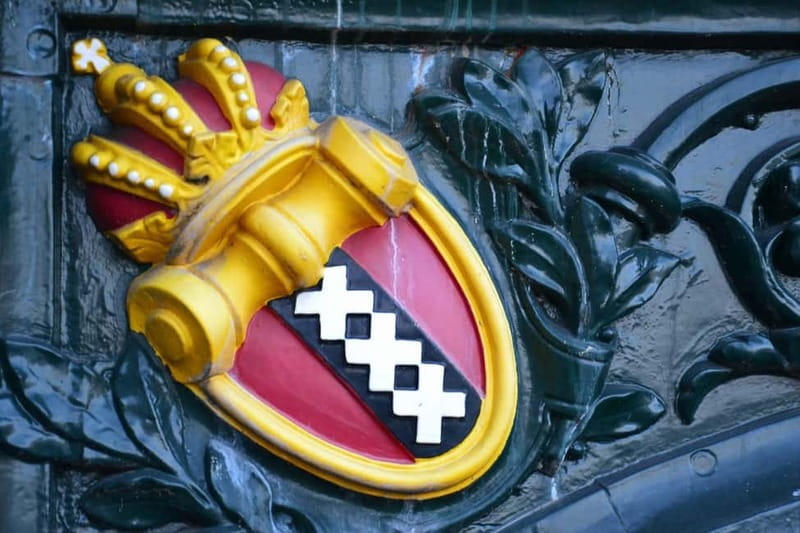
Dam Square is an effective opening stop because several layers of Amsterdam meet here: royal power, public life, tourism, and national memory. Your guide can help connect the square’s formal buildings with the city’s less formal character. It is also a useful place to ask about the three XXXs, the familiar symbols associated with Amsterdam and often linked to the city’s identity and history.
This part of the route can be crowded. Keep close to the guide, especially if you are trying to listen while also watching bicycles and street traffic. The reward is a fast sense of where the historic center fits together.
Spui and the quiet turn into Begijnhof
Spui Square offers a change of mood. Instead of the broad, heavily visited feel of Dam Square, the stop helps you notice the smaller public spaces that make central Amsterdam pleasant to explore. The walk is not only about major monuments. It is also about how the city is shaped by squares, lanes, and canals.
Begijnhof is one of the most appealing stops on the route. This enclosed courtyard gives you a quieter view of Amsterdam and a chance to see how historic residential and religious life fit into the city. Your guide can place the courtyard in the larger story of Amsterdam’s tolerant traditions and changing social structure.
I especially like this pairing of Spui and Begijnhof. It shows you that central Amsterdam is not just one long line of tourist sights. In a short distance, the city shifts from open public square to a more sheltered historic setting.
Be respectful here. Begijnhof is a real place with a calm atmosphere, not simply a photo stop. The tour’s value comes partly from learning how to look at such places without treating them as scenery alone.
Canal houses and Huis Aan De Drie Grachten
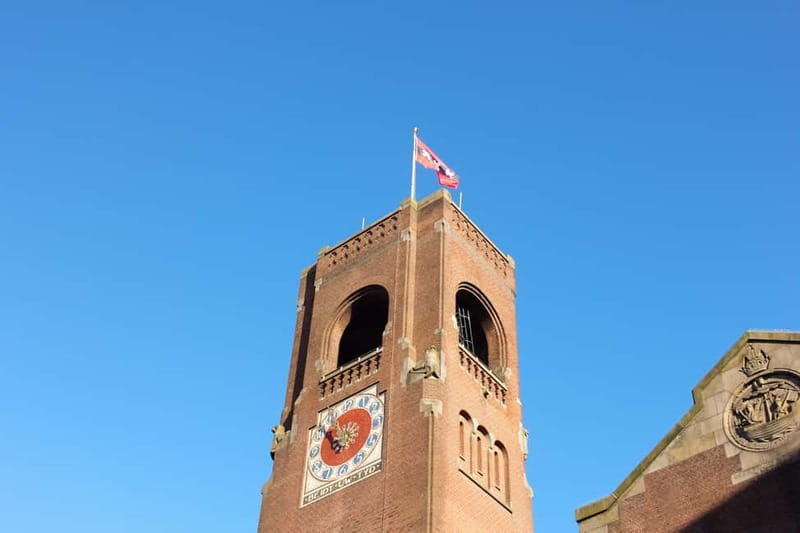
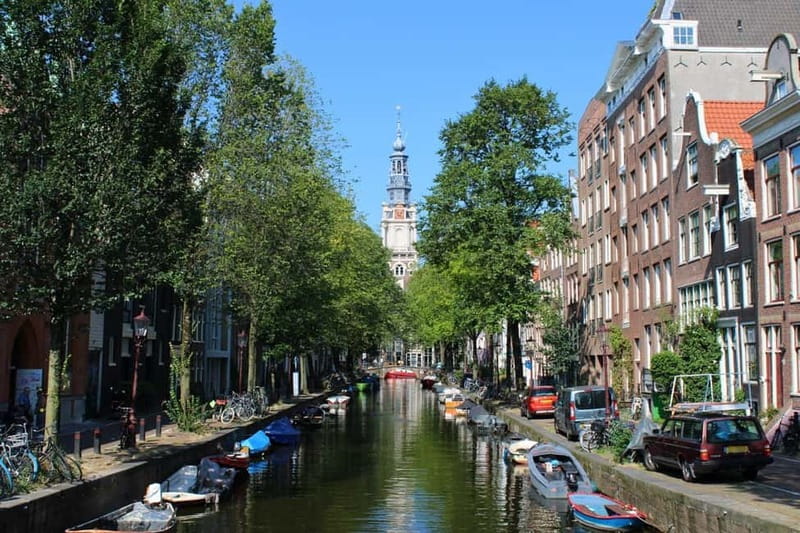
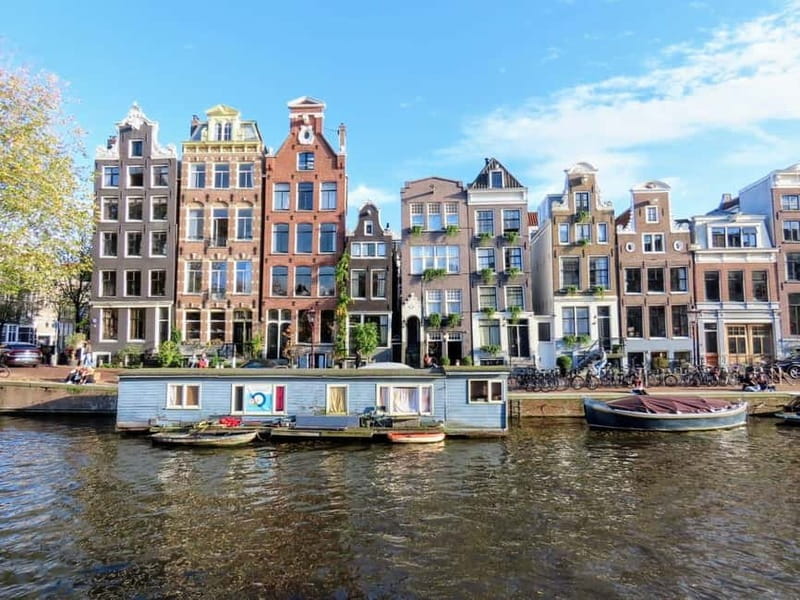
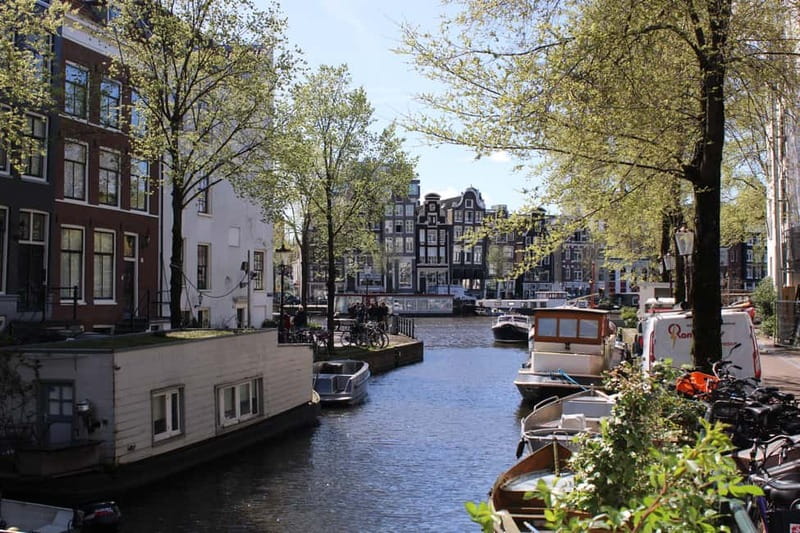
The canal belt is one of Amsterdam’s defining features, and the walk brings you into the story behind it. The canals are not just attractive waterways. They reflect the city’s growth, trade, housing patterns, and constant need to manage space and water.
At Huis Aan De Drie Grachten, you get a specific architectural point of reference. The name refers to a house connected with three canals, making it a useful place to discuss Amsterdam’s unusual buildings and tight urban layout. Rather than giving you only a general canal view, this stop focuses your attention on how the city’s buildings meet the water.
This is where a local guide can add real value. From the pavement, you may notice tilted façades, narrow plots, or the way houses line the water. A guide can explain what you are seeing and relate it to Amsterdam’s past and present.
The walk does not include an extended canal cruise, so do not book it expecting time on the water. Its canal experience is a walking view with historical explanation. For many people, that is a good first step before deciding if they want a separate boat ride.
More Walking Tours in Amsterdam
- Anne Frank’s Story – Guided Walking Tour through Amsterdam
★ 5.0 · 11,619 reviews - Amsterdam: Life of Anne Frank and World War II Walking Tour
★ 4.8 · 10,467 reviews - Absolutely Amsterdam – the Essential Introductory Walking Tour
★ 5.0 · 3,629 reviews - Amsterdam: Anne Frank Guided Small Group Walking Tour
★ 4.8 · 2,722 reviews
Nieuwmarkt, bikes, and Amsterdam’s modern character
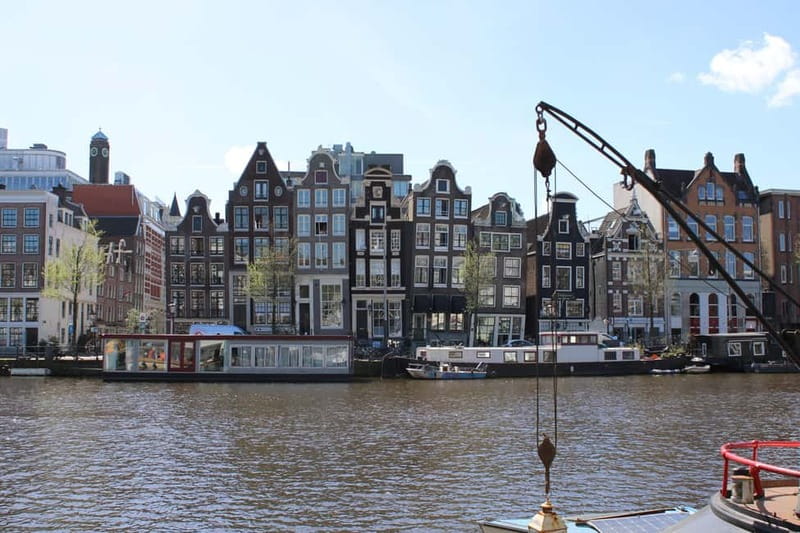
Nieuwmarkt Square takes the route into another part of central Amsterdam. Here, the guide continues the conversation about how the city has evolved and how older areas adapt to modern life.
Bikes are a major theme throughout the experience. Amsterdam’s cycling culture is not treated as a decorative feature for visitors. You will hear why there are so many bikes and what happens to bicycles that disappear. That lighter topic helps explain a serious point: the bicycle is part of the city’s transport system, public space, and daily rhythm.
You should pay attention while walking. Amsterdam’s bikes can appear quietly and move fast, and the tour’s focus on cycling is practical as well as entertaining. The guide’s local tips are useful for the rest of your stay, especially if you plan to cross streets, walk beside canals, or rent a bike.
Nieuwmarkt also helps broaden the tour beyond postcard Amsterdam. The route includes candid discussion of coffeeshops and prostitution, subjects that are closely tied to the city’s public image but more complicated in daily life. The guide explains how these parts of Amsterdam fit into its liberal reputation and its efforts to meet modern needs.
The discussion is frank, but the activity is not suitable for children under 12. Alcohol and drugs are not allowed on the tour.
Centraal Station and the return to Beursplein
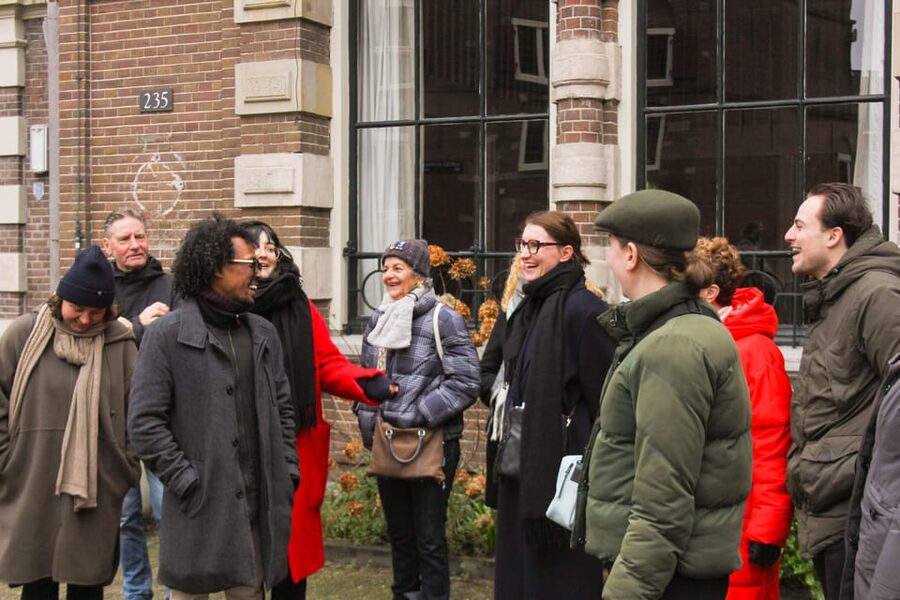
The walk continues to Amsterdam Centraal Station, one of the city’s most useful orientation points. Even if you are staying elsewhere, knowing where the station sits helps you understand the center’s layout and plan later trips.
Ending near Centraal Station also gives the route a clear shape. You have walked through civic spaces, a quiet courtyard, canals, older neighborhoods, and a major transport hub before returning to Beursplein. The tour ends back at the starting point, so you do not need to work out a new route after the guide says goodbye.
Because the experience lasts two hours, expect an overview rather than long stops at every location. The route includes sightseeing at each point, but there is no promise of extended free time or interior visits. Wear comfortable shoes and keep the pace in mind if you prefer very slow walks.
The guide makes the difference
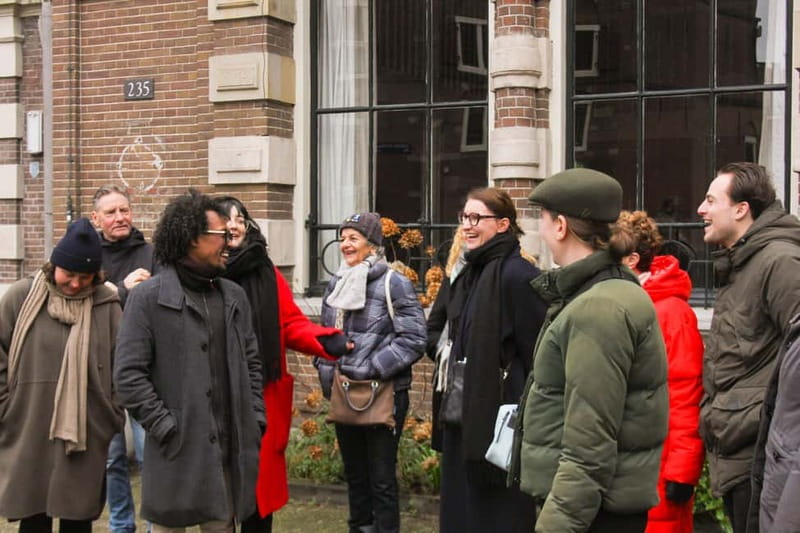
The strongest part of this experience is the guide’s role. Manouk is repeatedly praised for being friendly, engaging, and able to involve a whole group. That matters in a walking tour, where a long stream of facts can become tiring. Her approach appears to rely on conversation, questions, and links between historical and modern Amsterdam.
You can also use the tour as a planning session for the rest of your trip. Manouk has offered suggestions for coffee places, restaurants, bookshops, and museums. Those recommendations are more useful when you ask about your own interests, so arrive with a few questions ready.
The guide also seems well suited to first-day visitors. One guest took the tour on the first day in Amsterdam and found it helpful for understanding the city before exploring further. I agree with that timing. Once you know the basic layout and the stories behind the center, later walks and museum visits make more sense.
If you have already spent several days exploring central Amsterdam, some stops may feel familiar. In that case, the conversation and local advice become the main reason to book.
Stroopwafel and the small souvenir
The stroopwafel stop is simple but well chosen. This Dutch cookie, made with two thin waffles and a sweet filling, gives you a taste of local food without adding a long restaurant stop. It breaks up the walking and adds a bit of fun to the middle of the experience.
A small Dutch souvenir is provided at the end. It is not a major part of the price, but it gives the tour a pleasant finish. These small details help the experience feel less like a bare sightseeing circuit.
Do not confuse the snack with a full food tour. One Dutch treat is included, while other food and drinks are not specified as part of the activity. Eat beforehand if you need a proper meal.
Who should book this Amsterdam experience
I would recommend this walk to first-time visitors who want a clear introduction without spending half a day on a formal history tour. It is also a good fit if you enjoy asking questions and prefer a local conversation to a recorded audio guide.
The experience suits adults and families with children aged 12 or older. The subject matter includes adult topics, and the minimum age is stated clearly. A private group option may work well if your party wants a more personal pace or has particular interests.
It is also a practical choice for visitors with limited time. Two hours is long enough to cover a useful set of central sights but short enough to leave room for a museum, lunch, or independent exploring. The tour is wheelchair accessible, though the provided details do not explain the exact surface conditions or route adaptations, so contact the provider if you need specific mobility information.
You may want something else if your main goal is the Royal Palace interior, a canal cruise, a food-focused outing, or an extended Red Light District visit. This walk discusses major themes and shows key areas, but it does not replace dedicated entry-based or subject-specific tours.
Booking details and practical value
The price is $28 per person, with the local guide, Dutch snack, and small souvenir included. Palace entry is not included because the group does not visit the palace interior.
You can reserve now and pay later, which helps if your schedule is still changing. Cancellation is free up to 24 hours before the start time for a full refund. Starting times vary, so check availability when choosing your date.
The meeting point instructions are precise: Beursplein, by the large black lantern at the bottom of the Bistro Berlage stairs. The guide will hold the Guidance sign. English and Dutch are available, and the tour returns to Beursplein.
The activity has a 4.9 rating from 34 reviews, and the praise centers on the guide’s warmth, strong historical explanations, engaging conversation, and useful city suggestions. I would give those comments more weight than the snack or souvenir. A stroopwafel is nice, but a guide who can make Amsterdam’s past and present understandable is what gives the tour its real value.
Should you book it?
Book this tour if you want a friendly two-hour orientation with central sights, honest discussion of Amsterdam’s famous liberal culture, and practical ideas for the rest of your visit. It is particularly worthwhile early in your stay, when the city still feels like a puzzle of canals and narrow streets.
Skip it if you want long museum visits, a palace interior, or a specialist tour focused only on the Red Light area. At $28, though, it is a fair buy for a compact introduction led by a local guide, especially if Manouk is available and you value conversation over a rigid script.
FAQ
How long does the Amsterdam walking experience last?
The tour lasts two hours. Starting times vary, so check availability for the date you want.
How much does the tour cost?
The price is $28 per person.
Where does the tour start?
The meeting point is Beursplein. Wait at the bottom of the stairs of Bistro Berlage, by the large black lantern. The guide will hold a sign marked Guidance.
Where does the tour end?
The activity ends back at Beursplein, the same place where it starts.
Is the Royal Palace included?
No. The tour does not visit the Royal Palace interior, and entrance tickets are not included.
What languages are available?
The live guide can lead the experience in English or Dutch.
Is the tour wheelchair accessible?
Yes, the activity is listed as wheelchair accessible.
Can I cancel the booking?
Yes. You can cancel up to 24 hours in advance for a full refund. You can also reserve now and pay later.
Just added around Amsterdam
- From Amsterdam: The Hague Private Trip and Mauritshuis Entry★ 4.3 · 4 reviews
- VIP Private Full Day Tour of the Netherlands★ 4.8 · 6 reviews
- Amsterdam Old-West Vegan Food Tour with Local Guide★ 4.7 · 3 reviews
- Amsterdam: Van Gogh Museum Guided Tour★ 4.8 · 262 reviews
- Van Gogh Museum Private Guided Tour★ 4.2 · 10 reviews
- Vecht River: Full-day Cruise with Lunch★ 4.8 · 9 reviews
- Van Gogh and Rijksmusuem Tour: Small Group Tour with Entry★ 4.7 · 3 reviews
- Amsterdam: Van Gogh Museum Ticket & Guided Tour★ 4.4 · 187 reviews
City Tours, compared.
75 Minute City Canal Cruise with Audio Guide
Read our review →

City Canal Cruise and Heineken Experience Ticket
Read our review →

Browse the lists this tour appears in