
Reviewed · CITY TOURS
Amsterdam private city walking experience with a local
Amsterdam’s story unfolds nicely on foot, from a fishing village at Beursplein to the world-facing city symbolized by Centraal Station. Along the way, you’ll move through grand squares, quiet courtyards, canal streets, old guild buildings, and Chinatown with local guide Manouk.
I like the private format, which gives your group room to ask questions and shape the conversation. I also like the mix of famous sights and smaller details, including the old wooden houses, the bicycle bridge, local treats, maps, and changing neighborhood life.
The main consideration is pace. This is a two-hour walk, sometimes closer to two and a half, with little time for long stops or indoor visits. You’ll see many places from the outside, so it works best as an introduction rather than a substitute for museum visits.
Key points to know before you book
- A private walk for up to 12 people: You receive a personal guide rather than joining a large public group.
- A strong route for first-time orientation: The walk connects Beursplein, Dam Square, Begijnhof, Nieuwmarkt, Zeedijk, and Centraal Station.
- Manouk adapts the conversation: History and architecture can take center stage, while food tips and current neighborhood issues also fit naturally into the walk.
- Local details go beyond the main sights: Expect stories about guilds, dancing houses, wooden cottages, canal homes, and the bicycle bridge.
- Good value for a family or small group: The $180.62 price covers up to 12 people, making the per-person cost far better when shared.
- Flexible cancellation: You can cancel for a full refund up to 24 hours before the start time.
Starting Amsterdam at Beursplein
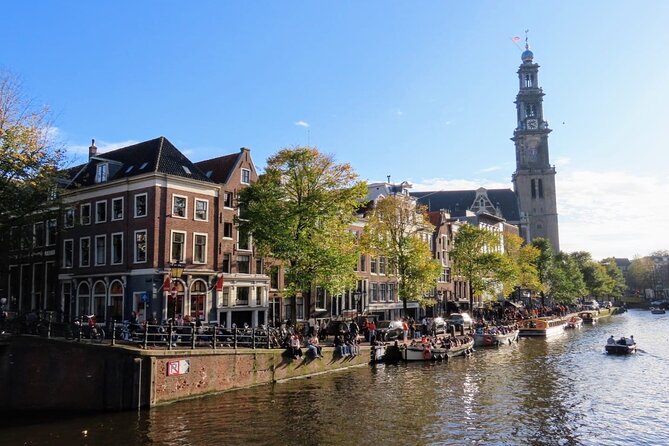
Beursplein is a sensible place to begin because it puts Amsterdam’s origin story first. Here, you learn how a small fishing settlement took its name and grew into a major center of trade and finance during the 17th century.
That opening gives the rest of the walk useful context. Amsterdam can look like a pretty collection of canals and narrow houses, but the city’s layout and prosperity came from water, trade, shipping, and organized commerce. I appreciate that this tour begins with that foundation instead of rushing straight to photo stops.
You spend about 15 minutes here, then continue on foot. Beursplein is also a practical meeting point in the central city, near public transportation. Since the activity ends back at the meeting point, you do not need to arrange a separate pickup or figure out where the walk finishes.
More City Tours in Amsterdam
- Amsterdam: 75 Minute City Canal Cruise with Audio Guide
★ 4.4 · 17,501 reviews - Amsterdam: City Centre Canal Cruise
★ 4.2 · 12,827 reviews - Amsterdam: Smoke and Lounge City Boat Cruise
★ 4.7 · 8,572 reviews
Dam Square, power, and wartime memory
The next stop is Dam Square, one of Amsterdam’s key public spaces. You’ll hear how the square helped shape the city and see the Royal Palace on the Dam, a building that gives the area its grandest architectural focus.
The stop also covers the square’s role during the Second World War. That detail keeps the visit from becoming a simple palace photo opportunity. Dam Square has been a place of power, public life, and remembrance, and the guide connects those layers in about 15 minutes.
You should expect commentary from outside rather than a palace tour. If entering the Royal Palace is a major goal, you’ll need to plan a separate visit. Still, the exterior setting makes a useful early stop because you can place Amsterdam’s civic center within the story of the city.
Begijnhof and Amsterdam’s tradition of tolerance
Begijnhof changes the mood. After the open space and heavy buildings of Dam Square, you enter a quiet courtyard with a religious past. The guide explains the women who lived here and what the site says about Amsterdam’s long, complicated tradition of tolerance.
The setting is especially useful for showing that tolerance was not just a modern slogan. Religious groups and communities found ways to live and worship in a city shaped by commercial interests and shifting rules. The discussion can help you understand why Amsterdam developed a reputation for allowing forms of life that were restricted elsewhere, while still recognizing that tolerance has never been simple or unlimited.
You’ll also see one of Amsterdam’s oldest houses, one of the two wooden cottages. That small detail makes the stop memorable. Amsterdam is often pictured through brick canal houses, so a surviving wooden cottage offers a different glimpse of the city’s earlier building traditions.
The courtyard is a place for quiet looking, not loud group energy. Your guide needs to keep the conversation respectful here. The planned stop lasts about 15 minutes, enough to get the meaning of the place without turning the visit into a long pause.
A house on three canals and the bicycle bridge
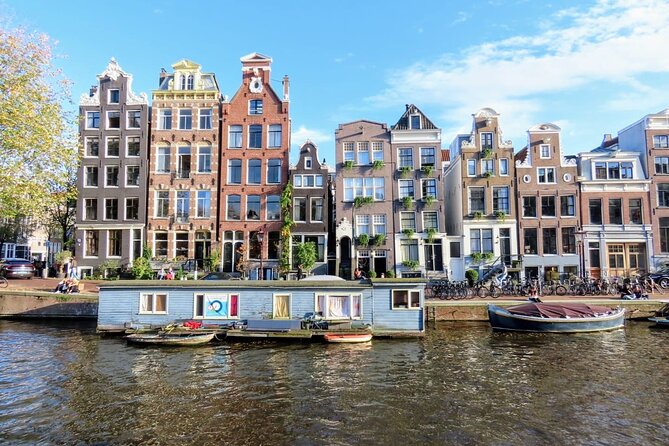
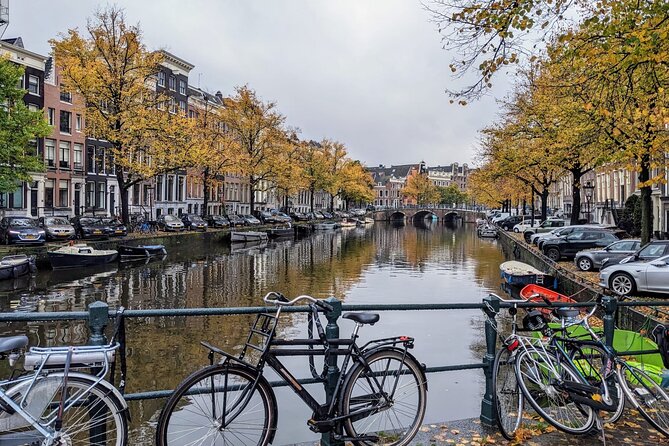
The canal section adds the visual Amsterdam most people hope to find. At the House On The Three Canals, you’ll look at a home positioned by three waterways and hear about the bicycle bridge.
This is a good example of the walk’s approach. Instead of simply pointing out a photogenic canal house, Manouk explains how the built environment works and why a small bridge matters in daily city life. Amsterdam’s canals are not just scenery. They shape movement, views, property, and the way neighborhoods connect.
The stop takes about 15 minutes. You should have time to look closely, ask questions, and take pictures, but do not expect a long architectural lecture. The appeal is in seeing how an ordinary part of the city becomes more interesting once you know what to notice.
More Private Tours in Amsterdam
- Rijksmuseum Amsterdam Small-Group Tour with Private Upgrade
★ 4.5 · 1,547 reviews - Van Gogh Museum Tour Reserved Entry Semi Private
★ 5.0 · 1,437 reviews - Private Amsterdam Red Light District and Coffee Shop Tour
★ 5.0 · 763 reviews - Anne Frank and Jewish Quarter Amsterdam Private Walking Tour
★ 5.0 · 684 reviews
Nieuwmarkt and the Waag’s working past
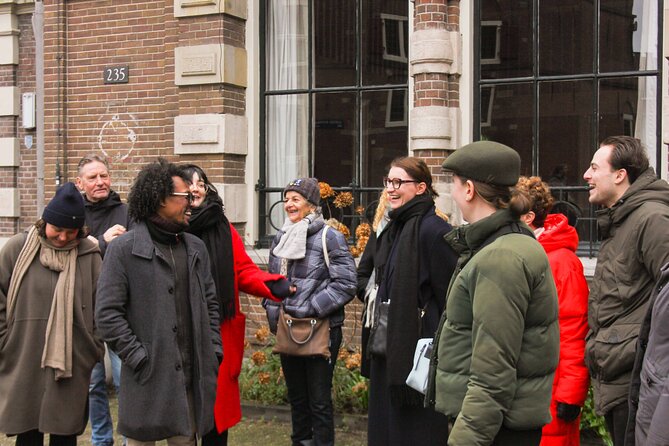
Nieuwmarkt receives the longest stop, about 30 minutes, and that extra time makes sense. The area brings together one of Amsterdam’s old city gates, the Waag, the guild system, and the famous dancing houses.
The Waag later became a guild hall, so this is where the guide can explain how tradespeople organized themselves. Guilds shaped work, training, standards, and economic life. That subject gives you a clearer idea of how Amsterdam operated before modern corporations and labor systems.
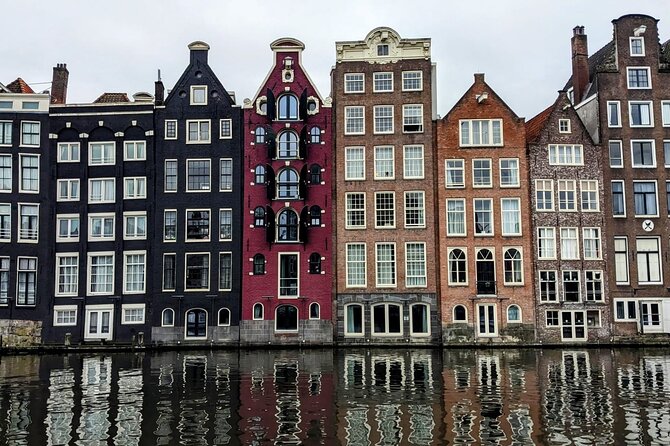
The dancing houses are another visual clue to the city. Amsterdam’s narrow canal buildings often appear to lean, shift, or move toward the water. Their unusual angles are not simply a novelty for photographs. They reflect building conditions, age, and the tight urban setting.
Nieuwmarkt is also useful because it links architecture with neighborhood life. You get more time here to ask about the past and present, rather than hearing only a prepared speech. If you are interested in architecture, this is likely one of the strongest parts of the route.
The walk does not include admission to the Waag or another indoor attraction. You are paying for interpretation and local orientation, not entry tickets. That keeps the cost simple, but you should plan extra time if you want to explore buildings from the inside.
Zeedijk and the changing face of Chinatown
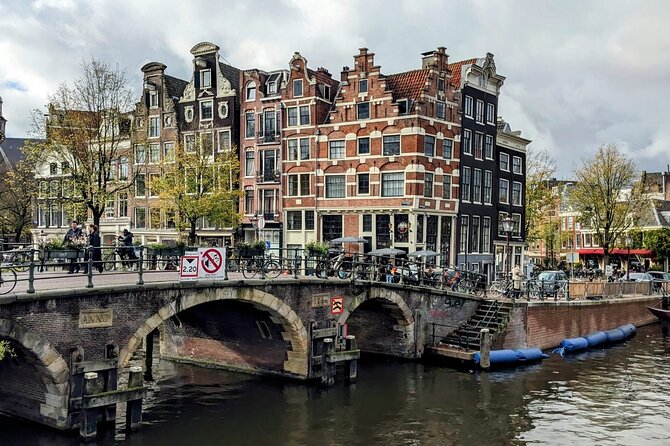
Zeedijk brings a different part of Amsterdam into view. The street is associated with Chinatown and has undergone a major change from its reputation as one of the city’s most dangerous places during the 1970s to a favorite area for many Amsterdammers.
I like this stop because it avoids presenting Amsterdam as a frozen postcard. Neighborhoods change. Streets can decline, recover, and find a new role, and Zeedijk gives the guide a chance to discuss those shifts directly.
The conversation covers the area’s decline and transformation. You may also receive food suggestions, which is practical if you are deciding where to eat later. The tour does not promise a full food tasting, but Manouk has provided local edible treats on some walks, so a small taste may be part of the personal touch. Treat that as a possible extra rather than a guaranteed feature.
The stop lasts about 15 minutes. That is enough for an overview and a few questions, but not a full exploration of Chinatown. If food or Asian history is your main reason for coming to Amsterdam, you may want a longer separate visit afterward.
Centraal Station and the city’s connection to the world
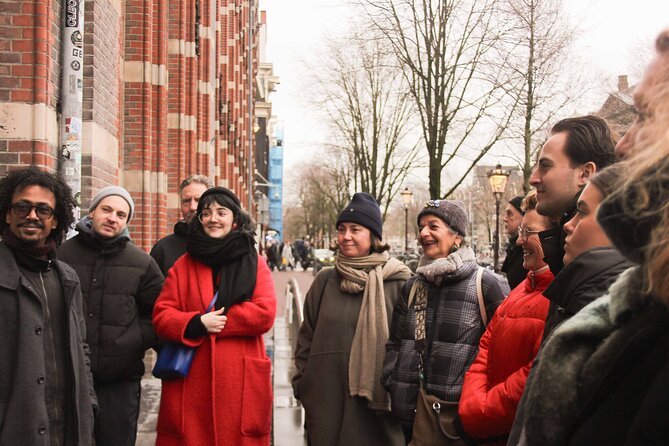
The final planned stop is Amsterdam Centraal Station, one of the city’s most striking buildings. The discussion is not limited to its architecture. You’ll learn why this location has served as a transportation hub for centuries and why the station became a symbol of connection and prosperity.
That ending works well. The tour begins with a fishing village and ends at a major gateway, showing how Amsterdam grew outward through movement and trade. The station also gives you a useful sense of the city’s geography, especially if you have arrived by train or plan to use rail transportation later.
The station is an active transport center, so expect noise, foot traffic, bikes, and vehicles around the approach. You will need to stay alert while walking. The route then returns to Beursplein, and the total experience usually takes two to two and a half hours.
A guide who keeps the walk personal
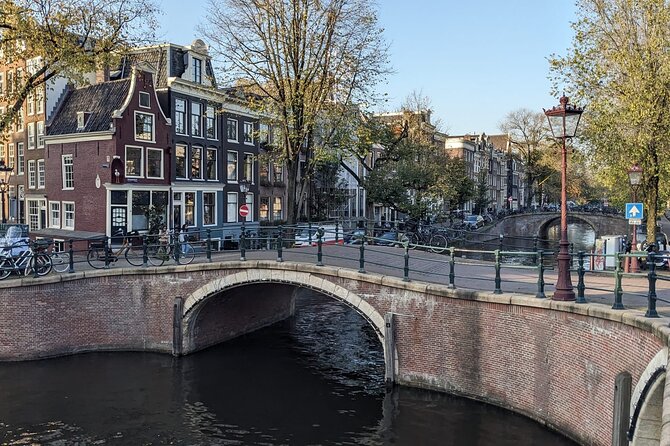
The strongest feature here is the guide-led format. Manouk’s approach combines prepared material with conversation. She uses maps and pictures to support her explanations, which helps when a historical site is no longer easy to imagine from the street.
You can also steer the emphasis. Past participants have focused on history and architecture, and Manouk adjusted the walk to those interests. You can ask questions about the past, current neighborhood problems, future plans, food, or places to explore afterward.
That flexibility matters more in a private tour than in a standard group walk. If one person in your party wants architecture while another wants local life, the guide can shift the balance. Solo visitors can also benefit from the format, since a friendly guide gives the walk a more natural social rhythm.
The style is professional but warm. Manouk has been described as welcoming, organized, curious about the people she guides, and easy to talk with. She also brings a personal touch through local snacks and visual aids. Those details do not replace solid information, but they make a two-hour walk feel less mechanical.
The tour is offered in English. The published rating is 5 out of 5 from 12 reviews, with 100 percent recommending it. That is a small sample, so I would not treat it as proof that every walk will be perfect. Still, the praise is notably consistent around the guide’s friendliness, preparation, personal attention, and ability to answer questions.
What the $180.62 price really means
The price is $180.62 per group of up to 12 people. For a full group, that works out to about $15 per person, which is strong value for two hours of private guiding. For two people, the cost is about $90 each, so the value depends more on how much you want personal attention.
A private guide can be worth the higher total price if you are traveling with family, friends, or a small group with shared interests. You avoid a large crowd and do not have to follow a fixed public-tour pace. You also receive a route that can respond to your questions.
The price does not include admission tickets because the stops are viewed without an entry charge. That is both a benefit and a limit. Your spending is predictable, but you will not automatically enter the Royal Palace, the Waag, or other attractions along the route.
I would compare this experience with the cost of a standard group walk, but I would focus on what you need. If you only want a quick checklist of major sights, a cheaper group option may be enough. If you want Amsterdam explained through conversation, local examples, and a route that can shift toward your interests, the private price makes more sense.
Timing, walking effort, and practical details
This is a walking experience lasting roughly two hours, sometimes two and a half. The listed stops account for about two hours, with the remaining time used to walk between them and discuss the city along the way.
You should wear comfortable shoes and dress for the weather. That is ordinary advice, but it matters in Amsterdam, where rain, wind, uneven paving, bicycles, and busy crossings can affect the pace. The provided information says most people can participate, and service animals are allowed.
The meeting point is Beursplein, 1012 JW Amsterdam. The activity ends back there. It is near public transportation, and confirmation is provided when you book.
The tour is private, with only your group taking part. Group size can reach 12 people, so do not assume every private booking means just two or three participants. If you want the most conversational experience, a smaller group within that limit will naturally be easier to manage.
You can cancel for a full refund up to 24 hours before the local start time. Changes or cancellations made less than 24 hours ahead are not accepted for a refund. Bookings are made, on average, 46 days in advance, so popular dates may be worth arranging early.
Who will get the most from this Amsterdam walk
I would choose this tour for a first visit, especially if you want to understand how Amsterdam fits together before exploring alone. The route covers enough ground to give you a useful mental map, and the return to Beursplein makes it easy to continue sightseeing afterward.
It also suits people who care about context. History fans will find material at Beursplein, Dam Square, Begijnhof, the Waag, and Centraal Station. Architecture fans get canal houses, wooden cottages, the dancing houses, the Royal Palace, and the station.
Families and small groups may appreciate the private setup. You can ask questions at your own level, pause for pictures, and avoid holding up strangers. Solo visitors may also find the friendly format reassuring, particularly if they want an easy first orientation to the center.
I would be more cautious if you want a museum-heavy tour, a canal cruise, or an extensive food walk. This experience stays outdoors and uses food only as a possible local touch, not as its main subject. It also moves through several districts quickly, so anyone wanting a slow photographic walk may find the schedule a little tight.
Should you book this private Amsterdam walk?
Book it if you want a personal introduction to Amsterdam led by someone who can connect famous sights with lesser-known details. The best reasons are the private format, Manouk’s adaptable style, the well-shaped route, and the balance between old Amsterdam and present-day neighborhood change.
I would especially recommend it for a small group that can share the $180.62 cost. You get better value as the group grows, while still keeping the conversation focused.
Skip it if your main goal is to enter major attractions or spend a long time in one neighborhood. In that case, use this walk as an orientation only, or choose a tour built around palace admission, museums, or food.
For most first-time visitors who want a clear, friendly start, this is a smart two-hour use of your time. It gives you enough history to make the streets meaningful, then leaves you well placed to explore Amsterdam on your own.
FAQ
How long does the Amsterdam private walking experience last?
The walk lasts approximately two hours, though the full experience can take two to two and a half hours because of the time spent walking between stops.
How many people can join the private tour?
The price covers one private group of up to 12 people. Only your group participates in the activity.
Where does the walking tour start and finish?
The tour starts at Beursplein, 1012 JW Amsterdam, and ends back at the same meeting point.
What places are included on the route?
The route includes Beursplein, Dam Square, Begijnhof, the House On The Three Canals, Nieuwmarkt, Zeedijk, and Amsterdam Centraal Station.
Is the tour offered in English?
Yes. The experience is offered in English and uses a mobile ticket.
Can I cancel for a full refund?
Yes. You can cancel at least 24 hours before the local start time for a full refund. Cancellations or changes made less than 24 hours before the start are not accepted for a refund.
More Walking Tours in Amsterdam
- Anne Frank’s Story – Guided Walking Tour through Amsterdam
★ 5.0 · 11,619 reviews - Amsterdam: Life of Anne Frank and World War II Walking Tour
★ 4.8 · 10,467 reviews - Absolutely Amsterdam – the Essential Introductory Walking Tour
★ 5.0 · 3,629 reviews - Amsterdam: Anne Frank Guided Small Group Walking Tour
★ 4.8 · 2,722 reviews
Just added around Amsterdam
- From Amsterdam: The Hague Private Trip and Mauritshuis Entry★ 4.3 · 4 reviews
- VIP Private Full Day Tour of the Netherlands★ 4.8 · 6 reviews
- Amsterdam Old-West Vegan Food Tour with Local Guide★ 4.7 · 3 reviews
- Amsterdam: Van Gogh Museum Guided Tour★ 4.8 · 262 reviews
- Van Gogh Museum Private Guided Tour★ 4.2 · 10 reviews
- Vecht River: Full-day Cruise with Lunch★ 4.8 · 9 reviews
- Amsterdam: Van Gogh Museum Ticket & Guided Tour★ 4.4 · 187 reviews
- Van Gogh and Rijksmusuem Tour: Small Group Tour with Entry★ 4.7 · 3 reviews
City Tours, compared.
75 Minute City Canal Cruise with Audio Guide
Read our review →

City Canal Cruise and Heineken Experience Ticket
Read our review →

Browse the lists this tour appears in