
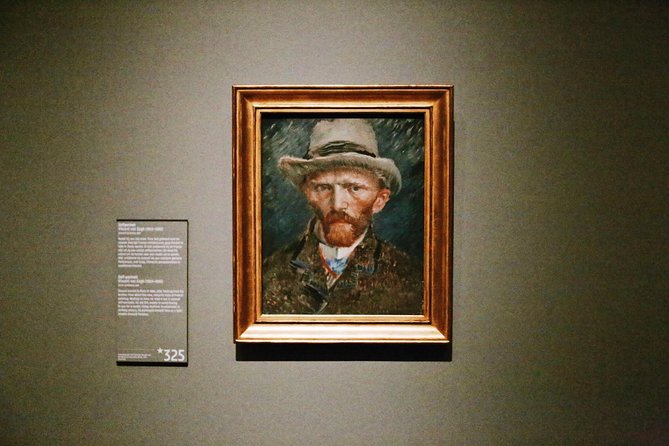
Reviewed · RIJKSMUSEUM TICKETS
Rijksmuseum & Amsterdam City Center – Exclusive Guided Tour
Amsterdam makes the most sense when you connect its paintings with its streets. This tour does exactly that: begin with Rembrandt and Vermeer inside the Rijksmuseum, then walk past canals, leaning houses, old almshouses, churches, and the Amstel River sites that shaped the city. The art-and-city pairing is the real idea here.
I like the private format, since your guide can spend more time on the works and stories that interest you. I also like the range: you get a serious museum visit, a lunch pause, and a long walk through Amsterdam’s old center rather than seeing only one famous square. The main drawback is the price, $287.18 per person, and the five-and-a-half-hour schedule requires steady walking on cobblestones.
Key details at a glance
- Rembrandt and Vermeer up close: Focus on major works such as The Milkmaid and Rembrandt’s masterpieces, with context that is easy to miss on your own.
- A private English-speaking guide: Your group has its own guide unless you choose the lower-priced semi-private option.
- Twenty-one city sights: The route includes St. Nicholas Basilica, Zeedijk, Nieuwmarkt, Begijnhof, Dam Square, the Golden Bend, and the Jordaan.
- Lunch is built into the day: You pay for lunch yourself, and the break gives your feet a needed rest.
- A useful first-day overview: The route moves from Amsterdam’s central station area and medieval core toward the canals and Jordaan.
- A weather-proof plan: The tour runs in rain or shine, so bring suitable clothing and comfortable shoes.
Why the Rijksmuseum makes a strong starting point
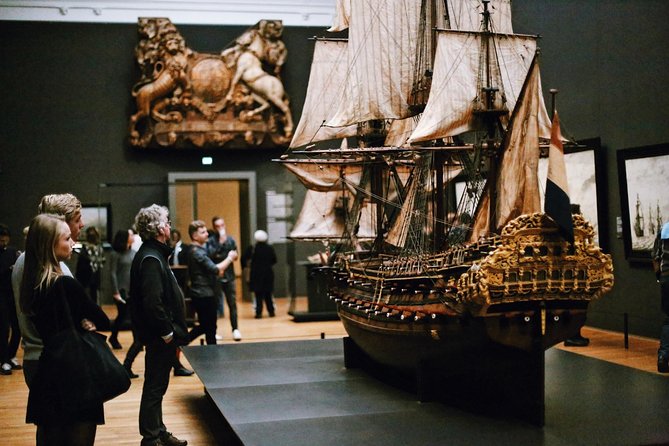
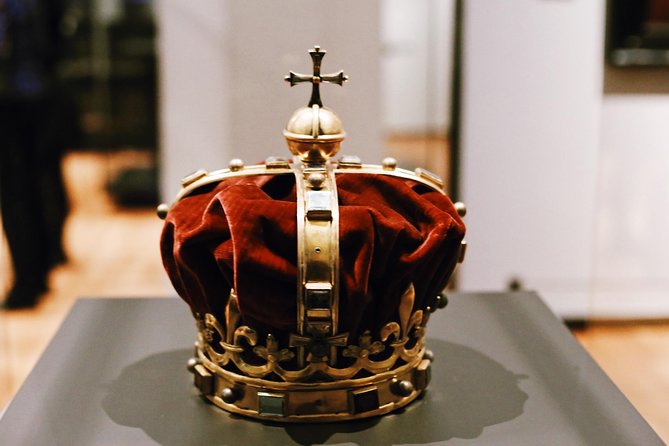
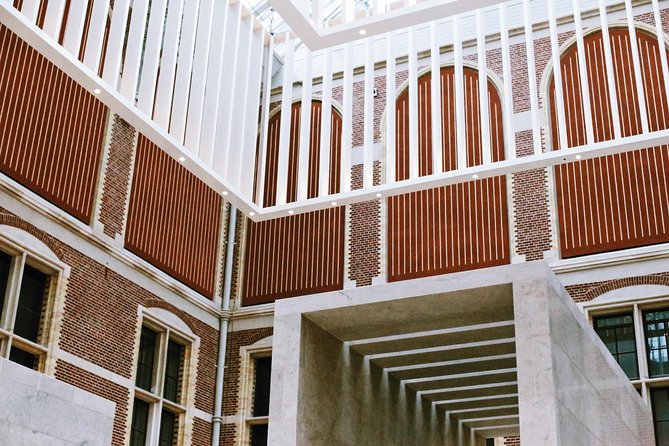
The Rijksmuseum is often treated as a checklist of Dutch masterpieces. That can be a mistake. With more than 8,000 objects on display, the museum can feel like several museums joined together, covering art, domestic life, trade, religion, design, and Dutch history across centuries.
A guide gives the collection a shape. You will focus on major names such as Rembrandt and Vermeer, but the smaller objects help explain how people lived. The 17th-century dollhouses are especially useful because they show interiors, possessions, and social status in a way a single painting cannot.
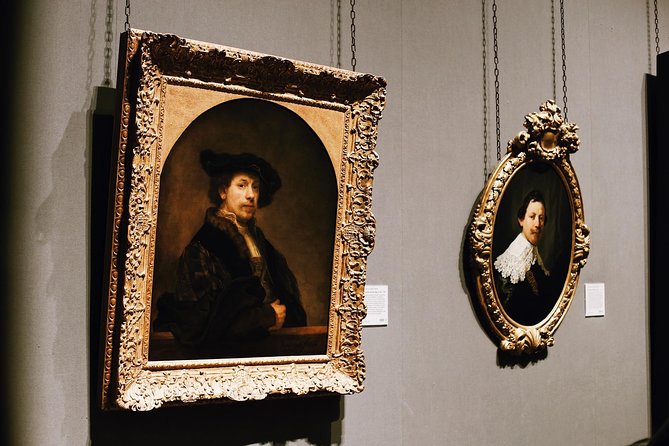
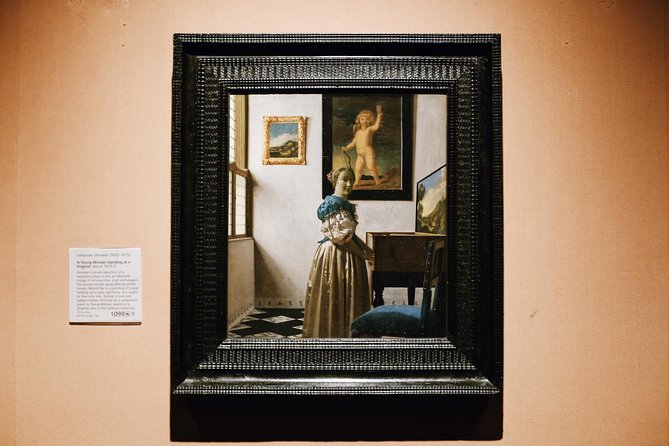
Vermeer’s The Milkmaid offers another kind of lesson. It is a quiet domestic scene, but your guide can point out how the painting uses light, space, and ordinary work to create something memorable. Rembrandt provides a different mood, with portraits and scenes that reveal both artistic skill and the character of the people he painted.
The museum also includes a 19th-century library. It is easy to walk past on your own, yet it gives the building a sense of scholarship and continuity. You are not simply looking at famous canvases. You are seeing pieces of a society that grew wealthy through trade, developed new religious and civic ideas, and left behind an unusually varied record.
The scheduled museum portion is listed at about two hours and thirty minutes. That is enough for a strong first look, but not enough to see everything. This is a highlights tour, not a full-day museum study. If you already know the Rijksmuseum well, you may find the selection too limited. If you are visiting for the first time, the structure is helpful.
The museum can occasionally close without warning, and some rooms require very quiet behavior or limit speaking. Your guide gives explanations before entering those areas. Large bags and suitcases are not allowed inside, so bring only a handbag or small, thin backpack.
More City Tours in Amsterdam
- Amsterdam: 75 Minute City Canal Cruise with Audio Guide
★ 4.4 · 17,501 reviews - Amsterdam: City Centre Canal Cruise
★ 4.2 · 12,827 reviews - Amsterdam: Smoke and Lounge City Boat Cruise
★ 4.7 · 8,572 reviews
From St. Nicholas Basilica to Amsterdam’s medieval edge
The city walk begins with the historic center, where Amsterdam’s story is easier to read in stone than on a map. The published meeting information lists Cobra Café on Hobbemastraat as the starting point at 10 a.m., while the city route identifies St. Nicholas Basilica as its first designated point. Confirm the exact meeting instructions after booking, especially if you are heading directly from a hotel.
St. Nicholas Basilica is a good opening stop. Built in the late 19th century, it reflects the return of public Catholic worship after three centuries of prohibition. Its design combines several architectural styles, so it gives you an immediate lesson in Amsterdam’s religious and political past.
From there, the route moves toward the Schreierstoren, often called the Weeping Tower. It was part of the medieval city wall, and its popular story concerns women mourning husbands who sailed away to war or fishing grounds. The tale may be more memorable than the building itself, but that is part of the fun of a walking tour. Amsterdam’s old structures often come with a human story attached.
Zeedijk brings a different layer of the city. This old street is known for Asian markets, restaurants, shops, and a Chinese-style Buddhist temple said to be the largest of its kind in Europe. You will not spend long at each stop, but the route shows how the old center has changed and absorbed new communities.
Nieuwmarkt, De Waag, and the city’s trading past
Nieuwmarkt has been a place for trade and social life since the 17th century. Its position just inside the old city gate made it convenient for shoppers and sellers, and it remains one of the old center’s livelier squares.
The Waag is the architectural centerpiece. Dating from the 15th century, it began as a city gate and later served as a guildhall, museum, and fire station. A short stop here helps you see Amsterdam not only as a city of canals and paintings, but also as a place organized around work, trade, and civic institutions.
The Trippenhuis and Klein Trippenhuis offer a delightful visual joke in brick and stone. The Trippenhuis is Amsterdam’s widest home, while the Kleine Trippenhuis across the way is one of its narrowest. Land taxes helped encourage tall, narrow homes, and these two buildings make that old system easy to understand.
The route also enters the courtyard of the Oost-Indisch Huis, once the headquarters of the Dutch East India Company. The building is tied to the rise of one of the world’s first multinational corporations. That history deserves clear, honest explanation, since the company’s wealth and power were connected to colonial trade and exploitation as well as business innovation.
Churches, Rembrandt’s home, and the Stopera
The Zuiderkerk was Amsterdam’s first purpose-built Protestant church. Its tower remains a useful landmark, and its design reflects the religious changes that reshaped the city.
You then pass Museum Het Rembrandthuis, the house where Rembrandt lived and worked from 1639 to 1656. The museum contains his etchings and paintings by his contemporaries. You do not enter as part of the listed route, so this stop is mainly about location and context. After seeing Rembrandt in the Rijksmuseum, standing outside the place where he worked gives his career a more physical connection to Amsterdam.
The Dutch National Opera and Ballet occupies the Stopera complex, shared with city hall. Construction took at least 60 years to reach completion, making the building a useful example of how modern Amsterdam can be just as politically complicated as old Amsterdam.
Huis aan de Drie Grachten offers a quieter architectural detail. This unusual 17th-century canal house sits at the junction of three canals, with façades facing in three directions. It is the sort of sight that can disappear into the background when you are walking alone. A guide helps you stop, look up, and understand why the building matters.
More Rijksmuseum tickets:
- Amsterdam: Rijksmuseum Entry Ticket
★ 4.7 · 25,535 reviews - Amsterdam: City Canal Cruise and Rijksmuseum
★ 4.5 · 2,129 reviews - Rijksmuseum Amsterdam Small-Group Tour with Private Upgrade
★ 4.5 · 1,547 reviews - Amsterdam: Rijksmuseum Entry Ticket and Canal Cruise Combo
★ 4.3 · 1,276 reviews
Begijnhof and Dam Square
Begijnhof is one of Amsterdam’s oldest hofjes, a group of homes arranged around a private courtyard and garden. It provided housing for Beguines, unmarried women who lived together under vows of chastity. Two churches are located there, adding to the site’s unusual religious history.
This is one of the tour’s more peaceful pauses. You should treat it as a residential and devotional place rather than a photo set. The courtyard feels removed from the traffic outside, which makes it a welcome contrast after the crowded old streets.
The route then reaches Dam Square, Amsterdam’s best-known central gathering place. The Royal Palace, New Church, and National Monument all face or border the square. It is a broad, open space with layers of royal, religious, civic, and wartime meaning.
Ten minutes is enough to identify the major buildings, but not enough to tour them. If you want to enter the Royal Palace or New Church, plan a separate visit.
The Golden Bend and the Anne Frank House exterior
Along Herengracht, you will see the Golden Bend, the grandest section of the canal ring. Wealthy families built ornate mansions here during the Dutch Golden Age. The façades show how commerce translated into private comfort and public status.
The walking route continues toward the Anne Frank House. The tour pauses outside, so admission to the house itself is not part of the experience. The stop still helps place Anne Frank’s wartime story within the city’s canal district, but you should arrange a separate ticket if you want to visit inside.
Next door is Westerkerk, whose tower is the tallest church tower in Amsterdam. The pairing of the church and Anne Frank House makes this a meaningful stop, though the brief timing means the guide cannot provide a full museum visit.
At Bloemgracht, look for gable stones and carved symbols on the façades. These details once identified trades, occupations, and stories connected with individual buildings. Amsterdam rewards anyone who looks above street level, and this part of the route gives you a reason to do so.
The Jordaan, Noorderkerk, and apple pie
The Coöperatieve Vereniging Karthuizerhof is the largest hofje in Amsterdam. Like other almshouses, it was built around a courtyard and offered shelter to poor and elderly residents. It is another reminder that charitable housing was part of the city’s urban fabric long before modern social services.
Noorderkerk was built in the 17th century for the Jordaan district. Its cross-shaped floor plan reflects Protestant ideas about worship and community. The church’s form is not just decorative. It shows how religious change affected the way people gathered inside a building.
The final stop is Het Papeneiland, a brown café dating from 1642 at one of the city’s prettiest canal corners. It is known for apple pie, though the tour does not state that a slice is included. You should think of this as a pleasant place to end the route, not a guaranteed food stop.
The finish at Prinsengracht 2 is practical. You are in the canal district, with plenty of options for continuing your afternoon. The route does not return you to your hotel.
What the private format is worth at $287.18
At $287.18 per person, this is expensive for Amsterdam, especially if you are traveling alone or as a couple. The value depends heavily on your group size and on how much you want personal attention inside the Rijksmuseum.
The price includes the guided museum visit, walking tour, entrance fees, and private transportation between tour locations if needed. It does not include hotel pickup, hotel drop-off, lunch, or gratuities. Group discounts are available, and the private arrangement becomes easier to justify when several people share the cost.
I would compare it with the cost of museum admission, a separate guide, and a city walking tour. The main benefit is not simply saving time. It is the continuity between the paintings and the places outside. A guide such as Jacopo, Victoria, Josje, Giuseppina, or Paola may bring a different personality and emphasis, but the strongest feedback centers on guides who explain art clearly, tell background stories, and adjust the pace around school groups or changing conditions.
One unusual problem occurred when a power outage interrupted a tour after fifteen minutes. The guide, Victoria, was praised for remaining professional, while Dario, the person handling the situation, worked to repair the experience. That does not remove the risk of disruptions, but it does suggest that the operator takes service recovery seriously.
Timing, walking, and practical preparation
This is a physically active half-day. You walk on cobblestones, cross bridges, and spend a long period inside a large museum. A moderate fitness level is required, and comfortable shoes matter more than stylish ones.
The tour runs in rain or shine. Amsterdam rain can make cobblestones slippery, so bring a waterproof layer and protect your phone for map and contact updates. You must provide a mobile number with country code because the operator may need to reach you.
The lunch break is at your own expense. Since the day is tightly organized, do not count on a long restaurant meal. Keep lunch simple and allow enough time to rest before the city walk.
The experience is offered in English. It is private unless you choose the save semi-private option. Free cancellation is available up to 24 hours before the 10 a.m. start time. Changes or cancellations inside that window are not accepted for a refund.
Who should book this Rijksmuseum and Amsterdam tour
I would recommend this to first-time visitors who want a strong introduction without planning several separate activities. It also suits families or friends who prefer to ask questions freely and set the emphasis around art, architecture, religion, or daily life.
Art lovers will get the most from the museum portion, especially if you want more than a quick look at Rembrandt and Vermeer. History-minded visitors will appreciate how the route connects the museum to Catholic worship, Protestant churches, colonial trade, charitable housing, Jewish wartime memory, and Amsterdam’s canal wealth.
I would hesitate if you want a slow museum day, extensive time inside every landmark, or a low-cost group walk. The itinerary includes many brief stops, so the appeal is breadth and connection rather than long visits at individual buildings.
Should you book it?
Book this tour if you value a private guide, want the Rijksmuseum explained rather than simply entered, and like the idea of linking Dutch art to Amsterdam’s streets. The combination of The Milkmaid, Rembrandt, dollhouses, canal houses, hofjes, and the Jordaan gives you a clear sense of how the city fits together.
Skip it if $287.18 feels too high, if you prefer exploring at your own pace, or if you plan to visit the Anne Frank House and other landmarks inside rather than just see them from outside. For the right group, the price pays for focus, structure, and a guide who can turn a very large museum and a sprawling city center into one understandable story.
FAQ
How long does the tour last?
The experience lasts approximately five hours and thirty minutes, including a lunch break.
Where does the tour start?
The meeting information lists Cobra Café, Hobbemastraat 18, Amsterdam, at 10 a.m. The city route also identifies St. Nicholas Basilica as its first designated meeting point, so confirm the exact rendezvous details after booking.
Where does the tour end?
The tour ends at Het Papeneiland, Prinsengracht 2, in Amsterdam.
Is the tour private?
Yes. Only your group participates when you select the private option. A semi-private save option is also offered, and the exclusive guide does not apply to that choice.
Is the Rijksmuseum admission included?
Yes. The tour includes the guided museum visit and entrance fees.
Is lunch included?
No. The lunch break is included in the schedule, but you pay for lunch yourself.
Is hotel pickup or drop-off included?
No. Hotel transportation is not included. The tour recommends using a taxi or Uber to reach the meeting point.
What should I bring to the Rijksmuseum?
Bring only a handbag or small, thin backpack. Large bags and suitcases are not allowed inside the museum. Appropriate dress may also be required at some sites.
What happens if the Rijksmuseum closes unexpectedly?
The museum can close without advance warning. If its opening is delayed by more than one hour after the scheduled start, an appropriate alternative is provided, but the stated conditions do not provide a refund or discount.
Just added around Amsterdam
- From Amsterdam: The Hague Private Trip and Mauritshuis Entry★ 4.3 · 4 reviews
- VIP Private Full Day Tour of the Netherlands★ 4.8 · 6 reviews
- Amsterdam Old-West Vegan Food Tour with Local Guide★ 4.7 · 3 reviews
- Amsterdam: Van Gogh Museum Guided Tour★ 4.8 · 262 reviews
- Van Gogh Museum Private Guided Tour★ 4.2 · 10 reviews
- Vecht River: Full-day Cruise with Lunch★ 4.8 · 9 reviews
- Van Gogh and Rijksmusuem Tour: Small Group Tour with Entry★ 4.7 · 3 reviews
- Amsterdam: Van Gogh Museum Ticket & Guided Tour★ 4.4 · 187 reviews
Rijksmuseum Tickets, compared.

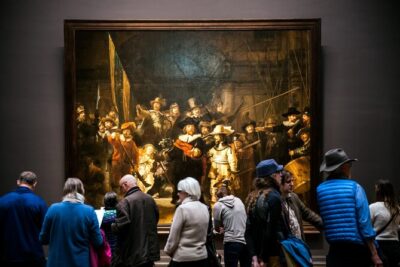
Rijksmuseum Amsterdam Small-Group Tour with Private Upgrade
Read our review →
Rijksmuseum Entry Ticket and Canal Cruise Combo
Read our review →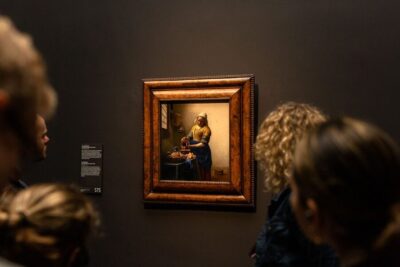
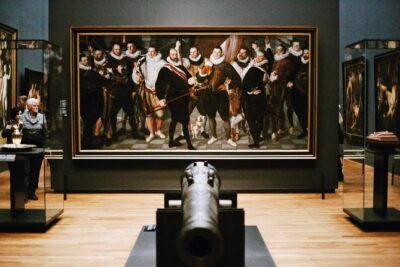
Rijksmuseum Amsterdam Exclusive Guided Tour w/ Reserved Entry
Read our review →
Van Gogh & Rijksmuseum w/ Reserved Entry Semi-Private 8ppl Max
Read our review →
Van Gogh & Rijksmuseum w/ Reserved Entry Exclusive Guided Tour
Read our review →Browse the lists this tour appears in