Reviewed · TICKETS
Noordwijk: Space Expo Entry Ticket
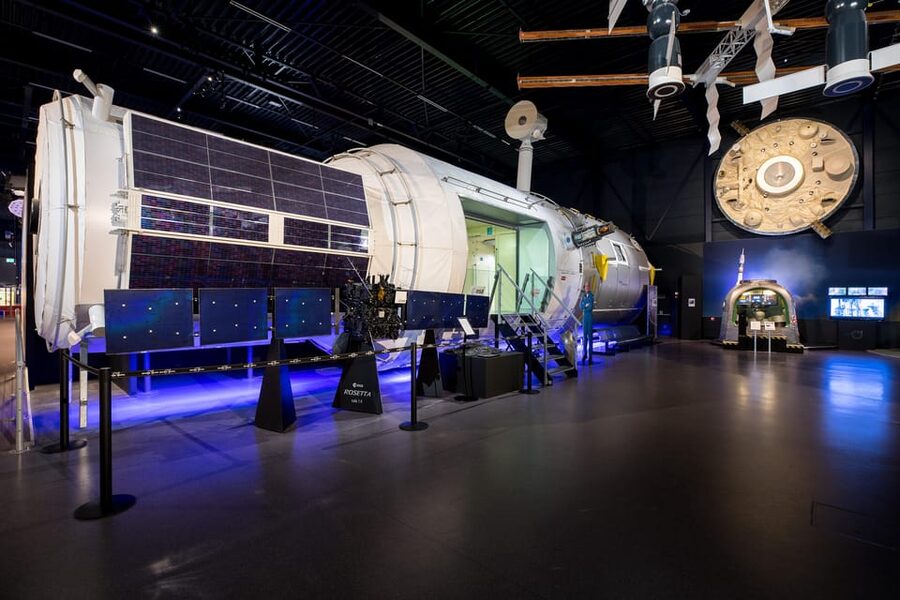
Space Expo puts real space hardware, hands-on exhibits, and Dutch spaceflight in one family-friendly museum behind Noordwijk’s sea and dunes. The most striking displays include the original Soyuz capsule used by André Kuipers and a life-size model of the International Space Station.
I like two things here: you can move at your own pace, and children get a proper mission to complete rather than just a sheet of facts. The Expedition Space Expo includes challenges, a secret message, and a quiz that leads to an official astronaut diploma. The main caution is size. At about $20 per person, this is a focused museum, not an all-day science center.
Key points before you book
- See the Soyuz capsule flown by André Kuipers, one of the museum’s most important original objects.
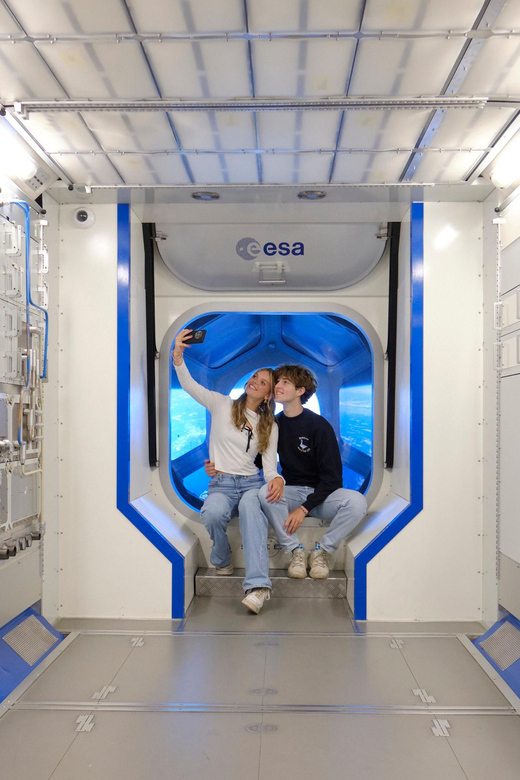
- Step inside a life-size ISS model to get a clearer sense of how people live and work in orbit.
- Touch a real meteorite, a simple but memorable hands-on moment.
- Children ages 5 to 12 can complete Expedition Space Expo and earn an astronaut diploma.
- Optional weekend and school-holiday Space Train tours visit ESA ESTEC, next door to the museum.
- The museum is interactive but relatively small, so the value depends on how carefully you explore the displays.
What Space Expo is really like
Space Expo is a museum about the full chain of space travel. You begin with the work done on Earth, including designing and building missions, then follow the path toward launch and life in space.
That broad subject gives the visit a useful shape. You are not looking only at rockets or astronauts. You get a sense of the planning, engineering, equipment, and daily work that make a space mission possible.
The visit is self-guided. You can take as much of the valid one-day entry period as you need, and there is no fixed museum tour included with the basic ticket. That suits families well because you can pause at interactive displays, move quickly past text panels, or let one child spend several minutes testing an activity while the rest of the family catches up.
One practical point: the museum’s exhibits become less text-heavy as you go along. If you want the background information, pay attention near the start rather than assuming every later display will explain itself in the same detail.
A few more days out around the Netherlands worth weighing up
- Amsterdam: Van Gogh Museum Ticket
★ 4.7 · 52,054 reviews - Amsterdam: Heineken Experience Ticket
★ 4.6 · 30,055 reviews - Amsterdam: Rijksmuseum Entry Ticket
★ 4.7 · 25,535 reviews
Starting at the entrance in Noordwijk
The museum sits in Noordwijk, just behind the coast and dunes. The setting gives the visit a pleasant change of pace from a city museum, though the ticket itself covers Space Expo rather than a wider Noordwijk attraction.
When you enter, reception is on your left. This is where you handle the basic arrival details and get oriented before walking into the exhibition areas.
The museum works best when you treat it as a place to investigate, not a quick photo stop. You can read about the displays, try the interactive elements, and let children follow their own tasks. Several families have found that younger children pay close attention when there is something to press, solve, or complete.
The atmosphere is suitable for a mixed-age group. Adults can focus on the spacecraft and mission stories, while children have a more active reason to keep moving through the rooms.
Following a mission from Earth to space
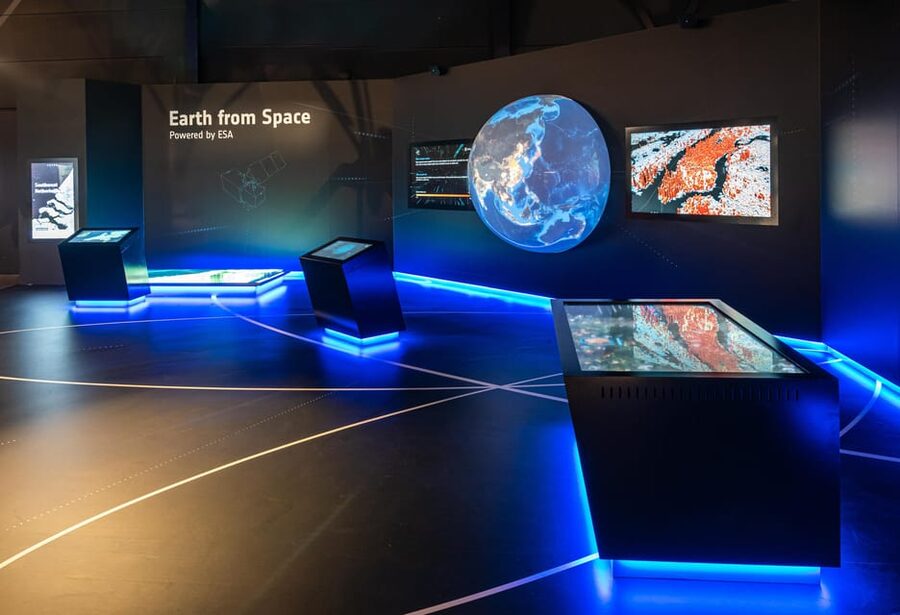
The opening part of the exhibition explains how space missions are planned and built on Earth. This section gives useful context before you reach the more dramatic spacecraft displays.
You will find information panels and exhibits that help connect the abstract idea of space exploration with practical work. A mission needs design, construction, testing, launch planning, and equipment that can operate far from Earth. Space Expo presents those stages as parts of one process.
I like this order because it keeps the museum from becoming a collection of unrelated objects. You can understand why the later spacecraft matter, rather than simply seeing them as large machines behind barriers.
Still, the amount of written information may feel uneven. The first displays contain more explanatory material, while later areas rely more heavily on interaction and visual presentation. If you enjoy detailed technical reading, you may want to slow down early in the visit.
For children, the interactive design is the stronger draw. The museum is not only asking them to stand and listen. It gives them reasons to take part, which can make space science easier to grasp.
The Soyuz capsule and André Kuipers’ spaceflight
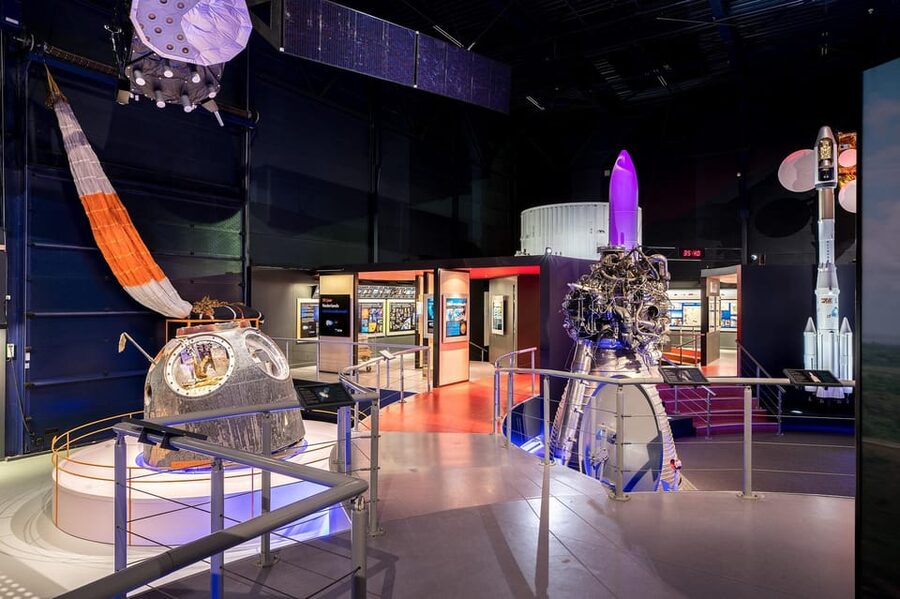
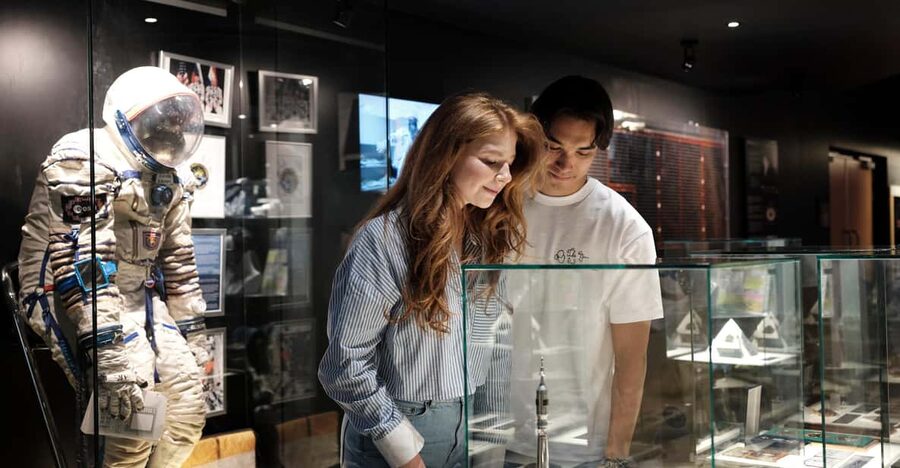
The original Soyuz capsule used by Dutch astronaut André Kuipers is the museum’s headline object. Seeing a spacecraft that actually carried an astronaut gives the visit a direct human link.
A real capsule also helps you understand the tight conditions of spaceflight. Photographs can make spacecraft interiors look spacious or abstract. A physical capsule shows the opposite: every part has a job, and room is limited.
For adults and older children, this is likely to be the point where the museum feels most substantial. The object is not merely a model built for display. It connects Dutch space history with the wider story of human missions beyond Earth.
The museum does not require you to follow a guide for this section, so you can spend time looking closely and reading the available information. If André Kuipers is the main reason you are considering the visit, the Soyuz capsule gives you a strong reason to come.
Same canals, a completely different sort of afternoon:
- Amsterdam Classic Saloon Boat Cruise with Drinks and Cheese
★ 5.0 · 31,825 reviews - Amsterdam Luxury Canal Cruise + Unlimited Drinks & Bites option
★ 5.0 · 30,518 reviews - Amsterdam: Classic Boat Cruise with Optional Cheese & Wine
★ 4.6 · 22,925 reviews - Amsterdam: Evening Cruise with Optional Wine and Snacks
★ 4.4 · 19,696 reviews
Inside the life-size International Space Station model
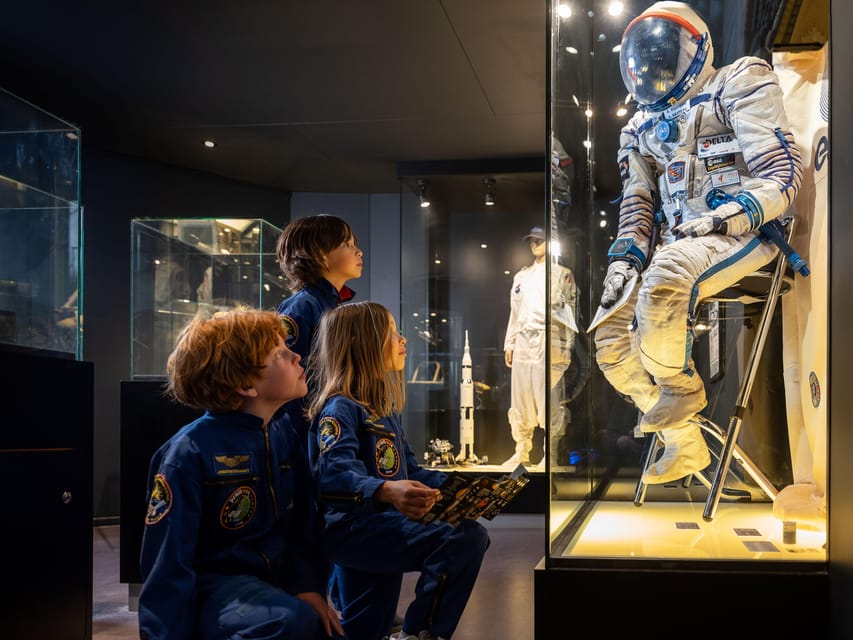
The life-size ISS model shifts the focus from launch to daily life in orbit. You can see what it is like to work and live inside a space station, at least through a full-scale exhibition model.
This is valuable because the International Space Station is often discussed in broad terms. A model at human scale makes the idea more concrete. You can think about where people work, how they move, and how different ordinary life becomes without normal gravity.
The ISS section is also useful for families with children who may know the station from pictures but have never considered its size or layout. It turns a distant object into a physical place.
Do not expect a full astronaut simulator or a long guided activity as part of the standard ticket. This is a museum display, and the experience depends on how much time you spend examining it and using the interactive features nearby.
Touching a real meteorite
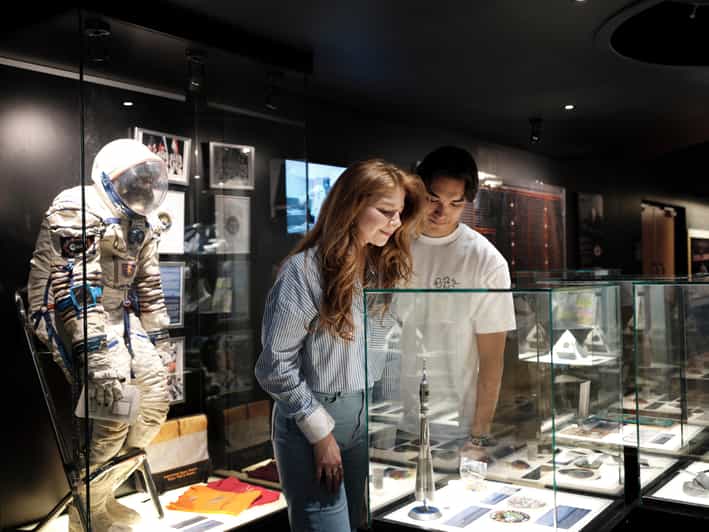
The chance to touch a real meteorite is a small feature, but it is exactly the sort of detail that children remember. Space can feel impossibly far away. A meteorite gives you something physical and immediate.
It also adds variety to the visit. After spacecraft, mission equipment, and station displays, handling a piece of material from space breaks up the reading and looking.
I would make a point of finding this display rather than assuming it will be obvious. The supplied information identifies it as a highlight, but it does not provide a precise location inside the museum.
Expedition Space Expo for children ages 5 to 12
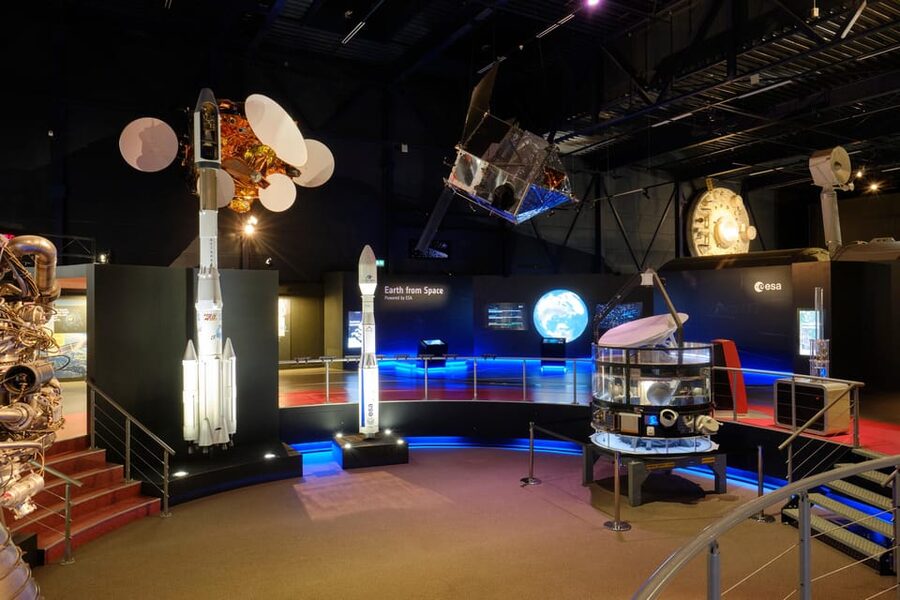
Families with children ages 5 to 12 get a free Expedition Space Expo activity. Children complete challenges, answer quiz questions, decode a secret message, and work toward an official astronaut diploma.
This is one of the best reasons to choose Space Expo over a museum where children simply follow adults from room to room. A mission gives younger visitors a goal and encourages them to look closely at the displays.
The activity also changes the pace of the visit. Instead of trying to read every panel, your child can focus on completing the assigned tasks. Adults can help when needed without turning the whole visit into a lesson.
The age range matters. The activity is specifically aimed at ages 5 to 12, so older children may find it too simple, while very young children may need help with the quiz and challenges.
If the astronaut diploma is important to your child, ask about the activity when you arrive. The ticket information confirms that it is included for this age group, but it does not specify how the materials are handed out or where the completed challenge is checked.
The Space Train to ESA ESTEC
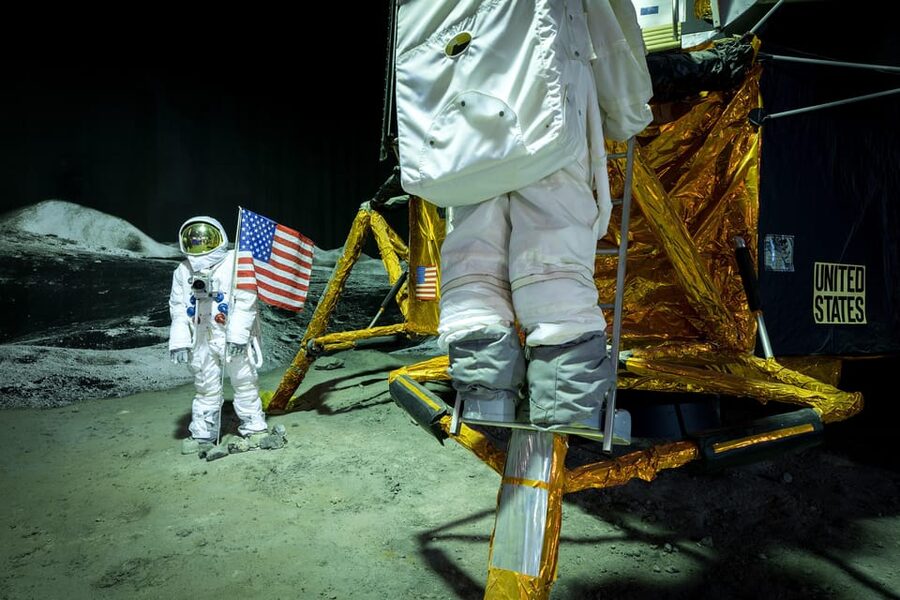
On weekends and during school vacations, Space Expo offers special Space Train tours to the European Space Agency’s nearby ESA ESTEC site. This is separate from simply entering the museum, and you need to check the museum’s website to book the train ride.
The tour offers a different kind of experience. Inside Space Expo, you see public exhibits about space travel. At ESA ESTEC, you get an inside look at work connected with space technology and exploration.
There are firm restrictions. Riders must be at least 9 years old, and everyone age 14 or older must present valid identification at security. This makes the train a better choice for families with older children and teenagers than for families visiting with toddlers.
Do not assume that buying the museum ticket reserves a seat on the Space Train. Check availability and booking rules before you plan your day around it.
How long the visit takes and what $20 buys you
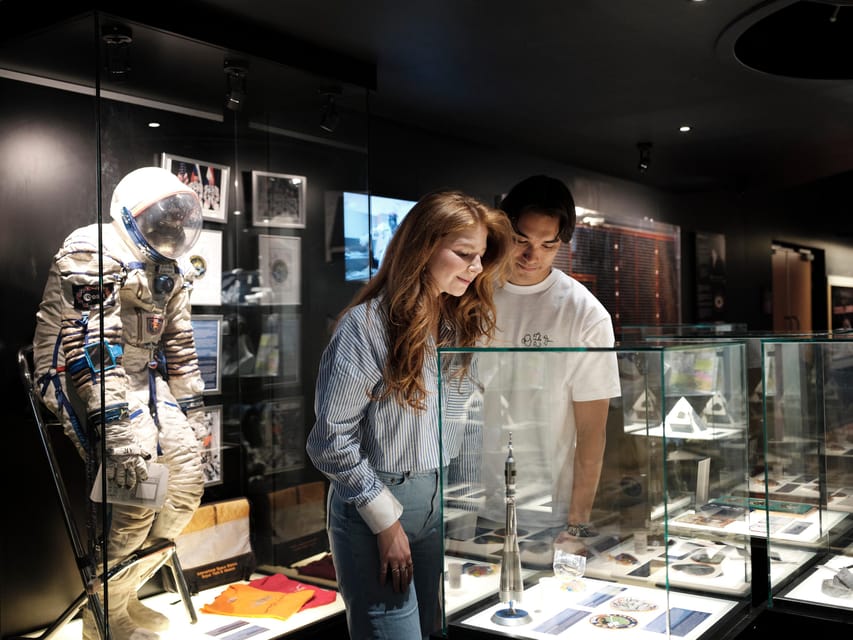
The entry ticket costs about $20 per person and is valid for one day. That is a reasonable price if you enjoy interactive museums, have children who will complete the expedition, or are especially interested in André Kuipers, the ISS, and European space work.
The value is less certain if you expect a huge museum with hours of galleries. One visitor found the exhibition relatively small and felt that $17 per person promised more. That is a fair warning, especially for adults who prefer dense technical collections over hands-on displays.
The best approach is to plan this as a focused visit rather than a full-day destination. You can take your time, but the museum’s size may limit the total amount of material available to explore.
Families may get better value than adults visiting alone. The children’s expedition adds structure, and younger visitors can spend time using interactive elements that an adult might pass quickly.
A café with reasonably priced food and a museum shop are available according to the supplied visitor information, but food, drinks, and merchandise are not included in the ticket. Keep that in mind when comparing the total cost.
Access, restrictions, and useful planning notes
Space Expo is wheelchair accessible. If you use a walking aid, mobility scooter, or wheelchair, check the museum’s website before arriving for the latest details about access throughout the building.
Large bags and luggage are not allowed. Drones, pets other than assistance dogs, skateboards, skates, speakers, and several other items are also prohibited. Smoking indoors, alcohol, drugs, fireworks, and explosive substances are not allowed.
The experience is not suitable for people with epilepsy. This is an important point to check before booking, particularly because interactive museums can include visual effects or changing displays.
You can cancel up to 24 hours in advance for a full refund, and the reserve-now, pay-later option lets you hold a place without paying immediately. Availability and starting times should still be checked before you set your schedule.
Who should book Space Expo?
I would recommend Space Expo most strongly to families with children ages 5 to 12. The astronaut diploma, secret message, quiz, and hands-on displays give younger visitors a clear reason to stay involved.
It also suits adults and older children with a real interest in spaceflight. The Soyuz capsule and life-size ISS model provide more substance than a simple children’s attraction, even though the museum remains accessible to young visitors.
The optional ESA ESTEC train tour makes the visit more appealing if you are in Noordwijk on a weekend or during a school vacation. Just remember that the train has separate booking and security rules.
You may want to skip it if you are looking for a large national museum with a very long collection. Space Expo is relatively small, and the amount of written explanation becomes lighter in some later sections.
Should you book Space Expo?
Book it if you want a family-friendly, interactive museum with genuine space hardware and a manageable visit in Noordwijk. The Soyuz capsule, ISS model, meteorite, and children’s astronaut mission give the ticket a clear purpose.
At $20, I see it as good value for a family that will use the interactive features and complete Expedition Space Expo. For adults who want a large, highly detailed collection, the price may feel high for the museum’s compact size.
If you plan to visit on a weekend or school holiday, check the ESA Space Train first. That extra experience could make the day much more rewarding, but it is not automatic with museum entry.
FAQ
Where is Space Expo located?
Space Expo is in Noordwijk, South Holland, in the area behind the sea and dunes.
How much does admission cost?
The listed price is $20 per person.
How long is the ticket valid?
The entry ticket is valid for one day. Check availability for the available starting times.
Is the Space Train to ESA included with museum admission?
The Space Train is an additional activity. It operates on weekends and during school vacations, and you need to visit the Space Expo website to book it.
How old must children be to ride the Space Train?
Riders must be at least 9 years old.
Do people age 14 and above need identification for the ESA visit?
Yes. Everyone age 14 and above must present valid identification at security for the Space Train visit to ESA ESTEC.
Is the children’s astronaut activity included?
Yes. Children ages 5 to 12 can take part in Expedition Space Expo, complete challenges and quiz questions, decode a secret message, and earn an official astronaut diploma.
Is Space Expo wheelchair accessible?
Yes, Space Expo is wheelchair accessible. For detailed information about walking aids, mobility scooters, or wheelchairs, check the museum’s website before visiting.
Can I bring luggage, pets, or large bags?
Large bags and luggage are not allowed. Pets are not permitted, but assistance dogs are allowed.
Just added around the Netherlands
- Volendam: E-Bike Rental including Highlights-Routes★ 4.9 · 23 reviews
- Volendam: E-Scooter Rental★ 4.5 · 41 reviews
- Volendam: Volendams Museum Entry Ticket★ 4.4 · 14 reviews
- Volendam: 2.5-Hour Cheesemaking Workshop & Clog Making Tour★ 4.5 · 17 reviews
- From Amsterdam: The Hague Private Trip and Mauritshuis Entry★ 4.3 · 4 reviews
- Vlissingen: Maritime Museum Entry Ticket★ 4.6 · 7 reviews
- Volendam: 2-Hour Clogmaking Workshop and Cheese Tour★ 3.9 · 17 reviews
- Zundert: Vincent van Gogh House Entrance Ticket★ 3.9 · 43 reviews
Tickets, compared.





Keukenhof Ticket and Roundtrip Shuttle Transfer
Read our review →
Moco Museum Amsterdam Entrance Tickets with Banksy & More
Read our review →