Reviewed · TOURS
From Amsterdam: Rotterdam and The Hague Tour in Spanish
Rotterdam’s Cube Houses and rebuilt skyline make a sharp contrast with The Hague’s royal palaces and government buildings. In one day, you get two very different views of South Holland, with a Spanish-speaking guide to connect the sights and explain how war, politics, art, and modern design shaped each city.
I like the smart pairing of destinations and the generous three hours of free time for lunch, shopping, or your own exploring. I also like the strong guide record, with Fanny, Facundo, Silvia, and Blas singled out for clear explanations, humor, patience, and good local recommendations. The tradeoff is a busy day, and the tour focuses mainly on city centers and key exterior sights rather than long museum visits.
Key points to know before booking
- Two cities in one day: Visit The Hague’s royal and political center, then continue to Rotterdam’s modern waterfront and architecture.
- Spanish-language guiding: The live tour is conducted in Spanish, with guides including Fanny, Facundo, Silvia, and Blas.
- Three hours of free time: You can choose your own lunch, shopping, or sightseeing in Rotterdam.
- A striking architecture lesson: Rotterdam brings you the Cube Houses, Markthal, Oude Haven, and postwar city design.
- A low-cost full-day outing: At $46 per person, transportation and guiding make this a useful option for seeing two cities from Amsterdam.
- Simple meeting point: Meet outside the main entrance to Aloha Bowling 15 minutes before departure and look for the green umbrellas.
Why this day trip works
At $46 per person, this is a strong-value way to reach two South Holland cities from Amsterdam without arranging separate trains, local transit, and sightseeing plans. You are paying for an eight-hour outing with bus transportation and a Spanish-speaking guide, while food, drinks, and most personal spending remain your responsibility.
The appeal is not just convenience. The Hague and Rotterdam tell very different stories. The Hague is polished, formal, and tied to the Dutch royal family, national government, and international law. Rotterdam is more experimental, with buildings and public spaces shaped by wartime destruction and a later push toward bold modern design.
You should think of this as a guided overview rather than an intensive museum or architecture course. The day gives you a useful first look, plenty of context, and time to wander on your own. If you want to examine every painting in the Mauritshuis or spend an entire afternoon inside Rotterdam’s architectural landmarks, you will need a separate visit.
A few more days out around Amsterdam worth weighing up
- Amsterdam: Van Gogh Museum Ticket
★ 4.7 · 52,054 reviews - Amsterdam Classic Saloon Boat Cruise with Drinks and Cheese
★ 5.0 · 31,825 reviews - Amsterdam Luxury Canal Cruise + Unlimited Drinks & Bites option
★ 5.0 · 30,518 reviews
Starting in The Hague, the Netherlands’ seat of power
The first major stop is The Hague, a city with a more official air than Amsterdam. It is the seat of Dutch government and the home of important royal and international institutions, so the early part of the tour centers on power, public life, and grand civic buildings.
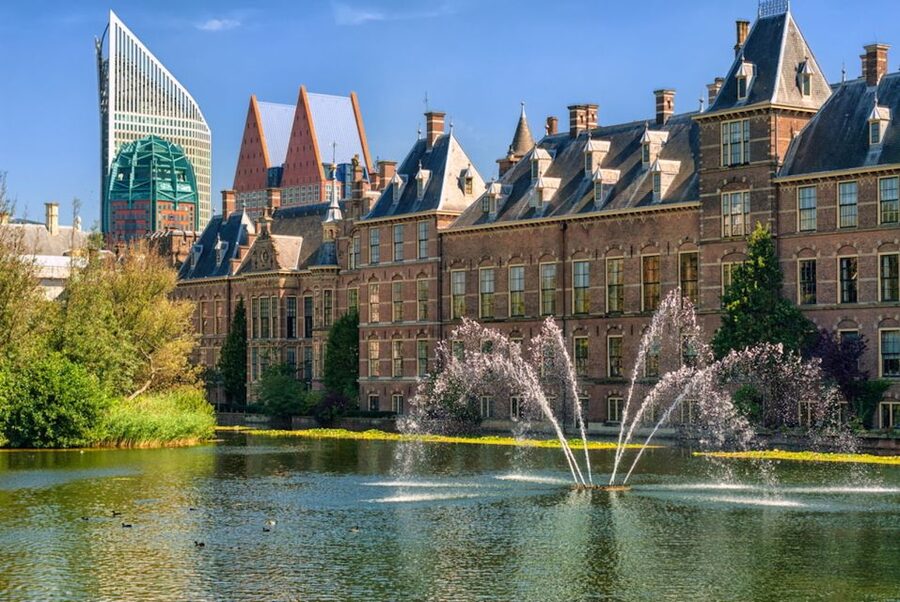
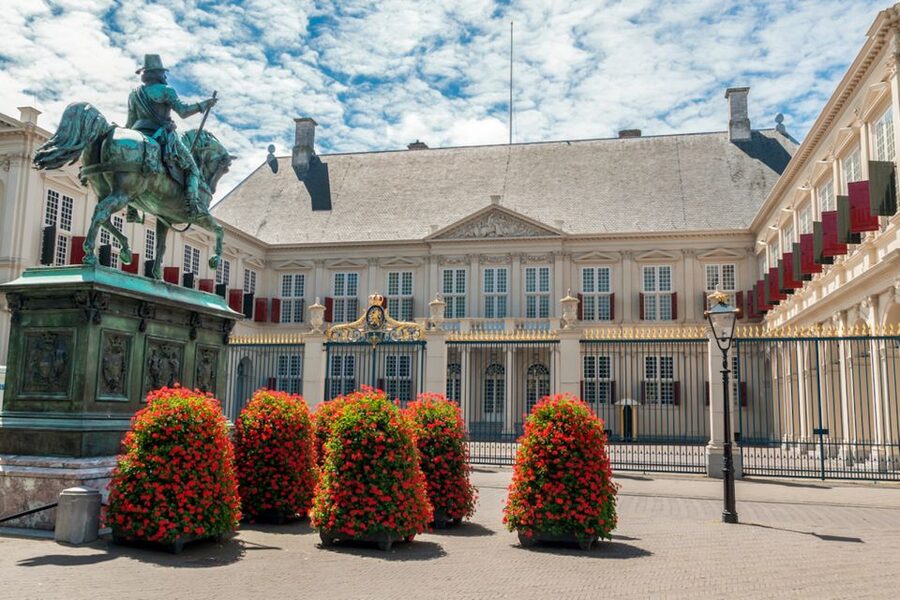
You will see Noordeinde Palace, one of the best-known royal sites in the city. The palace helps set the tone for The Hague, where royal connections are part of the city’s identity. The tour also brings you to the Binnenhof complex, the historic center of Dutch government.
The Binnenhof is especially useful for understanding why The Hague matters. Rather than treating it as just another attractive square, the guide places it in the setting of Dutch political life. You see where national decisions have been made and get a sense of how the city’s medieval core still serves a modern state.
The presentation here depends heavily on the guide, and that is one of the tour’s strengths. Past guides such as Facundo and Blas have been praised for humor and clear explanations, while Fanny has been noted for being attentive and professional. That combination matters on a day with many names, buildings, and dates.
Mauritshuis and the art stop

The route also includes the Mauritshuis Museum, home to paintings by Rembrandt and Vermeer. Even if you are not planning a full museum visit, the stop places two of the Netherlands’ best-known artists in the context of The Hague’s civic center.
You should check how much time is available for entering the museum on your departure date. The tour information identifies the Mauritshuis as a sight, but the day also includes several other stops and a later visit to Rotterdam. The schedule is built for broad coverage, not an extended gallery session.
That distinction is important. You may get an introduction to the museum and its collection, but you should not book this excursion solely for a slow art afternoon. If Vermeer or Rembrandt is your main reason for visiting The Hague, confirm the visit details and consider returning independently.
The Peace Palace and international law
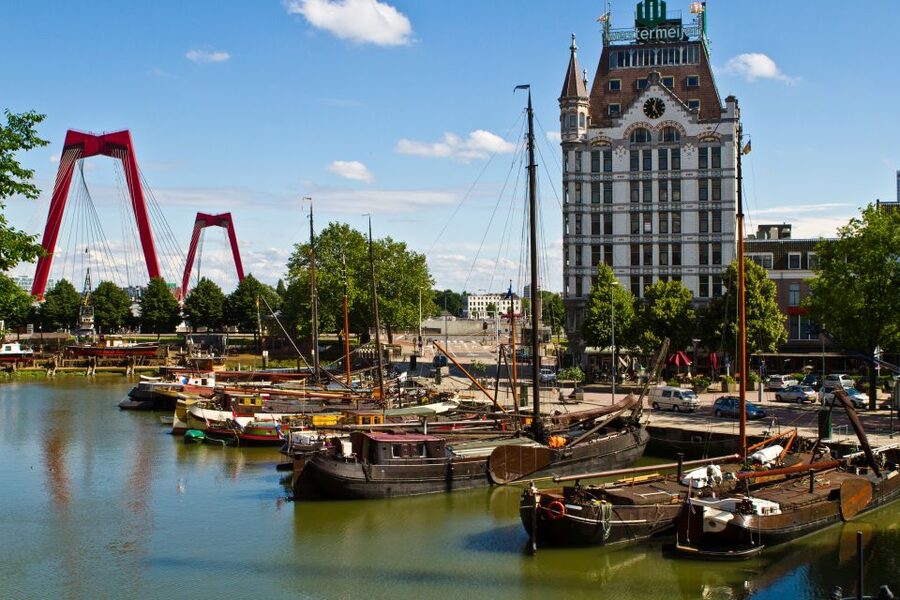
The Peace Palace gives the The Hague section another layer. The building is associated with the International Court of Justice, one of the world’s best-known institutions for international law.
This stop shows that The Hague is not only a royal and national political center. It is also linked to global diplomacy and legal disputes between countries. You get a quick look at the institution’s setting and a better sense of why this city has such a serious international role.
As with the other major sights, the emphasis is on seeing and explaining rather than spending a long time inside. That keeps the day moving, but it also means you should expect a guided city visit rather than a series of full indoor tours.
Same canals, a completely different sort of afternoon:
- Amsterdam: Heineken Experience Ticket
★ 4.6 · 30,055 reviews - Amsterdam: Rijksmuseum Entry Ticket
★ 4.7 · 25,535 reviews - Amsterdam: Classic Boat Cruise with Optional Cheese & Wine
★ 4.6 · 22,925 reviews - Amsterdam: Evening Cruise with Optional Wine and Snacks
★ 4.4 · 19,696 reviews
Rotterdam, rebuilt with imagination
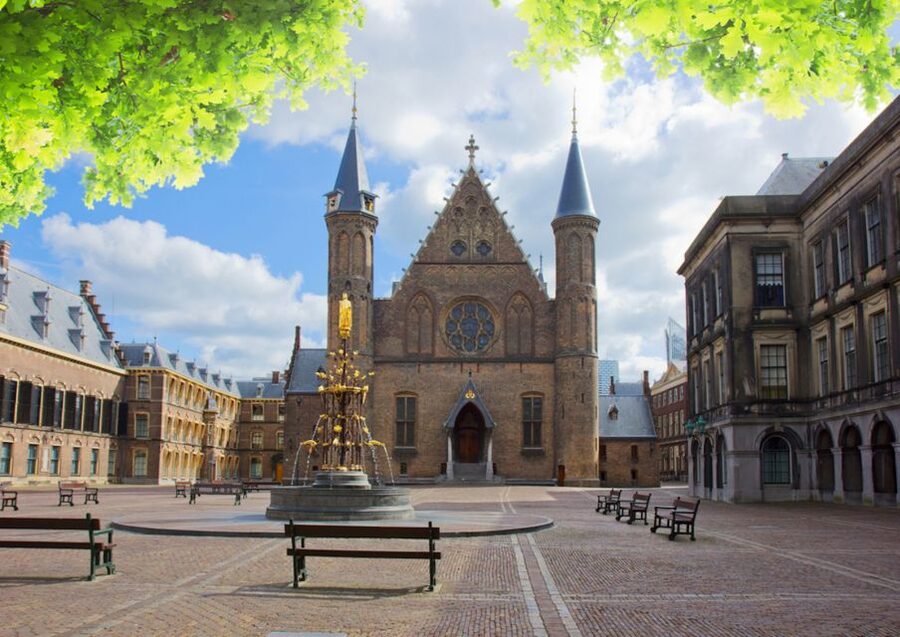
Rotterdam changes the mood completely. The city is known for contemporary architecture, and the tour uses that design focus to explain how Rotterdam became so different from many Dutch cities.
A key stop is The Man without a Heart, the sculpture by Ossip Zadkine. It was created as a response to the destruction of Rotterdam during World War II, and its damaged, open form gives the city’s rebuilding story a human image.
This is more than a quick photo stop. It helps explain why Rotterdam has so much modern architecture. Large parts of the city were destroyed, leaving room for new plans and daring buildings. The result is a place where glass towers, unusual housing, public art, and older survivors sit close together.
The guide’s explanation can make the difference here. Blas, in particular, has been praised for combining humor with strong historical detail and a modern connection to current issues. That style suits Rotterdam, where the past is visible but the city is also clearly looking ahead.
The last medieval building and the Cube Houses
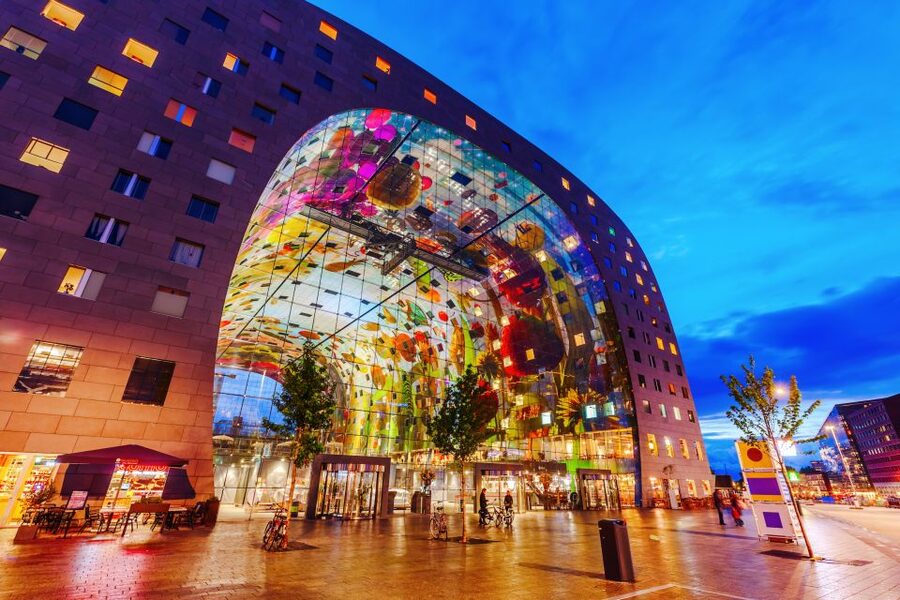
The tour points out the only medieval building still standing in Rotterdam. That detail gives you a useful visual contrast: one surviving piece of the old city set against a skyline shaped by war and reconstruction.
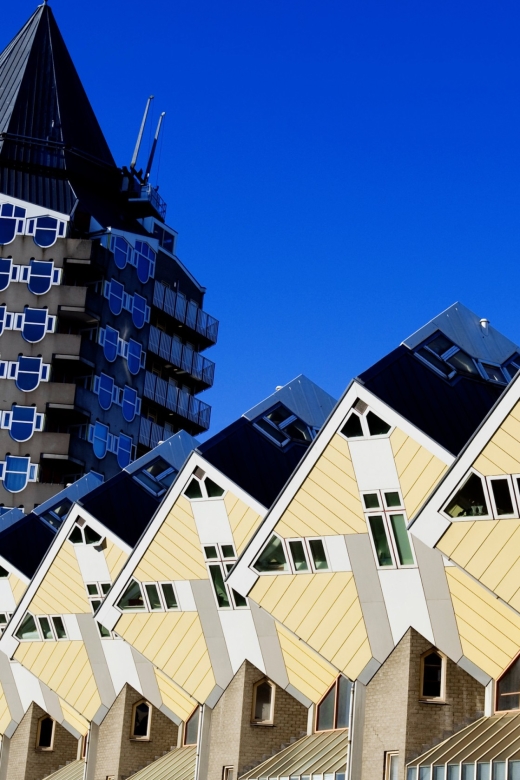
Then come the Cube Houses by Piet Blom, among Rotterdam’s most recognizable sights. Their tilted walls and unusual angles are fun to photograph, but the buildings also raise a practical question: what is it like to live in a house designed this way?
The tour introduces the outside design and its place in Rotterdam’s architectural story. You can admire the bold shapes without needing a technical background. If you want to explore a Cube House interior, confirm whether that is part of your available free time or arrange it separately.
The Cube Houses are also a good example of why a guide helps. Without context, they can look like oversized pieces of modern sculpture. With an explanation of their purpose and design, you see them as part of a broader attempt to rethink urban housing.
Oude Haven and the Markthal
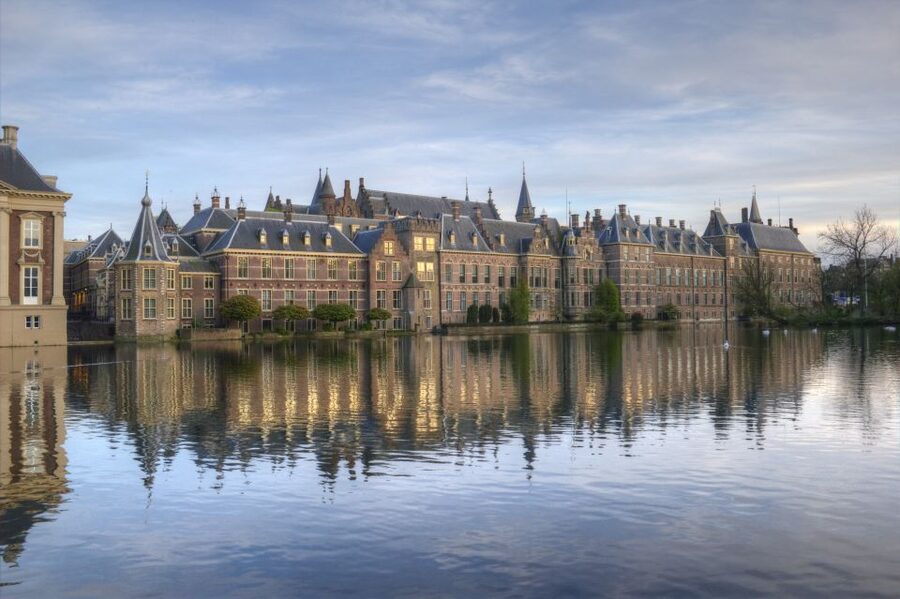
Oude Haven, or Old Harbour, brings you back toward Rotterdam’s waterfront. It offers a different view of the city, with a historic port setting beside newer buildings and the high-rise center.
The Markthal is another major stop. Inside, food displays fill a dramatic covered market building, giving you a chance to see Rotterdam’s modern public architecture used for everyday life. It is one of the better places on this route to pause, look upward, and take in the building as well as the food.
Food and drinks are not included, so plan to pay for lunch and any snacks yourself. The free time gives you flexibility. You can eat at the Markthal, choose a nearby restaurant, or simply grab something quick and use the rest of your time for photos and shopping.
One useful detail comes from the guides’ local recommendations. Blas was praised for suggesting a reasonably priced restaurant with generous portions. Recommendations can change, but a Spanish-speaking guide who knows how to point you toward practical food options is valuable on a tightly timed day.
The Meuse waterfront and the Rotterdam skyline
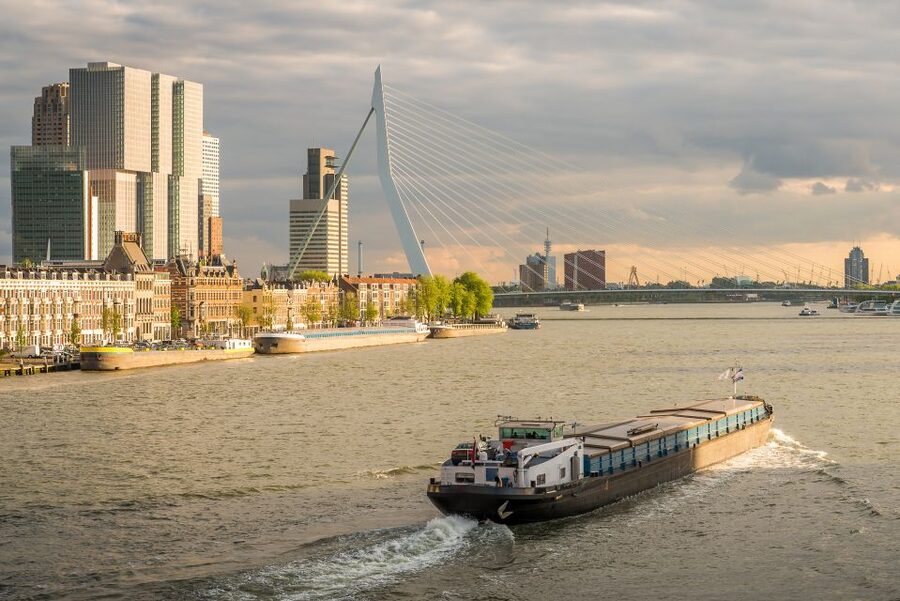
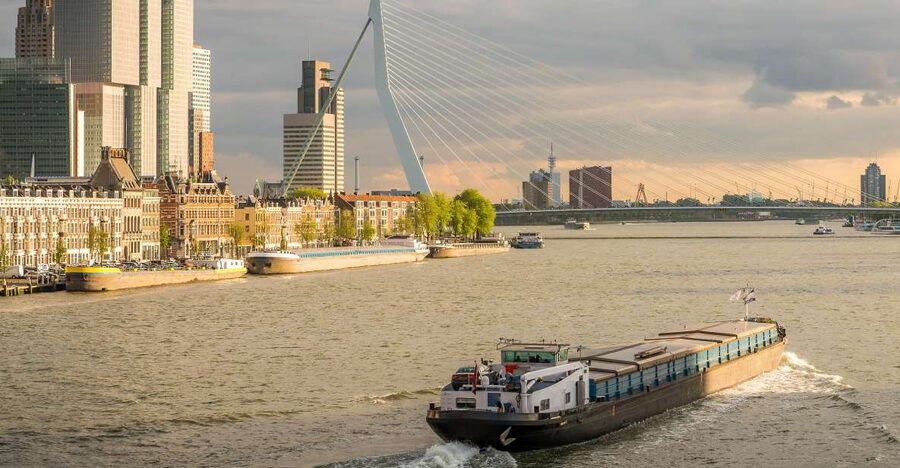
The route includes a walk or view along the River Meuse, where you can look back toward Rotterdam’s skyscrapers. This is the city at its most open and photogenic, with water in the foreground and the modern center beyond it.
The riverfront also helps you understand Rotterdam as a working port city rather than just an architecture showcase. You see how the water, harbor, bridges, and towers fit together. It is a good place to pause after the denser streets around the Cube Houses and Markthal.
The day’s free time is based in Rotterdam, giving you room to choose your own pace after the guided portion. You may use it for lunch, shopping, more photographs, or a closer look at a place that caught your attention during the introduction.
What the eight-hour schedule feels like
An eight-hour trip covering Amsterdam, The Hague, and Rotterdam is full. The bus saves you from arranging connections, but travel between cities still takes part of the day. You should expect a steady rhythm of sightseeing, short explanations, photo opportunities, and movement.
The schedule works best if you enjoy seeing a lot in one outing. You will not have unlimited time at each stop, and the guide cannot cover every street, church, museum room, or neighborhood. One past participant wished the group had entered more churches and had more time for interior art and architecture. That is a fair limitation to keep in mind.
The tour mainly gives you the city centers and important locations. It is a good first orientation, especially if you are new to both cities. It is less suitable if you prefer to spend most of the day inside museums or to explore one place at a slow, unplanned pace.
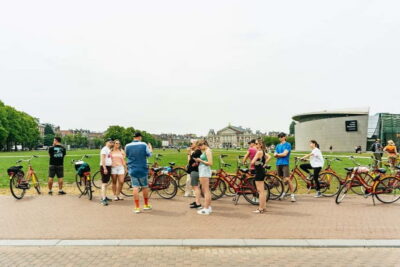
Be at the meeting point 15 minutes early. The departure point is outside the main entrance to Aloha Bowling, and staff can be identified by their green umbrellas. That small visual cue should make the morning easier, especially in a busy departure area.
Who will get the most from this tour
I would choose this excursion if you are staying in Amsterdam and want a simple way to add two major Dutch cities to your trip. It suits first-time visitors, couples, families, and Spanish-speaking groups who value explanation over independent route planning.
It is also a good fit if architecture interests you but you do not want a highly technical tour. Rotterdam gives you striking buildings and a clear story about wartime destruction and rebuilding. The Hague balances that with royal, political, artistic, and international sights.
You may want a different plan if your priority is a long visit to the Mauritshuis, detailed access to the Peace Palace, or extended time inside Rotterdam’s buildings. The program is broad, and its value comes from variety.
The rating of 4.6 from 431 reviews supports the idea that the format generally works well. The strongest praise centers on the guides’ humor, patience, organization, and ability to explain the cities. That matters because much of the day’s value comes from the quality of the commentary between stops.
Price, language, and practical value
At $46, the tour is priced well for a full day with bus transport and live Spanish-language guiding. You still need to budget for lunch, drinks, shopping, and any museum or attraction costs not covered by the tour.
The Spanish focus is central, not a minor feature. Guides including Fanny, Facundo, Silvia, and Blas have been praised for making the day clear and enjoyable, so Spanish-speaking visitors should get more from the historical and architectural commentary than they would from a self-guided bus ride.
One English-speaking participant joined mainly for photographs and still found the outing useful, with occasional English instructions from the guide. That may help with basic logistics, but you should book this as a Spanish tour and not expect full English commentary.
Free cancellation up to 24 hours before departure and the option to reserve now and pay later add flexibility. Hotel pickup and drop-off are included only if you select the private tour option, so do not assume the standard trip begins at your hotel.
Should you book it?
Book this tour if you want efficient coverage of The Hague and Rotterdam, prefer Spanish guiding, and like a day that mixes history, politics, art, public sculpture, food, and modern architecture. The $46 price is especially appealing when you factor in transportation and the time saved planning two separate city visits.
Skip it if you want a slow museum day or detailed interior access at every major sight. For most people, though, this is a practical introduction to two very different Dutch cities, with enough free time in Rotterdam to make the day feel like more than a bus tour.
FAQ
How long does the tour last?
The tour lasts eight hours, including transportation, guided sightseeing, and free time in Rotterdam.
What language is the tour conducted in?
The live tour guide speaks Spanish.
Which cities does the tour visit?
The tour visits The Hague and Rotterdam, departing from Amsterdam.
What sights are included in The Hague?
The Hague portion includes Noordeinde Palace, the Binnenhof complex, the Mauritshuis Museum, and the Peace Palace, associated with the International Court of Justice.
What sights are included in Rotterdam?
The Rotterdam portion includes The Man without a Heart sculpture, the only medieval building still standing in the city, the Cube Houses, Oude Haven, the Markthal, and views along the River Meuse.
How much free time do you get?
The tour provides three hours of free time to explore, eat, and shop on your own.
Is food included?
No. Food and drinks are not included, so you should budget separately for lunch and refreshments.
Where is the meeting point?
Meet outside the main entrance to Aloha Bowling 15 minutes before the activity begins. Staff can be identified by their green umbrellas.
Just added around Amsterdam
- From Amsterdam: The Hague Private Trip and Mauritshuis Entry★ 4.3 · 4 reviews
- VIP Private Full Day Tour of the Netherlands★ 4.8 · 6 reviews
- Amsterdam Old-West Vegan Food Tour with Local Guide★ 4.7 · 3 reviews
- Van Gogh Museum Private Guided Tour★ 4.2 · 10 reviews
- Vecht River: Full-day Cruise with Lunch★ 4.8 · 9 reviews
- Amsterdam: Van Gogh Museum Guided Tour★ 4.8 · 262 reviews
- Van Gogh and Rijksmusuem Tour: Small Group Tour with Entry★ 4.7 · 3 reviews
- Amsterdam: Van Gogh Museum Ticket & Guided Tour★ 4.4 · 187 reviews
Tours, compared.
Zaanse Schans, Edam, Volendam & Marken Bus Tour
Read our review →
Anne Frank’s Story – Guided Walking Tour through Amsterdam
Read our review →
Life of Anne Frank and World War II Walking Tour
Read our review →
Red Light District Tour in German/English/Italian
Read our review →
Guided Zaanse Schans, Windmills & Cheese Tour
Read our review →
Windmill Tour from Amsterdam, Including Volendam & Marken
Read our review →