Reviewed · TICKETS
Body Worlds Amsterdam: The Happiness Project Ticket
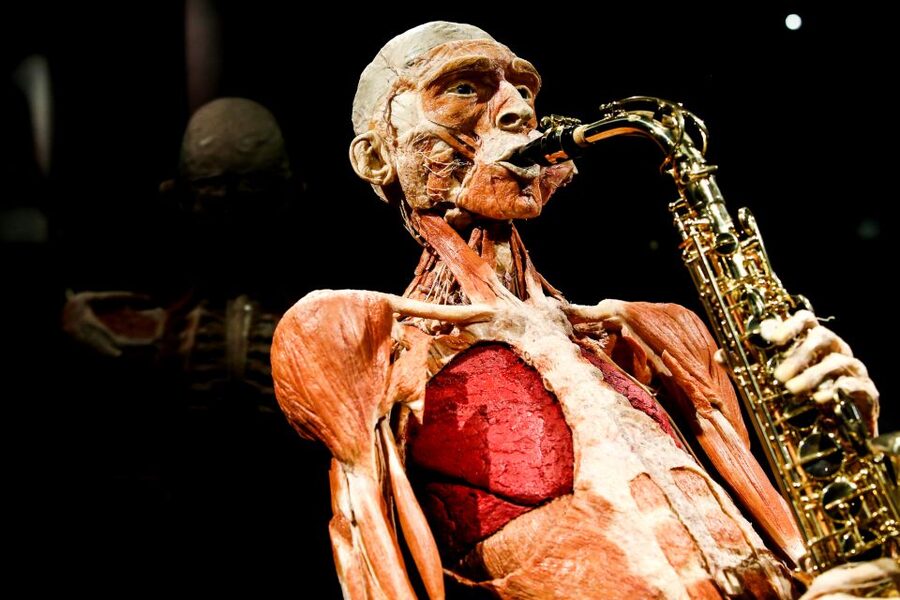
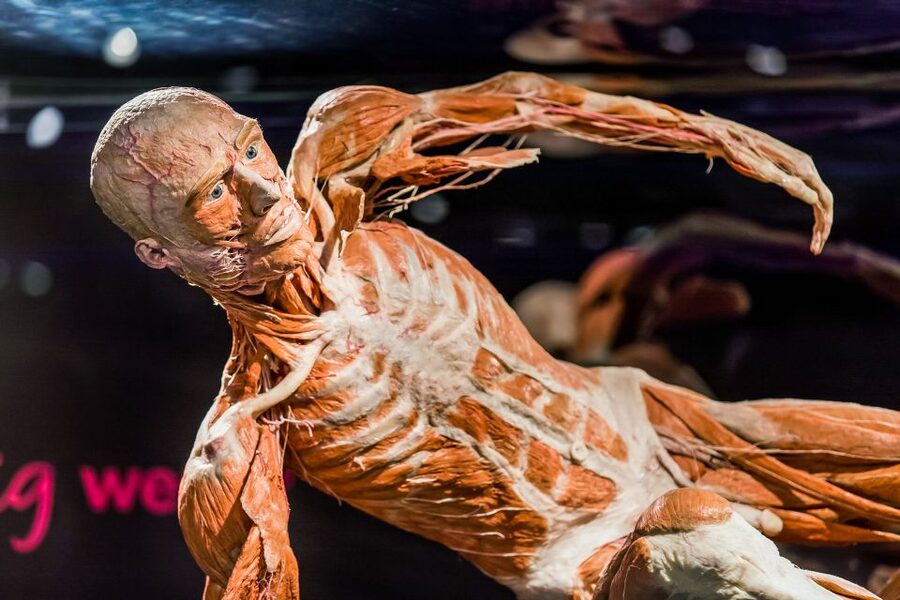
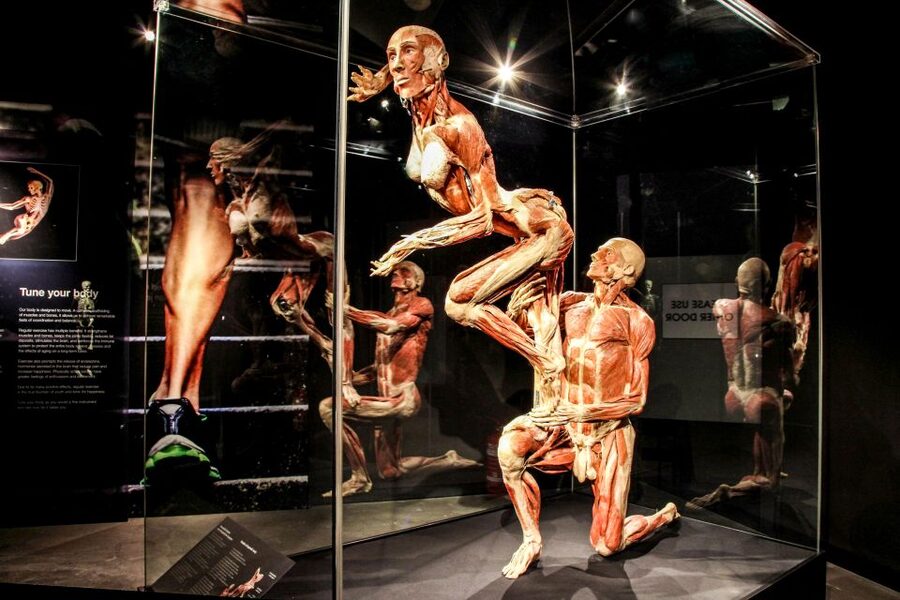
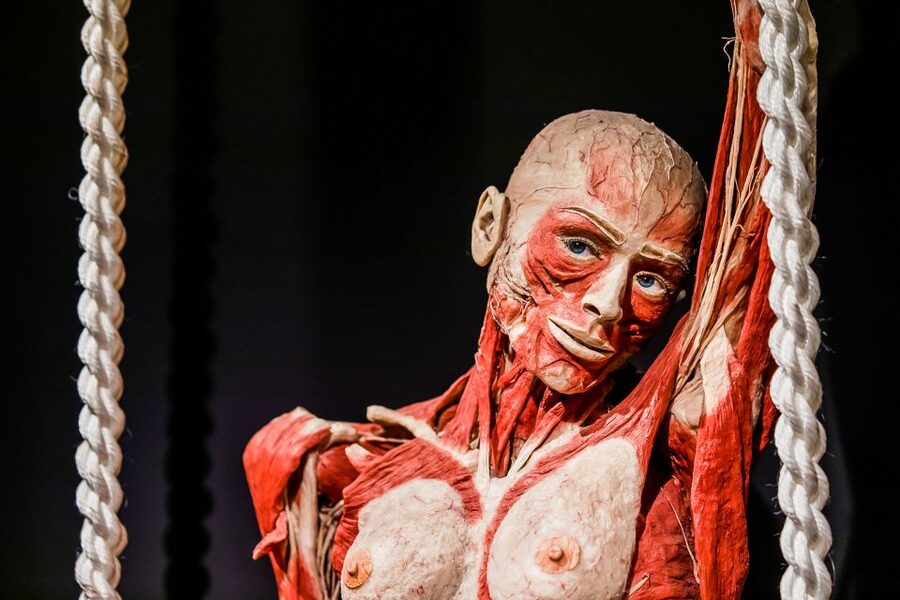
Body Worlds Amsterdam puts real human bodies at the center of its lesson about health and happiness. More than 200 donated specimens have been preserved through plastination, allowing you to see muscles, organs, nerves, blood vessels, and bones in a way ordinary models cannot match.
I like the exhibition’s clear link between anatomy and daily life, especially its focus on how stress, food, movement, and emotional wellbeing affect the body. I also like that the route is easy to follow, with displays in English and Dutch and plenty of text to read at your own speed.
The main consideration is simple: this is not a casual museum for everyone. The specimens are real, and the final section includes donated fetal specimens at different stages of pregnancy. You can pass that section, but anyone affected by pregnancy loss may find it upsetting.
Key points to know before you go
- More than 200 real specimens: Plastinated human bodies and body parts show anatomy with striking detail.
- A six-floor route: Start at the upper level and work downward through a clearly arranged exhibition.
- A free InBody scan: Check body fat, protein, minerals, and water, though the results may not be explained in detail.
- Plan 1.5 to 2 hours: You can move faster, but a careful visit takes longer than a quick look.
- Audio guide available: It is not included with admission, but one on-site review placed the cost at €3.50 and found it useful.
- Central Damrak location: The museum is at Damrak 66, an easy walk from Amsterdam Central Station.
What Body Worlds Amsterdam is really showing you
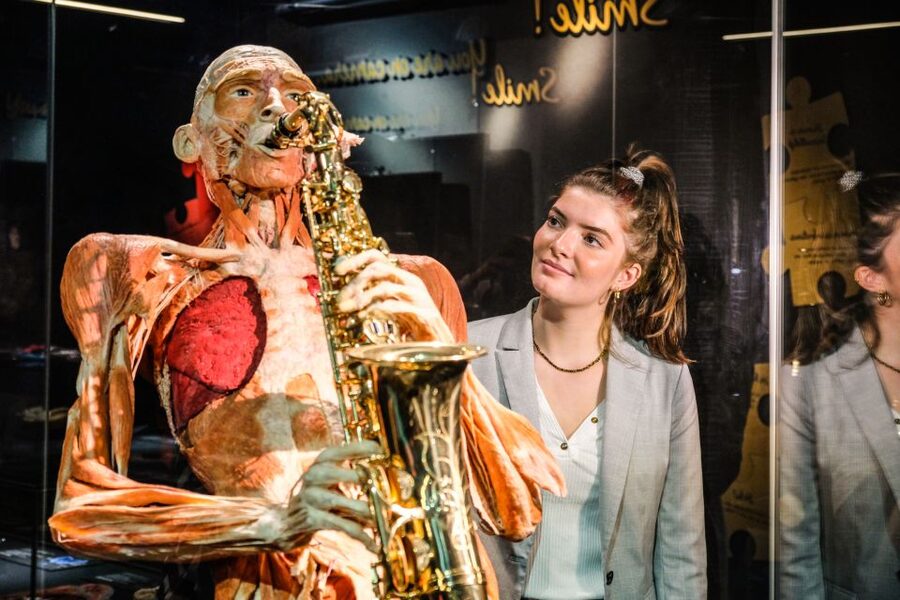
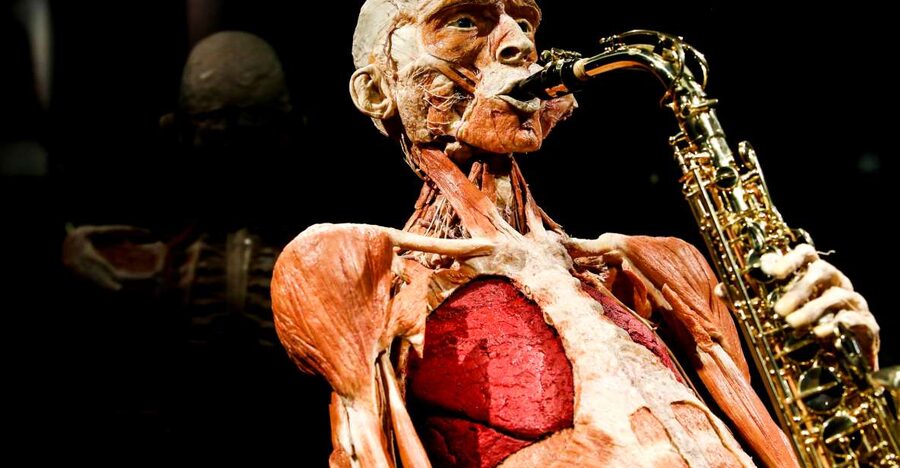
The famous sight here is not a wax figure or plastic teaching model. It is a preserved human body, positioned to show how the parts fit together. That first encounter can feel startling. After a few displays, the shock usually gives way to curiosity, but the experience remains more personal than a standard science museum.
The exhibition uses plastination, a preservation process associated with Dr. Gunther von Hagens. The supplied material does not give a full technical explanation of every step, but the result is clear: tissues are presented dry, stable, and highly visible, without the usual limits of a textbook diagram.
The central theme is The Happiness Project. Instead of treating the body as a collection of separate parts, the exhibition asks how physical health and emotional life connect. You will see anatomy displays alongside information about wellbeing, lifestyle, and the effects of your choices.
That theme gives the visit a practical edge. You are not only looking at the heart, lungs, brain, and skeleton. You are also being asked to think about how your own habits affect those systems. The message can feel direct, but it is part of what makes the museum more memorable than a room full of medical specimens.
A few more days out around the Netherlands worth weighing up
- Amsterdam: Van Gogh Museum Ticket
★ 4.7 · 52,054 reviews - Amsterdam: Heineken Experience Ticket
★ 4.6 · 30,055 reviews - Amsterdam: Rijksmuseum Entry Ticket
★ 4.7 · 25,535 reviews
Following the six-floor route
The museum is arranged over six floors, and the most helpful tip is to begin on the sixth floor and work your way down. This gives you a natural route and reduces the chance of missing a room or doubling back.
The displays are arranged so you can progress through the human body in a logical way. You may see complete bodies positioned to reveal the relationship between bones, muscles, and internal organs, followed by closer views of individual systems. The layout helps you make sense of what you are seeing, even if you have no medical background.
I appreciate that the exhibition does not require a guide to make the basic route work. English and Dutch information panels explain the displays, and you can stop when something catches your attention. Some people finish in around 90 minutes. If you read most of the text and use the interactive sections, allow closer to two hours.
The route is not a timed tour, so the pace is yours once you enter. That matters because some exhibits reward a slow look, while others are easy to understand in seconds. You can spend more time on the systems that interest you and move past sections that feel too graphic.
Real bodies, clear anatomy, and a few difficult sights

The main specimens are presented as educational objects, not as a horror show. The exhibition aims to explain structure and function, and the displays are generally clinical rather than gory. Still, the fact that these are authentic human remains never disappears completely.
Some of the most effective displays show the complexity of the body by separating or positioning tissues in precise ways. You may see how muscles wrap around bones, how blood vessels spread through an organ, or how several body systems occupy the same small area. A photograph cannot fully convey the three-dimensional detail.
This is especially useful for anyone studying biology, nursing, medicine, or physical education. It can also help younger visitors connect school lessons with something more concrete. A 12-year-old with an interest in science may find the displays fascinating, but parents should decide in advance if the subject is suitable.
The final section presents donated fetal specimens at different stages of pregnancy. This is a serious and sensitive part of the exhibition, not a casual display. You can walk past it without missing the rest of the experience, and I recommend doing so if the subject may cause distress.
The museum is best for people who are comfortable with direct physical evidence. If you are squeamish, you may need a few minutes to adjust to the first specimen. If you already know you dislike medical imagery, the admission price may be better spent elsewhere.
The Happiness Project and your own health
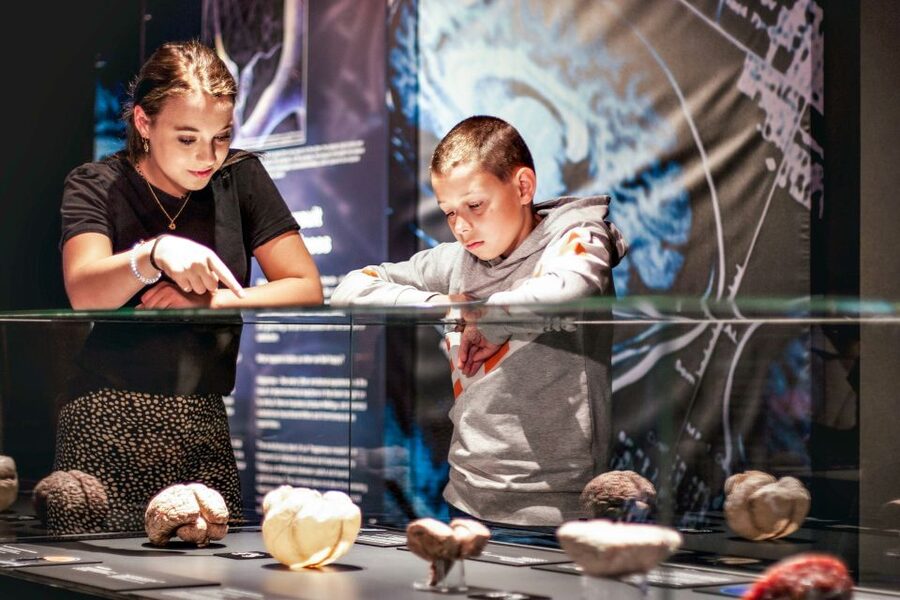
The exhibition’s strongest idea is that the body is affected by more than disease or injury. Health also connects with sleep, diet, activity, stress, and emotional state. The displays use the human form to make that point in a way that feels harder to ignore than a general health poster.
You will find information that links happiness and wellbeing with the body and soul. The term happiness is broad, so do not expect a tightly focused laboratory lecture on one scientific subject. Instead, expect a public exhibition that combines anatomy with questions about how you live.
That approach works best when you treat the museum as a prompt for thought rather than a medical consultation. You may leave considering your own habits, but the exhibition is not a substitute for advice from a doctor or other health professional.
I like the way the theme brings a personal angle to the specimens. A display of an organ can teach you what it looks like. The Happiness Project also asks what happens when you neglect it, protect it, or place it under long-term strain.
Same canals, a completely different sort of afternoon:
- Amsterdam Classic Saloon Boat Cruise with Drinks and Cheese
★ 5.0 · 31,825 reviews - Amsterdam Luxury Canal Cruise + Unlimited Drinks & Bites option
★ 5.0 · 30,518 reviews - Amsterdam: Classic Boat Cruise with Optional Cheese & Wine
★ 4.6 · 22,925 reviews - Amsterdam: Evening Cruise with Optional Wine and Snacks
★ 4.4 · 19,696 reviews
The InBody scan and interactive displays
Admission includes a free InBody scan, described as a check of your body composition. The report covers fat percentage, protein, minerals, and water. It adds a modern, personal element to an exhibition otherwise built around preserved specimens.
The scan can be fun and thought provoking, especially if you want a quick snapshot of your body composition. Do not expect a long consultation. One practical criticism is that the results may not be explained in much detail, and the printer has occasionally had trouble producing reports.
Other interactive features include a virtual anatomy model, a blood pressure machine, and body-analysis equipment. These displays give you something to do rather than simply read. Some equipment may be out of service during your visit, so I would treat the interactive side as an extra, not the main reason to buy a ticket.
The InBody scan also gives the exhibition a useful closing question: what do you know about your own body, beyond your height and weight? It is a small feature, but it helps connect the museum’s preserved bodies with your everyday health.
How long the visit takes
The advertised validity is one day, but your actual museum visit is usually much shorter. Plan for about 1.5 hours if you read selectively and closer to 2 hours if you stop at most panels and interactive displays.
A quicker visit is possible. One visitor found the museum neither too short nor too long, while another felt the number of displays was modest for the admission cost. Both reactions make sense. The exhibition is carefully arranged, but it is not a vast national museum that fills an entire day.
I would schedule it as a focused indoor stop, not as your only activity in Amsterdam. The central location makes it easy to pair with other plans around Damrak and the city center. Nearby shops and restaurants can fill the rest of your afternoon, though those are not part of the ticket.
The chosen time slot matters. You can enter only at the time selected when booking, so leave enough room for transport and finding the address. Once inside, the experience is self-guided rather than a fixed group tour.
Is the $26 ticket good value?
At about $26 per person, the ticket is reasonably priced if you are genuinely interested in anatomy, health, or unusual museums. The specimens are the main value. You are seeing something rare, technically demanding, and difficult to duplicate with ordinary teaching models.
The price feels less attractive if you expect a large number of interactive installations or a full-day attraction. Some displays may be unavailable, and the exhibition can take less than two hours. You also need to pay extra for the audio guide, which is not included.
For families, the value depends on the children. Curious older children and teenagers may find the human body displays absorbing. Younger children may focus on the unusual appearance of the specimens without taking much from the health message.
Students and medical professionals have a stronger case for visiting. The real donated bodies can make anatomy more understandable, while the clear labels help you follow the display without specialist instruction. Repeat visitors may also find enough detail to justify returning, particularly if they missed sections the first time.
The free scan helps, but I would not use it to justify the ticket by itself. Think of it as a useful extra attached to a distinctive anatomy exhibition.
Practical details at Damrak 66
Body Worlds Amsterdam is at Damrak 66, 1012 LM Amsterdam. Go directly to the museum and present your voucher for scanning. The ticket permits you to skip the ticket line, but you still need to arrive for the time slot printed on your booking.
The museum is wheelchair accessible. Children aged 4 and under enter free, and the listed child ticket covers ages 6 to 17. The supplied information does not specify the fare or arrangements for five-year-olds, so check before booking if that applies to your family.
The basic exhibition information is available in English and Dutch. An audio guide is not included, but it is available in additional languages. One reported price for the audio guide is €3.50, and it may be worthwhile if you want more explanation than the wall panels provide.
The museum is easy to follow without an audio guide. Still, the device could add context to the preservation process and the meaning of individual displays. If you enjoy learning through spoken commentary, budget for it.
You can cancel up to 24 hours before the visit for a full refund, and a reserve-now, pay-later option is available. Those terms are useful when your Amsterdam schedule is still shifting, but do check the exact conditions at booking.
Who should book Body Worlds Amsterdam?
I would recommend it to adults and older children who enjoy science, medicine, biology, or unusual cultural attractions. It also suits a mixed-interest couple surprisingly well because the displays are factual, visual, and easy to follow rather than academic in a dry way.
The museum may also work for someone who thinks they are not interested in anatomy. The route is structured, the text is accessible, and the happiness theme gives the displays a wider purpose. But I would not pressure a reluctant companion who dislikes medical imagery.
This is not the right pick if you want a relaxed art museum, a long guided tour, or a lighthearted family activity. The real specimens demand respect, and the pregnancy section requires particular care. You can skip it, but it is still worth knowing about before you arrive.
Should you book it?
Book Body Worlds Amsterdam if you want a distinctive, educational stop in central Amsterdam and are comfortable seeing authentic human remains. The strongest reasons are the quality of the anatomical detail, the easy six-floor route, the English and Dutch explanations, and the chance to connect physical health with personal wellbeing.
I would allow two hours, reserve a time that fits your day, and consider the inexpensive audio guide if you want extra context. Go in expecting a focused exhibition rather than a full-day museum. For the right audience, the unusual subject and thoughtful health message make the $26 ticket worthwhile.
FAQ
Where is Body Worlds Amsterdam located?
The museum is at Damrak 66, 1012 LM Amsterdam, Netherlands, in the center of Amsterdam.
How long should I allow for the exhibition?
Allow about 1.5 to 2 hours. You can finish more quickly if you read only selected information, but a slower visit takes longer.
Are the specimens real human bodies?
Yes. The exhibition includes more than 200 authentic human anatomical specimens preserved through plastination.
Is the exhibition suitable for children?
It is described as suitable for adults and children. Children aged 4 and under enter free, and the child ticket applies to ages 6 to 17. Because the specimens are real and one section includes fetal specimens, parents should decide if the subject is appropriate.
Is an audio guide included?
No. The audio guide is not included with the entrance ticket. An audio guide is available separately and offers additional languages beyond the English and Dutch display text.
Is the museum wheelchair accessible?
Yes. Body Worlds Amsterdam is wheelchair accessible.
Just added around the Netherlands
- Volendam: E-Bike Rental including Highlights-Routes★ 4.9 · 23 reviews
- Volendam: E-Scooter Rental★ 4.5 · 41 reviews
- Volendam: Volendams Museum Entry Ticket★ 4.4 · 14 reviews
- Volendam: 2.5-Hour Cheesemaking Workshop & Clog Making Tour★ 4.5 · 17 reviews
- From Amsterdam: The Hague Private Trip and Mauritshuis Entry★ 4.3 · 4 reviews
- Vlissingen: Maritime Museum Entry Ticket★ 4.6 · 7 reviews
- Volendam: 2-Hour Clogmaking Workshop and Cheese Tour★ 3.9 · 17 reviews
- Zundert: Vincent van Gogh House Entrance Ticket★ 3.9 · 43 reviews
Tickets, compared.





Keukenhof Ticket and Roundtrip Shuttle Transfer
Read our review →
Moco Museum Amsterdam Entrance Tickets with Banksy & More
Read our review →