Reviewed · AMSTERDAM TOURS
Amsterdam’s Hidden Facts: 750 Years of Secrets ⭐
Amsterdam’s strangest facts are often sitting right in front of you. On this two-hour walk, Antonis connects leaning houses, muddy ground, old dams, floods, trade, wartime hardship, and liberal change into one clear story about how the city was built and rebuilt.
I like the small maximum of 12 people, which gives the guide room to answer questions. I also like the personal postcard with a Dutch stamp, a modest but thoughtful souvenir that fits the old-fashioned spirit of the tour. The main consideration is that the route is story-led rather than a standard monument checklist, so you should choose it for context and unusual facts, not for entering major attractions.
Key points to know before booking
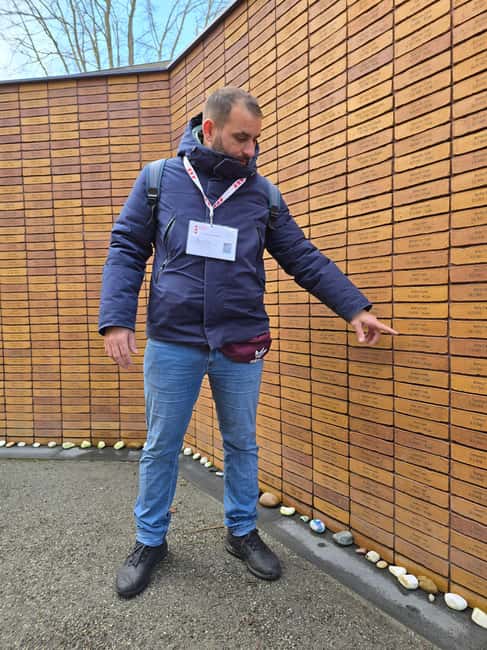
- 750 years in two hours: The tour moves from early settlers and dams to the Golden Age, World War II, and modern Amsterdam.
- Antonis leads the walk: He combines historical detail with warmth, humor, and obvious affection for his adopted city.
- A maximum of 12 people: This is a better setup for conversation than a large group following an umbrella.
- Look for the odd details: You’ll explore why houses lean, why Amsterdam is built on mud, and what the city’s XXX symbol means.
- The walk returns to its start: Meet in front of the Bull and finish back at the same meeting point.
- A postcard is included: You receive a handwritten Amsterdam postcard and a Dutch stamp at the end.
Amsterdam explained through its strangest details
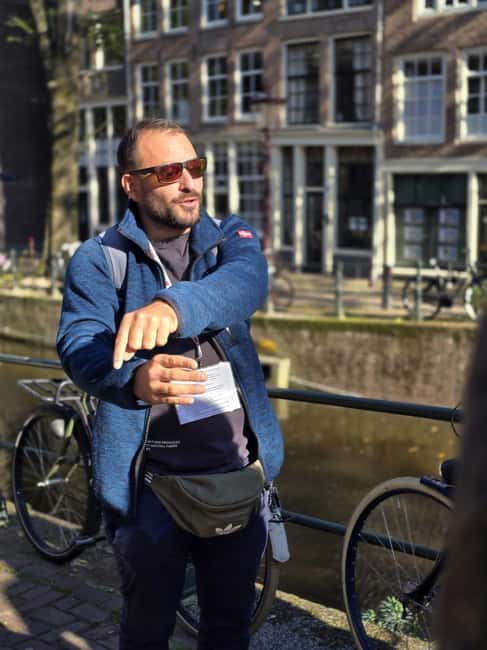
This is not a tour built around ticking off famous sights. It is built around questions. Why do the houses lean? Why is the city built on mud? Why do three X symbols appear across Amsterdam? How did floods shape the way the city works?
Those questions give the walk its appeal. You are not simply memorizing dates. You are learning how geography, engineering, trade, religion, war, and social change pushed Amsterdam in new directions.
Antonis is the guide, and the tone is informal. He uses facts, stories, humor, and surprising connections rather than presenting a long lecture. That matters in Amsterdam, where a short walk can easily become a blur of canals, narrow façades, and old buildings unless someone gives you a way to read what you see.
The tour is offered in English and Greek. It is suitable for solo visitors, couples, and friends, especially if you enjoy asking Wait, how did that happen? The small group format should make it easier to pause, ask questions, and follow the story at a human pace.
A few more days out around Amsterdam worth weighing up
- Amsterdam: Van Gogh Museum Ticket
★ 4.7 · 52,054 reviews - Amsterdam Classic Saloon Boat Cruise with Drinks and Cheese
★ 5.0 · 31,825 reviews - Amsterdam Luxury Canal Cruise + Unlimited Drinks & Bites option
★ 5.0 · 30,518 reviews
Meeting the city at the Bull
The meeting point is in front of the Bull. You should arrive ready to walk, since hotel pickup and drop-off are not included. The walk ends back at the same meeting point, which makes planning the rest of your day easier.
The exact sequence of streets and stops is not specified, so you should not expect a published stop-by-stop route. Instead, think of the experience as a connected walk through Amsterdam’s main turning points. The guide uses the city itself as the setting, pointing out details that can be missed when you pass through on your own.
That format has a clear advantage. Amsterdam is compact enough for its past to remain visible in ordinary streets, canal views, façades, and civic spaces. You can hear about the city’s past while looking at the physical clues that remain around you.
The tradeoff is just as clear. If you want guaranteed entry into a museum, church, house, or other attraction, this is not that kind of experience. It is an outdoor storytelling walk, so comfortable shoes and weather-appropriate clothing are essential.
From muddy ground to the first dam
The opening part looks at Amsterdam’s earliest settlers, the first dam, and the dikes that allowed people to live and work on wet ground. This is the foundation for everything that follows.
Amsterdam was not built on easy terrain. The tour explains the challenges of building a city on mud and the systems that helped protect it from water. The point is not simply that the ground was soft. The point is that cooperation, planning, and trust became necessary parts of daily life.
That idea gives the tour a useful theme: Amsterdam was shaped by people solving shared problems. Dams and dikes were not decorative additions. They were basic tools for survival, trade, and expansion.
You might find this section especially helpful early in your visit because it changes how you look at the city. Canals and water are not just scenic features. They are part of the reason Amsterdam developed as it did.
The guide also discusses the systems that saved the city from devastating floods. This connects old engineering with the wider character of Amsterdam, a place where practical solutions and bold public decisions often had to work together.
Why the houses lean and the city keeps adapting
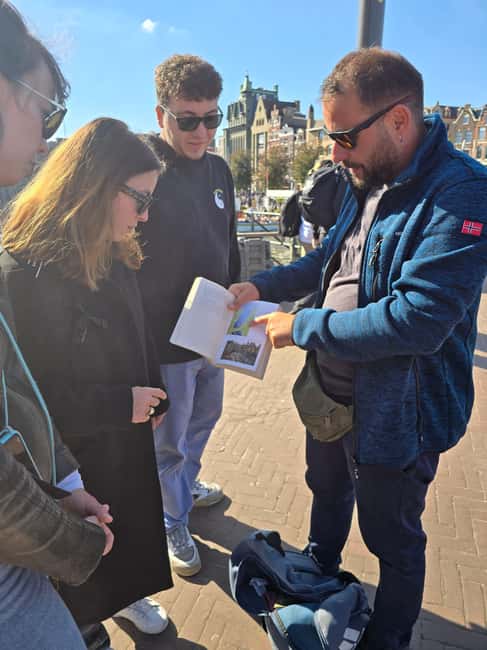
The leaning houses are one of Amsterdam’s most obvious oddities, but many people see them without learning why they appear that way. This tour makes those details part of the larger story.
You should expect an explanation that links the city’s buildings to its difficult ground and long urban development. The tour does not present the façades as isolated curiosities. Instead, it places them within the story of a city built in challenging conditions and repeatedly adjusted over time.
This is one of the strongest reasons to take the walk early in your stay. Once you understand the questions behind the buildings, you can notice more as you explore independently. A narrow house, an unusual angle, or a canal-side structure becomes a clue rather than just a photo opportunity.
The tour also asks why Amsterdam uses XXX. That symbol is familiar across the city, yet many people never learn the story behind it. Details like this give the walk its strange-but-true character.
You will not leave with only the famous postcard images of Amsterdam. You will have a collection of explanations to carry through the rest of your visit.
Same canals, a completely different sort of afternoon:
- Amsterdam: Heineken Experience Ticket
★ 4.6 · 30,055 reviews - Amsterdam: Rijksmuseum Entry Ticket
★ 4.7 · 25,535 reviews - Amsterdam: Classic Boat Cruise with Optional Cheese & Wine
★ 4.6 · 22,925 reviews - Amsterdam: Evening Cruise with Optional Wine and Snacks
★ 4.4 · 19,696 reviews
Trade, the Golden Age, and Amsterdam’s changing identity
The next broad chapter concerns the Golden Age and the growth of trade. Amsterdam’s expansion was tied to commerce, shipping, money, and the ability to organize a large city around exchange.
The value here is context. A quick look at old buildings can tell you that Amsterdam once had money and influence, but it does not explain how that power developed. Antonis connects the city’s growth to the forces that turned a settlement near water into a major trading center.
The tour also places this period alongside changing religious ideas and liberal revolutions. That combination is important. Amsterdam’s identity was not formed by commerce alone. It was also shaped by arguments about belief, personal freedom, public life, and who could participate in the city.
You should expect a broad account rather than a specialist course in economics or politics. In two hours, the guide has to choose the clearest threads. The payoff is a readable story that shows how trade and social change affected one another.
This section may suit you if you prefer history with human consequences. Instead of treating the Golden Age as a collection of dates, the walk asks what kind of city those changes produced.
Floods, resilience, and the systems behind the postcard view
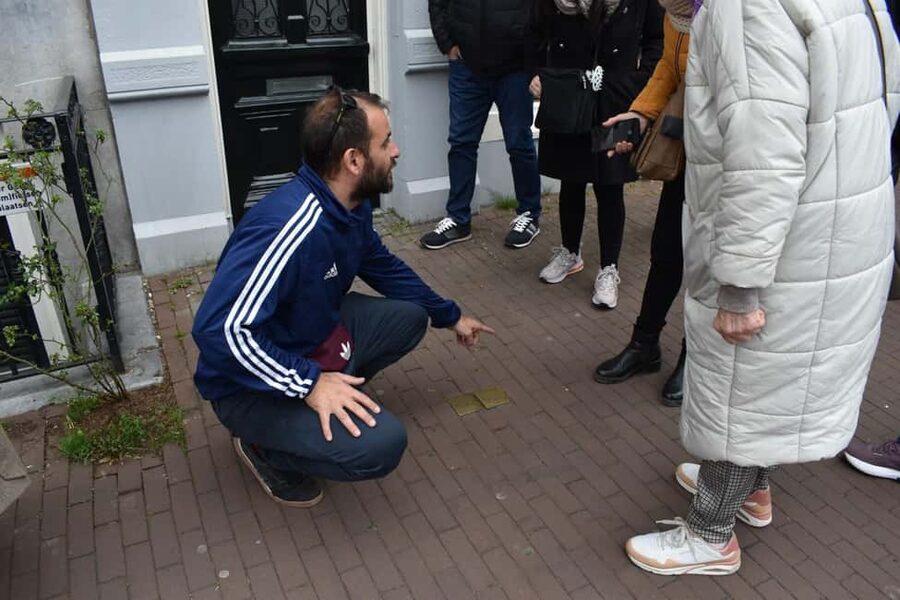
Amsterdam’s water story continues beyond the first dam. Floods repeatedly forced the city to improve its defenses and rethink the way people lived together.
The tour treats resilience as something practical, not as a vague slogan. Dikes, drainage, planning, and shared responsibility all matter when a city is built on vulnerable ground. You learn why the relationship between Amsterdam and water has always involved both danger and opportunity.
This is also where the tour’s focus on trust becomes useful. A city cannot manage major water problems through isolated individual action. It needs systems that people maintain together.
I like this part because it gives weight to the familiar canal scene. The water is attractive, but it also represents engineering, risk, and hard work. You get a better sense of the choices that made urban life possible here.
There is one practical limitation. Outdoor storytelling depends on conditions. Bring water, a camera if you want photographs, and clothing suited to the forecast. The activity specifically recommends comfortable shoes and weather-appropriate clothing, sensible advice for a two-hour walk.
From old religions to liberal revolutions
Amsterdam’s story also includes religious change and liberal ideas. The tour moves beyond architecture and engineering to examine how beliefs and social rules shaped the city.
The description is broad, so you should expect key stories and turning points rather than a detailed study of every religious group or political movement. Still, this part helps explain why Amsterdam is often associated with personal freedom and unconventional traditions.
The useful distinction is between a city that simply has liberal policies and a city whose identity was formed through long debates about tolerance, religion, and public behavior. Antonis presents those changes as part of the city’s development, not as a separate modern add-on.
This may be the most thought-provoking section for anyone interested in how cities change socially. It also helps balance the Golden Age material. Amsterdam’s past was not only about wealth and buildings. It was also about ideas that challenged older systems.
Because the tour is delivered in English or Greek, you can choose the language that lets you follow those ideas most easily. The small group should also help if you want to ask for clarification during a complicated historical point.
World War II and the city’s harder memories
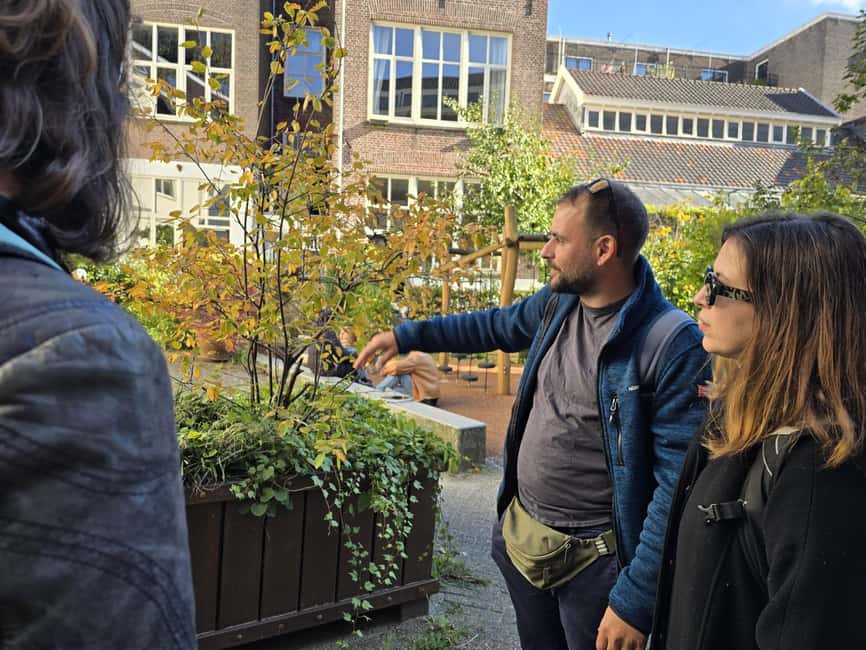
The walk includes World War II, adding a more serious chapter to the tour. This prevents the experience from becoming a string of amusing facts about architecture and symbols.
The wartime section looks at one of Amsterdam’s defining periods and places it within the longer story of the city. After hearing about trade, freedom, and adaptation, you confront the damage and moral strain caused by war.
No detailed list of wartime locations is provided, so you should not book this expecting a dedicated memorial tour or museum visit. Instead, World War II is one part of a wider historical account.
That broad approach can work well on a first visit. You get a sense of how the war fits into Amsterdam’s identity without spending the entire two hours on one period. If wartime history is your main reason for walking, you may want a more specialized experience as well.
Antonis’s warm style appears to be particularly useful here. Humor can make a long walk engaging, but the guide also needs to know when a subject calls for care. The tour’s mix of warmth and serious history aims for that balance.
A small group with room for real conversation
The group is limited to 12 people. That is a meaningful feature, not just a line in the booking details.
A small group allows the guide to notice whether everyone is following the story. It also gives you a better chance to ask about a building, a symbol, or a historical point without interrupting a large crowd.
If you are traveling alone, this format is reassuring. The tour has been operated even when one person booked, so a solo booking is not automatically treated as a reason to cancel. You should still check the conditions at the time you reserve, but the experience is designed to work for one person as well as a couple or a few friends.
The walk is also described as avoiding umbrellas and large crowds. That suggests a more personal setup, though you should still expect a city walk in public streets rather than a private route closed to others.
Antonis is praised for being attentive, warm, and enthusiastic about his adopted city. Those qualities matter because a history walk can feel dry if the guide only recites information. Here, the aim is to make the facts feel connected to real places and everyday Amsterdam.
The postcard with a Dutch stamp
At the end, you receive a handwritten postcard from historic Amsterdam with a Dutch stamp. It is a small extra, but it fits the experience better than a generic souvenir.
You can send it home or keep it. Either way, the postcard gives the tour a physical ending and a reminder of the city’s older communication habits.
The gesture also suits the tone of the walk. The experience is built around human stories, shared ideas, and the way a city carries its past forward. A handwritten card feels more personal than a standard branded giveaway.
Do not treat the postcard as a major part of the price calculation. The real value is the guide’s time and the two-hour explanation of Amsterdam. The card is a pleasant bonus.
Is $28 a fair price?
At $28 per person, this tour sits in a reasonable range for a two-hour guided walk, provided you value interpretation rather than admission tickets or transport.
There are no museum entries, meals, hotel transfers, or other major costs included. You are paying for Antonis’s guiding, the small group, the story structure, and the chance to ask questions.
I think the price makes sense if you want to understand Amsterdam before exploring it on your own. The tour can help you read the city for the rest of your visit, which gives it value beyond the two hours.
It is less appealing if you mainly want a fast orientation, a list of famous sights, or a tour that takes you inside several attractions. In that case, compare it with a sightseeing route that includes entries or transport.
Free cancellation up to 24 hours before the start and reserve-now, pay-later booking make it easier to fit into a changing schedule. Check the available starting times before booking, since the activity runs at set times shown during the reservation process.
Who should book this walk?
I would recommend it to you if you enjoy facts, odd details, and stories that explain why a city looks and behaves the way it does.
It is especially suitable for:
- Solo visitors who want a small social setting
- Couples and friends who prefer conversation to a scripted group tour
- First-time visitors who want useful context before sightseeing
- People interested in engineering, trade, religion, war, and social change
- Anyone who enjoys unusual questions about familiar places
You need to be comfortable walking outdoors for two hours. Bring comfortable shoes, water, a camera if desired, and clothing suited to the weather.
Video recording is not allowed, so plan to listen and take mental notes rather than filming the whole presentation. You can take photographs, and the city itself provides plenty of visual material.
Should you book Amsterdam’s Hidden Facts?
Book this tour if you want Amsterdam explained through connections: mud to buildings, water to cooperation, trade to growth, and liberal ideas to the city’s modern identity.
The strongest features are Antonis’s personal storytelling, the maximum group size of 12, and the unusual questions that make ordinary streets more interesting. The handwritten postcard is a nice finishing touch.
Skip it if you need a fixed monument-by-monument route, museum access, or a focused World War II walk. For a curious mind and a first or second day in Amsterdam, however, $28 buys a useful two-hour introduction with plenty of facts to carry into the rest of your stay.
FAQ
How long does the Amsterdam’s Hidden Facts tour last?
The walking tour lasts two hours.
What is the price?
The listed price is $28 per person.
Where does the tour start?
The tour starts in front of the Bull.
Where does the tour finish?
The activity ends back at the meeting point.
Who is the guide?
Antonis leads the experience.
What languages are available?
The tour is offered in English and Greek.
How large is the group?
The group is limited to a maximum of 12 people.
Is hotel pickup included?
No. Hotel pickup and drop-off are not included.
What should I bring?
Bring comfortable shoes, water, a camera if you want one, and clothing suitable for the weather.
Is video recording allowed?
No. Video recording is not allowed.
What is included with the tour?
The booking includes a professional guide, a two-hour storytelling walk, and a handwritten Amsterdam postcard with a Dutch stamp.
Can I cancel for a refund?
Yes. You can cancel up to 24 hours in advance for a full refund.
Just added around Amsterdam
- From Amsterdam: The Hague Private Trip and Mauritshuis Entry★ 4.3 · 4 reviews
- VIP Private Full Day Tour of the Netherlands★ 4.8 · 6 reviews
- Amsterdam Old-West Vegan Food Tour with Local Guide★ 4.7 · 3 reviews
- Amsterdam: Van Gogh Museum Guided Tour★ 4.8 · 262 reviews
- Van Gogh Museum Private Guided Tour★ 4.2 · 10 reviews
- Vecht River: Full-day Cruise with Lunch★ 4.8 · 9 reviews
- Van Gogh and Rijksmusuem Tour: Small Group Tour with Entry★ 4.7 · 3 reviews
- Amsterdam: Van Gogh Museum Ticket & Guided Tour★ 4.4 · 187 reviews
Amsterdam Tours, compared.

Amsterdam Classic Saloon Boat Cruise with Drinks and Cheese
Read our review →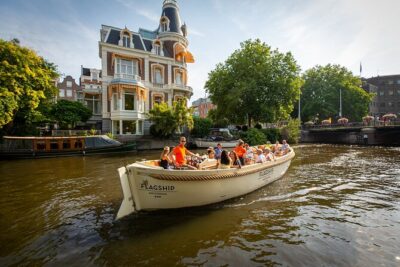
Amsterdam Luxury Canal Cruise + Unlimited Drinks & Bites option
Read our review →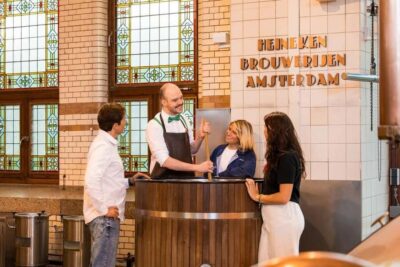

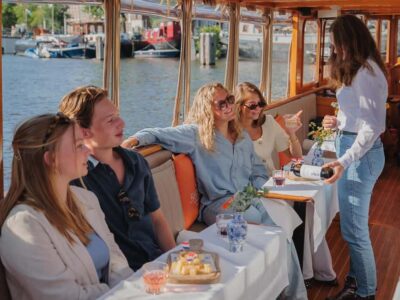
Classic Boat Cruise with Optional Cheese & Wine
Read our review →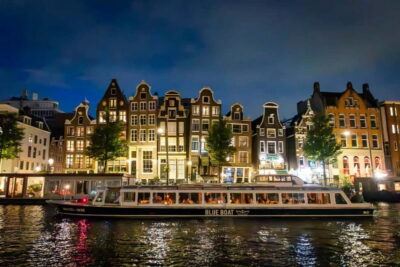
Evening Cruise with Optional Wine and Snacks
Read our review →