
Reviewed · CITY TOURS
Amsterdam Urban Legend Scavenger City Game
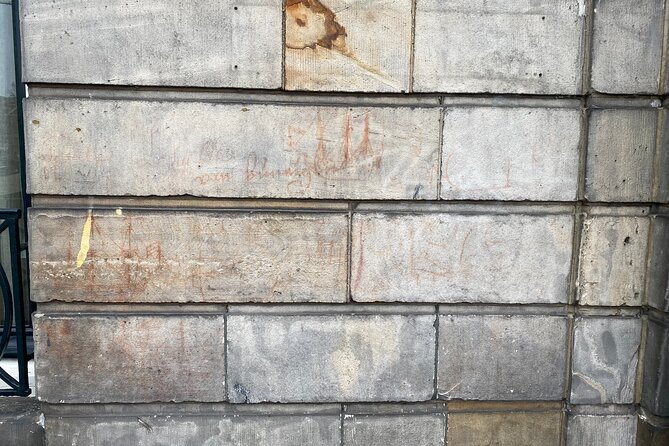
Amsterdam’s House with the Bloodstains gives this city game a fine hook: a mysterious chest, a former mayor, and a dark tale tied to his final days. You follow clues through central Amsterdam while solving hands-on puzzles built around a real urban legend with an added fictional twist.
I like two things right away. The game turns sightseeing into an active group challenge, and the puzzles are more varied than a basic phone scavenger hunt. You might work with inkblots, locks, or a simple chemical reaction. The main caution is that you need to enjoy solving puzzles under a little pressure, and the outdoor format means weather can affect the mood.
Key points at a glance
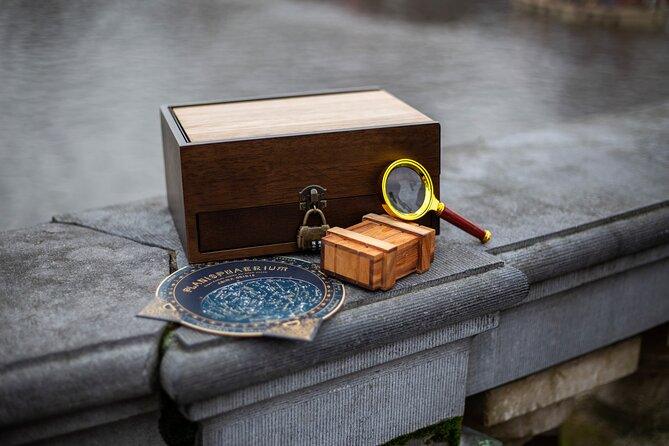
- A 17th-century chest starts the mystery: The story centers on a box found beneath the floorboards of a canal house beside the Amstel.
- Physical puzzles keep you off your phone: Expect challenges involving lock picking, inkblots, and chemical reactions.
- The route doubles as a city walk: You move through central Amsterdam, seeing attractive locations while working through the plot.
- A private booking suits small groups: Only your own party takes part, with group discounts available.
- The host can give hints: You receive an introduction before setting off, and help is available if a puzzle stalls you.
- Allow about two to two and a half hours: One party finished in about two hours, while the official estimate is roughly 2 hours 30 minutes.
A bloodstained house and a mayor’s mysterious chest
The story begins with a discovery beneath the floorboards of a historic canal house along the Amstel. Inside is a 17th-century chest, along with a letter suggesting that former resident and mayor Coenraad van Beuningen left it behind.
That would be enough to get any puzzle fan interested. The darker edge comes from the house’s nickname, the House with the Bloodstains, linked to the mayor’s strange final days. The game uses this real urban legend as its base, then adds an imaginative layer so the afternoon plays like an outdoor escape room.
I appreciate that setup because it gives the walk a clear purpose. You are not simply collecting random answers at unrelated corners of Amsterdam. Each challenge feeds into a larger question: what is inside the chest, why was it left there, and what happened to its former owner?
The story also gives you a reason to pay attention to the city around you. Amsterdam’s old canal houses, waterways, and narrow streets become part of the setting rather than mere scenery between puzzle stations.
More City Tours in Amsterdam
- Amsterdam: 75 Minute City Canal Cruise with Audio Guide
★ 4.4 · 17,501 reviews - Amsterdam: City Centre Canal Cruise
★ 4.2 · 12,827 reviews - Amsterdam: Smoke and Lounge City Boat Cruise
★ 4.7 · 8,572 reviews
The Amstel meeting point and the opening briefing
You begin at the Amstel in Amsterdam, and the activity finishes at the same meeting point. The exact route details are not provided in advance, so you should think of this as a guided city quest rather than a fixed sightseeing tour with a published list of monuments.
The host introduces the mystery, explains how the game works, and sends your private group out with the materials needed to solve it. A good briefing matters here. With several puzzles ahead, you want to understand the rules before your attention shifts to the first clue.
The introduction is also where the activity’s tone is set. This is not a formal lecture about Amsterdam. It is a story-led game with historical ingredients, physical tasks, and a little theatrical suspense. If your group enjoys escape rooms, the opening should feel familiar, but the city itself becomes the game board.
You do not need to join strangers. The booking is private, so only your group takes part. That makes it easier to discuss clues openly, divide up tasks, and move at your own pace without worrying about holding up another party.
From city walk to outdoor escape room
Once the quest starts, the route sends you through Amsterdam’s center. The sightseeing is woven into the puzzles, so you may pause at a location to inspect something, compare notes, or test an idea before moving on.
The experience takes about 2 hours 30 minutes, although one group completed it in roughly two hours. That difference is useful to keep in mind. Your time can depend on how quickly your group spots patterns, how often you ask for help, and how much time you spend enjoying the surroundings.
This is not a marathon walk. A family with a nearly two-year-old in a buggy found the amount of walking manageable, even in poor weather. Still, the activity asks for a moderate level of physical fitness, so you should expect to be outdoors and on your feet for much of the session.
The city walk adds real value. A conventional escape room keeps you in one room, while this game gives you changing views and a sense of movement. You can also pause for a drink on a terrace between challenges, according to the experience of one group. That makes the afternoon feel less like a race and more like a flexible city outing.
The tradeoff is focus. Amsterdam has plenty to distract you, and a busy urban setting can make a clue harder to study. If your group wants a quiet puzzle room with every object under controlled lighting, this will feel less tidy. If you like the extra challenge of solving something in public, the setting is part of the fun.
The physical puzzles: inkblots, locks, and chemical reactions
The strongest feature here is the range of puzzle types. This is not only a series of questions on a phone. The game includes physical and surprising tasks, with examples such as lock picking, inkblots, and chemical reactions.
The lock-picking challenge gives the game an immediate hands-on quality. You are not merely reading a clue and typing a response. You have to handle an object, work out what it wants from you, and stay patient when the answer is not obvious.
The inkblot puzzle was particularly challenging for one group. That is a useful warning, not a criticism. Some puzzles may look strange until you understand the intended method. The satisfaction comes after the penny drops, but the same moment can be frustrating if nobody in your party sees the pattern.
Chemical reactions add another change of pace. The supplied information does not explain the exact materials or safety process, so you should treat this as a supervised puzzle element rather than expect a science lesson. The point is variety: each task asks you to observe, test, and think differently.
The final puzzle has been singled out as especially strong. I would save a little energy for the ending rather than rushing through the middle. A good last challenge gives the whole route shape, and this one appears designed to provide that final payoff.
The host can offer hints when your group gets stuck. That is important for a private game. Without a guide nearby, one stubborn clue could consume half the afternoon. Hints let you keep moving while preserving enough of the solution for your group to feel that it solved the mystery.
More scavenger hunts around Amsterdam:
- e-Scavenger hunt Amsterdam: Explore the city at your own pace
★ 4.5 · 14 reviews - Amsterdam Scavenger Hunt and Highlights Self Guided Audio Tour
★ 4.0 · 9 reviews - e-Scavenger hunt Volendam: Explore the city at your own pace
★ 4.5 · 8 reviews - e-Scavenger hunt Maastricht: Explore the city at your own pace
★ 4.5 · 110 reviews
How the urban legend shapes the sightseeing
The game’s historical angle is deliberately selective. You are not receiving a full account of Coenraad van Beuningen’s life or a detailed survey of Amsterdam’s past. Instead, you get one unusual story and follow its clues through the city.
That narrow focus works well for a game. A broad history lesson can become hard to remember, especially when you are also trying to solve puzzles. The tale of a mayor, a canal house, a mysterious chest, and bloodstains is easier to carry from one location to the next.
The added fictional twist should also set expectations. You are getting a playful version of an urban legend, not a formal historical investigation. If you want every detail to be documented and explained, choose a traditional history walk. If you like a story that uses real places as a stage for imaginative questions, this format is a better fit.
I like the balance between fact and invention. The real-world base gives the game a sense of place, while the fictional additions allow the designers to build puzzles that would not fit into a strict lecture. You can enjoy the atmosphere without needing to decide which part belongs to documented history and which part belongs to the game.
What the private format means for your group
Private booking is one of the better practical features. Your group can share ideas freely, and different personalities can take different roles. One person may spot visual clues, another may handle the physical pieces, and someone else may keep track of the story.
This is especially useful for friends, families, and colleagues. The game gives you a common task without forcing anyone into a competitive team against strangers. Group discounts may also improve the value when several people book together.
The activity appears best suited to people who enjoy escape rooms, puzzle hunts, and unusual city walks. It also works for first-time visitors who want to see Amsterdam through something more active than a standard sightseeing route.
Families should consider the ages and patience of everyone involved. A buggy can work, and the walking was manageable for one family with a toddler, but a very young child will not solve the clues. The adults in your group will need to treat the child as part of the outing rather than expect a child-focused activity.
The game is also a good choice for a private afternoon with friends who have already seen the main sights. You get a reason to walk through central Amsterdam without repeating a standard museum or canal tour.
Timing, weather, and practical comfort
The activity takes place outdoors, so check the forecast and dress for conditions. One group had fun despite poor weather, but rain can make handling puzzle materials less comfortable and may reduce the pleasure of stopping to look around.
Wear shoes suitable for a city walk. The physical demand is moderate rather than extreme, but you will be moving through Amsterdam for up to two and a half hours. The route includes enough walking to require reasonable mobility, even though it is not described as a strenuous hike.
Public transportation is nearby, which makes reaching the Amstel meeting point simple within Amsterdam. A mobile ticket is available, and booking confirmation arrives at the time of purchase. Service animals are allowed.
Build a little spare time around the activity. The official duration is approximate, and puzzle speed varies from group to group. You may finish in two hours, or you may need the full estimate. A terrace stop can also stretch the outing if you choose to pause.
Is $29.50 a fair price?
At $29.50 per person, this costs more than a self-guided phone walk but less than many private, guide-heavy Amsterdam experiences. The value rests on the physical materials, the host’s introduction and hints, the private format, and the fact that the game combines entertainment with city sightseeing.
You are paying for an activity, not just information. If your group would otherwise book an escape room and a separate city walk, this can combine parts of both in one afternoon. You also avoid the awkwardness of sharing a puzzle experience with people you do not know.
The price is less attractive if your main goal is a detailed history tour. The story provides atmosphere and context, but the main event is solving the challenges. You should book it for the game and the unusual way it moves you around Amsterdam, not as a replacement for a serious historical guide.
Group discounts may help larger parties. Since the booking is private, the cost can make particular sense for a group that wants its own time, its own pace, and the freedom to ask for hints without an audience.
Who should book the House with the Bloodstains?
I would choose this for a group that likes puzzles, escape rooms, and city walks with a story attached. The mix of inkblots, locks, chemical reactions, and visual observation gives different people a chance to contribute.
It is also a smart pick for a first visit if you want an activity that shows you central Amsterdam without following the usual sightseeing script. You will not simply stand and listen. You will look more closely at the places around you because the next clue may depend on it.
I would hesitate if your group dislikes riddles, gets frustrated when answers are not immediate, or wants a fully planned historical route with named monuments at every stop. The outdoor setting can also be a drawback in wet or cold weather, even though the game can still be completed.
The cancellation terms are friendly if your plans are still taking shape. You can receive a full refund by cancelling at least 24 hours before the start time. Changes or cancellations inside that window are not accepted for a refund.
My booking verdict
Book it if you want Amsterdam sightseeing with a practical challenge attached. The private format, strong story, physical puzzle materials, and helpful hints make this more than a phone-based treasure hunt.
Skip it if your ideal afternoon is a quiet museum, a formal history talk, or a perfectly predictable route. For puzzle-lovers and groups looking for something original, $29.50 buys a lively two-hour-plus outing with enough story and sightseeing to make the city feel like part of the game.
FAQ
Where does the Amsterdam Urban Legend Scavenger City Game start?
It starts at the Amstel in Amsterdam, Netherlands.
Where does the activity finish?
The activity ends back at the meeting point.
How long does the city game last?
The approximate duration is 2 hours 30 minutes. One group completed the quest in about two hours.
Is this a private activity?
Yes. Only your group participates in the booking.
What kinds of puzzles are included?
The game includes physical and surprising puzzles. Examples mentioned include lock picking, chemical reactions, and an inkblot challenge.
Is a host present during the experience?
A host provides the introduction and sends your group on its way. Hints are available when needed.
Is the activity suitable for people with limited fitness?
A moderate level of physical fitness is recommended. The game is an outdoor city walk, though one family found the walking manageable with a toddler in a buggy.
Can I cancel for a full refund?
Yes. You must cancel at least 24 hours before the experience start time for a full refund. Cancellations or changes made less than 24 hours before the start time are not accepted for a refund.
Just added around Amsterdam
- From Amsterdam: The Hague Private Trip and Mauritshuis Entry★ 4.3 · 4 reviews
- VIP Private Full Day Tour of the Netherlands★ 4.8 · 6 reviews
- Amsterdam Old-West Vegan Food Tour with Local Guide★ 4.7 · 3 reviews
- Vecht River: Full-day Cruise with Lunch★ 4.8 · 9 reviews
- Amsterdam: Van Gogh Museum Guided Tour★ 4.8 · 262 reviews
- Van Gogh Museum Private Guided Tour★ 4.2 · 10 reviews
- Van Gogh and Rijksmusuem Tour: Small Group Tour with Entry★ 4.7 · 3 reviews
- Amsterdam: Van Gogh Museum Ticket & Guided Tour★ 4.4 · 187 reviews
City Tours, compared.
75 Minute City Canal Cruise with Audio Guide
Read our review →


City Canal Cruise and Heineken Experience Ticket
Read our review →


Browse the lists this tour appears in